Muchim · Dressed side dish 무침
Doraji Muchim (Spicy Raw Bellflower Root Salad)
도라지무침
Romanization: doraji-muchim
Raw bellflower root, shredded and salt-rubbed to tame its bitterness, then dressed with gochugaru, gochujang, vinegar and sugar — crunchy, sweet, sour and hot.
- Serves
- 4
- Prep
- 30 min
- Cook
- 0 min
Recipe
Ingredients · Serves 4
- 200 gFresh doraji (bellflower root), peeled
- 1 tbspCoarse salt (for rubbing)mostly rinsed off
- 1 tbspGochugaru
- 1 tbspGochujang
- 1½ tbspVinegar
- 1 tbspSugar
- 1 cloveGarlicminced
- 1 tbspGreen onionfinely chopped
- 1 tspToasted sesame seeds
- 1 tspToasted sesame oiloptional
Method
Technique: Yangnyeom: Seasoning Basics
Step 1: If the doraji still has its skin, scrape or peel it. Split thick roots lengthwise and tear or cut them into thin strips about 5 cm long.
Step 2: Put the strips in a bowl with the coarse salt and rub firmly for 3–5 minutes, until they soften and a cloudy, bitter liquid comes out.
Step 3: Rinse well in cold water three or four times, tasting a strip — it should be only faintly bitter. If it is still sharp, soak in cold water for 20–30 minutes. Squeeze out as much water as possible.
Step 4: Toss the doraji with the gochugaru first and rub it in so the strips turn evenly red.
Step 5: Add the gochujang, sugar, garlic and green onion and mix well, then add the vinegar last and toss again.
Step 6: Finish with sesame seeds (and sesame oil, if using). Serve within a day; the salad releases water as it sits.
Origin & History
Doraji is the root of the balloon flower (Platycodon grandiflorum), which grows on sunny hillsides throughout Korea. The Encyclopedia of Korean Culture records it under the medicinal name gilgyeong (桔梗) and notes that the fifteenth-century Hyangyak jipseongbang describes the dried root as a remedy for sore throats; it has remained a staple of Korean herbal tradition because of its saponins. Young roots two or three years old are the most tender.
In the kitchen doraji is eaten in two broad ways. Doraji-namul (cooked, usually stir-fried) is the white member of the three-colored namul set served at rites and holidays. Doraji-saengchae, the raw version that this entry describes and that is commonly called doraji-muchim, belongs to the saengchae family of uncooked, seasoned vegetables. The Encyclopedia of Korean Culture describes the method: the root is torn into fine strips and rubbed with salt until it softens, then seasoned. The folk-culture encyclopedia adds the details home cooks still follow — rinse several times to wash out the bitterness, rub in the gochugaru first to color the strips, and add vinegar last.
The folk-culture encyclopedia's entry on saengchae notes that the 1924 cookbook Joseon mussang sinsik yori jebeop already lists doraji-saengchae alongside radish and cucumber versions. Today the bright red, sweet-sour salad is an everyday banchan in homes and restaurants.
Key Ingredients
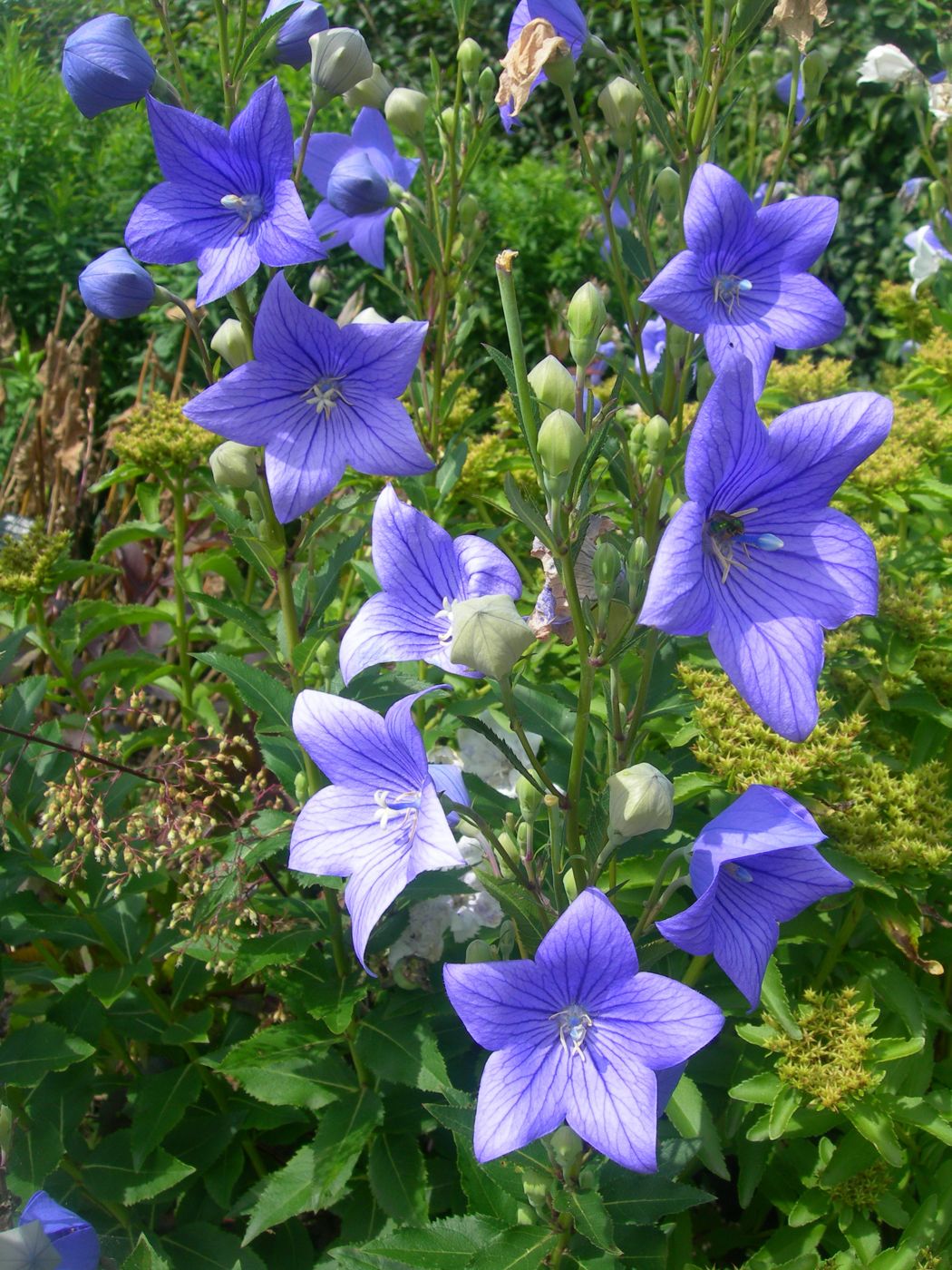 Balloon flower root도라지The pale, fibrous root of the balloon flower, prized for its crunch and gentle bitterness. It is tamed with salt and soaking, then served as a white namul, a tangy raw salad, or threaded onto skewers.
 Gochugaru고춧가루Korean red chili powder, made from dried red peppers ground coarse or fine. It gives kimchi, gochujang and countless banchan their color and warmth.
- Gochujang고추장Fermented red chili paste — sweet, savory and hot. Made from meju powder, glutinous rice, malt and gochugaru, it is a later addition to Korea's family of jang.
- Korean Vinegar식초Vinegar in the Korean kitchen, from naturally fermented grain and fruit vinegars, such as persimmon vinegar, to everyday brewed vinegar. It sharpens muchim, pickles and the dipping sauce chogochujang.
 Garlic마늘Used raw, minced, pickled and roasted, garlic is one of the essential aromatics of Korean food — in seasonings, marinades, kimchi and namul.
 Green onion파Korean green onion (pa), from thick-stemmed daepa to slender scallions — chopped into nearly every seasoning sauce, soup and kimchi, and the star of pa-kimchi.
 Sesame참깨Toasted sesame seeds and sesame oil (chamgireum) finish countless Korean dishes, adding a nutty aroma and gloss.
Nutrition
| Calories | ~64 kcal |
|---|---|
| Protein | ~2.1 g |
| Fat | ~2.1 g |
| Carbohydrates | ~11.2 g |
| Fiber | Not reported |
| Sodium | ~205 mg |
Notable forPotassium · Iron
Doraji uses the Korean Food Composition Table entry “Korean bellflower, Raw” (per 100 g: 41 kcal, 3.0 g protein, 950 mg potassium, 4.1 mg iron); that entry does not report dietary fiber, so fiber is left as not reported. The estimate assumes about 1 g of the rubbing salt remains after rinsing — actual retained salt varies widely. Gochujang uses the Korean table; gochugaru uses the USDA red pepper (cayenne) entry as a stand-in; vinegar, sugar, garlic, green onion, sesame seeds and sesame oil use USDA FoodData Central. Totals divided by four. Actual values vary with ingredients, portion size and preparation.
Health Benefits
- Fibrous root vegetable: the Encyclopedia of Korean Culture describes doraji as mostly fiber and carbohydrate, with notable calcium and iron, which gives it its distinctive chew.
- Potassium: the Korean Food Composition Table lists raw doraji as high in potassium.
- Saponins and traditional use: doraji's bitterness comes from triterpene saponins (platycodins). Long used in Korean and Chinese herbal medicine for coughs and sore throats, they are being studied for anti-inflammatory and other effects, but the evidence comes mainly from laboratory and animal research, not from eating the vegetable.
Regional Variations
- Gochugaru and gochujang dressing: the familiar red version, sweet, sour and spicy.
- Chogochujang: some cooks simply dress the salted root in vinegared gochujang, as the dictionary definition mentions.
- With cucumber: salted cucumber slices mixed in, a combination recorded in the folk-culture encyclopedia.
- From dried doraji: dried root, soaked and torn, can be used when fresh roots are out of season.
Pairings
- Doraji Namul도라지나물Shredded bellflower root rubbed with salt to tame its bitterness, then gently stir-fried — the ivory-white member of the three-colored namul.
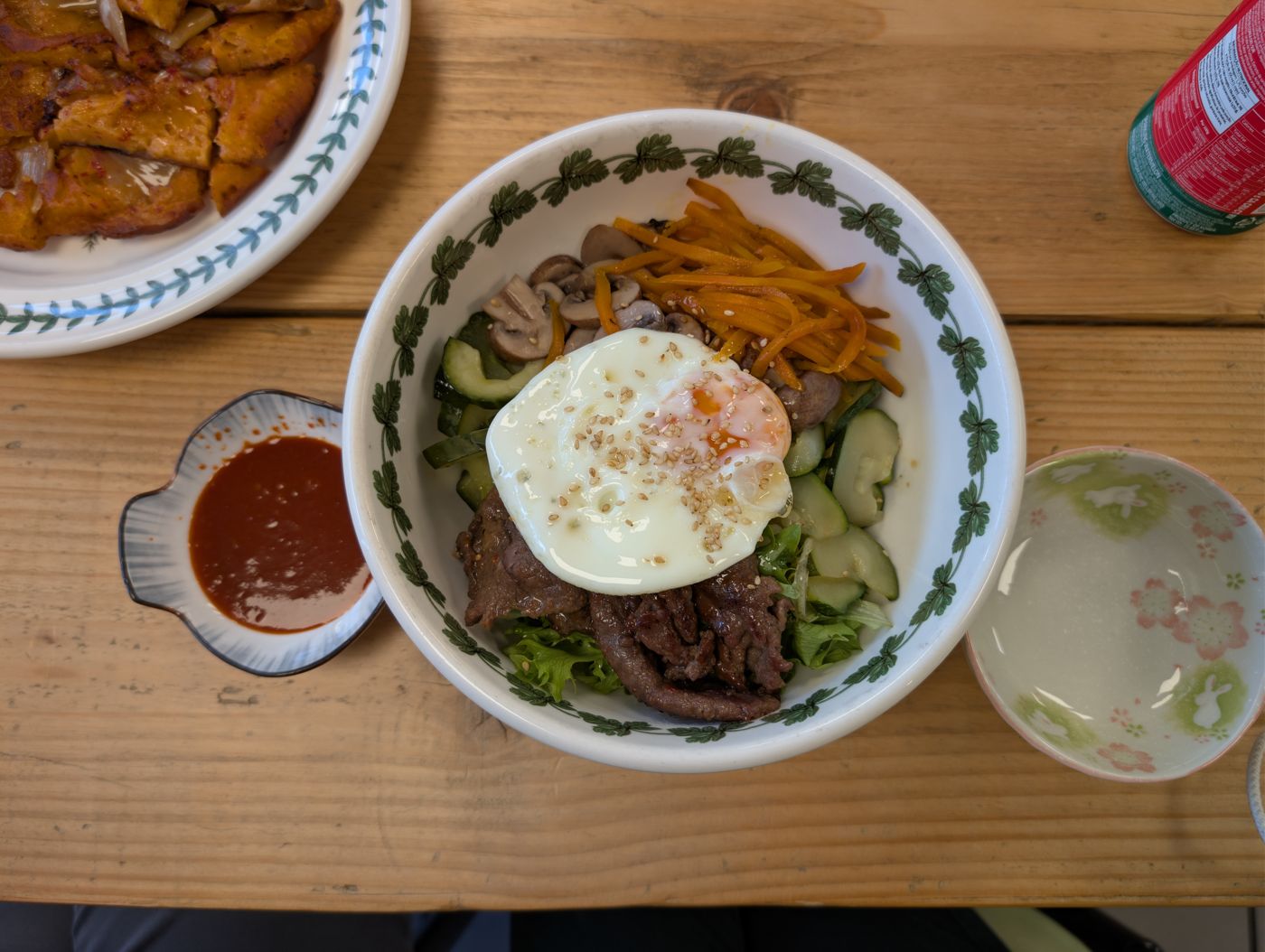 Bibimbap (Mixed Rice with Namul)비빔밥A bowl of rice topped with seasoned namul, beef and egg, mixed at the table with chili paste and sesame oil — banchan gathered into a single meal.
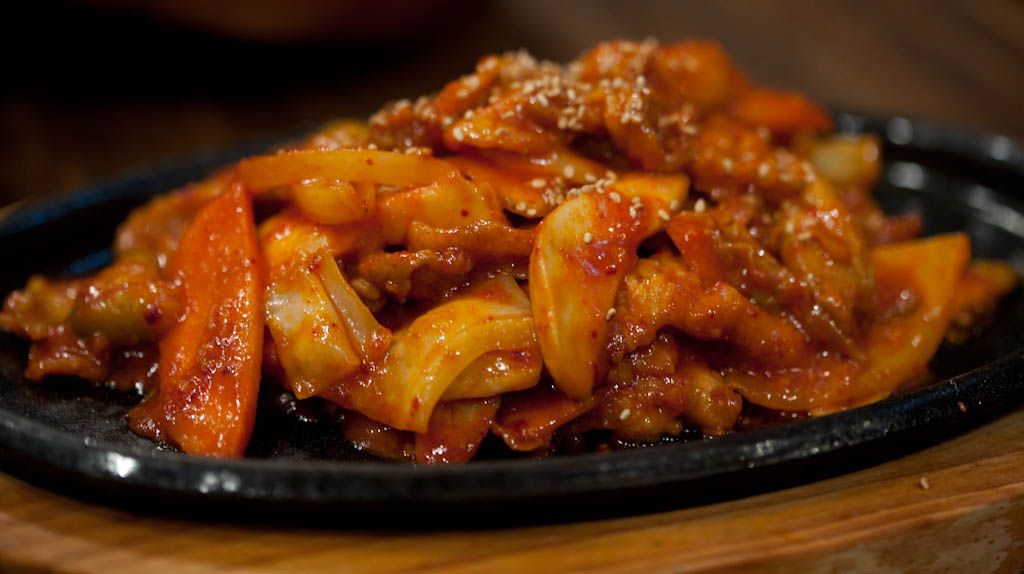 Jeyuk Bokkeum (Spicy Stir-Fried Pork)제육볶음Thin slices of pork marinated in gochujang, garlic and ginger, then stir-fried with onion and green onion — a hearty, spicy staple of home and diner tables.
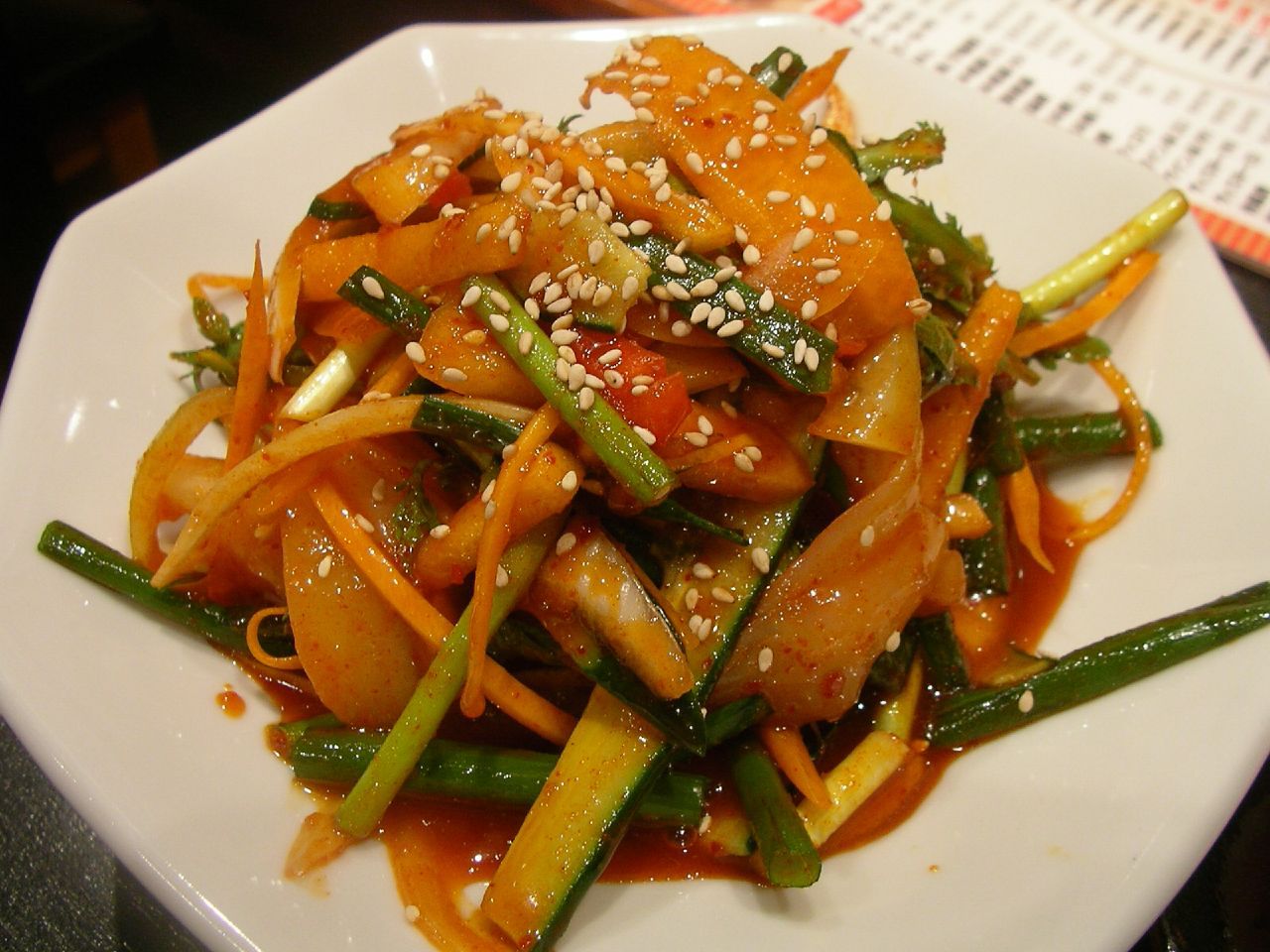 Oi Muchim오이무침Thin-sliced cucumber, briefly salted and tossed with chili flakes, vinegar and garlic — a cool, crunchy quick salad made in minutes, especially in summer.
Sources
- 01도라지나물 (Doraji-namul) — Encyclopedia of Korean Folk Culture (National Folk Museum of Korea)
- 02도라지 (Doraji) — Encyclopedia of Korean Culture
- 03도라지생채 (Doraji-saengchae) — Urimalsaem (National Institute of Korean Language)
- 04생채 (Saengchae) — Encyclopedia of Korean Folk Culture (National Folk Museum of Korea)
- 05Korean Food Composition Table: Korean bellflower, Raw — National Institute of Agricultural Sciences
- 06Zhang L. et al. Ethnopharmacology, phytochemistry, pharmacology and product application of Platycodon grandiflorum: A review. Chinese Herbal Medicines (2024) — PMC
Last updated