Ingredient
Gochujang
고추장
Romanization: gochujang
Fermented red chili paste — sweet, savory and hot. Made from meju powder, glutinous rice, malt and gochugaru, it is a later addition to Korea's family of jang.
Flavor
Thick and sticky; sweet up front, then savory-fermented and building chili heat, with a mellow, rounded finish.
Origin & History
Gochujang could only appear after chili peppers reached Korea around the turn of the 17th century. The earliest known written recipe is in Jeungbo sallim gyeongje, an expanded household-management manual from the 1760s, which mixes sieved meju powder, chili powder and glutinous rice flour and seasons the paste with soy sauce. That early version used far less chili and more meju than modern gochujang.
A typical traditional method cooks glutinous rice into a porridge, sweetens it by adding strained barley-malt water (yeotgireum), whose enzymes convert starch to sugar, then stirs in meju powder, gochugaru for color and heat, and salt. The paste matures in earthenware jars, often in the sun. Regional versions use barley, sorghum, sweet potato or red beans; Sunchang in North Jeolla is the most famous gochujang town, with Haenam and Jinju also well known.
Along with doenjang and ganjang, gochujang is one of the fermented sauces covered by UNESCO's 2024 inscription of Korean jang-making on the Representative List of the Intangible Cultural Heritage of Humanity. It seasons stews, vegetables and braises, accompanies raw fish, and is the base for chogochujang, a vinegared dipping sauce.
Nutrition
| Calories | 205 kcal |
|---|---|
| Protein | 3.7 g |
| Fat | 1.4 g |
| Carbohydrates | 51.8 g |
| Fiber | 5.2 g |
| Sodium | 2486 mg |
Notable forVitamin A (as beta-carotene)
Values from the Korean Food Composition Table (RDA, 2016 data) for commercial gochujang, which lists about 22 g sugars per 100 g. Traditional gochujang (고추장, 재래) in the same table: 163 kcal and 3,009 mg sodium per 100 g. Actual values vary with ingredients, portion size and preparation.
Health Benefits
- Carotenoids from chili: Its red color comes from gochugaru, and Korean food-composition data list beta-carotene among its notable components.
- Sodium and sugar: Gochujang is both salty and fairly sweet; a tablespoon adds meaningful sodium and some sugar. The FDA's daily value for sodium is less than 2,300 mg.
- Allergens: Contains soy; many commercial versions also contain wheat. Check labels.
- Spice tolerance: Like other chili products, it can aggravate heartburn in some people.
Informational, not medical advice. Talk to a qualified professional about your own health and diet.
Dishes with Gochujang
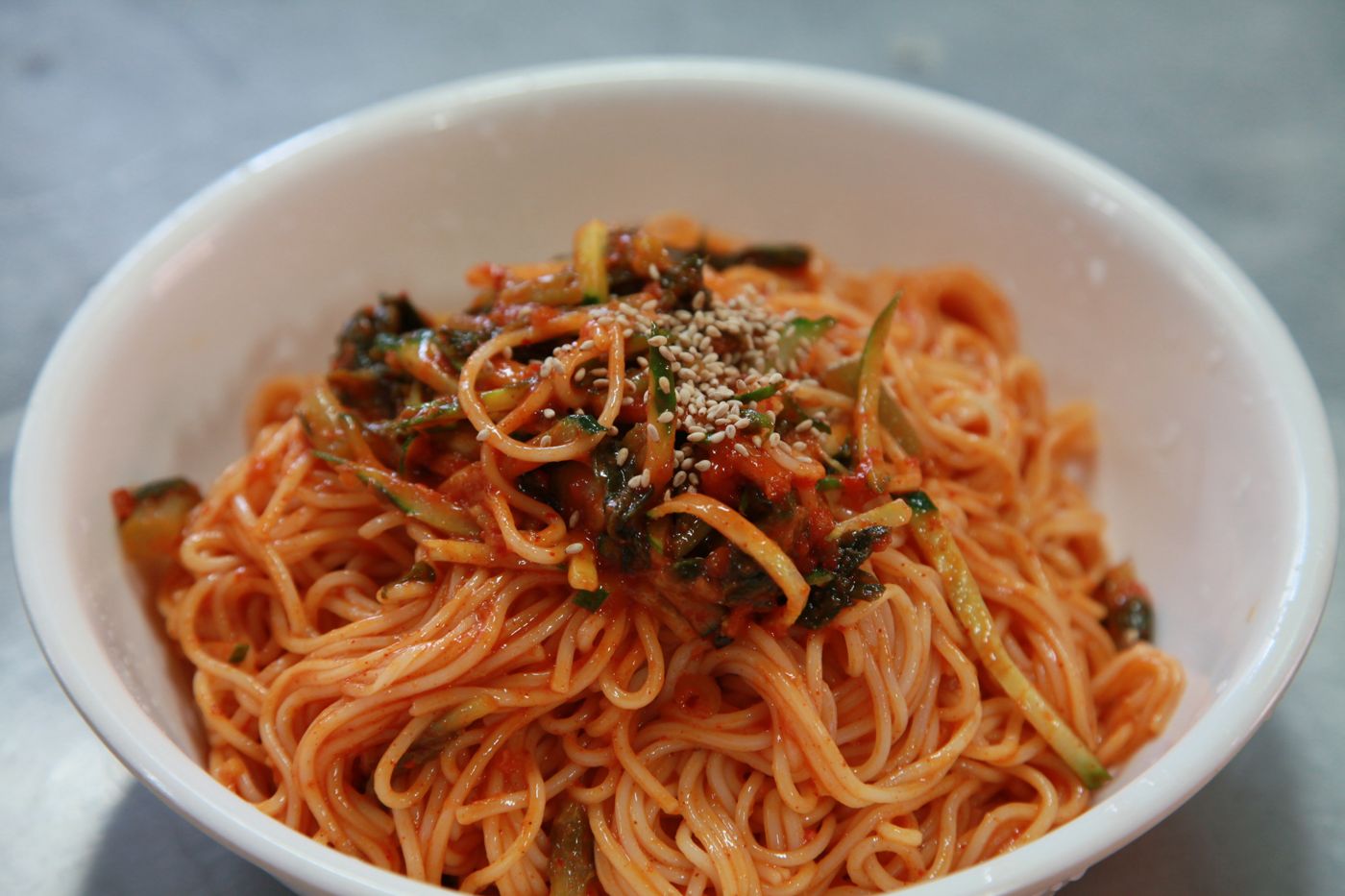 Bibim-guksu (Spicy Mixed Noodles)비빔국수Thin wheat noodles tossed cold in a sweet, sour and spicy gochujang dressing with cucumber, kimchi and egg — a modern turn on the soy-dressed goldongmyeon of Joseon.
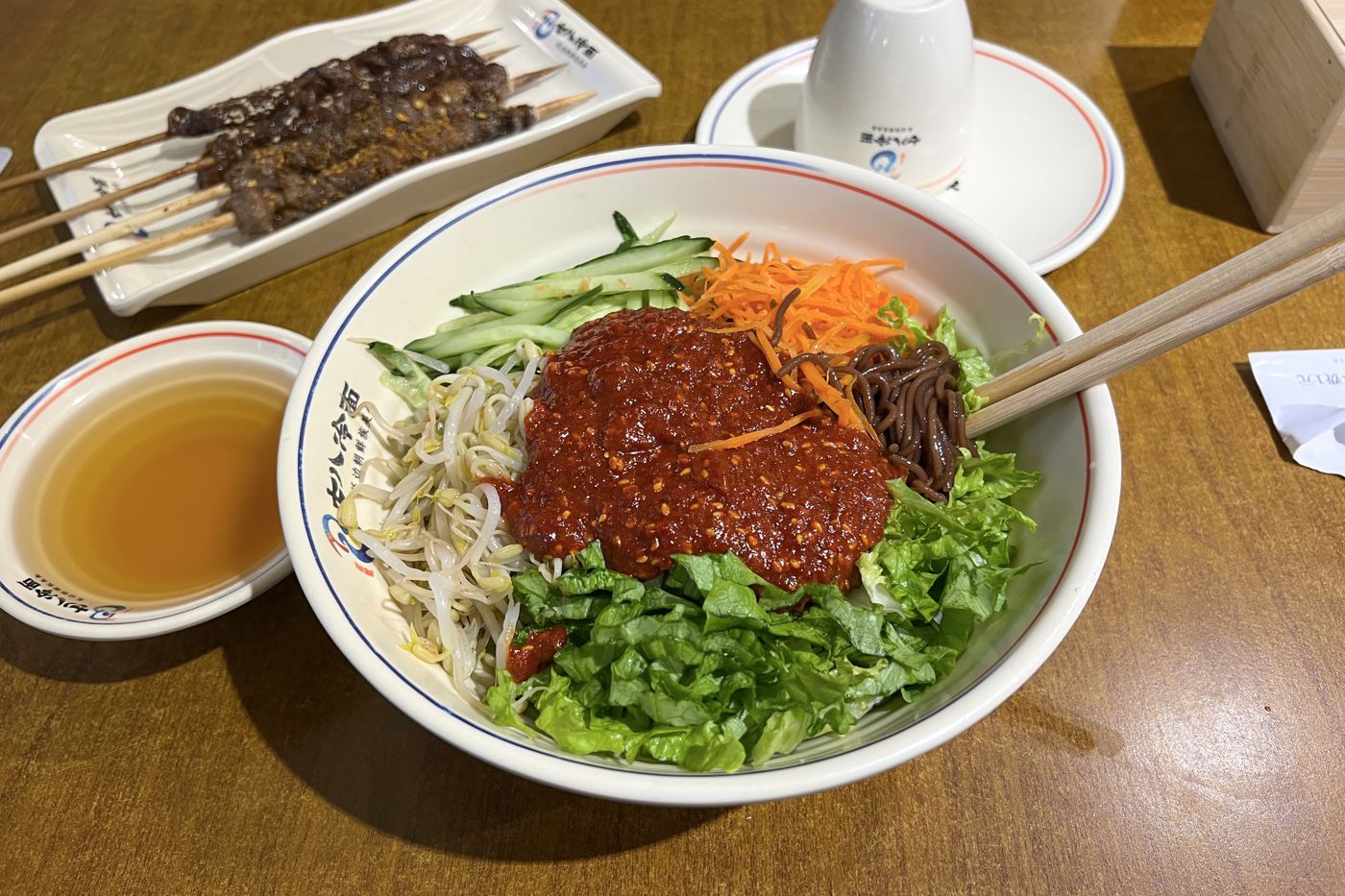 Bibim-naengmyeon (Spicy Mixed Cold Noodles)비빔냉면Chewy starch noodles tossed in a sweet, vinegary chili sauce, topped with cucumber, pear and egg — the Hamheung tradition of hoe-naengmyeon, carried south by refugees.
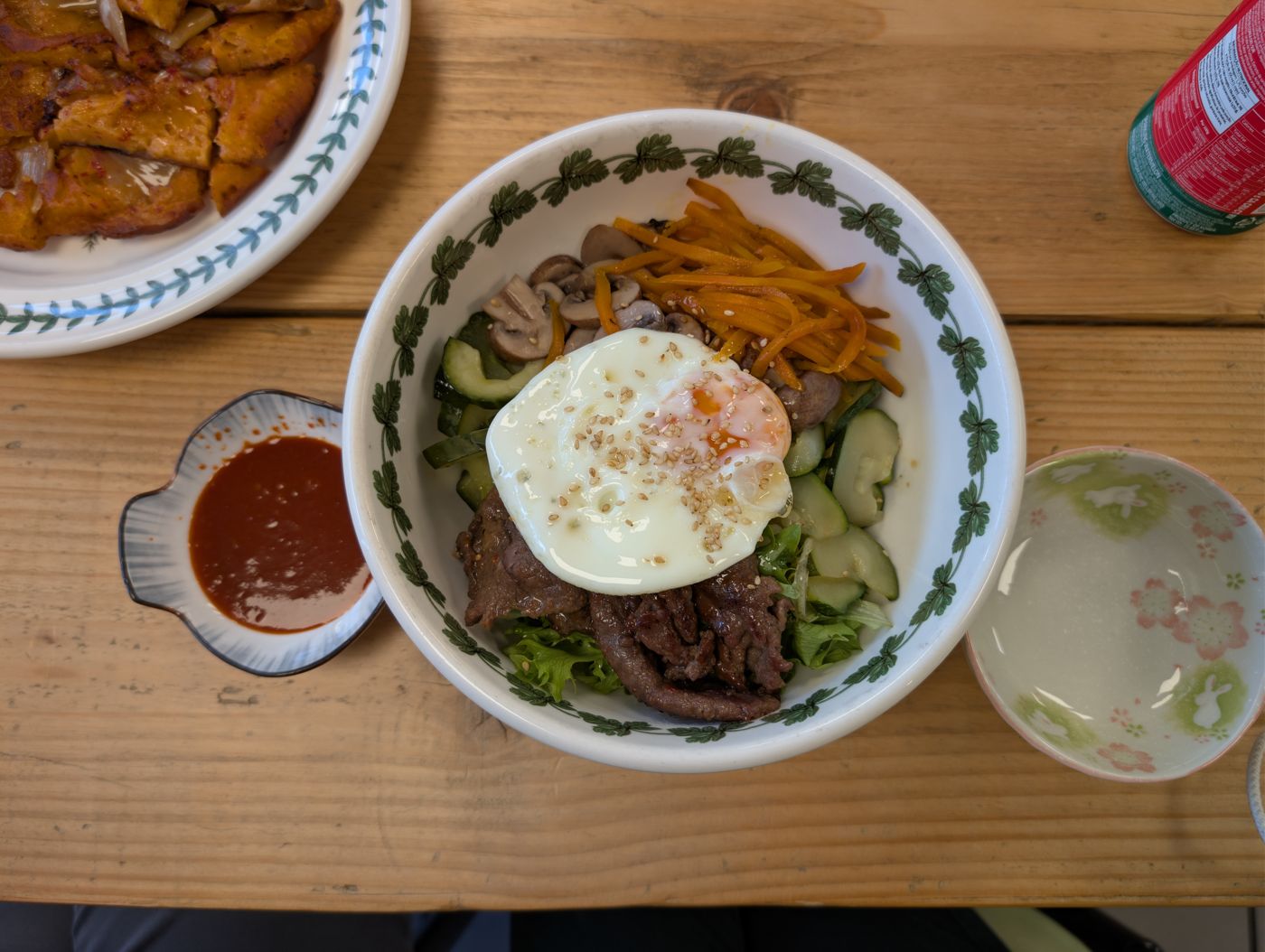 Bibimbap (Mixed Rice with Namul)비빔밥A bowl of rice topped with seasoned namul, beef and egg, mixed at the table with chili paste and sesame oil — banchan gathered into a single meal.
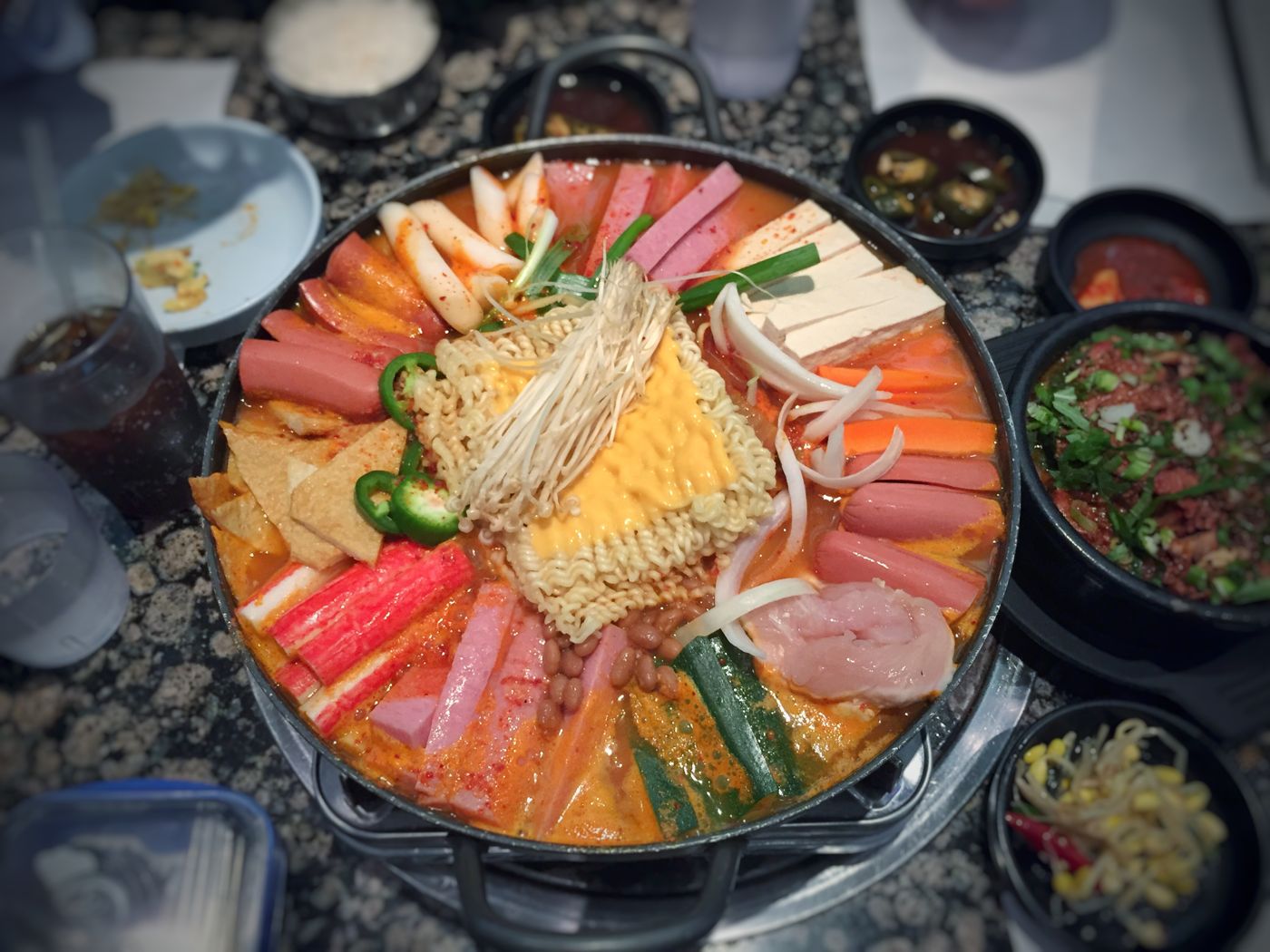 Budae Jjigae (Army Base Stew)부대찌개Ham, sausages and canned beans simmered with kimchi, tofu and a gochujang-chili broth, usually finished with instant noodles — a postwar stew born around US Army bases.
- Bugeo Muchim (Shredded Dried Pollock Salad)북어무침Shredded dried pollock softened with a splash of water and tossed in a sweet, spicy gochujang dressing — a chewy, protein-rich banchan that keeps for days.
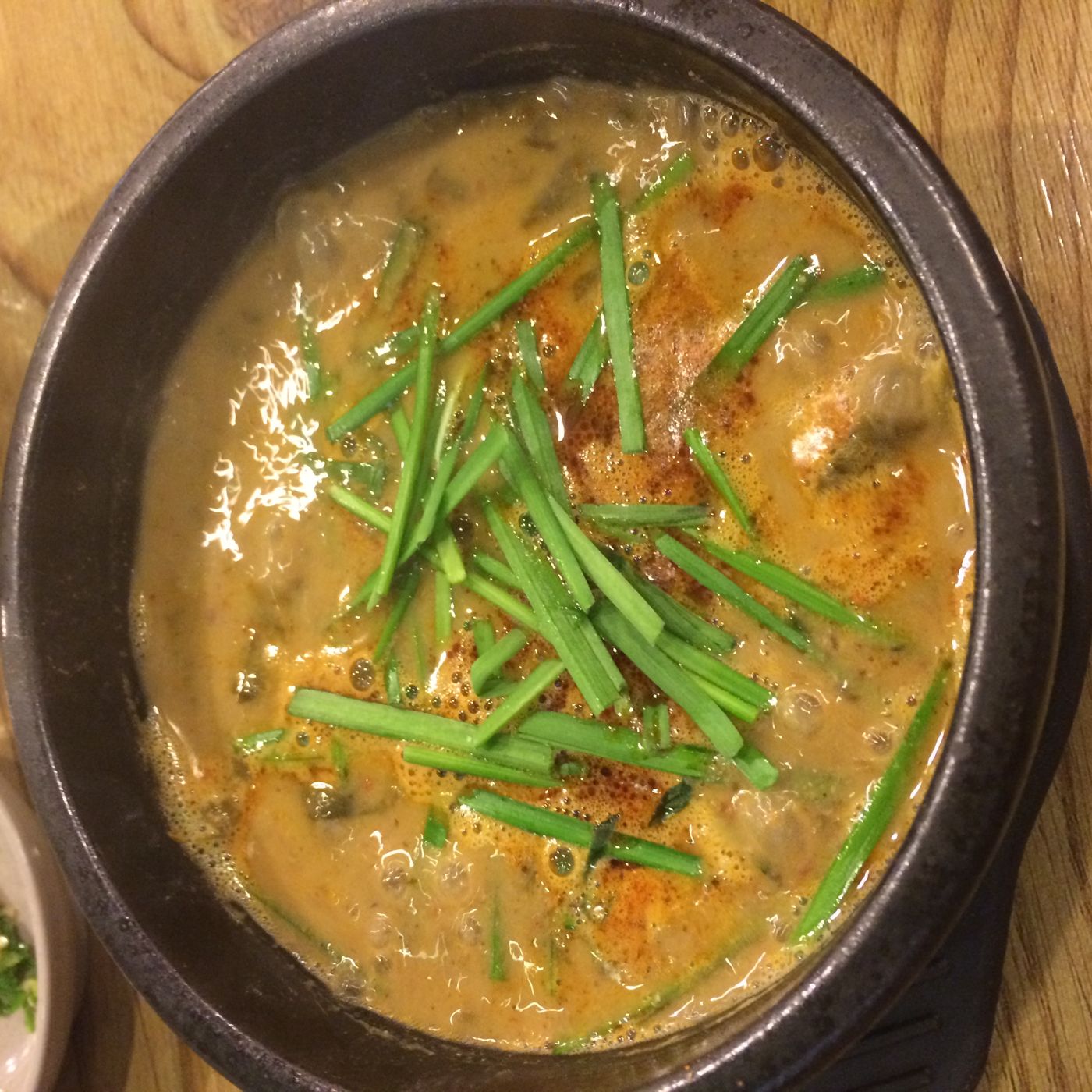 Chueotang (Loach Soup)추어탕Pond loaches simmered and ground into a thick, earthy soup with dried greens, doenjang and perilla, sharpened with chopi pepper — an autumn harvest dish turned year-round restorative.
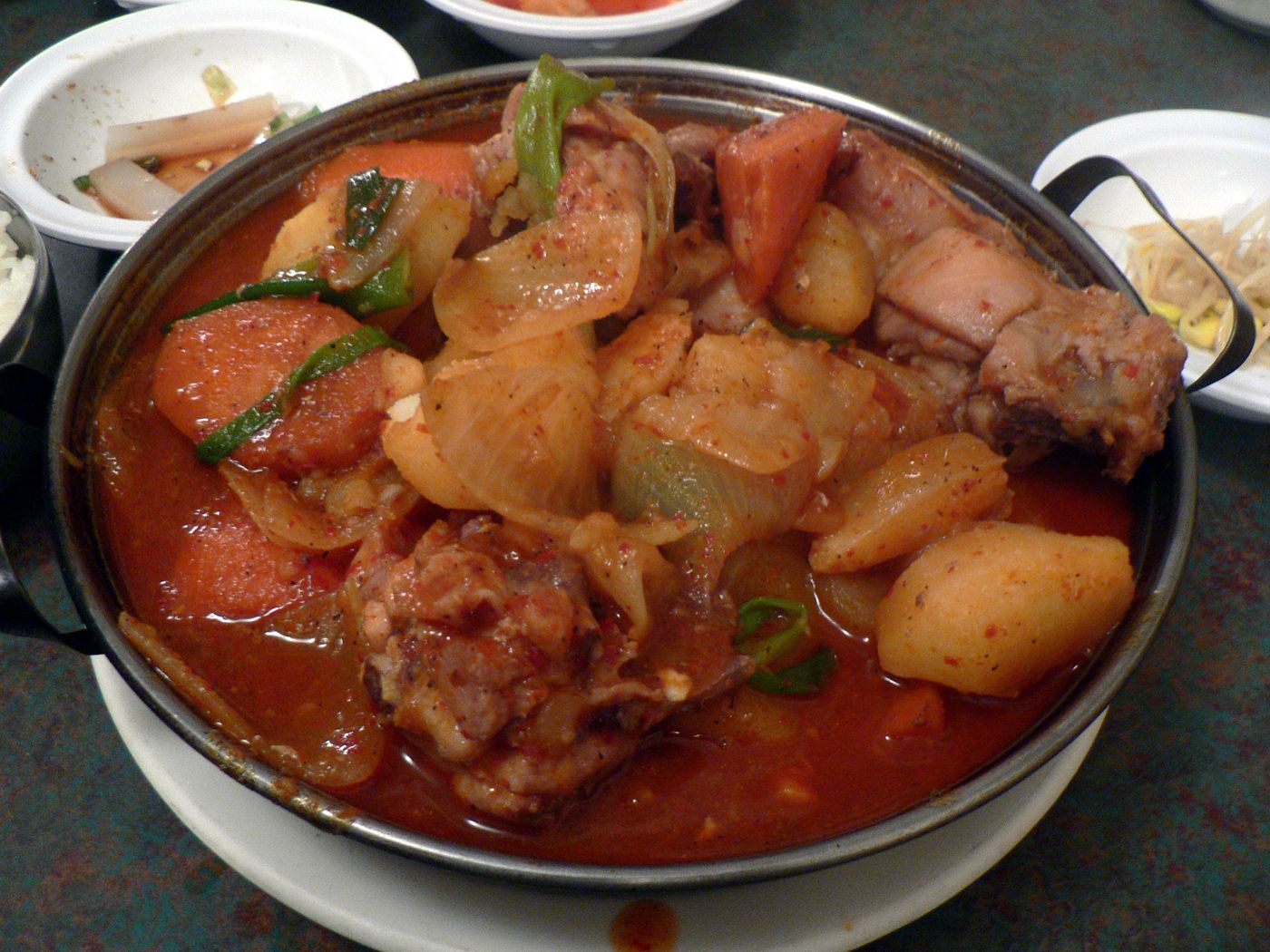 Dak-bokkeumtang (Spicy Braised Chicken)닭볶음탕Bone-in chicken and potatoes braised in a red chili sauce until it thickens and clings — long known as dakdoritang, a name whose origin is still debated.
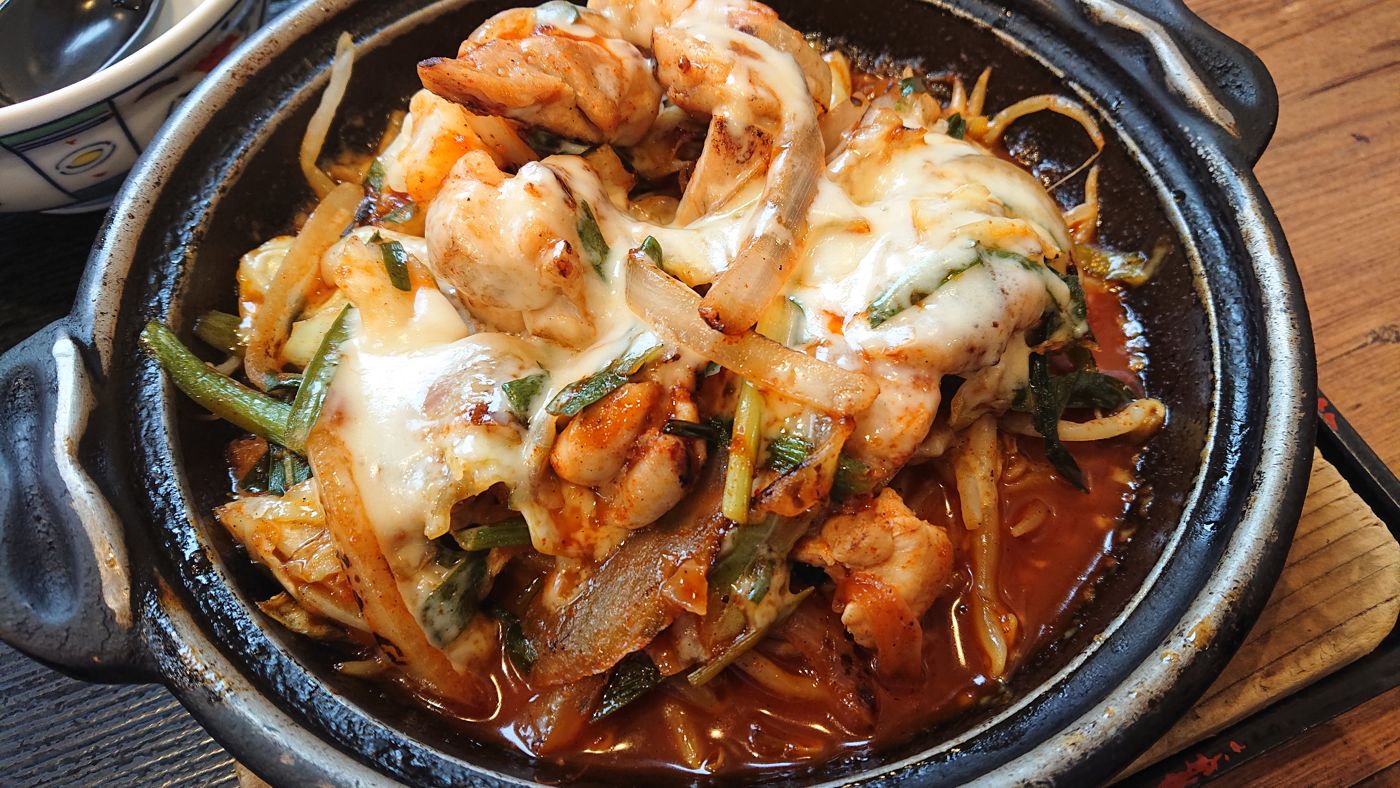 Dakgalbi (Spicy Stir-Fried Chicken)닭갈비Chicken marinated in a fiery gochujang sauce and cooked on a big iron pan with cabbage, sweet potato and rice cakes — Chuncheon's signature dish, finished with fried rice.
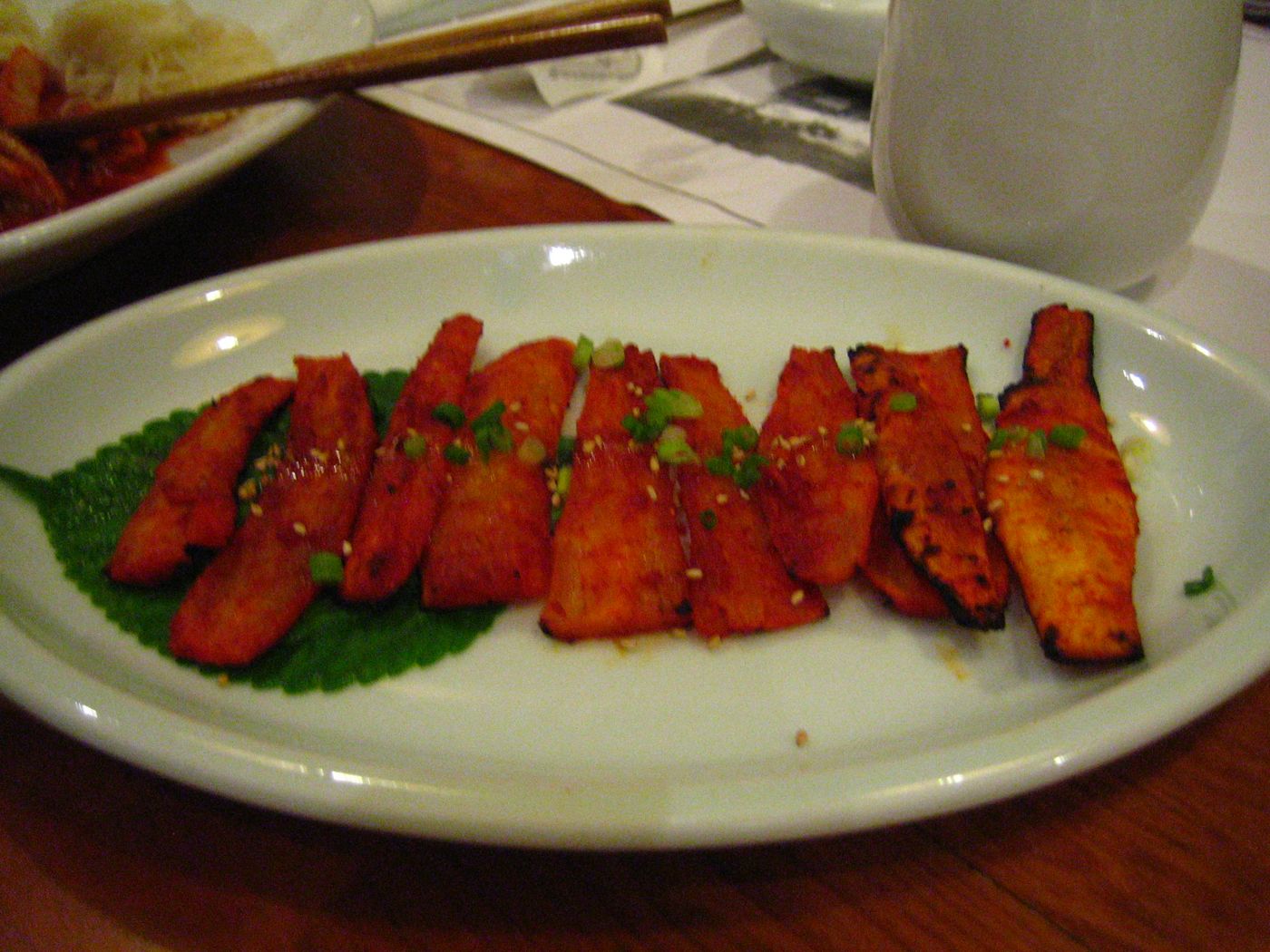 Deodeok Gui (Grilled Seasoned Deodeok)더덕구이Deodeok root pounded flat, brushed with sesame oil and soy, then grilled under a sweet gochujang glaze — chewy, fragrant and slightly bitter, often called meat from the mountains.
- Dongtae-jjigae (Frozen Pollack Stew)동태찌개A spicy, clean-tasting stew of frozen Alaska pollack with radish, tofu and fresh greens in a gochugaru-and-jang broth — a winter staple at the Korean table.
- Doraji Muchim (Spicy Raw Bellflower Root Salad)도라지무침Raw bellflower root, shredded and salt-rubbed to tame its bitterness, then dressed with gochugaru, gochujang, vinegar and sugar — crunchy, sweet, sour and hot.
- Dubu Gangjeong (Crispy Glazed Tofu)두부강정Cubes of tofu coated in starch, fried until crisp and tossed in a sticky soy-gochujang glaze — a sweet, savory banchan built on the fried-chicken gangjeong idea.
- Dureup Muchim (Seasoned Aralia Shoots)두릅무침Tender aralia tree shoots blanched briefly and dressed with a tangy gochujang sauce — a fleeting mid-spring delicacy with a resinous, slightly bitter edge.
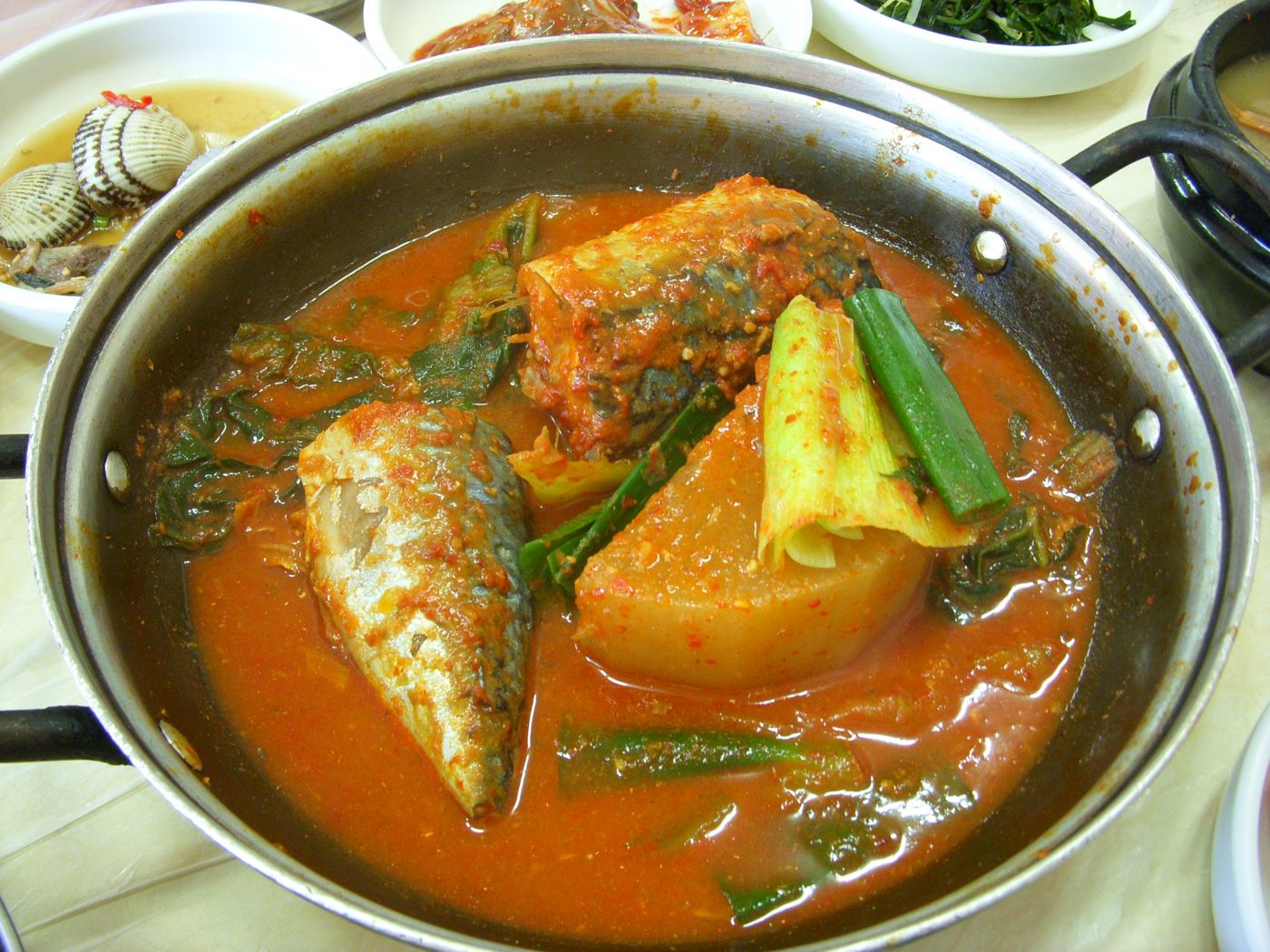 Godeungeo Jorim고등어조림Mackerel braised on a bed of Korean radish in a spicy soy and chili sauce — a warming, rice-friendly dish where the radish is often the best part.
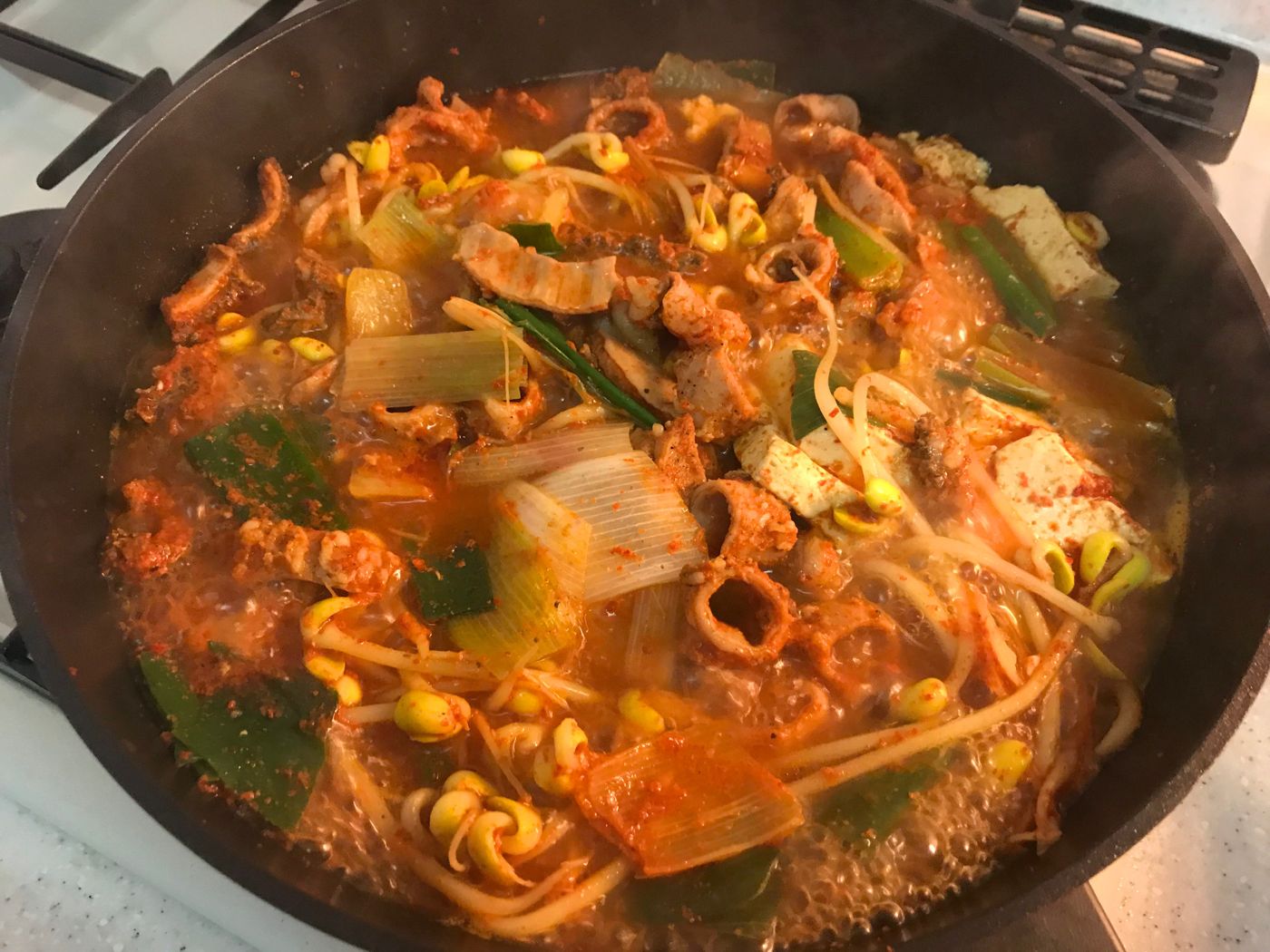 Gopchang Jeongol (Beef Intestine Hot Pot)곱창전골Cleaned beef small intestine and tripe simmered at the table with vegetables, mushrooms and glass noodles in a spicy broth — a rich, chewy hot pot for cold nights.
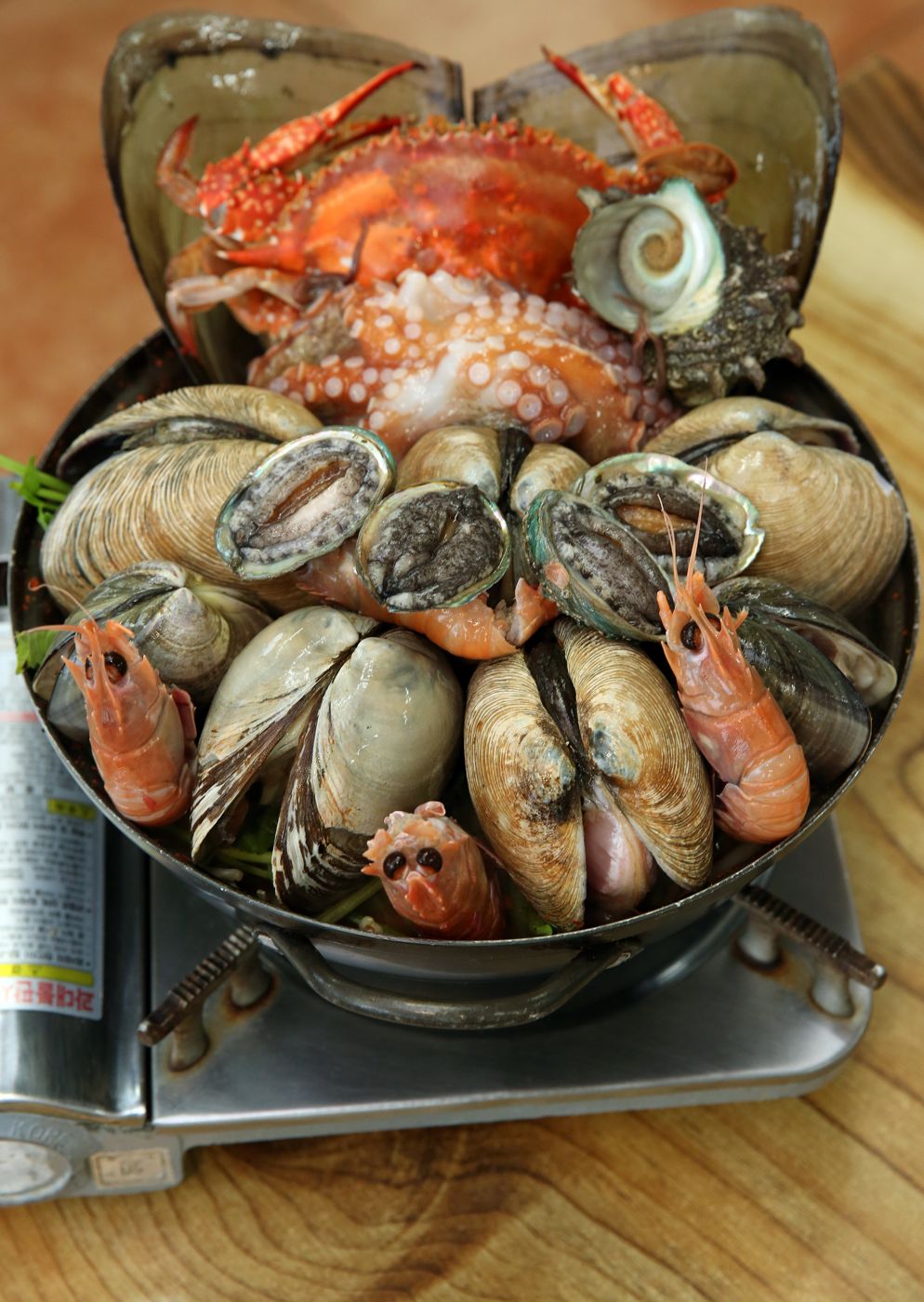 Haemul Tang (Spicy Seafood Hot Pot)해물탕Blue crab, octopus, shrimp, clams and sea squirt simmered with radish and water dropwort in a bright, spicy gochujang broth — a seafood feast in one pot.
- Spicy Skate Salad홍어회무침Strips of raw or lightly fermented skate, firmed in vinegar and tossed with minari, radish and a sweet-sour gochujang dressing — Jeolla's feast-day salad.
- Hwangtae Gui (Grilled Seasoned Dried Pollock)황태구이Winter-cured dried pollock softened, opened flat and grilled with a glossy gochujang glaze — tender, savory and a specialty of Gangwon's mountain drying yards.
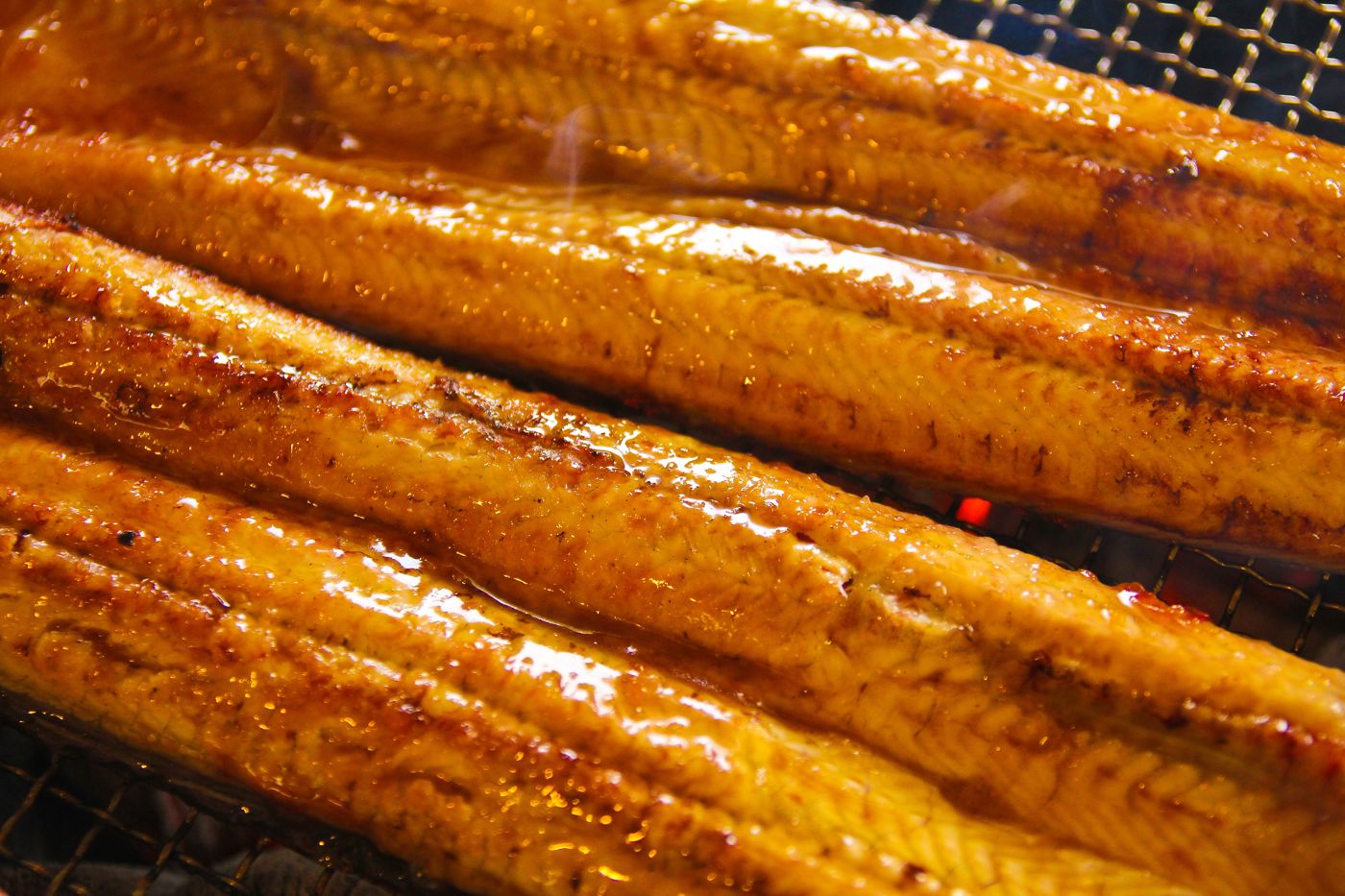 Jangeo-gui (Grilled Eel)장어구이Freshwater eel grilled over a flame, then brushed with a sweet-savory soy and gochujang glaze: a rich summer stamina dish tied to Gochang's pungcheon eel.
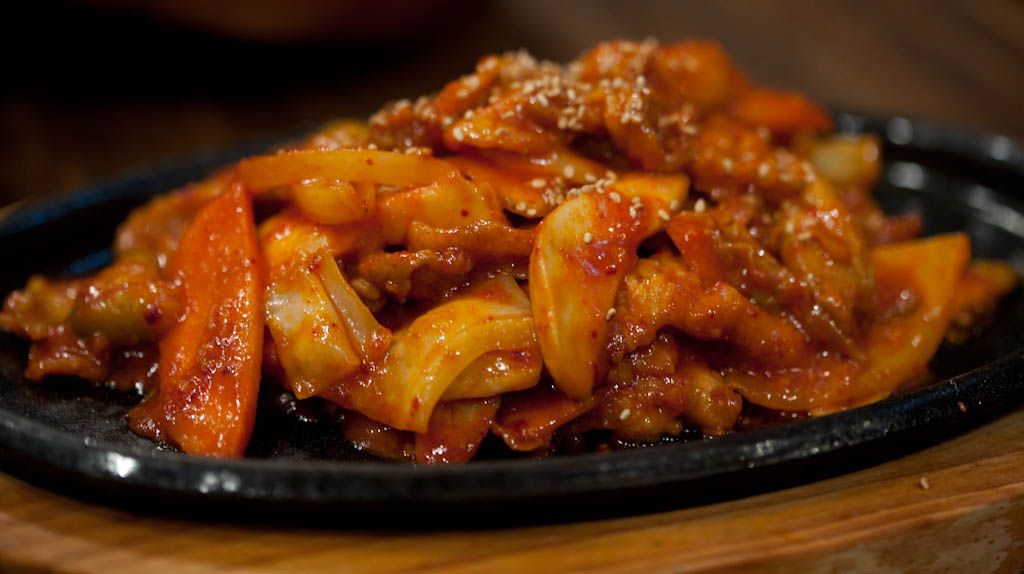 Jeyuk Bokkeum (Spicy Stir-Fried Pork)제육볶음Thin slices of pork marinated in gochujang, garlic and ginger, then stir-fried with onion and green onion — a hearty, spicy staple of home and diner tables.
- Jinmichae Bokkeum진미채볶음Seasoned dried squid shreds tossed in a sweet, spicy gochujang glaze — chewy, glossy and one of the most familiar keeping banchan.
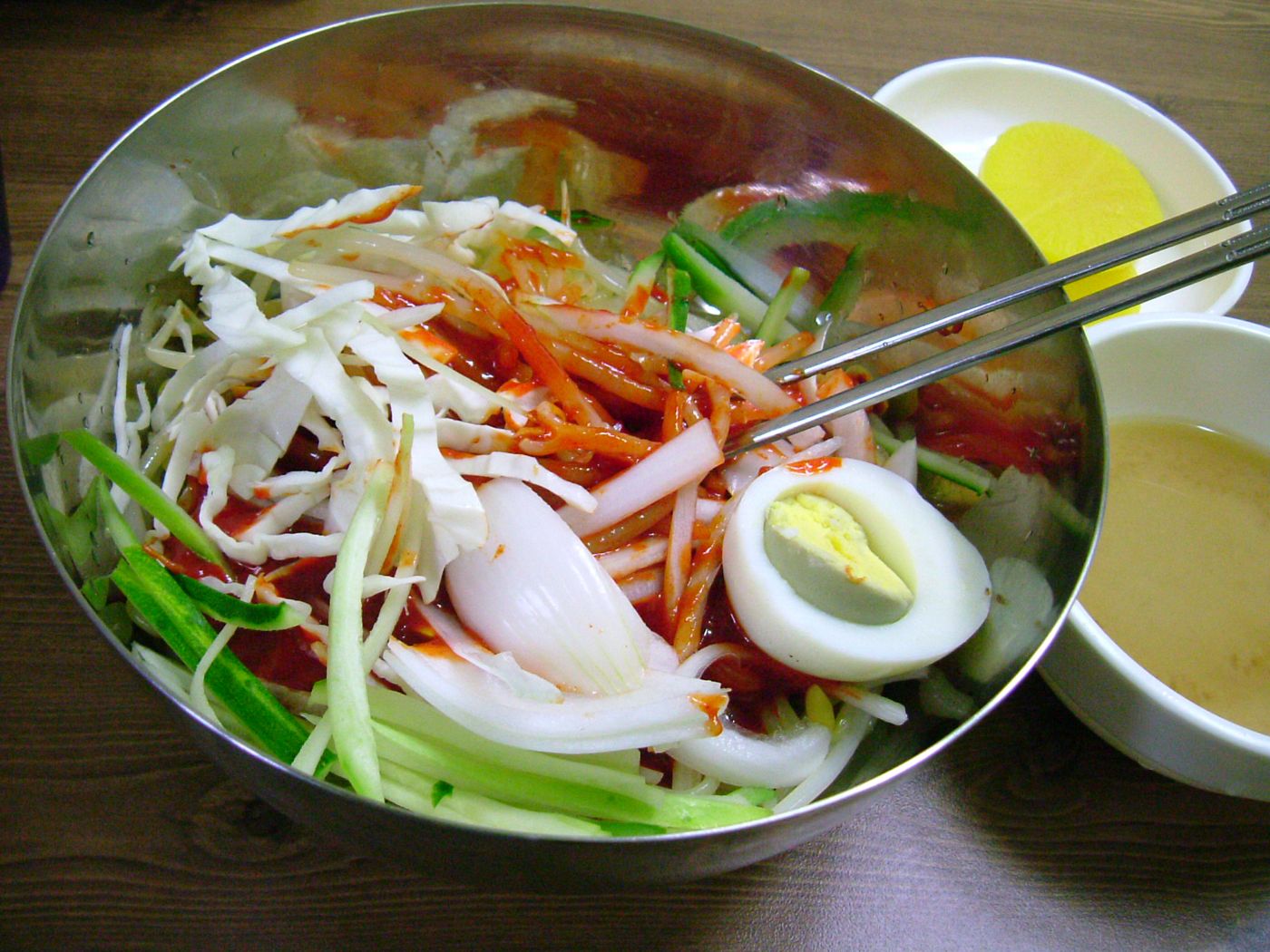 Jjolmyeon (Chewy Spicy Noodles)쫄면Thick, rubbery-chewy wheat noodles tossed cold in a sweet-sour gochujang sauce with cabbage, sprouts and egg — a snack-bar classic invented in 1970s Incheon.
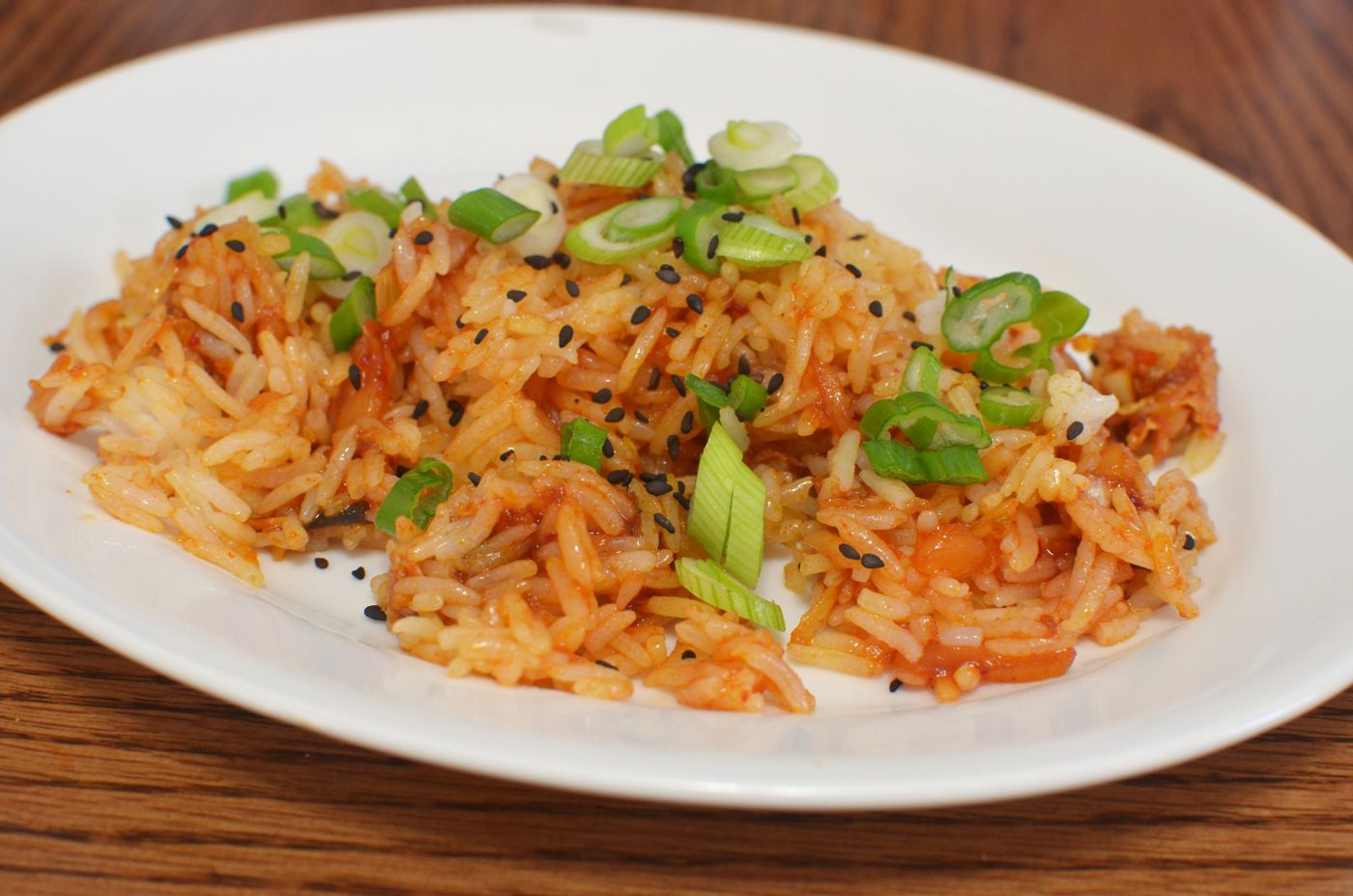 Kimchi-bokkeumbap (Kimchi Fried Rice)김치볶음밥Leftover rice stir-fried with sour, well-fermented kimchi and a little pork, usually topped with a fried egg — a home staple that spread with frying pans and cooking oil.
- Kodari Jorim (Braised Semi-Dried Pollock)코다리조림Half-dried Alaska pollock braised with radish in a sweet, spicy soy-gochugaru sauce until the chewy flesh soaks up the glaze.
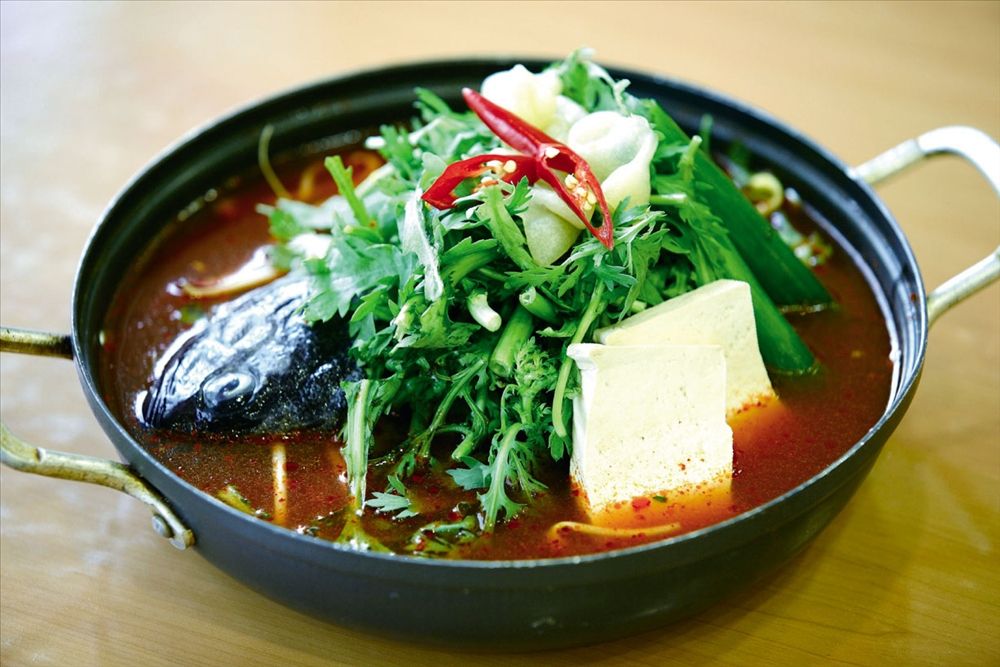 Maeuntang (Spicy Fish Stew)매운탕Fish — freshwater or sea — simmered with radish, tofu and fragrant greens in a fiery gochugaru and gochujang broth; the stew that follows sashimi and fills riverside restaurants.
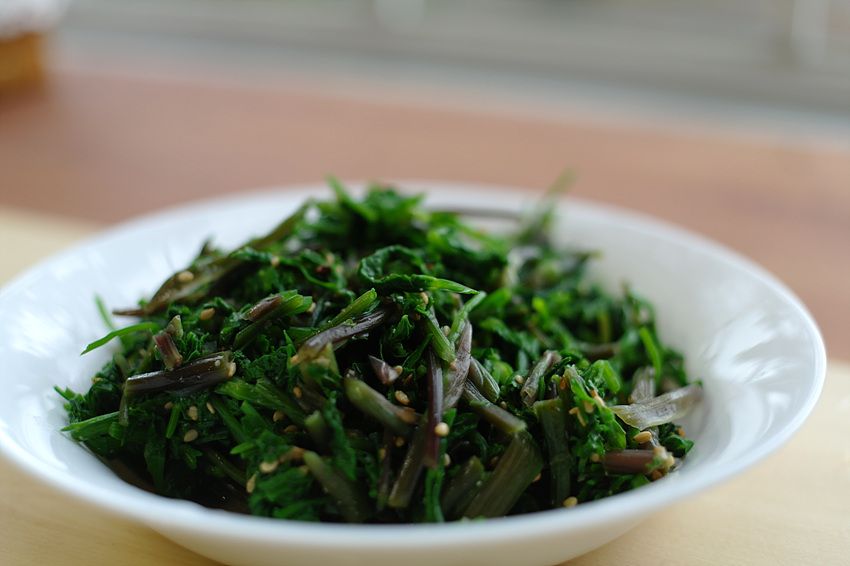 Minari Muchim미나리무침Korean water dropwort blanched for a few seconds and dressed with tangy gochujang and vinegar — fresh, herbal and very much a taste of spring.
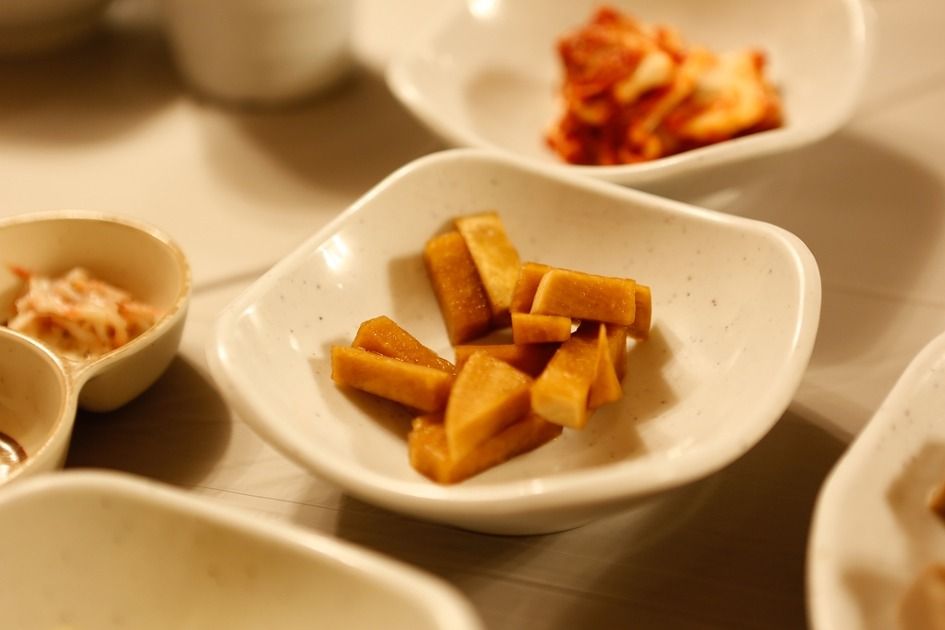 Chili Paste–Cured Radish무장아찌Korean radish salted, dried until leathery and buried in gochujang for weeks, then sliced thin with sesame oil — chewy, savory and deeply seasoned.
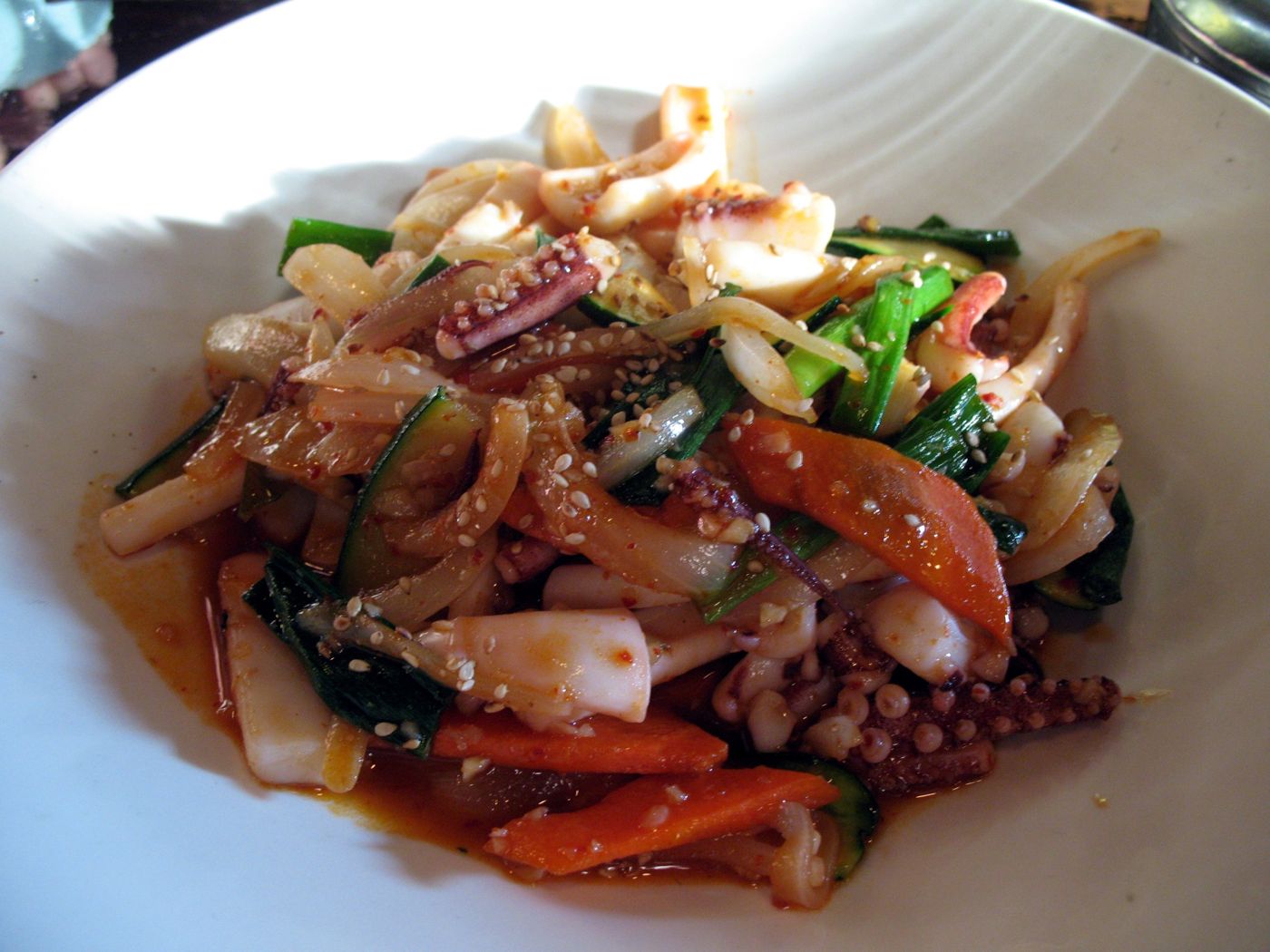 Ojingeo Bokkeum (Spicy Stir-Fried Squid)오징어볶음Scored squid stir-fried over high heat with onion, cabbage and a fiery gochujang-gochugaru sauce — tender, smoky and spicy, eaten with plenty of rice.
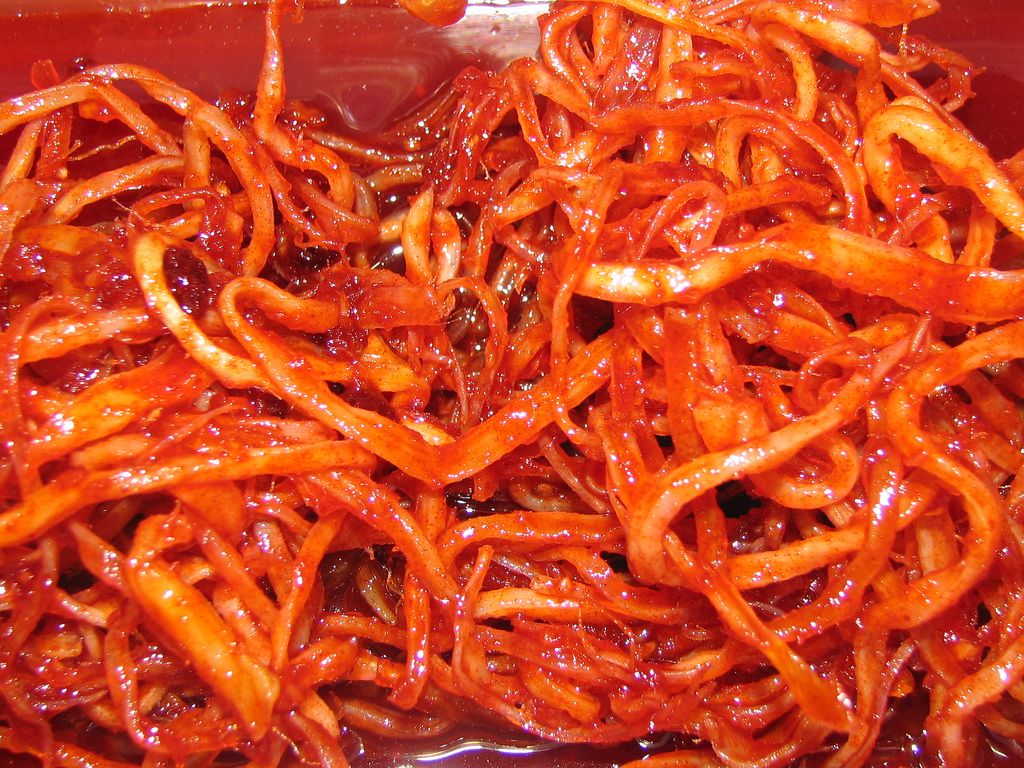 Ojingeochae Muchim오징어채무침Chewy shredded dried squid tossed raw in a glossy gochujang and syrup sauce — sweet, spicy and savory, and one of the best-keeping banchan.
- Saengtae Jjigae (Fresh Pollock Stew)생태찌개Chunks of fresh, never-frozen pollock simmered with radish, tofu and a red chili broth, finished with water dropwort and crown daisy — a winter stew prized for its clean, bracing taste.
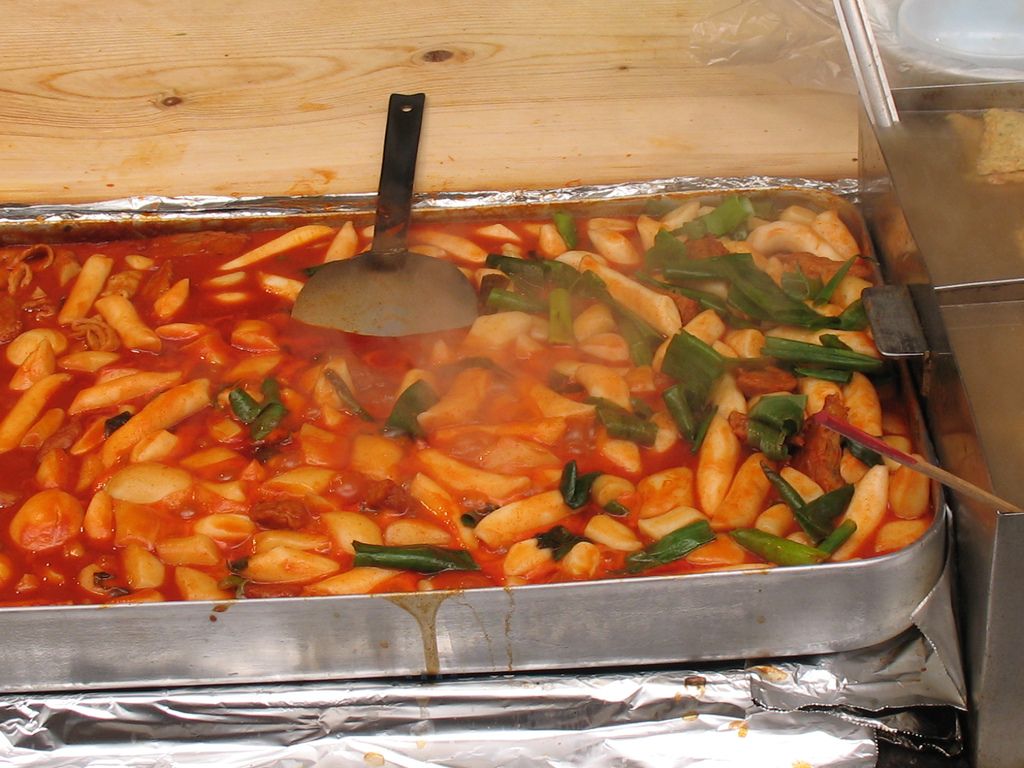 Tteokbokki (Spicy Stir-fried Rice Cakes)떡볶이Chewy rice cakes simmered in a sweet, fiery gochujang sauce with fish cake and green onion — a postwar street snack with roots in a refined soy-sauce court dish.
Sources
- 01고추장 (Gochujang) — Encyclopedia of Korean Culture
- 02고추 (Red pepper) — Encyclopedia of Korean Culture
- 03Knowledge, beliefs and practices related to jang making in the Republic of Korea — UNESCO Intangible Cultural Heritage
- 04Korean Food Composition Table (National Standard Food Composition Table) search — Rural Development Administration
- 05Sodium in Your Diet — U.S. Food and Drug Administration