Techniques
Blanching and Seasoning Namul
나물 데치기와 무치기
The two-step method behind dozens of Korean vegetable side dishes: a quick blanch, a firm squeeze, then seasoning worked in by hand.
Namul is the Korean word for edible greens, shoots and roots gathered from fields and mountains, and for the seasoned side dishes made from them. The Encyclopedia of Korean Culture distinguishes raw preparations (saengchae) from cooked ones (sukchae), and notes that cooked namul are by far the more common on the everyday table. Most cooked namul are made one of two ways: stir-fried in a little oil, or blanched and then dressed with seasoning. This page covers the second method, which is the backbone of dishes like sigeumchi-namul and kongnamul-muchim.
Step 1: Prepare and blanch
Trim roots and tough stems, then wash the vegetables well; spinach in particular carries grit near the crown. Bring a large pot of water to a rolling boil and salt it lightly.
- Use plenty of water. Home-preservation guidance from the National Center for Home Food Preservation notes that the water should come back to the boil within about a minute of adding vegetables; if it takes longer, the pot is overloaded. The same logic applies to namul: a crowded pot stews the greens instead of blanching them.
- Keep it brief. Tender leaves such as spinach need only a short dip, often well under a minute, until they wilt and turn bright green. Sturdier vegetables such as soybean sprouts, bellflower root (doraji) or rehydrated bracken (gosari) need longer to lose their rawness. Blanching times published for freezing (about two minutes for most greens) are deliberately thorough; namul cooks usually stop sooner to keep some bite.
- Why blanch at all? Brief heating inactivates the enzymes that dull color and flavor, rinses away surface soil and microbes, and softens the vegetable so it can be squeezed and seasoned.
Step 2: Cool quickly
Lift the greens straight into cold water to stop the cooking. Preservation guides recommend cooling for roughly as long as the vegetables were blanched. Rinsing also removes any lingering grit and, for some wild greens, a little bitterness.
Step 3: Squeeze firmly
Gather the cooled vegetables into small handfuls and press out as much water as you can. The encyclopedia makes the reason plain: excess water dilutes the seasoning and leaves the dish watery. Squeezing in portions is easier than wringing one large ball, and it keeps leaves from tearing. Long greens are often cut into bite-size lengths after squeezing.
Step 4: Season by hand
The Korean verb muchida means to mix or dress, and namul is traditionally seasoned with the fingertips so the dressing reaches every strand. A typical base is soy sauce (or salt), minced garlic and green onion, finished with sesame oil and toasted sesame seeds. Salt is often chosen over soy sauce when a cook wants to keep a vegetable's natural color bright. Some namul use doenjang, gochujang, perilla oil or a pinch of gochugaru instead. The encyclopedia notes that vinegar is generally not used in cooked namul, and that older recipes sometimes used ground pine nuts where sesame is used today.
Season lightly, taste, and adjust; it is easier to add salt than to take it away. Many cooks add the sesame oil last so it coats rather than soaks in.
The cook's hand
Koreans have a word for the flavor that comes from a cook's skill: son-mat (손맛), literally “hand taste.” Standard Korean dictionaries define it as the taste that arises from the handiwork of the person preparing food, and the word is closely tied to home cooking. The Korean Food Promotion Institute makes a similar point about namul specifically, observing that the same dish varies with the skill of whoever makes it. Because namul has so few ingredients, small choices (how long to blanch, how hard to squeeze, how much garlic) show up clearly on the plate.
Related techniques and dishes
- Blanched and dressed: sigeumchi-namul, kongnamul-muchim, sukju-namul, chwinamul-muchim.
- Stir-fried namul: sturdier or dried vegetables such as gosari-namul and doraji-namul are often softened and then sautéed in oil; see stir-frying.
- Raw saengchae and muchim: musaengchae, oi-muchim and buchu-muchim skip the blanch and are dressed raw, often with gochugaru and a touch of vinegar.
Dried namul and the seasons
Before refrigeration, greens were dried in season and rehydrated later as mungnamul, so namul could be eaten year-round. The encyclopedia records the custom of eating several kinds of dried namul at Jeongwol Daeboreum, the first full moon of the lunar year, traditionally believed to help people weather the coming summer heat. Plates of two or three namul, arranged so their colors complement one another, remain a familiar part of the Korean table.
Dishes using this technique
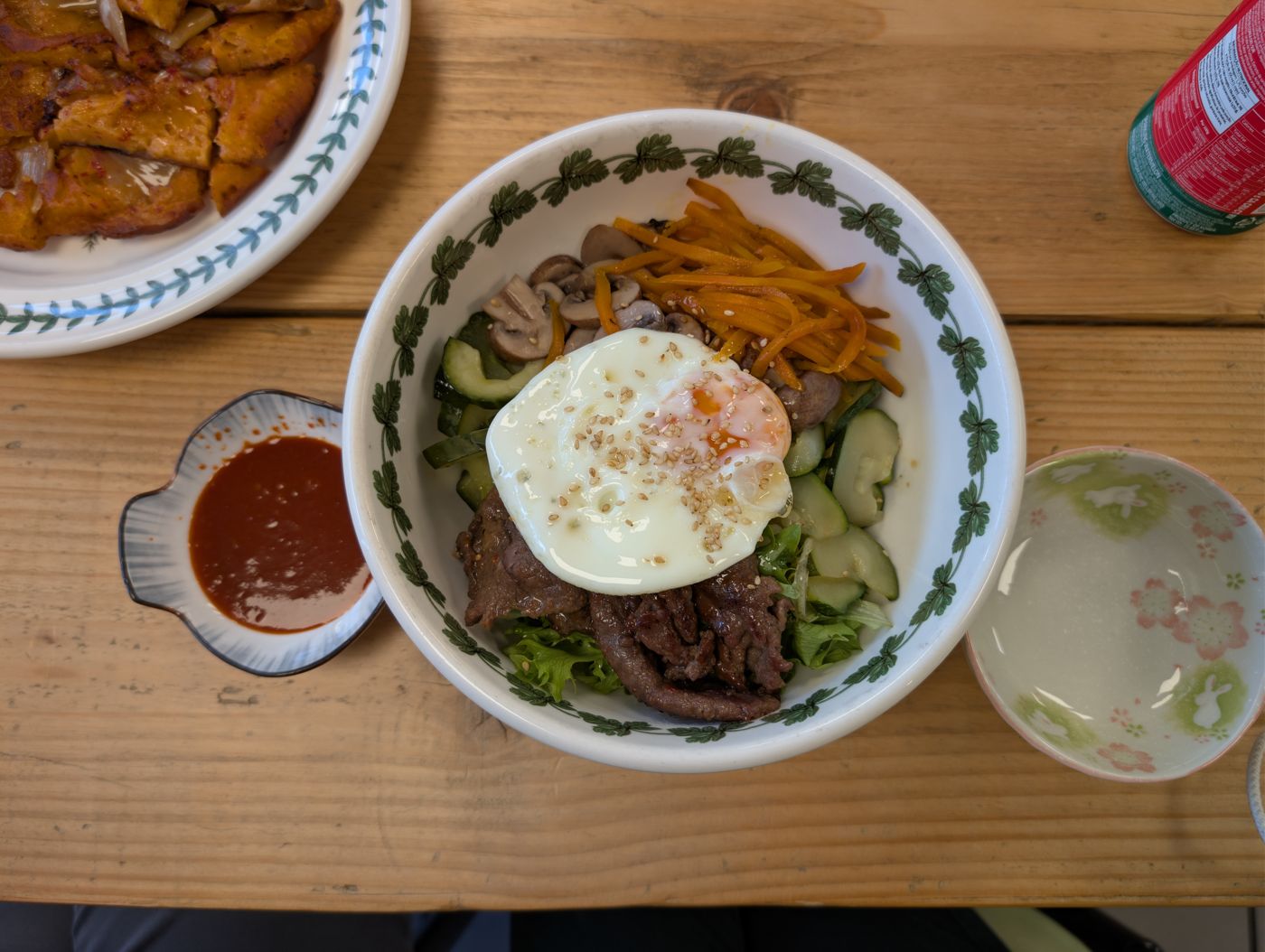 Bibimbap (Mixed Rice with Namul)비빔밥A bowl of rice topped with seasoned namul, beef and egg, mixed at the table with chili paste and sesame oil — banchan gathered into a single meal.
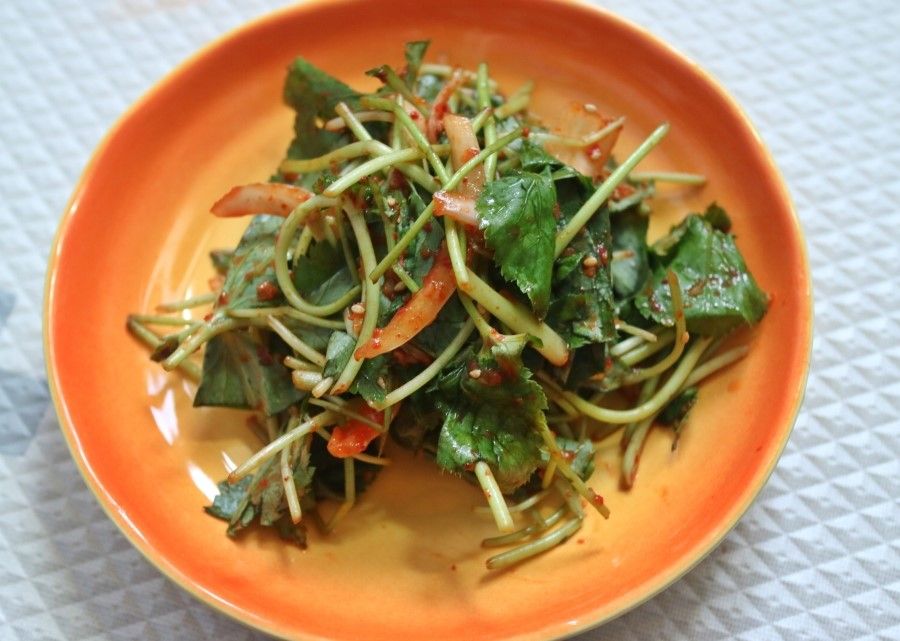 Chamnamul Muchim (Seasoned Chamnamul)참나물무침Tender chamnamul blanched for seconds and dressed with soy sauce, garlic and sesame oil — a fresh, celery-scented spring namul.
- Chwinamul Muchim취나물무침Aster scaber, a fragrant mountain green, blanched and dressed with soup soy sauce or doenjang and sesame oil — a taste of Korean spring.
- Doraji Namul도라지나물Shredded bellflower root rubbed with salt to tame its bitterness, then gently stir-fried — the ivory-white member of the three-colored namul.
- Dureup Muchim (Seasoned Aralia Shoots)두릅무침Tender aralia tree shoots blanched briefly and dressed with a tangy gochujang sauce — a fleeting mid-spring delicacy with a resinous, slightly bitter edge.
- Gaji Namul가지나물Eggplant steamed until silky, torn into strips and dressed with soy sauce, garlic and sesame — a soft, savory summer namul.
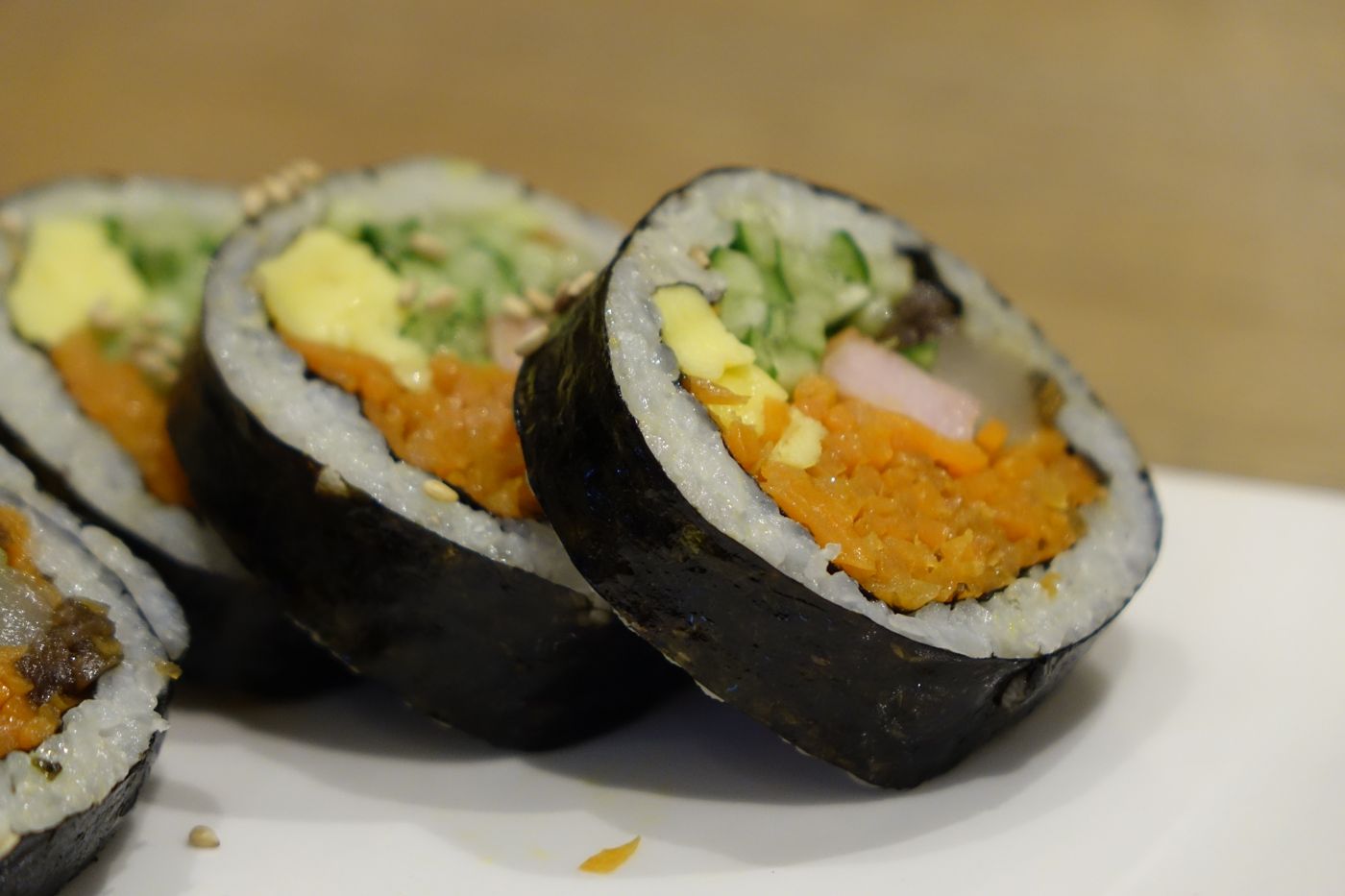 Gimbap (Seaweed Rice Rolls)김밥Rice seasoned with sesame oil and salt, rolled in laver around strips of spinach, egg, carrot and pickled radish, then sliced — Korea's classic picnic and lunchbox food.
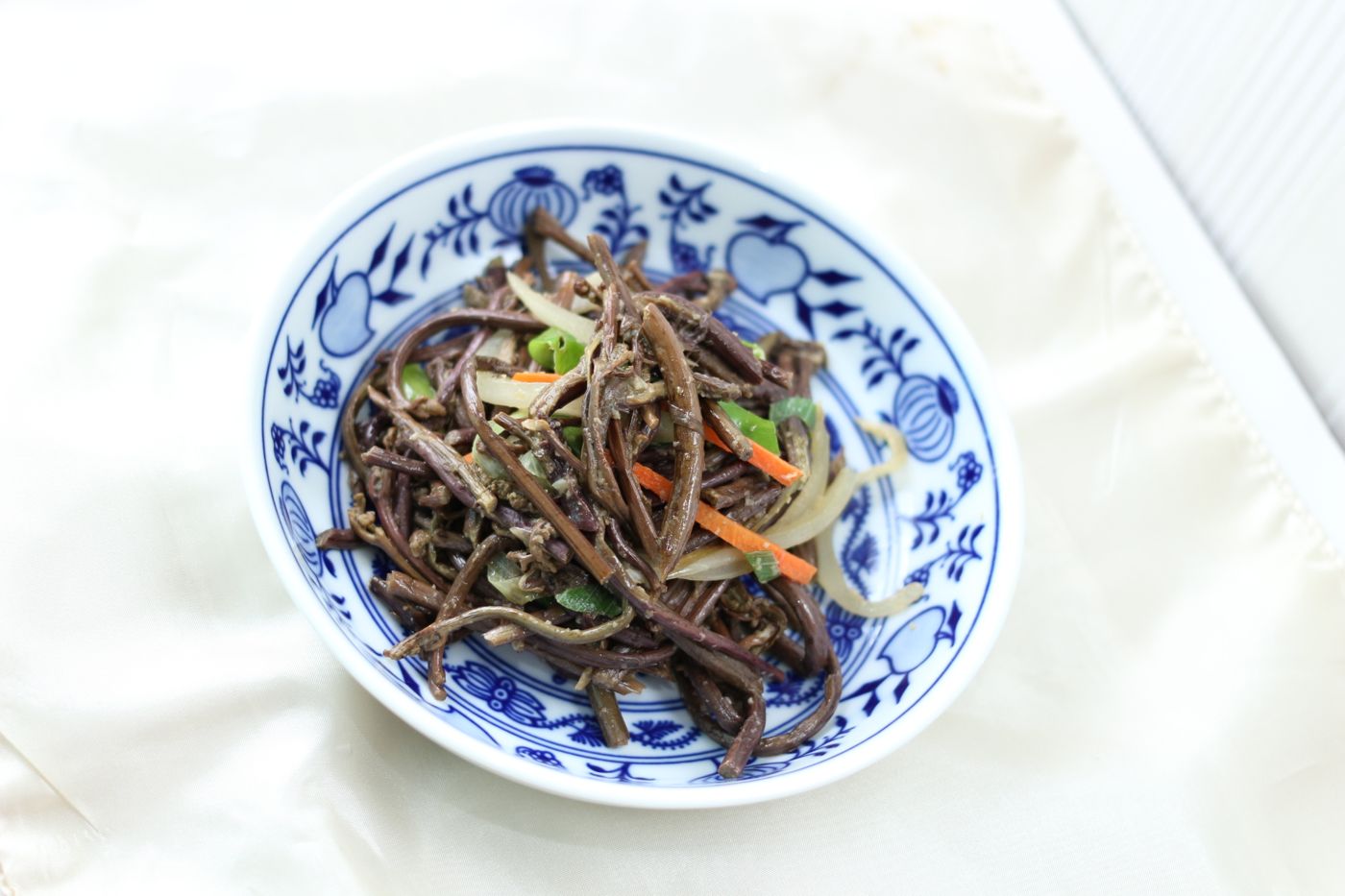 Gosari Namul고사리나물Dried bracken fern soaked, boiled and slowly stir-fried with soup soy sauce, garlic and perilla oil — chewy, earthy and central to holiday tables.
 Japchae (Glass Noodles with Vegetables)잡채Chewy sweet potato glass noodles tossed with stir-fried vegetables, mushrooms and beef in soy sauce and sesame oil — Korea's essential celebration dish.
- Kkaennip Namul (Seasoned Perilla Leaves)깻잎나물Young perilla leaves and tender tips, blanched and sautéed in perilla oil with garlic and soup soy sauce — a soft, deeply aromatic summer namul.
 Kongnamul Muchim콩나물무침Soybean sprouts cooked under a lid until just tender, then tossed with garlic, green onion and sesame oil — crisp, nutty and on tables across Korea.
- Mareun Hobak Namul (Dried Squash Namul)호박고지나물Sun-dried strips of young squash soaked and stir-fried with perilla oil and soy sauce — chewy and sweet, one of the stored "old greens" eaten on the first full moon.
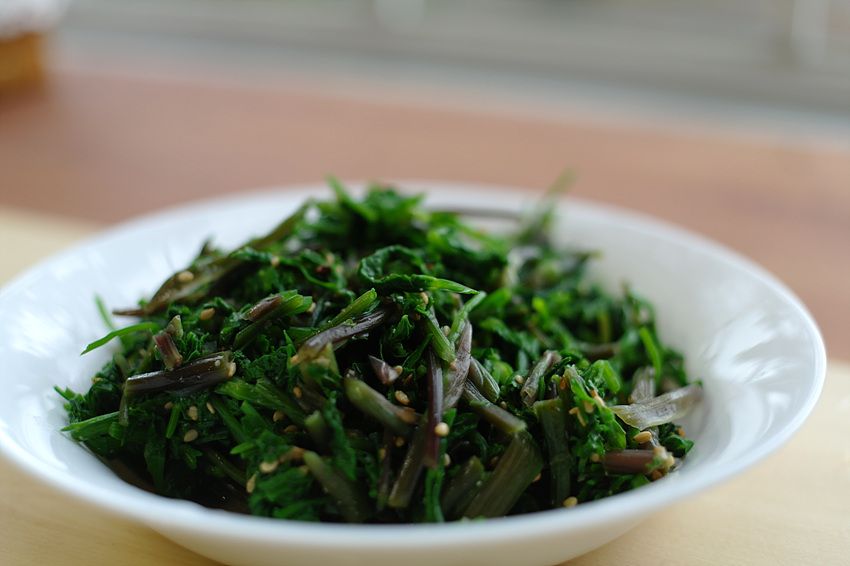 Minari Muchim미나리무침Korean water dropwort blanched for a few seconds and dressed with tangy gochujang and vinegar — fresh, herbal and very much a taste of spring.
- Mu Namul (Stir-Fried Radish Namul)무나물Julienned Korean radish stir-fried in perilla oil, then steamed in a splash of water until sweet and translucent — a soft, mild namul for rites and everyday rice.
- Naengi Muchim (Seasoned Shepherd's Purse)냉이무침Young shepherd's purse, roots and all, blanched for seconds and dressed with doenjang, garlic and sesame — the earthy, faintly bitter taste of early spring.
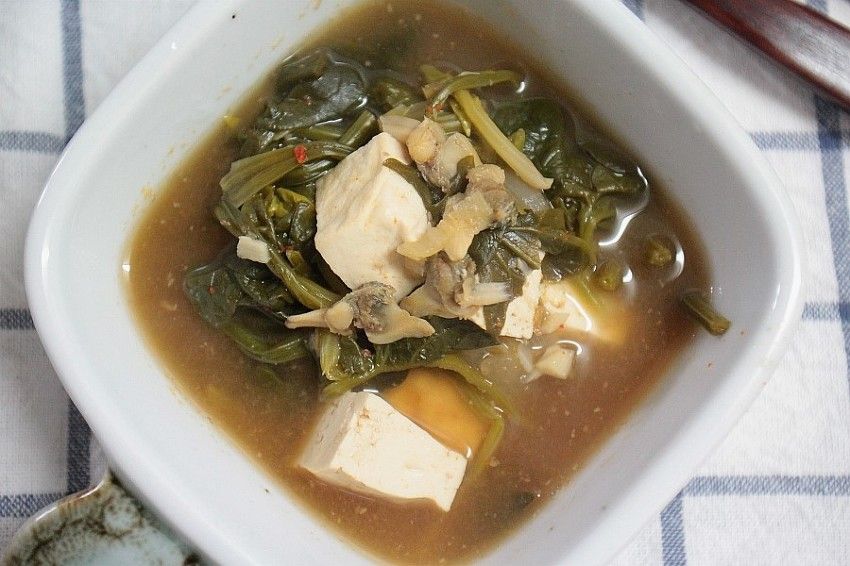 Sigeumchi Doenjang Guk (Spinach Soybean-Paste Soup)시금치된장국Tender spinach simmered in an anchovy broth seasoned with doenjang — a mild, everyday soup that is at its sweetest in winter and early spring.
 Sigeumchi Namul시금치나물Spinach blanched for a few seconds, squeezed dry and dressed with garlic, soy sauce and sesame — one of the simplest and most familiar namul.
- Siraegi Namul시래기나물Dried radish greens soaked, simmered until tender and seasoned with doenjang and perilla or sesame oil — a deep, earthy winter namul.
- Ssukgat Muchim (Seasoned Crown Daisy)쑥갓무침Crown daisy greens blanched for a few seconds and dressed with soy sauce, a touch of vinegar, garlic and sesame — a soft namul with a distinctive herbal fragrance.
- Sukju Namul숙주나물Mung bean sprouts blanched briefly and dressed with salt, garlic and sesame oil — lighter, juicier and more delicate than soybean sprouts.
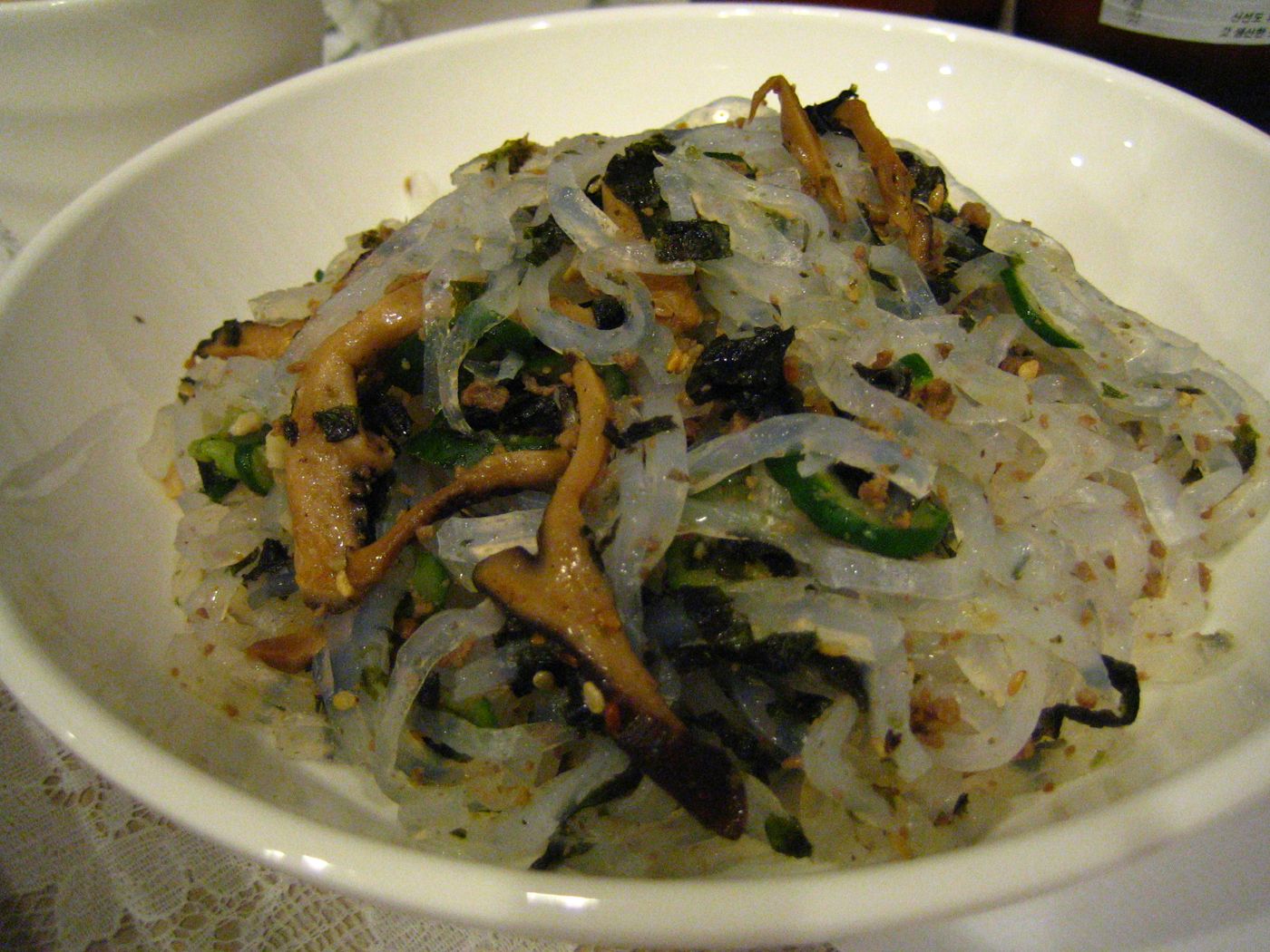 Tangpyeongchae탕평채Mung bean jelly tossed with beef, sprouts, water dropwort, egg and roasted gim in a soy-vinegar dressing — a classic spring dish named after a Joseon policy of political harmony.