Muchim · Dressed side dish 무침
Gim Muchim (Seasoned Laver Flakes)
김무침
Romanization: gim-muchim
Toasted laver crumbled into flakes and tossed with soy sauce, garlic, green onion and sesame oil — a savory, five-minute banchan that tastes of the sea.
- Serves
- 4
- Prep
- 10 min
- Cook
- 5 min
RegionJeolla
Jump to recipeRecipe
Ingredients · Serves 4
- 10 sheetsGim (laver), unseasoned sheetsabout 25 g
- 1 tbspSoy sauce
- 1 tbspWater
- 1 tspSugar
- 1 cloveGarlicfinely minced
- 1 tbspGreen onionfinely chopped
- 1 tspGochugaruoptional
- 1 tbspToasted sesame oil
- 1 tspToasted sesame seeds
Method
Technique: Yangnyeom: Seasoning Basics
Step 1: Toast the gim sheets one or two at a time in a dry skillet over medium-low heat, or pass them briefly over a gas flame, until they turn from purple-black to green and smell nutty. Do not let them scorch.
Step 2: Stack the sheets, slip them into a clean plastic bag and crush them with your hands into flakes about 1–2 cm across.
Step 3: In a small bowl, stir together the soy sauce, water, sugar, garlic, green onion and gochugaru until the sugar dissolves.
Step 4: Put the gim flakes in a mixing bowl, drizzle the sauce over them a little at a time and toss with chopsticks or fingertips so every flake is lightly coated rather than soggy.
Step 5: Add the sesame oil and sesame seeds, toss again and serve. Gim-muchim is best the day it is made; it softens as it sits.
Origin & History
Gim is the thin, dried sheet of red algae from the laver family (Bangiaceae) that Koreans have long eaten with rice. Old texts call it haeui ("sea garment"), after the way it is spread and dried in sheets, or jachae; the term haetae now seen on packaging is a Japanese usage. The Encyclopedia of Korean Folk Culture notes that haeui appears as a local product in the Gyeongsang-do jiriji of 1425 and as a tribute item sent to Ming China in the Sejong sillok of 1429, and the fifteenth-century gazetteer Dongguk yeoji seungnam lists twenty-one counties in Jeolla, Gyeongsang and Chungcheong as producers.
Cultivation followed by the middle of the Joseon period. Several coastal communities claim to have started it — Taeindo near Gwangyang, and islands off Wando — with stories of laver found growing on drifting branches or fish-weir screens. The south and west coasts of Jeolla remain the heart of gim farming today.
Most gim is brushed with oil and salt and toasted, or eaten plain with rice. Gim-muchim is the more home-style use: the National Institute of Korean Language's dictionary defines it as toasted gim broken into pieces and dressed with mixed seasonings, sometimes with water dropwort or stir-fried beef added. The Encyclopedia of Korean Culture notes that seasoned and fried gim dishes are a good way to use sheets that have lost their freshness by spring, and gim-muchim serves the same purpose for broken or slightly stale sheets.
Key Ingredients
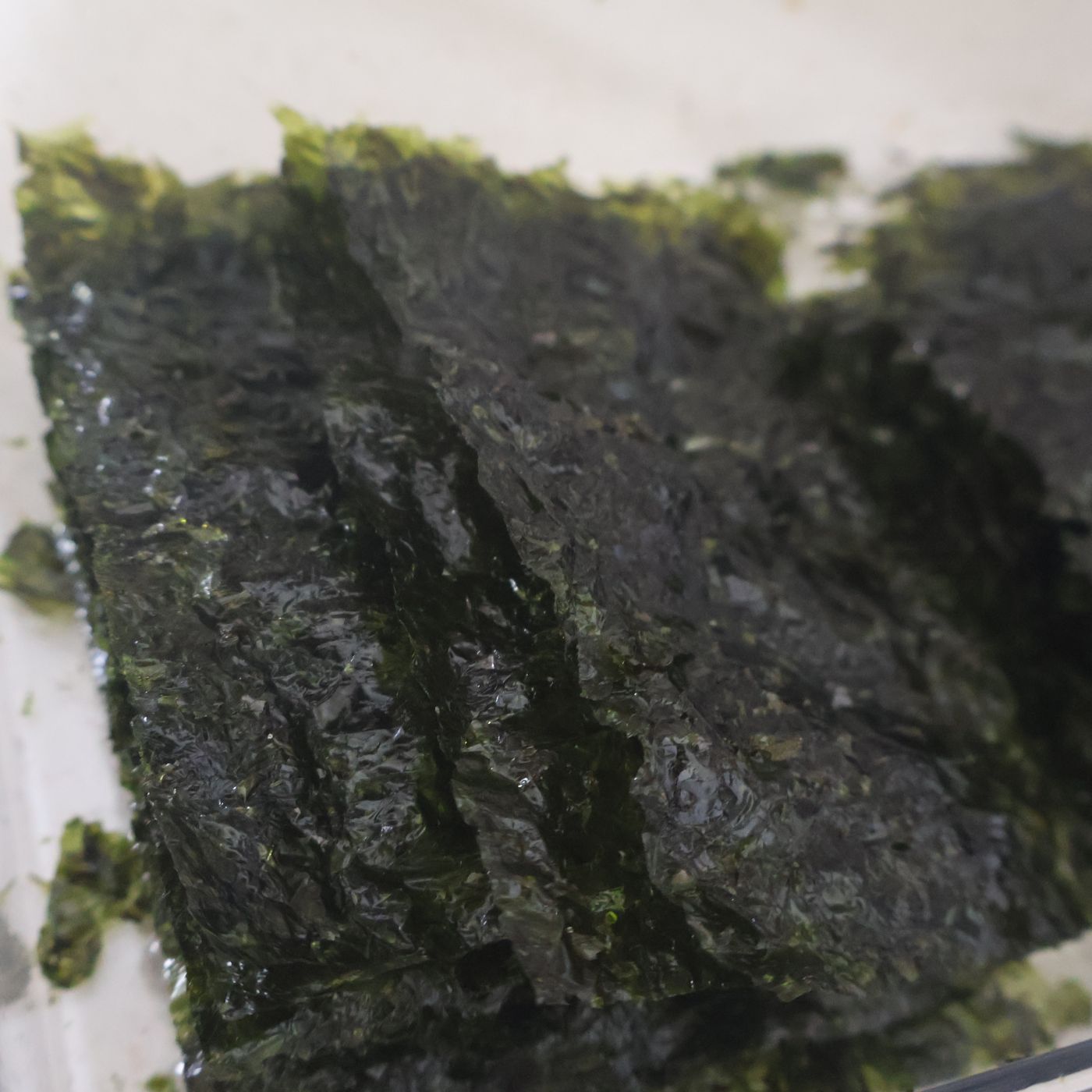 Laver (gim)김Paper-thin sheets of dried red seaweed, toasted until crisp and fragrant. Gim wraps gimbap and rice, crumbles over noodles and soups, and — brushed with oil and salt — becomes the everyday side dish gim-gui.
 Soy sauce간장Korean soy sauce, in two main kitchen forms: pale, salty guk-ganjang (soup soy sauce) brewed the traditional way from meju, and darker, sweeter jin-ganjang for braises and marinades.
 Garlic마늘Used raw, minced, pickled and roasted, garlic is one of the essential aromatics of Korean food — in seasonings, marinades, kimchi and namul.
 Green onion파Korean green onion (pa), from thick-stemmed daepa to slender scallions — chopped into nearly every seasoning sauce, soup and kimchi, and the star of pa-kimchi.
 Gochugaru고춧가루Korean red chili powder, made from dried red peppers ground coarse or fine. It gives kimchi, gochujang and countless banchan their color and warmth.
 Sesame참깨Toasted sesame seeds and sesame oil (chamgireum) finish countless Korean dishes, adding a nutty aroma and gloss.
Nutrition
| Calories | ~58 kcal |
|---|---|
| Protein | ~3.4 g |
| Fat | ~3.9 g |
| Carbohydrates | ~5.4 g |
| Fiber | Not reported |
| Sodium | ~247 mg |
Notable forRiboflavin · Vitamin A (as beta-carotene) · Iron
Gim uses the Korean Food Composition Table entry “Laver product, Roasted” (per 100 g: 174 kcal, 43.3 g protein, 491 mg sodium, 18.3 mg iron, 5.63 mg riboflavin, 1,011 µg RAE vitamin A); that entry does not report dietary fiber, so fiber is left as not reported. Soy sauce uses the Korean table's fermented soy sauce; gochugaru uses the USDA red pepper (cayenne) entry as a stand-in; garlic, green onion, sugar, sesame oil and sesame seeds use USDA FoodData Central. Totals divided by four. Pre-seasoned (salted, oiled) gim would add considerably more sodium and fat. Actual values vary with ingredients, portion size and preparation.
Health Benefits
- Concentrated nutrients: dried laver is dense in protein for its weight, and the Korean Food Composition Table lists roasted laver as rich in riboflavin, vitamin A (as beta-carotene) and iron. A serving of gim-muchim uses only a few grams of gim, so its contribution is modest but real.
- Iodine: like other seaweeds, laver is a natural source of iodine, a mineral the thyroid needs; seaweeds vary widely in how much they contain.
- Light side dish: the dish adds savory depth to a meal for under 60 kcal per serving, most of it from sesame oil.
Regional Variations
- Soy-dressed: the everyday version — toasted gim crumbled and dressed with soy sauce, garlic, green onion, sesame oil and sesame seeds, often with a pinch of gochugaru.
- With water dropwort or beef: the dictionary definition mentions minari or stir-fried beef folded in, which turns the side dish into something closer to a light salad.
- Mul-gim muchim: fresh, undried laver (mul-gim) dressed with soy sauce, chili flakes and garlic — a related but distinct dish recorded in the same dictionary.
- Gim-jaban and gim-bugak: sheets brushed with seasoned soy sauce and dried, or coated in glutinous rice paste and fried, are the preserved relatives of this quick muchim.
Pairings
- Gim Gui (Seasoned Roasted Laver)김구이Sheets of laver brushed with sesame or perilla oil, sprinkled with salt and toasted until crisp — eaten wrapped around spoonfuls of rice.
 Myeolchi Bokkeum멸치볶음Small dried anchovies stir-fried until crisp, then glazed in a sweet soy and garlic syrup — a keeping banchan found in refrigerators across Korea.
 Doenjang Jjigae (Soybean Paste Stew)된장찌개A thick, savory stew of fermented soybean paste with tofu, zucchini and whatever the season offers — the everyday pot at the center of the Korean table.
 Kongnamul Muchim콩나물무침Soybean sprouts cooked under a lid until just tender, then tossed with garlic, green onion and sesame oil — crisp, nutty and on tables across Korea.
Sources
- 01김 (Gim) — Encyclopedia of Korean Folk Culture (National Folk Museum of Korea)
- 02김 (Gim) — Encyclopedia of Korean Culture
- 03김무침 (Gim-muchim) — Urimalsaem (National Institute of Korean Language)
- 04Korean Food Composition Table: Laver product, Roasted — National Institute of Agricultural Sciences
- 05Iodine in diet — MedlinePlus Medical Encyclopedia (U.S. National Library of Medicine)
Last updated