Ingredient
Green onion
파
Romanization: pa
Korean green onion (pa), from thick-stemmed daepa to slender scallions — chopped into nearly every seasoning sauce, soup and kimchi, and the star of pa-kimchi.
Flavor
Fresh, oniony and slightly sweet; sharp when raw, mellow and sweet when cooked.
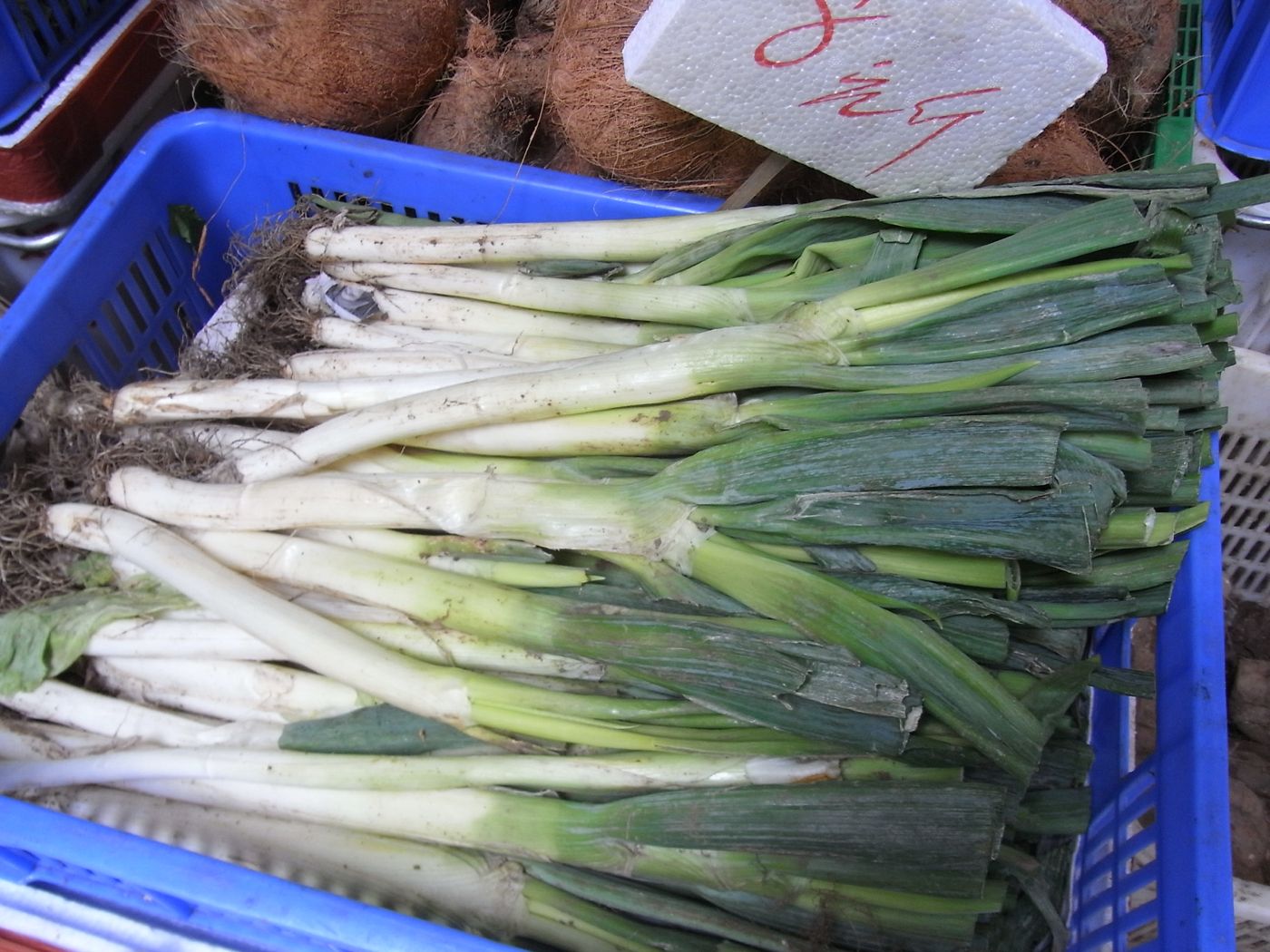 Photo: Genmewcaugsa, CC BY-SA 3.0, via Wikimedia Commons
Origin & History
The Welsh onion (Allium fistulosum), the plant behind Korea's daepa, is thought to have originated in western China, where it has been grown for some 3,000 years; no wild ancestor has been found. It is believed to have reached Korea before the Goryeo period.
Green onion is grown all over South Korea, and production is spread fairly evenly across the provinces. Growers distinguish stem types, which are earthed up so the lower stalk stays long and white, from leafy types grown mainly for their greens; a traditional Seoul leafy variety has deep green leaves.
Green onion is one of the basic Korean aromatics, chopped into yangnyeom sauces, scattered over soups and stews and added to kimchi paste along with garlic, ginger and jeotgal. It is also a main ingredient in its own right, in pa-kimchi, pa-ganghoe (blanched scallion bundles) and skewers such as pasanjeok, and is valued for masking the odors of meat and fish.
Nutrition
| Calories | 23 kcal |
|---|---|
| Protein | 1.8 g |
| Fat | 0.2 g |
| Carbohydrates | 4.8 g |
| Fiber | 1.6 g |
| Sodium | 0 mg |
Notable forVitamin K · Manganese
Values from the Korean Food Composition Table (RDA, 2016 data). Actual values vary with ingredients, portion size and preparation.
Health Benefits
- Low in calories: Green onion adds flavor for very few calories and essentially no sodium.
- Greens carry the nutrients: The Encyclopedia of Korean Culture notes that the green parts are richer in vitamins A and C and minerals; Korean data also list vitamin K.
- Vitamin K and warfarin: Eaten in large amounts, as in pa-kimchi, green onion contributes vitamin K; people on warfarin should keep intake consistent.
Informational, not medical advice. Talk to a qualified professional about your own health and diet.
Dishes with Green onion
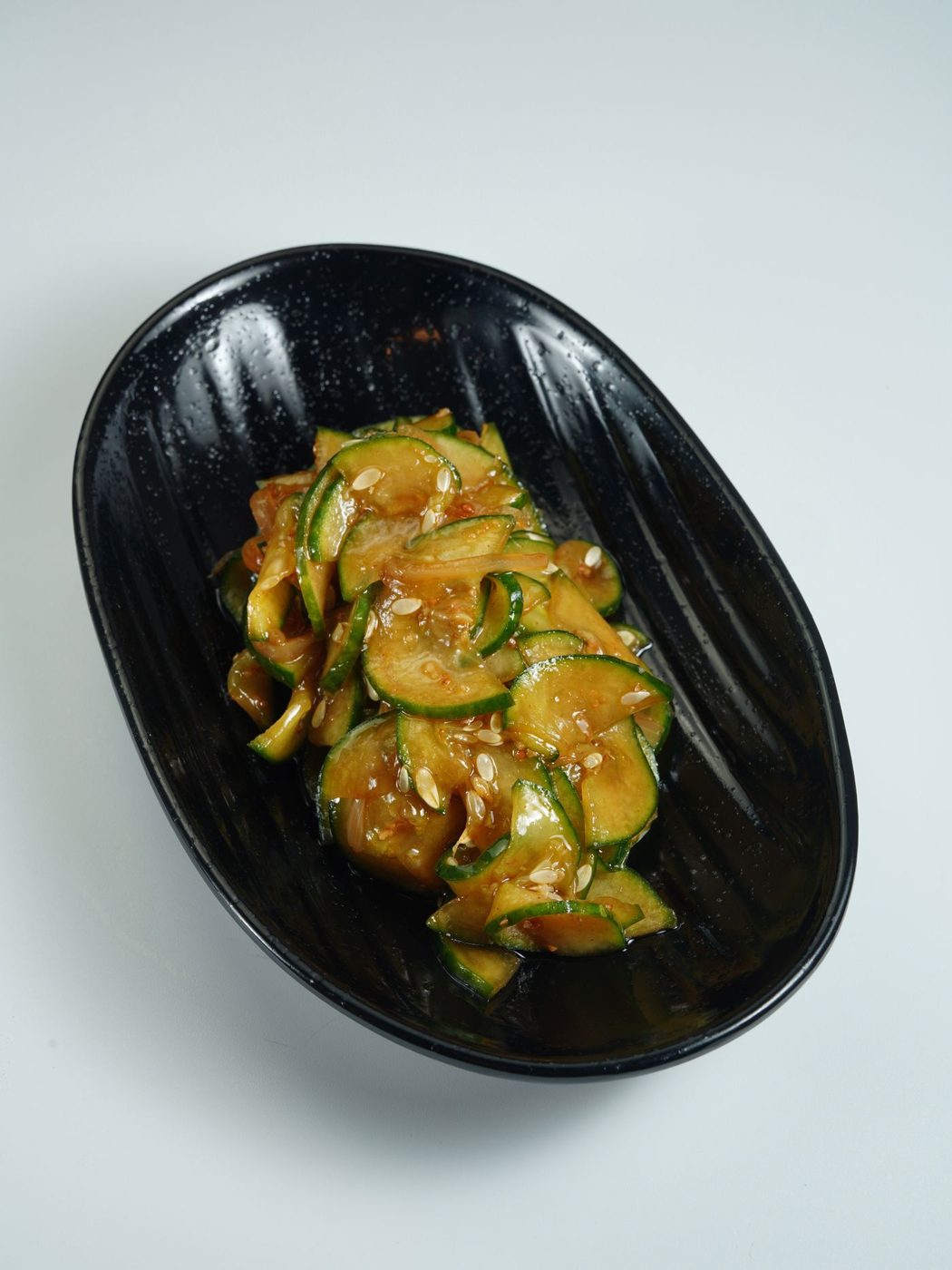 Aehobak Namul애호박나물Young Korean squash cut into half-moons and stir-fried with garlic and a little salted shrimp — sweet, tender and quick to make.
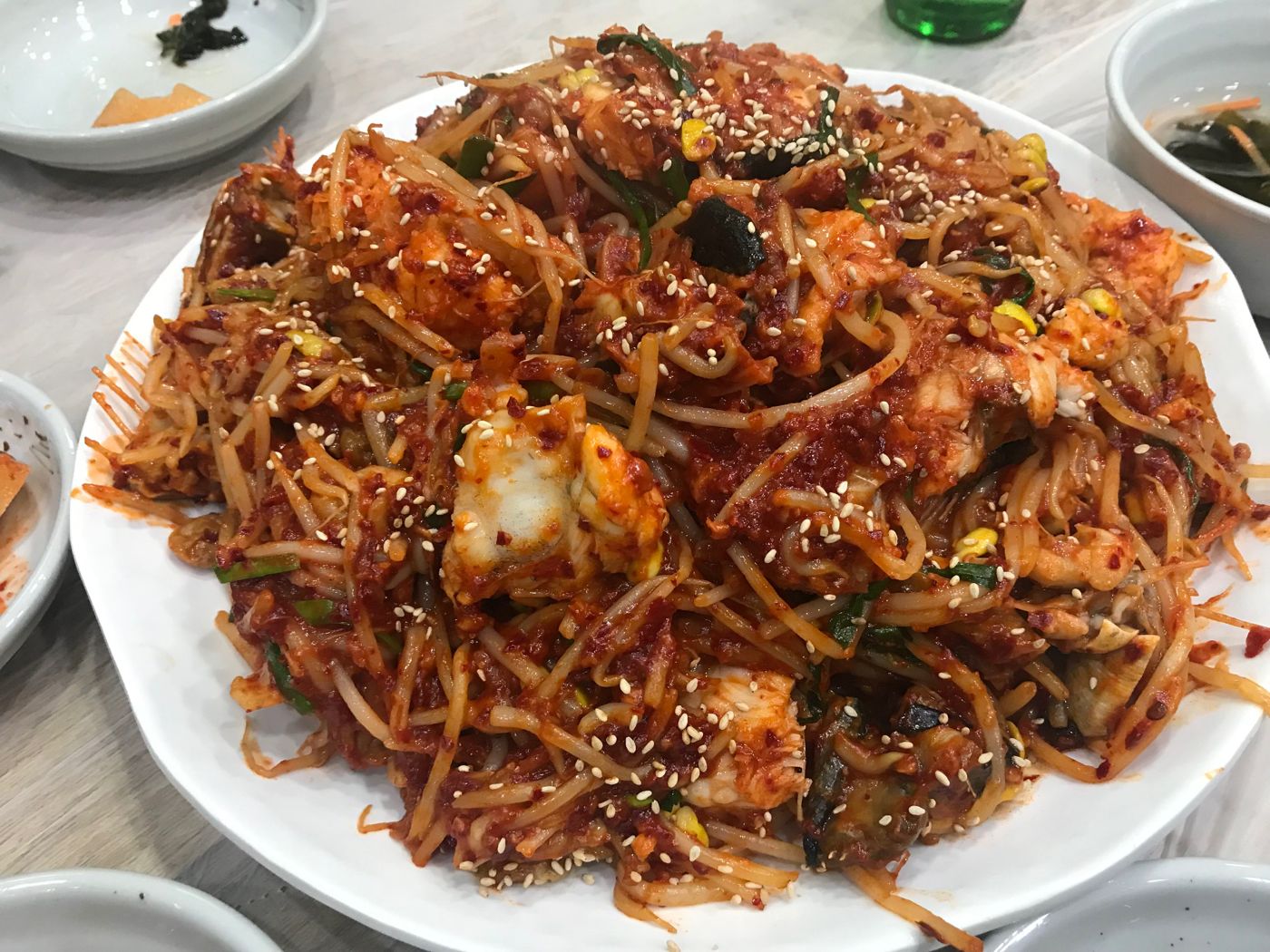 Agu-jjim (Spicy Braised Monkfish)아귀찜Monkfish braised with a mountain of soybean sprouts and minari in a fiery chili sauce thickened with starch — a Masan specialty now eaten across Korea.
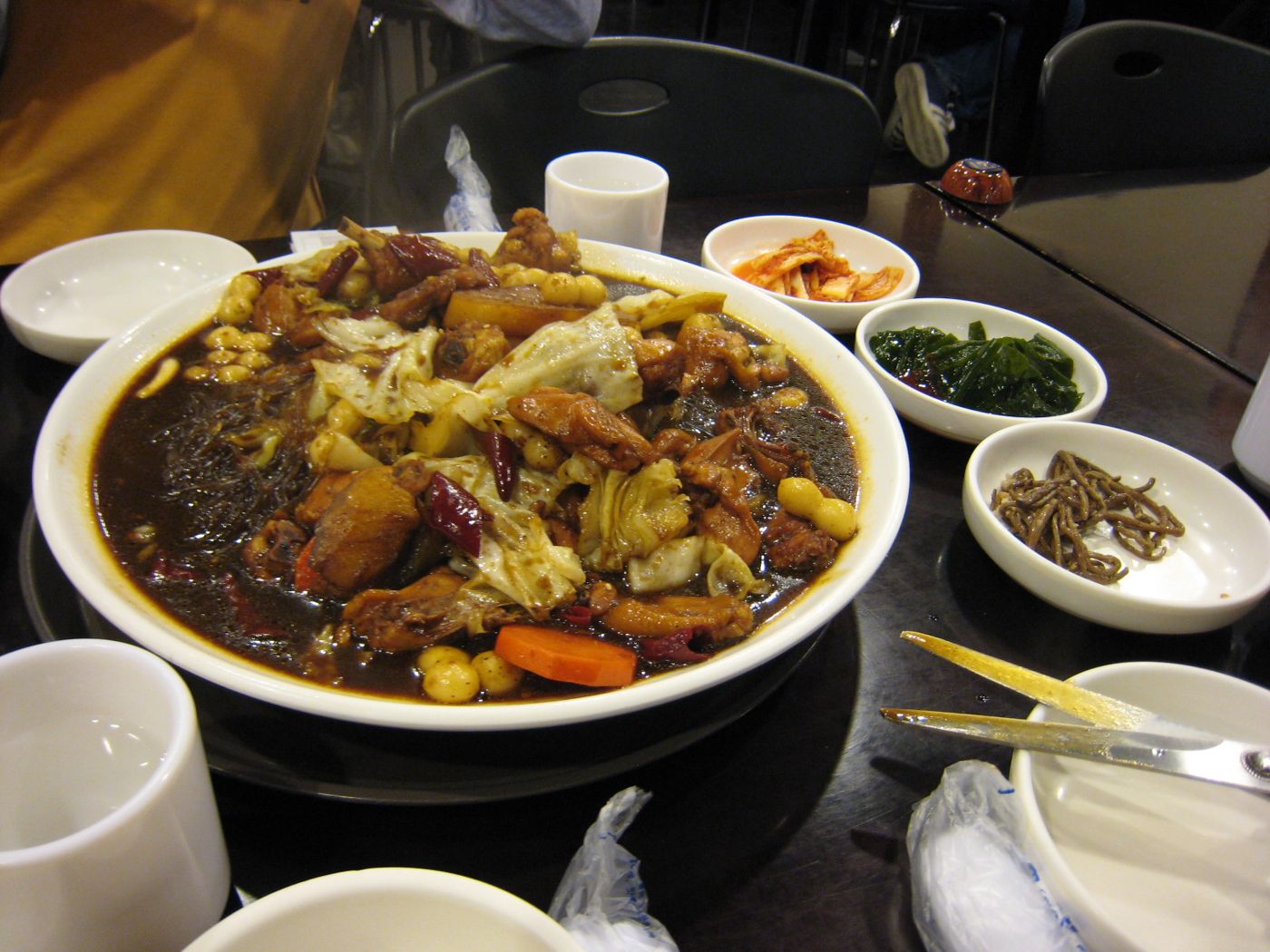 Andong Jjimdak (Soy-Braised Chicken with Glass Noodles)안동찜닭Chicken braised hard in a sweet soy sauce with potatoes, vegetables, dried chilies and glass noodles — a 1980s invention of Andong's old market, not a yangban heirloom.
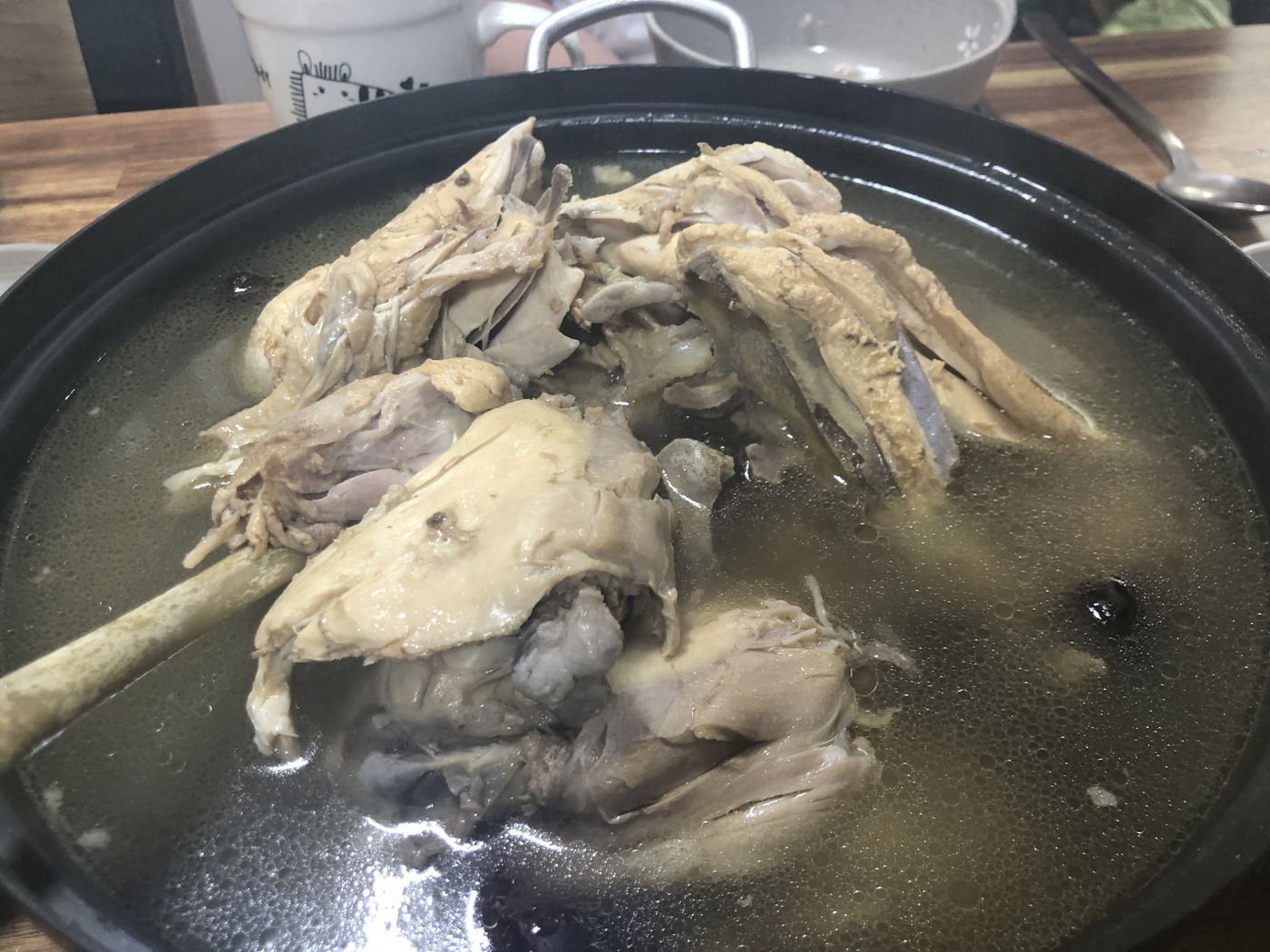 Baeksuk (Plain Whole Boiled Chicken)백숙A whole chicken simmered in plain water with garlic until falling-apart tender, eaten with salt and pepper, then followed by rice porridge cooked in the broth.
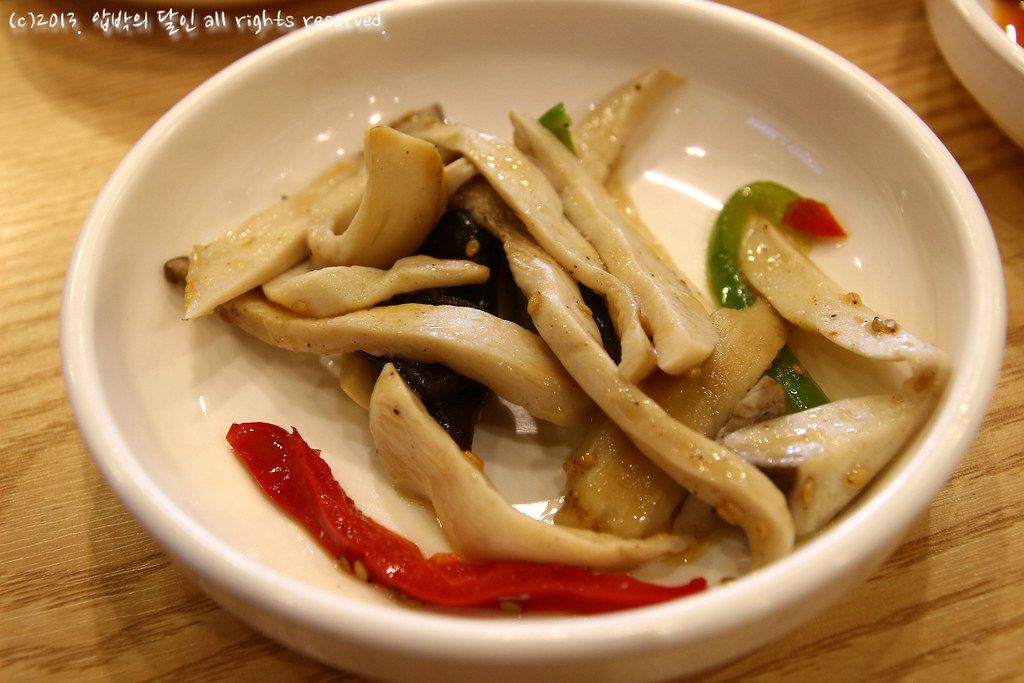 Beoseot Bokkeum (Stir-Fried Mushrooms)버섯볶음Oyster mushrooms torn by hand and stir-fried with onion, garlic and a little soy sauce — a quick, savory, meaty-textured banchan.
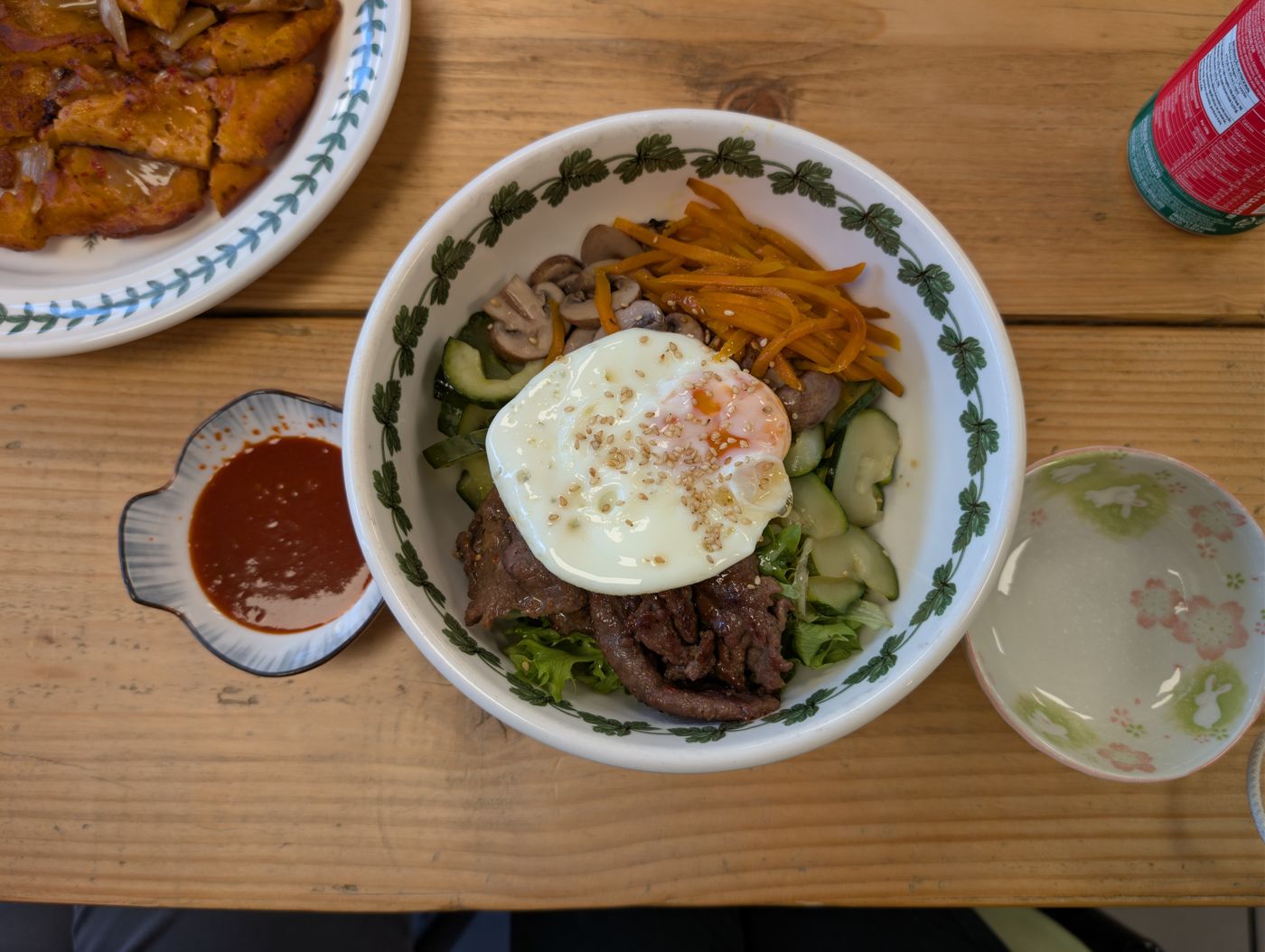 Bibimbap (Mixed Rice with Namul)비빔밥A bowl of rice topped with seasoned namul, beef and egg, mixed at the table with chili paste and sesame oil — banchan gathered into a single meal.
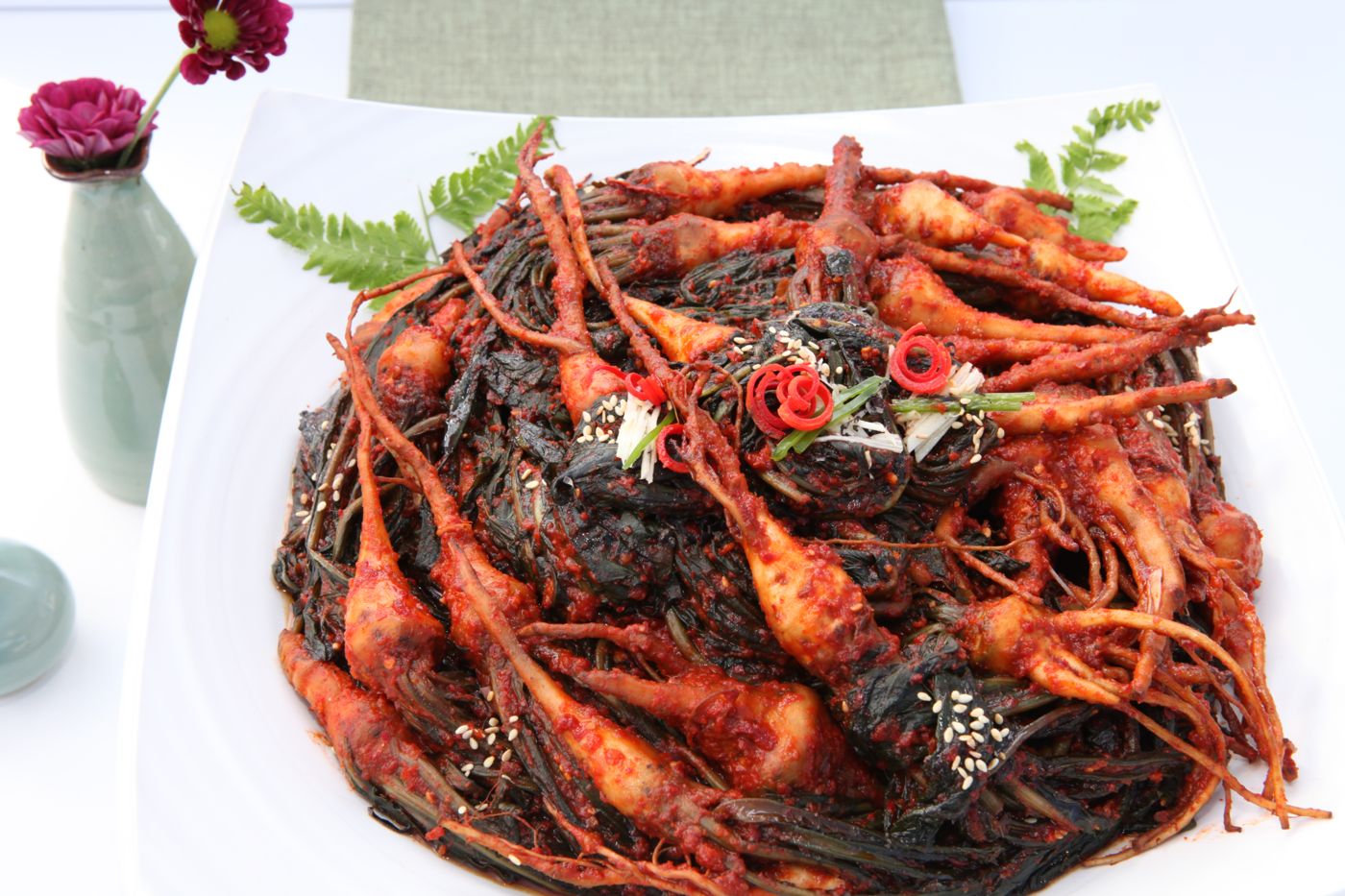 Bitter Godeulppaegi Kimchi고들빼기김치A bittersweet Jeolla kimchi of whole godeulppaegi greens and roots, soaked for days to tame the bitterness and dressed with anchovy jeotgal and chili.
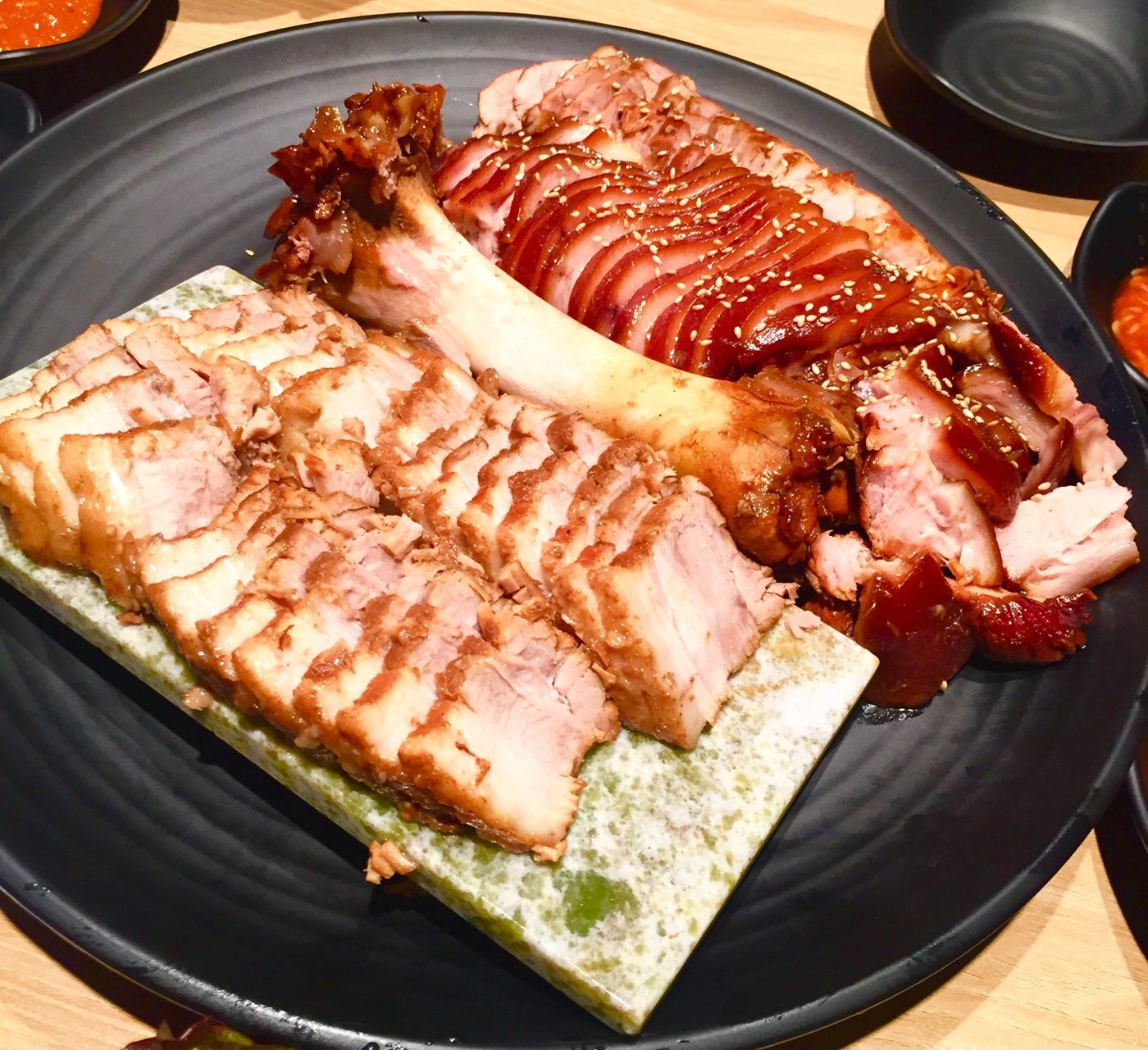 Bossam (Boiled Pork Wraps)보쌈Pork belly simmered with doenjang and aromatics, pressed and sliced, then wrapped in salted cabbage with spicy radish and salted shrimp — a feast dish built for sharing.
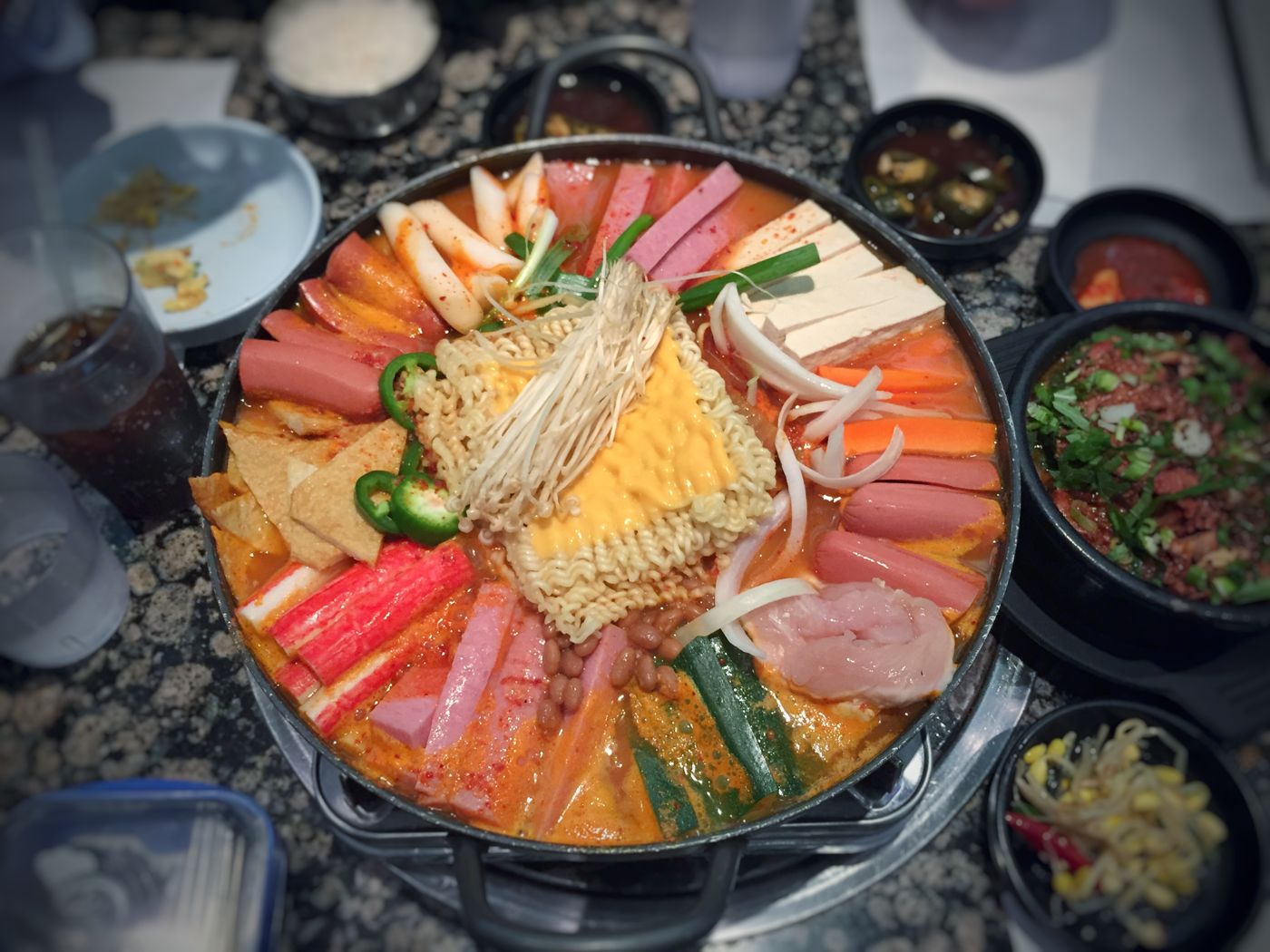 Budae Jjigae (Army Base Stew)부대찌개Ham, sausages and canned beans simmered with kimchi, tofu and a gochujang-chili broth, usually finished with instant noodles — a postwar stew born around US Army bases.
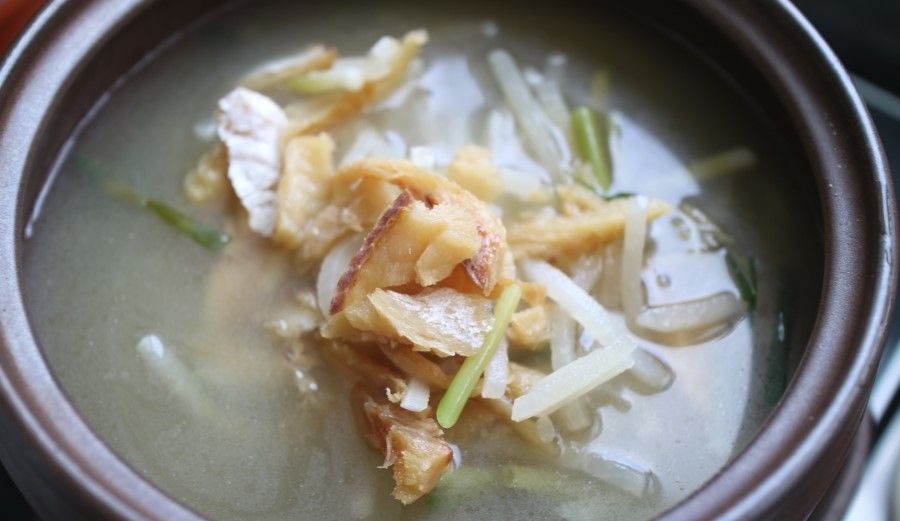 Bugeo Guk (Dried Pollock Soup)북엇국Shredded dried pollock sautéed in sesame oil and simmered into a milky, savory broth with radish, tofu and a ribbon of egg — Korea's favorite morning-after soup.
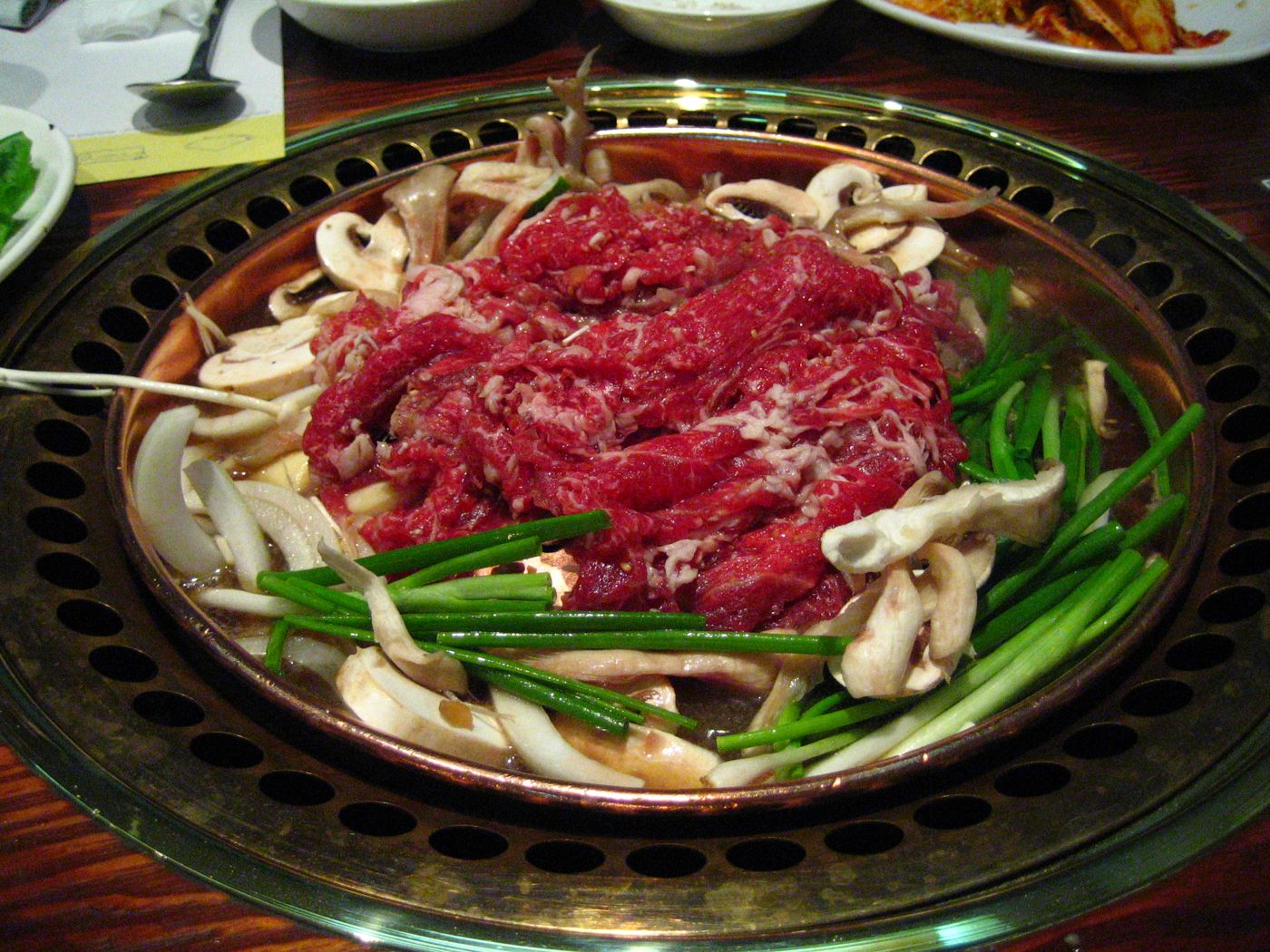 Bulgogi (Marinated Grilled Beef)불고기Thin slices of beef marinated in soy sauce, pear, garlic and sesame, then grilled or seared — descended from the court dish neobiani and Korea's best-known meat dish.
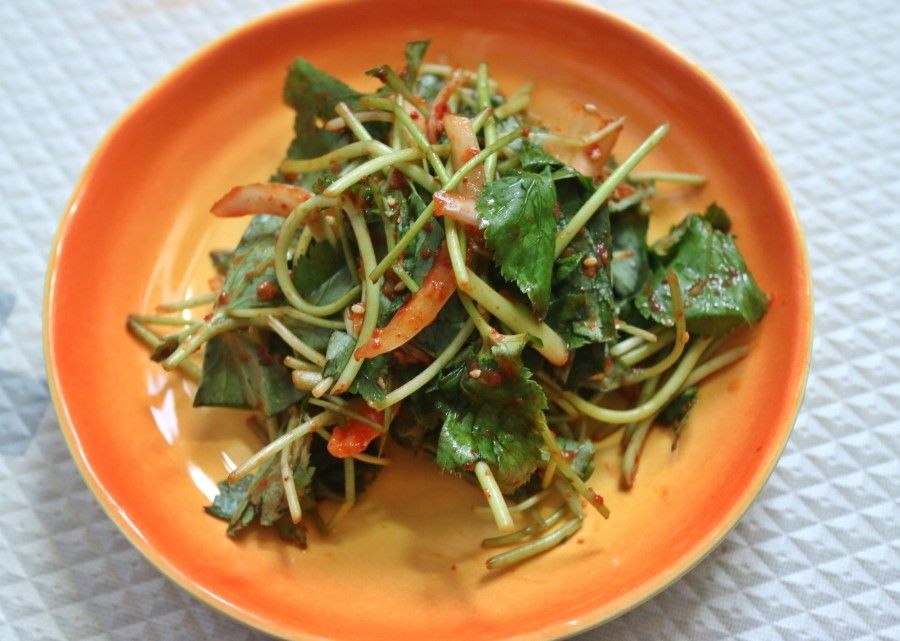 Chamnamul Muchim (Seasoned Chamnamul)참나물무침Tender chamnamul blanched for seconds and dressed with soy sauce, garlic and sesame oil — a fresh, celery-scented spring namul.