Ingredient
Korean grain syrup
물엿
Romanization: mulyeot
A clear, glossy syrup used to sweeten and glaze braised and stir-fried banchan. Its traditional relative, jocheong, is a darker malt syrup made by slowly boiling down saccharified rice.
Flavor
Mildly sweet and neutral (mulyeot); jocheong is deeper, with toasty malt and caramel notes.
 Photo: 국립국어원, CC BY-SA 2.0 kr, via Wikimedia Commons
Origin & History
Yeot is the Korean family of sweets made by breaking down the starch in grains with malt (yeotgireum) and boiling the sweet liquid down. How long it is cooked decides the result: a pourable syrup (mulyeot, literally “water yeot”) or, cooked further, hard taffy (gangyeot). The Encyclopedia of Korean Culture traces malt-based sweeteners at least to the Goryeo period, through references in the writings of the 12th–13th-century scholar Yi Gyu-bo.
Jocheong is the traditional thick syrup. The name contrasts it with cheong, the old word for honey — it was a ‘made’ honey, and because honey was scarce and costly, jocheong became the everyday sweetener for confections. To make it, cooked rice (or millet, sorghum or corn) is mixed with malt water and kept warm until it turns sweet; the liquid is strained through cloth and boiled for hours in an iron cauldron until it thickens. Rice jocheong is clear amber, sorghum versions reddish; thin syrup is used for dipping rice cakes and thick syrup for binding gangjeong.
Most modern mulyeot is factory-made from inexpensive corn or sweet-potato starch, saccharified with microbial enzymes instead of malt and concentrated to a clear syrup. In home cooking it lends a mild sweetness, shine and stickiness to braised (jorim) and stir-fried (bokkeum) banchan such as myeolchi-bokkeum.
Nutrition
| Calories | 306 kcal |
|---|---|
| Protein | 0 g |
| Fat | 0 g |
| Carbohydrates | 79.2 g |
| Fiber | 0 g |
| Sodium | 0 mg |
Values from the Korean Food Composition Table (RDA, 2022 data); about 44 g sugars per 100 g. Rice jocheong (조청, 쌀) in the same table: 326 kcal and 87.9 g carbohydrate per 100 g. Actual values vary with ingredients, portion size and preparation.
Health Benefits
- An added sugar: Mulyeot and jocheong are almost pure carbohydrate, providing energy but little else nutritionally. Count them as added sugars.
- Less intensely sweet than sugar: The Encyclopedia of Korean Culture notes that yeot sweetens without the sharpness of sugar and also thickens and binds, which is why small amounts go a long way in glazes.
- Blood sugar: People managing diabetes or blood sugar should account for these syrups the same way as other sugars.
Informational, not medical advice. Talk to a qualified professional about your own health and diet.
Dishes with Korean grain syrup
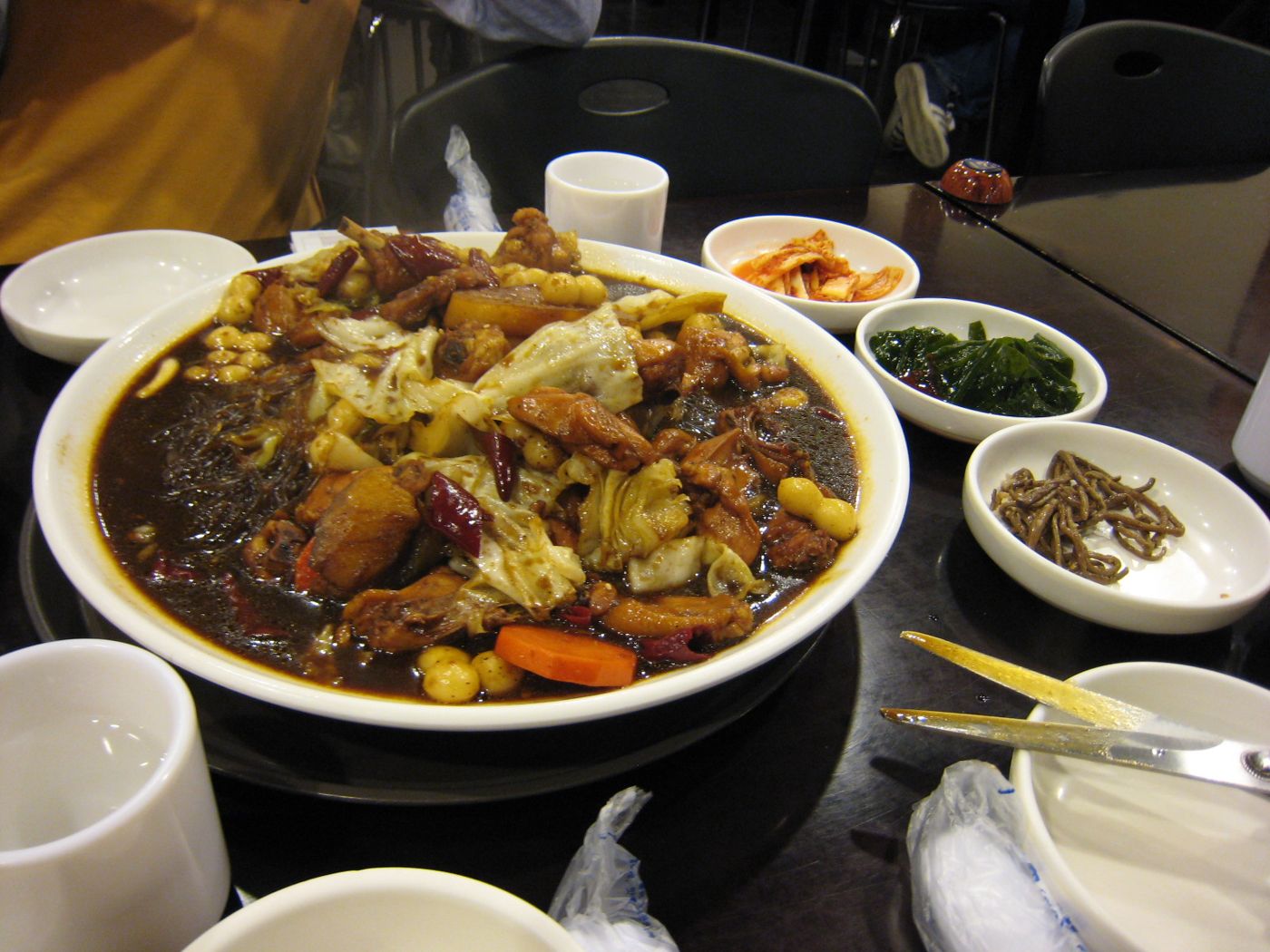 Andong Jjimdak (Soy-Braised Chicken with Glass Noodles)안동찜닭Chicken braised hard in a sweet soy sauce with potatoes, vegetables, dried chilies and glass noodles — a 1980s invention of Andong's old market, not a yangban heirloom.
- Bugeo Muchim (Shredded Dried Pollock Salad)북어무침Shredded dried pollock softened with a splash of water and tossed in a sweet, spicy gochujang dressing — a chewy, protein-rich banchan that keeps for days.
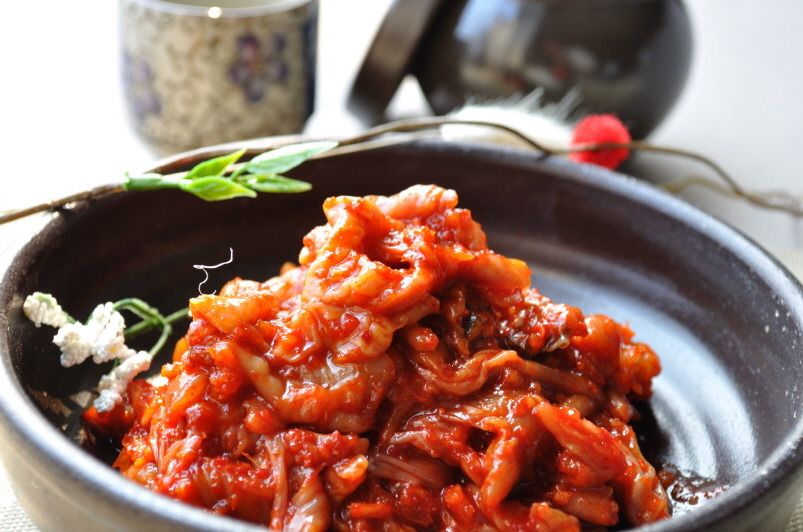 Salted Pollock Tripe창난젓Pollock intestines cured in salt, then cut and dressed with chili, garlic and green onion — a chewy, savory East Sea jeotgal, often mixed with radish.
- Dubu Gangjeong (Crispy Glazed Tofu)두부강정Cubes of tofu coated in starch, fried until crisp and tossed in a sticky soy-gochujang glaze — a sweet, savory banchan built on the fried-chicken gangjeong idea.
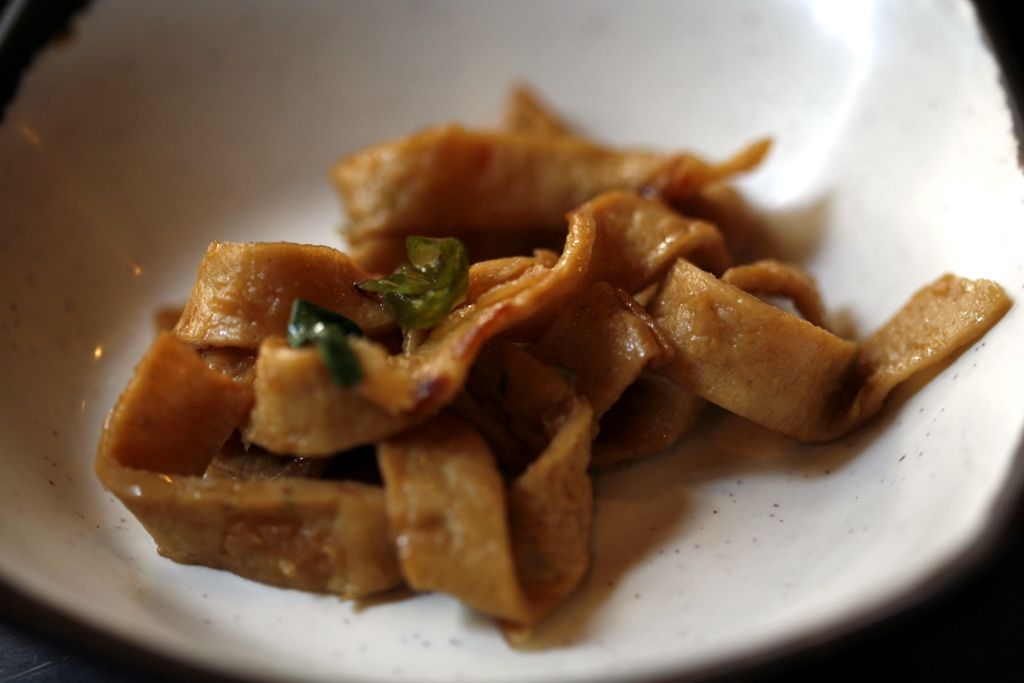 Eomuk Bokkeum어묵볶음Strips of Korean fish cake stir-fried with onion and carrot in a light soy glaze — quick, savory-sweet and one of the most familiar everyday banchan.
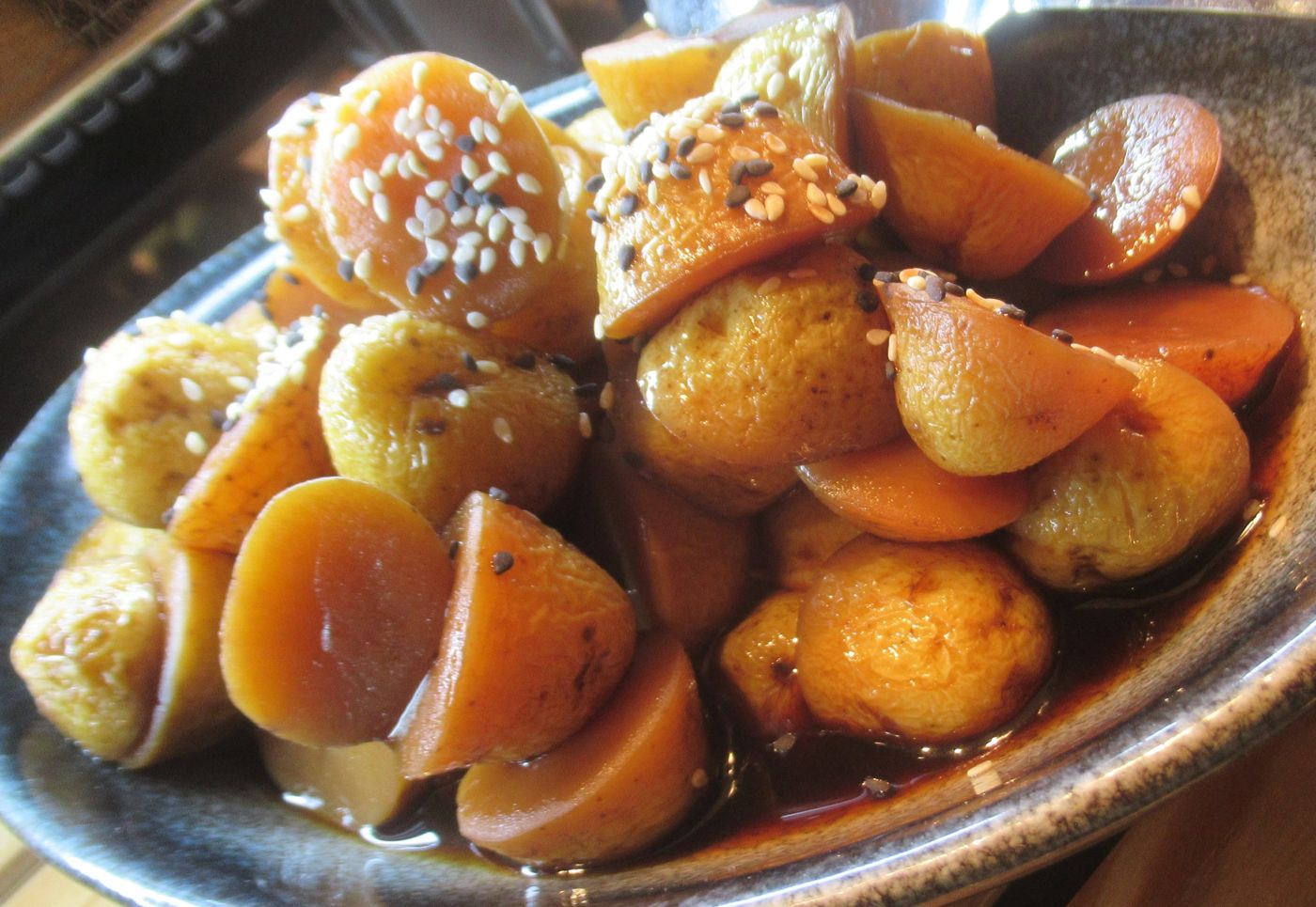 Gamja Jorim감자조림Cubed potatoes simmered in soy sauce, garlic and a touch of sweetness until tender and glossy — a comforting, child-friendly staple of the Korean home table.
- Gochu Doenjang Muchim (Green Chilies in Doenjang)고추된장무침Crisp, mild green chilies cut into rounds and tossed with doenjang, garlic and sesame oil — a five-minute summer banchan built on the old habit of dipping peppers in jang.
- Hwangtae Gui (Grilled Seasoned Dried Pollock)황태구이Winter-cured dried pollock softened, opened flat and grilled with a glossy gochujang glaze — tender, savory and a specialty of Gangwon's mountain drying yards.
- Jinmichae Bokkeum진미채볶음Seasoned dried squid shreds tossed in a sweet, spicy gochujang glaze — chewy, glossy and one of the most familiar keeping banchan.
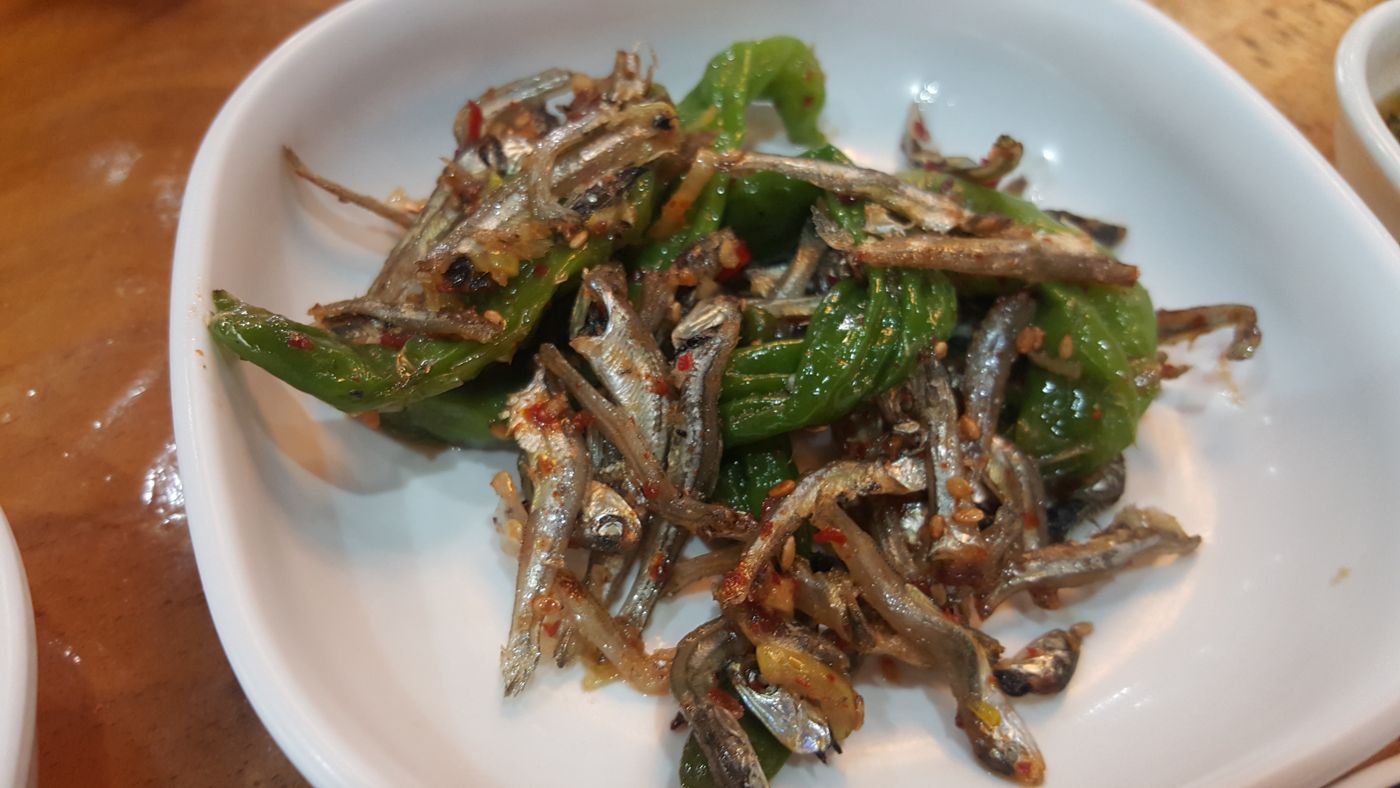 Kkwarigochu Myeolchi Bokkeum (Shishito Peppers with Anchovies)꽈리고추멸치볶음Small dried anchovies and wrinkled shishito-type peppers glazed in soy sauce and rice syrup — a sweet, salty, gently grassy lunchbox staple.
- Kodari Jorim (Braised Semi-Dried Pollock)코다리조림Half-dried Alaska pollock braised with radish in a sweet, spicy soy-gochugaru sauce until the chewy flesh soaks up the glaze.
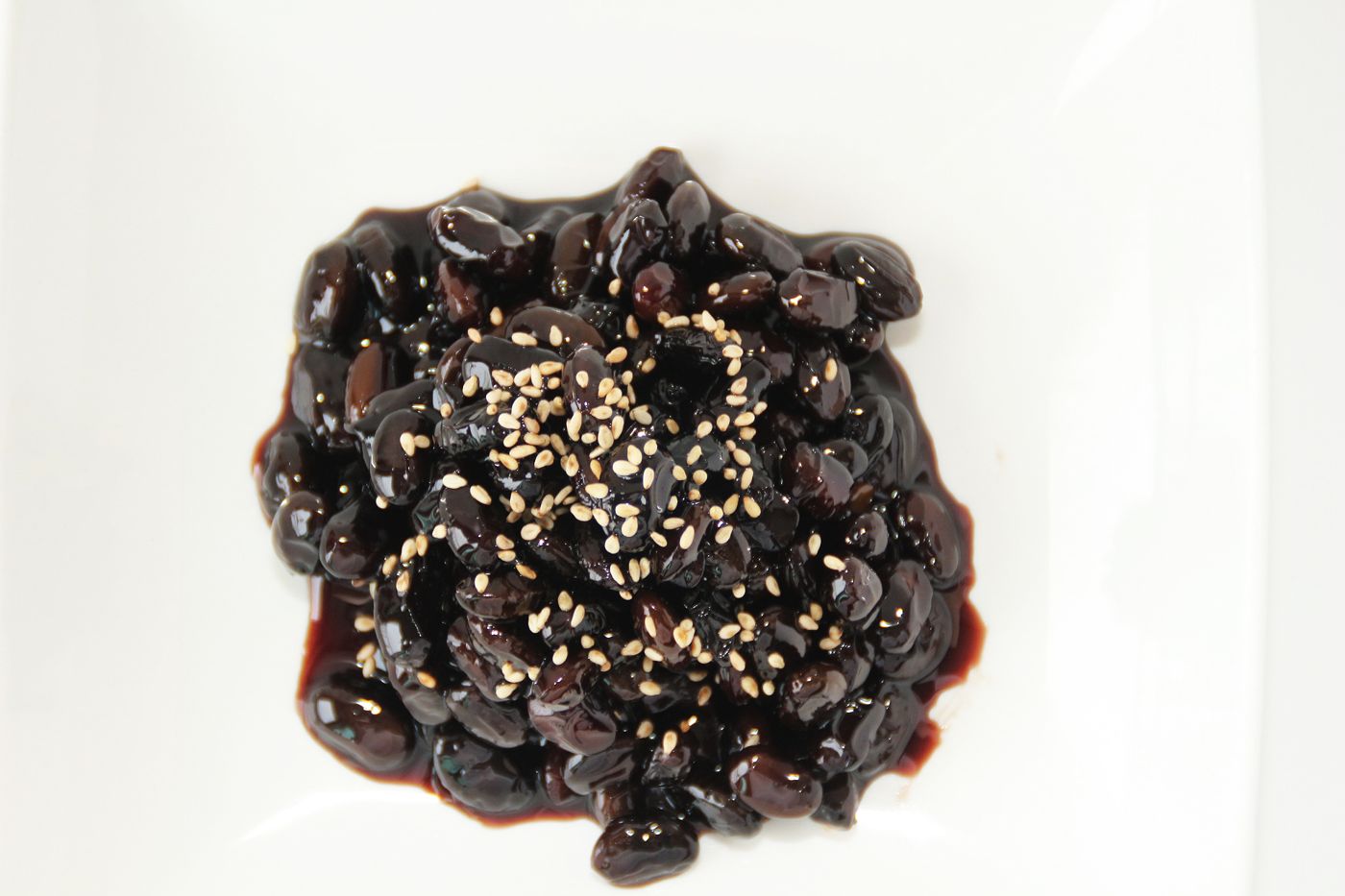 Kongjaban콩자반Black soybeans simmered in soy sauce until wrinkled and glossy, then finished with syrup and sesame — a sweet-salty, chewy keeping banchan.
- Maneuljong Bokkeum마늘종볶음Tender garlic scapes stir-fried in a light soy and syrup glaze until bright and just yielding — a spring banchan with a mild, sweet garlic flavor.
- Mareun Saeu Bokkeum (Stir-Fried Dried Shrimp)마른새우볶음Small dried shrimp toasted in a dry pan, then glazed with soy sauce, rice syrup and garlic — a sweet-savory, crunchy banchan that keeps for days.
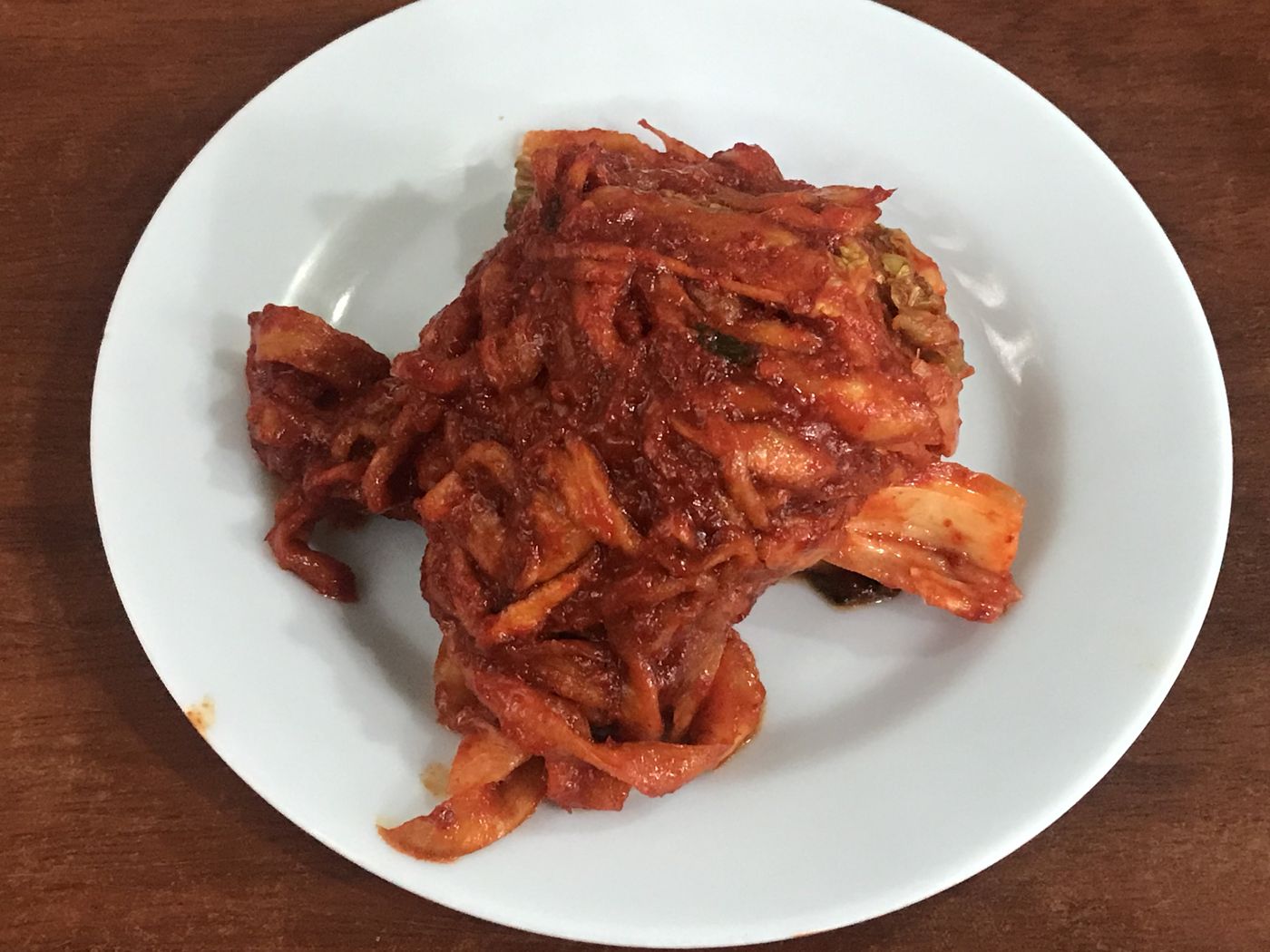 Mu Mallaengi Muchim무말랭이무침Sun-dried radish strips soaked until springy and tossed in a sweet, spicy chili dressing — crunchy, chewy and a long-keeping winter staple.
 Myeolchi Bokkeum멸치볶음Small dried anchovies stir-fried until crisp, then glazed in a sweet soy and garlic syrup — a keeping banchan found in refrigerators across Korea.
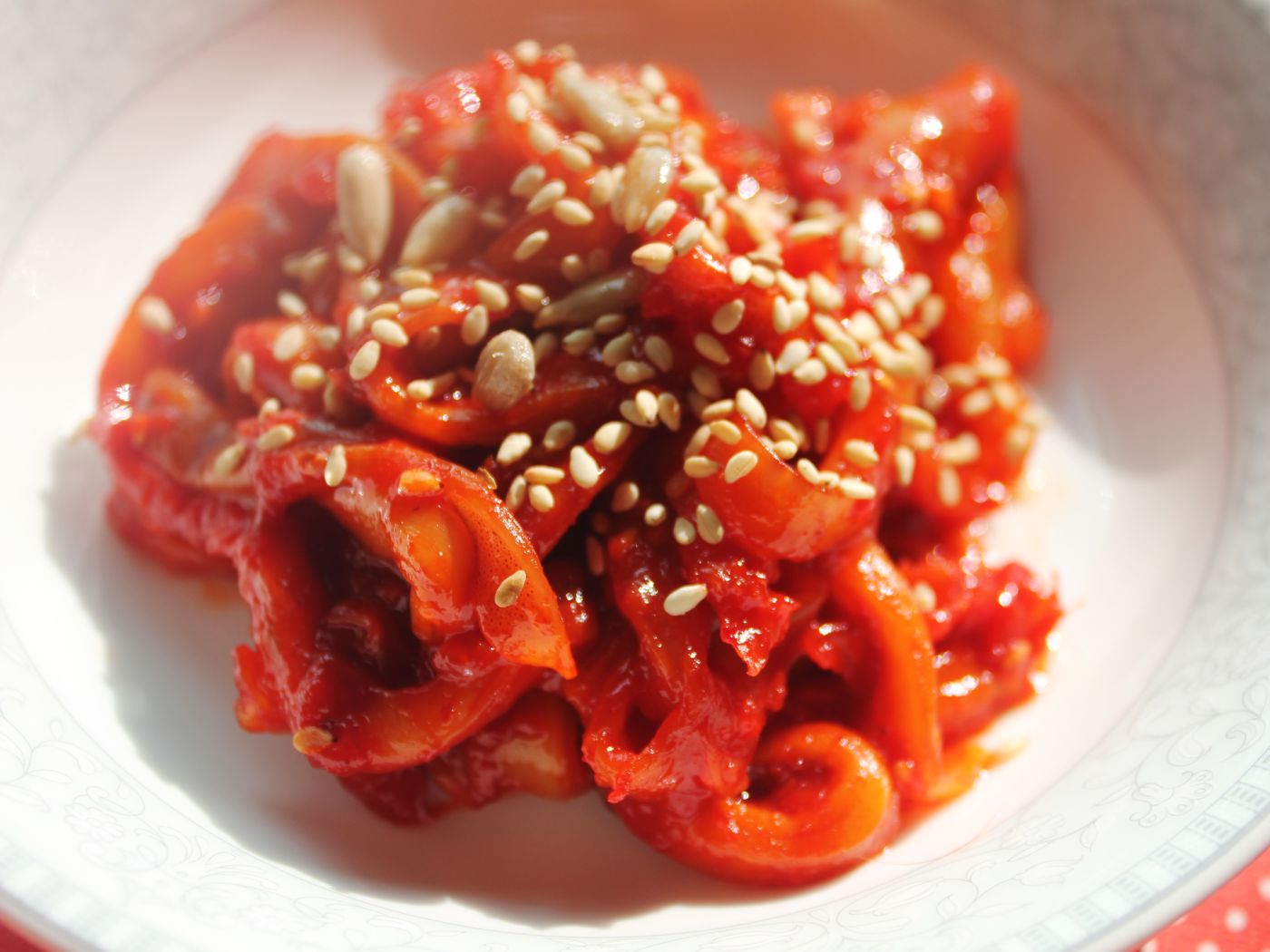 Salted Squid오징어젓Squid cured in salt, then sliced and tossed with chili, garlic and a touch of syrup — chewy, sweet-savory jeotgal from the East Sea coast.
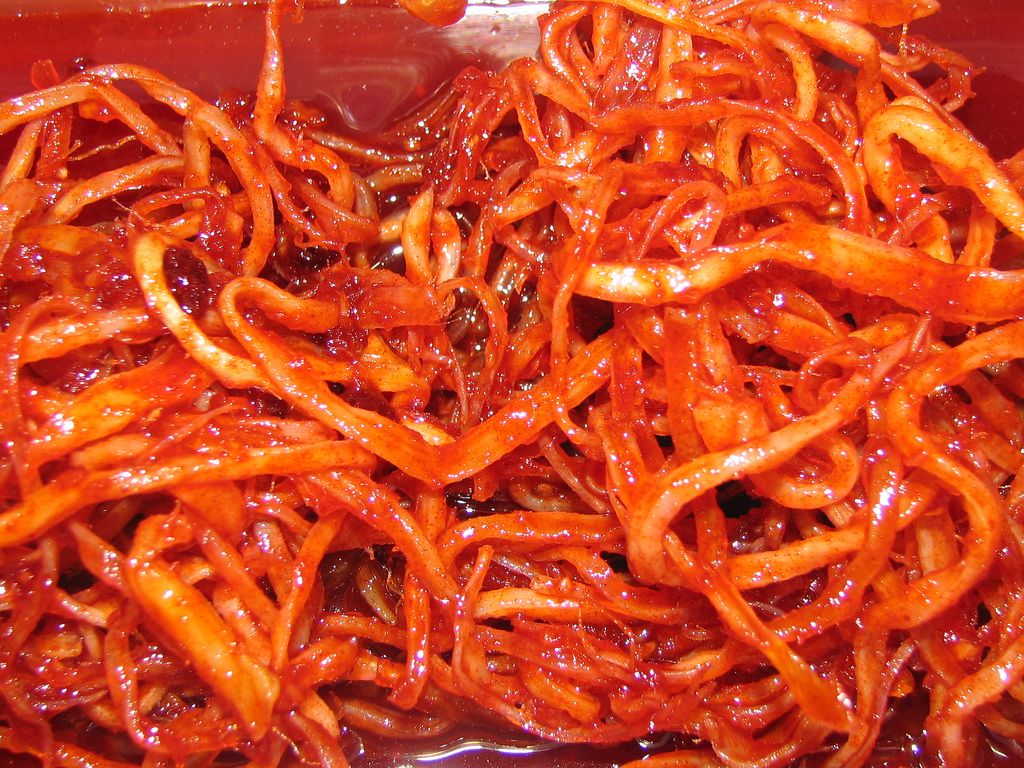 Ojingeochae Muchim오징어채무침Chewy shredded dried squid tossed raw in a glossy gochujang and syrup sauce — sweet, spicy and savory, and one of the best-keeping banchan.
- Ueong Jorim우엉조림Thin strips of burdock root braised in soy sauce and glazed with syrup until chewy and dark — an earthy, sweet-salty keeping banchan.
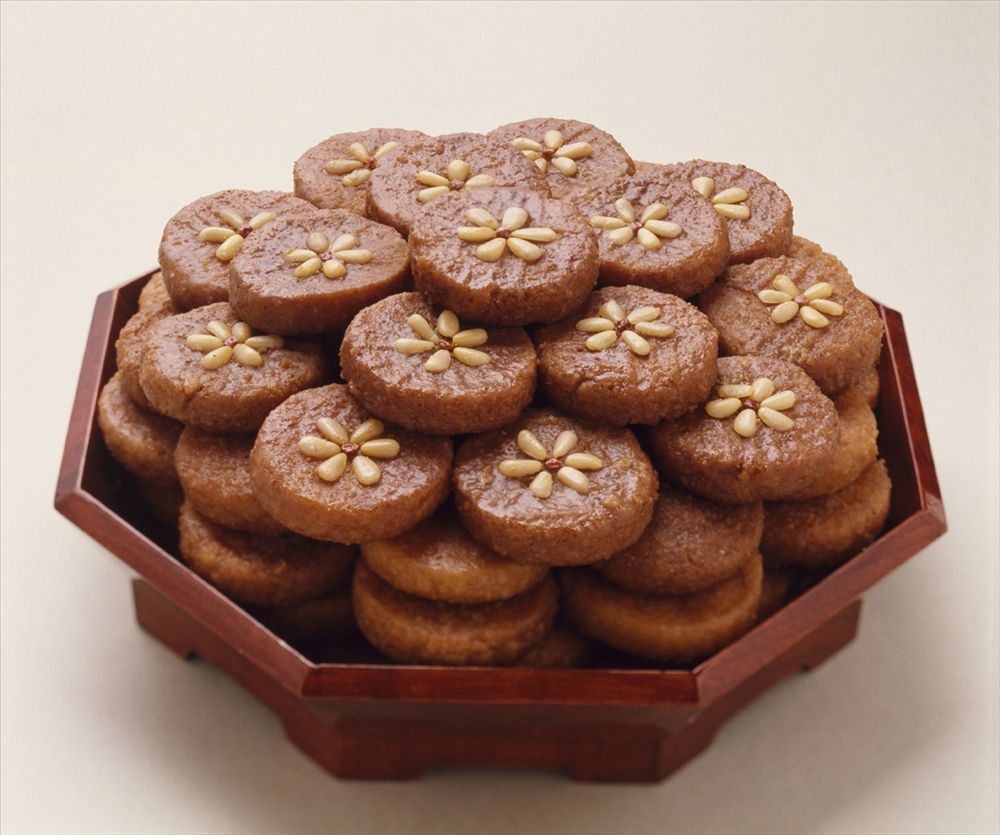 Yakgwa (Honey Cookies)약과Wheat dough rubbed with sesame oil and bound with honey, pressed into a carved mold, slow-fried and soaked in syrup — the best-known of Korea's honey-and-oil pastries.
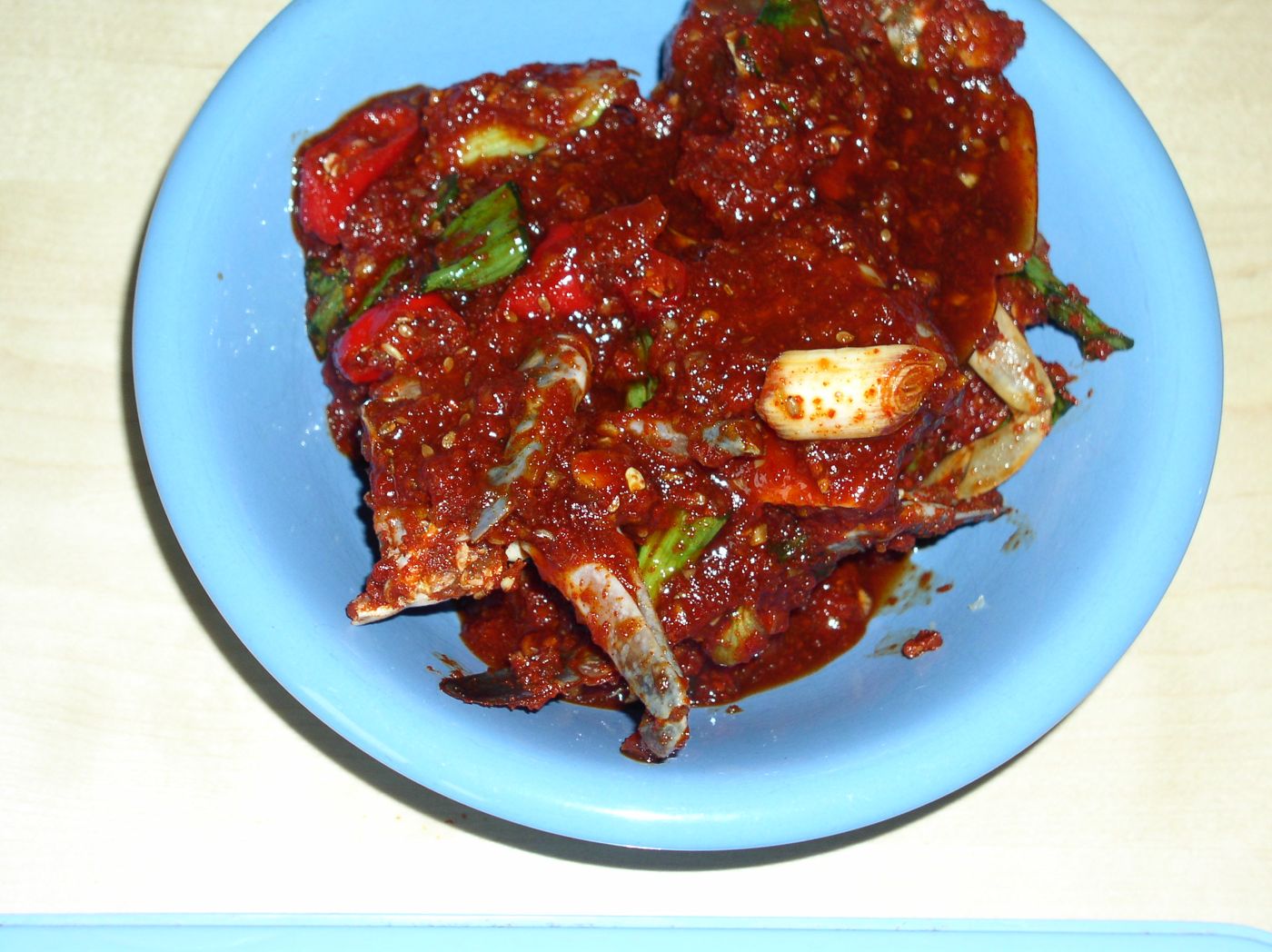 Spicy Marinated Raw Crab양념게장Raw crab pieces tossed in a glossy chili, garlic and soy dressing and eaten within days — sweet, fiery and a specialty of Yeosu's gejang restaurants.
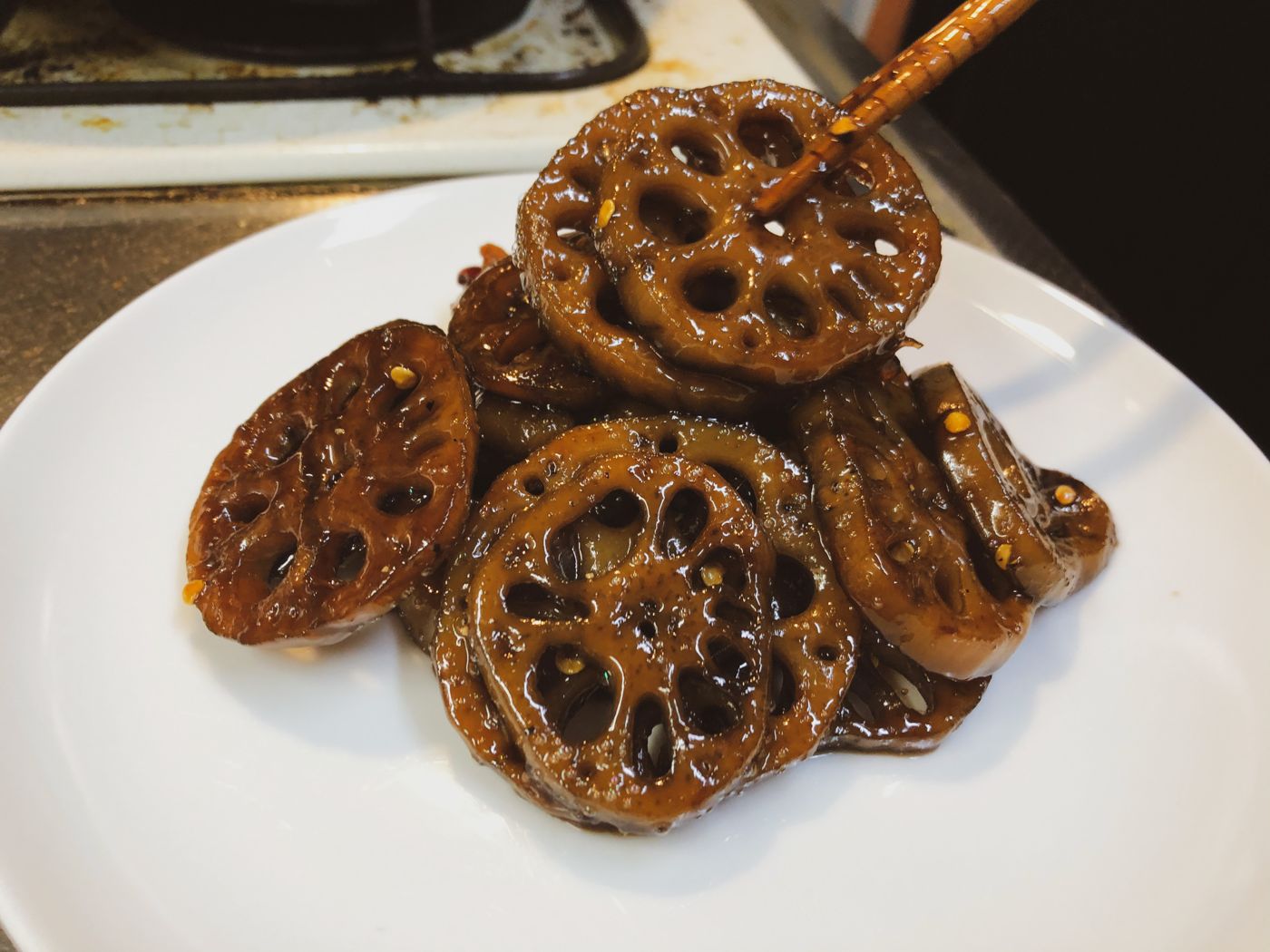 Yeongeun Jorim연근조림Rounds of lotus root simmered in soy sauce and glazed with syrup until glossy and pleasantly chewy, with a crisp bite and lace-like pattern of holes.