Ingredient
Anchovy fish sauce
멸치액젓
Romanization: myeolchi-aekjeot
The clear amber liquid drawn from salted, fermented anchovies. A jeotgal in liquid form, it is the savory backbone of much southern-style kimchi and a quick seasoning for soups and namul.
Flavor
Very salty and deeply savory, with a pungent fish-sauce aroma that softens into rich umami once cooked or fermented into kimchi.
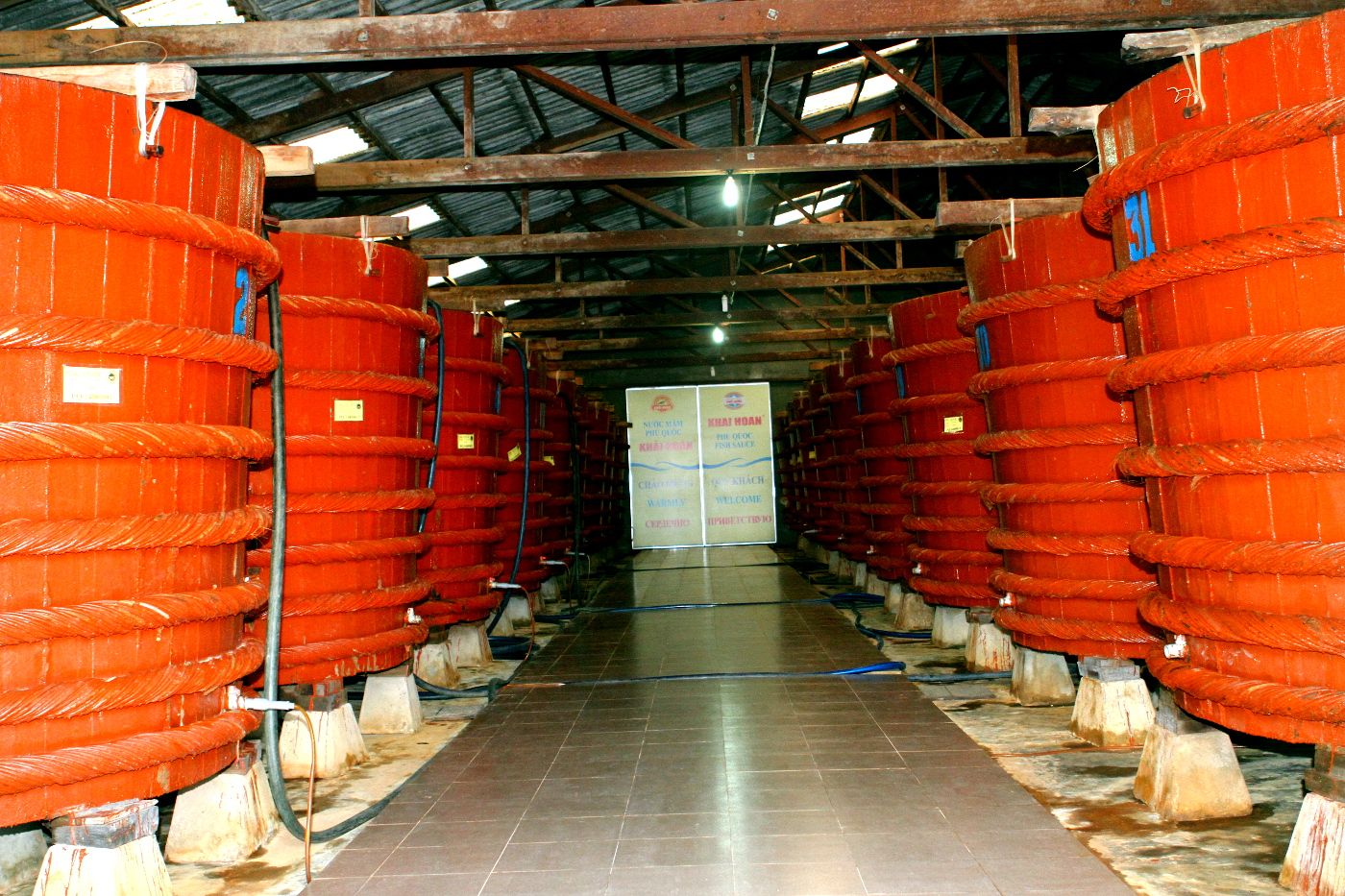 Photo: Frank Fox, CC BY-SA 4.0, via Wikimedia Commons
Origin & History
Anchovy jeot is a relatively recent jeotgal: large-scale anchovy fishing developed in the late Joseon period, and fermented anchovy rarely appears in older texts. Traditionally fresh anchovies caught in May and June, when they are at their best, are layered with salt — about six measures of salt to ten of fish — in jars topped with a sealing layer of salt and left to ferment. Jeolla, Gyeongsang and Jeju are anchovy-jeot regions; Chungcheong and Hwanghae traditionally used sand lance (kkanari) instead.
As the fish ferment, their own enzymes break the flesh down into a savory brine. On Geomundo, for example, the clear liquid (jeotguk) was ladled off in autumn and kept separately, while the cloudy remainder was cooked into a sauce. Aekjeot (literally “liquid jeot”) is this clarified liquid; once mostly homemade, it is now produced in factories specifically for kimchi and used by many households instead of homemade jeotgal.
In kimchi, anchovy jeotgal and its liquid are characteristic of the south: according to the Encyclopedia of Korean Culture, central and northern regions favor shrimp and croaker jeotgal, while Gyeongsang and Jeolla use anchovy and cutlassfish for a stronger, saltier kimchi. Myeolchi-aekjeot also seasons namul, soups and dipping sauces.
Nutrition
| Calories | 31 kcal |
|---|---|
| Protein | 6.5 g |
| Fat | 0 g |
| Carbohydrates | 1.1 g |
| Fiber | 0 g |
| Sodium | 8188 mg |
Values from the Korean Food Composition Table (RDA, 2019 data); salt equivalent about 21 g per 100 g. Used by the teaspoon or tablespoon, so other nutrients are negligible per serving. Actual values vary with ingredients, portion size and preparation.
Health Benefits
- Umami for less: Its free amino acids (glutamic acid is the most abundant in Korean food-composition data) deliver savory depth, so a small amount seasons a lot of food.
- Kimchi fermentation: Research on kimchi made with salted anchovy found that jeotgal sped acidification and acted as a kind of natural microbial starter alongside its flavor contribution.
- Very high in sodium: Over 8 g of sodium per 100 g; the FDA's daily value for sodium is less than 2,300 mg. Measure rather than pour.
- Histamine and allergens: Fish sauces can contain histamine and other biogenic amines; a 2025 analysis of commercial fish sauces from four Asian countries found high levels in some Korean samples. People sensitive to histamine, or allergic to fish, should take care.
Informational, not medical advice. Talk to a qualified professional about your own health and diet.
Dishes with Anchovy fish sauce
 Napa Cabbage Kimchi배추김치Salted napa cabbage layered with a red paste of chili, garlic, ginger and fermented seafood, then left to ripen: the kimchi most people picture first.
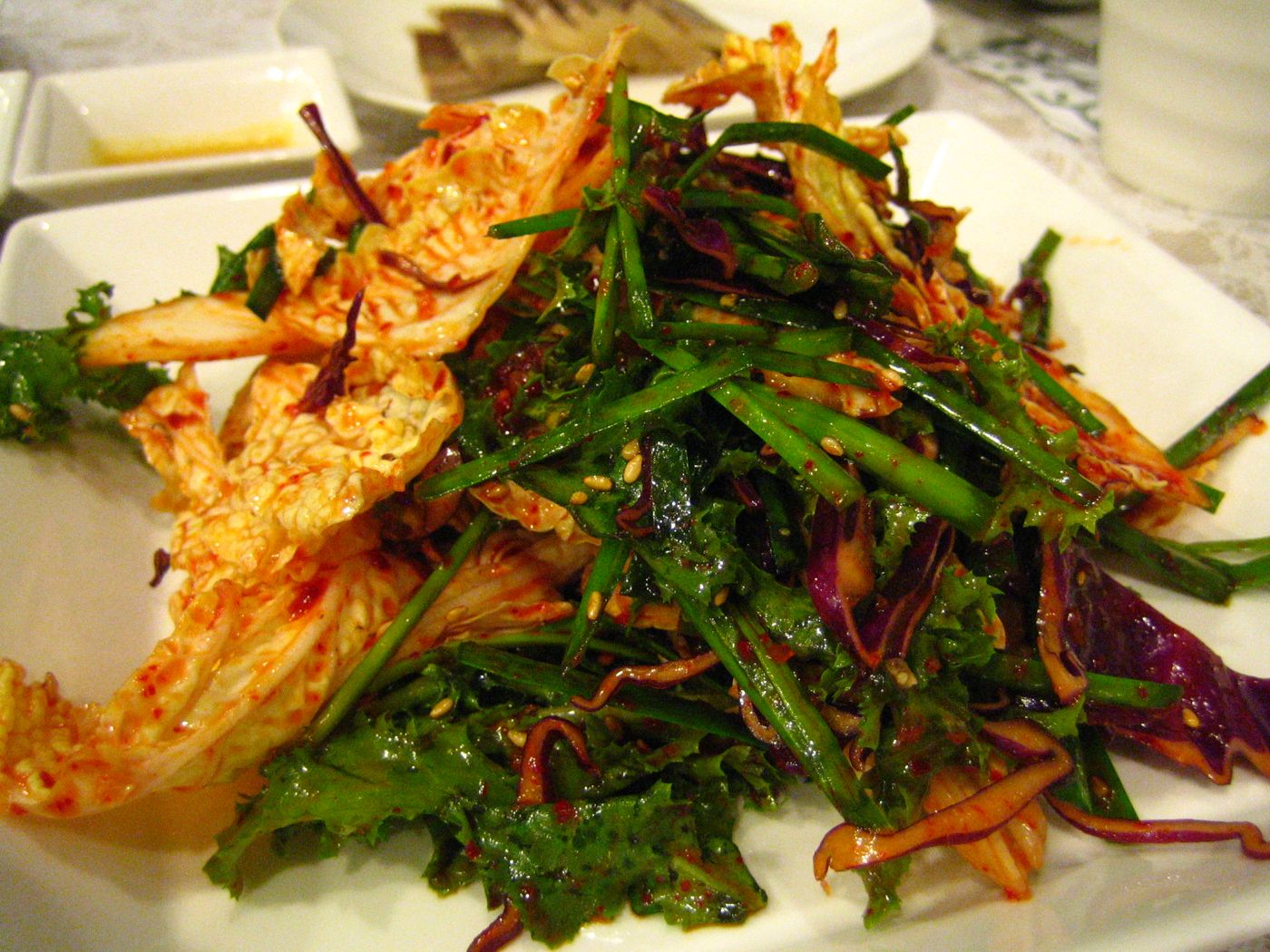 Garlic Chive Kimchi부추김치Whole garlic chives tossed with anchovy fish sauce and plenty of chili — a quick kimchi eaten fresh or ripe, known by a different name in nearly every province.
- Ponytail Radish Kimchi총각김치Small, firm radishes kimchi'd whole with their green tops in a chili and salted-shrimp paste — crunchy, juicy and a fixture of the winter kimjang.
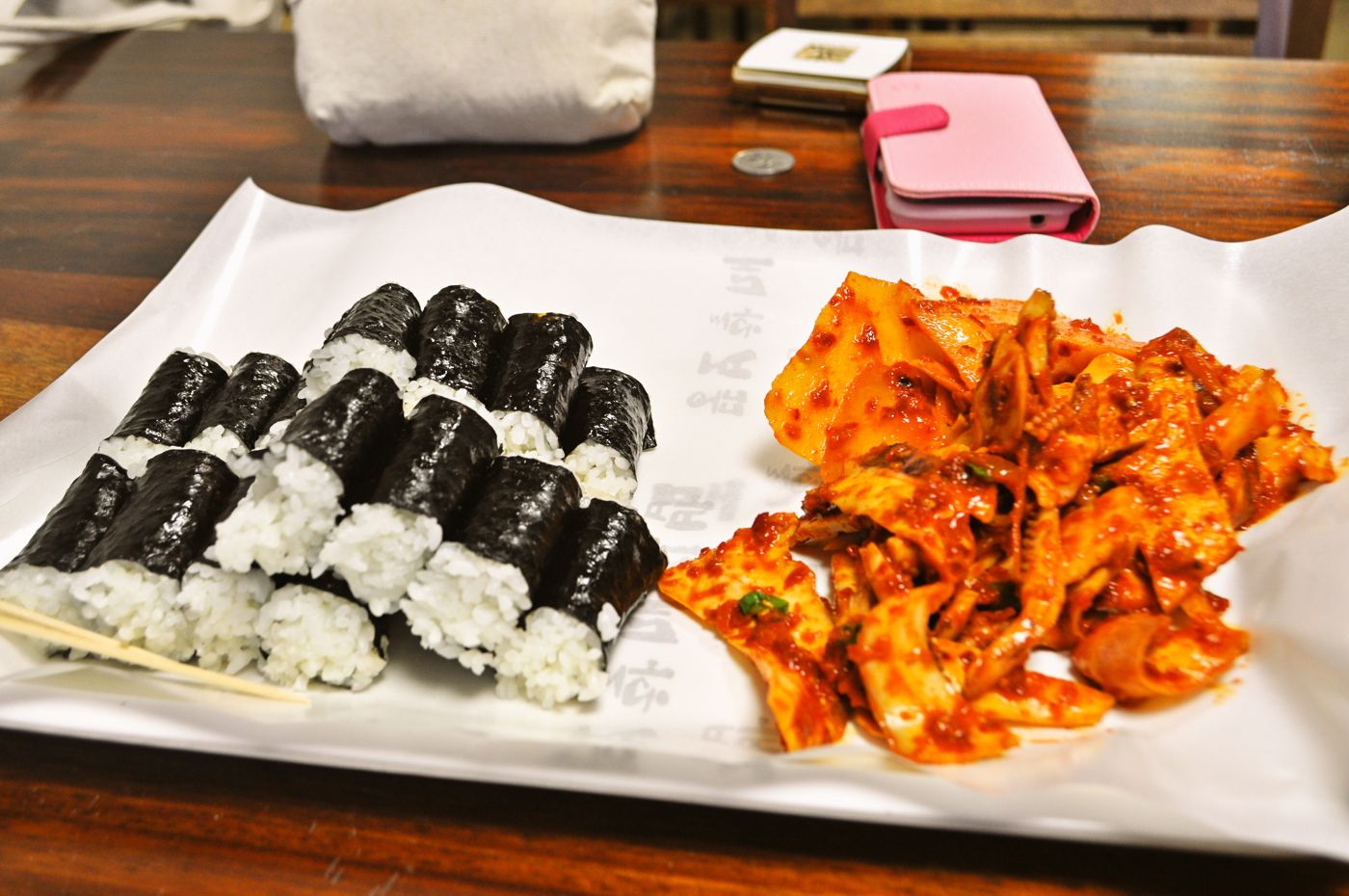 Chungmu Gimbap (Tongyeong Rice Rolls)충무김밥Finger-sized rolls of plain rice in laver, eaten with spicy squid and chunky radish kimchi on the side — Tongyeong's harbor food, built to survive summer heat.
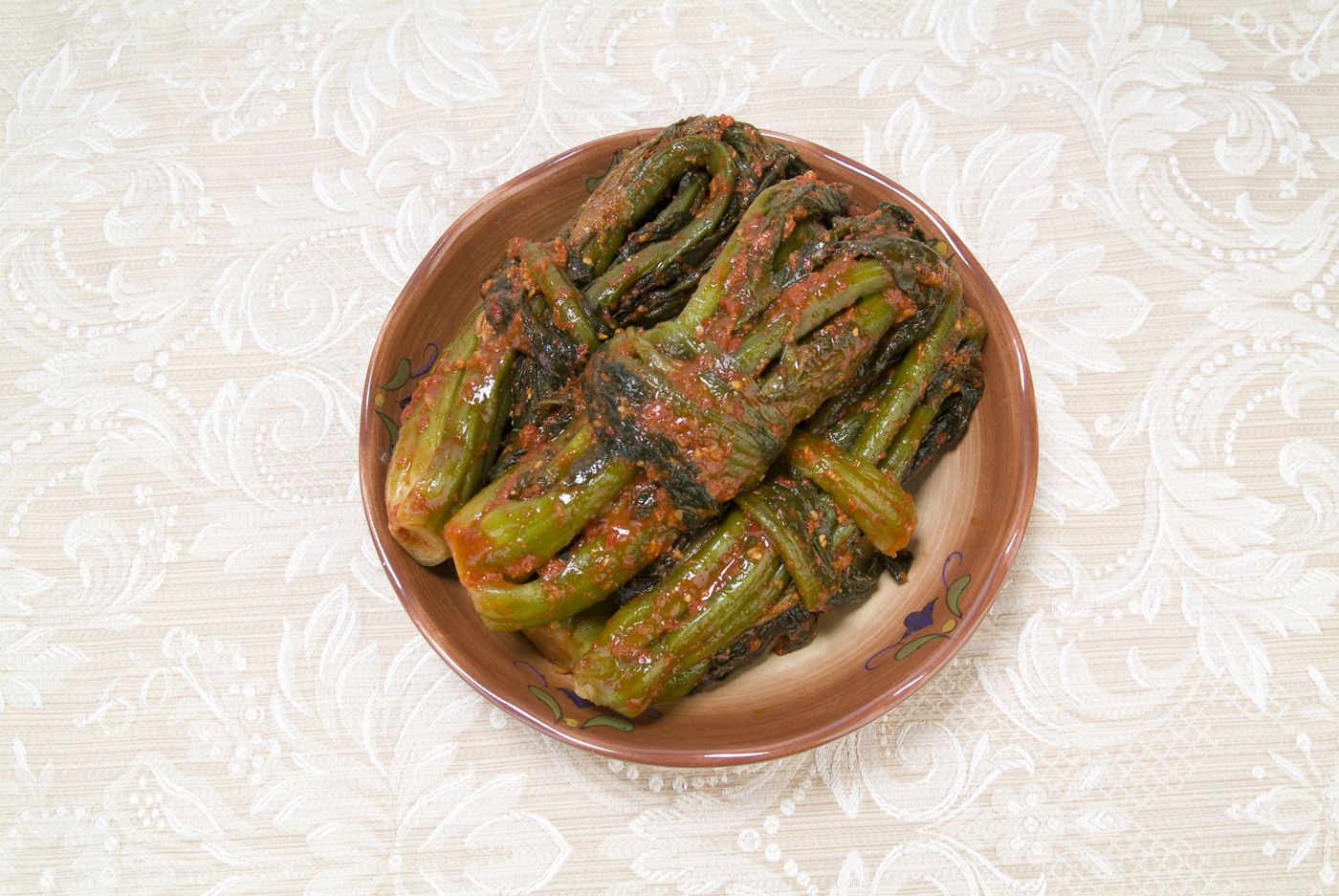 Mustard Leaf Kimchi갓김치Leaf mustard rolled in a chili and anchovy paste and fermented until its nose-tingling bite mellows — a Jeolla specialty, famously from Dolsan in Yeosu.
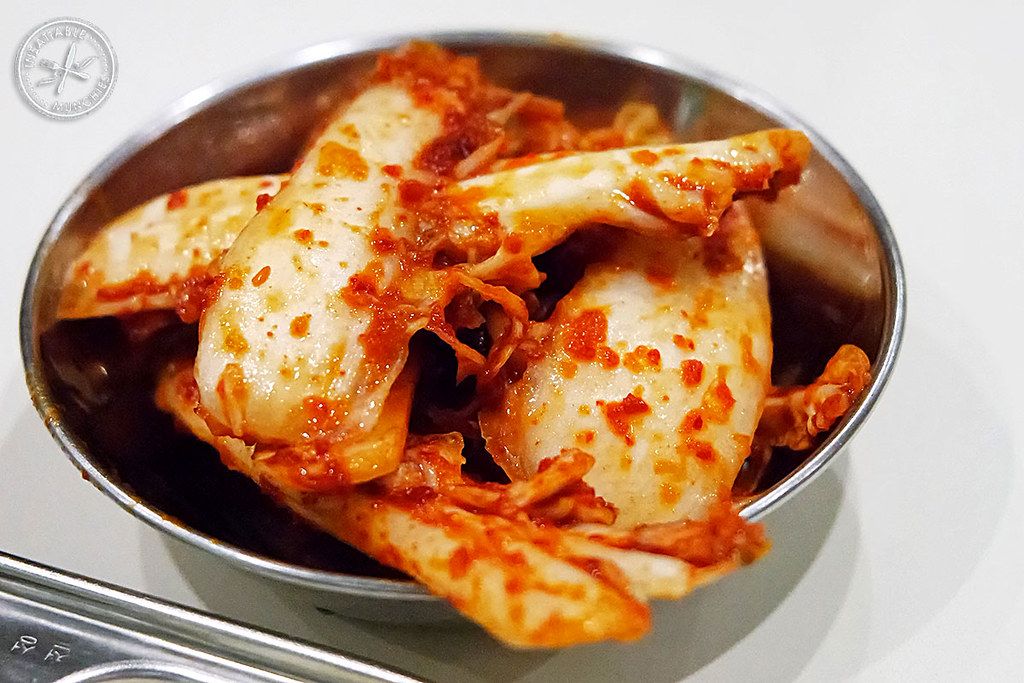 Fresh Cabbage Kimchi겉절이Napa cabbage salted only briefly, then tossed with chili, garlic and fish sauce and eaten the same day — kimchi at its freshest, crisp and bright.
- Pumpkin Kimchi for Stew호박김치Thick slices of pumpkin fermented with cabbage or young radish greens, then simmered into a mellow stew — a Hwanghae and Chungcheong cooking kimchi.
- Perilla Leaf Kimchi깻잎김치Stacks of perilla leaves layered with a soy, fish-sauce and chili seasoning — fragrant, slightly bitter summer kimchi peeled off one leaf at a time over rice.
 Cubed Radish Kimchi깍두기Korean radish cut into neat cubes and tossed with chili, garlic and salted shrimp — crunchy, juicy and a classic partner to rich soups.
- Cut Cabbage Kimchi막김치Napa cabbage cut into bite-size pieces before salting and tossed with the seasoning all at once — the quick, everyday way to make cabbage kimchi.
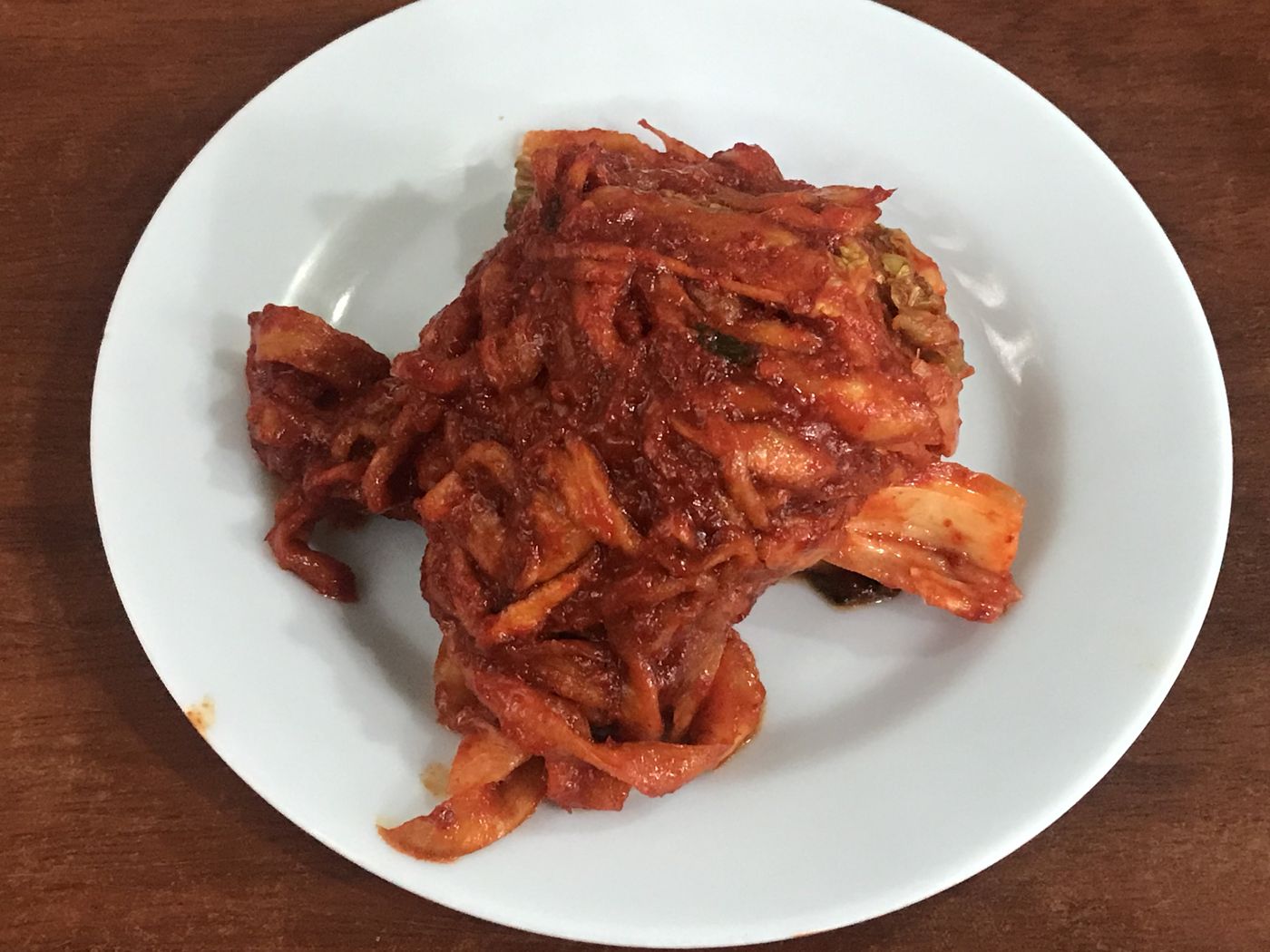 Mu Mallaengi Muchim무말랭이무침Sun-dried radish strips soaked until springy and tossed in a sweet, spicy chili dressing — crunchy, chewy and a long-keeping winter staple.
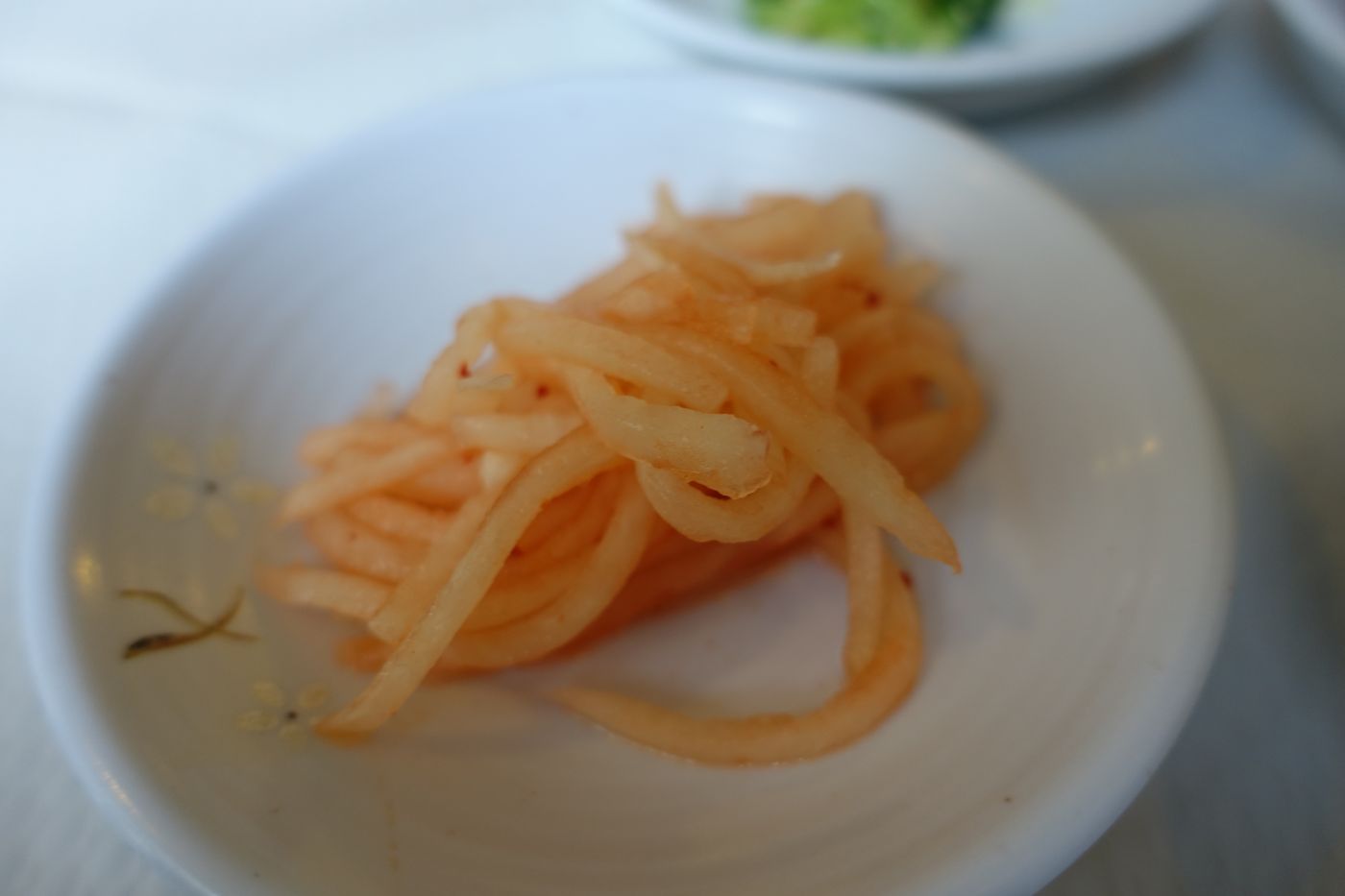 Musaengchae무생채Fine matchsticks of Korean radish dressed raw with chili flakes, a little vinegar and sugar — crisp, sweet-sharp and best made just before the meal.
- Salted Anchovies멸치젓Whole anchovies packed in heavy salt and aged for months — the south coast's kimchi jeotgal, also boned, dressed with chili and eaten with rice or in ssam.
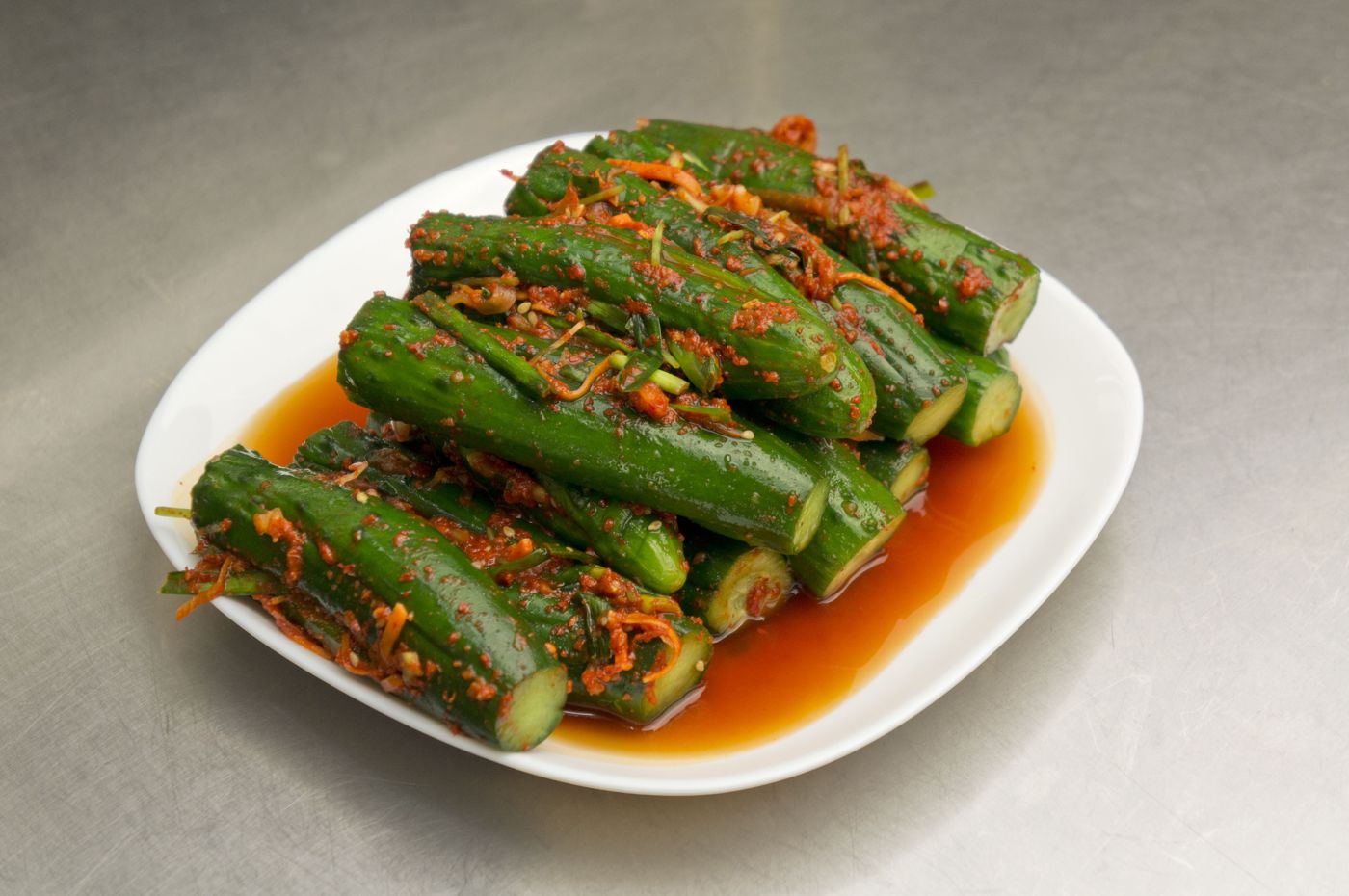 Stuffed Cucumber Kimchi오이소박이Cucumbers slit and stuffed with garlic chives, chili and garlic — a crisp, refreshing summer kimchi meant to be eaten young.
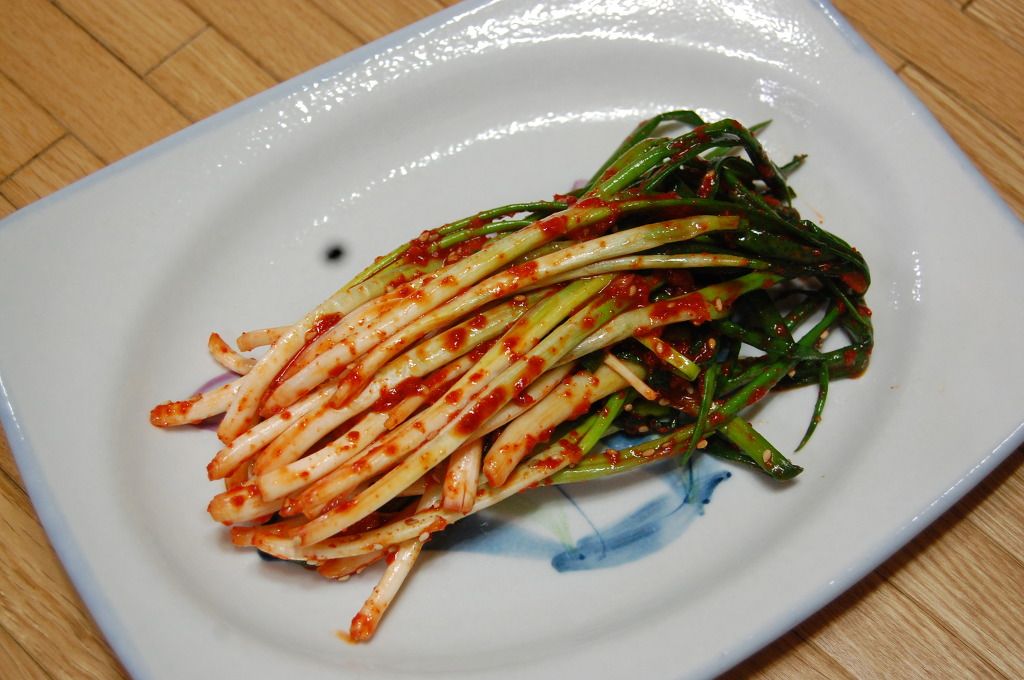 Green Onion Kimchi파김치Slender Korean green onions coated in a thick chili and anchovy-sauce paste — pungent when fresh, mellow and savory once ripe.
- Chunky Radish and Cabbage Kimchi섞박지Big, flat-cut pieces of radish and cabbage mixed in one chili and jeotgal seasoning — a late-autumn “mixed” kimchi, and the name for big radish kimchi today.
- Green Cabbage Kimchi양배추김치Crisp, quick kimchi of round green cabbage — once South Korea's stand-in when napa ran short, and still an everyday summer kimchi in North Korea.
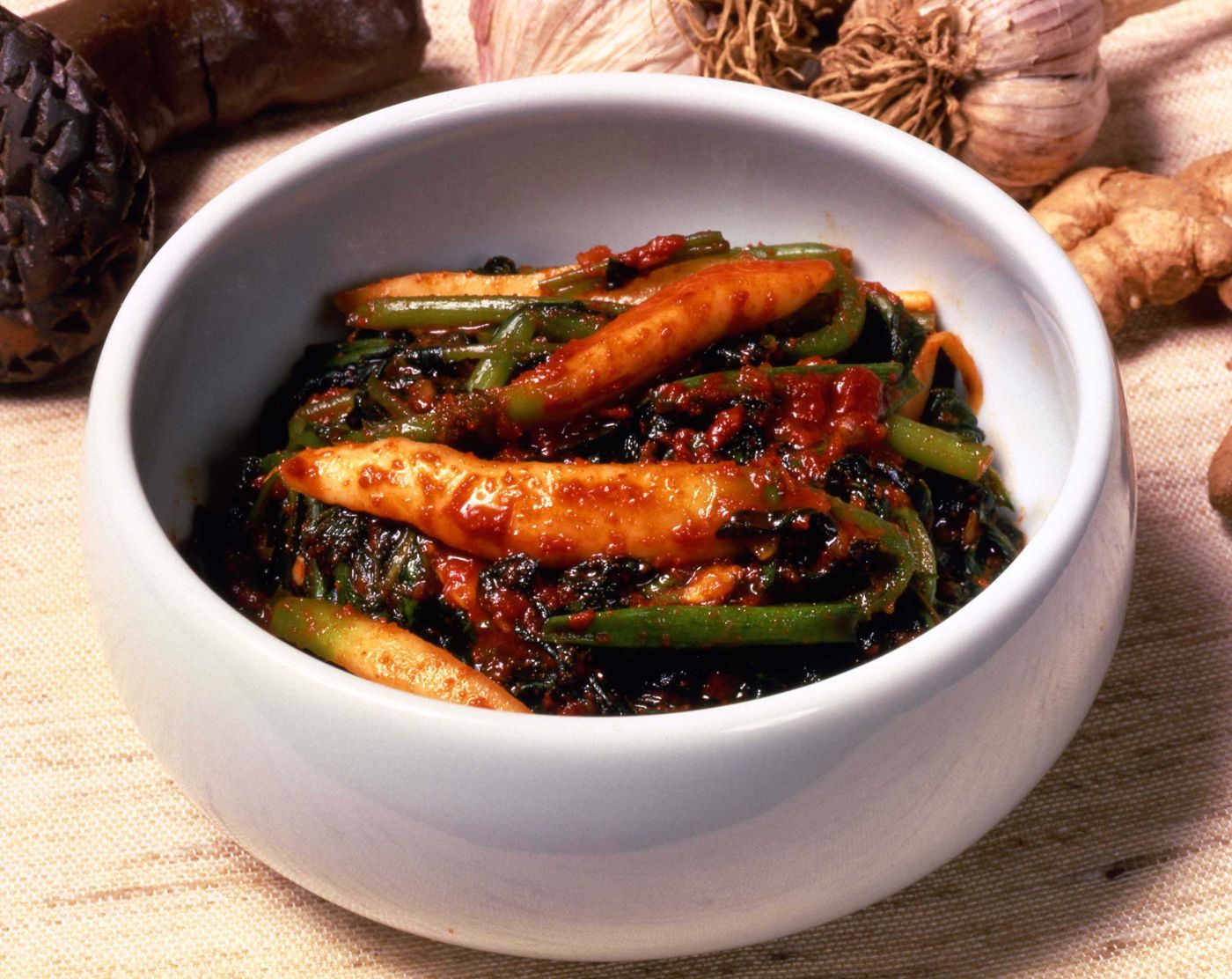 Young Summer Radish Kimchi열무김치Tender young radish greens in a loose, lightly spicy brine thickened with flour or rice paste — the classic summer kimchi, served over noodles and barley rice.
Sources
- 01멸치젓 (Myeolchijeot) — Encyclopedia of Korean Culture
- 02젓갈 (Jeotgal) — Encyclopedia of Korean Culture
- 03김치 (Kimchi) — Encyclopedia of Korean Culture
- 04Comparative Analysis of Chemical Composition and Food Safety of Commercial Fish Sauces from Four Asian Countries — PMC
- 05Effects of adding various salted seafood (jeotgal) types on the microbial, metabolic, and sensory dynamics of kimchi during fermentation — PMC
- 06Korean Food Composition Table (National Standard Food Composition Table) search — Rural Development Administration