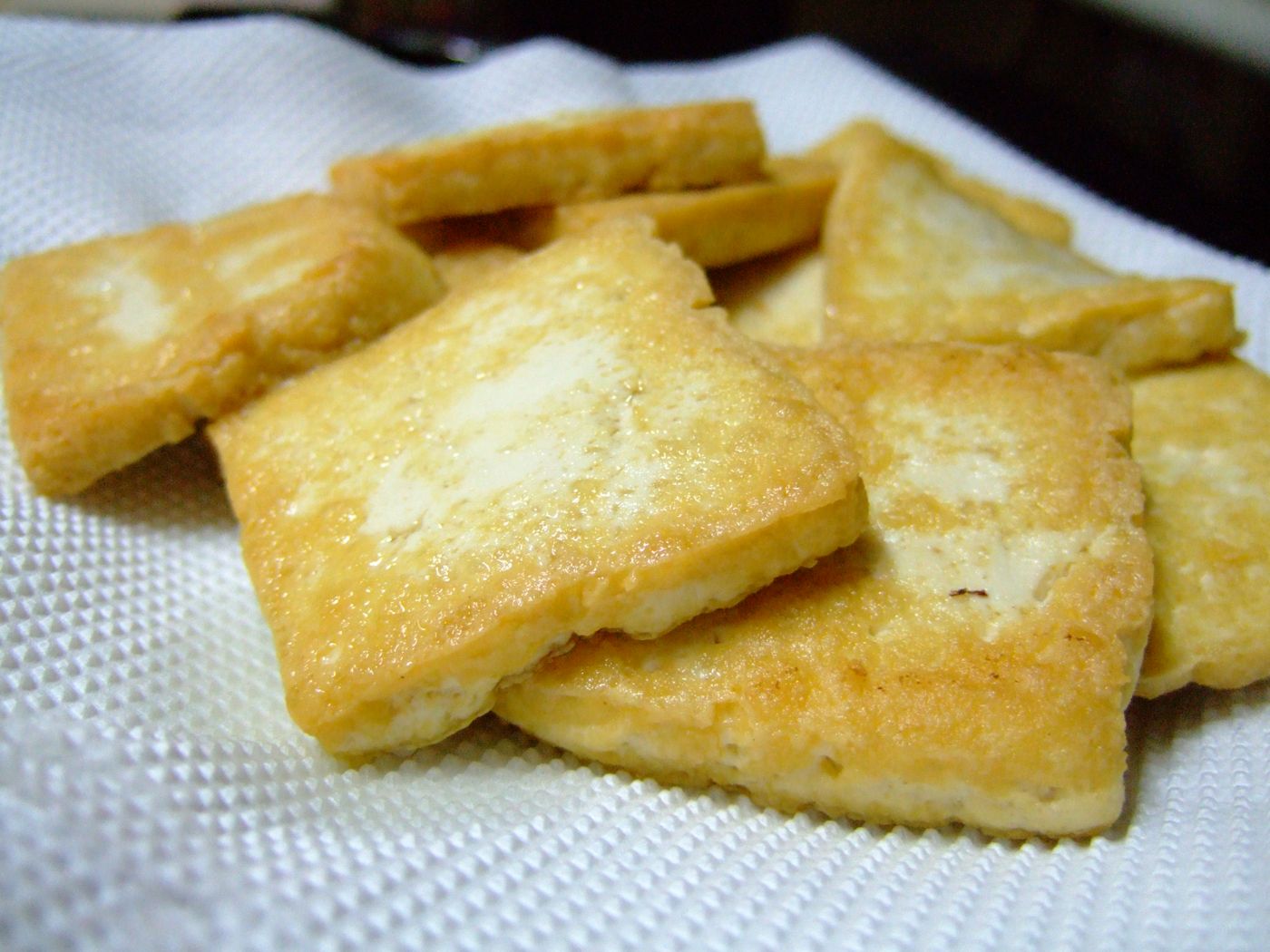
 Photo: 정희 강, CC BY 2.0, via Wikimedia Commons
Jeon · Pan-fried 전
Dubu Buchim (Pan-Fried Tofu with Seasoning Sauce)
두부부침
Romanization: dubu-buchim
Thick slices of firm tofu pan-fried until golden on both sides and spooned with a soy, chili and green-onion sauce — one of the simplest and most loved home banchan.
- Serves
- 4
- Prep
- 15 min
- Cook
- 15 min
Recipe
Ingredients · Serves 4
- 450 gFirm tofu1 block
- ¼ tspFine salt
- 2 tbspNeutral cooking oil
- 2 tbspSoy sauce
- 1 tbspWater
- 1 tspGochugaru
- 1 tspSugar
- 1 cloveGarlicfinely minced
- 2 tbspGreen onionfinely chopped
- 1 tspToasted sesame oil
- 1 tspToasted sesame seeds
Method
Technique: Jeon: Pan-Frying in Flour and Egg, Yangnyeom: Seasoning Basics
Step 1: Cut the tofu into slices about 1–1.5 cm thick. Lay them on paper towels, sprinkle lightly with the salt and leave for 10 minutes; pat dry on both sides.
Step 2: Meanwhile, mix the soy sauce, water, gochugaru, sugar, garlic, green onion, sesame oil and sesame seeds in a small bowl.
Step 3: Heat the oil in a large nonstick skillet over medium heat. Add the tofu in a single layer, leaving space between slices.
Step 4: Fry without moving for 4–5 minutes, until the underside is evenly golden, then turn and fry the other side the same way. Work in batches if needed, adding a little oil.
Step 5: Transfer to a plate and spoon a little sauce over each slice, or serve the sauce alongside. Eat warm or at room temperature the same day.
Origin & History
Tofu most likely reached Korea from China, perhaps through the busy exchanges of the late Goryeo period. The Encyclopedia of Korean Folk Culture cites a poem by the scholar Yi Saek as its first appearance in Korean writing, praising tofu as a welcome change from a diet of vegetable porridge. Through the Joseon dynasty, Buddhist temples attached to royal tombs — called jopo-sa, "tofu-making temples" — prepared it for memorial rites, and Korean tofu-making was admired abroad: the Sejong sillok records a Ming emperor praising Korean cooks for their tofu and asking for more to be sent.
Frying slices of tofu in oil is an old way of eating it. The folk-culture encyclopedia notes that the eighteenth-century Jeungbo sallim gyeongje calls broad slices fried in oil dubu-jeok, and that the same dish is known as dubu-jeon, dubu-gui or dubu-buchim. On the ancestral-rite table it is the sojeok, the meatless one of the three fried or skewered offerings, which shows how firmly it is woven into family ritual.
At the everyday table the plain fried slices are usually dressed with a spoonful of seasoned soy sauce. The contrast — a crisp, browned surface around a soft, mild center, with a salty, garlicky sauce — is why dubu-buchim remains a standby side dish.
Key Ingredients
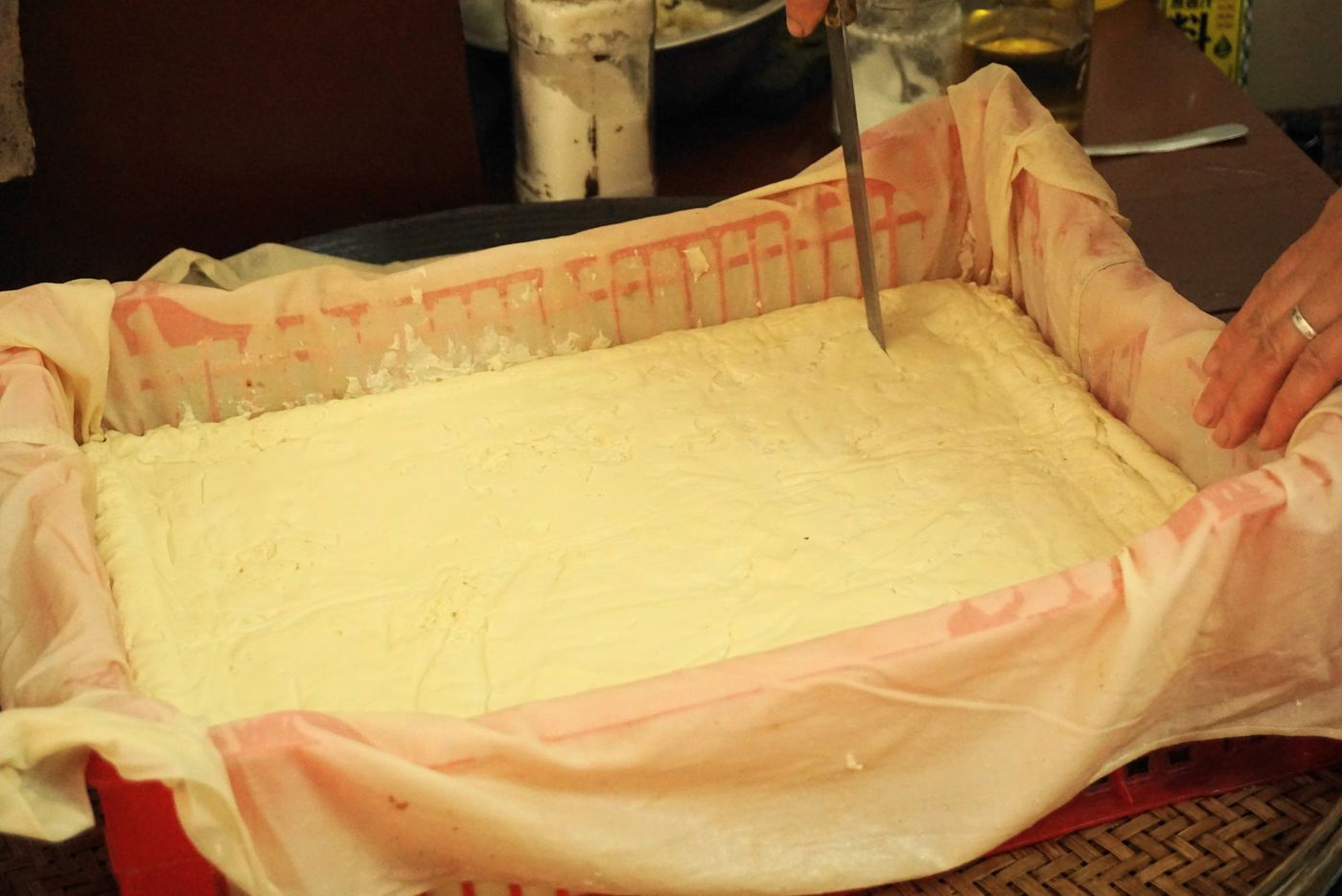 Tofu두부Fresh bean curd made by coagulating soy milk and pressing the curds. A quiet staple of Korean cooking since at least the late Goryeo period, it is pan-fried, braised in spicy soy glaze, or simmered in stews.
 Soy sauce간장Korean soy sauce, in two main kitchen forms: pale, salty guk-ganjang (soup soy sauce) brewed the traditional way from meju, and darker, sweeter jin-ganjang for braises and marinades.
 Gochugaru고춧가루Korean red chili powder, made from dried red peppers ground coarse or fine. It gives kimchi, gochujang and countless banchan their color and warmth.
 Garlic마늘Used raw, minced, pickled and roasted, garlic is one of the essential aromatics of Korean food — in seasonings, marinades, kimchi and namul.
 Green onion파Korean green onion (pa), from thick-stemmed daepa to slender scallions — chopped into nearly every seasoning sauce, soup and kimchi, and the star of pa-kimchi.
 Sesame참깨Toasted sesame seeds and sesame oil (chamgireum) finish countless Korean dishes, adding a nutty aroma and gloss.
Nutrition
| Calories | ~185 kcal |
|---|---|
| Protein | ~12 g |
| Fat | ~11.8 g |
| Carbohydrates | ~7.9 g |
| Fiber | ~3.7 g |
| Sodium | ~578 mg |
Notable forProtein · Magnesium · Manganese · Calcium
Tofu uses the Korean Food Composition Table entry “Tofu, Firm” (per 100 g: 97 kcal, 9.6 g protein, 64 mg calcium, 80 mg magnesium). The estimate assumes about 20 g of the frying oil is taken up by the tofu. Soy sauce uses the Korean table's fermented soy sauce; gochugaru uses the USDA red pepper (cayenne) entry as a stand-in; salt, oil, garlic, green onion, sugar, sesame oil and sesame seeds use USDA FoodData Central. Totals divided by four. Calcium content of tofu depends heavily on the coagulant used. Actual values vary with ingredients, portion size and preparation.
Health Benefits
- Plant protein: a serving supplies about 12 g of protein from soybeans, making the dish a useful protein source in meatless meals.
- Easily digested: the folk-culture encyclopedia notes that tofu keeps most of the soybean's protein and fat in a far more digestible form than cooked whole beans, which is one reason it was considered good food for older people.
- Minerals: tofu contributes magnesium and manganese, and calcium when it is set with a calcium-based coagulant.
Regional Variations
- Plain, for rites: salted slices fried without any coating are what appear on the memorial table as sojeok.
- With seasoning sauce: the everyday home version, topped with soy sauce, gochugaru, garlic, green onion and sesame.
- Starch- or egg-coated: the folk-culture encyclopedia describes slices dusted with starch, or dipped in flour and egg, before frying; the egg-dipped style is closer to a classic jeon.
- Pork-topped: seasoned minced pork spread thinly on each slice before frying.
- Into a braise: the fried slices are the starting point for dubu-jorim, simmered in the same kind of sauce until it is absorbed.
Pairings
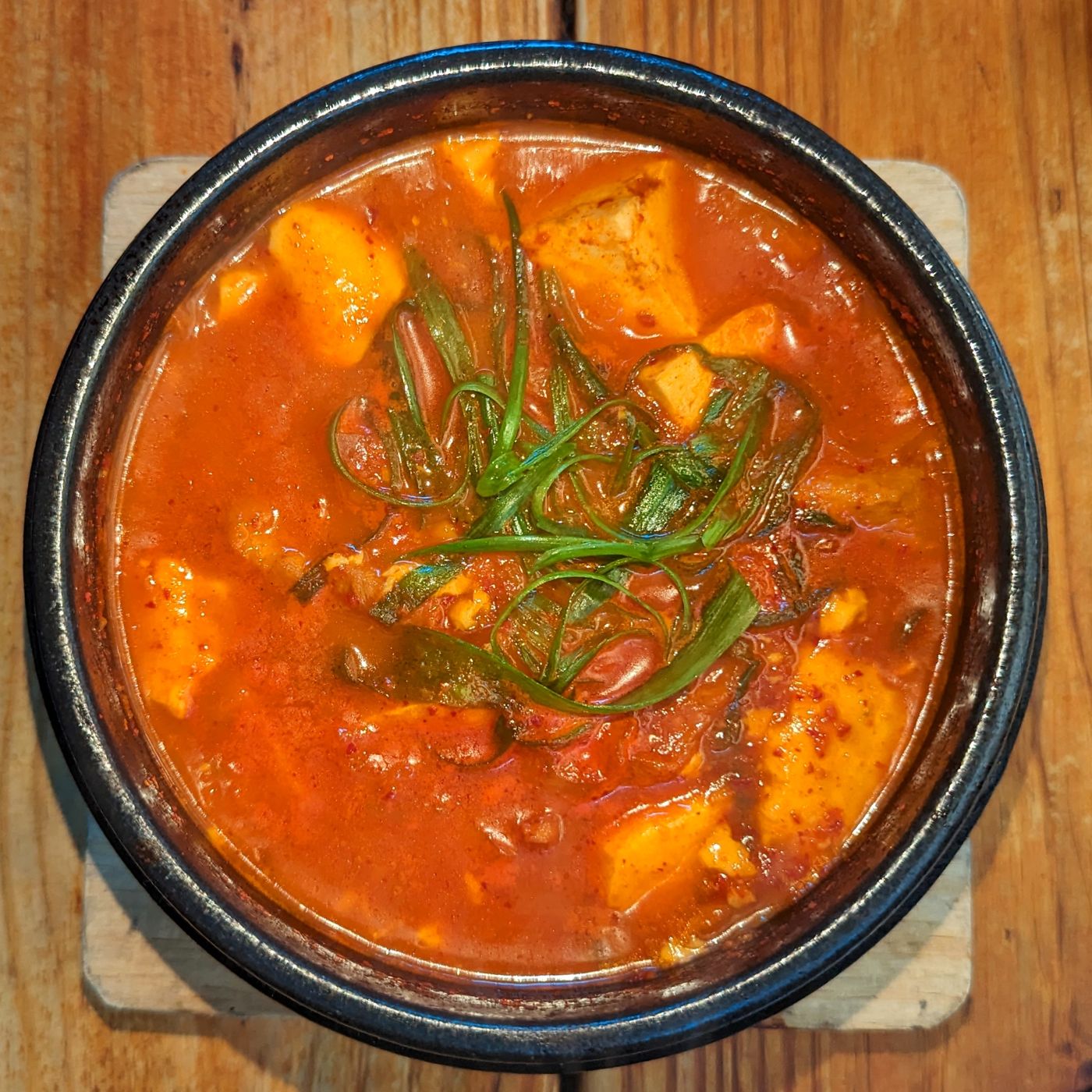 Kimchi Jjigae (Kimchi Stew)김치찌개Sour, well-aged napa cabbage kimchi simmered with pork and tofu into a tangy, spicy stew — the classic way to use up kimchi that has gone past its prime.
 Kongnamul Muchim콩나물무침Soybean sprouts cooked under a lid until just tender, then tossed with garlic, green onion and sesame oil — crisp, nutty and on tables across Korea.
 Sigeumchi Namul시금치나물Spinach blanched for a few seconds, squeezed dry and dressed with garlic, soy sauce and sesame — one of the simplest and most familiar namul.
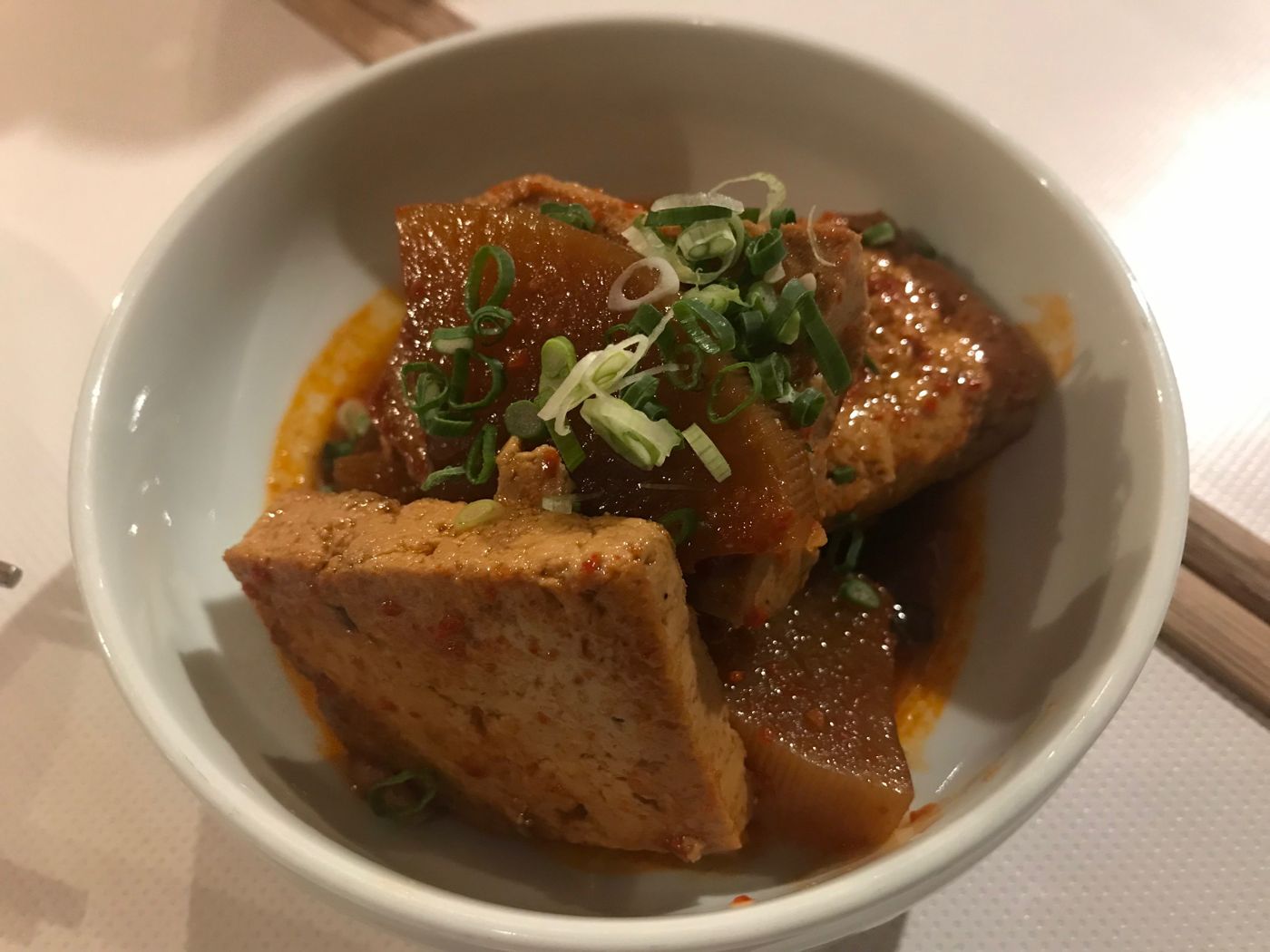 Dubu Jorim두부조림Slices of firm tofu pan-fried until golden, then simmered in a garlicky soy and chili sauce — an inexpensive, protein-rich staple of Korean home cooking.
Sources
- 01두부전 (Dubu-jeon) — Encyclopedia of Korean Folk Culture (National Folk Museum of Korea)
- 02두부 (Tofu) — Encyclopedia of Korean Folk Culture (National Folk Museum of Korea)
- 03두부 (Tofu) — Encyclopedia of Korean Culture
- 04Korean Food Composition Table: Tofu, Firm — National Institute of Agricultural Sciences
- 05Food Allergies — U.S. Food and Drug Administration
Last updated