Ingredient
Korean Vinegar
식초
Romanization: sikcho
Vinegar in the Korean kitchen, from naturally fermented grain and fruit vinegars, such as persimmon vinegar, to everyday brewed vinegar. It sharpens muchim, pickles and the dipping sauce chogochujang.
Flavor
Brewed vinegar is sharp and clean. Traditional grain vinegars are rounder, with mellow sweetness and a light malty depth; fruit vinegars such as persimmon carry gentle fruit notes.
Origin & History
Korean vinegar grew up alongside Korean alcohol. Nobody knows exactly when it was first made, but the Encyclopedia of Korean Culture cites a Joseon saying, recorded in Jibong yuseol, that vinegar is simply ‘bitter wine,’ and reasons that vinegar must be as old as brewing. Goryeo-era texts mention vinegar in cooking and medicine, and the first Korean recipe for making it, a barley vinegar, appears in the 16th-century Gosa chwaryo.
Joseon cookbooks and household manuals record many kinds: grain vinegars from rice, wheat and barley; fruit vinegars from persimmon and jujube; vinegars from vegetables such as bellflower root; and honey vinegar. Jeungbo sallim gyeongje ranks vinegar second only to jang as a seasoning no household should be without. Making it was a careful, almost ritual task. Many households kept a vinegar bottle on the kitchen hearth, topped it up with leftover alcohol and shook it whenever they passed — which, as the encyclopedia notes, kept it warm and fed oxygen to the acetic-acid bacteria.
Modern vinegars fall into brewed vinegars made by fermenting grains, alcohol or fruit, and synthetic vinegar diluted from glacial acetic acid. Slowly fermented grain and fruit vinegars, persimmon vinegar among them, carry on the traditional styles. In banchan, vinegar balances sweet and salty in cucumber and radish muchim, pickles jangajji, and mixed with gochujang becomes chogochujang, the classic dip for raw fish.
Nutrition
| Calories | 1 kcal |
|---|---|
| Protein | 0.02 g |
| Fat | 0 g |
| Carbohydrates | 0.34 g |
| Fiber | 0 g |
| Sodium | 1 mg |
Values from the Korean Food Composition Table (RDA, 2016 data). The same table lists brown-rice vinegar (현미식초) at 22 kcal and persimmon vinegar (감식초) at 10 kcal per 100 g; vinegar is used by the spoonful, so its nutritional contribution is negligible. Actual values vary with ingredients, portion size and preparation.
Health Benefits
- Flavor without salt or fat: A splash of vinegar brightens dressings and can reduce the need for extra salt.
- Blood sugar research: A 2017 meta-analysis of clinical trials found that vinegar taken with a meal modestly lowered post-meal blood glucose and insulin responses. Research is ongoing, and vinegar is not a treatment for diabetes.
- Acidity: Typical vinegars contain about 3–5 percent acetic acid. Drinking vinegar undiluted can injure the throat and stomach; a published case report describes esophageal ulcers in a teenager who drank an under-diluted vinegar beverage daily. Always dilute drinking vinegars well.
Informational, not medical advice. Talk to a qualified professional about your own health and diet.
Dishes with Korean Vinegar
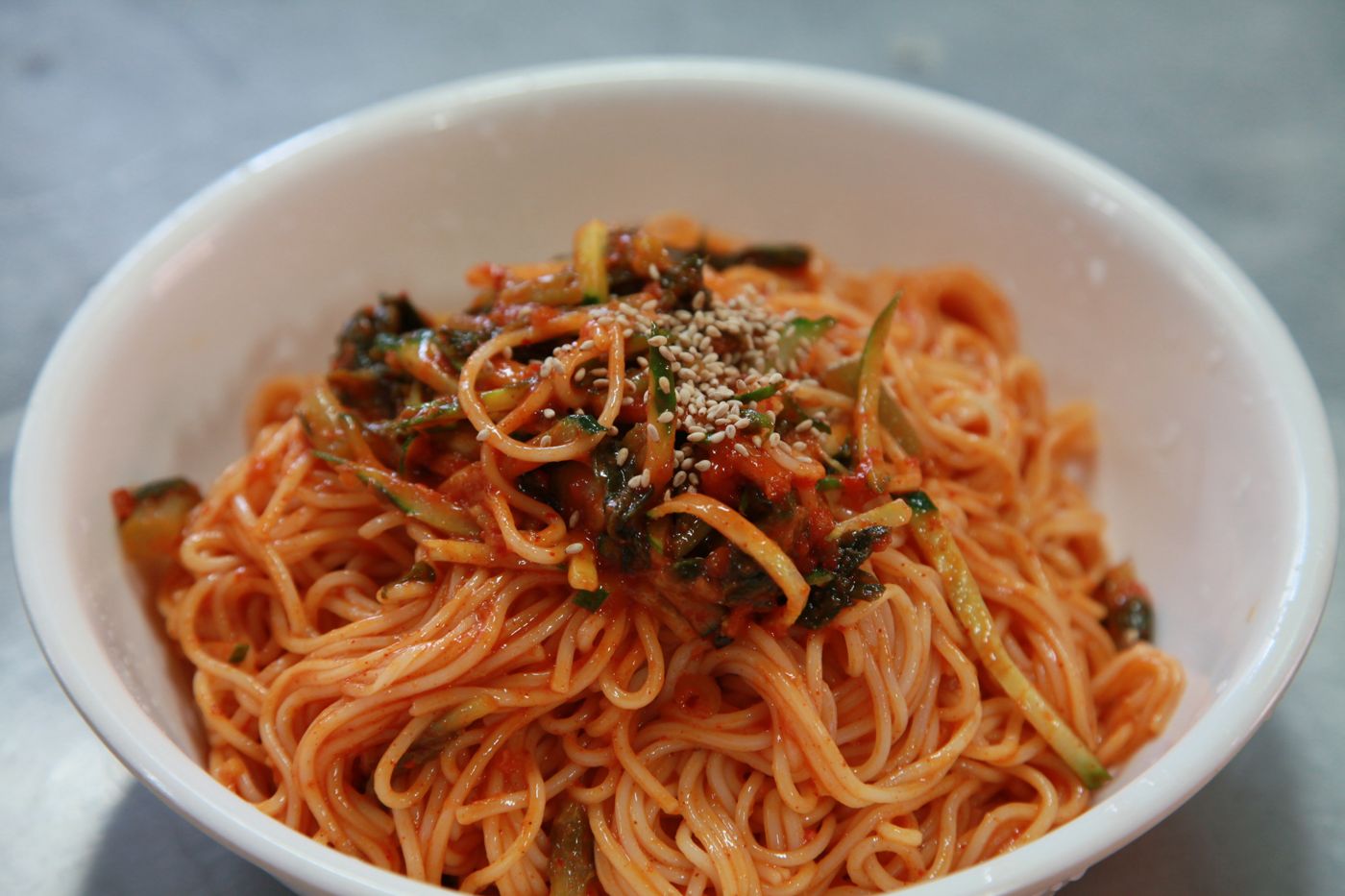 Bibim-guksu (Spicy Mixed Noodles)비빔국수Thin wheat noodles tossed cold in a sweet, sour and spicy gochujang dressing with cucumber, kimchi and egg — a modern turn on the soy-dressed goldongmyeon of Joseon.
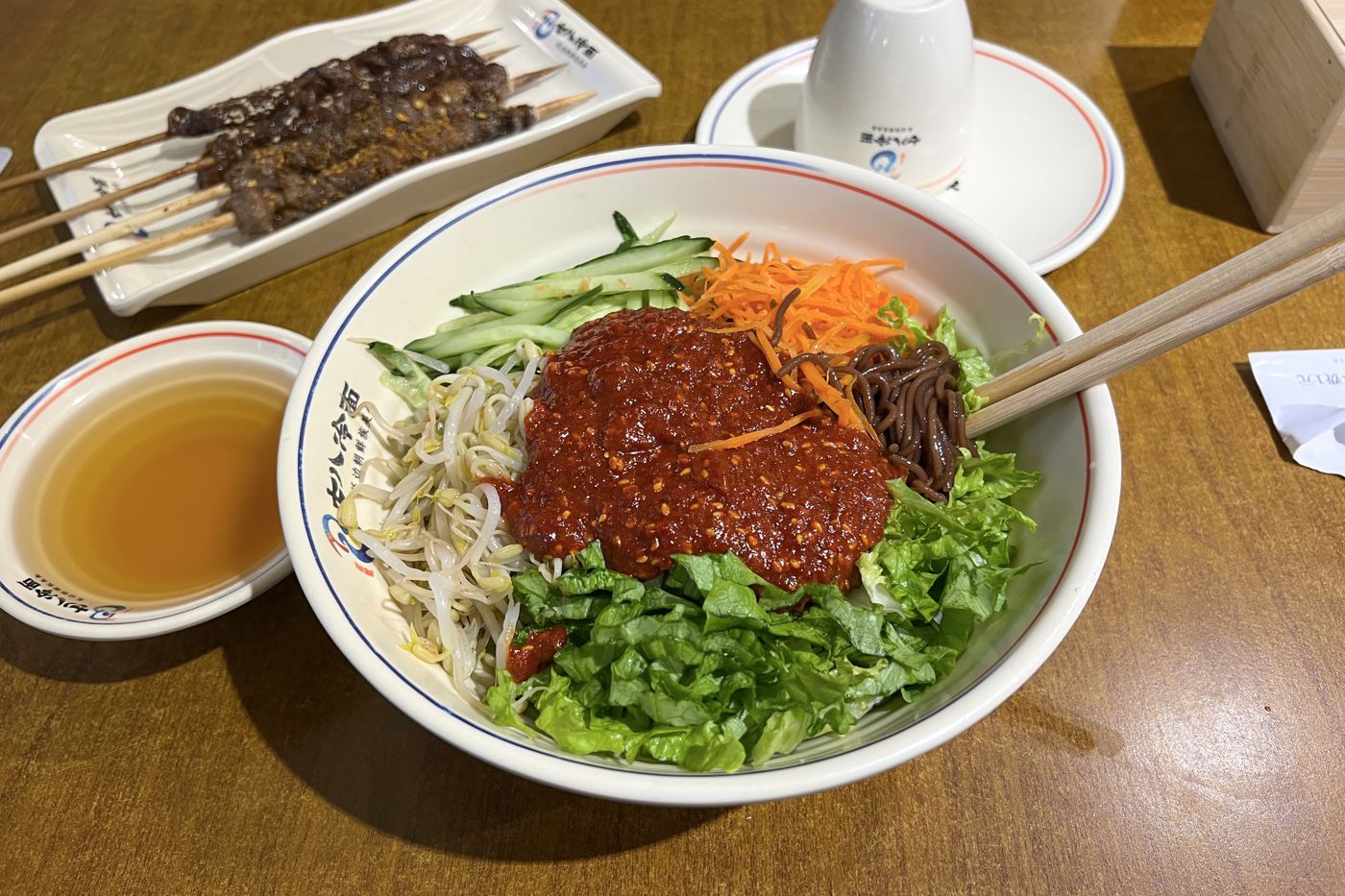 Bibim-naengmyeon (Spicy Mixed Cold Noodles)비빔냉면Chewy starch noodles tossed in a sweet, vinegary chili sauce, topped with cucumber, pear and egg — the Hamheung tradition of hoe-naengmyeon, carried south by refugees.
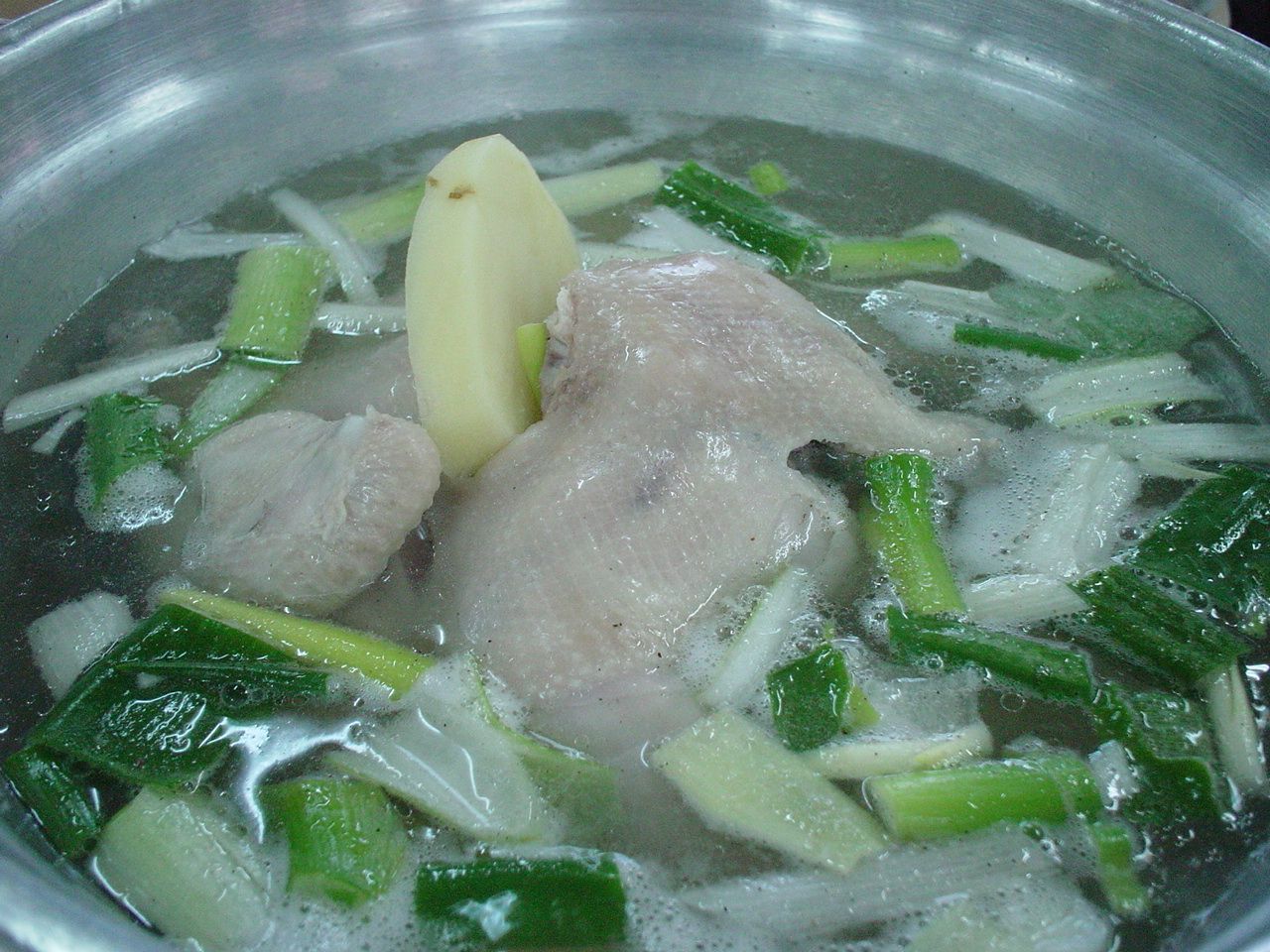 Dak Hanmari ("One Whole Chicken" Hot Pot)닭한마리A whole chicken simmered at the table with potatoes, rice cakes and green onion, dipped in a vinegar-mustard sauce, then finished with noodles in the broth — a Dongdaemun original.
- Dallae Muchim (Seasoned Wild Chive)달래무침Raw wild chives, bulbs and all, tossed with soy sauce, chili flakes, a touch of vinegar and sesame — a sharp, garlicky spring muchim made in minutes.
- Doraji Muchim (Spicy Raw Bellflower Root Salad)도라지무침Raw bellflower root, shredded and salt-rubbed to tame its bitterness, then dressed with gochugaru, gochujang, vinegar and sugar — crunchy, sweet, sour and hot.
- Dureup Muchim (Seasoned Aralia Shoots)두릅무침Tender aralia tree shoots blanched briefly and dressed with a tangy gochujang sauce — a fleeting mid-spring delicacy with a resinous, slightly bitter edge.
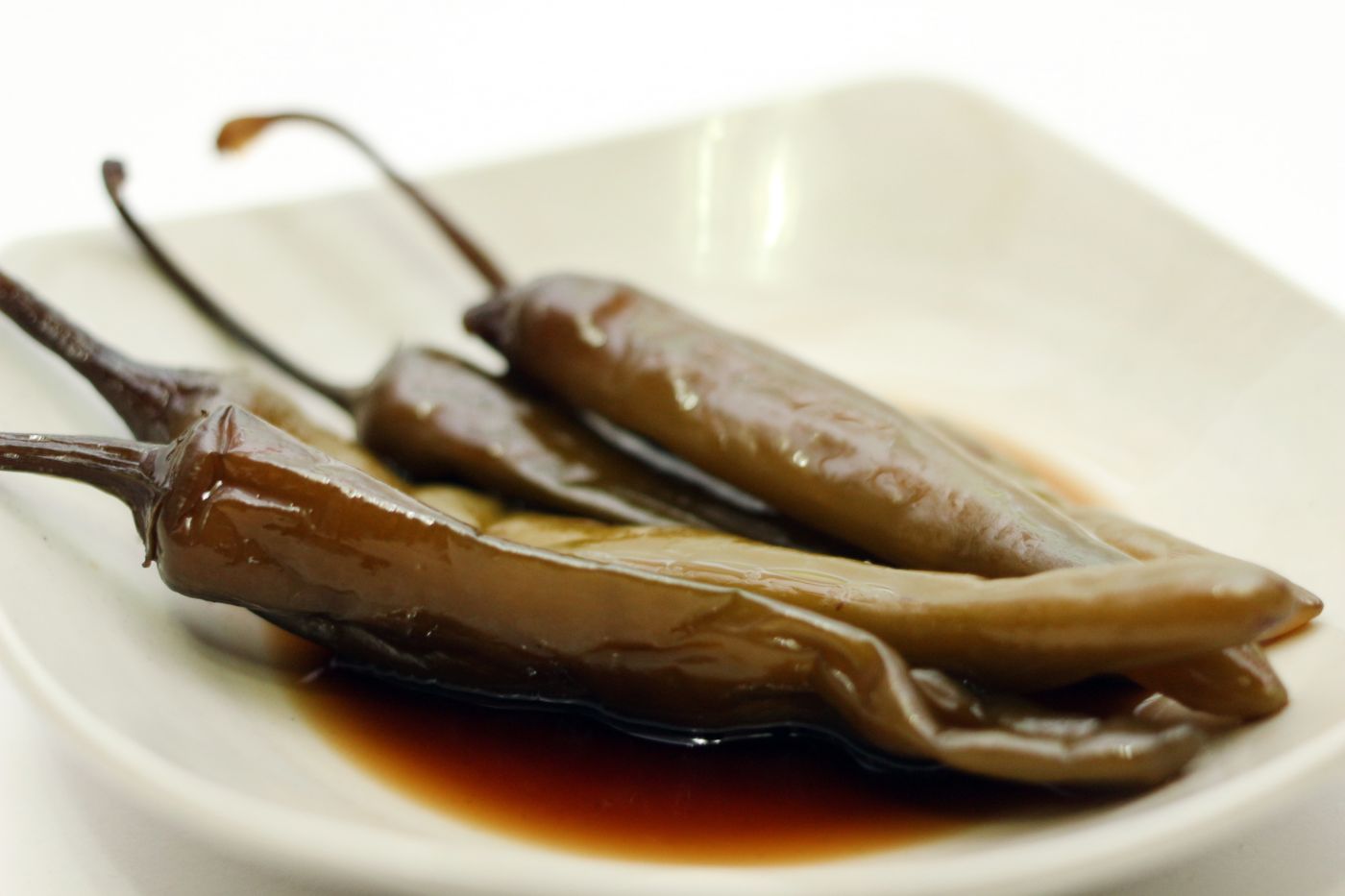 Soy-Pickled Green Chilies고추장아찌Whole green chilies cured in a sweet, tangy soy brine until olive-drab and tender-crisp — a keeping pickle that brings heat and salt to plain rice.
- Spicy Skate Salad홍어회무침Strips of raw or lightly fermented skate, firmed in vinegar and tossed with minari, radish and a sweet-sour gochujang dressing — Jeolla's feast-day salad.
- Salted Radish Pickle짠지Whole radishes packed in heavy salt over winter and opened in spring — soaked, sliced thin and served in vinegared cold water or dressed with chili.
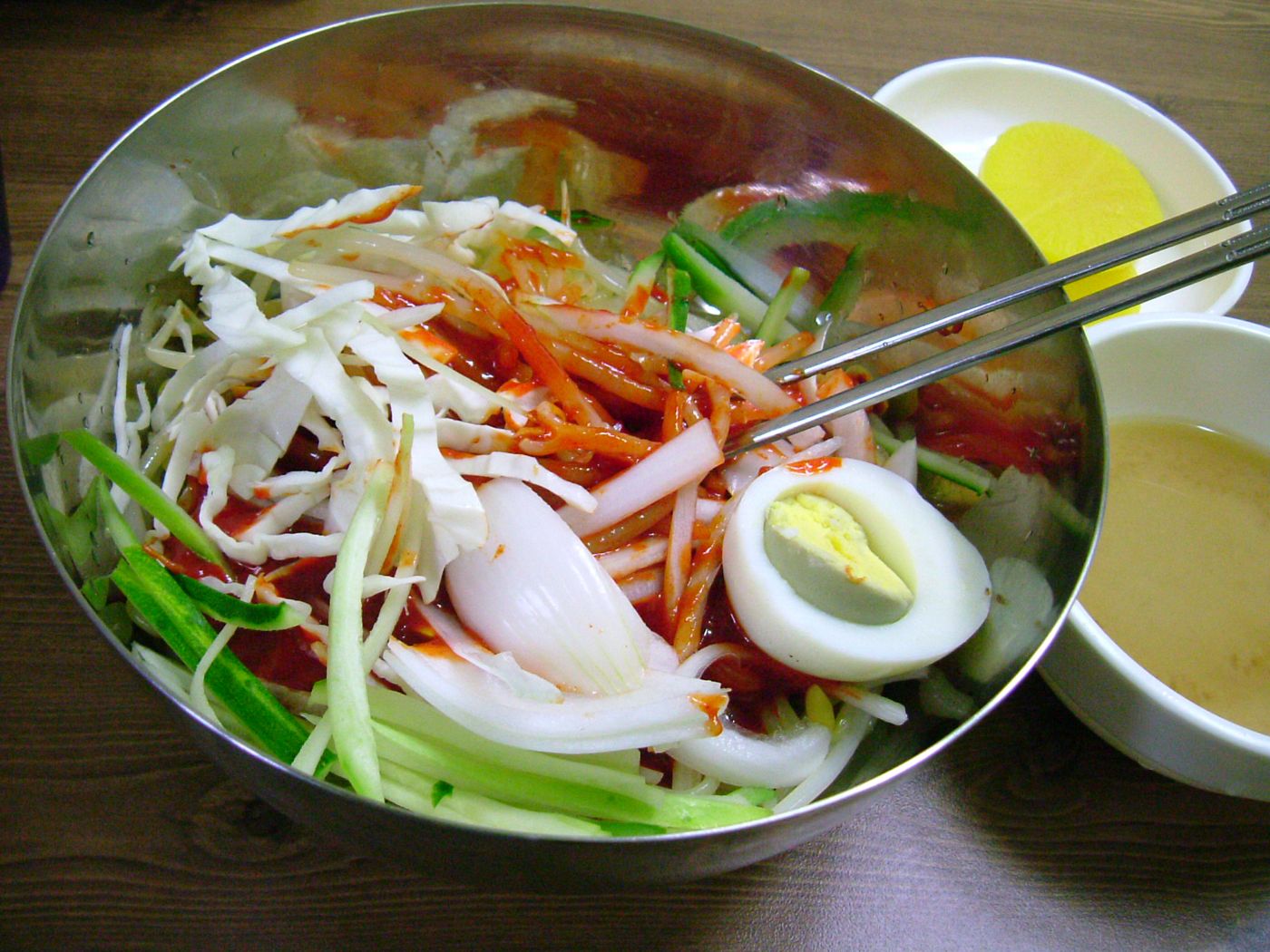 Jjolmyeon (Chewy Spicy Noodles)쫄면Thick, rubbery-chewy wheat noodles tossed cold in a sweet-sour gochujang sauce with cabbage, sprouts and egg — a snack-bar classic invented in 1970s Incheon.
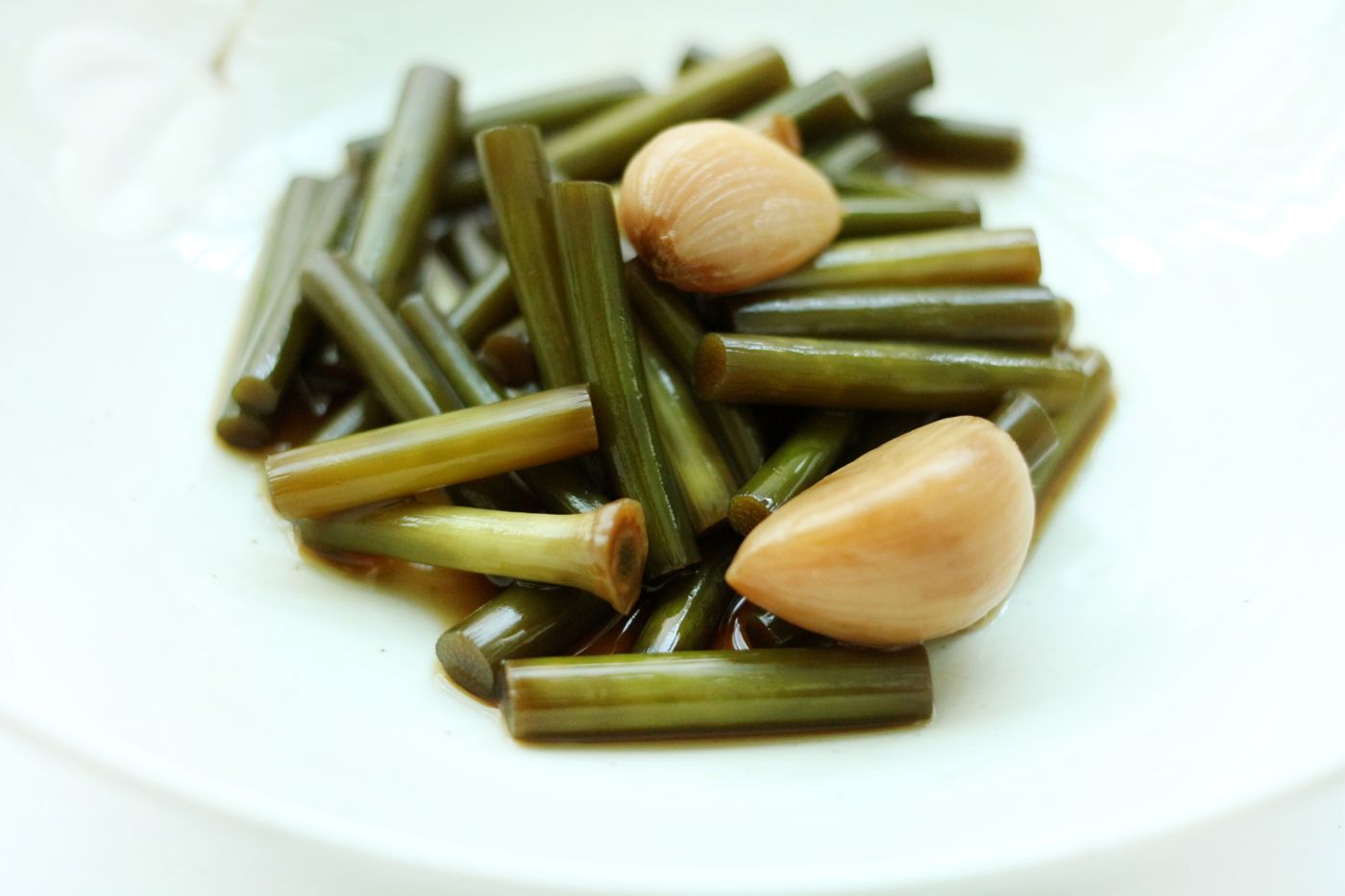 Pickled Garlic Scapes마늘종장아찌Spring garlic scapes cut into short lengths and steeped in a sweet-sour soy brine — crisp, gently garlicky jangajji that keeps for months.
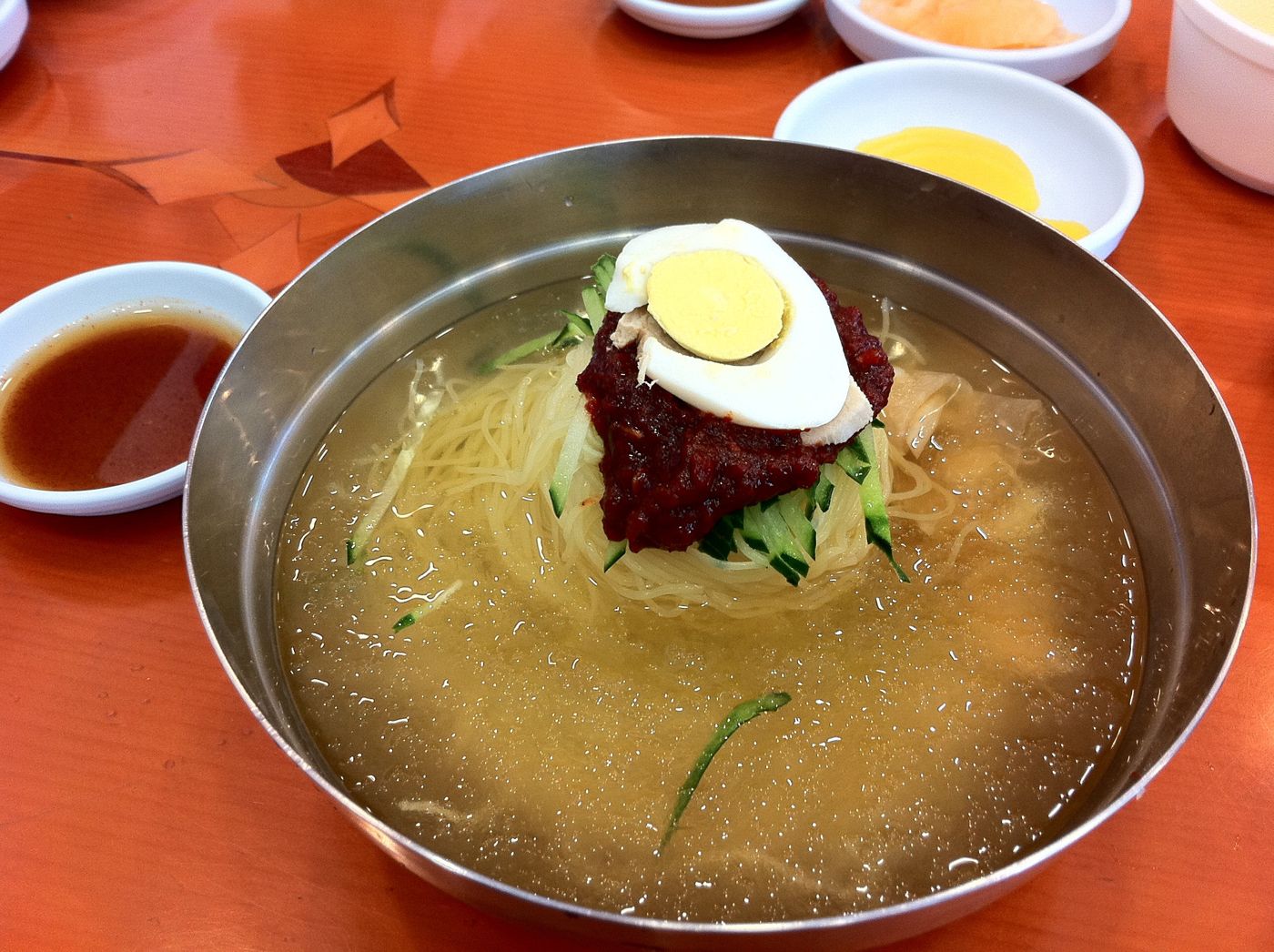 Milmyeon (Busan Wheat Cold Noodles)밀면Chewy wheat-and-starch noodles in an icy, sweet-sour beef broth or tossed in chili paste — Busan's refugee-era answer to northern naengmyeon.
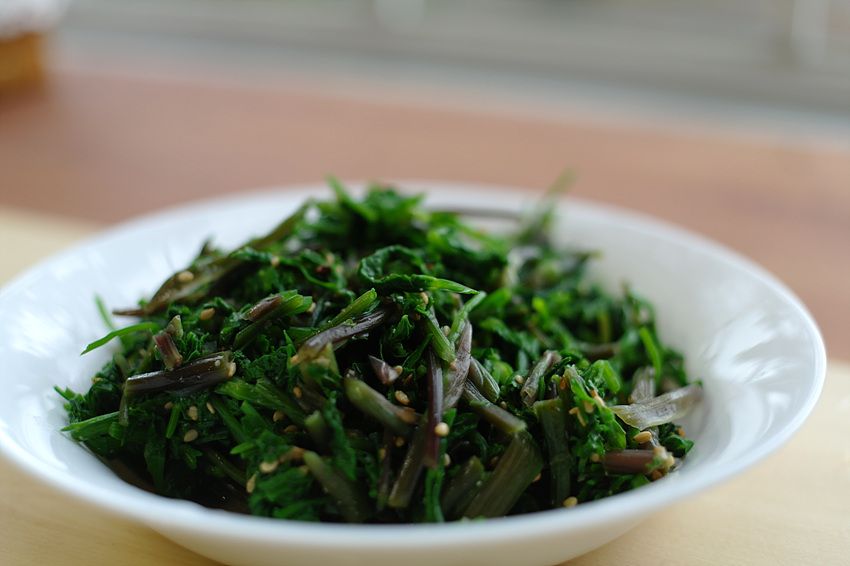 Minari Muchim미나리무침Korean water dropwort blanched for a few seconds and dressed with tangy gochujang and vinegar — fresh, herbal and very much a taste of spring.
- Miyeok Muchim미역무침Rehydrated wakame seaweed and cucumber in a light sweet-and-sour soy dressing — cool, slippery and refreshing, especially in summer.
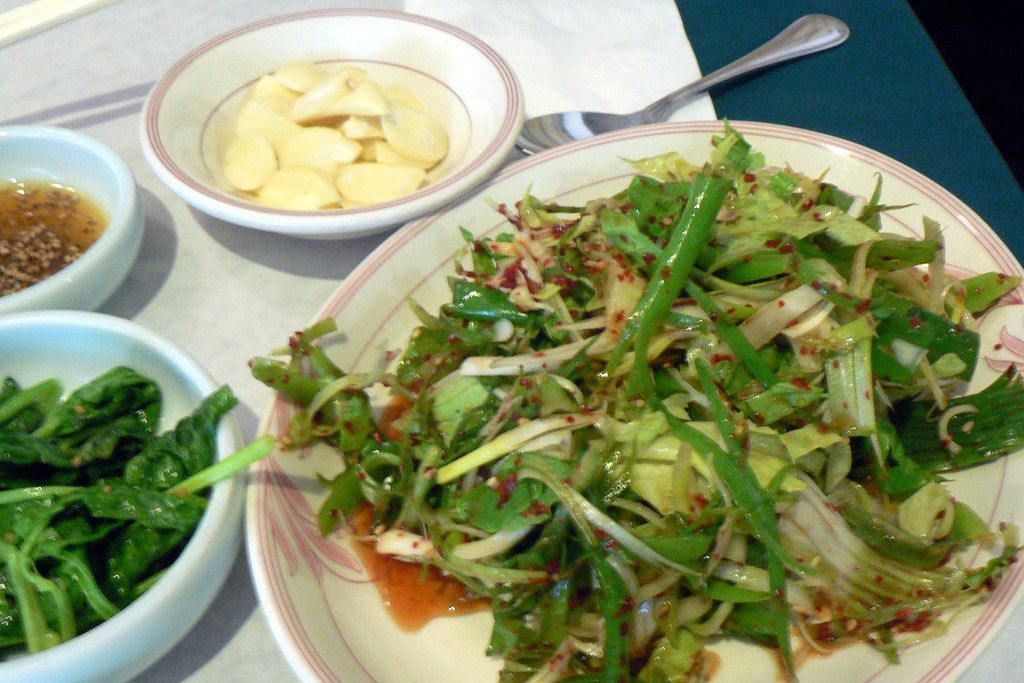 Pajeori (Green Onion Salad)파절이Fine shreds of Korean green onion tossed with chili flakes, soy sauce, vinegar and sesame oil — the sharp, bright salad that cuts the richness of grilled pork.
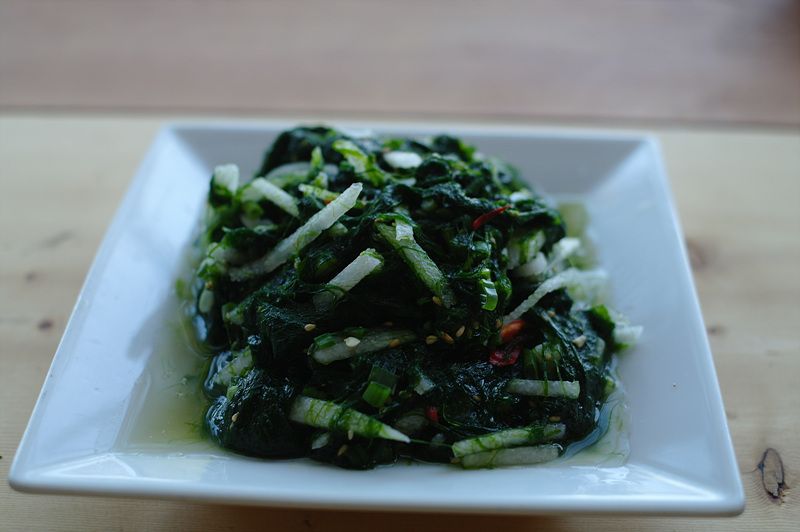 Parae Muchim (Green Laver Salad)파래무침Fresh green laver rinsed, squeezed and tossed with salted radish in a sweet-sour dressing — a bright, briny winter banchan from Korea's southwest coast.
- Sangchu Geotjeori (Fresh Lettuce Salad, Kimchi-Style)상추겉절이Tender leaf lettuce dressed at the last minute with soy sauce, chili flakes, green onion and sesame — the crisp, spicy salad served beside grilled pork.
- Ssukgat Muchim (Seasoned Crown Daisy)쑥갓무침Crown daisy greens blanched for a few seconds and dressed with soy sauce, a touch of vinegar, garlic and sesame — a soft namul with a distinctive herbal fragrance.
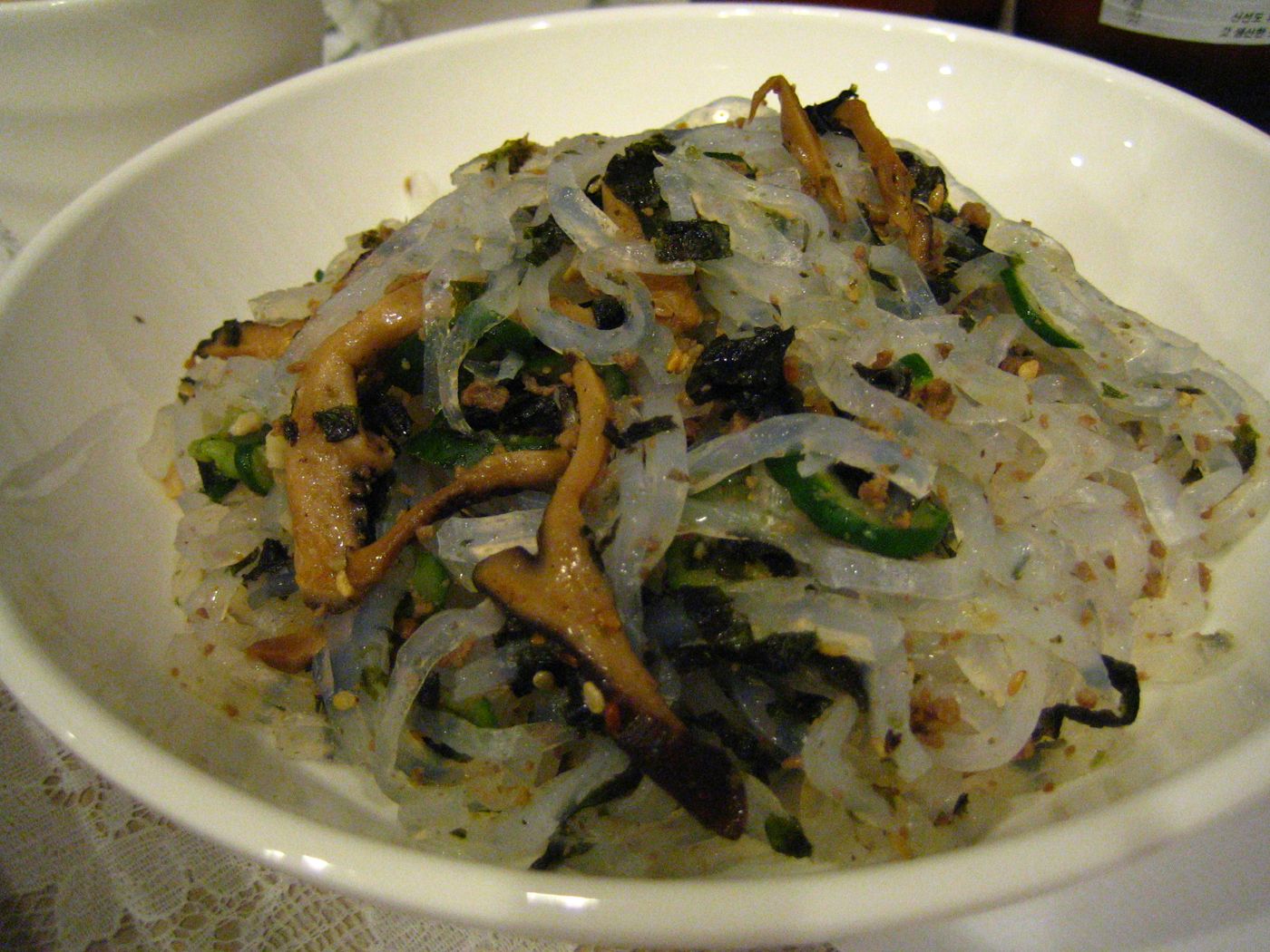 Tangpyeongchae탕평채Mung bean jelly tossed with beef, sprouts, water dropwort, egg and roasted gim in a soy-vinegar dressing — a classic spring dish named after a Joseon policy of political harmony.
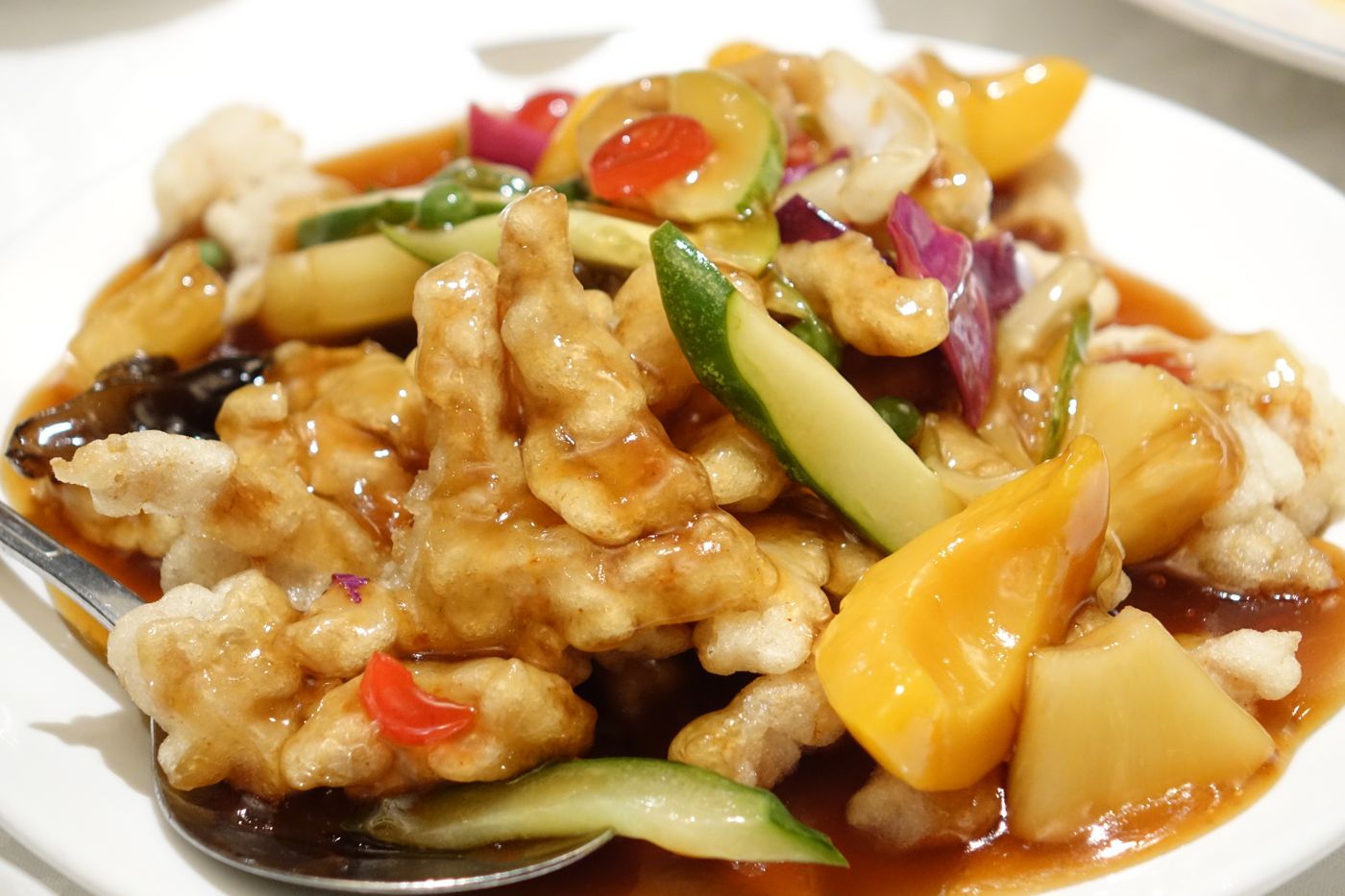 Tangsuyuk (Sweet and Sour Pork)탕수육Strips of pork in a crisp starch batter, fried twice and dressed with a glossy sweet-and-sour vegetable sauce — the shared platter of the Korean-Chinese restaurant.
- Soy-Pickled Onions양파장아찌Chunks of onion steeped in a sweet, tangy soy brine until mellow and crunchy — a quick modern jangajji that cuts through grilled meats and fried foods.
Sources
- 01식초 (Vinegar) — Encyclopedia of Korean Culture
- 02Vinegar consumption can attenuate postprandial glucose and insulin responses; a systematic review and meta-analysis of clinical trials — Diabetes Research and Clinical Practice (2017)
- 03Corrosive Esophageal Injury due to a Commercial Vinegar Beverage in an Adolescent — Clinical Endoscopy (PMC)
- 04Korean Food Composition Table (National Standard Food Composition Table) search — Rural Development Administration