Bap · Rice dishes 밥
Kongnamul-bap (Soybean Sprout Rice)
콩나물밥
Romanization: kongnamul-bap
Rice steamed over a bed of soybean sprouts, often with a little beef, and eaten with a spoonful of soy-and-scallion sauce — a thrifty one-pot meal from Chungcheong.
- Serves
- 4
- Prep
- 15 min
- Cook
- 30 min
RegionChungcheong
Jump to recipeRecipe
Ingredients · Serves 4
- 360 gShort-grain white rice2 cups, washed and soaked 30 minutes
- 300 gSoybean sproutsrinsed, any husks removed
- 100 gBeef (sirloin or round), mincedoptional
- 1 tspSoy saucefor the beef
- 2 clovesGarlicminced, divided
- 1 tspToasted sesame oilfor the beef
- 380 mlWaterslightly less than usual; the sprouts release water
- 4 tbspSoy saucefor the seasoning sauce
- 2 stalksGreen onionfinely chopped, for the sauce
- 1 tspGochugarufor the sauce
- 1 tbspToasted sesame oilfor the sauce
- 1 tbspToasted sesame seedsfor the sauce
- 1 tspSugarfor the sauce, optional
Method
Technique: Cooking Bap
Step 1: Drain the soaked rice. Mix the beef with 1 tsp soy sauce, half the garlic and 1 tsp sesame oil.
Step 2: Spread the soybean sprouts over the bottom of a heavy pot, stone pot or rice cooker, scatter the beef over them, and spread the rice on top. Pour in the water.
Step 3: Cover and bring to a boil over medium-high heat, then reduce to low and cook for 15 minutes without lifting the lid (or use the rice cooker's normal setting).
Step 4: Turn off the heat and let stand, covered, for 10 minutes so the rice finishes steaming.
Step 5: Meanwhile, mix the 4 tbsp soy sauce with the green onion, remaining garlic, gochugaru, sesame oil, sesame seeds and sugar.
Step 6: Fold the sprouts and rice together gently with a paddle and serve in bowls. Each person mixes in the sauce a spoonful at a time.
Origin & History
Soybean sprouts (kongnamul) have been grown in Korea for centuries. The Encyclopedia of Korean Culture notes that they appear as daeduhwang in Hyangyak gugeupbang, a medical text from the reign of the Goryeo king Gojong, where the sprouts were dried in the sun for medicinal use; Joseon sources record a stir-fried sprout dish and the name hwangdua. See soybean sprouts.
No one knows when cooks began steaming sprouts and rice together, but the encyclopedia identifies kongnamul-bap as a local dish that took root in Chungcheong province. The method is simple: seasoned sprouts go in the bottom of the pot, washed rice on top, and the whole is cooked like ordinary rice. The encyclopedia warns against the reverse arrangement — sprouts laid over the rice taste raw and grassy and lose their moisture.
Kongnamul-bap belongs to a family of byeolmibap, "special rices" cooked with vegetables, grains or mushrooms, which stretched a little rice into a filling meal. It was traditionally cooked in a soapstone pot (gopdolsot) or an earthenware casserole and, says the encyclopedia, tastes best eaten hot straight from the pot. Like bibimbap, it relies on a seasoning sauce added at the table rather than in the pot. See cooking bap and rice in Korean culture.
Key Ingredients
 Rice쌀Short, round grains of japonica rice that cook up glossy, soft and gently clinging. Steamed white rice, bap, is the center of the Korean table: every banchan, soup and stew is planned to be eaten with it.
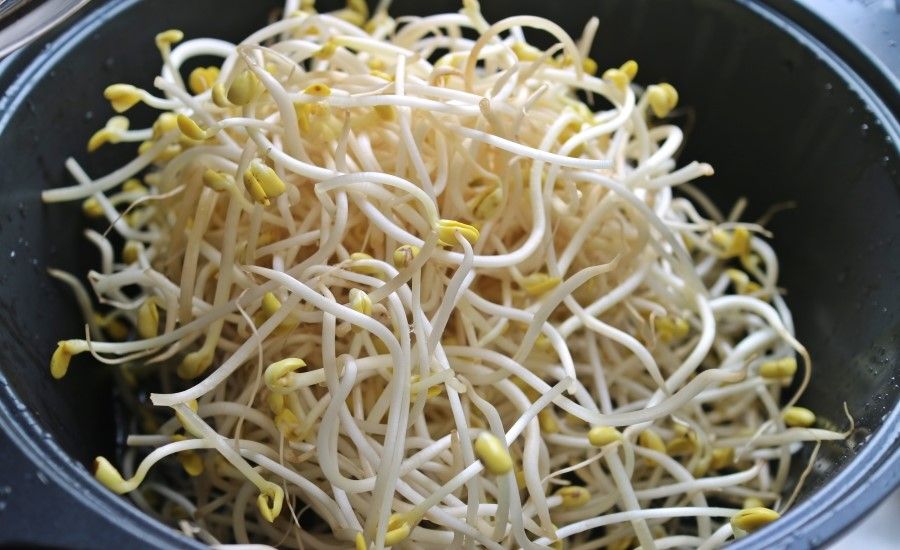 Soybean sprouts콩나물Soybeans sprouted in the dark until they grow long, pale stems topped with a yellow bean. A staple of everyday Korean cooking in kongnamul-muchim, clear sprout soup and sprout rice.
 Soy sauce간장Korean soy sauce, in two main kitchen forms: pale, salty guk-ganjang (soup soy sauce) brewed the traditional way from meju, and darker, sweeter jin-ganjang for braises and marinades.
 Garlic마늘Used raw, minced, pickled and roasted, garlic is one of the essential aromatics of Korean food — in seasonings, marinades, kimchi and namul.
 Green onion파Korean green onion (pa), from thick-stemmed daepa to slender scallions — chopped into nearly every seasoning sauce, soup and kimchi, and the star of pa-kimchi.
 Gochugaru고춧가루Korean red chili powder, made from dried red peppers ground coarse or fine. It gives kimchi, gochujang and countless banchan their color and warmth.
 Sesame참깨Toasted sesame seeds and sesame oil (chamgireum) finish countless Korean dishes, adding a nutty aroma and gloss.
Nutrition
| Calories | ~545 kcal |
|---|---|
| Protein | ~23 g |
| Fat | ~15 g |
| Carbohydrates | ~83 g |
| Fiber | ~2.9 g |
| Sodium | ~1120 mg |
Notable forFolate · Protein
Estimated by summing USDA FoodData Central (SR Legacy) values for raw medium-grain white rice (FDC 168879), raw soybean sprouts (FDC 169284), top sirloin (FDC 168728), soy sauce (FDC 174277), sesame oil, sesame seeds, garlic, scallions, sugar and red pepper (FDC 170932, as a stand-in for gochugaru), divided by 4. Assumes every spoonful of the sauce is eaten; most people use about half, which saves roughly 400–500 mg sodium. Folate is counted from the sprouts only, because USDA's rice entry is enriched. Actual values vary with ingredients, portion size and preparation.
Health Benefits
- Soybean sprouts: a source of folate and vitamin C, and noticeably higher in protein than most vegetables. See vegetables and namul.
- Stretching the rice: a generous layer of sprouts adds volume and crunch for few calories, so a bowl feels substantial with less rice.
- Little added fat: the rice is steamed, not fried; most of the fat comes from the optional beef and the sesame in the sauce.
Regional Variations
- Chungcheong style: the encyclopedia's version — seasoned sprouts under the rice, cooked in a stone or earthenware pot.
- With beef or pork: a little minced beef seasoned with soy sauce and garlic, laid in with the sprouts, is the most common home addition.
- Stone-pot (dolsot) kongnamul-bap: cooked or served in a heated stone pot to form a crisp crust (nurungji) on the bottom.
- Seafood or mushroom versions: oysters, clams or mushrooms are sometimes added in season.
Pairings
 Doenjang Jjigae (Soybean Paste Stew)된장찌개A thick, savory stew of fermented soybean paste with tofu, zucchini and whatever the season offers — the everyday pot at the center of the Korean table.
 Napa Cabbage Kimchi배추김치Salted napa cabbage layered with a red paste of chili, garlic, ginger and fermented seafood, then left to ripen: the kimchi most people picture first.
 Gyeran Jjim (Steamed Egg)계란찜Eggs whisked with water or broth and gently steamed into a silky, savory custard, often seasoned with salted shrimp and served bubbling hot.