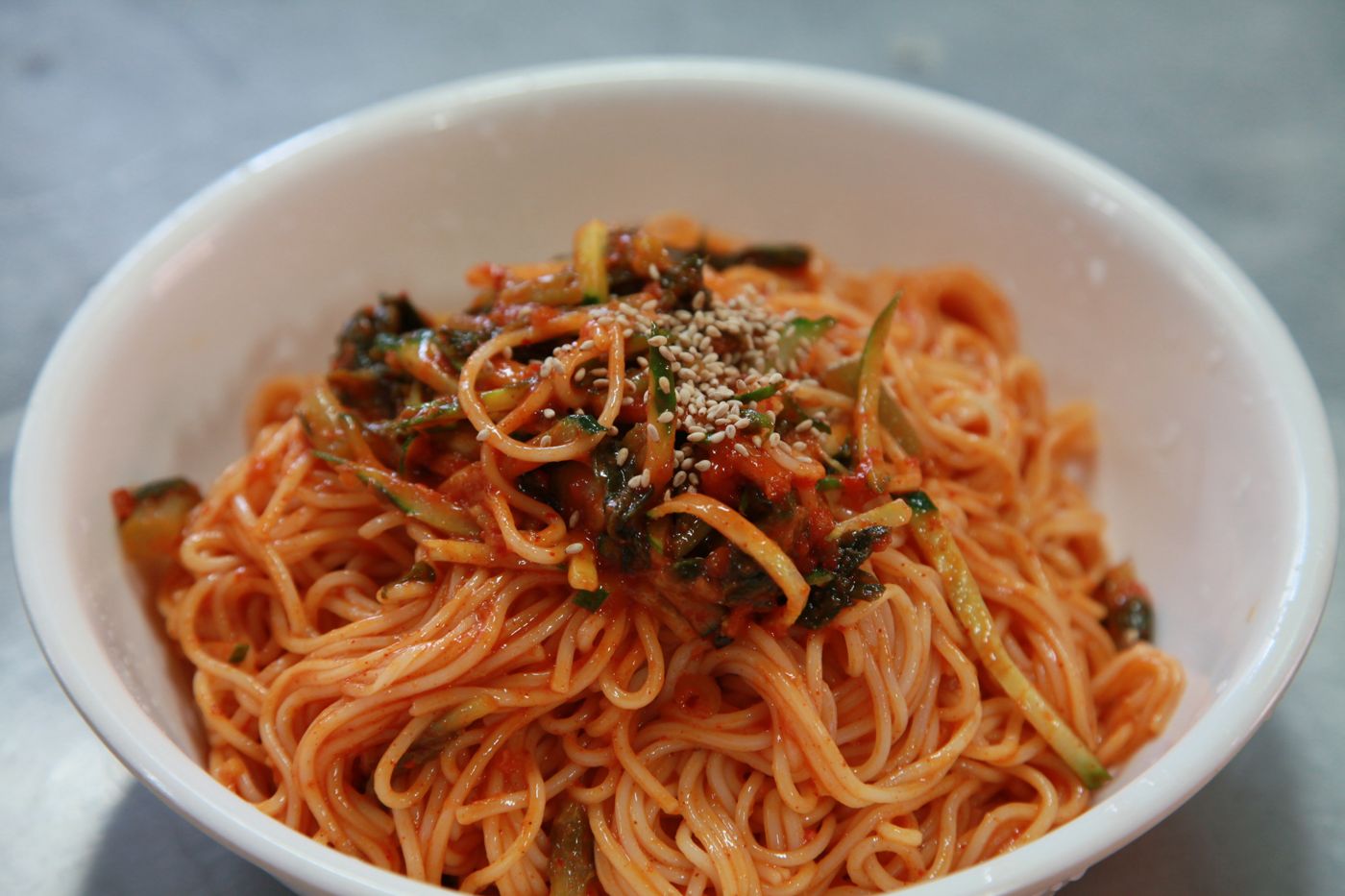
 Photo: JeongHO Suh (daecheonnet), CC0, via Wikimedia Commons
Myeon · Noodles 면
Bibim-guksu (Spicy Mixed Noodles)
비빔국수
Romanization: bibim-guksu
Thin wheat noodles tossed cold in a sweet, sour and spicy gochujang dressing with cucumber, kimchi and egg — a modern turn on the soy-dressed goldongmyeon of Joseon.
- Serves
- 2
- Prep
- 15 min
- Cook
- 10 min
Recipe
Ingredients · Serves 2
- 200 gThin wheat noodles (somyeon)
- 3 tbspGochujang
- 1 tbspGochugaru
- 2 tbspVinegar
- 1½ tbspSugaror part maesil-cheong
- 1 tbspSoy sauce
- 1 tbspToasted sesame oil
- 1 cloveGarlicgrated
- 1 tbspToasted sesame seeds
- 100 gCucumberjulienned
- 100 gNapa cabbage kimchifinely chopped
- 1 largeEgghard-boiled and halved
Method
Technique: Yangnyeom: Seasoning Basics
Step 1: Mix the gochujang, gochugaru, vinegar, sugar, soy sauce, sesame oil, garlic and sesame seeds into a smooth sauce. Taste: it should be sweet, sour and hot in roughly equal measure.
Step 2: Bring a large pot of water to a rolling boil and add the noodles, stirring so they don't stick. When the water foams up, add ½ cup cold water; repeat once and cook until just tender, about 3 minutes in total.
Step 3: Drain and rinse the noodles under cold running water, rubbing them between your hands to wash off the surface starch, until they are cold and springy. Drain very well.
Step 4: Toss the noodles with about three-quarters of the sauce and the chopped kimchi.
Step 5: Twist the noodles into two bowls, top with the cucumber, a half egg and the remaining sauce, and serve at once.
Origin & History
Bibim-guksu — also guksu-bibim or, in older writing, goldongmyeon — simply means noodles mixed with other things. The folk encyclopedia's entry, by food scholar Jeong Hye-kyung, explains that goldong carries the sense of jumbling together, the same word found in goldongban, an old name for bibimbap.
The dish appears in several late-Joseon texts. The almanac Dongguk sesigi lists goldongmyeon among the foods of the eleventh lunar month: buckwheat noodles mixed with assorted vegetables, pear, chestnut, beef, pork, sesame oil and soy sauce. The late-19th-century cookbook Siuijeonseo has cooks fry seasoned minced beef, blanch mung bean sprouts and water dropwort, dress strips of acorn jelly, toss everything with the noodles, scatter fried beef, chili powder and sesame salt on top, and send a bowl of broth to the table alongside. A 1915 manuscript, Buinpilji, adds sliced boiled beef and pork, sea cucumber, stir-fried shredded vegetables and tiny meatballs, finished with a vinegared chili dressing.
The old dish was usually buckwheat noodles with a soy-sauce dressing; today wheat noodles and a hot gochujang sauce are the norm. The folk encyclopedia notes that in winter, pure buckwheat noodles were mixed with chopped kimjang kimchi, and that bibim-guksu was considered a good lunch for guests, served with a clear meatball or beef broth and a watery kimchi such as dongchimi or nabak-kimchi. It also counts Hamheung's chewy potato-starch hoe-naengmyeon, dressed with raw fish, as a member of the family. See noodles in Korean history and seasonal foods.
Key Ingredients
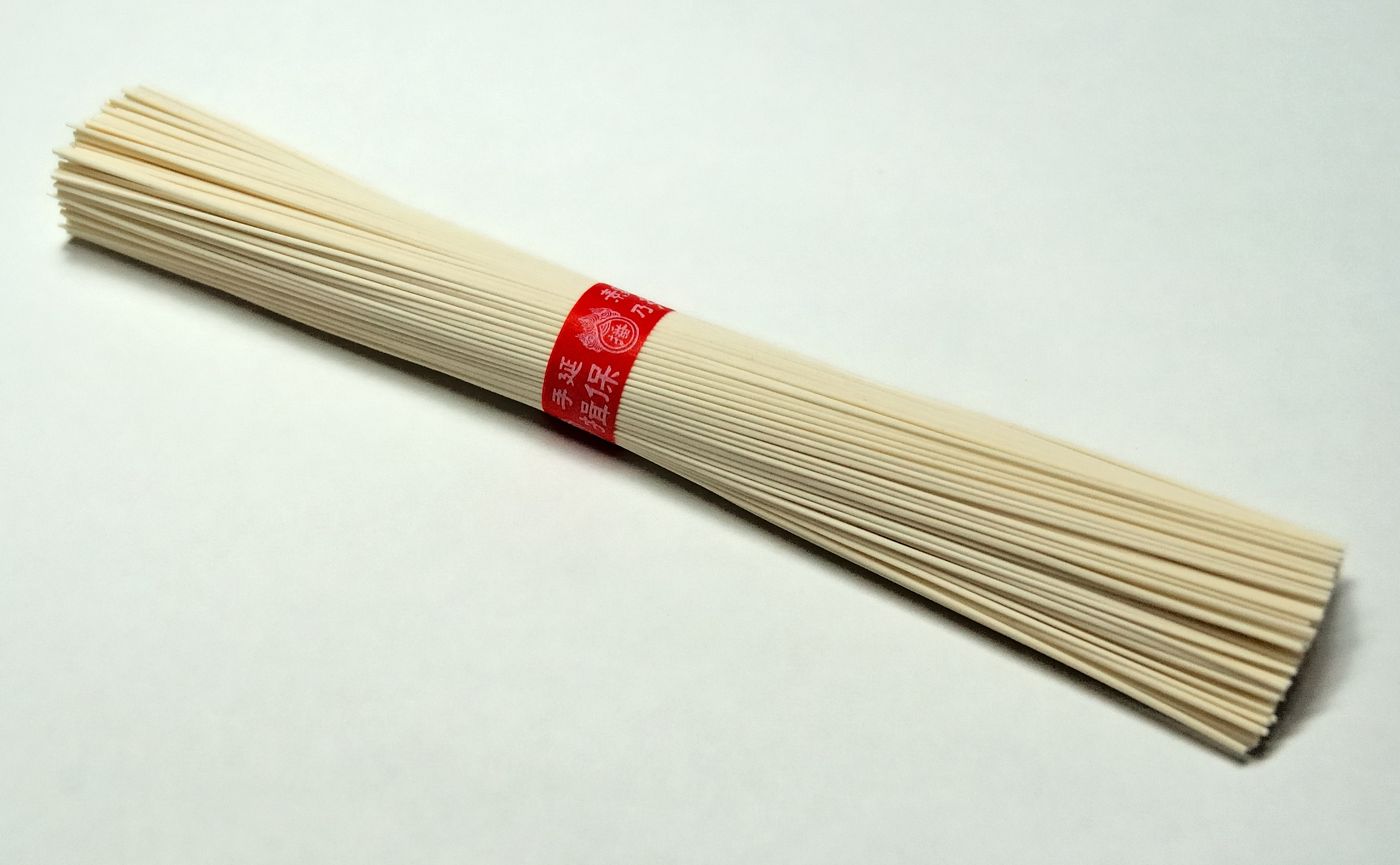 Thin wheat noodles (somyeon)소면Very thin, dried white wheat noodles sold in long bundles. They cook in a few minutes and are the noodle of janchi-guksu, the warm anchovy-broth "banquet noodles" served at celebrations, as well as of spicy cold bibim-guksu.
- Gochujang고추장Fermented red chili paste — sweet, savory and hot. Made from meju powder, glutinous rice, malt and gochugaru, it is a later addition to Korea's family of jang.
 Gochugaru고춧가루Korean red chili powder, made from dried red peppers ground coarse or fine. It gives kimchi, gochujang and countless banchan their color and warmth.
- Korean Vinegar식초Vinegar in the Korean kitchen, from naturally fermented grain and fruit vinegars, such as persimmon vinegar, to everyday brewed vinegar. It sharpens muchim, pickles and the dipping sauce chogochujang.
 Soy sauce간장Korean soy sauce, in two main kitchen forms: pale, salty guk-ganjang (soup soy sauce) brewed the traditional way from meju, and darker, sweeter jin-ganjang for braises and marinades.
 Sesame참깨Toasted sesame seeds and sesame oil (chamgireum) finish countless Korean dishes, adding a nutty aroma and gloss.
 Garlic마늘Used raw, minced, pickled and roasted, garlic is one of the essential aromatics of Korean food — in seasonings, marinades, kimchi and namul.
- Cucumber오이Slender, thin-skinned Korean cucumbers, prized for their crunch. Stuffed and fermented as oi-sobagi, dressed quickly as oi-muchim, salted into oiji or floated in chilled summer soup.
- Egg (gyeran)계란The everyday protein of the Korean table: rolled into gyeran-mari, steamed into puffy gyeran-jjim, simmered in soy for gyeran-jangjorim, and cut into thin yellow and white ribbons of jidan to garnish soups and noodles.
Nutrition
| Calories | ~625 kcal |
|---|---|
| Protein | ~18 g |
| Fat | ~14 g |
| Carbohydrates | ~106 g |
| Fiber | ~6.3 g |
| Sodium | ~2660 mg |
Notable forSelenium · Vitamin A
Estimated by summing Korean Food Composition Table values for dry somyeon noodles (A0180010001a), gochujang (R0050010009a) and napa cabbage kimchi (F2050070009a) with USDA FoodData Central (SR Legacy) values for red pepper (FDC 170932, as a stand-in for gochugaru), distilled vinegar (FDC 172237), sugar, soy sauce (FDC 174277), sesame oil, garlic, sesame seeds, cucumber with peel (FDC 168409) and whole egg (FDC 171287), divided by 2. The dry noodles contain added salt (about 1,270 mg per 100 g) and the full amount is counted, although some of it dissolves into the cooking water, so the sodium actually eaten is lower. Actual values vary with ingredients, portion size and preparation.
Health Benefits
- Cool and vegetable-topped: cucumber and kimchi add crunch, water and some fiber to a light summer meal.
- Chili: gochujang and gochugaru bring capsaicin and carotenoids (vitamin A activity). See capsaicin and spicy food.
- Modest fat: with no meat and only a spoon of sesame oil, the dish is lower in fat than most noodle restaurant meals.
Regional Variations
- Soy-dressed goldongmyeon: the older style — buckwheat or wheat noodles with beef, mushrooms, cucumber and egg garnish in soy sauce and sesame oil.
- Gochujang bibim-guksu: the everyday modern version — thin wheat somyeon in a gochujang, vinegar and sugar sauce with cucumber and kimchi.
- Winter kimchi noodles: buckwheat noodles tossed with chopped kimjang kimchi, as the folk encyclopedia describes.
- Hamheung hoe-naengmyeon (northern provinces): chewy starch noodles mixed with a fiery sauce and raw fish, a northern relative of the dish.
Pairings
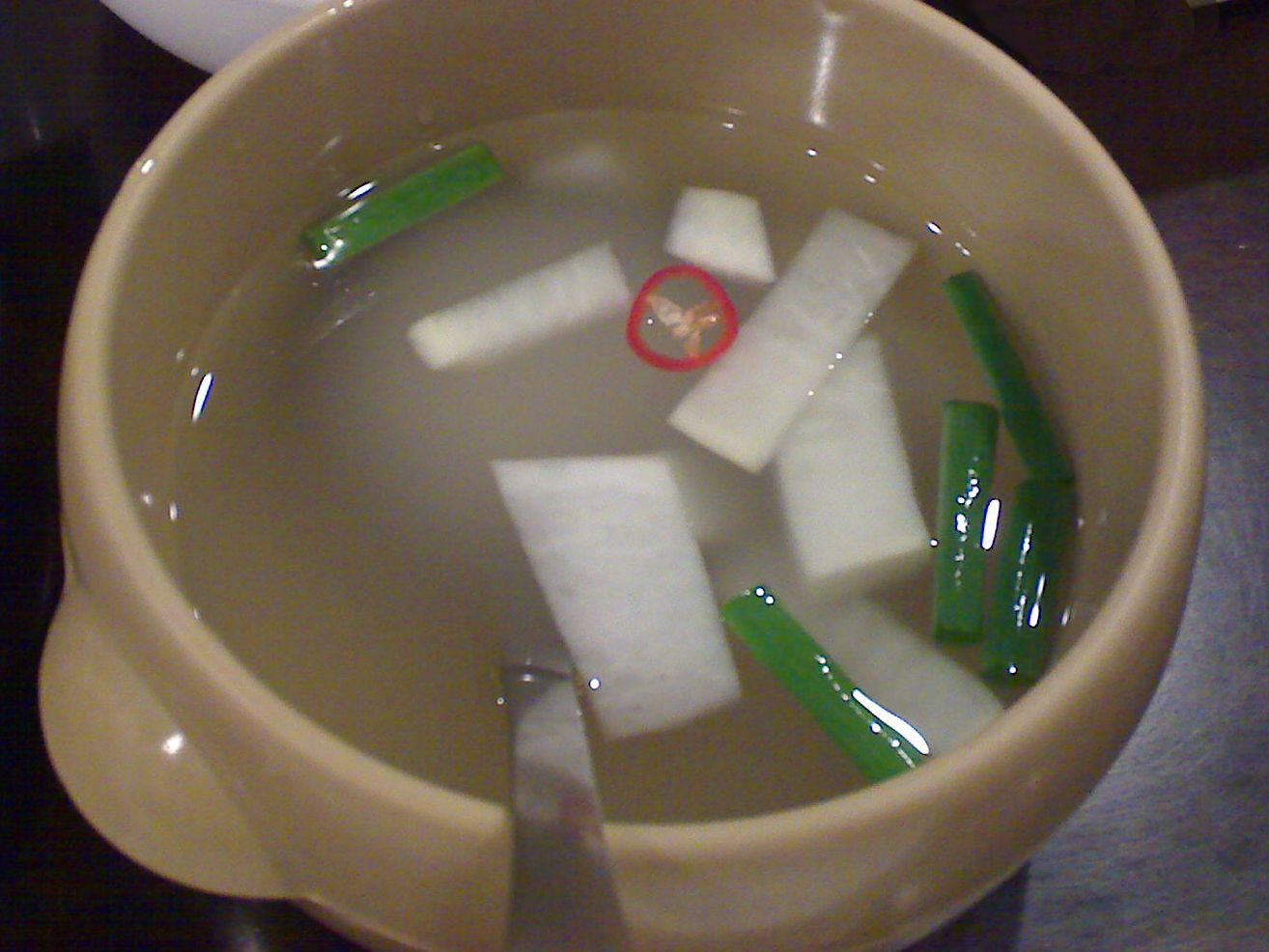 Radish Water Kimchi동치미Whole radishes steeped in a clear salt brine with pear, ginger and green chili — a winter water kimchi whose tangy broth is prized on its own.
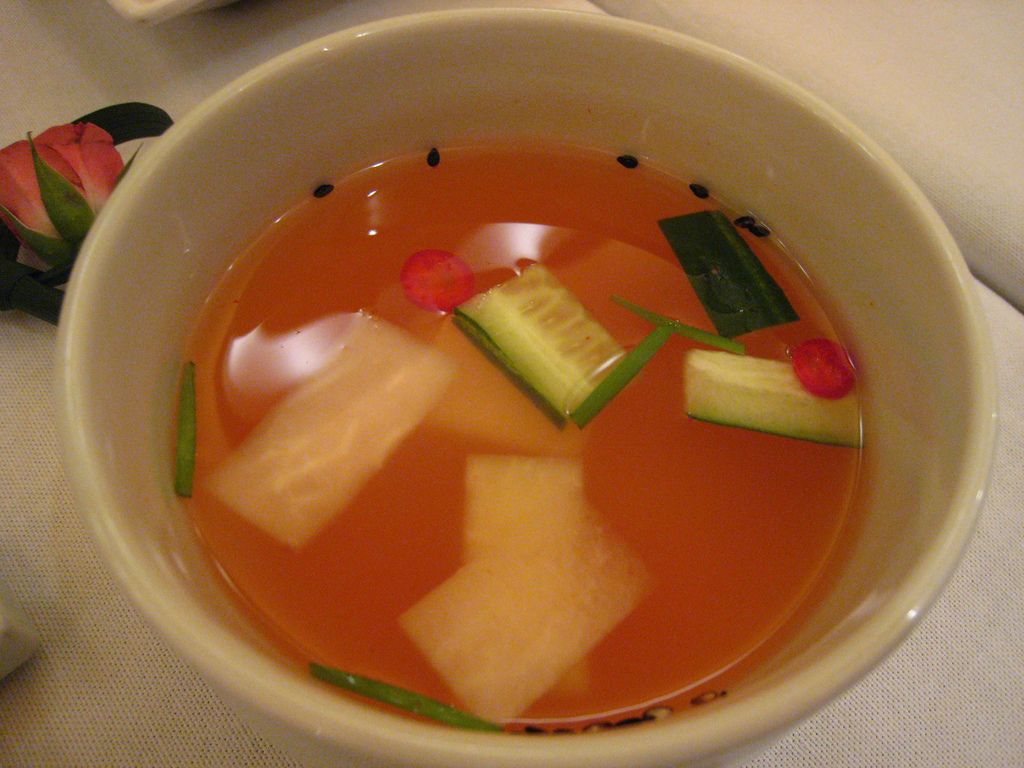 Radish and Cabbage Water Kimchi나박김치Thin squares of radish and napa cabbage in a lightly salted, pink-tinted broth — a mild, refreshing water kimchi eaten by the spoonful.
 Mandu (Korean Dumplings)만두Thin wrappers folded around pork, tofu, kimchi and sprouts, then steamed or boiled — a Goryeo-era arrival from China that became a winter staple of the North.