Kimchi 김치
Sangchu Geotjeori (Fresh Lettuce Salad, Kimchi-Style)
상추겉절이
Romanization: sangchu-geotjeori
Tender leaf lettuce dressed at the last minute with soy sauce, chili flakes, green onion and sesame — the crisp, spicy salad served beside grilled pork.
- Serves
- 4
- Prep
- 15 min
- Cook
- 0 min
Recipe
Ingredients · Serves 4
- 200 gLeaf lettuce (green, red or mixed)
- ¼ smallOnionabout 40 g, thinly sliced
- 2 stalksGreen onionfinely shredded
- 1½ tbspSoy sauce
- 1 tbspGochugaru
- 1 tbspVinegaroptional
- 2 tspSugar
- 1 cloveGarlicminced
- 1 tbspToasted sesame oil
- 1 tspToasted sesame seedslightly crushed
Method
Technique: Yangnyeom: Seasoning Basics
Step 1: Soak the lettuce in cold water for about 5 minutes, then rinse leaf by leaf under running water two or three times. Drain well and spin or pat dry — water on the leaves dilutes the dressing.
Step 2: Tear or cut the lettuce into bite-size pieces. Soak the sliced onion in cold water for 5 minutes to soften its bite, then drain.
Step 3: In a small bowl, mix the soy sauce, gochugaru, vinegar, sugar and garlic until the sugar dissolves.
Step 4: Just before serving, put the lettuce, onion and green onion in a large bowl, pour the dressing around the edge and toss gently with your fingertips so the leaves are coated but not crushed.
Step 5: Add the sesame oil and sesame seeds, toss once more and serve immediately; dressed lettuce wilts within minutes.
Origin & History
Lettuce (sangchu) is native to Europe and western Asia but has been grown in Korea for a very long time. The Encyclopedia of Korean Folk Culture cites the late-Joseon history Haedong yeoksa, which tells of a Goguryeo envoy buying lettuce seed in Sui China at great price — hence the old name cheongeumchae, "thousand-gold vegetable" — and Chinese writers of the Yuan period who remarked that the people of Goryeo wrapped their rice in raw greens. In the eighteenth century the scholar Yi Ik wrote that every household grew lettuce because it was the favorite leaf for ssam.
Lettuce was not only wrapped. The folk-culture encyclopedia notes that Joseon writings describe dried lettuce stems dressed as namul, blanched lettuce stir-fried in oil, and a lettuce kimchi recorded in the nineteenth-century Imwon gyeongje-ji. Geotjeori — from the idea of salting or seasoning only the surface — is the family of fresh, unfermented kimchi made to be eaten the same day, and the folk-culture encyclopedia lists lettuce among the many vegetables used for it.
The Encyclopedia of Korean Culture describes sangchu-geotjeori specifically: unlike cabbage geotjeori, the lettuce is not salted at all, but layered in a bowl with a sauce of shredded green onion, soy sauce, gochugaru, sesame salt, sesame oil and sugar spooned over each layer. Today it is best known as the bright, sharp side served with grilled pork belly and other grilled meats.
Key Ingredients
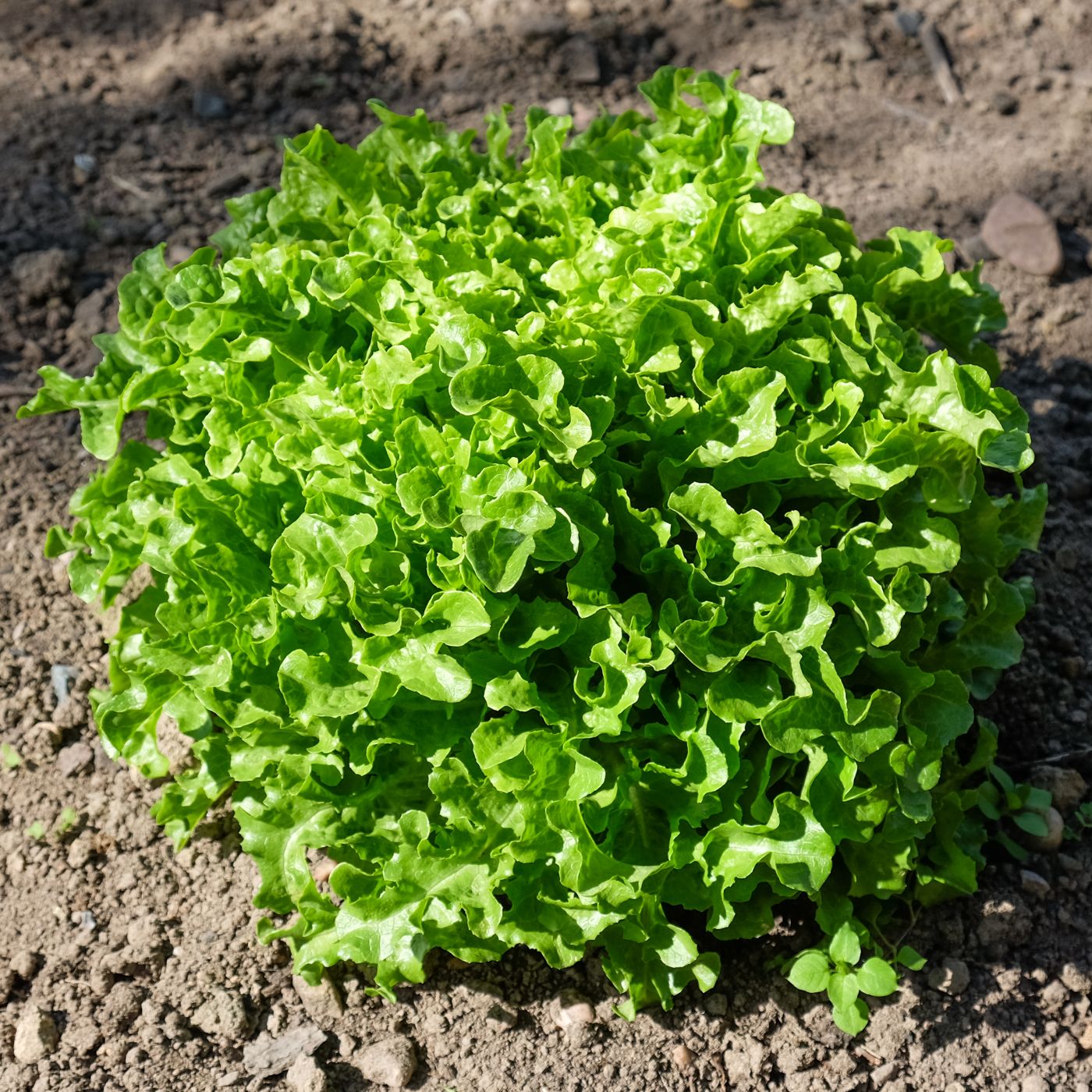 Sangchu (lettuce)상추Soft, loose-leaf lettuce, green or red-tinged, that anchors the Korean habit of ssam: wrapping rice, grilled meat and a dab of ssamjang in a fresh leaf. It is also dressed quickly as sangchu-geotjeori.
 Green onion파Korean green onion (pa), from thick-stemmed daepa to slender scallions — chopped into nearly every seasoning sauce, soup and kimchi, and the star of pa-kimchi.
 Soy sauce간장Korean soy sauce, in two main kitchen forms: pale, salty guk-ganjang (soup soy sauce) brewed the traditional way from meju, and darker, sweeter jin-ganjang for braises and marinades.
 Gochugaru고춧가루Korean red chili powder, made from dried red peppers ground coarse or fine. It gives kimchi, gochujang and countless banchan their color and warmth.
- Korean Vinegar식초Vinegar in the Korean kitchen, from naturally fermented grain and fruit vinegars, such as persimmon vinegar, to everyday brewed vinegar. It sharpens muchim, pickles and the dipping sauce chogochujang.
 Garlic마늘Used raw, minced, pickled and roasted, garlic is one of the essential aromatics of Korean food — in seasonings, marinades, kimchi and namul.
 Sesame참깨Toasted sesame seeds and sesame oil (chamgireum) finish countless Korean dishes, adding a nutty aroma and gloss.
Nutrition
| Calories | ~73 kcal |
|---|---|
| Protein | ~2.2 g |
| Fat | ~4.3 g |
| Carbohydrates | ~7.8 g |
| Fiber | ~2.2 g |
| Sodium | ~334 mg |
Notable forVitamin K · Vitamin A (as beta-carotene) · Folate · Potassium
Lettuce uses the Korean Food Composition Table entry “Lettuce (Sangchu), Leaf type, Cheongchima, Green, Raw” (per 100 g: 20 kcal, 2.4 g fiber, about 237 µg vitamin K, 239 µg RAE vitamin A, 64 µg folate, 591 mg potassium). Soy sauce uses the Korean table's fermented soy sauce; gochugaru uses the USDA red pepper (cayenne) entry as a stand-in; onion, green onion, vinegar, sugar, garlic, sesame oil and sesame seeds use USDA FoodData Central. Totals divided by four. Actual values vary with ingredients, portion size and preparation.
Health Benefits
- Raw greens with a fatty meal: the Encyclopedia of Korean Culture notes that fresh saengchae-type dishes are especially welcome alongside rich food such as meat, and this salad adds crunch, fiber and acidity to a grilled-pork meal.
- Vitamins K and A: leaf lettuce is a good source of vitamin K and beta-carotene, and of folate and potassium.
- Light: a serving is about 70 kcal, most of it from sesame oil.
Regional Variations
- Soy-sauce dressing: the classic version described above, sometimes with fish sauce or jeotgal liquid replacing part of the soy sauce.
- With vinegar: many modern versions add vinegar and onion, pushing the dish toward a salad.
- Red or green lettuce: green and red leaf lettuce are both used, often mixed.
- Regional names for geotjeori: the folk-culture encyclopedia notes that Jeonju cooks call geotjeori saengji, and that it is called nal-gimchi ("raw kimchi") in Gyeongsang.
Pairings
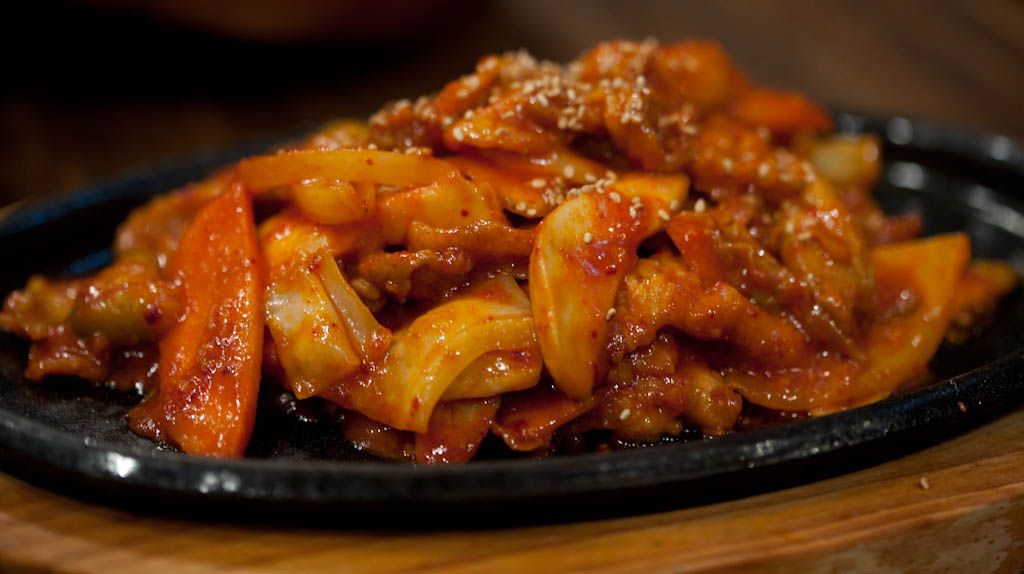 Jeyuk Bokkeum (Spicy Stir-Fried Pork)제육볶음Thin slices of pork marinated in gochujang, garlic and ginger, then stir-fried with onion and green onion — a hearty, spicy staple of home and diner tables.
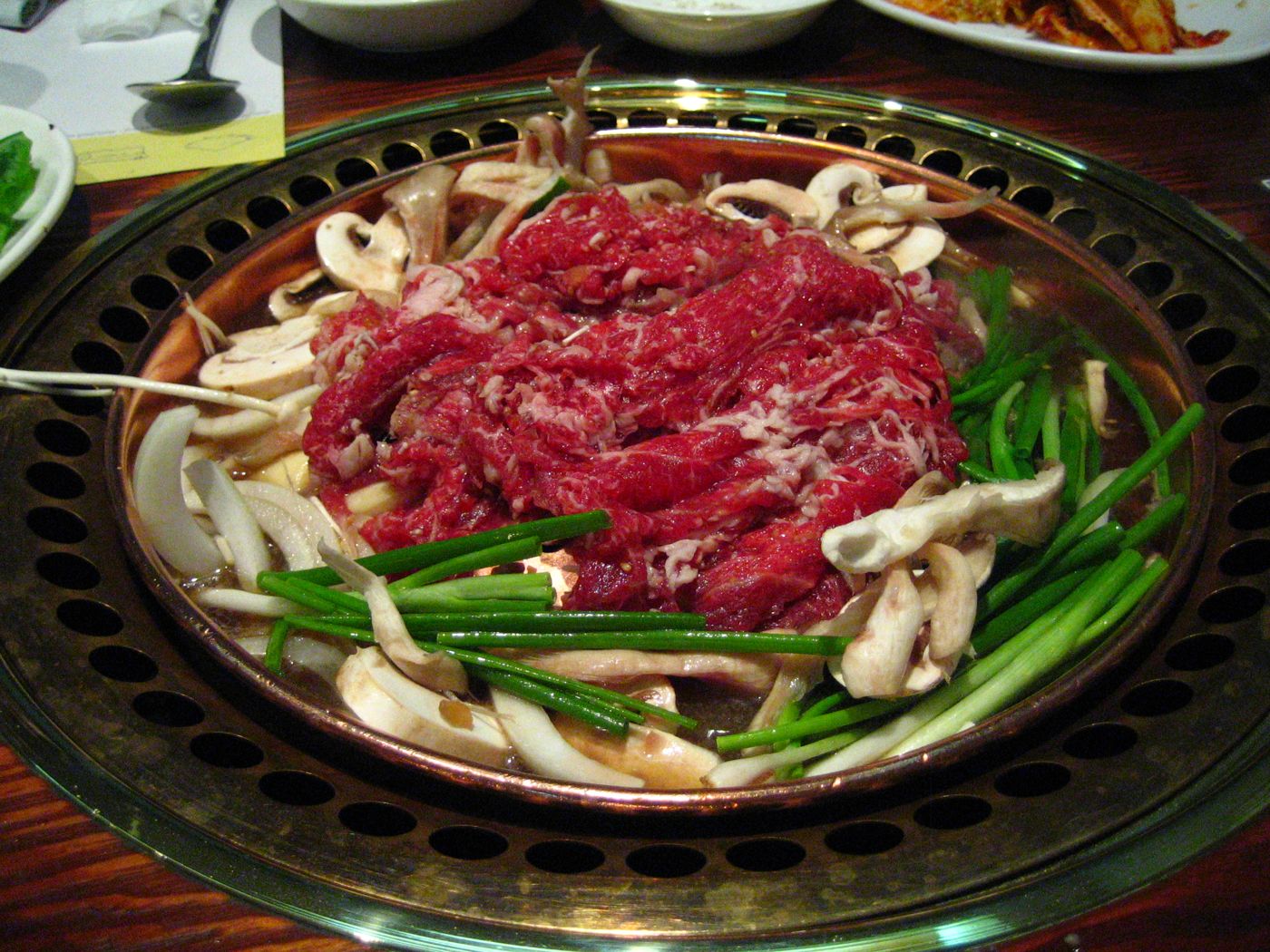 Bulgogi (Marinated Grilled Beef)불고기Thin slices of beef marinated in soy sauce, pear, garlic and sesame, then grilled or seared — descended from the court dish neobiani and Korea's best-known meat dish.
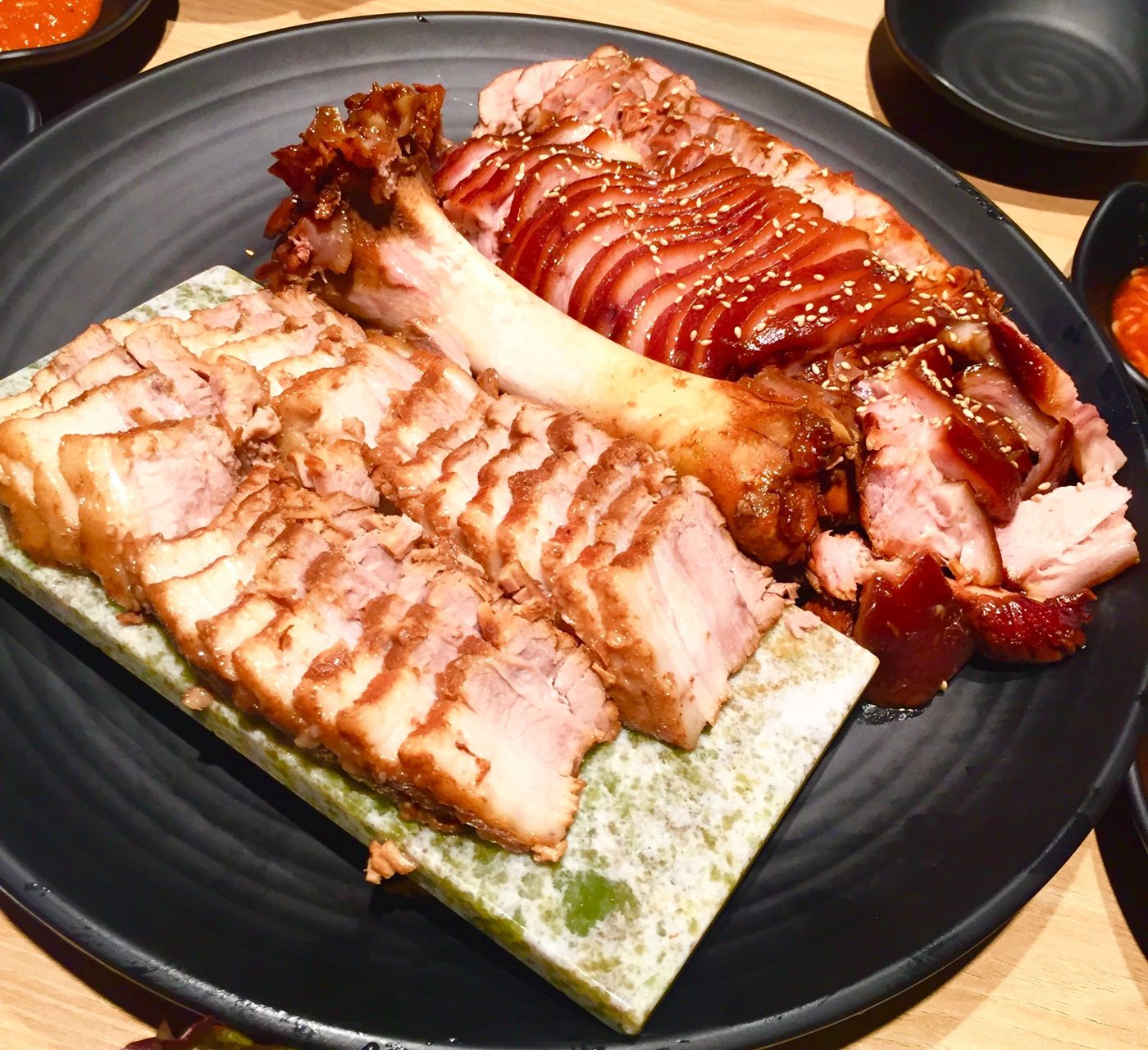 Bossam (Boiled Pork Wraps)보쌈Pork belly simmered with doenjang and aromatics, pressed and sliced, then wrapped in salted cabbage with spicy radish and salted shrimp — a feast dish built for sharing.
 Doenjang Jjigae (Soybean Paste Stew)된장찌개A thick, savory stew of fermented soybean paste with tofu, zucchini and whatever the season offers — the everyday pot at the center of the Korean table.
Sources
- 01겉절이 (Geotjeori) — Encyclopedia of Korean Culture
- 02겉절이 (Geotjeori) — Encyclopedia of Korean Folk Culture (National Folk Museum of Korea)
- 03상추 (Lettuce) — Encyclopedia of Korean Folk Culture (National Folk Museum of Korea)
- 04Korean Food Composition Table: Lettuce (Sangchu), Leaf type, Cheongchima, Green, Raw — National Institute of Agricultural Sciences
- 05Leafy Vegetables — Restaurant Food Safety, U.S. Centers for Disease Control and Prevention
- 06생채 (Saengchae) — Encyclopedia of Korean Culture
Last updated