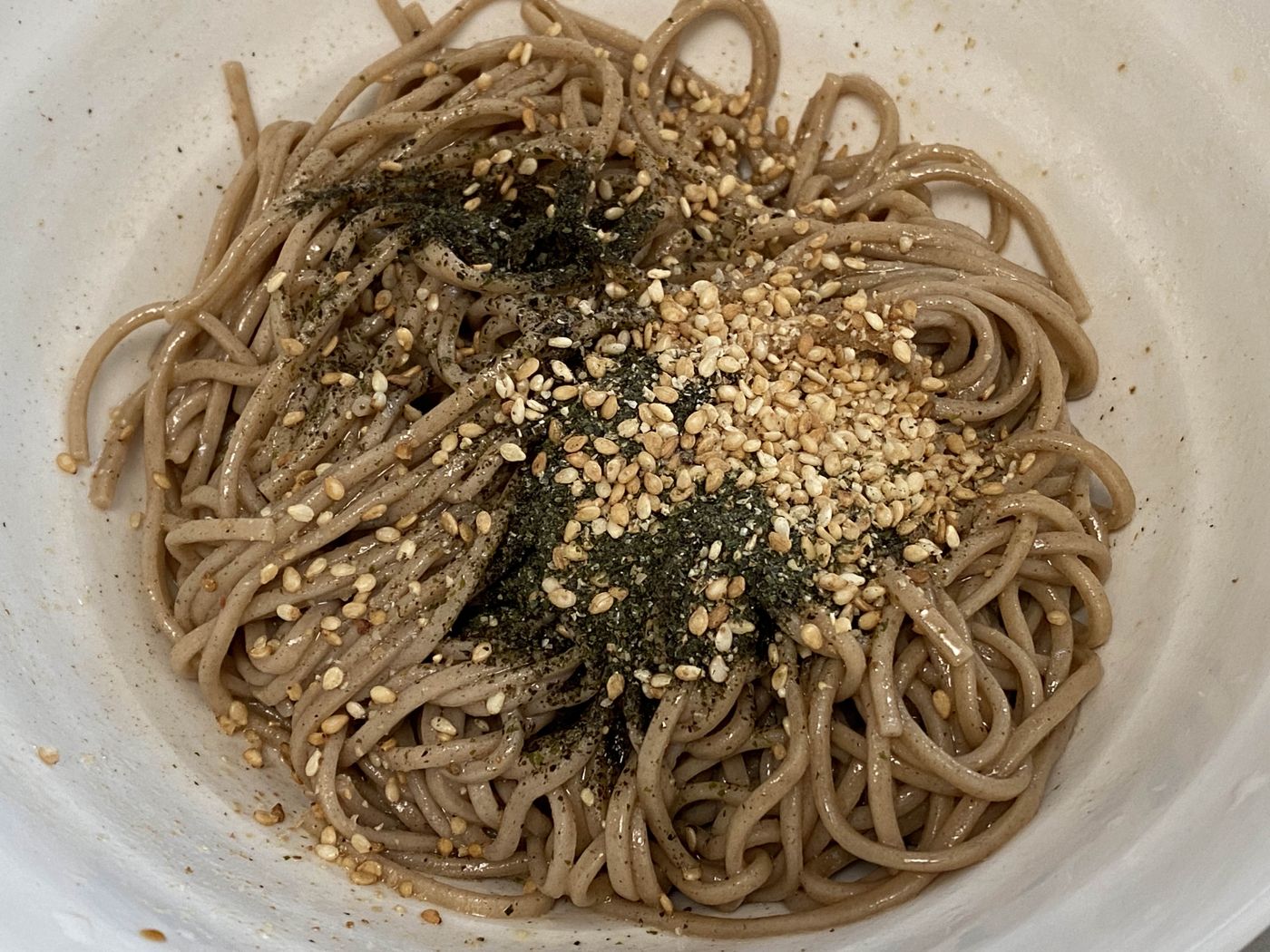
 Photo: lazy fri13th, CC BY 2.0, via Wikimedia Commons
Myeon · Noodles 면
Makguksu (Gangwon Buckwheat Noodles)
막국수
Romanization: makguksu
Coarse, grayish buckwheat noodles served in cold dongchimi broth or tossed with spicy sauce — a Gangwon mountain dish most famously eaten in Chuncheon.
- Serves
- 2
- Prep
- 15 min
- Cook
- 10 min
RegionChuncheon · Gangwon · Northern Provinces (Hwanghae, Pyeongan, Hamgyeong)
Jump to recipeRecipe
Ingredients · Serves 2
- 200 gDried buckwheat noodles
- 400 mlDongchimi brine (radish water kimchi)well chilled, with a few slices of its radish
- 200 mlCold water or chilled beef stock
- 1½ tbspSugarabout 17 g; 1 tbsp for the broth, the rest for the sauce
- 1 tbspVinegarplus more at the table
- 100 gNapa cabbage kimchisliced
- 60 gCucumberjulienned
- 1 Hard-boiled egghalved
- 1 tbspGochugarufor the sauce
- 1 tbspSoy saucefor the sauce
- 1 cloveGarlicminced, for the sauce
- 1 tsp eachToasted sesame oil and seeds
- to tasteKorean mustard (gyeoja)optional, at the table
Method
Technique: Yangnyeom: Seasoning Basics
Step 1: Mix the dongchimi brine, cold water or stock, 1 tbsp sugar and the vinegar. Taste — it should be sweet, sour and salty — and chill until icy.
Step 2: Stir together the gochugaru, soy sauce, garlic, remaining sugar and sesame oil for the seasoning sauce.
Step 3: Boil the noodles according to the package, usually 4–5 minutes; buckwheat noodles break easily, so stir gently. Drain and rinse in several changes of cold water, rubbing them to remove the starch, then drain well.
Step 4: Divide the noodles between two wide bowls. Top with the seasoning sauce, kimchi, cucumber, radish slices and half an egg, and sprinkle with sesame seeds.
Step 5: Pour the chilled broth around the noodles at the table, as much or as little as you like. Mix well and add vinegar or mustard to taste.
Origin & History
Makguksu is a buckwheat noodle dish of Gangwon-do, where the cool highlands suit buckwheat. The Encyclopedia of Korean Culture describes buckwheat noodles served in cold kimchi broth — preferably a clear kimchi such as dongchimi or nabak-kimchi, sometimes cut half and half with chilled meat stock — topped with kimchi, salted cucumber, sesame and chili flakes. Once a late-night snack, it gradually became a lunch dish.
The name is explained in two ways in the Encyclopedia of Korean Folk Culture: mak as in "just now," because the noodles were pressed and eaten the moment the flour was ground, and mak as in "rough," because hand-milled buckwheat kept bits of dark hull and gave dark, speckled, coarse-textured noodles. Its earliest printed appearance found so far is a 1934 newspaper report of food poisoning in Pyongyang from what it called makguksu, glossed as "black noodles"; a hand-drawn 1930s map of Chuncheon marks a "Bang family makguksu house." A 1967 newspaper article pictured villagers in Chuncheon grinding buckwheat on long winter nights and pressing noodles through a wooden frame.
The folk encyclopedia also records traditions linking buckwheat to famine relief after the Imjin War and to slash-and-burn farmers' buckwheat dumplings, and notes that makguksu was once served at Gangwon ancestral rites and village feasts. A winter food at first, it became a summer dish after the Korean War and a year-round one from the 1970s. More recently a viral video by a K-pop singer made perilla-oil makguksu a craze in Korea and abroad.
Key Ingredients
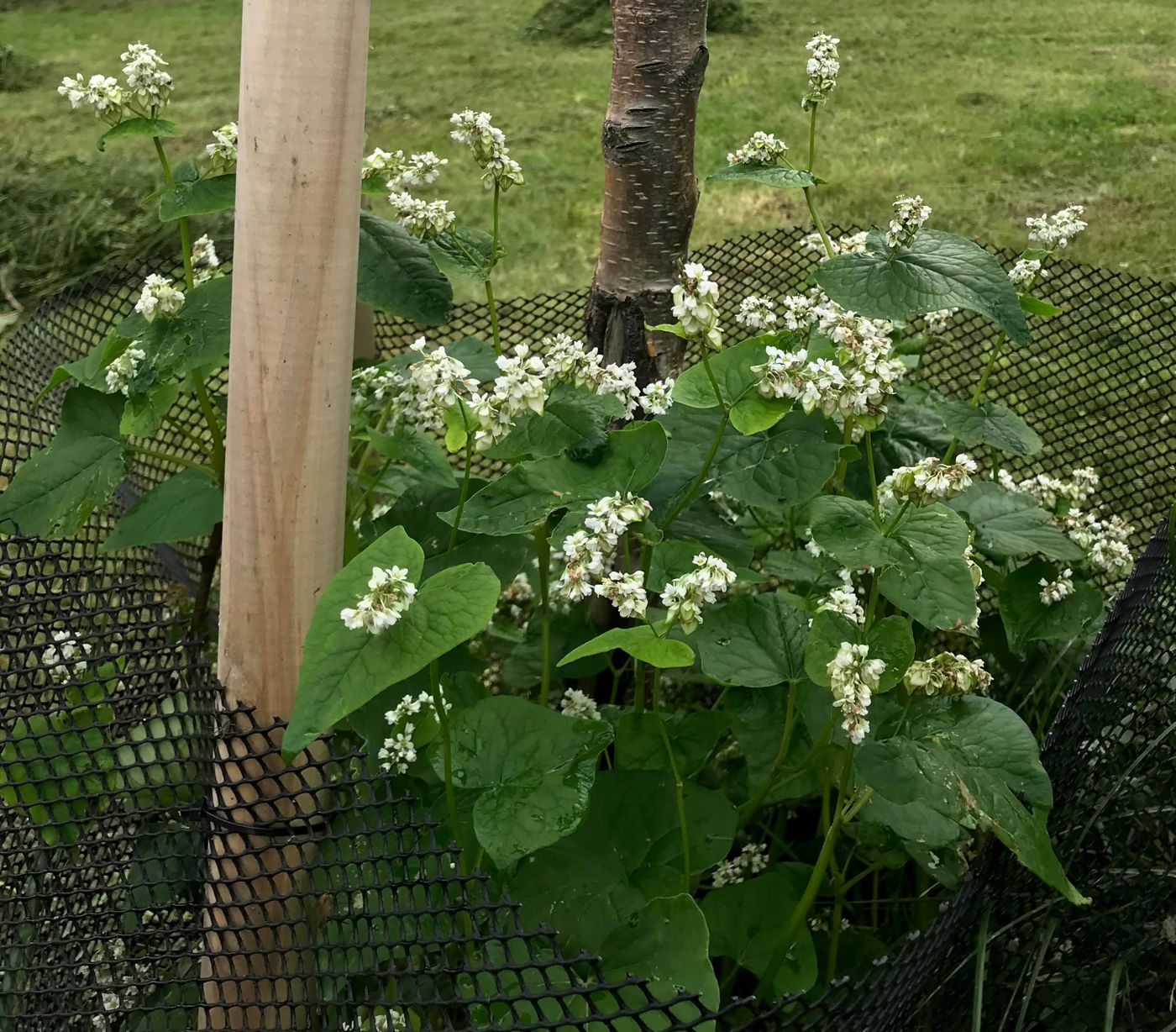 Buckwheat메밀Small, three-cornered seeds ground into a gray, earthy flour for cold noodles, makguksu and silky memil-muk. Buckwheat is the grain of Korea's cool mountain country, above all Gangwon-do.
 Korean radish무A stout, heavy white radish, often tinged pale green near the top. It is cubed for kkakdugi, left whole in the clear brine of dongchimi, shredded into salads and simmered into broths.
- Cucumber오이Slender, thin-skinned Korean cucumbers, prized for their crunch. Stuffed and fermented as oi-sobagi, dressed quickly as oi-muchim, salted into oiji or floated in chilled summer soup.
- Egg (gyeran)계란The everyday protein of the Korean table: rolled into gyeran-mari, steamed into puffy gyeran-jjim, simmered in soy for gyeran-jangjorim, and cut into thin yellow and white ribbons of jidan to garnish soups and noodles.
 Gochugaru고춧가루Korean red chili powder, made from dried red peppers ground coarse or fine. It gives kimchi, gochujang and countless banchan their color and warmth.
 Soy sauce간장Korean soy sauce, in two main kitchen forms: pale, salty guk-ganjang (soup soy sauce) brewed the traditional way from meju, and darker, sweeter jin-ganjang for braises and marinades.
 Garlic마늘Used raw, minced, pickled and roasted, garlic is one of the essential aromatics of Korean food — in seasonings, marinades, kimchi and namul.
 Sesame참깨Toasted sesame seeds and sesame oil (chamgireum) finish countless Korean dishes, adding a nutty aroma and gloss.
Nutrition
| Calories | ~524 kcal |
|---|---|
| Protein | ~20.4 g |
| Fat | ~7.4 g |
| Carbohydrates | ~93.7 g |
| Fiber | ~8.5 g |
| Sodium | ~1932 mg |
Notable forCarbohydrate · Fiber · Selenium
Estimated by summing ingredient values and dividing by two, assuming all the broth is eaten. Buckwheat noodles counted as boiled (200 g dry ≈ 650 g cooked; Korean Food Composition Table A0050000001b); dongchimi and kimchi from the Korean table (F2050050009a; F2050070009a); soy sauce: USDA FDC 174277; cucumber (168409), egg (171287), sugar, sesame, gochugaru and garlic from USDA. Most of the sodium is in the dongchimi brine. The MFDS analysis of a 600 g home-style serving (133 kcal and 405 mg sodium per 100 g) gives about 800 kcal and 2,430 mg sodium, with about 64 µg selenium. Actual values vary with ingredients, portion size and preparation.
Health Benefits
- Buckwheat noodles supply carbohydrate with more fiber than refined wheat noodles of the same weight, by the Korean food composition table.
- The MFDS analysis shows a serving providing more than an adult's daily selenium.
- Cucumber, radish and kimchi make it a cool, vegetable-forward summer meal.
Regional Variations
- Chuncheon: noodles rinsed and topped with a spicy seasoning, then loosened with dongchimi broth or meat stock as each diner likes; the cloudy noodle-cooking water is drunk with a little soy sauce.
- Mul vs. bibim: served in cold broth (mul-makguksu) or tossed in chili sauce (bibim-makguksu); many restaurants pour broth on the side.
- Binding: because buckwheat has little stickiness, cooks traditionally mixed in starch, or dried elm-bark powder in parts of Gangwon.
- Deulgireum makguksu: a recent favorite of noodles dressed with perilla oil, soy sauce, toasted laver and sesame.
- Pyongyang connection: the folk encyclopedia notes that in the 1930s the name was also used in Pyongyang, as another name for a dark buckwheat naengmyeon.
Pairings
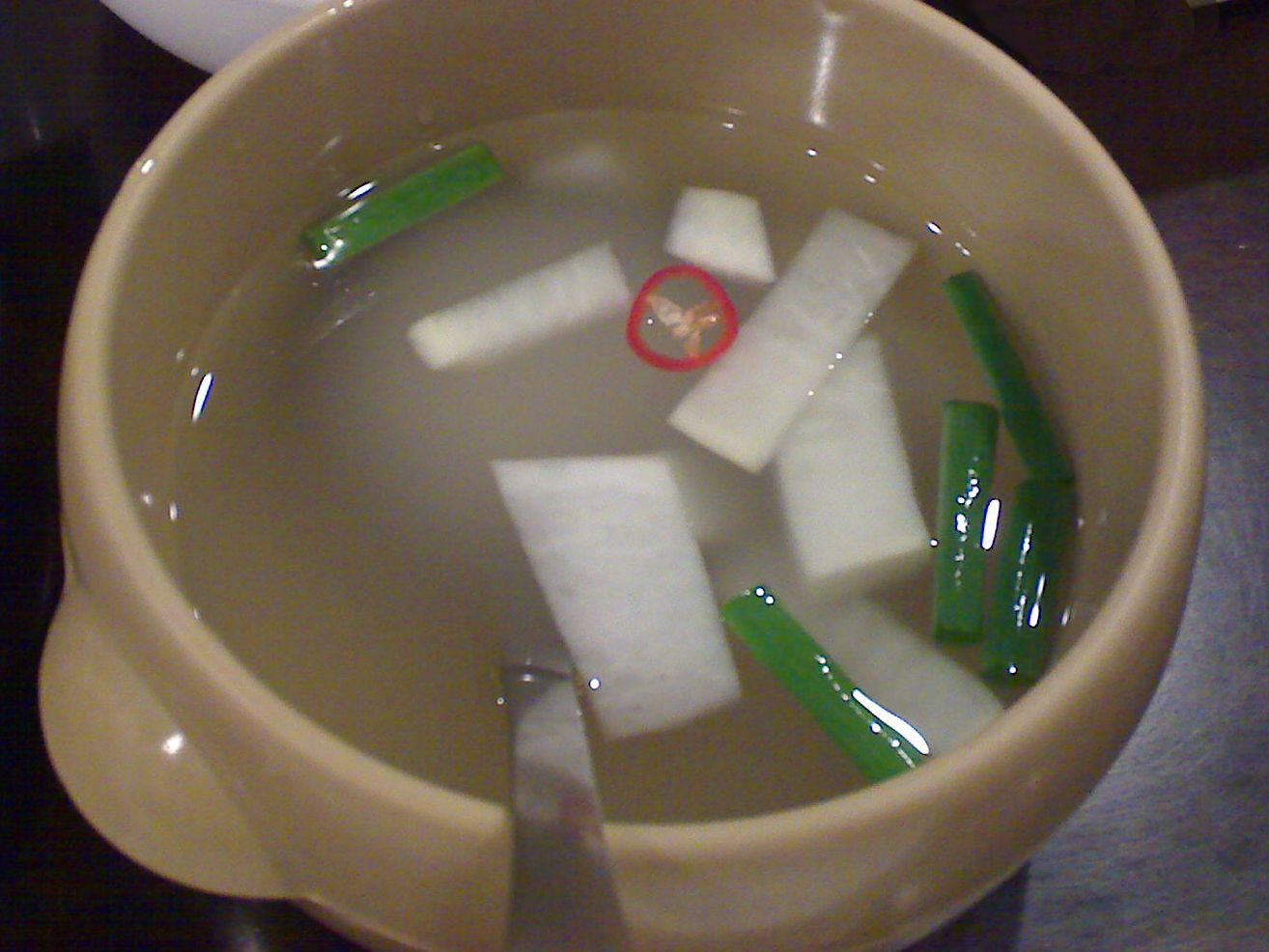 Radish Water Kimchi동치미Whole radishes steeped in a clear salt brine with pear, ginger and green chili — a winter water kimchi whose tangy broth is prized on its own.
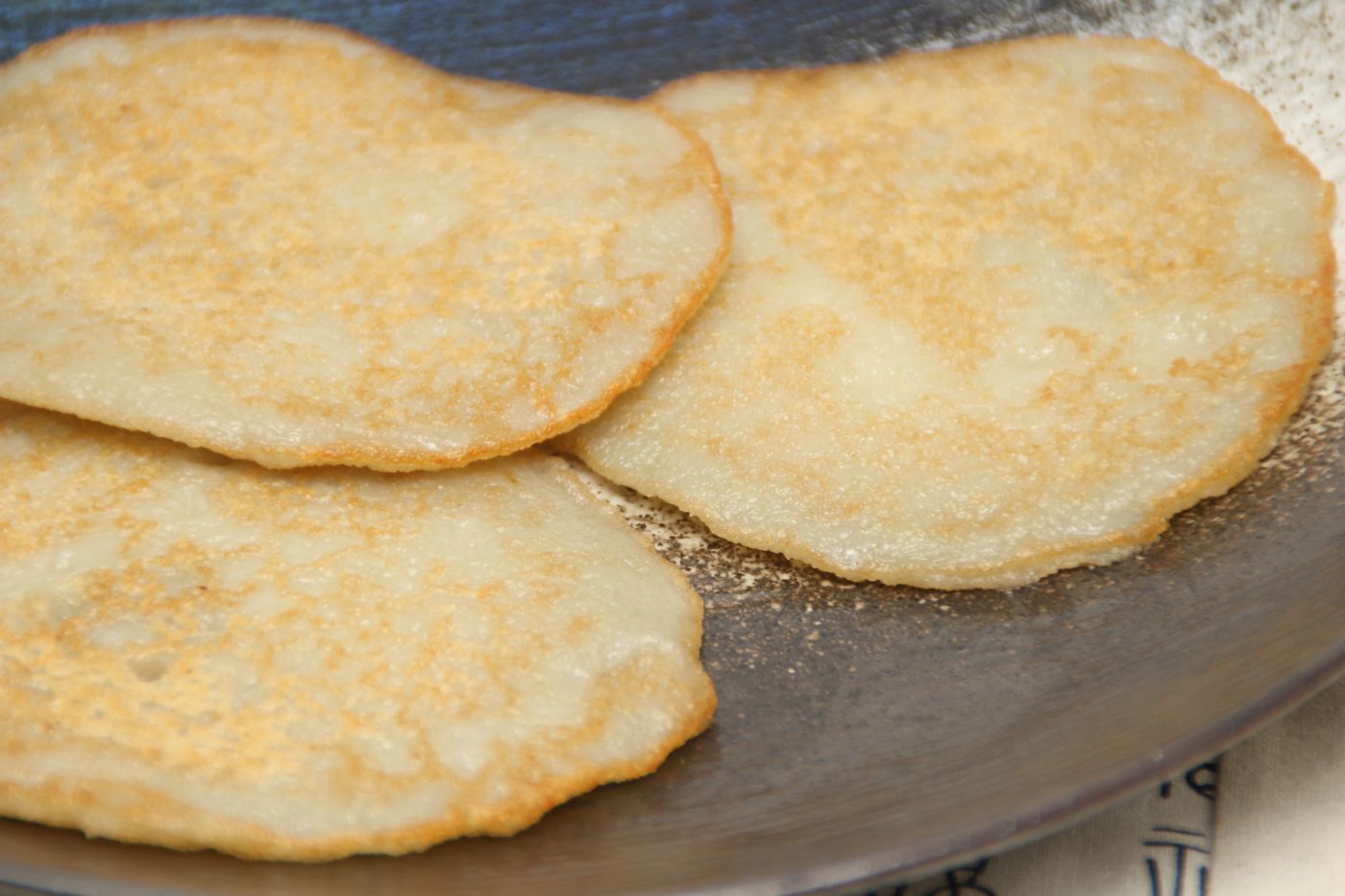 Gamja Jeon (Potato Pancake)감자전Finely grated potato, bound only by its own starch, pan-fried into crisp-edged, chewy rounds — a simple Gangwon-style jeon.
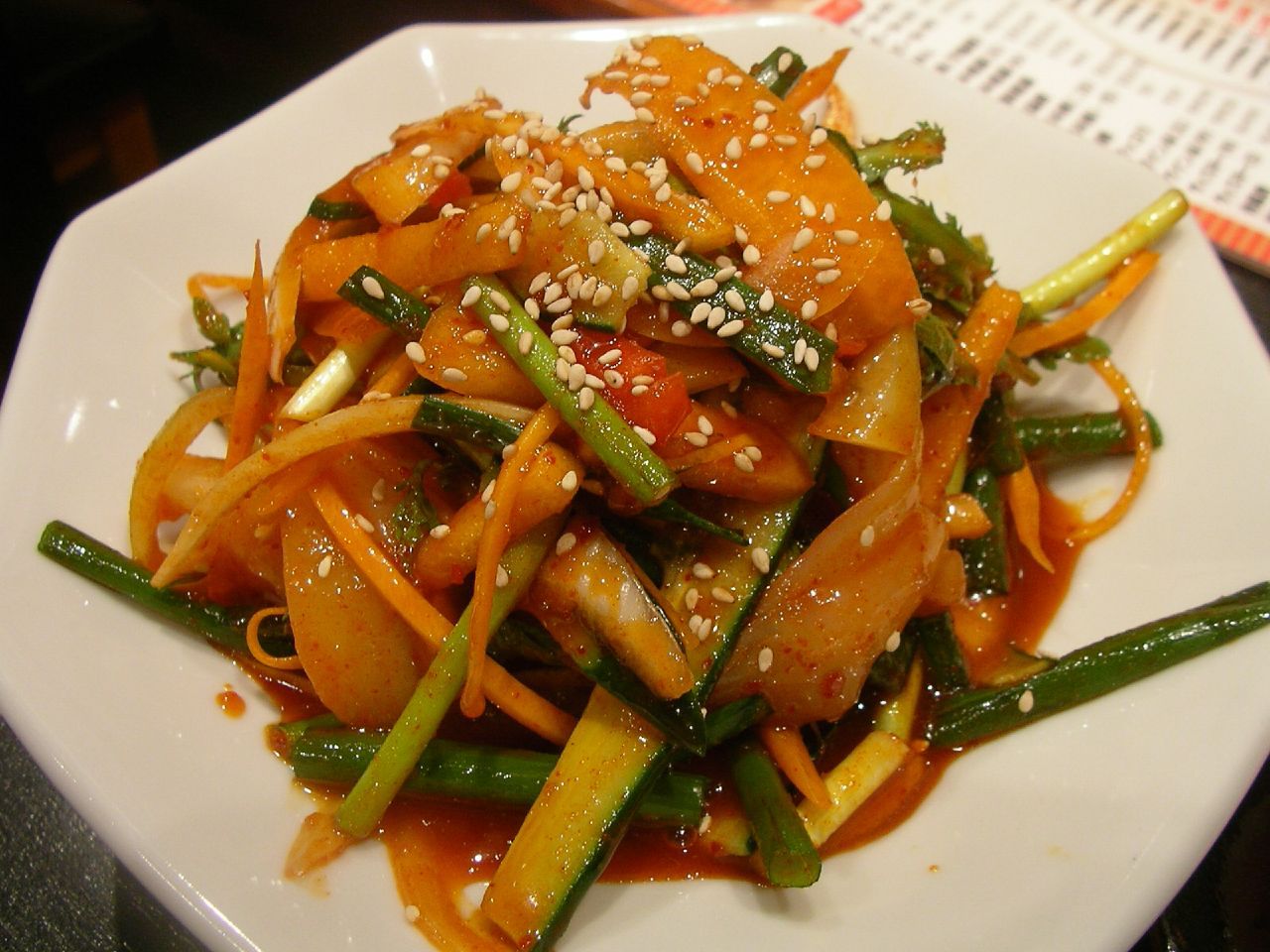 Oi Muchim오이무침Thin-sliced cucumber, briefly salted and tossed with chili flakes, vinegar and garlic — a cool, crunchy quick salad made in minutes, especially in summer.
Sources
- 01막국수 (Makguksu) — Encyclopedia of Korean Culture
- 02춘천막국수 (Chuncheon makguksu) — Encyclopedia of Korean Folk Culture (한국의식주생활사전)
- 03막국수 (Makguksu) — Encyclopedia of Korean Folk Culture (한류문화사전)
- 04국수_막국수 (Makguksu, home-style, analyzed) — MFDS K-FIND food composition database
- 05국수장국 (Guksu-janguk, on buckwheat-to-wheat ratios) — Encyclopedia of Korean Culture
- 06Buckwheat allergy — Asian Pacific Journal of Allergy and Immunology, 2025
Last updated