Regions
Gangwon
강원
A mountain-and-sea province: potatoes, corn and buckwheat from the highlands, squid and pollack from the East Sea, and cooking known for its simplicity.
Gangwon is defined by the Taebaek mountain range, which runs down its length and divides the province into two quite different food worlds: the inland highlands west of the ridge (Yeongseo) and the narrow East Sea coast to the east (Yeongdong).
Geography and climate
The Encyclopedia of Korean Culture describes Gangwon as a land of deep mountains, valleys and small basins facing an East Sea where cold and warm currents meet. Rice paddies were limited in the uplands, so the staple crops were those that tolerate steep, cool ground: potatoes, corn, buckwheat and acorns. The same source calls the province a storehouse of famine-relief foods — crops once eaten to get through hard years that became everyday staples and, later, beloved local dishes.
On the coast, the fishing towns had a very different pantry built around squid, pollack, flatfish and other East Sea catches.
Character of the cuisine
Gangwon cooking is usually described as plain and rustic. The encyclopedia notes that mountain households often cooked single-ingredient dishes, while coastal cooks added anchovies or clams for depth. Seasoning tends to be straightforward, letting starches, wild greens and fresh fish carry the flavor.
Signature dishes and banchan
- Potato dishes: Gangwon potatoes are prized for being floury rather than waxy. A distinctive local technique is grating potatoes and using the starch, which produces chewy textures in dumplings, gamja-tteok (potato rice cakes), potato sujebi (hand-torn dough soup) and potato pancakes. Simpler gamja-jorim also appears among the province's side dishes.
- Corn and buckwheat: corn rice, corn porridge and corn jelly (olchaengi-muk), and buckwheat noodles such as makguksu and buckwheat jelly (memil-muk).
- Mountain greens: wild vegetables are a backbone of the Gangwon table, including chwinamul and deodeok root. Chwinamul-muchim is a good example of how such greens become banchan.
- East Sea seafood: steamed snow crab, squid in many forms, dried pollack and other dried fish, and gajami-sikhae, flatfish fermented with grain.
Kimchi styles
Kimchi in Gangwon draws on both halves of the province. The Encyclopedia of Korean Culture lists changnanjeot-kkakdugi — cubed radish kimchi (kkakdugi) made with salted pollack innards — along with shredded-radish kimchi and dongchimi. The Korea Herald similarly highlights a radish kimchi made with pollack gills (seogeori-kkakdugi) and the use of squid and pollack in coastal kimchi.
Local specialties
- Chodang dubu (Gangneung): tofu from Gangneung's Chodang village is made using East Sea seawater as the coagulant, which gives it a soft, moist texture. Local tradition connects the name to the pen name of a Joseon-era official, Heo Yeop, though this is a handed-down account. See dubu for tofu in general.
- Waxy corn: Gangwon's sticky corn (chal-oksusu) is known for large, chewy kernels, and corn is also boiled down into a local taffy (hwanggol-yeot).
- Grain rice cakes: the encyclopedia notes that Gangwon rice cakes lean toward mixed grains rather than rice, with potato-starch songpyeon and buckwheat crepes rolled around a filling (memil-jeonbyeong) among the regional types. The two halves of the province differ here too: coastal Yeongdong households made many songpyeon and steamed siru-tteok, while inland Yeongseo, with its many hillside farming villages, made rice cakes from corn, millet, sorghum, potato and buckwheat, including a steamed corn-flour cake mixed with kidney beans.
Dishes from this region
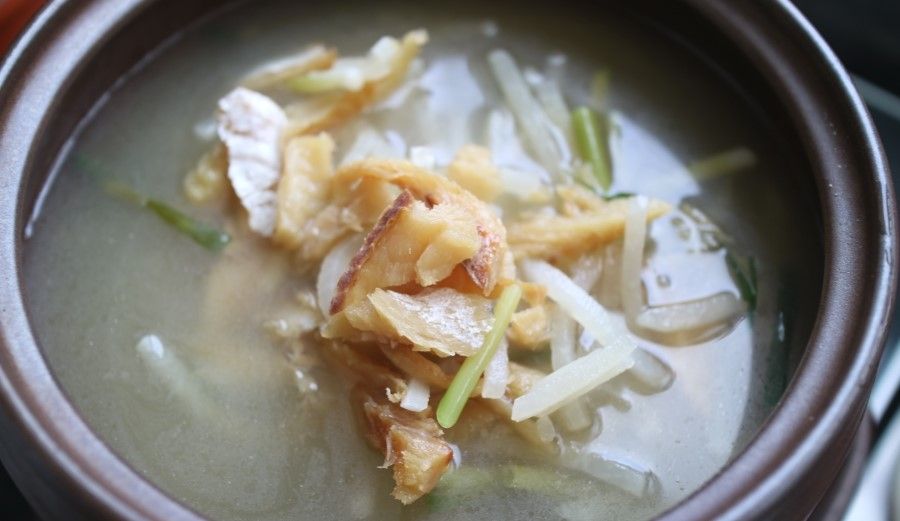 Bugeo Guk (Dried Pollock Soup)북엇국Shredded dried pollock sautéed in sesame oil and simmered into a milky, savory broth with radish, tofu and a ribbon of egg — Korea's favorite morning-after soup.
- Bugeo Muchim (Shredded Dried Pollock Salad)북어무침Shredded dried pollock softened with a splash of water and tossed in a sweet, spicy gochujang dressing — a chewy, protein-rich banchan that keeps for days.
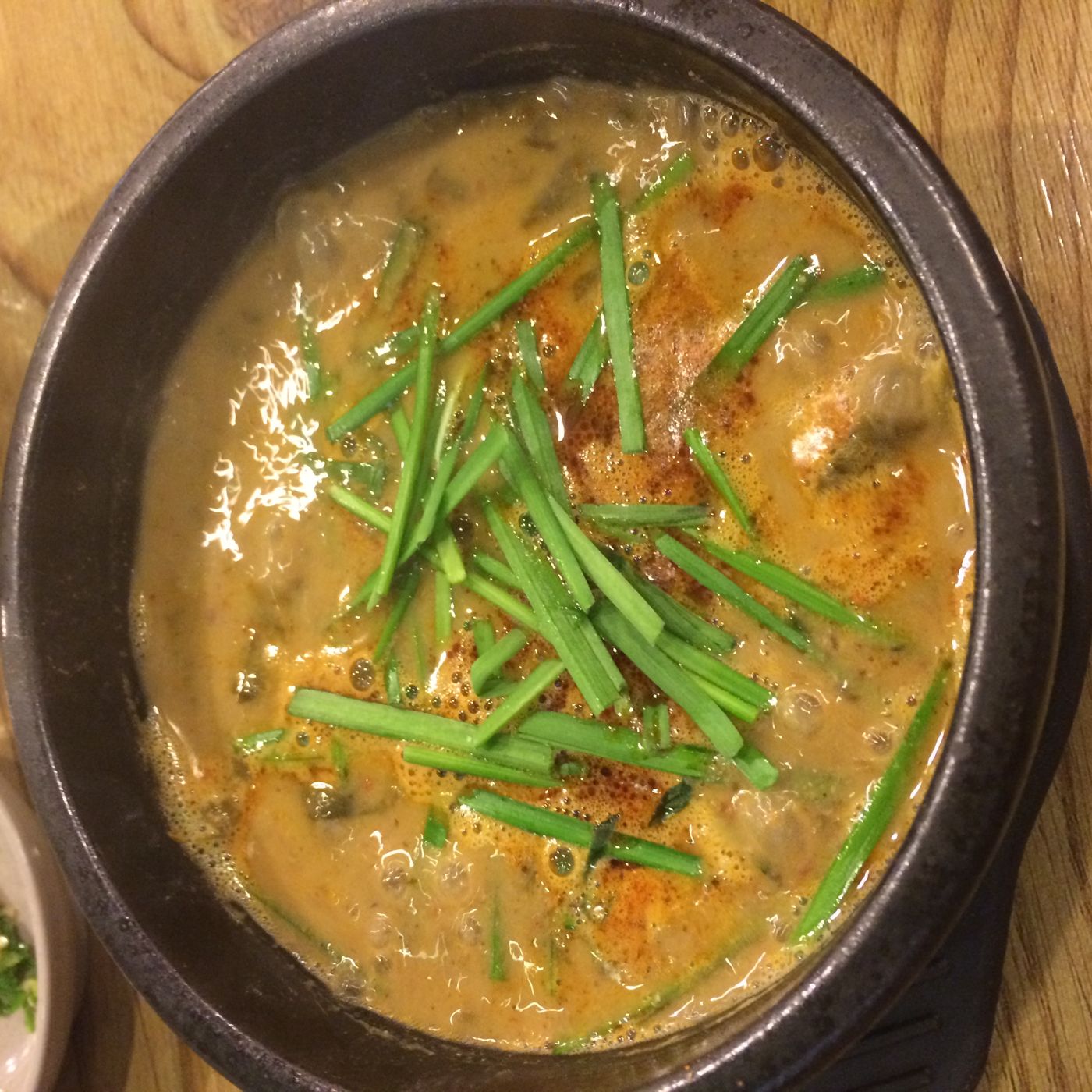 Chueotang (Loach Soup)추어탕Pond loaches simmered and ground into a thick, earthy soup with dried greens, doenjang and perilla, sharpened with chopi pepper — an autumn harvest dish turned year-round restorative.
 Cubed Radish Kimchi깍두기Korean radish cut into neat cubes and tossed with chili, garlic and salted shrimp — crunchy, juicy and a classic partner to rich soups.
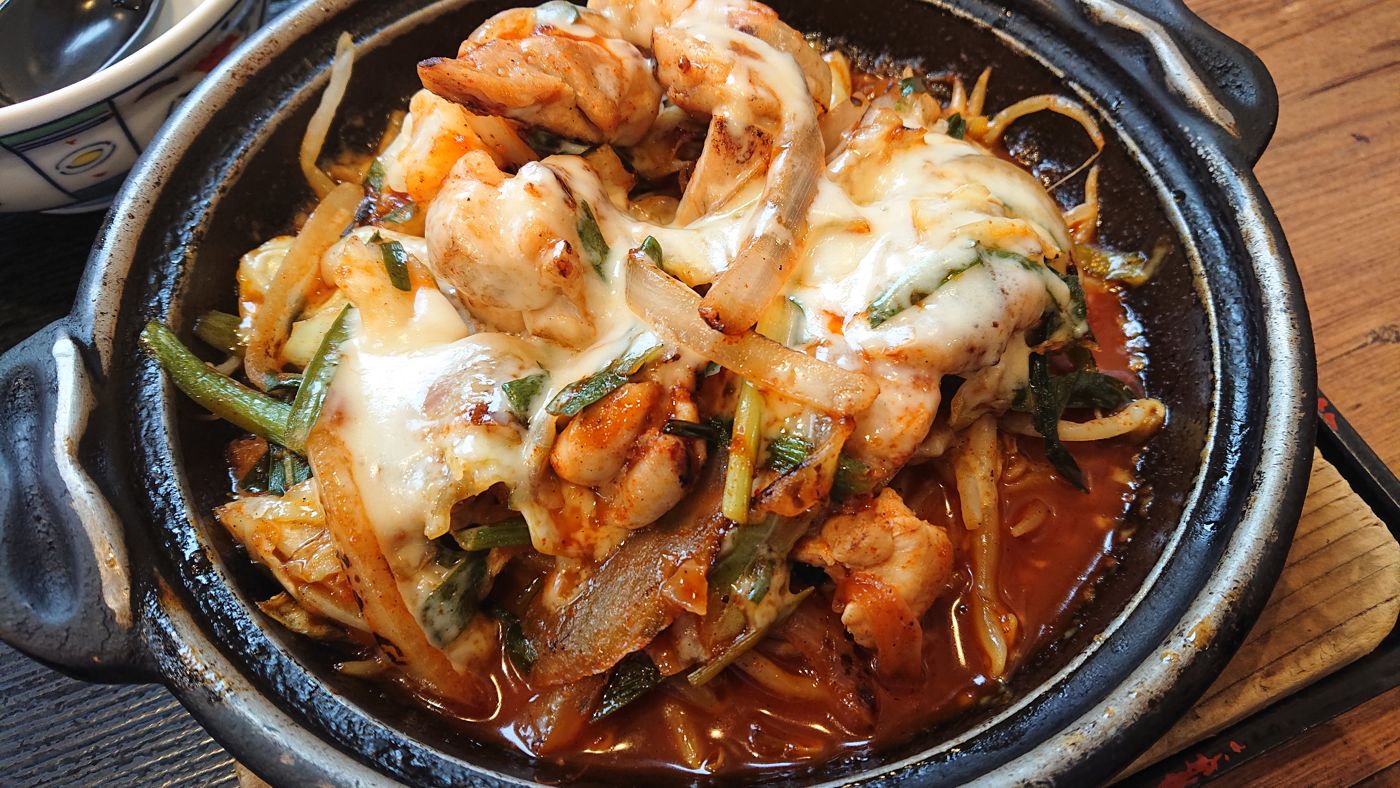 Dakgalbi (Spicy Stir-Fried Chicken)닭갈비Chicken marinated in a fiery gochujang sauce and cooked on a big iron pan with cabbage, sweet potato and rice cakes — Chuncheon's signature dish, finished with fried rice.
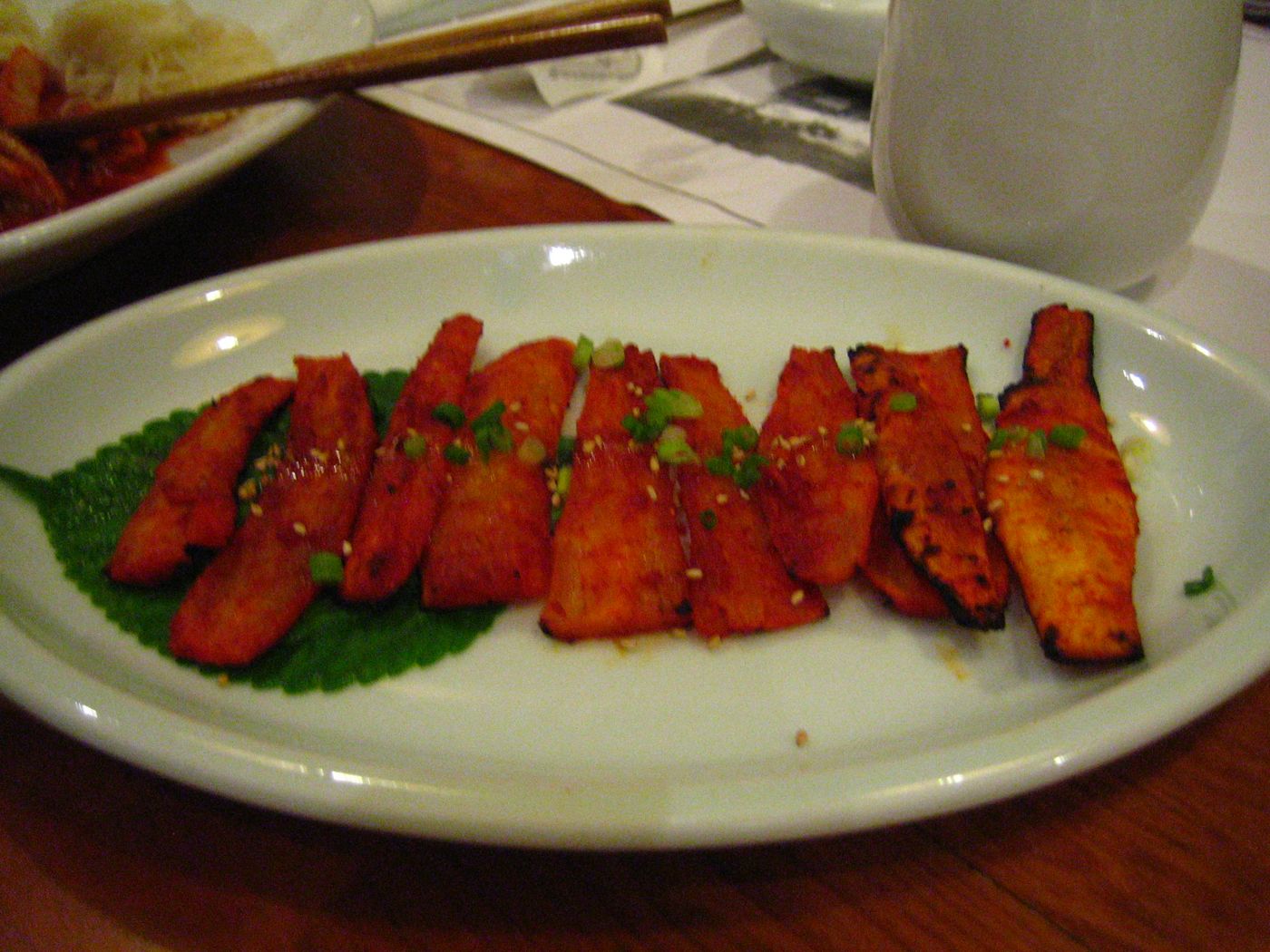 Deodeok Gui (Grilled Seasoned Deodeok)더덕구이Deodeok root pounded flat, brushed with sesame oil and soy, then grilled under a sweet gochujang glaze — chewy, fragrant and slightly bitter, often called meat from the mountains.
- Dongtae-jjigae (Frozen Pollack Stew)동태찌개A spicy, clean-tasting stew of frozen Alaska pollack with radish, tofu and fresh greens in a gochugaru-and-jang broth — a winter staple at the Korean table.
- Dotori Muk Muchim도토리묵무침Slices of soft, faintly bitter acorn jelly tossed with crisp vegetables and a soy–chili–sesame dressing — a cool, light side dish and a favorite with drinks.
- Dureup Muchim (Seasoned Aralia Shoots)두릅무침Tender aralia tree shoots blanched briefly and dressed with a tangy gochujang sauce — a fleeting mid-spring delicacy with a resinous, slightly bitter edge.
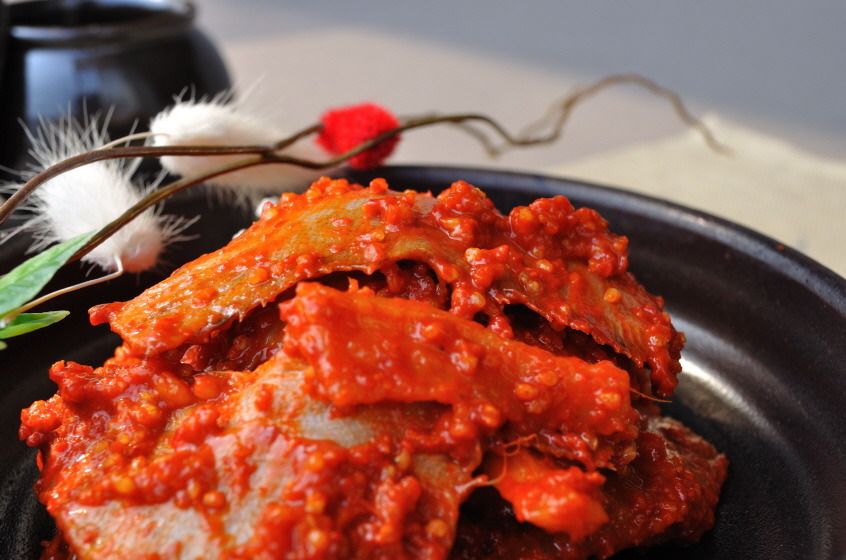 Fermented Flatfish with Millet가자미식해Salted flatfish fermented with foxtail millet, malt, radish and chili — the tangy, spicy sikhae of Hamgyeong, carried south to the Gangwon coast.
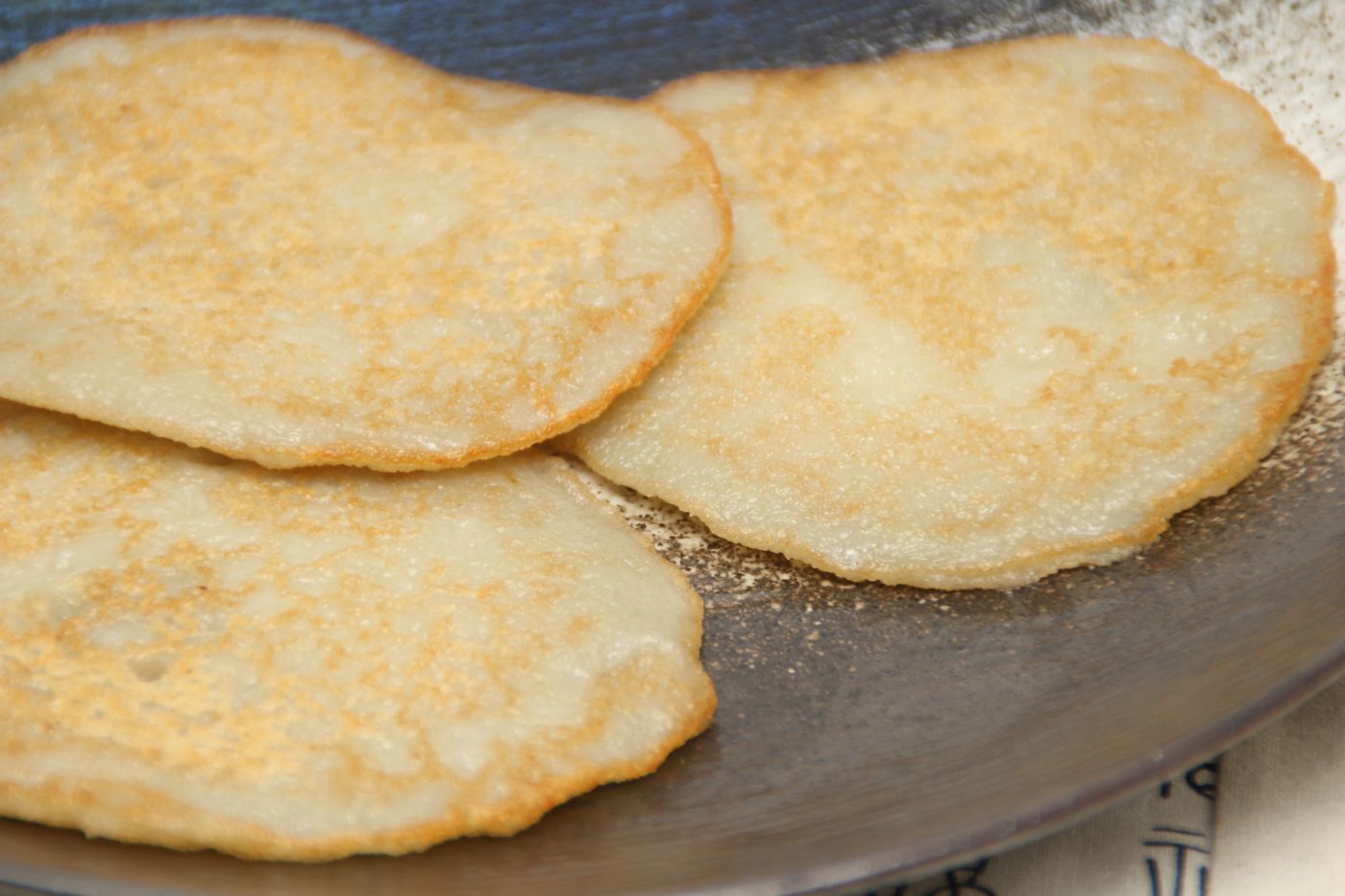 Gamja Jeon (Potato Pancake)감자전Finely grated potato, bound only by its own starch, pan-fried into crisp-edged, chewy rounds — a simple Gangwon-style jeon.
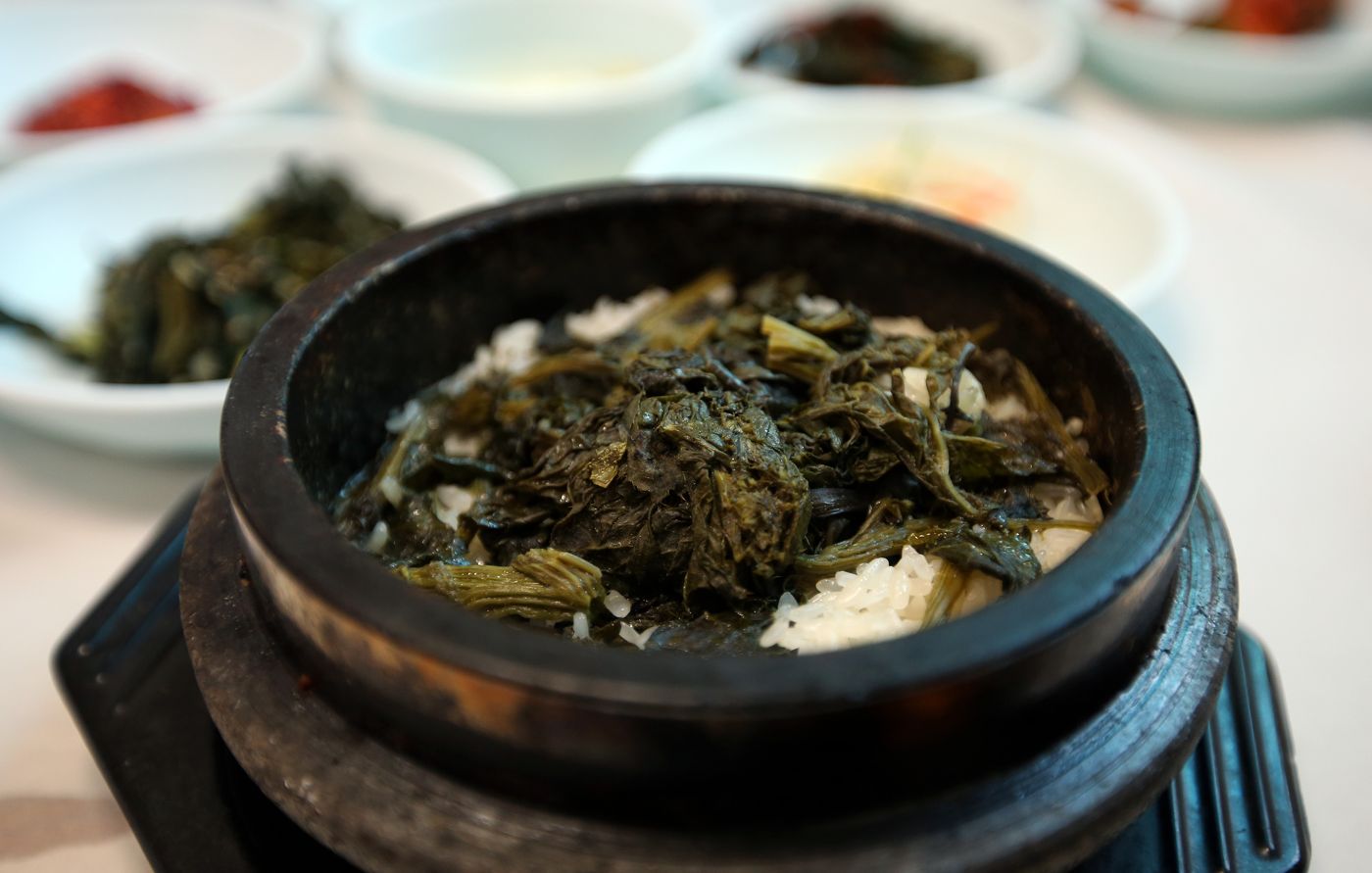 Gondeure-bap (Thistle Rice)곤드레밥Rice steamed with dried-and-rehydrated gondeure, a soft mountain thistle, then stirred with a soy-sauce dressing — the signature dish of Gangwon's highlands, especially Jeongseon.
- Hwangtae Gui (Grilled Seasoned Dried Pollock)황태구이Winter-cured dried pollock softened, opened flat and grilled with a glossy gochujang glaze — tender, savory and a specialty of Gangwon's mountain drying yards.
- Kodari Jorim (Braised Semi-Dried Pollock)코다리조림Half-dried Alaska pollock braised with radish in a sweet, spicy soy-gochugaru sauce until the chewy flesh soaks up the glaze.
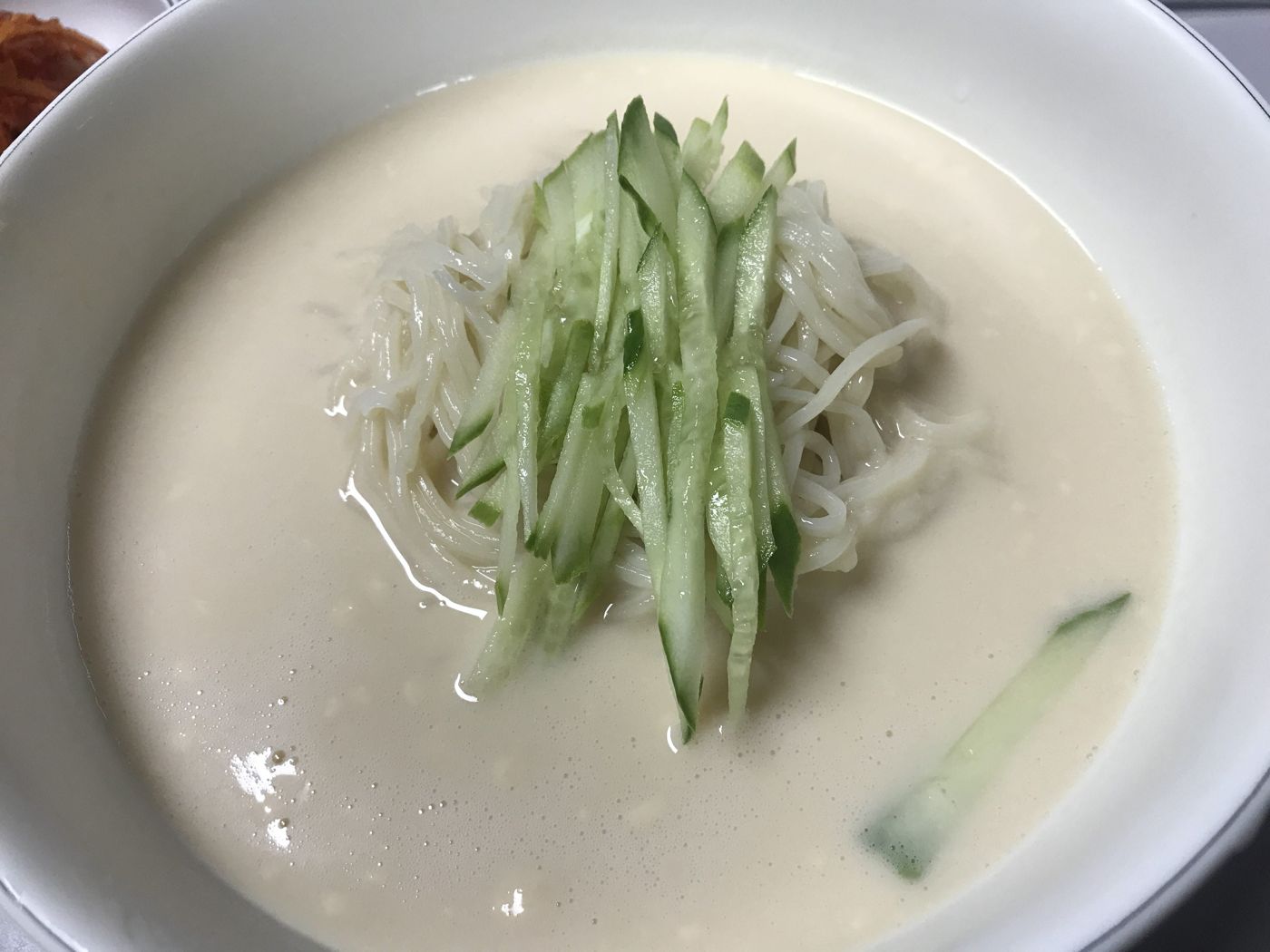 Kongguksu (Cold Soybean-Milk Noodles)콩국수Thin wheat noodles in a chilled, nutty broth of freshly ground soybeans, topped with cucumber — a protein-rich summer noodle traditionally eaten with yeolmu kimchi.
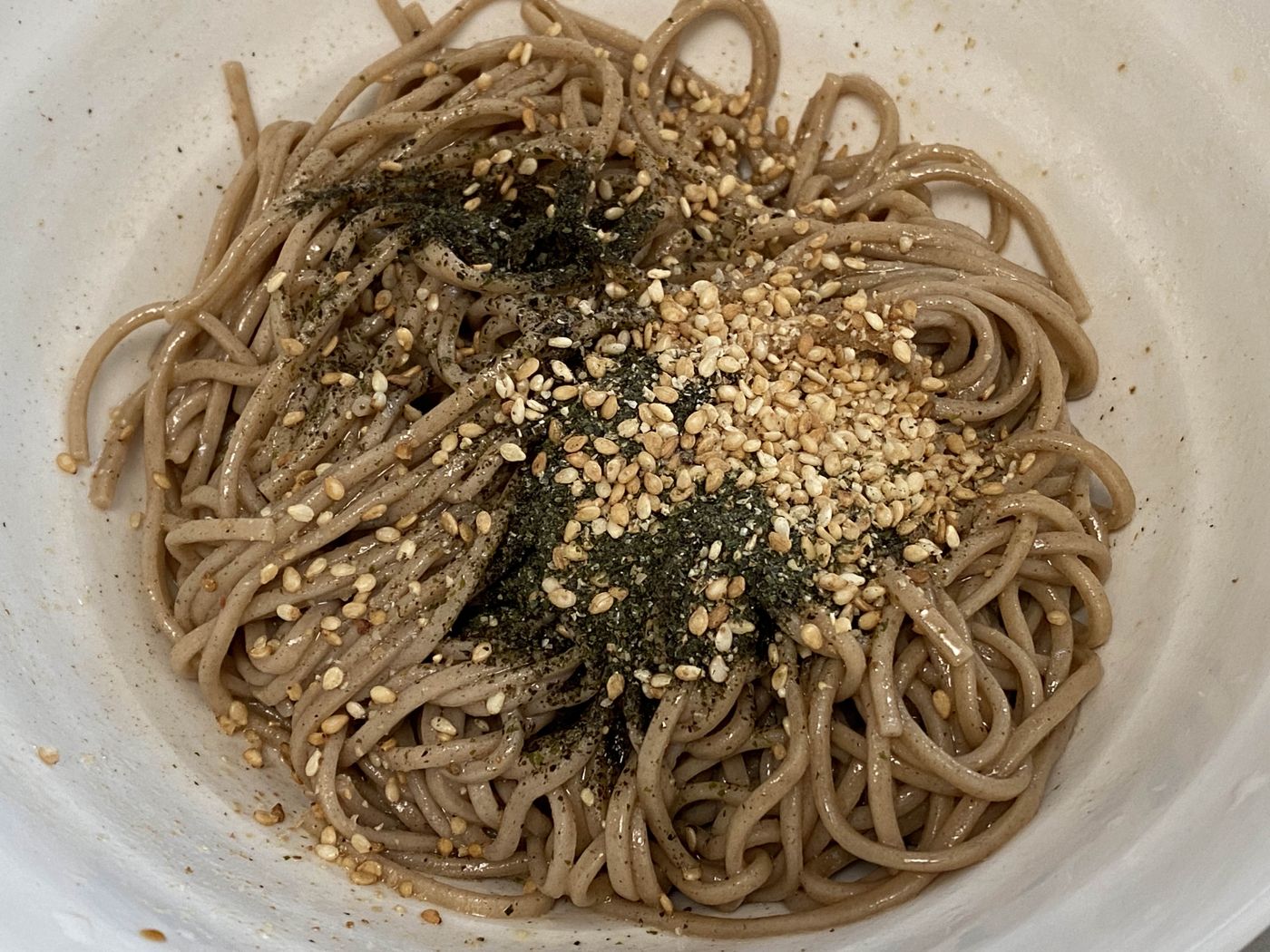 Makguksu (Gangwon Buckwheat Noodles)막국수Coarse, grayish buckwheat noodles served in cold dongchimi broth or tossed with spicy sauce — a Gangwon mountain dish most famously eaten in Chuncheon.
- Mareun Hobak Namul (Dried Squash Namul)호박고지나물Sun-dried strips of young squash soaked and stir-fried with perilla oil and soy sauce — chewy and sweet, one of the stored "old greens" eaten on the first full moon.
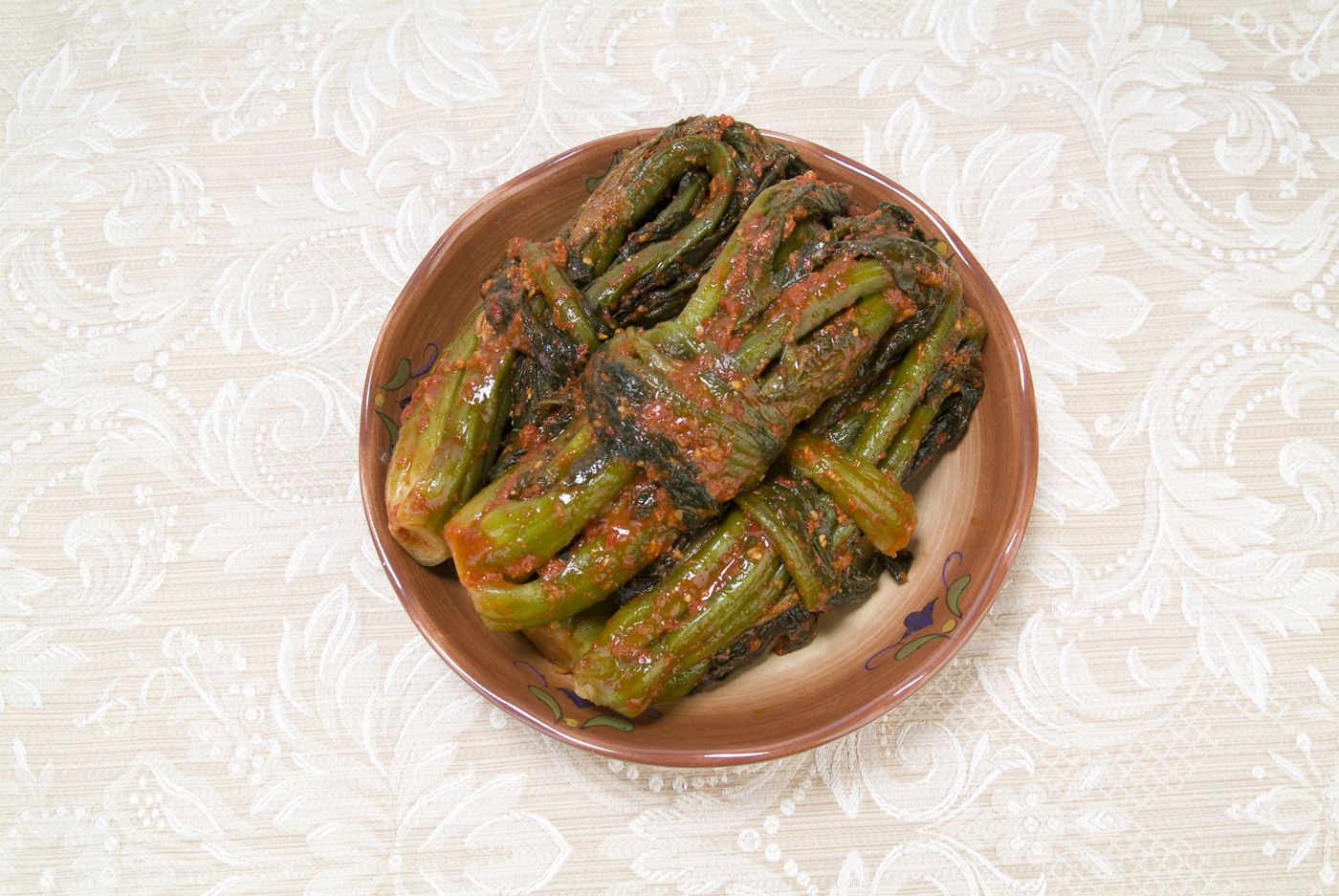 Mustard Leaf Kimchi갓김치Leaf mustard rolled in a chili and anchovy paste and fermented until its nose-tingling bite mellows — a Jeolla specialty, famously from Dolsan in Yeosu.
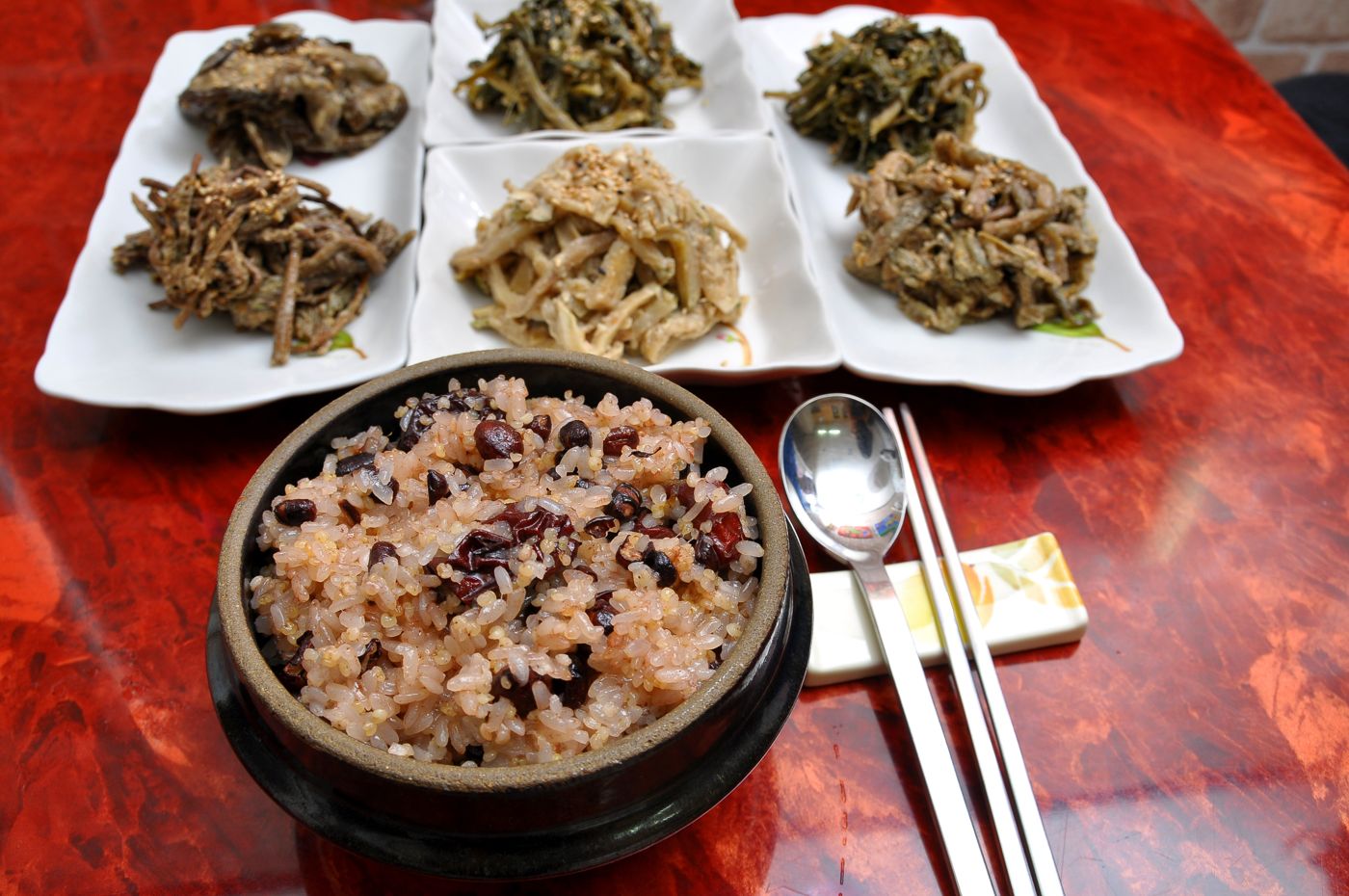 Ogokbap (Five-Grain Rice)오곡밥Glutinous rice cooked with sorghum, millet, red beans and black soybeans for Daeboreum, the first full moon of the lunar year, and shared among neighbors for a good harvest.
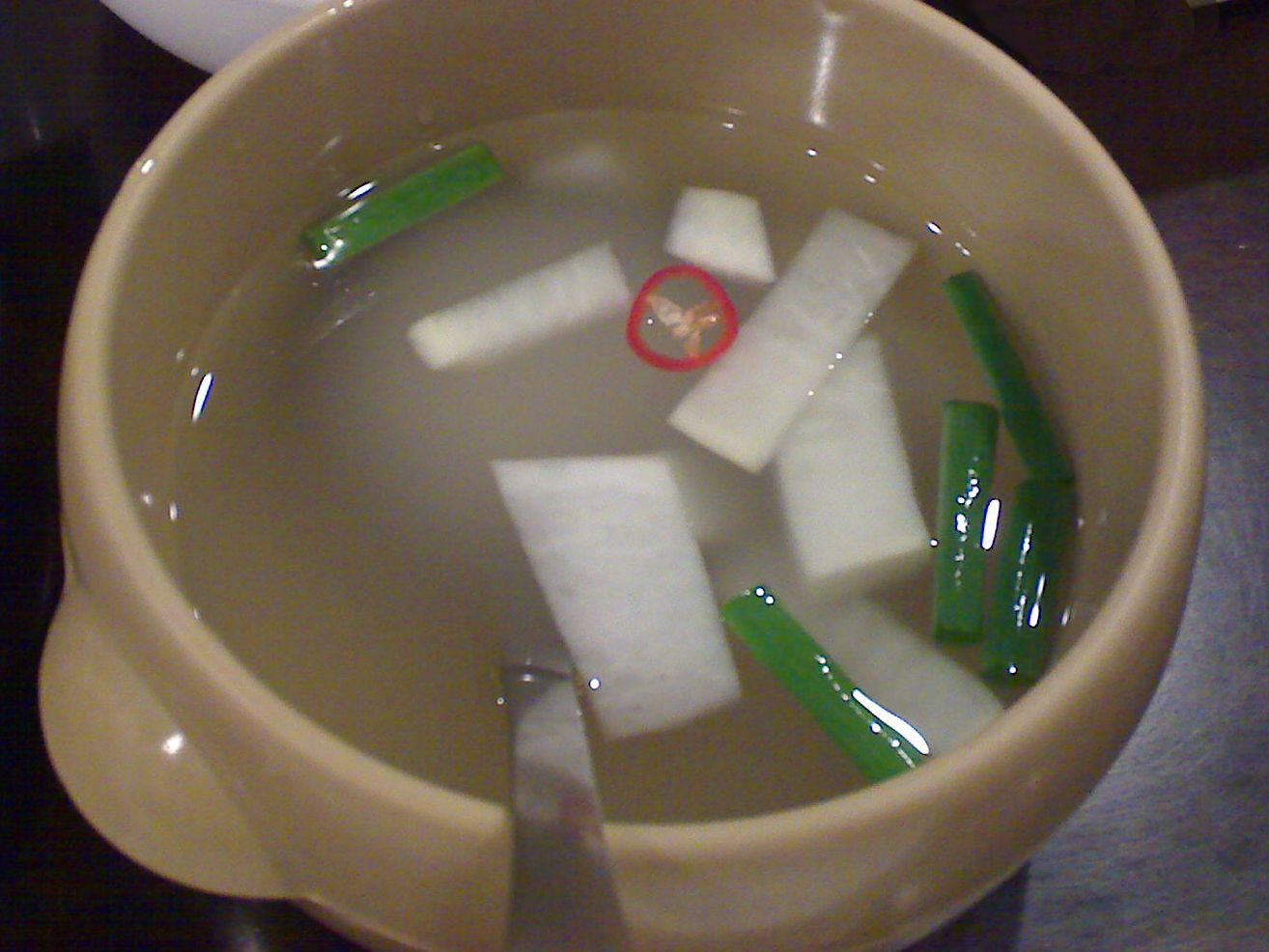 Radish Water Kimchi동치미Whole radishes steeped in a clear salt brine with pear, ginger and green chili — a winter water kimchi whose tangy broth is prized on its own.
- Saengtae Jjigae (Fresh Pollock Stew)생태찌개Chunks of fresh, never-frozen pollock simmered with radish, tofu and a red chili broth, finished with water dropwort and crown daisy — a winter stew prized for its clean, bracing taste.
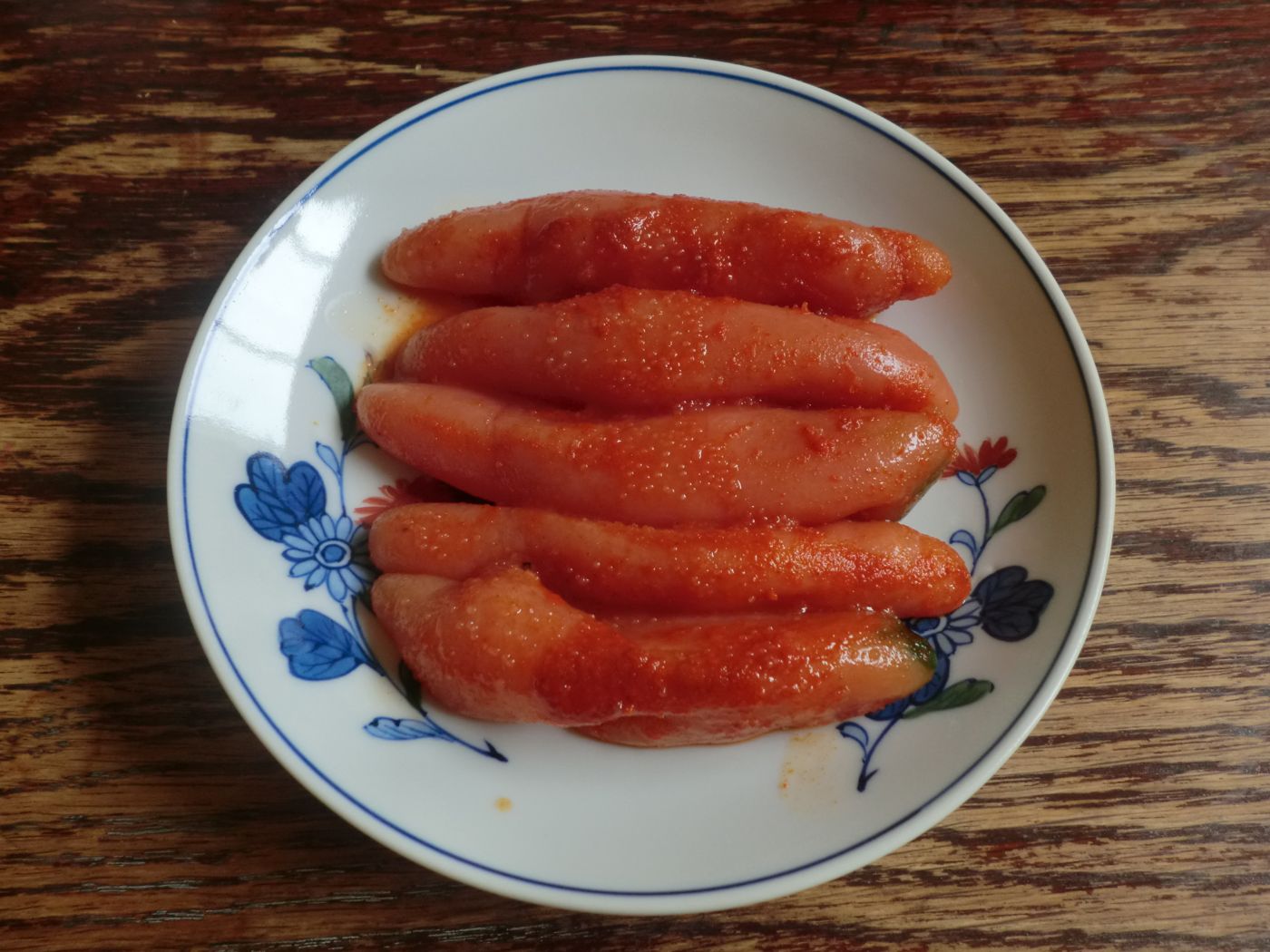 Salted Pollock Roe명란젓Whole sacs of Alaska pollock roe cured in salt and coated with chili and garlic — briny, savory and eaten in small amounts with rice and sesame oil.
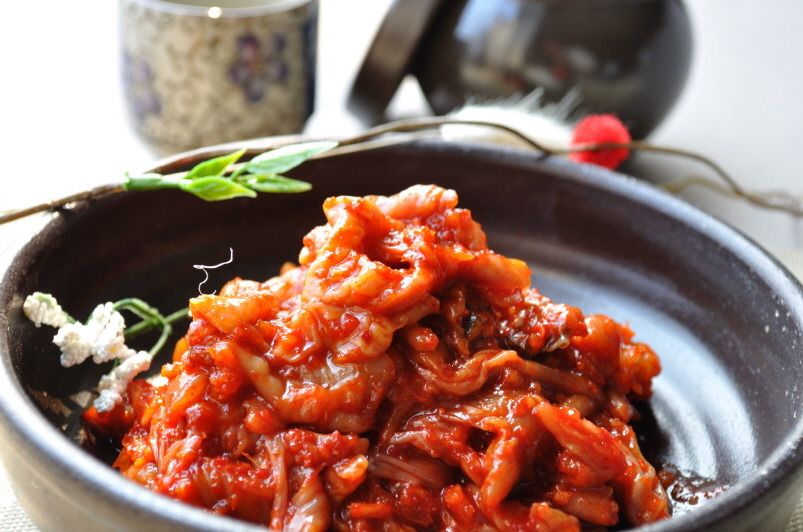 Salted Pollock Tripe창난젓Pollock intestines cured in salt, then cut and dressed with chili, garlic and green onion — a chewy, savory East Sea jeotgal, often mixed with radish.
- Salted Radish Pickle짠지Whole radishes packed in heavy salt over winter and opened in spring — soaked, sliced thin and served in vinegared cold water or dressed with chili.
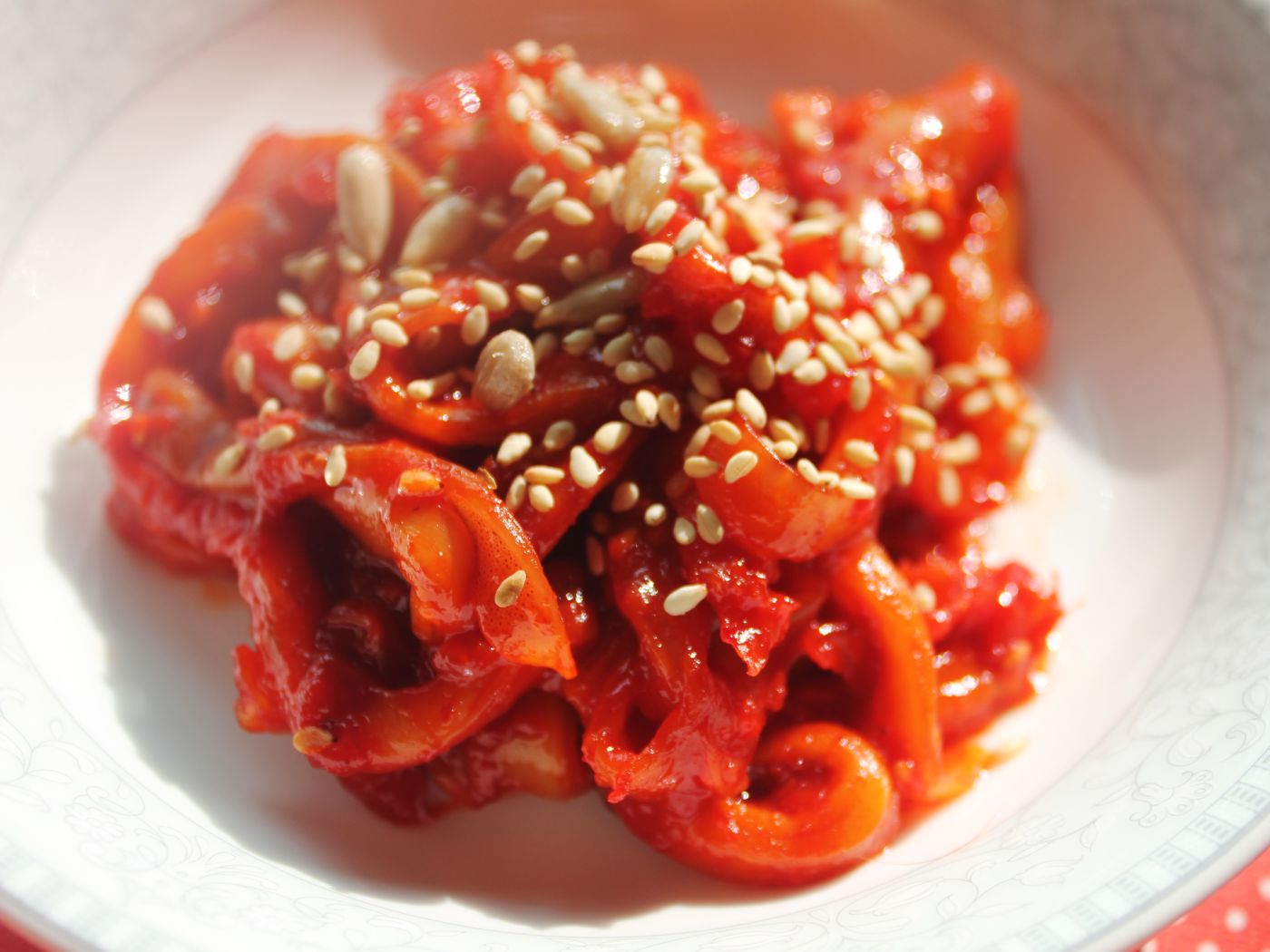 Salted Squid오징어젓Squid cured in salt, then sliced and tossed with chili, garlic and a touch of syrup — chewy, sweet-savory jeotgal from the East Sea coast.
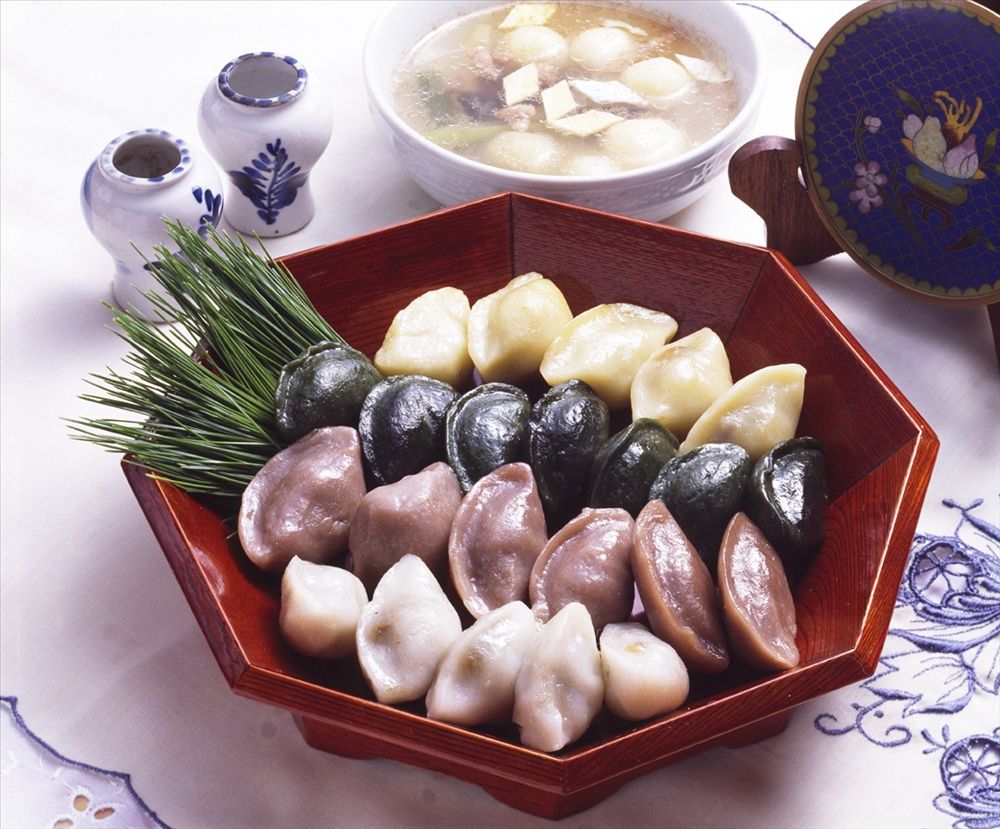 Songpyeon (Half-Moon Rice Cakes)송편Small half-moon cakes of rice dough filled with sweet sesame, beans or chestnut and steamed on a bed of pine needles — the rice cake of Chuseok, made with the new harvest.
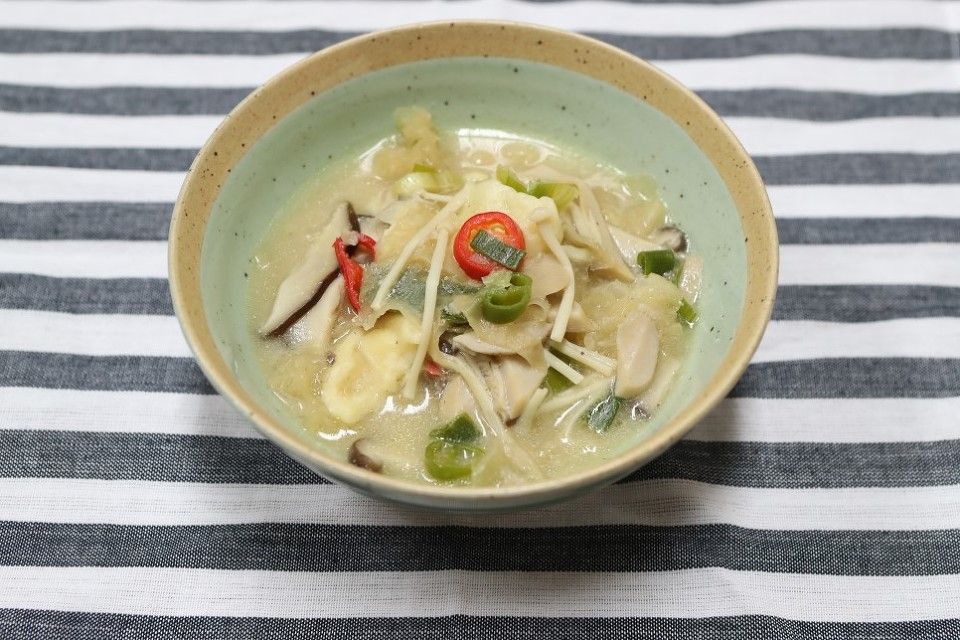 Sujebi (Hand-Torn Dough Soup)수제비Thin pieces of wheat dough pulled by hand into a simmering anchovy broth with zucchini and potato — a cozy, inexpensive one-pot meal, traditionally a summer staple.
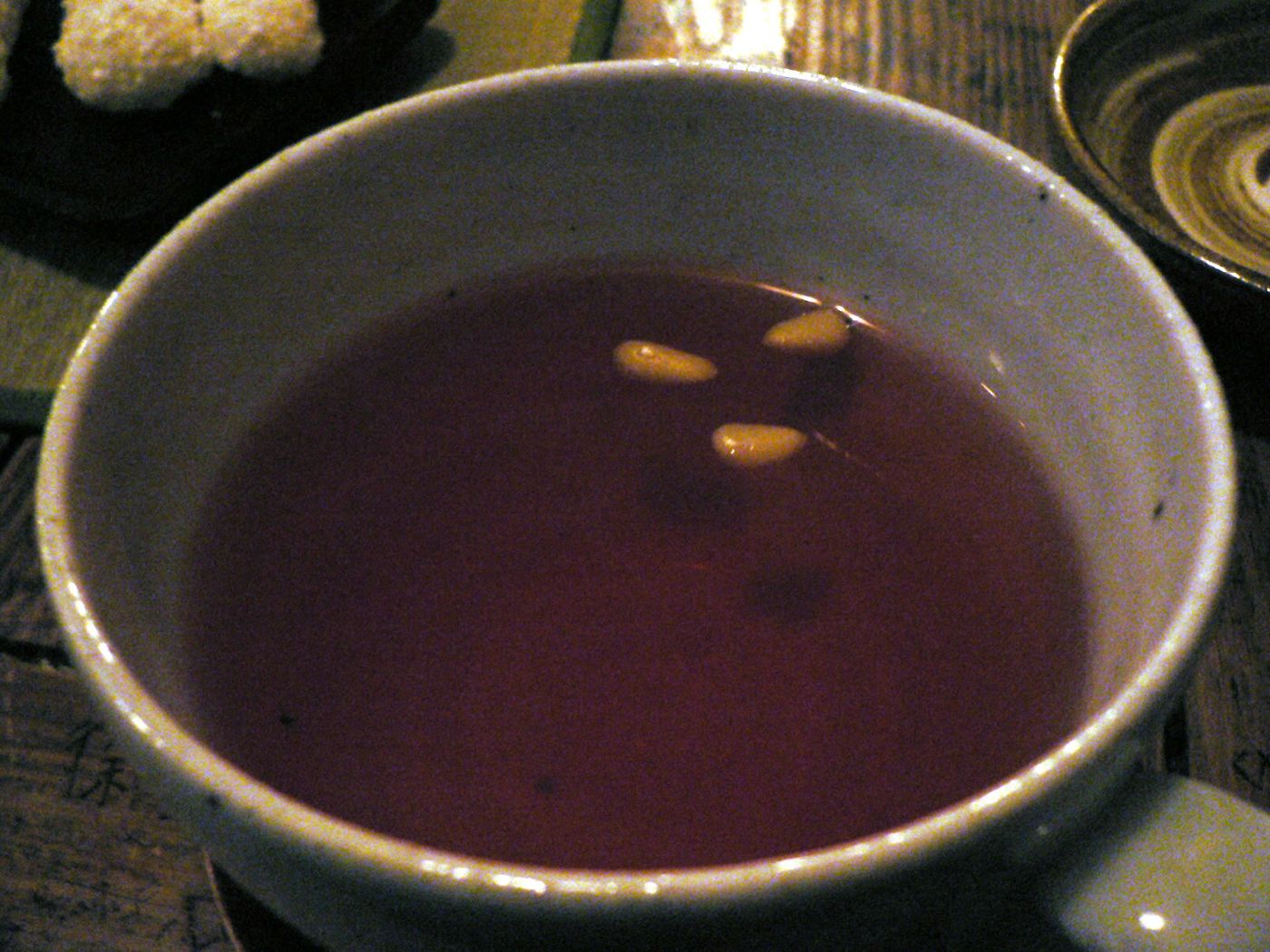 Sujeonggwa (Cinnamon-Ginger Punch with Dried Persimmon)수정과A cold, spicy-sweet punch of ginger and cinnamon simmered separately, sweetened, and served with softened dried persimmons and pine nuts — a New Year drink for guests.
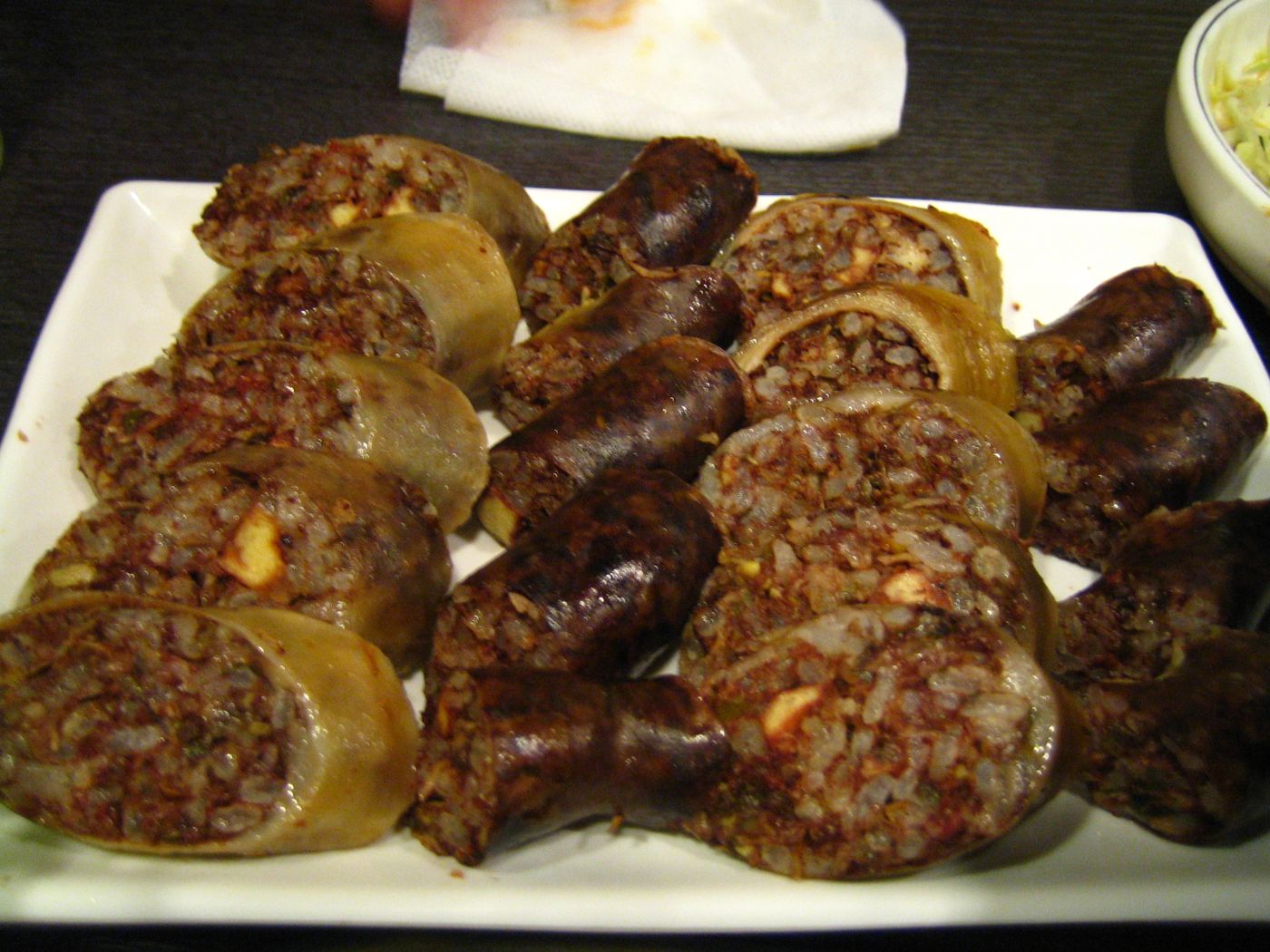 Sundae (Korean Blood Sausage)순대Pork intestine stuffed with pig's blood, glutinous rice, glass noodles and vegetables, then steamed — a northern farmhouse food that became a nationwide street snack.
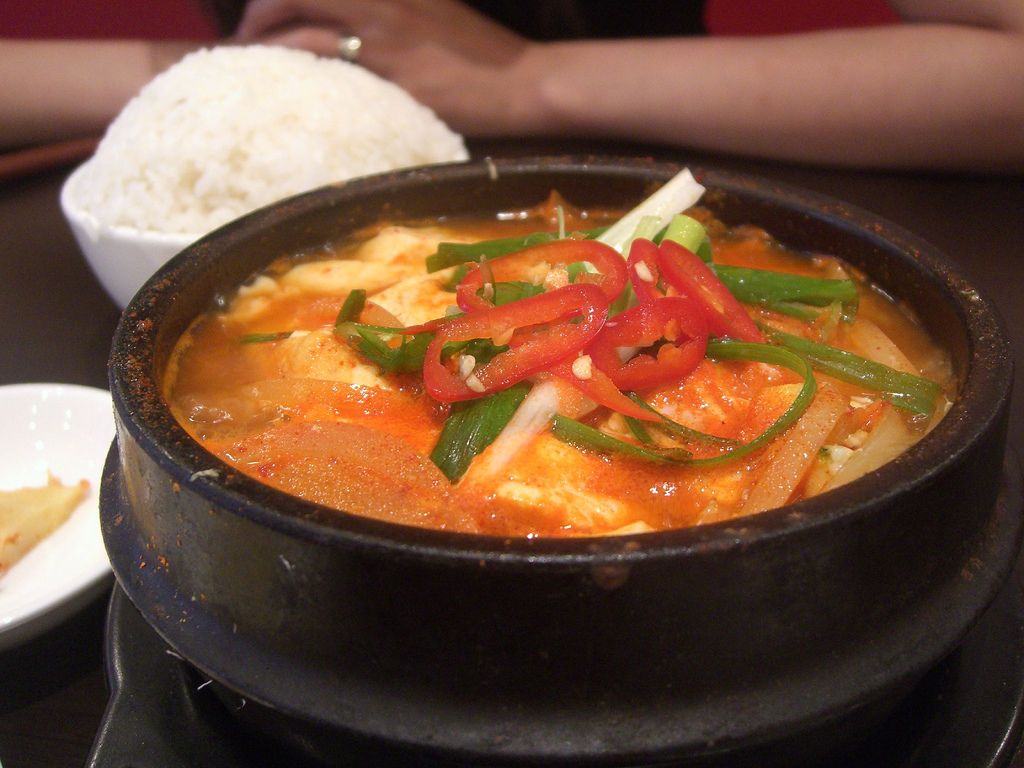 Sundubu Jjigae (Soft Tofu Stew)순두부찌개Silky, unpressed tofu simmered in a fiery chili broth with clams or pork and finished with a raw egg — served still boiling in its earthenware pot.
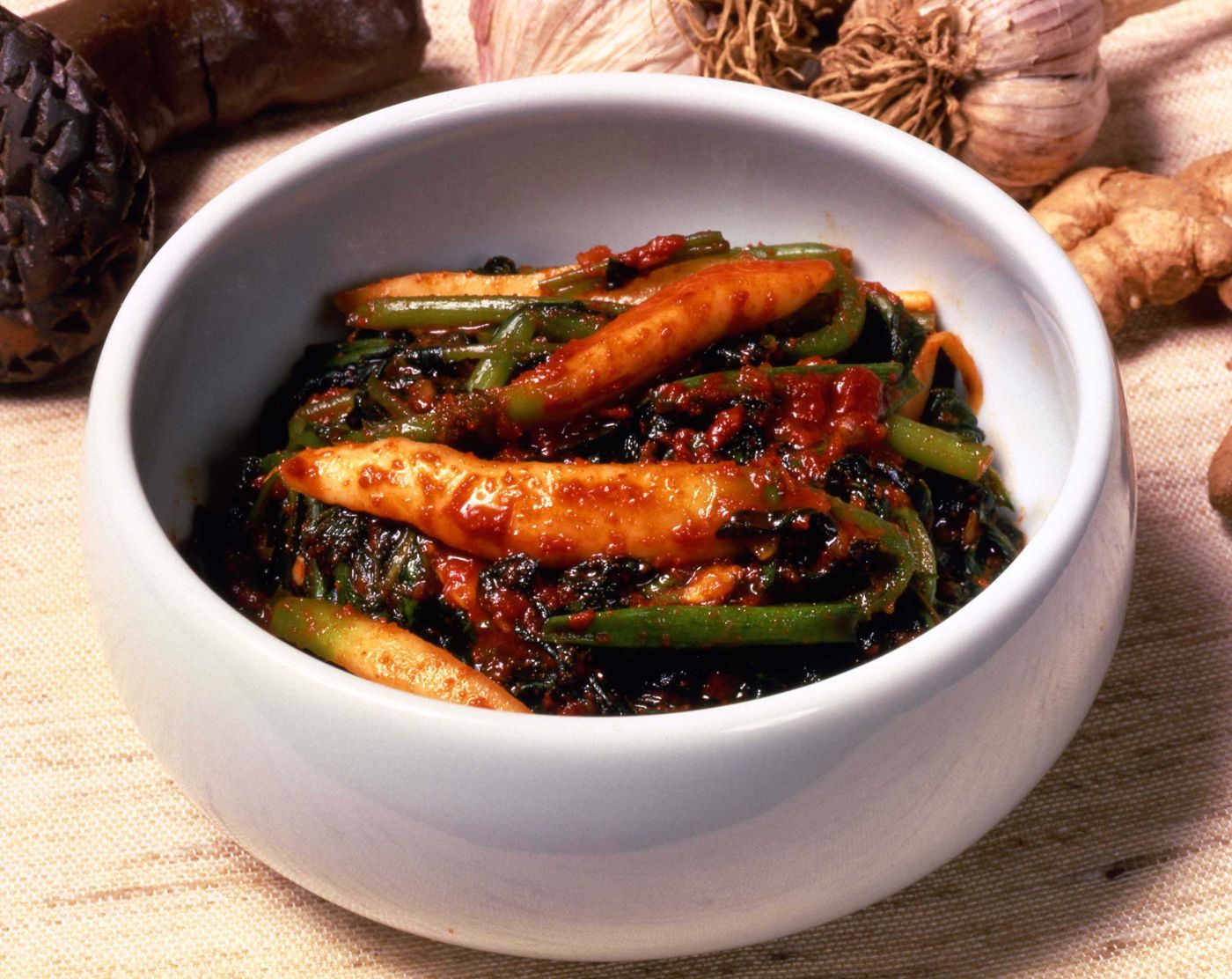 Young Summer Radish Kimchi열무김치Tender young radish greens in a loose, lightly spicy brine thickened with flour or rice paste — the classic summer kimchi, served over noodles and barley rice.