Ingredient
Aster greens (chwi)
취나물
Romanization: chwinamul
Aromatic mountain greens from the aster family, led by chamchwi. Eaten fresh in spring and dried for winter, chwinamul is one of the most beloved wild-style namul.
Flavor
Herbal and lightly resinous with a pleasant bitterness; fresh leaves are bright and grassy, while dried chwi is deeper and more earthy.
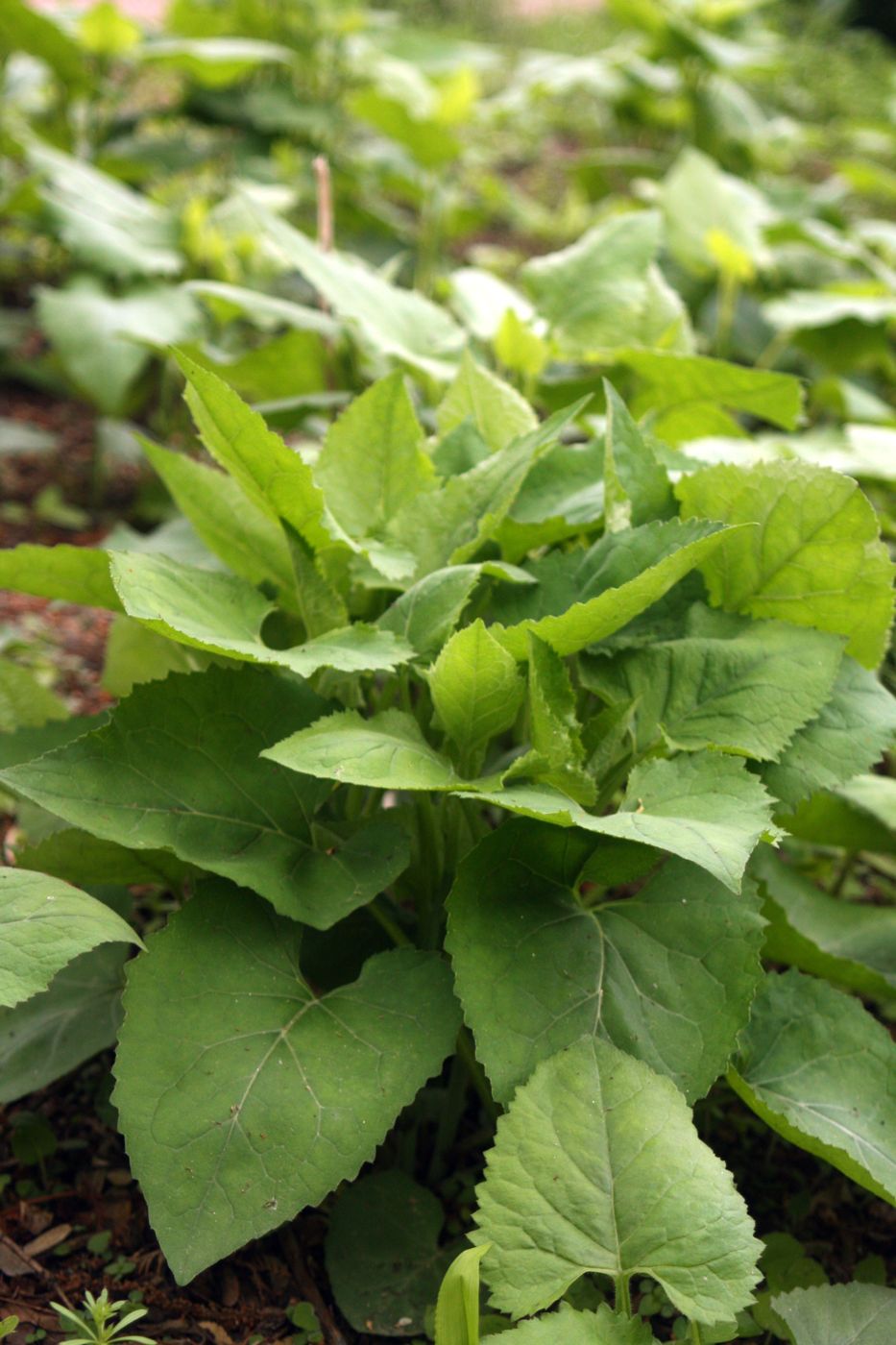 Photo: Dalgial, CC BY-SA 3.0, via Wikimedia Commons
Origin & History
Chwi is the collective Korean name for a group of edible wild plants in the aster family whose names end in -chwi: chamchwi (Aster scaber), gomchwi (Ligularia fischeri), miyeokchwi, dangpungchwi, surichwi and others. When a recipe simply says chwinamul, it usually means chamchwi, a common mountain plant with heart-shaped, toothed leaves and small white flowers in autumn.
These greens have been gathered as namul since early times, and young chamchwi shoots were also worked into rice cakes. Dried chwi is one of the stored vegetables (mugeun-namul) cooked for Jeongwol Daeboreum, the first full moon of the lunar year; the 19th-century almanac Dongguk sesigi records the belief that eating these dried greens protects against the summer heat. On the same holiday, boksam — rice wrapped in chamchwi, cabbage leaves or laver — was eaten as a wish for a good harvest.
Once foraged mainly in spring, chamchwi is now widely cultivated in Korea, including in greenhouses, so fresh bunches are available for much of the year. A portion of the harvest is still blanched and sun-dried for keeping.
Fresh leaves are blanched briefly, squeezed and seasoned as namul. Dried chwi is soaked, simmered until tender and then stir-fried with seasoning, which gives it a deeper, woodsy character.
Nutrition
| Calories | 49 kcal |
|---|---|
| Protein | 2.77 g |
| Fat | 0.5 g |
| Carbohydrates | 10.54 g |
| Fiber | 4.5 g |
| Sodium | 8 mg |
Notable forVitamin K (150 µg) · Calcium (124 mg) · Potassium (449 mg) · Vitamin A (174 µg RAE)
Values copied from the Korean Food Composition Table (Rural Development Administration / National Institute of Crop Science) for this exact food, per 100 g edible portion. Actual values vary with ingredients, portion size and preparation.
Health Benefits
- A nutrient-dense green: According to the Korean Food Composition Table, blanched chamchwi provides dietary fiber, calcium, potassium and vitamin A.
- Very rich in vitamin K: A 100 g portion of blanched chamchwi contains more vitamin K than the daily recommended amount for adults. People who take the blood thinner warfarin are advised to keep their vitamin K intake consistent from day to day, so they should talk with their clinician before making large changes to how much leafy namul they eat.
- Part of the vegetable-forward table: Like other namul, chwinamul is usually served in small portions alongside rice and other side dishes.
- Seasoning matters: The greens themselves are very low in sodium; most of the salt in chwinamul comes from the seasoning.
Informational, not medical advice. Talk to a qualified professional about your own health and diet.
Sources
- 01취 (Chwi) — Encyclopedia of Korean Culture
- 02묵은나물 (Mugeun-namul) — Encyclopedia of Korean Culture
- 03음식 (Food) — Encyclopedia of Korean Culture
- 04Dissipation Kinetics and Risk Assessment of Spirodiclofen and Tebufenpyrad in Aster scaber Thunb. (Foods, 2023)
- 05Vitamin K — Consumer Fact Sheet, NIH Office of Dietary Supplements
- 06Korean Food Composition Table — Rough aster (Chamchwi), Blanched