Namul · Seasoned vegetables 나물
Mareun Hobak Namul (Dried Squash Namul)
호박고지나물
Romanization: hobakgoji-namul
Sun-dried strips of young squash soaked and stir-fried with perilla oil and soy sauce — chewy and sweet, one of the stored "old greens" eaten on the first full moon.
- Serves
- 4
- Prep
- 40 min
- Cook
- 12 min
Recipe
Ingredients · Serves 4
- 50 gHobak-goji (dried young squash slices)
- 1 tbspPerilla oilor toasted sesame oil
- 1 tspSoup soy sauce (guk-ganjang)
- 1 tspGarlicminced
- 80 mlAnchovy stock or water
- 1 pinchSaltto taste
- 1 tbspGreen onionfinely chopped
- 1 tspToasted sesame seedscrushed
Method
Technique: Drying and Rehydrating Vegetables, Blanching and Seasoning Namul
Step 1: Rinse the dried squash and soak in warm water for 30 minutes, until pliable. If it still feels leathery, simmer it in fresh water for 3–5 minutes.
Step 2: Drain and squeeze out the water gently. Cut very long strips into manageable lengths.
Step 3: Toss the squash with the soup soy sauce and garlic and let it sit for 5 minutes to absorb the seasoning.
Step 4: Heat the perilla oil in a pan over medium heat and stir-fry the squash for 2–3 minutes.
Step 5: Add the stock, cover and cook over low heat for 4–5 minutes, until the squash is tender and the liquid has mostly been absorbed. Taste and add a pinch of salt if needed.
Step 6: Toss in the green onion and sesame seeds, cook for 30 seconds more, and serve warm or at room temperature.
Origin & History
Squash came to Korea late. The Encyclopedia of Korean Folk Culture dates its arrival to around the Imjin War of the 1590s, after which it spread to every corner of the country and was valued as famine food. Young squash (aehobak) was eaten fresh in summer, and the surplus was sliced thin and dried in the sun. The National Institute of Korean Language defines hobak-goji as young squash sliced thin and dried as a cooking ingredient, soaked and then stir-fried or dressed as namul; the related word hobak-oagari covers squash sliced or cut into long strips and dried. (Dried slices of mature pumpkin, also called hobak-goji in some regions, go mostly into steamed rice cakes.)
Dried squash is one of the classic mugeun-namul — "aged greens" dried the year before and cooked for Jeongwol Daeboreum, the first full moon of the lunar year, with five-grain rice. The Encyclopedia of Korean Culture lists squash among these stored vegetables and notes that the nineteenth-century almanac Dongguk sesigi records the belief that eating them keeps one from suffering in the summer heat. The folk-culture encyclopedia adds that the early-twentieth-century Haedong jukji counted hobak-goji, dried eggplant and radish greens among nine old greens that, eaten at Daeboreum, would see a family through summer without illness.
The cooking method is simple: soak the dried strips, simmer them if they are tough, then stir-fry with seasoning, adding a little stock and covering the pan so they turn tender. Today, dried squash strips are sold year-round, and the namul appears on everyday tables as well as on the full-moon spread.
Key Ingredients
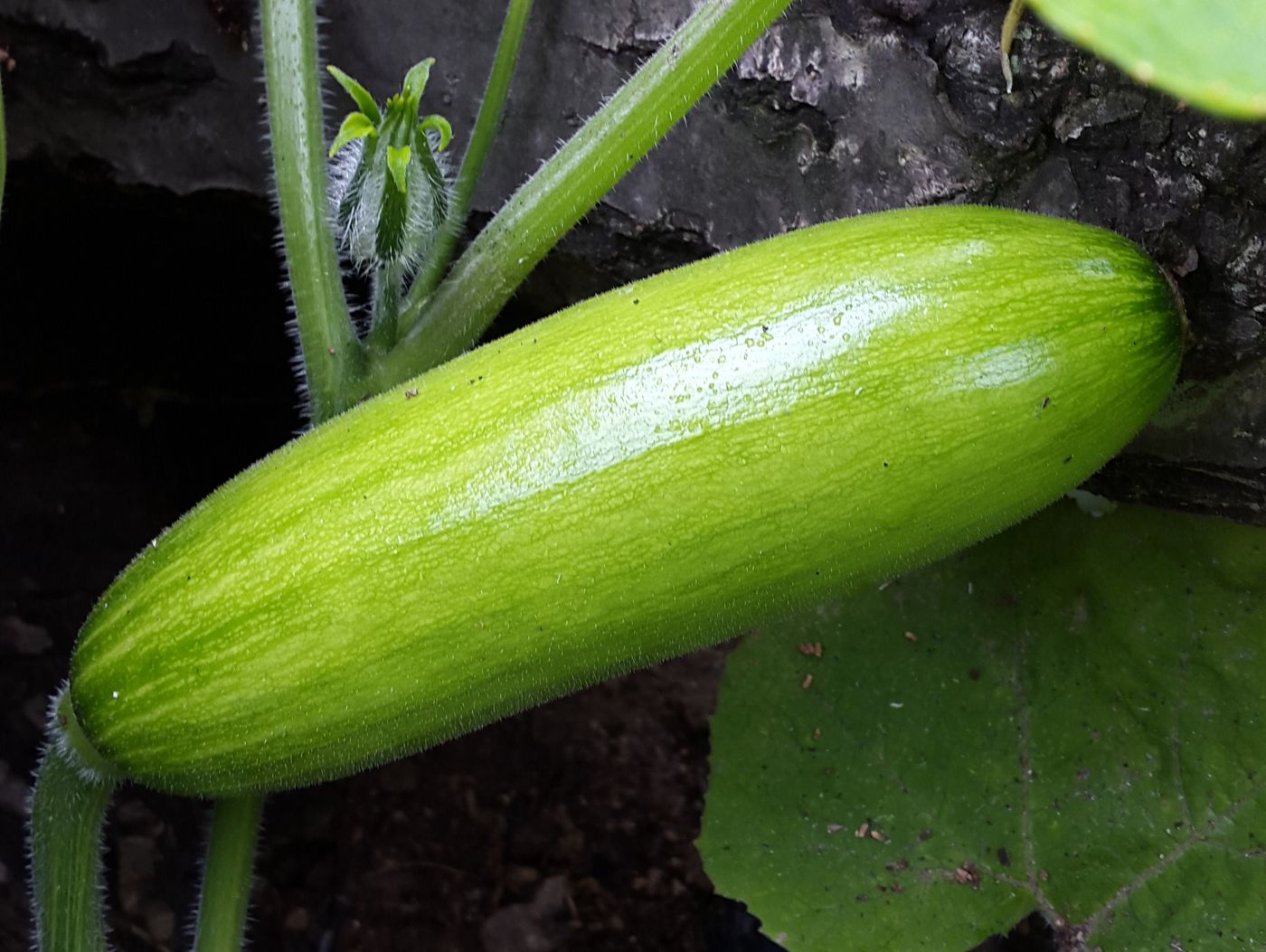 Korean zucchini애호박A pale-green young squash with thin, smooth skin and tender flesh. Sliced into rounds for hobak-jeon, sautéed as namul and added to doenjang stews.
 Soy sauce간장Korean soy sauce, in two main kitchen forms: pale, salty guk-ganjang (soup soy sauce) brewed the traditional way from meju, and darker, sweeter jin-ganjang for braises and marinades.
 Garlic마늘Used raw, minced, pickled and roasted, garlic is one of the essential aromatics of Korean food — in seasonings, marinades, kimchi and namul.
 Green onion파Korean green onion (pa), from thick-stemmed daepa to slender scallions — chopped into nearly every seasoning sauce, soup and kimchi, and the star of pa-kimchi.
 Sesame참깨Toasted sesame seeds and sesame oil (chamgireum) finish countless Korean dishes, adding a nutty aroma and gloss.
Nutrition
| Calories | ~73 kcal |
|---|---|
| Protein | ~2 g |
| Fat | ~3.8 g |
| Carbohydrates | ~9.2 g |
| Fiber | ~2.7 g |
| Sodium | ~170 mg |
Notable forPotassium · Dietary fiber · Folate
Dried squash uses the Korean Food Composition Table entry “Pumpkin, Young, Dried” (호박, 애호박, 말린것; per 100 g dried: 284 kcal, 19.9 g fiber, 3,735 mg potassium, 326 µg folate), counted at its dry weight. Perilla oil and soup soy sauce also use Korean table values; other seasonings use USDA FoodData Central. Some potassium and folate will leach into the soaking water, so those figures are likely high. Anchovy stock is not counted. Totals divided by four. Actual values vary with ingredients, portion size and preparation.
Health Benefits
- Fiber and potassium: drying concentrates squash; even a small portion supplies useful fiber and potassium.
- Perilla oil: perilla oil is valued for its plant omega-3 fat (alpha-linolenic acid).
- Seasonal tradition: eating dried greens at Daeboreum was traditionally believed to keep people healthy through the coming summer — a custom that reflects the value of stored vegetables in late winter.
Regional Variations
- North Jeolla: the folk-culture encyclopedia describes old greens stir-fried and then simmered with ground perilla seed and a little rice flour, making a creamy, nutty sauce.
- Inje, Gangwon: hobakgoji-tang, a soup of stir-fried dried squash simmered with a strained mixture of ground perilla seed and rice, eaten at Seollal and Daeboreum.
- Ulleungdo: strips of mature pumpkin (hobak-oagari) are simmered in grain syrup to make a pumpkin taffy.
- Daeboreum spread: served alongside other dried greens such as bracken, radish greens, eggplant, mushrooms and bellflower root.
Pairings
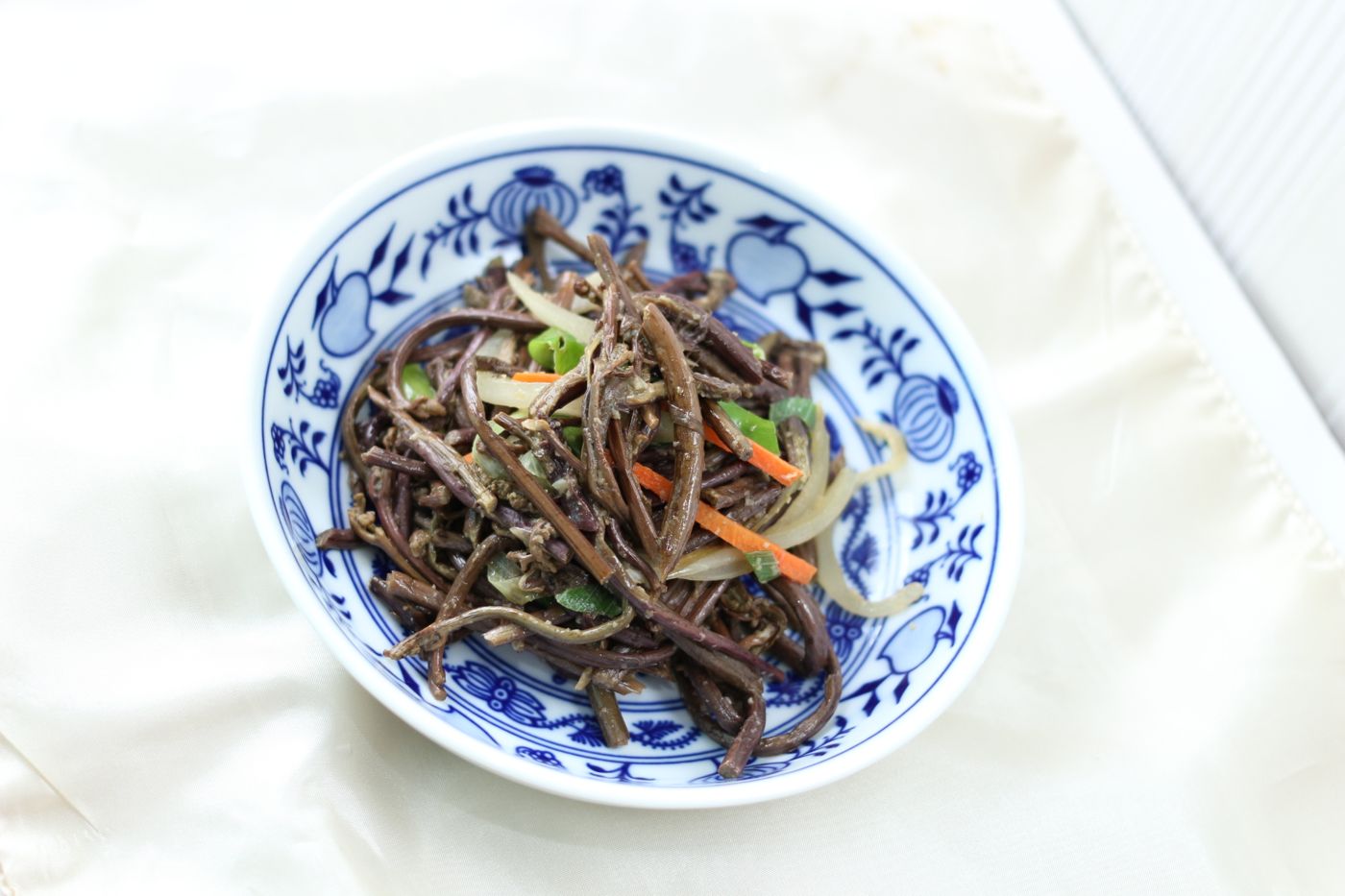 Gosari Namul고사리나물Dried bracken fern soaked, boiled and slowly stir-fried with soup soy sauce, garlic and perilla oil — chewy, earthy and central to holiday tables.
- Siraegi Namul시래기나물Dried radish greens soaked, simmered until tender and seasoned with doenjang and perilla or sesame oil — a deep, earthy winter namul.
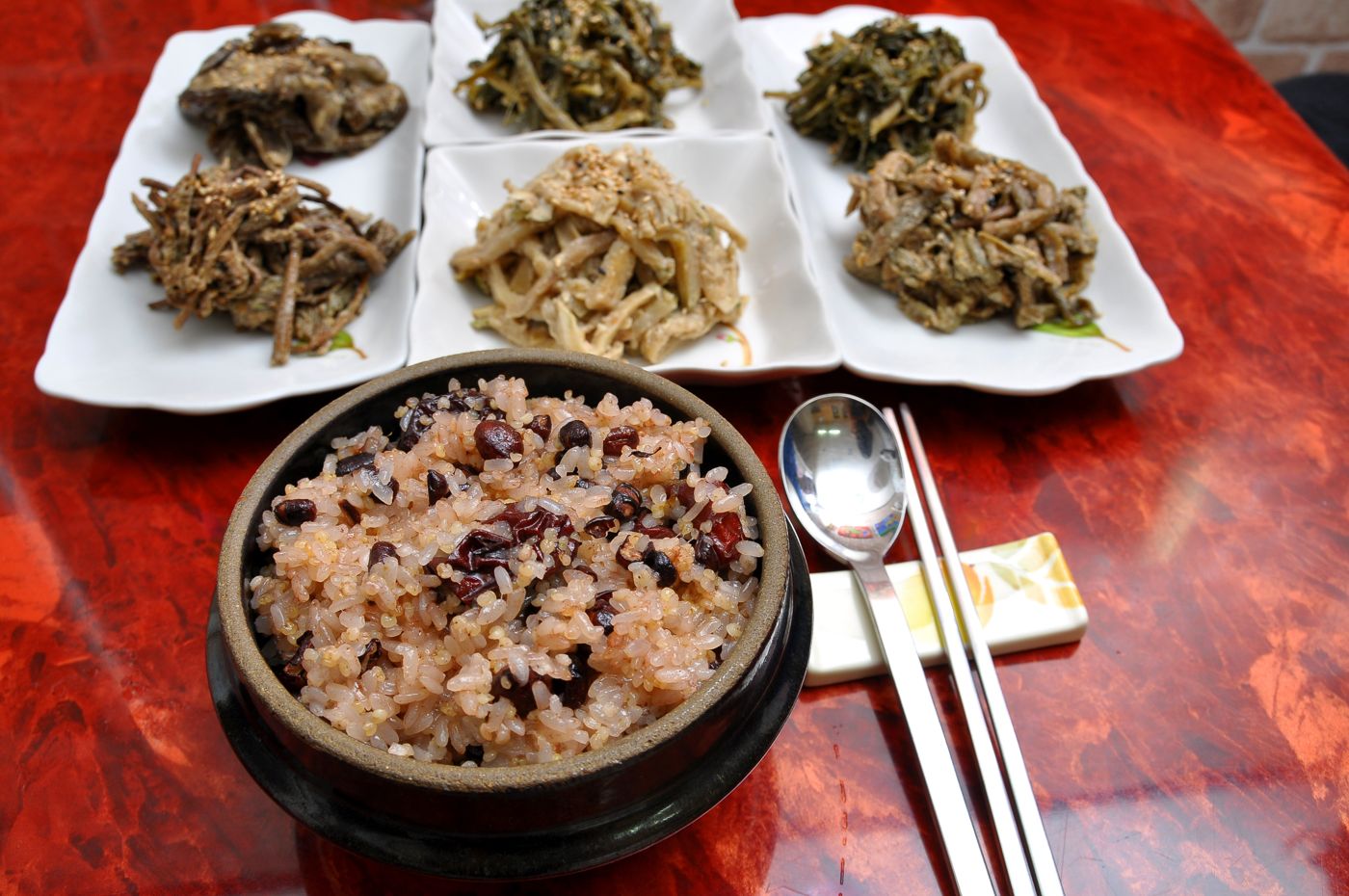 Ogokbap (Five-Grain Rice)오곡밥Glutinous rice cooked with sorghum, millet, red beans and black soybeans for Daeboreum, the first full moon of the lunar year, and shared among neighbors for a good harvest.
Sources
- 01호박고지 (Hobak-goji) — Urimalsaem (National Institute of Korean Language)
- 02묵은나물 (Mugeun-namul) — Encyclopedia of Korean Culture
- 03묵은나물 (Mugeun-namul) — Encyclopedia of Korean Folk Culture (National Folk Museum of Korea)
- 04호박 (Hobak, squash) — Encyclopedia of Korean Folk Culture (National Folk Museum of Korea)
- 05시래기 (Siraegi) — Encyclopedia of Korean Folk Culture (National Folk Museum of Korea)
- 06Korean Food Composition Table: Pumpkin, Young, Dried — National Institute of Agricultural Sciences
Last updated