 Photo: Nissy-KITAQ, CC BY-SA 3.0, via Wikimedia Commons
Jeotgal · Salted seafood 젓갈
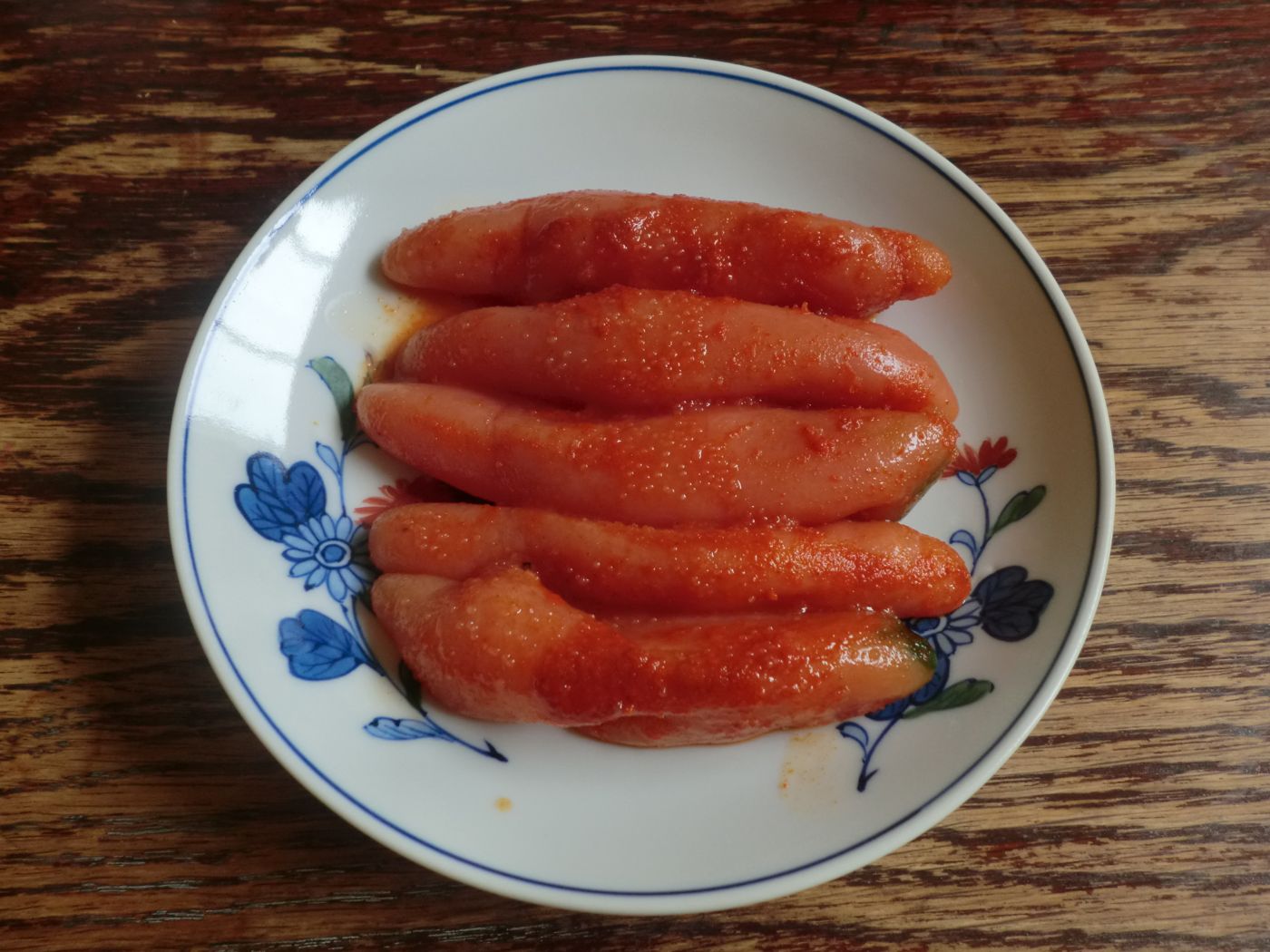
Salted Pollock Roe
명란젓
Romanization: myeongnan-jeot
Whole sacs of Alaska pollock roe cured in salt and coated with chili and garlic — briny, savory and eaten in small amounts with rice and sesame oil.
- Serves
- 40
- Prep
- 40 min
- Cook
- 0 min
RegionGangwon · Northern Provinces (Hwanghae, Pyeongan, Hamgyeong)
Jump to recipeRecipe
Ingredients · Serves 40
- 1 kgPollock roe sacs (myeongnan), fresh or frozenunbroken sacs; thaw frozen roe overnight in the refrigerator
- 80 gCoarse sea salt (cheonilyeom), non-iodizedabout 8% of the roe weight; plus 1 tbsp for the rinse
- 1 LCold waterfor rinsing
- 3 tbspGochugaru (Korean chili flakes), fine
- 6 clovesGarlicfinely minced
- 1 tspSugaroptional
- 1 tbspSoju or rice wineoptional; softens the fishy edge
- Toasted sesame oil and sesame seedsfor serving
- 1 stalkGreen onionfinely sliced, for serving
Method
Technique: Making Jeotgal
Step 1: Dissolve 1 tbsp salt in the cold water and very gently swish the roe sacs in it to rinse off blood and loose membrane, keeping them whole. Lift out onto a rack and drain for 20 minutes.
Step 2: Scatter a thin layer of the measured salt over the bottom of a glass or ceramic dish, lay in the roe in a single layer, and sprinkle the rest of the salt evenly over the top. Cover and refrigerate (at 4°C or below) for 24 hours; liquid will collect in the dish.
Step 3: Pour off the liquid, rinse the sacs very briefly in cold water and drain well on a rack for about 30 minutes.
Step 4: Mix the gochugaru, garlic, sugar and soju into a paste. Coat each sac evenly — a gloved hand or soft brush works best — and lay them snugly in a clean jar, spreading any remaining paste over the top so the uppermost sacs are covered.
Step 5: Seal and cure in the refrigerator for 7–14 days, until the roe is firm, evenly seasoned and pleasantly savory. Taste a small piece after a week.
Step 6: To serve, slice off a short length, split the membrane if you like, and dress it with a few drops of sesame oil, sesame seeds and green onion. Eat a little at a time with hot rice.
Step 7: Keep refrigerated in a sealed container and use within about a month, with clean utensils every time. For longer storage, wrap individual sacs and freeze. Discard if it smells sour or off, turns slimy or shows mold.
Origin & History
Myeongnan-jeot is the roe of the Alaska pollock (myeongtae), cured in salt and usually seasoned with chili and garlic. Its history follows the fish itself. The name myeongtae first appears in a government record of 1741, and a later miscellany explains it, in a story usually told rather than proven, as the combination of Myeongcheon, a county in Hamgyeong Province, and the surname of the fisherman, Tae, who first caught it there. By the end of the Joseon dynasty pollock had become the largest catch in Korean fisheries, and nothing was wasted: the roe went into myeongnan-jeot and the intestines into changnan-jeot.
The Encyclopedia of Korean Culture dates the first written mention of salted pollock roe to the 19th-century encyclopedic miscellany Ojuyeonmun jangjeon sango, with a method recorded in Siuijeonseo, a cookbook thought to date from the late 1800s. Roe from Sinpo and Seoho on the northeast coast was especially prized, and traditionally it was put down before the winter solstice, when the fish were running.
Today most Korean myeongnan comes from pollock caught in the distant North Pacific, or is imported already processed, because the coastal catch has collapsed. The Encyclopedia of Korean Folk Culture notes that the food crossed to Japan under the name mentaiko (1949 is the date it gives) and that Fukuoka has since made it a regional specialty — a rare case of a Korean side dish becoming an everyday Japanese one.
Key Ingredients
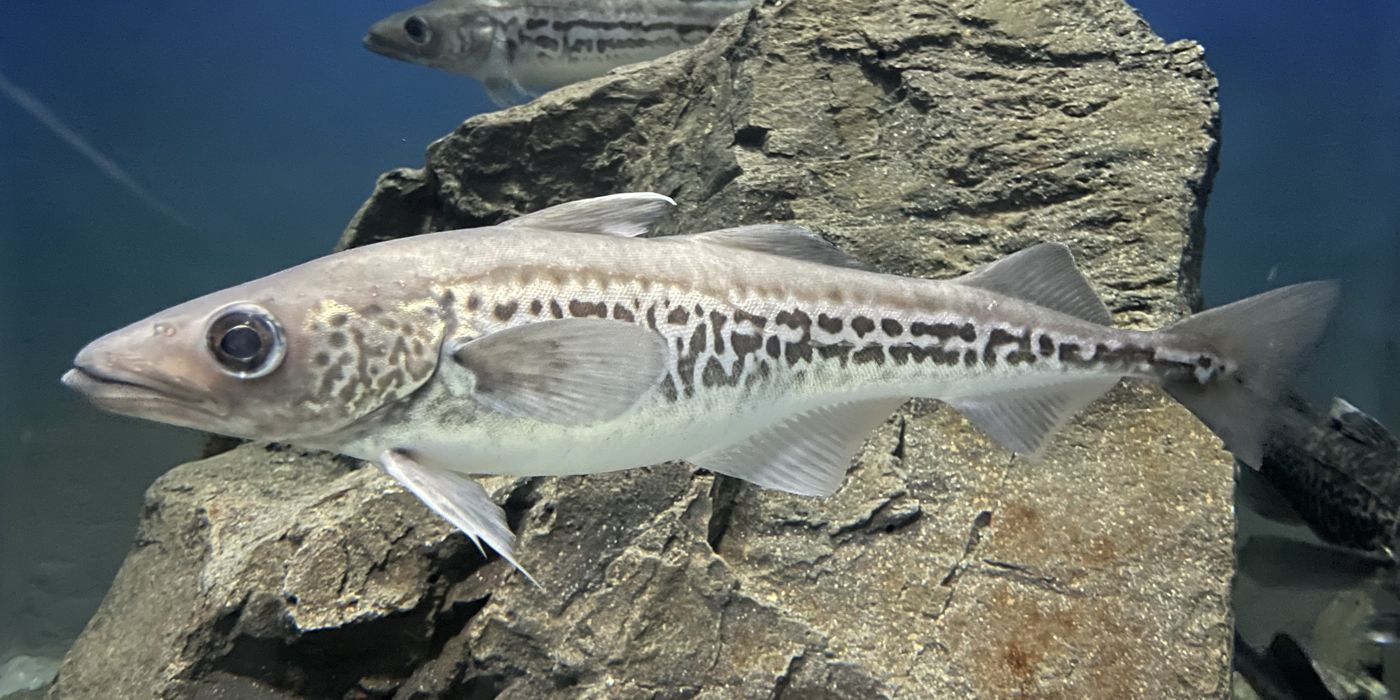 Alaska pollock (myeongtae)명태A lean, mild cold-water fish that Koreans know by a dozen names, depending on how it has been frozen, dried or salted. Dried bugeo simmers into a clear hangover soup, and its roe becomes myeongnan-jeot.
 Sun-Dried Sea Salt천일염Coarse sea salt made by evaporating seawater with sun and wind in tidal-flat salt pans, most of it from Sinan County off Korea's southwest coast. It is the everyday salt for salting cabbage and making jang.
 Gochugaru고춧가루Korean red chili powder, made from dried red peppers ground coarse or fine. It gives kimchi, gochujang and countless banchan their color and warmth.
 Garlic마늘Used raw, minced, pickled and roasted, garlic is one of the essential aromatics of Korean food — in seasonings, marinades, kimchi and namul.
 Sesame참깨Toasted sesame seeds and sesame oil (chamgireum) finish countless Korean dishes, adding a nutty aroma and gloss.
 Green onion파Korean green onion (pa), from thick-stemmed daepa to slender scallions — chopped into nearly every seasoning sauce, soup and kimchi, and the star of pa-kimchi.
Nutrition
| Calories | 27 kcal |
|---|---|
| Protein | 4.5 g |
| Fat | 0.6 g |
| Carbohydrates | 0.9 g |
| Fiber | 0 g |
| Sodium | 446 mg |
Notable forVitamin B12 · Selenium · Protein
From the Korean Food Composition Table entry “Alaska pollock edible offal, Roe, Seasoned, Salt-fermented” (명태, 알, 양념젓갈(명란젓); per 100 g: 135 kcal, 22.4 g protein, 2,232 mg sodium, 10.4 µg vitamin B12, 113 µg selenium, 246 mg cholesterol), scaled to the serving size. Homemade and low-salt commercial versions vary. Actual values vary with ingredients, portion size and preparation.
Health Benefits
- Concentrated protein: roe is dense with protein, so even a small serving adds some to a rice-based meal.
- Vitamin B12 and selenium: in the composition table, a 20 g serving supplies about 2 µg of vitamin B12 — close to the 2.4 µg adults are advised to get daily — and about 23 µg of selenium, against an adult RDA of 55 µg.
- A little goes a long way: traditionally it is eaten in small amounts as a relish, which is also the sensible way to enjoy it given its salt content. Korean references note that pollock roe is relatively rich in vitamin E and polyunsaturated fats; research on health effects is limited.
Regional Variations
- Gangwon and the East Sea coast: the traditional home of pollock fishing, and still the region most associated with myeongnan-jeot and changnan-jeot.
- Hamgyeong (northern provinces): historic center of the pollock fishery; Sinpo and Seoho roe was considered the finest.
- Plain or seasoned: the folk-encyclopedia method coats the roe in salt, garlic and chili; milder, lightly salted versions — and low-salt commercial lines — are increasingly common.
- At the table: sliced and dressed with sesame oil and green onion, grilled whole, simmered with eggs in a light stew (jeotguk-jjigae), or tucked into rice dishes.
Pairings
 Gyeran Jjim (Steamed Egg)계란찜Eggs whisked with water or broth and gently steamed into a silky, savory custard, often seasoned with salted shrimp and served bubbling hot.
- Gim Gui (Seasoned Roasted Laver)김구이Sheets of laver brushed with sesame or perilla oil, sprinkled with salt and toasted until crisp — eaten wrapped around spoonfuls of rice.
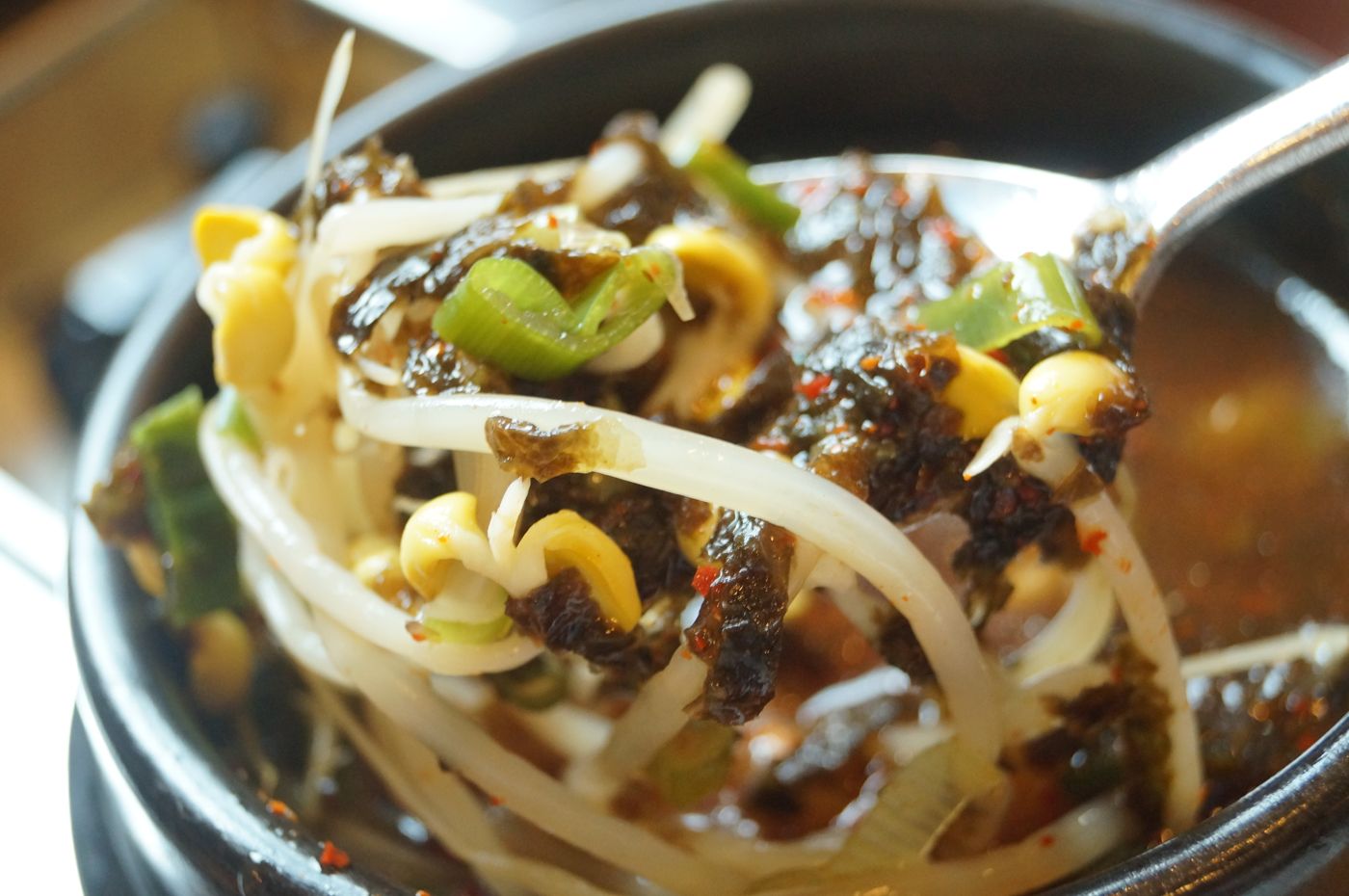 Kongnamul Guk (Soybean Sprout Soup)콩나물국A clear, light soup of soybean sprouts in anchovy-kelp stock, seasoned with salt or soup soy sauce — an everyday guk and a favorite morning-after cure.
Sources
- 01Korean Food Composition Table: Alaska pollock edible offal, Roe, Seasoned, Salt-fermented — National Institute of Agricultural Sciences
- 02명란젓(明卵젓) - 한국민족문화대백과사전 (Encyclopedia of Korean Culture)
- 03명란젓 - 한국민속대백과사전 (Encyclopedia of Korean Folk Culture)
- 04Vitamin B12 - MedlinePlus Medical Encyclopedia
- 05Selenium in diet - MedlinePlus Medical Encyclopedia
- 06Sodium in Your Diet - U.S. Food and Drug Administration
Last updated