Jorim · Braised 조림
Dubu Gangjeong (Crispy Glazed Tofu)
두부강정
Romanization: dubu-gangjeong
Cubes of tofu coated in starch, fried until crisp and tossed in a sticky soy-gochujang glaze — a sweet, savory banchan built on the fried-chicken gangjeong idea.
- Serves
- 4
- Prep
- 20 min
- Cook
- 15 min
Recipe
Ingredients · Serves 4
- 400 gFirm tofu
- ¼ tspSalt
- 4 tbspPotato starchabout 30 g; cornstarch also works
- Neutral oilfor frying (about 2 cm deep in a pan)
- 1 tbspSoy sauce
- 1 tbspGochujangoptional, for a spicier glaze
- 2 tbspMulyeot (rice or corn syrup)
- 1 tspSugar
- 2 tspGarlicminced
- 3 tbspWater
- 1 tspToasted sesame seeds
Method
Technique: Twigim: Korean Deep-Frying, Jorim: Braising in Seasoned Liquid
Step 1: Wrap the tofu in a clean towel and press under a light weight for 15 minutes. Cut into 2 cm cubes, sprinkle with the salt and pat dry.
Step 2: Toss the cubes with the starch in a bowl or bag until evenly coated; shake off the excess.
Step 3: Heat the oil to about 170 °C. Fry the tofu in batches for 4–5 minutes, turning, until golden and crisp. Drain on a rack.
Step 4: In a wide pan, combine the soy sauce, gochujang (if using), syrup, sugar, garlic and water. Simmer over medium heat for 1–2 minutes until it bubbles and thickens slightly.
Step 5: Turn off the heat, add the fried tofu and toss quickly so every cube is glazed without going soggy.
Step 6: Sprinkle with sesame seeds and serve warm or at room temperature. Best eaten the same day.
Origin & History
Tofu has a long history in Korea. The Encyclopedia of Korean Folk Culture traces its first appearance in Korean writing to a poem by the late-Goryeo scholar Yi Saek, and records that Joseon cooks were so skilled at it that the Ming court asked for Korean cooks who could make tofu. Temples attached to royal tombs (joposa) made tofu for the memorial rites, and it became a staple of the everyday table — pan-fried, braised, simmered in stews and served at feasts and ancestral rites.
The gangjeong in the name is borrowed. Traditional gangjeong is a confection: the folk-culture encyclopedia describes pieces of fermented glutinous-rice dough that are steamed, dried, fried until they puff, and rolled in sesame, pine nuts or puffed rice, a fixture of New Year gift tables. In the 1980s and after, the word was taken up for dakgangjeong — fried chicken coated in a soy or chili syrup — which the encyclopedia explains was developed so that sauced fried chicken would stay crisp, borrowing the fry-then-coat logic of the old confection.
Dubu-gangjeong applies the same method to tofu. The National Institute of Korean Language defines it as fried tofu simmered in a sauce of soy sauce, syrup, ginger and garlic. It works as a meatless stand-in for the chicken version.
Key Ingredients
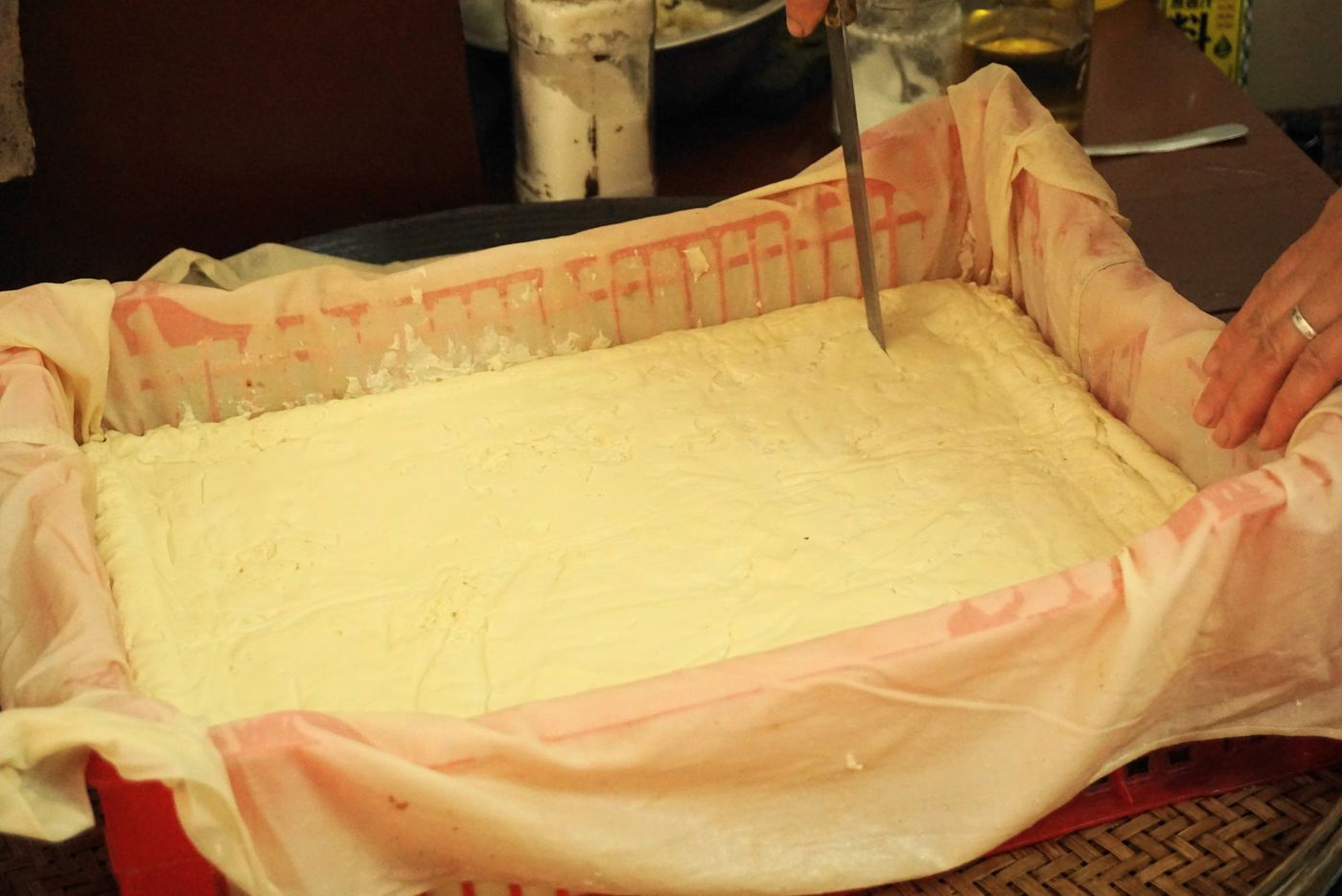 Tofu두부Fresh bean curd made by coagulating soy milk and pressing the curds. A quiet staple of Korean cooking since at least the late Goryeo period, it is pan-fried, braised in spicy soy glaze, or simmered in stews.
 Soy sauce간장Korean soy sauce, in two main kitchen forms: pale, salty guk-ganjang (soup soy sauce) brewed the traditional way from meju, and darker, sweeter jin-ganjang for braises and marinades.
- Gochujang고추장Fermented red chili paste — sweet, savory and hot. Made from meju powder, glutinous rice, malt and gochugaru, it is a later addition to Korea's family of jang.
 Korean grain syrup물엿A clear, glossy syrup used to sweeten and glaze braised and stir-fried banchan. Its traditional relative, jocheong, is a darker malt syrup made by slowly boiling down saccharified rice.
 Garlic마늘Used raw, minced, pickled and roasted, garlic is one of the essential aromatics of Korean food — in seasonings, marinades, kimchi and namul.
 Sesame참깨Toasted sesame seeds and sesame oil (chamgireum) finish countless Korean dishes, adding a nutty aroma and gloss.
Nutrition
| Calories | ~229 kcal |
|---|---|
| Protein | ~10.5 g |
| Fat | ~10.8 g |
| Carbohydrates | ~22.8 g |
| Fiber | ~3.3 g |
| Sodium | ~421 mg |
Notable forProtein · Iron
Tofu uses the Korean Food Composition Table entry for firm tofu (9.6 g protein, 4.6 g fat per 100 g); potato starch, soy sauce, gochujang and mulyeot also use Korean table values; other seasonings use USDA FoodData Central. Absorbed frying oil (about 23 g for the batch) was estimated by comparing the fat-to-protein ratio of raw tofu with USDA's “Tofu, fried” entry (20.2 g fat to 18.8 g protein per 100 g) — an approximation, since a starch coating can take up more oil. Totals divided by four. Actual values vary with ingredients, portion size and preparation.
Health Benefits
- Plant protein: tofu supplies protein from soybeans; the folk-culture encyclopedia notes that tofu is far more digestible than whole cooked soybeans.
- Minerals: firm tofu contributes iron and some calcium, depending on the coagulant used.
- Meatless option: a satisfying substitute for fried chicken in vegetarian meals (check that the syrup and sauces suit your diet).
Regional Variations
- Soy-garlic: glaze of soy sauce, syrup and garlic only — mild and child-friendly, close to the dictionary definition.
- Sweet-spicy: gochujang (and sometimes ketchup) added for a red, dakgangjeong-style coating.
- Pan-fried: cubes shallow-fried in a few spoonfuls of oil rather than deep-fried, for a lighter version.
- Finishes: sesame seeds, crushed peanuts or chopped green onion scattered over the top.
Pairings
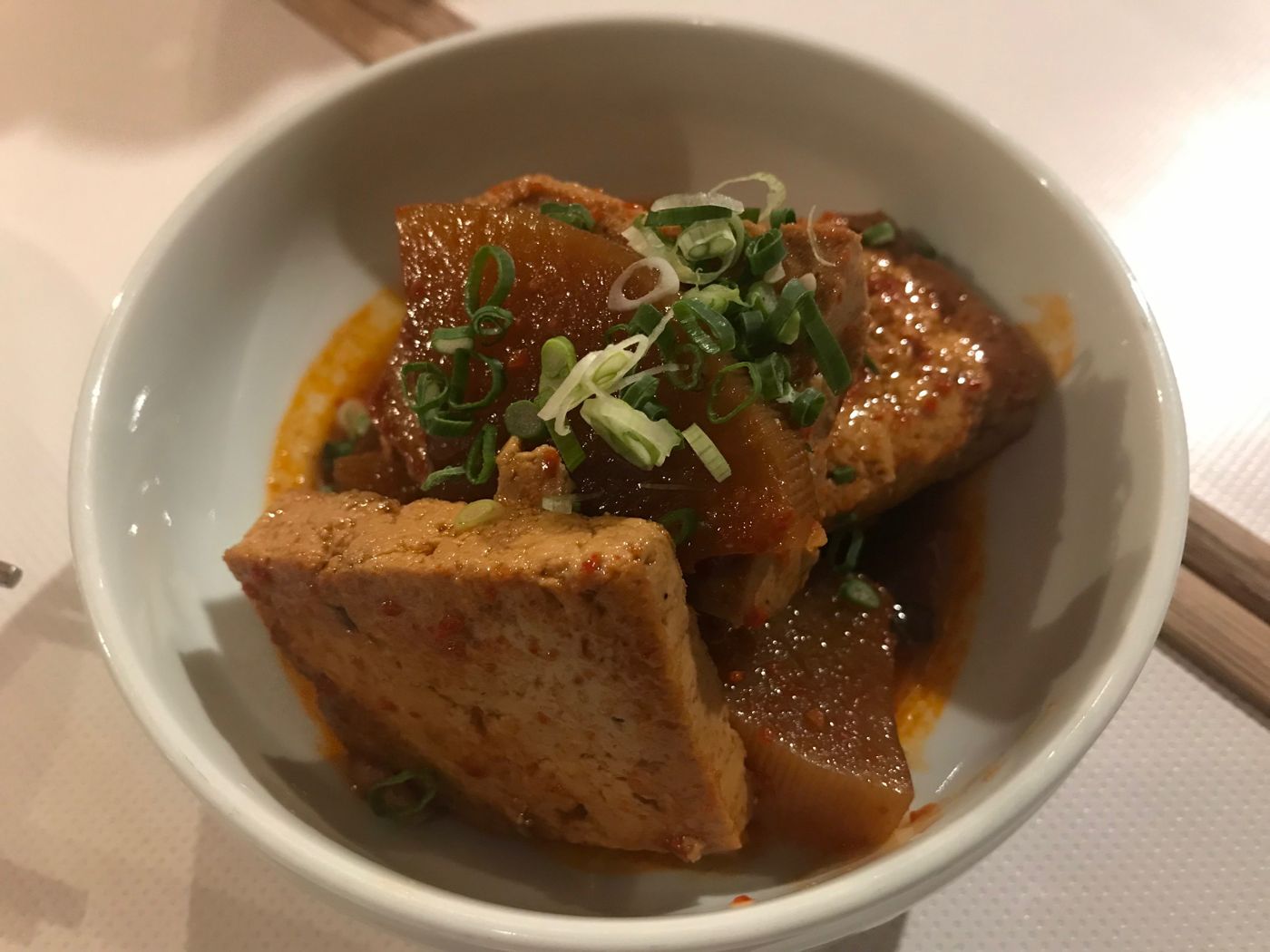 Dubu Jorim두부조림Slices of firm tofu pan-fried until golden, then simmered in a garlicky soy and chili sauce — an inexpensive, protein-rich staple of Korean home cooking.
 Kongnamul Muchim콩나물무침Soybean sprouts cooked under a lid until just tender, then tossed with garlic, green onion and sesame oil — crisp, nutty and on tables across Korea.
 Doenjang Jjigae (Soybean Paste Stew)된장찌개A thick, savory stew of fermented soybean paste with tofu, zucchini and whatever the season offers — the everyday pot at the center of the Korean table.
Sources
- 01두부강정 (Dubu-gangjeong) — Urimalsaem (National Institute of Korean Language)
- 02두부 (Dubu, tofu) — Encyclopedia of Korean Folk Culture (National Folk Museum of Korea)
- 03강정 (Gangjeong) — Encyclopedia of Korean Folk Culture (National Folk Museum of Korea)
- 04닭강정 (Dakgangjeong) — Encyclopedia of Korean Folk Culture (National Folk Museum of Korea)
- 05Tofu, fried — USDA FoodData Central
- 06Food Allergies — U.S. Food and Drug Administration
Last updated