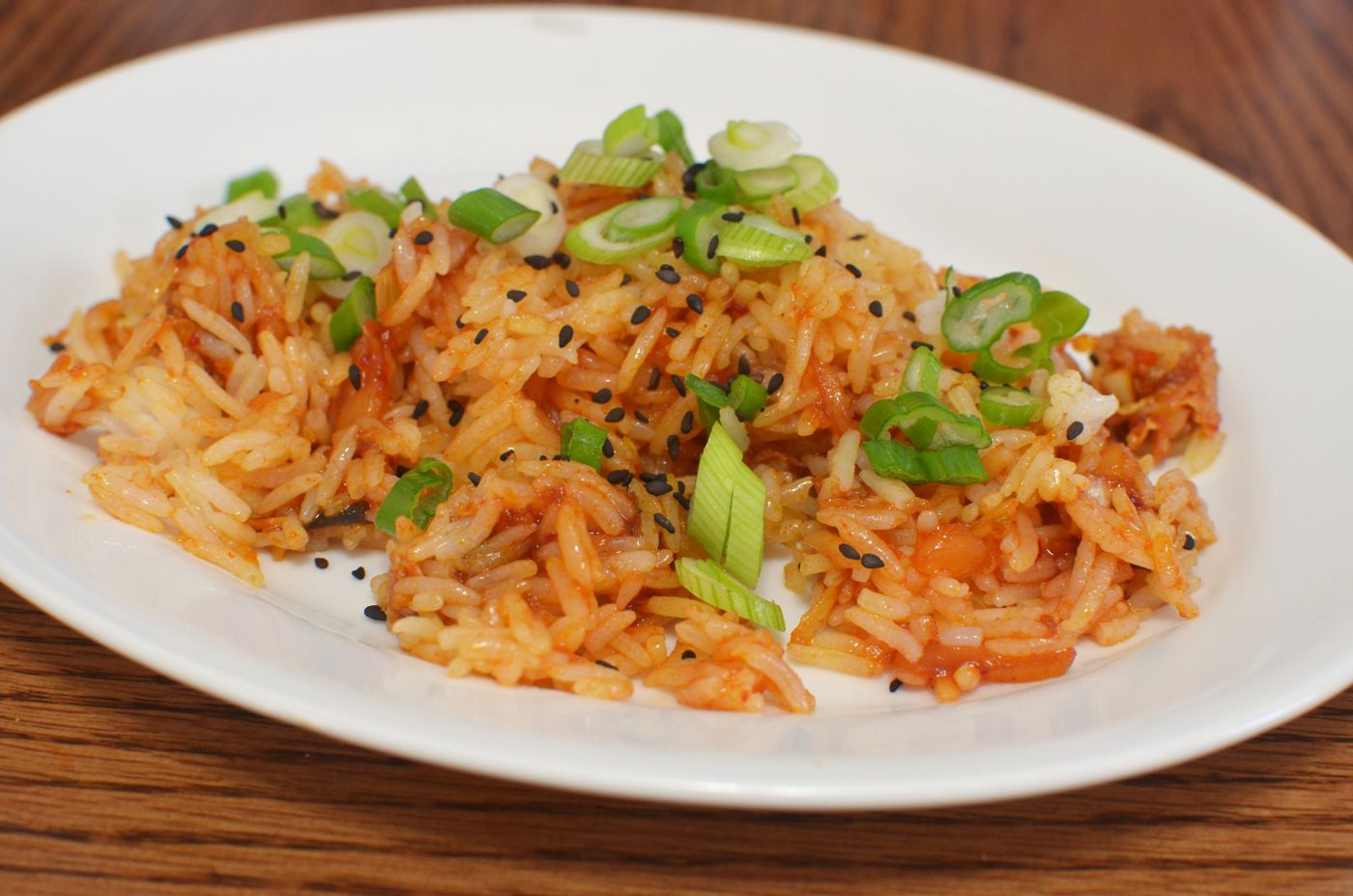
 Photo: jeffreyw, CC BY 2.0, via Wikimedia Commons
Bap · Rice dishes 밥
Kimchi-bokkeumbap (Kimchi Fried Rice)
김치볶음밥
Romanization: kimchi-bokkeumbap
Leftover rice stir-fried with sour, well-fermented kimchi and a little pork, usually topped with a fried egg — a home staple that spread with frying pans and cooking oil.
- Serves
- 2
- Prep
- 10 min
- Cook
- 15 min
Recipe
Ingredients · Serves 2
- 400 gCooked short-grain rice, preferably a day oldabout 2 rice bowls
- 200 gWell-fermented (sour) napa cabbage kimchichopped, plus 2 tbsp kimchi juice
- 100 gPork belly or shouldercut into small pieces
- 50 gOniondiced
- 1 tbspGochujangoptional, for depth
- 1 tspGochugaruoptional
- 1 tspSoy sauce
- ½ tspSugarsoftens very sour kimchi
- 1 tbspNeutral cooking oilplus 1 tsp for the eggs
- 1 tspToasted sesame oil
- 2 largeEggs
- 1 stalkGreen onionsliced
- 1 tspToasted sesame seeds
- 1 sheetRoasted gim, crumbledoptional garnish
Method
Technique: Bokkeum: Korean Stir-Frying, Cooking Bap
Step 1: Break up the cold rice with your fingers so it has no clumps. Mix the gochujang, gochugaru, soy sauce, sugar and kimchi juice in a small bowl.
Step 2: Heat the oil in a wide skillet or wok over medium-high heat and stir-fry the pork for 3–4 minutes until browned and cooked through. Add the onion and cook 1 minute.
Step 3: Add the kimchi and stir-fry 3–4 minutes, until it softens, smells toasty and starts to catch on the pan.
Step 4: Add the sauce, then the rice. Toss and press the rice against the hot pan for 3–4 minutes until every grain is coated and some bits crisp. Taste; add a little more kimchi juice if it is dry.
Step 5: Turn off the heat, stir in the sesame oil and green onion, and divide between bowls.
Step 6: Fry the eggs sunny side up in a little oil and set one on each bowl. Finish with sesame seeds and crumbled gim.
Origin & History
Kimchi has gone into soups, kimchi rice, noodles, mung bean pancakes and dumplings for a long time, but kimchi fried rice is a newer idea. The folk encyclopedia's entry, by food researcher Park Chae-rin, ties it to two things the old Korean kitchen lacked: cheap cooking oil and a light pan with a handle. A heavy iron cauldron set over a fire hole suited steaming and boiling, and traditional bokkeum meant cooking with a little oil in the ingredients' own juices. Quick, high-heat stir-frying, the entry argues, spread only with foreign influences after the ports opened in the late 19th century.
A 1924 cookbook, Joseon musang sinsik yori jebeop, already gives "fry rice" as a Western dish made with butter in a pot, but most Koreans met fried rice in the Chinese restaurants of the colonial period, which held public cooking classes in the 1930s; a 1939 Dong-A Ilbo article gave lard-fried rice with egg, mushrooms or pork. Oil and frying pans reached ordinary homes from the 1960s, when fried rice was promoted as a simple one-dish meal in diet-improvement campaigns. A 1965 Chosun Ilbo recipe used stir-fried kimchi cooked on top of leftover rice, and a 1972 Dong-A Ilbo article, calling it a Gyeongsang dish, stir-fried kimchi with pork belly, gochujang, garlic and ginger before tossing in cold rice — essentially today's method.
It became truly everyday in the 1980s, when kimchi was plentiful enough to cook with freely and kimchi recipes were promoted ahead of the 1986 Asian Games. In the late 1980s and early 1990s, campus cafés and pubs sold it cheaply at lunch, and a 1989 hit song by Byun Jin-sub name-checks it in its lyrics. Iron-griddle chains made a griddle version fashionable in the 1990s, and frying rice in the pan after a meal of grilled meat or dakgalbi remains a habit. See cooking bap, bokkeum stir-frying and food in modern Korea.
Key Ingredients
 Rice쌀Short, round grains of japonica rice that cook up glossy, soft and gently clinging. Steamed white rice, bap, is the center of the Korean table: every banchan, soup and stew is planned to be eaten with it.
 Pork (dwaeji-gogi)돼지고기Korea's most widely eaten meat, prized cut by cut: fatty belly for samgyeopsal, neck for the grill, lean legs for boiled suyuk and stir-fried jeyuk. Pork also anchors Jeju Island's feast cooking.
 Yangpa (onion)양파The bulb onion, literally the "Western scallion." A latecomer to Korea, it is now everywhere: sweetening stir-fries and braises, pickled in soy sauce as yangpa-jangajji, and served raw beside grilled meat.
- Gochujang고추장Fermented red chili paste — sweet, savory and hot. Made from meju powder, glutinous rice, malt and gochugaru, it is a later addition to Korea's family of jang.
 Gochugaru고춧가루Korean red chili powder, made from dried red peppers ground coarse or fine. It gives kimchi, gochujang and countless banchan their color and warmth.
 Soy sauce간장Korean soy sauce, in two main kitchen forms: pale, salty guk-ganjang (soup soy sauce) brewed the traditional way from meju, and darker, sweeter jin-ganjang for braises and marinades.
 Sesame참깨Toasted sesame seeds and sesame oil (chamgireum) finish countless Korean dishes, adding a nutty aroma and gloss.
- Egg (gyeran)계란The everyday protein of the Korean table: rolled into gyeran-mari, steamed into puffy gyeran-jjim, simmered in soy for gyeran-jangjorim, and cut into thin yellow and white ribbons of jidan to garnish soups and noodles.
 Green onion파Korean green onion (pa), from thick-stemmed daepa to slender scallions — chopped into nearly every seasoning sauce, soup and kimchi, and the star of pa-kimchi.
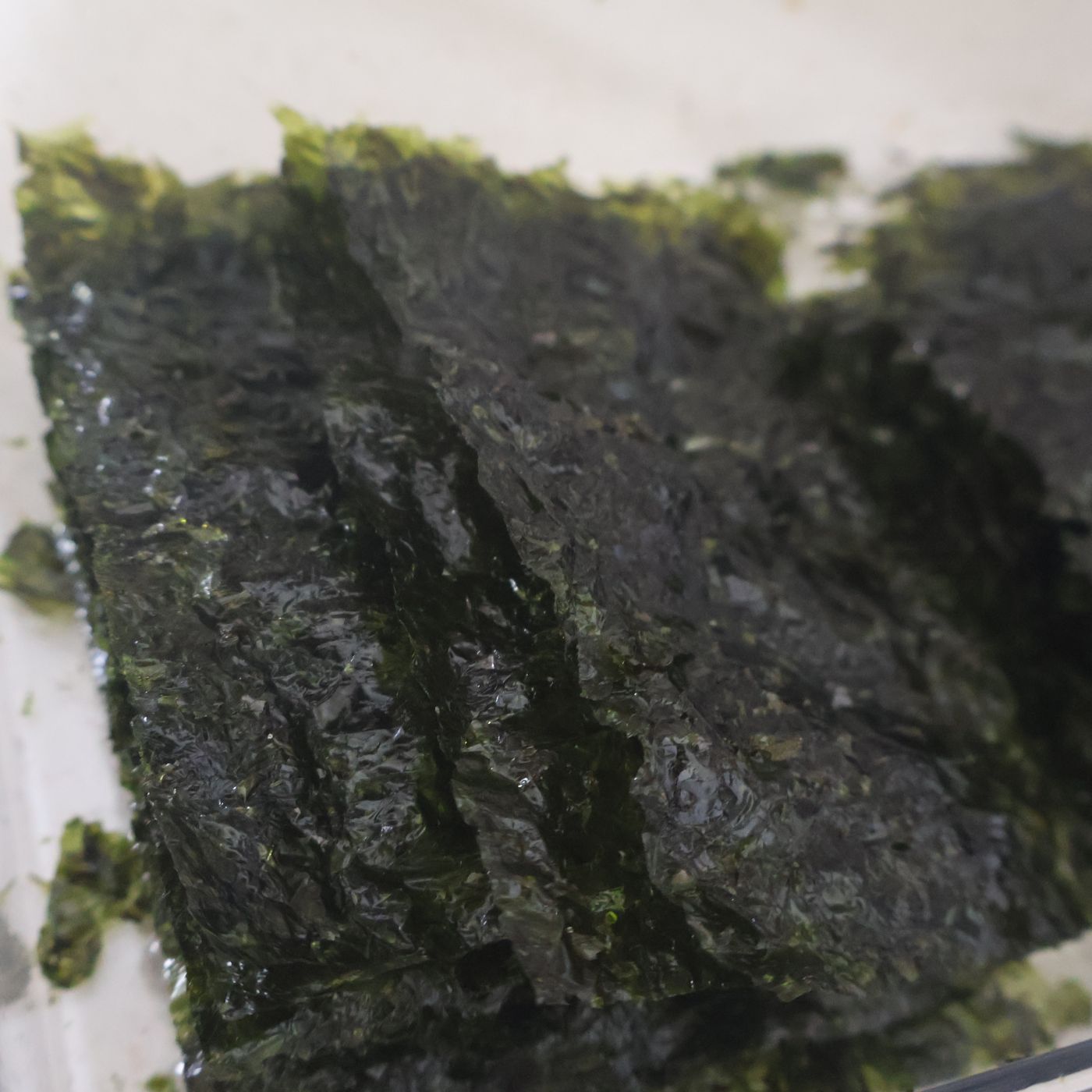 Laver (gim)김Paper-thin sheets of dried red seaweed, toasted until crisp and fragrant. Gim wraps gimbap and rice, crumbles over noodles and soups, and — brushed with oil and salt — becomes the everyday side dish gim-gui.
Nutrition
| Calories | ~705 kcal |
|---|---|
| Protein | ~22 g |
| Fat | ~35 g |
| Carbohydrates | ~75 g |
| Fiber | ~4.4 g |
| Sodium | ~1085 mg |
Notable forVitamin K · Thiamin (vitamin B1) · Protein
Estimated by summing USDA FoodData Central (SR Legacy) values for cooked short-grain white rice (FDC 168932), whole egg (FDC 171287), onion, scallions, red pepper (FDC 170932, as a stand-in for gochugaru), soy sauce (FDC 174277), sugar, soybean oil (18 g), sesame oil and sesame seeds, with Korean Food Composition Table values for napa cabbage kimchi including juice (F2050070009a, 230 g), gochujang (R0050010009a) and raw pork belly (I014000F110a), divided by 2. Gim is not counted. Using lean pork and less oil lowers the fat considerably. Actual values vary with ingredients, portion size and preparation.
Health Benefits
- Vegetables from the kimchi: napa cabbage kimchi is a source of vitamin K and adds fiber to a rice dish. See fermented foods.
- Thrifty and balanced: it turns leftover rice and over-sour kimchi into a one-bowl meal with protein from the egg and pork.
- Easy to lighten: more kimchi and onion, less rice, and a lean protein shift the balance toward vegetables.
Regional Variations
- Home style: sour, older baechu-kimchi and a splash of its juice, a little pork or whatever protein is at hand, and a fried egg on top.
- Gyeongsang style (1972 recipe): kimchi stir-fried with pork belly, gochujang, garlic and ginger before the rice goes in.
- Iron-griddle (cheolpan) style: cooked on a hot griddle until the rice crisps at the edges, popularized by griddle restaurant chains in the 1990s.
- After-meal fried rice: rice, chopped kimchi and gim fried in the leftover sauce and fat of dakgalbi, grilled meat or a braise.
Pairings
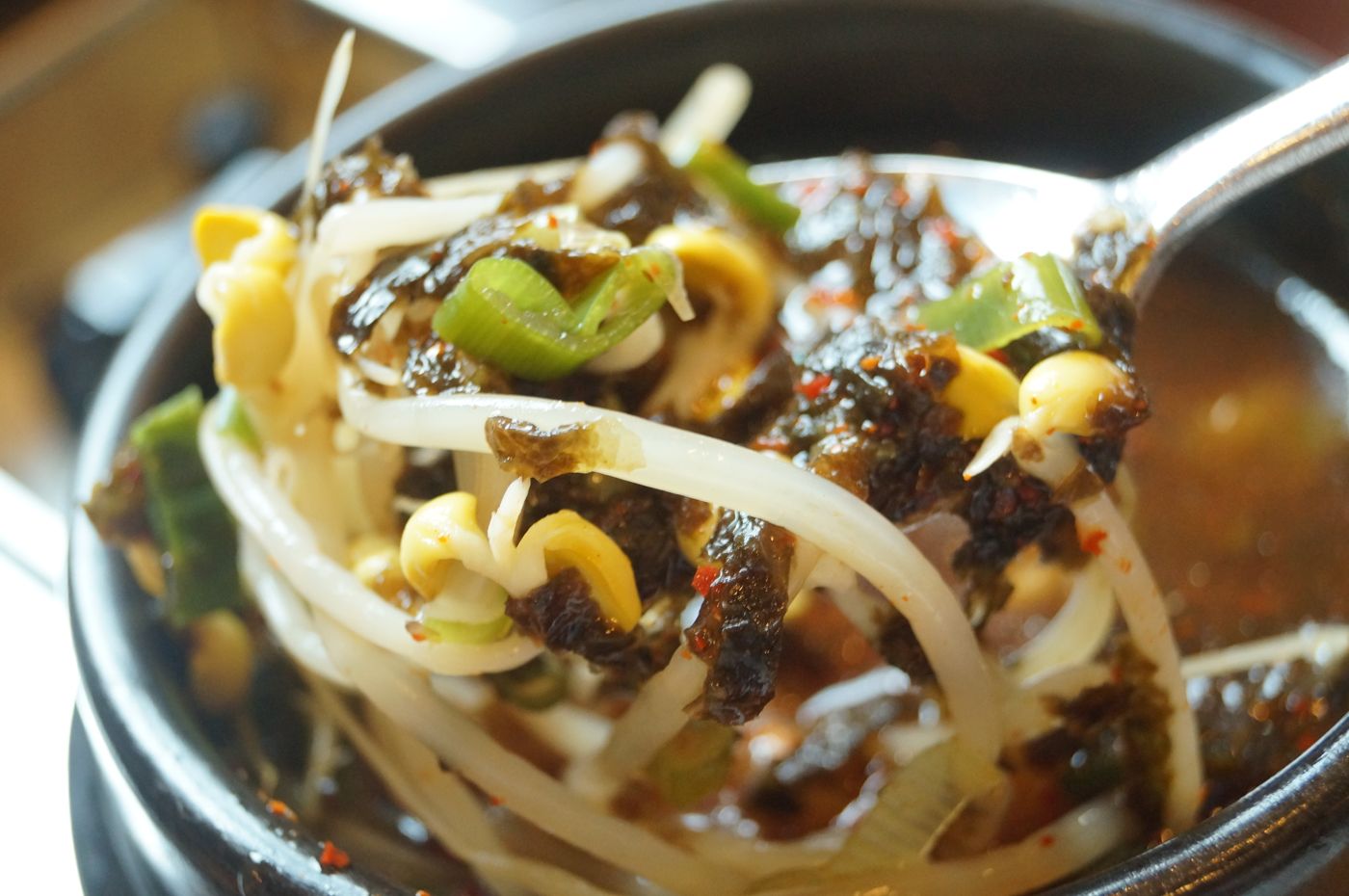 Kongnamul Guk (Soybean Sprout Soup)콩나물국A clear, light soup of soybean sprouts in anchovy-kelp stock, seasoned with salt or soup soy sauce — an everyday guk and a favorite morning-after cure.
- Gim Gui (Seasoned Roasted Laver)김구이Sheets of laver brushed with sesame or perilla oil, sprinkled with salt and toasted until crisp — eaten wrapped around spoonfuls of rice.
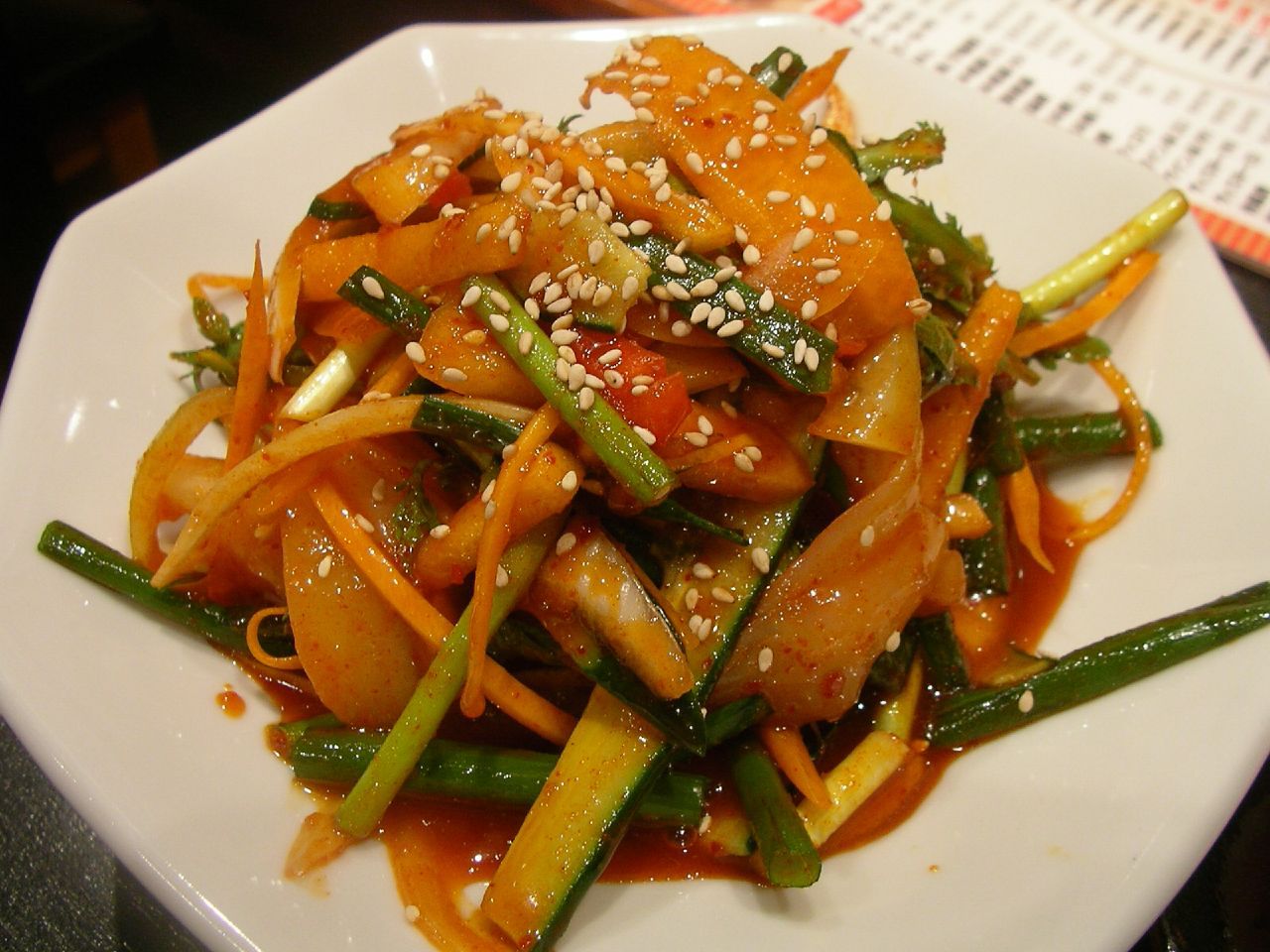 Oi Muchim오이무침Thin-sliced cucumber, briefly salted and tossed with chili flakes, vinegar and garlic — a cool, crunchy quick salad made in minutes, especially in summer.
Sources
- 01김치볶음밥 (Kimchi-bokkeumbap) — Encyclopedia of Korean Folk Culture (Korean Wave Culture Dictionary), National Folk Museum of Korea
- 02Kimchi, Baechukimchi, Prepared with Kimchi cabbage (F2050070009a) — Korean Food Composition Table
- 03Pork meat, Belly side (Samgyeopsal), Raw (I014000F110a) — Korean Food Composition Table
- 04Rice, white, short-grain, cooked, unenriched (FDC 168932) — USDA FoodData Central
Last updated