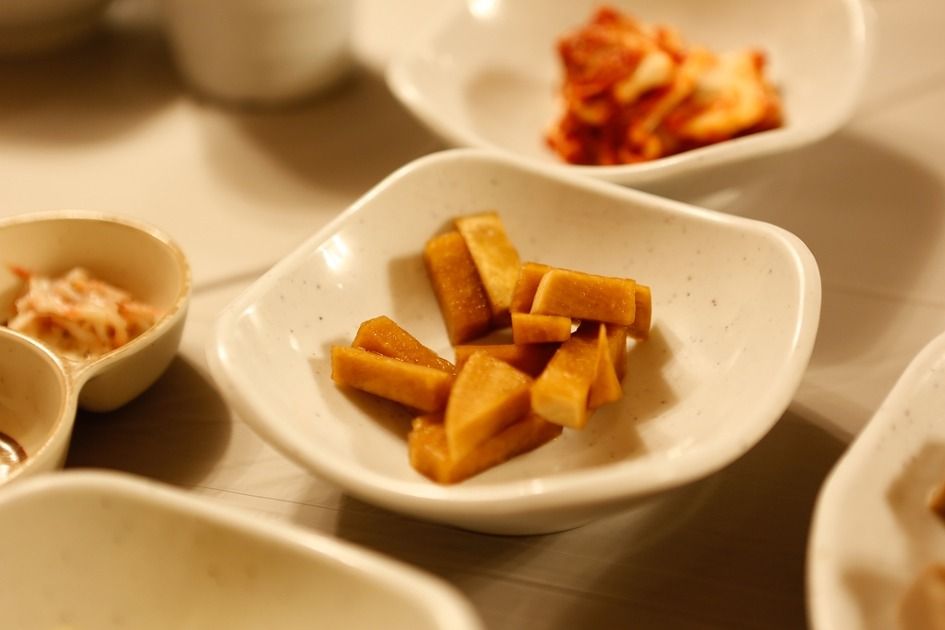
 Photo: 아이해피, CC BY 2.0 kr, via Wikimedia Commons
Jangajji · Pickled 장아찌
Chili Paste–Cured Radish
무장아찌
Romanization: mu-jangajji
Korean radish salted, dried until leathery and buried in gochujang for weeks, then sliced thin with sesame oil — chewy, savory and deeply seasoned.
- Serves
- 20
- Prep
- 40 min
- Cook
- 0 min
RegionJeolla
Jump to recipeRecipe
Ingredients · Serves 20
- 1 kgKorean radish (mu)firm, peeled or well scrubbed
- 40 gCoarse sea salt (cheonilyeom), non-iodizedabout ¼ cup
- 500 gGochujang (Korean chili paste)a dedicated batch for pickling; reusable for a second round
- 1 tspToasted sesame oilper serving portion, for dressing
- ½ tspSugarper serving portion, for dressing
- ½ tspToasted sesame seedsper serving portion, for dressing
- 1 cloveGarlicoptional, minced, for dressing
Method
Technique: Jangajji: Pickling in Jang, Drying and Rehydrating Vegetables
Step 1: Cut the radish into sticks about 2 cm thick and 6–7 cm long. Toss with the salt in a bowl and leave for 12–24 hours, turning occasionally, until it has released a lot of water and bends easily. Drain and pat dry; do not rinse.
Step 2: Dry the radish until leathery but still pliable, losing roughly half its weight: 2–3 days on a rack in a sunny, airy spot (bring it in at night), or about 6–8 hours in a dehydrator at around 50°C. Properly dried radish will not water down the paste.
Step 3: Spread a layer of gochujang in the bottom of a clean, dry glass or earthenware jar. Add a layer of radish, cover with more paste and repeat, making sure every piece is completely coated and finishing with a layer of paste. Smooth the top and cover with plastic wrap pressed onto the surface.
Step 4: Refrigerate (or keep in a cold, dark place below about 10°C) for at least 1 month; 2–3 months gives a deeper flavor. Check occasionally that the radish stays buried.
Step 5: To serve, lift out a few pieces with clean chopsticks, scrape off the paste, and slice thinly. If very salty, rinse once briefly and squeeze dry. Toss with sesame oil, sugar, sesame seeds and a little garlic.
Step 6: Kept chilled and covered by paste, the radish lasts for several months. The used gochujang will be thinner and saltier; it can cure one more batch or be used in stews, but not as fresh table paste. Discard anything with surface mold.
Origin & History
Radish may be the oldest jangajji vegetable on record. In verses on his kitchen garden, the Goryeo scholar Yi Gyu-bo described radish steeped in jang to be eaten through the three months of summer, and many writers read this as the earliest mention of mu-jangajji. Scholars do not all agree — some interpret the passage as a summer soy-seasoned kimchi — but either way, radish preserved in fermented soy has deep roots in Korea.
The classic method, as Korean references describe it, starts by salting radish and drying it until pliable, so it will not water down the paste, then burying it in gochujang or doenjang. When needed, a piece is lifted out, the paste wiped off, and the radish sliced thin and dressed with sugar and sesame oil. Radish buried in soybean paste is often steamed briefly before seasoning to soften its raw, pasty smell. Cooks traditionally keep a separate batch of paste for pickling, because the gochujang gradually loses flavor and color as it cures the vegetables.
Jangajji are made especially widely in Jeolla. In Sunchang, a town famous for its jang, radish is among the many vegetables cured in local chili paste; artisan producers there re-bury their pickles in fresh paste every few months for two to three years.
Key Ingredients
 Korean radish무A stout, heavy white radish, often tinged pale green near the top. It is cubed for kkakdugi, left whole in the clear brine of dongchimi, shredded into salads and simmered into broths.
 Sun-Dried Sea Salt천일염Coarse sea salt made by evaporating seawater with sun and wind in tidal-flat salt pans, most of it from Sinan County off Korea's southwest coast. It is the everyday salt for salting cabbage and making jang.
- Gochujang고추장Fermented red chili paste — sweet, savory and hot. Made from meju powder, glutinous rice, malt and gochugaru, it is a later addition to Korea's family of jang.
 Sesame참깨Toasted sesame seeds and sesame oil (chamgireum) finish countless Korean dishes, adding a nutty aroma and gloss.
 Garlic마늘Used raw, minced, pickled and roasted, garlic is one of the essential aromatics of Korean food — in seasonings, marinades, kimchi and namul.
Nutrition
| Calories | ~29 kcal |
|---|---|
| Protein | ~0.5 g |
| Fat | ~1 g |
| Carbohydrates | ~4.9 g |
| Fiber | ~0.9 g |
| Sodium | ~315 mg |
Rough estimate; no measured value for mu-jangajji was found in the Korean Food Composition Table or USDA FoodData Central. Calories and macronutrients assume each 20 g serving corresponds to about 45 g fresh radish (USDA FDC 168451) plus about 4 g absorbed gochujang (a Korean fermented chili paste listed in USDA FDC, 2410981), 1 g sugar and 1 g sesame oil. Because salt uptake during salting and curing could not be calculated, sodium is taken as the midpoint of measured soy- and paste-cured jangajji in the Korean Food Composition Table (about 1,100–2,000 mg per 100 g, e.g. gochu-jangajji 2,026 mg and maneul-jangajji 1,127 mg), i.e. roughly 225–405 mg per serving. Actual values vary with ingredients, portion size and preparation.
Health Benefits
- A seasoning as much as a side: the intense, savory flavor means a few slivers season a whole bowl of rice or porridge.
- Fermented flavors: the gochujang cure brings the depth of fermented soybeans and chili; most of the radish's raw sharpness disappears as it matures.
- Preserving the harvest: drying and paste-curing were ways to keep autumn radish edible long after the season ended.
Regional Variations
- Gochujang-cured: the version here; Korean references favor chili paste over soybean paste for its brighter color and flavor.
- Doenjang-cured: earthier and saltier, and often steamed before being sliced and seasoned.
- Soy-brine: a quicker modern style cures radish chunks in a boiled soy sauce, vinegar and sugar brine, like other refrigerator jangajji.
- Sunchang (Jeolla): commercial producers cure radish in traditional Sunchang paste for years, renewing the paste periodically.
Pairings
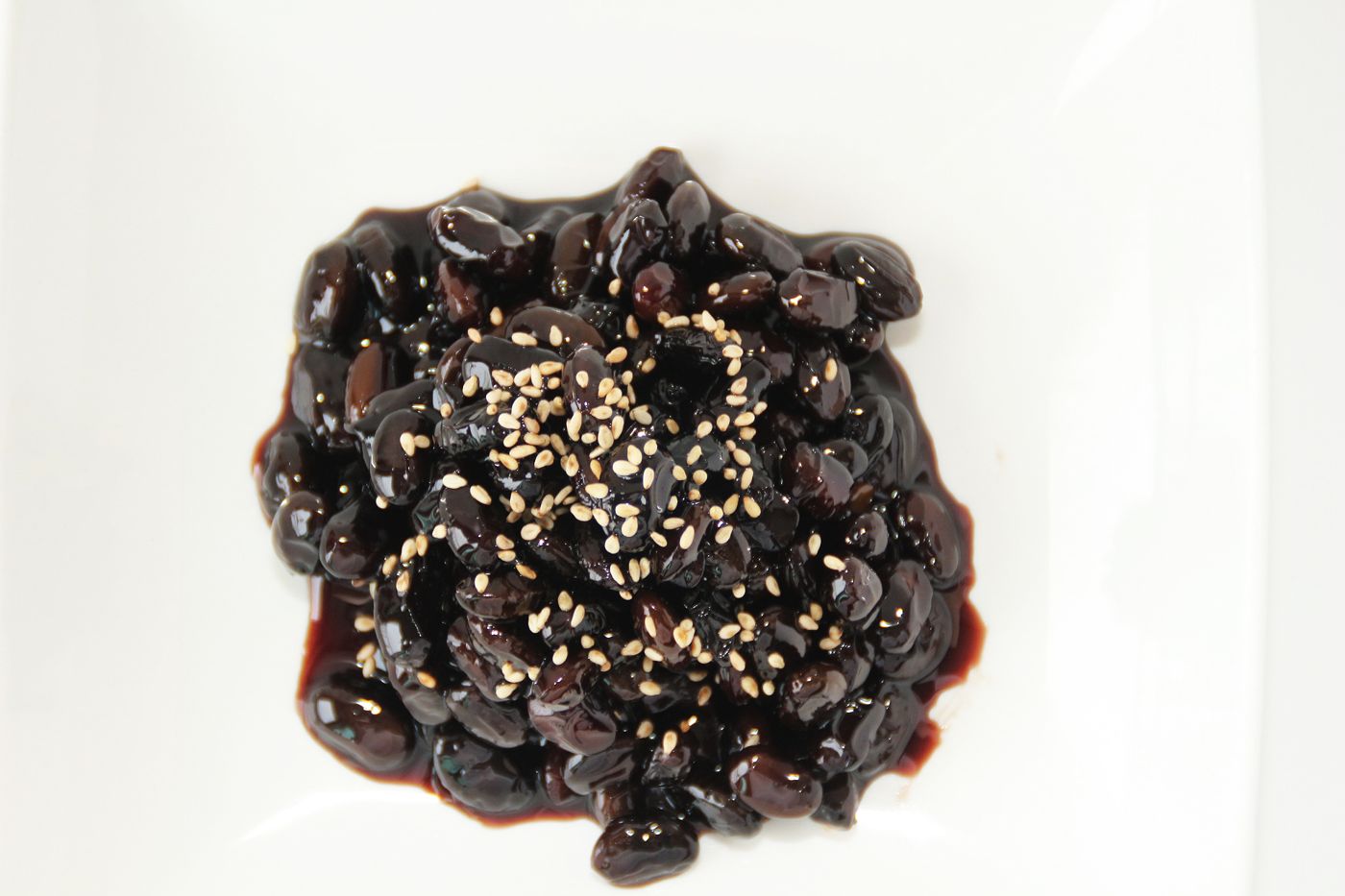 Kongjaban콩자반Black soybeans simmered in soy sauce until wrinkled and glossy, then finished with syrup and sesame — a sweet-salty, chewy keeping banchan.
- Gim Gui (Seasoned Roasted Laver)김구이Sheets of laver brushed with sesame or perilla oil, sprinkled with salt and toasted until crisp — eaten wrapped around spoonfuls of rice.
 Gyeran Jjim (Steamed Egg)계란찜Eggs whisked with water or broth and gently steamed into a silky, savory custard, often seasoned with salted shrimp and served bubbling hot.
Sources
- 01장아찌 - 한국민족문화대백과사전 (Encyclopedia of Korean Culture)
- 02장아찌 - 한국민속대백과사전 (Encyclopedia of Korean Folk Culture)
- 03장아찌 - 디지털순창문화대전 (Encyclopedia of Korean Local Culture: Sunchang)
- 04Radishes, oriental, raw (FDC 168451) — USDA FoodData Central
- 05GOCHUJANG KOREAN FERMENTED CHILI SAUCE (branded food, FDC 2410981) — USDA FoodData Central
- 06Korean Food Composition Table: Hot pepper, Pickled, Gochu-jangajji — National Institute of Agricultural Sciences
Last updated