Techniques
Bokkeum: Korean Stir-Frying
볶음
Cooking over brisk heat with oil and a little seasoning, from dry, crisp anchovies to saucy fish cakes and the separately sautéed parts of japchae.
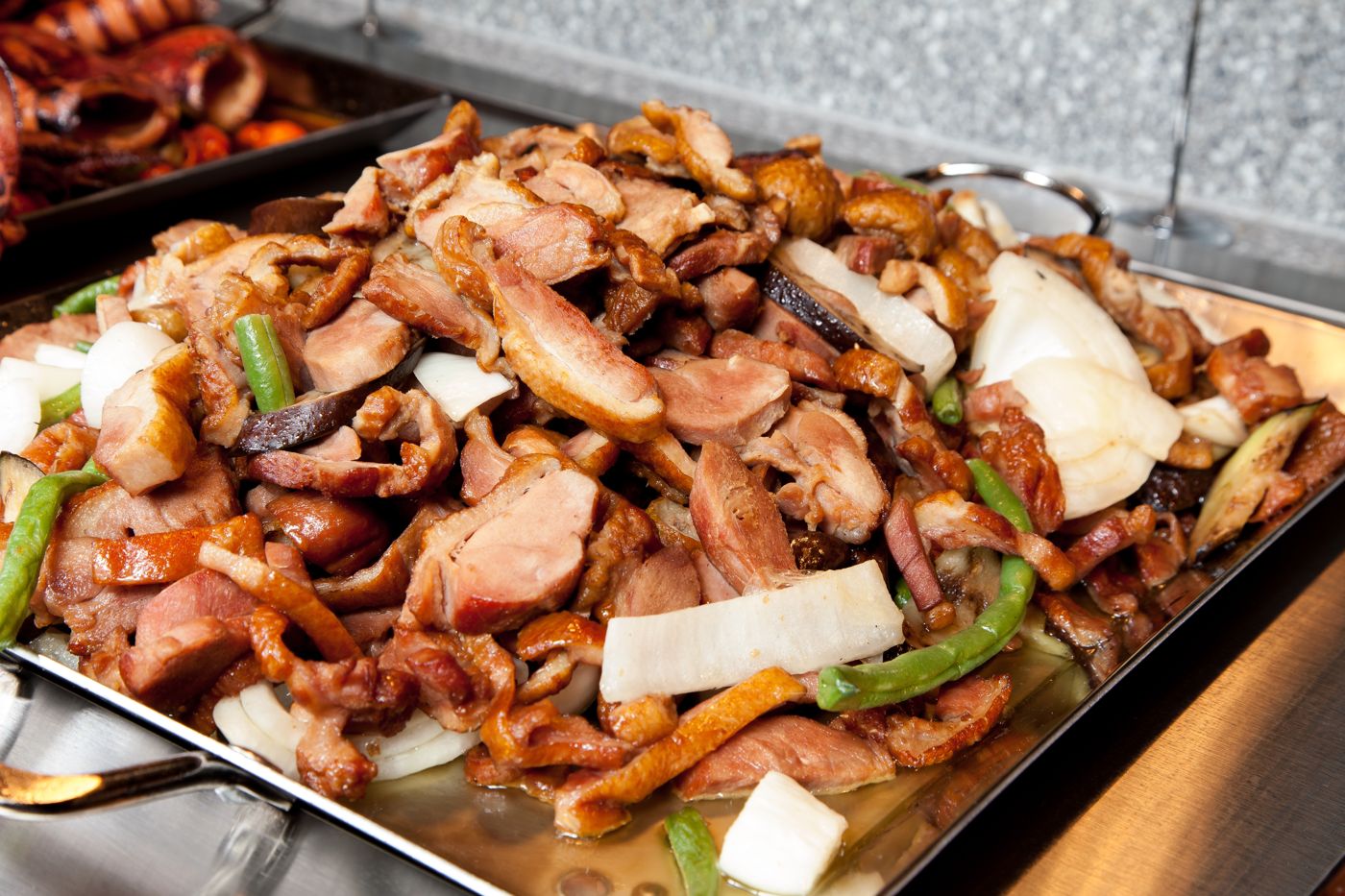
Bokkeum is the noun form of bokda, to cook ingredients over heat with little or no liquid while stirring. The Encyclopedia of Korean Culture defines it simply as food stir-fried with seasoning, and distinguishes two broad styles that are still useful for home cooks today.
Two styles of bokkeum
- Dry bokkeum. Ingredients are cooked with oil or even no fat at all, the way beans or sesame seeds are toasted. Small dried fish, dried shrimp and other dried seafood are typical. The goal is crispness and concentrated flavor.
- Wet bokkeum. A small amount of liquid (soy sauce, water, syrup or a chili-paste sauce) is added so the seasoning clings to the ingredients. The encyclopedia lists anchovy, squid, burdock root and pine mushroom among ingredients prepared this way.
The encyclopedia also places bokkeum on a spectrum of wetness: a soup has the most liquid, and a stir-fry has much less, edging toward a braise. In practice many banchan blend the two, starting dry and finishing with a quick glaze.
The basic method
- Prepare everything first. Bokkeum moves fast, so cut ingredients to similar sizes and mix any sauce in advance.
- Heat the pan, then the oil. A hot pan with a thin film of oil sears the surface and drives off moisture. Overcrowding drops the temperature and causes steaming, so cook in batches if needed.
- Cook the main ingredient. Stir or toss to keep things moving. For dried anchovies, a brief toss in a dry pan first drives off moisture and some of the fishy smell before oil is added.
- Season. Add the sauce once the ingredient is mostly cooked so it reduces to a coating rather than boiling the food. Garlic is often added at this stage so it does not burn.
- Finish off the heat. Sesame oil and toasted sesame seeds are typically added at the end, when their aroma is preserved.
Why it works
High heat and minimal liquid encourage browning and evaporation, which build flavor and give dried ingredients a pleasant crunch. Adding sugary sauces late helps prevent scorching; adding them to a very hot pan for too long can make a glaze hard or bitter.
Common dishes
- Myeolchi-bokkeum: small dried anchovies stir-fried until crisp, then glazed with soy sauce and syrup, sometimes with nuts or chilies.
- Eomuk-bokkeum: sliced fish cake stir-fried with vegetables in a soy or chili sauce.
- Japchae: each vegetable and the meat are usually stir-fried separately so they keep their own color and texture, then tossed with seasoned glass noodles.
- Gosari-namul and doraji-namul: sturdy or rehydrated vegetables that are often sautéed in oil rather than simply blanched and dressed (see namul).
Outside the banchan table, bokkeum also describes main dishes such as spicy pork or octopus stir-fries and fried rice (bokkeumbap).
History
Stir-fried dishes appear in several major Korean cookbooks. According to the Encyclopedia of Korean Culture, the 17th-century Eumsik Dimibang describes stir-frying lamb in a hot, oiled pan; the early-19th-century Gyuhap Chongseo records soy sauce stir-fries (jang-bokki); and the late-19th-century Siui Jeonseo includes a gochujang stir-fry with detailed seasoning instructions. The last is a reminder that chili-based bokkeum is a relatively recent development, following the arrival of chili peppers in Korea.
Tips
- Use a wide skillet or wok so ingredients make contact with the hot surface.
- Taste before adding the full amount of soy sauce; dried seafood and fish cake are already salty.
- Let dry bokkeum cool completely before storing so condensation does not soften it.
Dishes using this technique
- Aehobak Namul애호박나물Young Korean squash cut into half-moons and stir-fried with garlic and a little salted shrimp — sweet, tender and quick to make.
- Beoseot Bokkeum (Stir-Fried Mushrooms)버섯볶음Oyster mushrooms torn by hand and stir-fried with onion, garlic and a little soy sauce — a quick, savory, meaty-textured banchan.
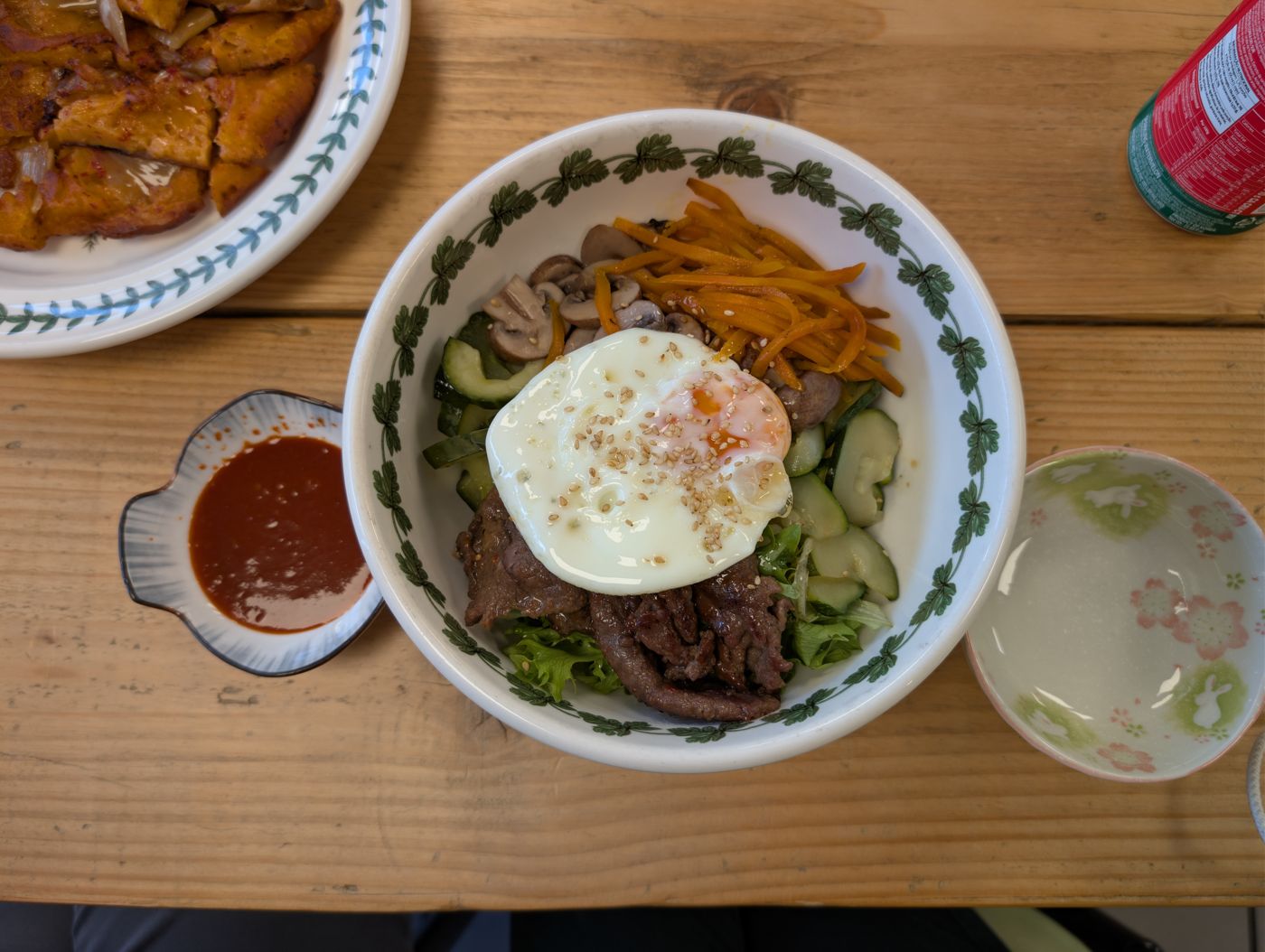 Bibimbap (Mixed Rice with Namul)비빔밥A bowl of rice topped with seasoned namul, beef and egg, mixed at the table with chili paste and sesame oil — banchan gathered into a single meal.
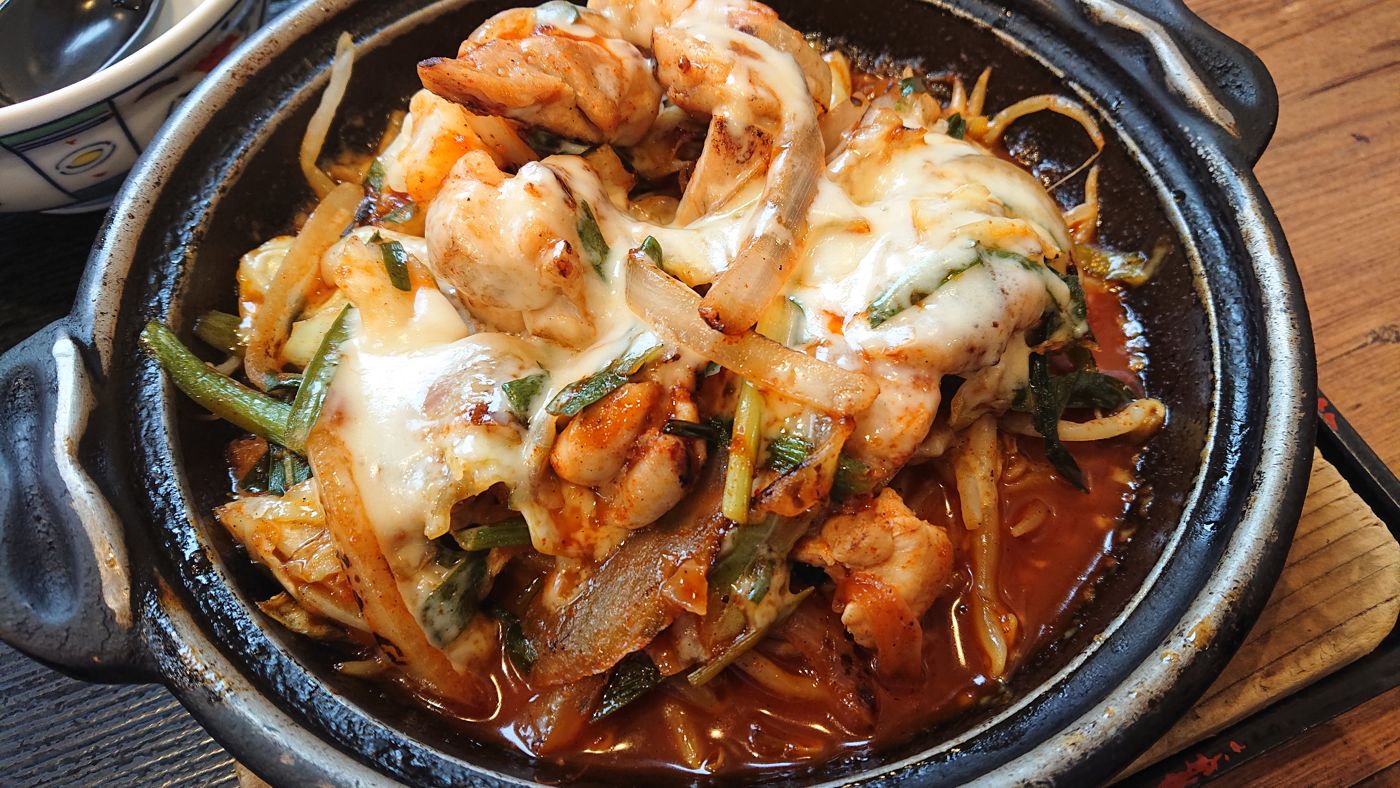 Dakgalbi (Spicy Stir-Fried Chicken)닭갈비Chicken marinated in a fiery gochujang sauce and cooked on a big iron pan with cabbage, sweet potato and rice cakes — Chuncheon's signature dish, finished with fried rice.
- Doraji Namul도라지나물Shredded bellflower root rubbed with salt to tame its bitterness, then gently stir-fried — the ivory-white member of the three-colored namul.
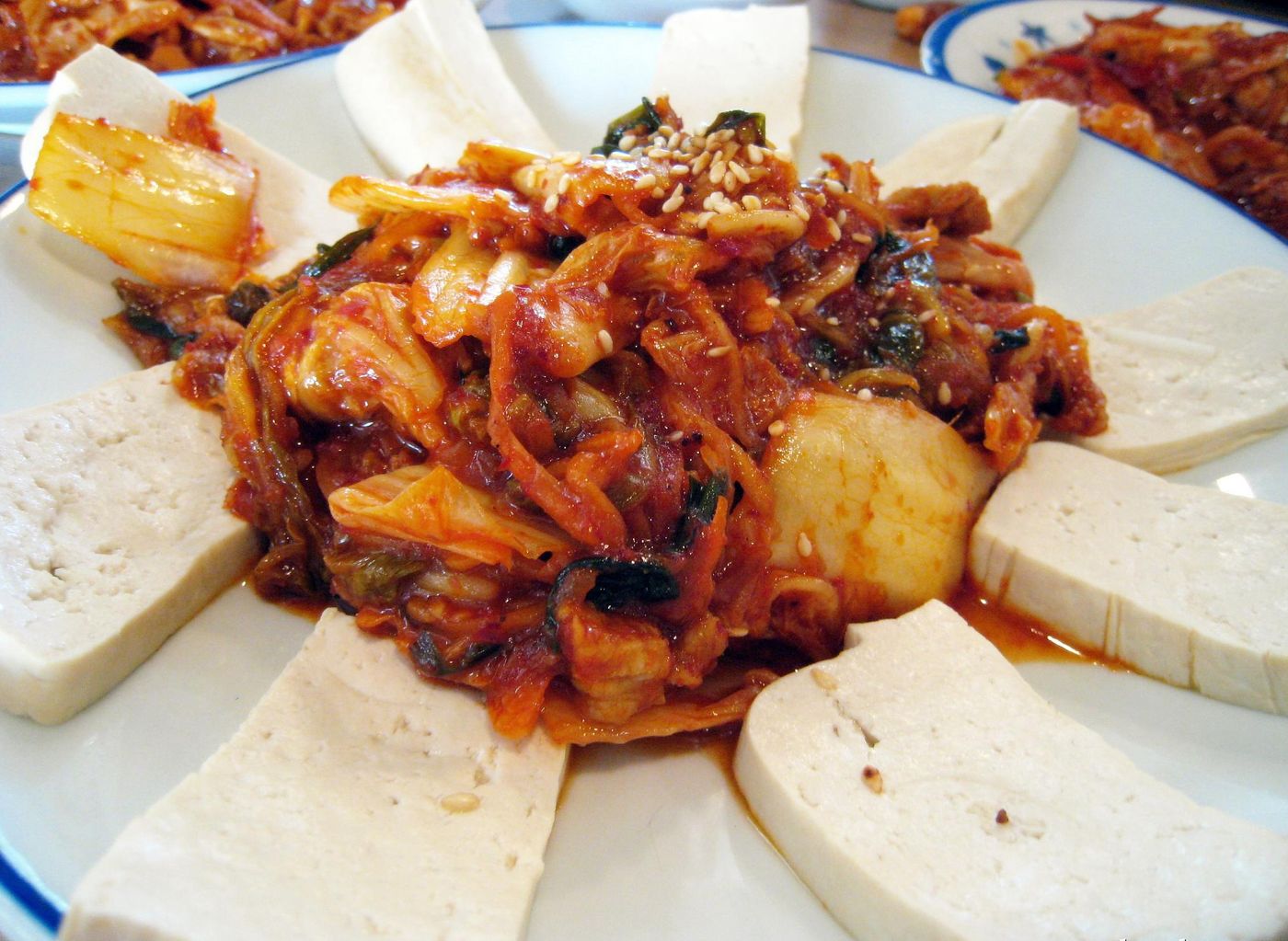 Dubu Kimchi (Tofu with Stir-Fried Kimchi)두부김치Warm slices of plain tofu arranged around kimchi stir-fried with pork — a mild-and-spicy pairing that is a favorite with soju and makgeolli.
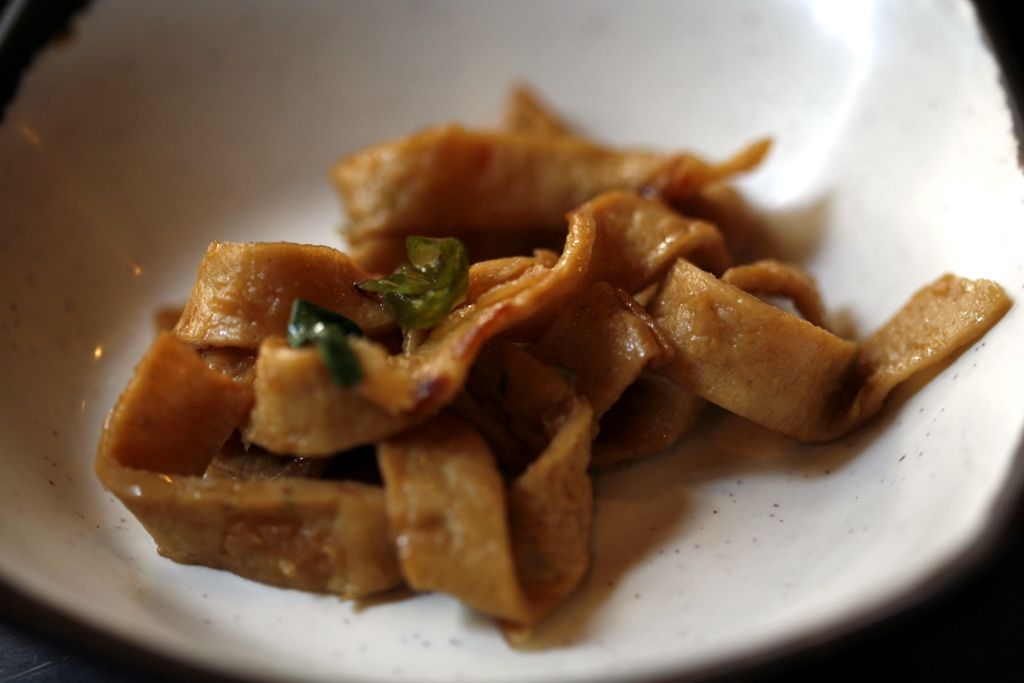 Eomuk Bokkeum어묵볶음Strips of Korean fish cake stir-fried with onion and carrot in a light soy glaze — quick, savory-sweet and one of the most familiar everyday banchan.
- Gamjachae Bokkeum감자채볶음Thin matchsticks of potato stir-fried with onion and carrot and seasoned simply with salt and sesame — tender-crisp, mild and endlessly familiar.
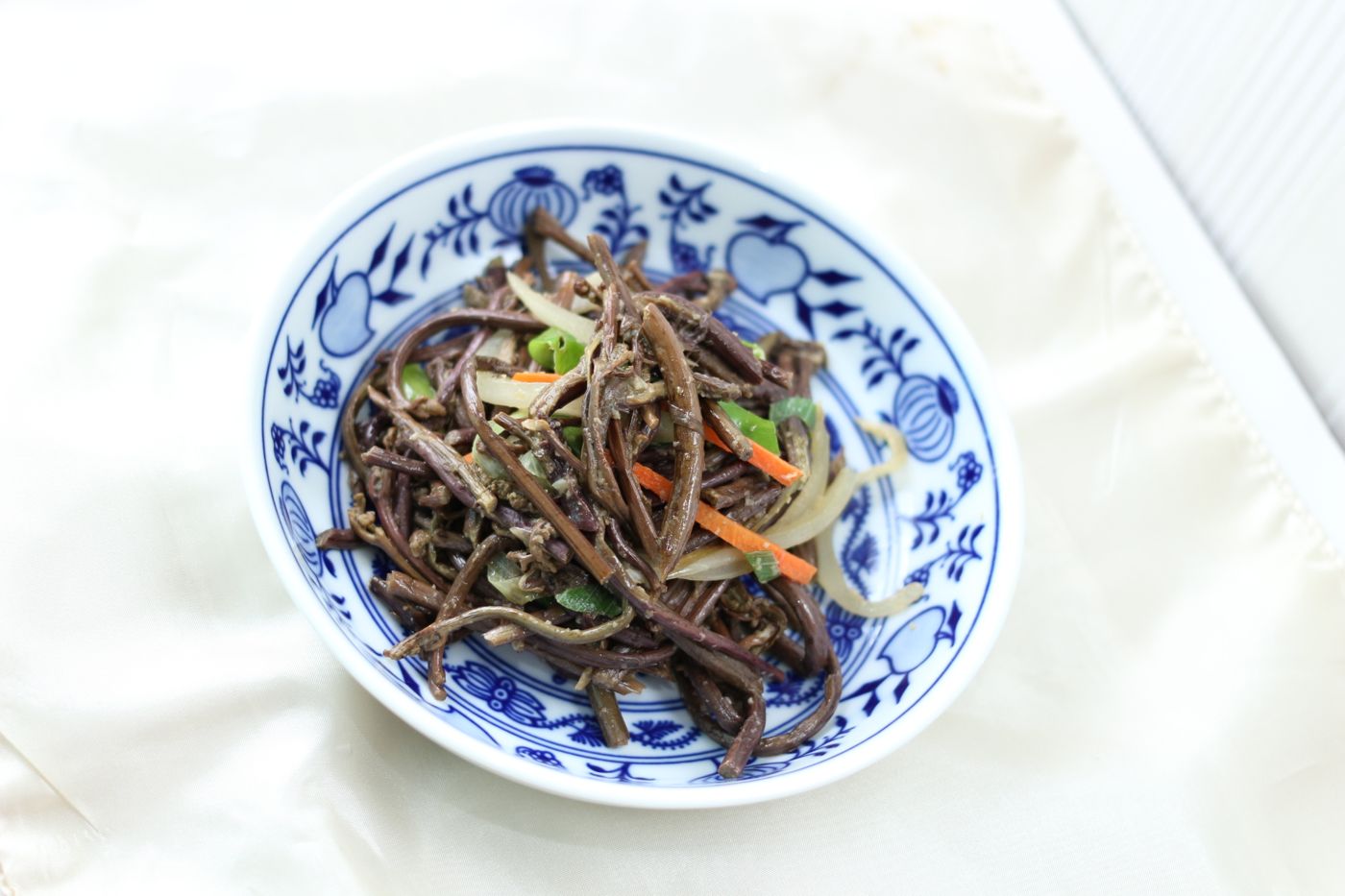 Gosari Namul고사리나물Dried bracken fern soaked, boiled and slowly stir-fried with soup soy sauce, garlic and perilla oil — chewy, earthy and central to holiday tables.
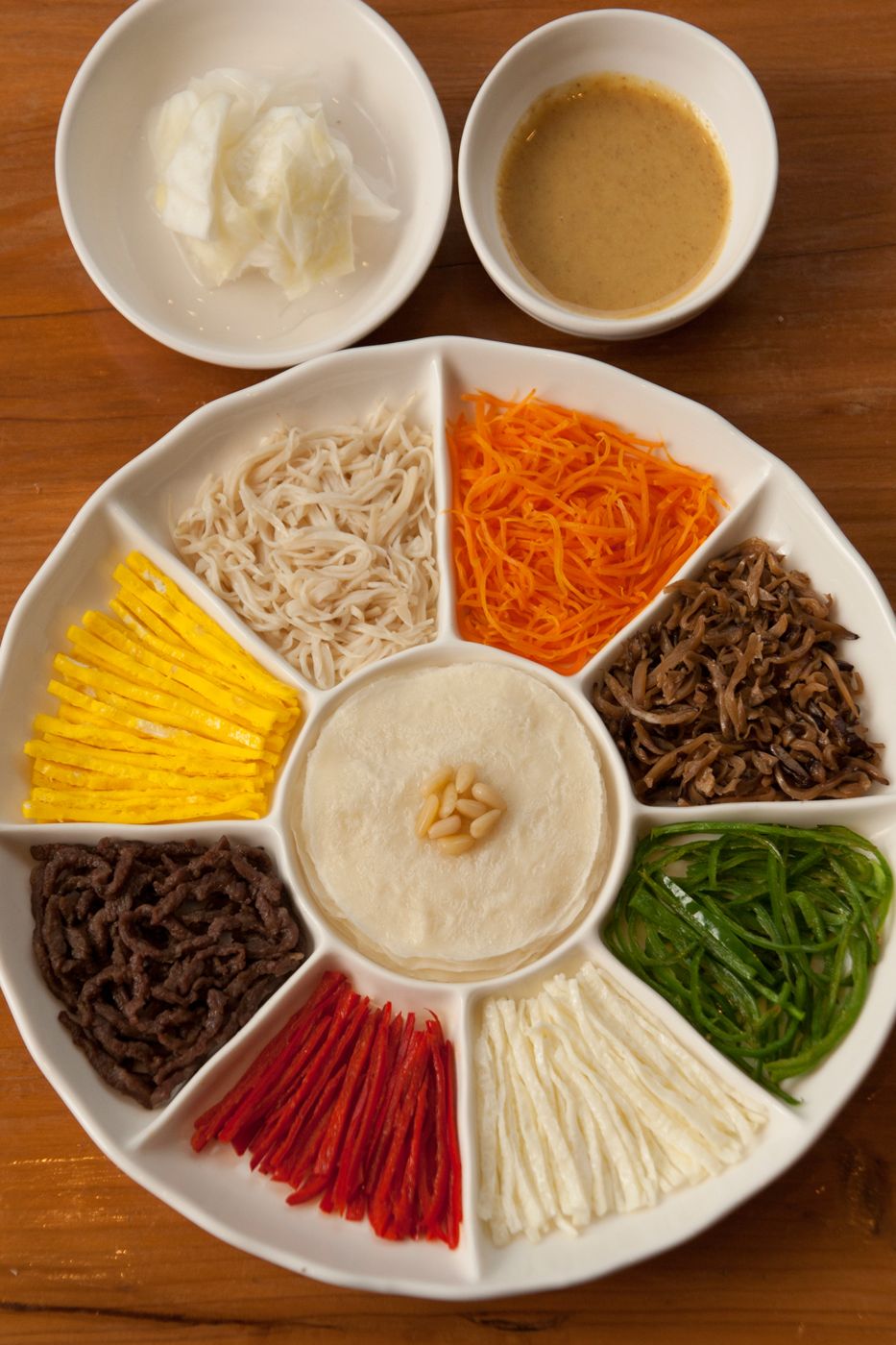 Gujeolpan (Platter of Nine Delicacies)구절판Eight finely cut fillings arranged by color around a stack of paper-thin crepes in a nine-compartment dish, wrapped at the table — an elegant banquet dish.
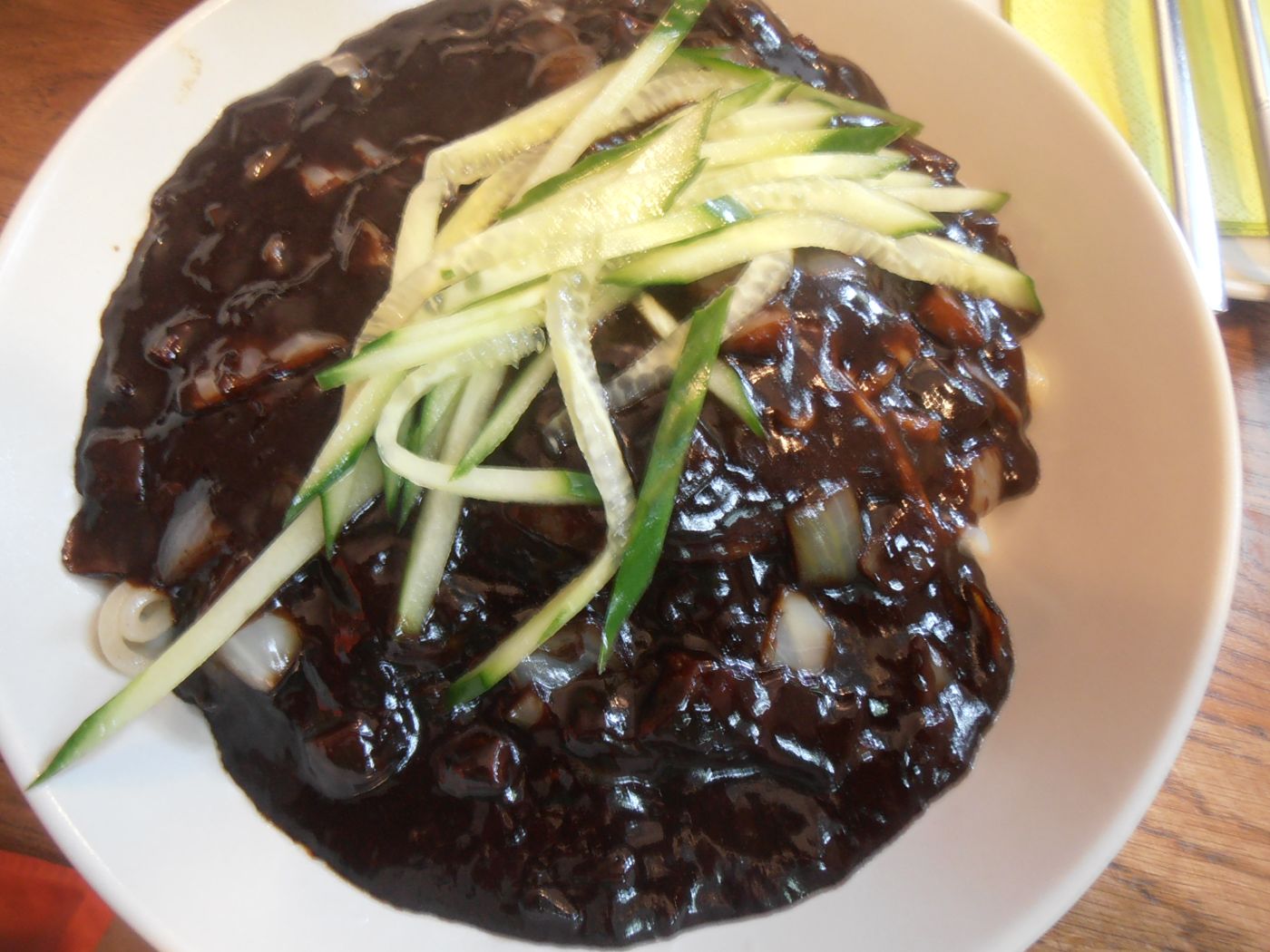 Jajangmyeon (Noodles in Black Bean Sauce)자장면Wheat noodles under a glossy sauce of chunjang fried with pork, onion and potato — the Korean-Chinese dish born among Shandong migrants in Incheon, contested origin claims and all.
 Japchae (Glass Noodles with Vegetables)잡채Chewy sweet potato glass noodles tossed with stir-fried vegetables, mushrooms and beef in soy sauce and sesame oil — Korea's essential celebration dish.
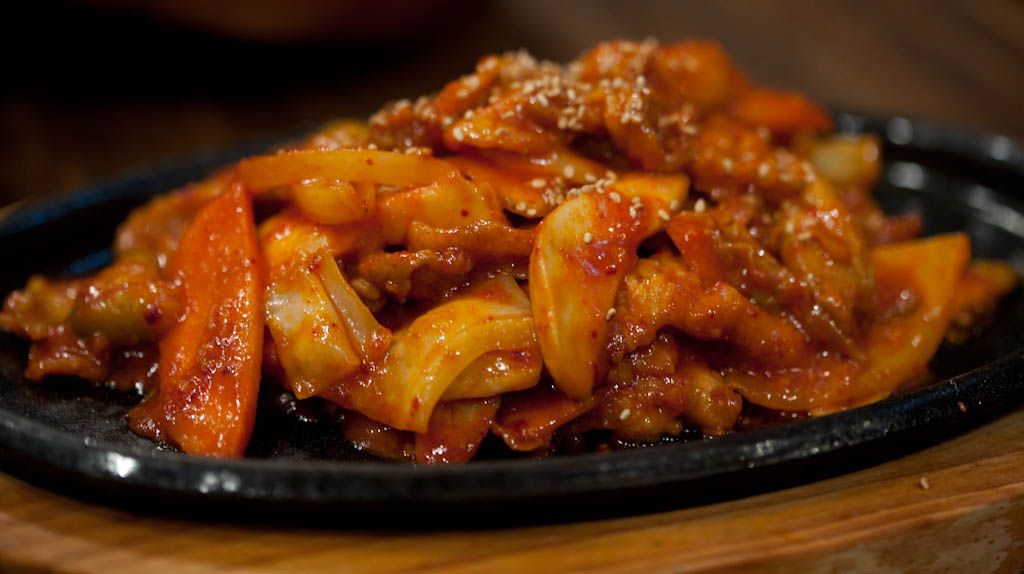 Jeyuk Bokkeum (Spicy Stir-Fried Pork)제육볶음Thin slices of pork marinated in gochujang, garlic and ginger, then stir-fried with onion and green onion — a hearty, spicy staple of home and diner tables.
- Jinmichae Bokkeum진미채볶음Seasoned dried squid shreds tossed in a sweet, spicy gochujang glaze — chewy, glossy and one of the most familiar keeping banchan.
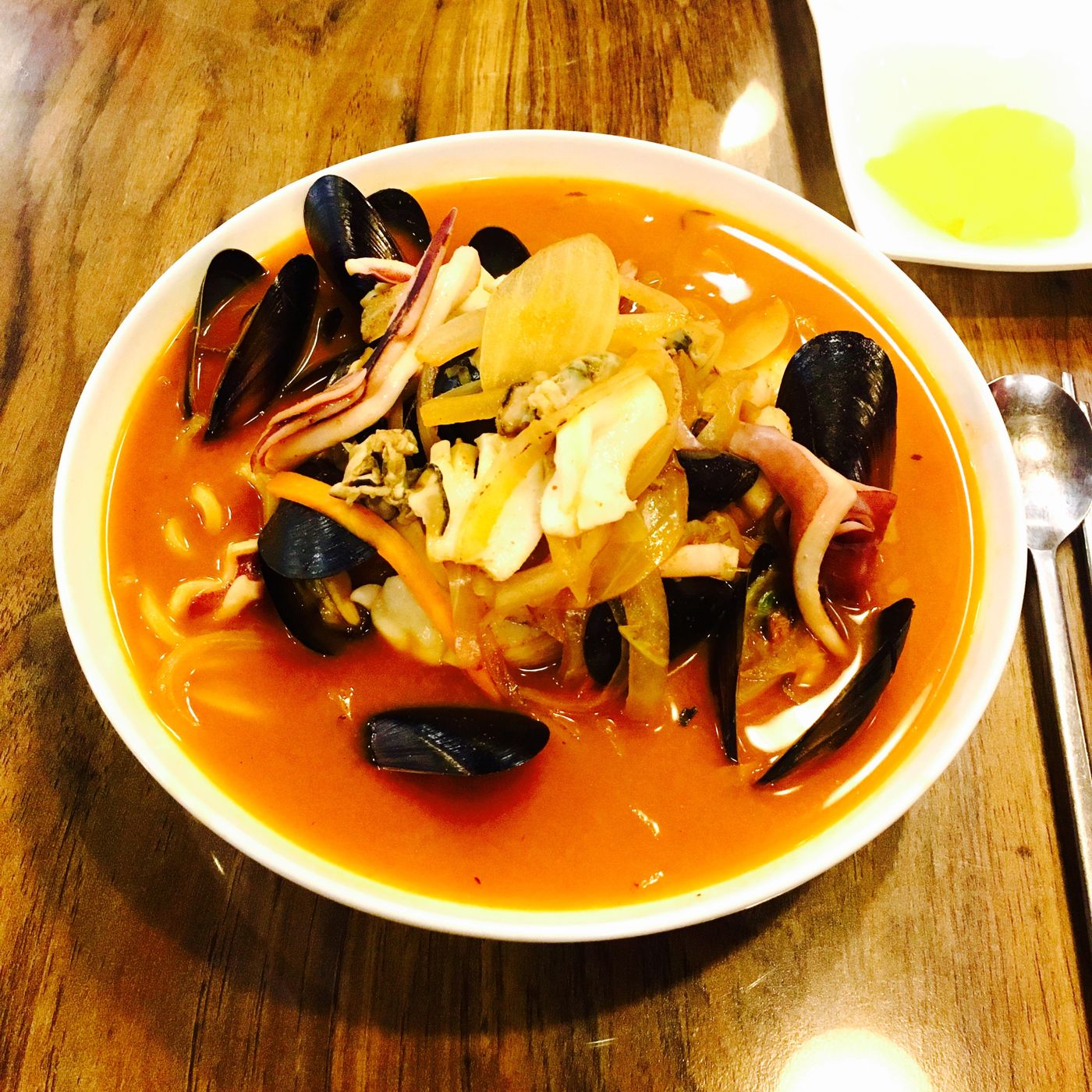 Jjamppong (Spicy Seafood Noodle Soup)짬뽕Thick wheat noodles in a fiery red broth of stir-fried pork, squid, shellfish and vegetables — the Korean-Chinese restaurant's spicy counterpart to jajangmyeon.
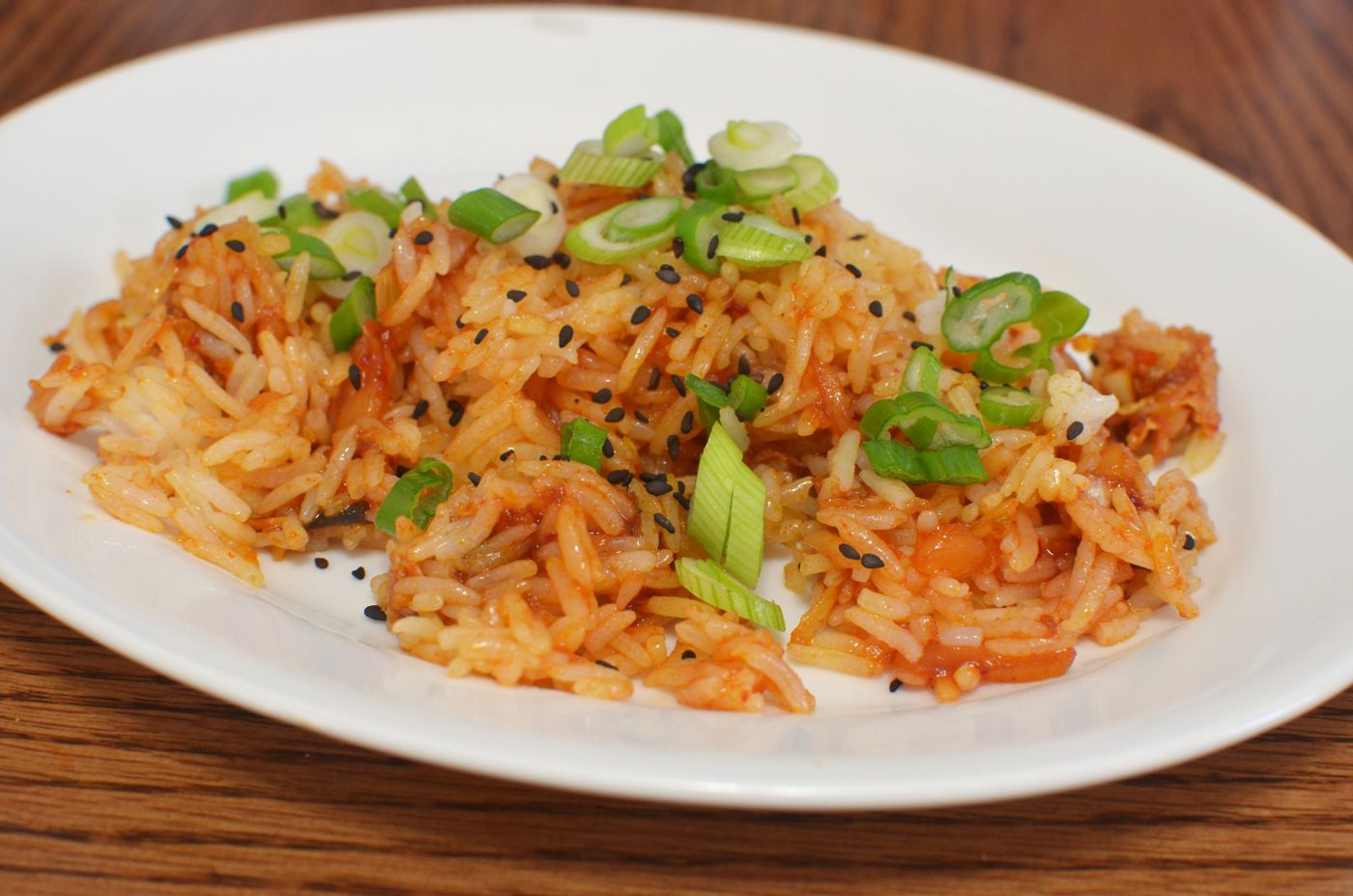 Kimchi-bokkeumbap (Kimchi Fried Rice)김치볶음밥Leftover rice stir-fried with sour, well-fermented kimchi and a little pork, usually topped with a fried egg — a home staple that spread with frying pans and cooking oil.
- Kkaennip Namul (Seasoned Perilla Leaves)깻잎나물Young perilla leaves and tender tips, blanched and sautéed in perilla oil with garlic and soup soy sauce — a soft, deeply aromatic summer namul.
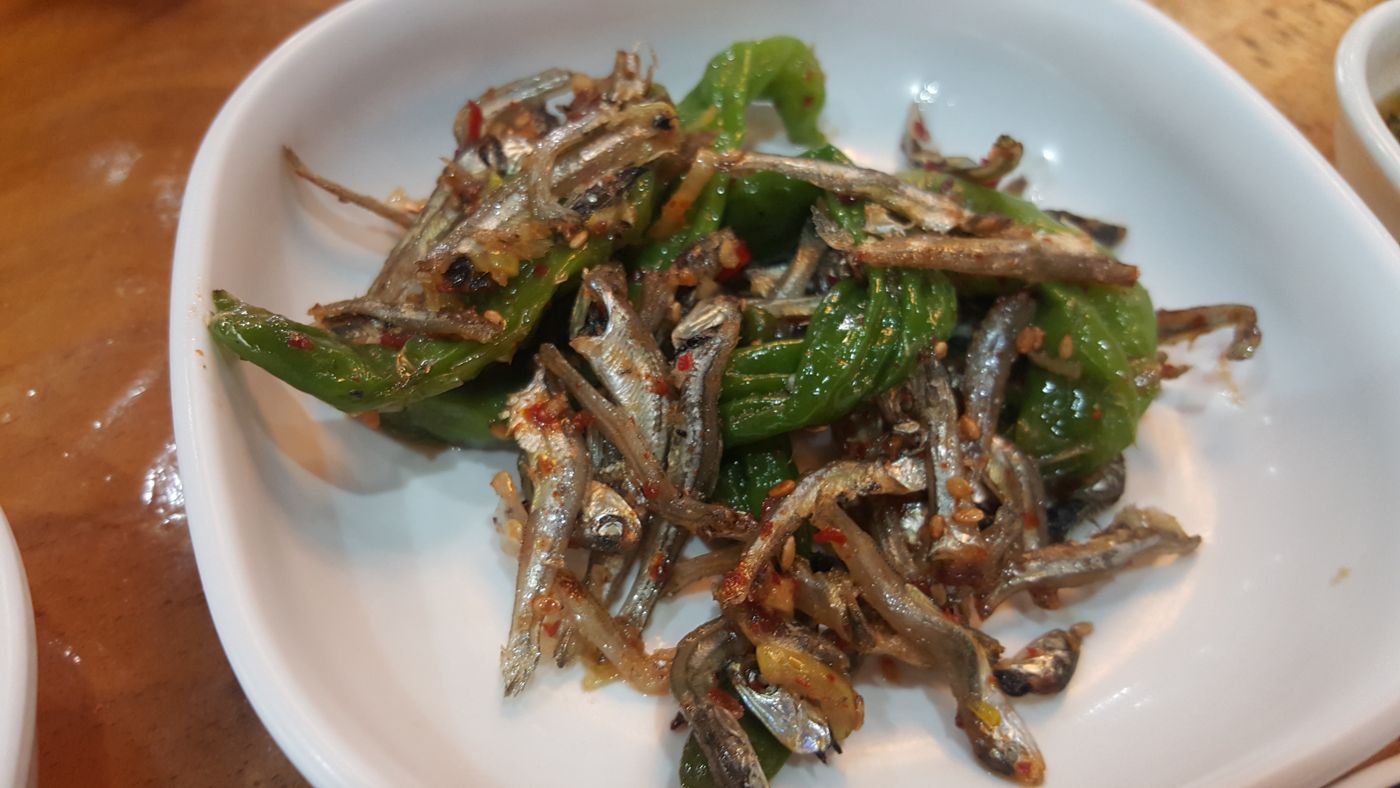 Kkwarigochu Myeolchi Bokkeum (Shishito Peppers with Anchovies)꽈리고추멸치볶음Small dried anchovies and wrinkled shishito-type peppers glazed in soy sauce and rice syrup — a sweet, salty, gently grassy lunchbox staple.
- Maneuljong Bokkeum마늘종볶음Tender garlic scapes stir-fried in a light soy and syrup glaze until bright and just yielding — a spring banchan with a mild, sweet garlic flavor.
- Mareun Saeu Bokkeum (Stir-Fried Dried Shrimp)마른새우볶음Small dried shrimp toasted in a dry pan, then glazed with soy sauce, rice syrup and garlic — a sweet-savory, crunchy banchan that keeps for days.
- Miyeok Julgi Bokkeum미역줄기볶음Salted sea mustard stems, soaked and stir-fried with garlic and sesame oil until tender-crunchy — a savory, ocean-fresh banchan with a satisfying snap.
- Mu Namul (Stir-Fried Radish Namul)무나물Julienned Korean radish stir-fried in perilla oil, then steamed in a splash of water until sweet and translucent — a soft, mild namul for rites and everyday rice.
 Myeolchi Bokkeum멸치볶음Small dried anchovies stir-fried until crisp, then glazed in a sweet soy and garlic syrup — a keeping banchan found in refrigerators across Korea.
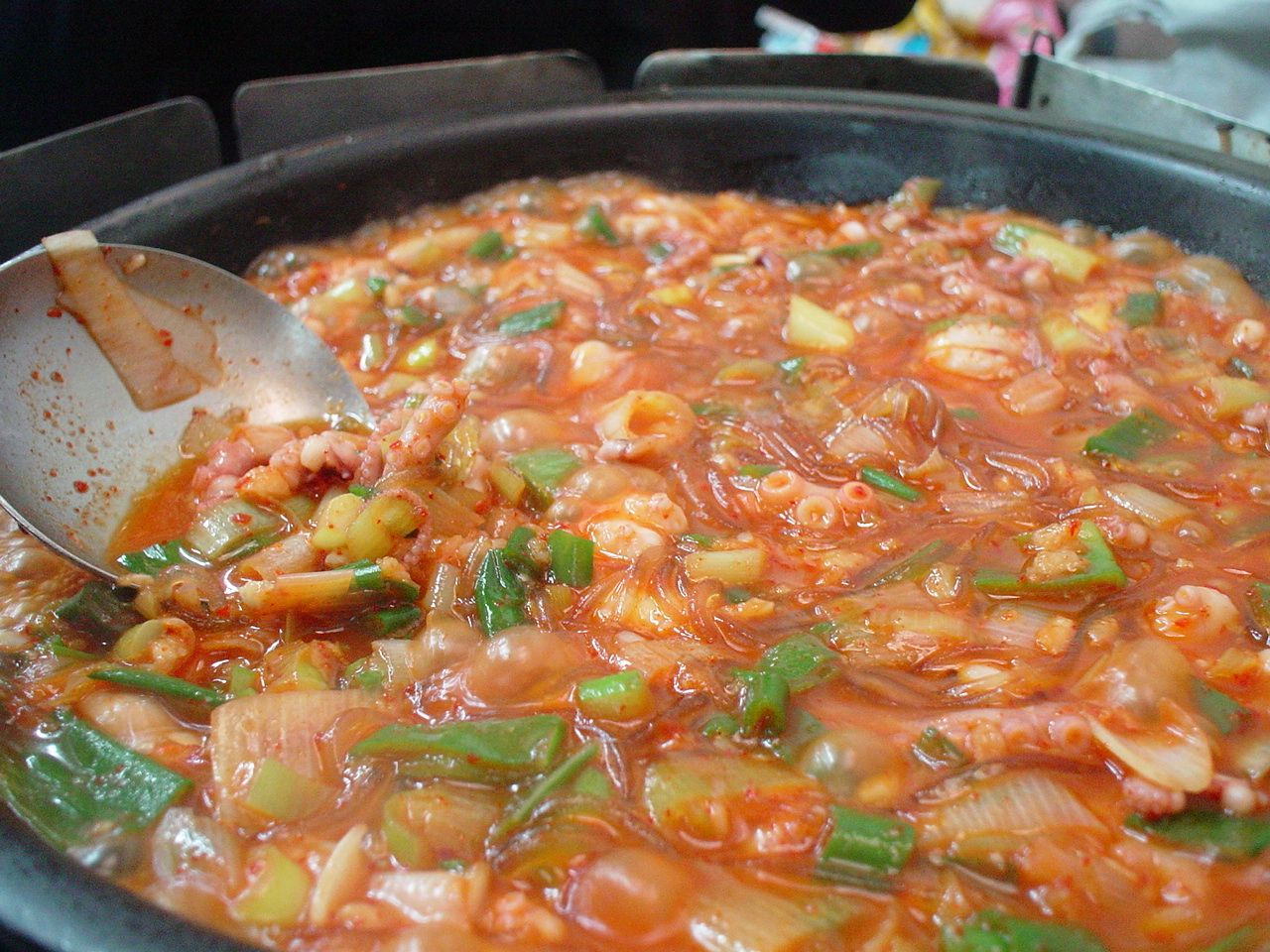 Nakji Bokkeum (Spicy Stir-Fried Octopus)낙지볶음Long-arm octopus stir-fried fast over high heat with onion and a fiery gochugaru sauce, usually served with rice and a mild soup to calm the heat.
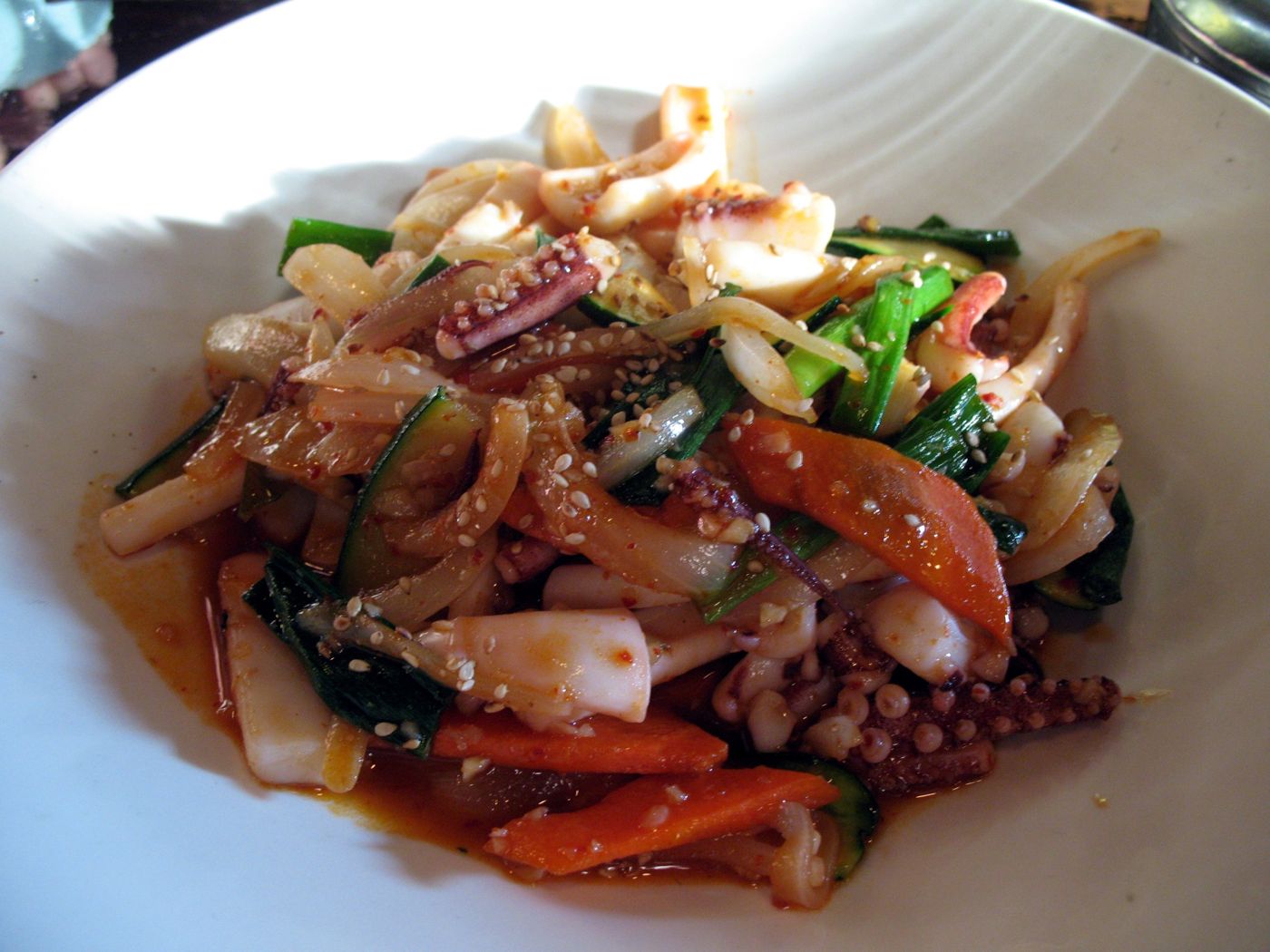 Ojingeo Bokkeum (Spicy Stir-Fried Squid)오징어볶음Scored squid stir-fried over high heat with onion, cabbage and a fiery gochujang-gochugaru sauce — tender, smoky and spicy, eaten with plenty of rice.
- Siraegi Namul시래기나물Dried radish greens soaked, simmered until tender and seasoned with doenjang and perilla or sesame oil — a deep, earthy winter namul.
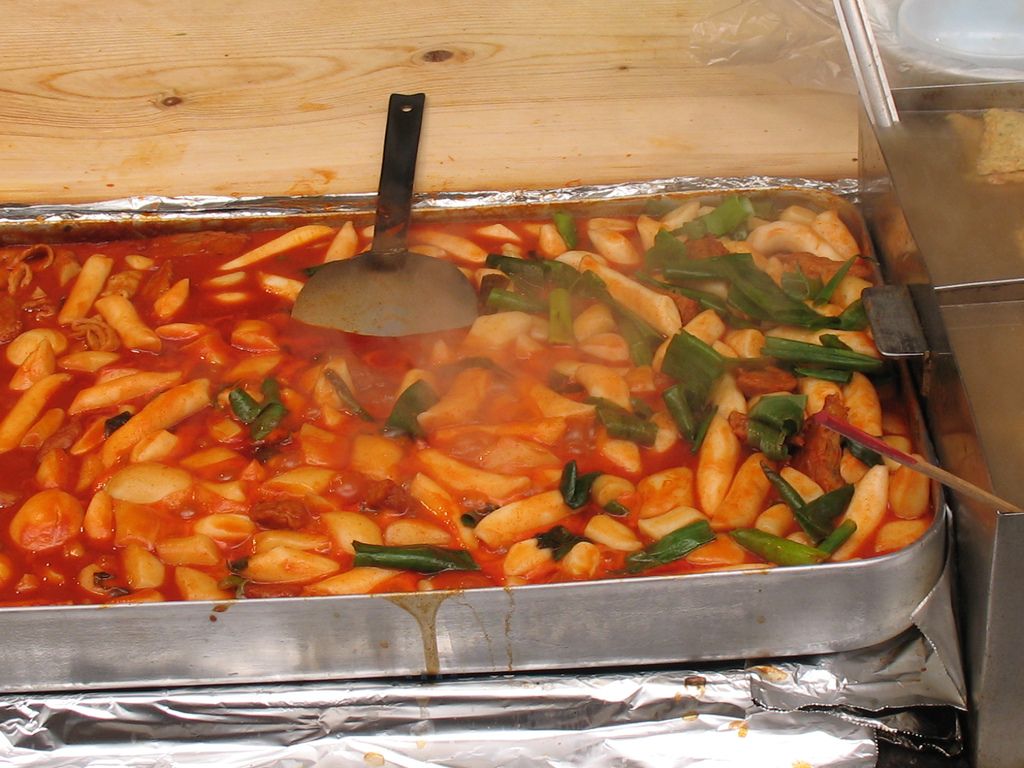 Tteokbokki (Spicy Stir-fried Rice Cakes)떡볶이Chewy rice cakes simmered in a sweet, fiery gochujang sauce with fish cake and green onion — a postwar street snack with roots in a refined soy-sauce court dish.