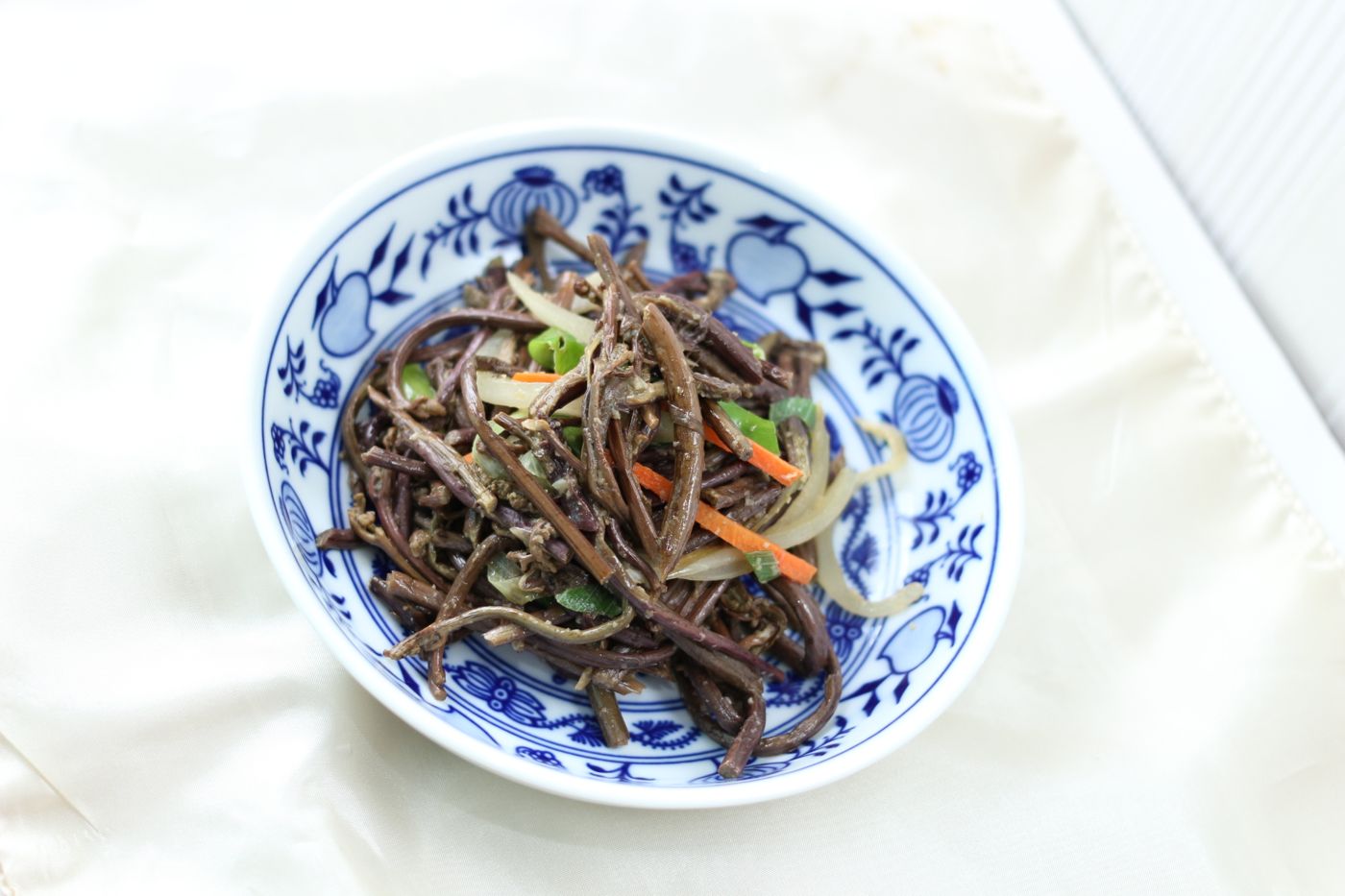
 Photo: Hyeon-Jeong Suk, CC BY 2.0, via Wikimedia Commons
Namul · Seasoned vegetables 나물
Gosari Namul
고사리나물
Romanization: gosari-namul
Dried bracken fern soaked, boiled and slowly stir-fried with soup soy sauce, garlic and perilla oil — chewy, earthy and central to holiday tables.
- Serves
- 4
- Prep
- 15 min
- Cook
- 35 min
Recipe
Ingredients · Serves 4
- 30 gDried bracken (gosari)soaked overnight; or about 250 g ready-prepared soaked bracken
- 1 tbspSoup soy sauce (guk-ganjang)
- 2 clovesGarlicminced
- 1 tbspPerilla oilor toasted sesame oil
- 60 mlWater or anchovy-kelp stock
- 1 tbspGreen onionfinely chopped
- 1 tspToasted sesame oil
- 1 tspToasted sesame seeds
Method
Technique: Blanching and Seasoning Namul, Bokkeum: Korean Stir-Frying
Step 1: Soak the dried bracken in plenty of cold water for 8–12 hours.
Step 2: Drain, put the bracken in a pot of fresh water and boil for at least 20 minutes, until a stem can be pinched through easily. Turn off the heat and let it sit in the water until cool.
Step 3: Drain and soak again in fresh cold water for several hours, changing the water a few times. Taste a piece: it should be tender with no bitterness.
Step 4: Drain, trim off any tough ends and cut into 5–6 cm lengths. Squeeze lightly, then toss with the soup soy sauce and garlic and let stand for 10 minutes.
Step 5: Heat the perilla oil in a pan over medium heat and stir-fry the bracken for 2–3 minutes.
Step 6: Add the water or stock, cover, and simmer over low heat for 5–7 minutes, until the liquid is mostly absorbed and the stems are soft.
Step 7: Stir in the green onion, sesame oil and sesame seeds. Taste, adjust the seasoning, and serve warm or at room temperature.
Origin & History
Gosari is bracken fern (Pteridium aquilinum var. latiusculum). Its young fronds, which unfurl in spring covered in fine white down, have been eaten across East Asia since ancient times. In Korea they are gathered from late April into early May and most are boiled and sun-dried, so that the harvest can be stored and used all year.
Raw bracken is bitter and contains an enzyme that breaks down vitamin B1. Traditional cooks treated it with wood ash and hot water, or boiled it and then added ash, to remove the bitterness and destroy that enzyme; today salt or baking soda and long soaking do the same job. Hansik magazine notes that Korean records of namul stretch back to texts such as Sanga yorok (c. 1450), and that bracken was valued as an unusually protein-rich wild green — sometimes called "beef from the mountains."
Bracken namul is one of the three colored namul (samsaek namul) for ancestral rites, where its dark brown represents the stem — and, in one popular reading, the parents' generation. It is also one of the dried "old greens" (mugeun namul) eaten on Jeongwol Daeboreum, the first full moon of the lunar year; the nineteenth-century almanac Dongguk sesigi records the belief that eating them wards off the summer heat.
Key Ingredients
- Bracken fern shoots고사리The young, tightly curled shoots of bracken fern, picked in spring and almost always sold blanched and dried. Once soaked and thoroughly cooked, gosari turns tender and earthy, and it is a fixture of ancestral-rite tables, bibimbap and yukgaejang.
 Soy sauce간장Korean soy sauce, in two main kitchen forms: pale, salty guk-ganjang (soup soy sauce) brewed the traditional way from meju, and darker, sweeter jin-ganjang for braises and marinades.
 Garlic마늘Used raw, minced, pickled and roasted, garlic is one of the essential aromatics of Korean food — in seasonings, marinades, kimchi and namul.
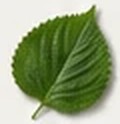 Perilla깻잎Perilla leaves have a bold, minty-herbal scent. They are eaten fresh as a wrap, pickled in soy sauce, or layered with seasoning as kkaennip-jangajji.
 Green onion파Korean green onion (pa), from thick-stemmed daepa to slender scallions — chopped into nearly every seasoning sauce, soup and kimchi, and the star of pa-kimchi.
 Sesame참깨Toasted sesame seeds and sesame oil (chamgireum) finish countless Korean dishes, adding a nutty aroma and gloss.
Nutrition
| Calories | ~62 kcal |
|---|---|
| Protein | ~2.2 g |
| Fat | ~5 g |
| Carbohydrates | ~3.1 g |
| Fiber | ~1.9 g |
| Sodium | ~360 mg |
Notable forFolate · Vitamin K · Dietary fiber
Estimated from the Korean Food Composition Table values for blanched bracken (about 250 g, the yield of 30 g dried) and traditional soup soy sauce, plus USDA FoodData Central values for garlic, green onion, oils and sesame seeds, divided by four. Perilla oil was treated as pure fat. Actual values vary with ingredients, portion size and preparation.
Health Benefits
- Fiber and folate: prepared bracken provides dietary fiber and is a source of folate and vitamin K.
- Carotenoids: bracken contains carotenoids, which are better absorbed with the oil used in cooking.
- Seasonal tradition: eating dried greens on Daeboreum was traditionally believed to keep people healthy through the coming summer — a custom that reflects the value of stored vegetables in late winter.
Regional Variations
- Perilla or sesame oil: many cooks stir-fry bracken in perilla oil (deulgireum) for its nutty, slightly grassy aroma; others use sesame oil, or a mix of both.
- With broth: a splash of anchovy-kelp stock or water is often added during cooking so the stems soften and absorb the seasoning.
- Daeboreum greens: on the first full moon, bracken is served among a spread of dried namul — such as radish greens, eggplant, squash and mushrooms — alongside five-grain rice.
- Ash or soda: older households softened bracken with wood ash and hot water; modern cooks use salt or baking soda in the boiling water instead.
Pairings
 Sigeumchi Namul시금치나물Spinach blanched for a few seconds, squeezed dry and dressed with garlic, soy sauce and sesame — one of the simplest and most familiar namul.
- Doraji Namul도라지나물Shredded bellflower root rubbed with salt to tame its bitterness, then gently stir-fried — the ivory-white member of the three-colored namul.
- Sukju Namul숙주나물Mung bean sprouts blanched briefly and dressed with salt, garlic and sesame oil — lighter, juicier and more delicate than soybean sprouts.
Sources
- 01고사리 (Gosari, bracken) — Encyclopedia of Korean Culture
- 02묵은나물 (Mugeun-namul) — Encyclopedia of Korean Culture
- 03Namul, Food for People, Food That Spares — Hansik magazine (Korean Food Promotion Institute)
- 04Risk Assessment and Risk Reduction of Ptaquiloside in Bracken Fern (Kim et al., Toxics, 2023)
- 05Korean Food Composition Database — National Institute of Agricultural Sciences, RDA
Last updated