Namul · Seasoned vegetables 나물
Mu Namul (Stir-Fried Radish Namul)
무나물
Romanization: mu-namul
Julienned Korean radish stir-fried in perilla oil, then steamed in a splash of water until sweet and translucent — a soft, mild namul for rites and everyday rice.
- Serves
- 4
- Prep
- 15 min
- Cook
- 15 min
Recipe
Ingredients · Serves 4
- 400 gKorean radish (mu)about ⅓ of a medium radish
- 1 tbspPerilla oil (or toasted sesame oil)
- 1 cloveGarlicminced
- ½ tspSaltor to taste; soup soy sauce can replace part
- 3 tbspWater
- 1 tbspGreen onionfinely chopped
- 1 tspToasted sesame seeds
Method
Technique: Bokkeum: Korean Stir-Frying, Blanching and Seasoning Namul
Step 1: Peel the radish and cut it into 5–6 cm lengths. Slice each piece lengthwise into 3 mm planks, then into matchsticks, cutting along the grain so the shreds hold together as they cook.
Step 2: Heat the perilla oil in a wide pan over medium heat. Add the radish and garlic and stir-fry for 2–3 minutes, until the radish starts to turn translucent at the edges.
Step 3: Sprinkle in the salt and add the water. Cover and cook over medium-low heat for 5–8 minutes, until the radish is soft and sweet but not broken.
Step 4: Uncover and cook off any remaining liquid, stirring gently so the shreds stay whole.
Step 5: Add the green onion and sesame seeds, toss and taste for salt. Serve warm or at room temperature; it keeps for 2–3 days in the refrigerator.
Origin & History
Mu-namul comes in two forms: a raw version (saengchae) dressed with chili and vinegar, and the cooked version described here, in which shredded radish is stir-fried in perilla oil, splashed with water and seasoned with salt. The National Folk Museum's encyclopedia notes that the cooked dish calls for a large, firm Korean radish (Joseon-mu) that can be cut into long, even shreds.
The radish has deep roots in Korean cooking. A poem by the Goryeo scholar Yi Gyu-bo (1168–1241) lists it among six home-grown vegetables and mentions radish kimchi and pickles, so a radish namul may well have been on Goryeo tables too. In the nineteenth-century Nongga wollyeongga, the ninth-month verses celebrate a harvest meal of radish namul with cabbage soup and pickled chili leaves; the folk encyclopedia reads this as evidence that cooked, perilla-oil mu-namul is the older form, with the vinegared raw salad a later development.
Cooked mu-namul is one of the most widely shared namul in Korea. From Hamgyeong in the north to Jeju in the south it is a basic member of the three- or five-color namul platter for ancestral rites (jesa), household rituals and feasts, it appears on the list of namul for the first full moon (Jeongwol Daeboreum), and it is a standard bibimbap topping. Stir-fried with shreds of beef, it was a frequent side dish at royal and aristocratic tables.
Key Ingredients
 Korean radish무A stout, heavy white radish, often tinged pale green near the top. It is cubed for kkakdugi, left whole in the clear brine of dongchimi, shredded into salads and simmered into broths.
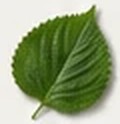 Perilla깻잎Perilla leaves have a bold, minty-herbal scent. They are eaten fresh as a wrap, pickled in soy sauce, or layered with seasoning as kkaennip-jangajji.
 Garlic마늘Used raw, minced, pickled and roasted, garlic is one of the essential aromatics of Korean food — in seasonings, marinades, kimchi and namul.
 Sun-Dried Sea Salt천일염Coarse sea salt made by evaporating seawater with sun and wind in tidal-flat salt pans, most of it from Sinan County off Korea's southwest coast. It is the everyday salt for salting cabbage and making jang.
 Green onion파Korean green onion (pa), from thick-stemmed daepa to slender scallions — chopped into nearly every seasoning sauce, soup and kimchi, and the star of pa-kimchi.
 Sesame참깨Toasted sesame seeds and sesame oil (chamgireum) finish countless Korean dishes, adding a nutty aroma and gloss.
Nutrition
| Calories | ~58 kcal |
|---|---|
| Protein | ~1 g |
| Fat | ~3.9 g |
| Carbohydrates | ~5.4 g |
| Fiber | ~1.3 g |
| Sodium | ~305 mg |
Notable forVitamin C · Potassium
Radish uses the Korean Food Composition Table entry “Radish (Mu), Korean radish, Root, Raw” (per 100 g: 21 kcal, 1.1 g fiber, 12 mg vitamin C, 279 mg potassium); some vitamin C is lost in cooking, so that value is a ceiling. Perilla oil is entered with USDA sesame oil values (both are essentially pure fat with the same calories); salt, garlic, green onion and sesame seeds use USDA FoodData Central. Totals divided by four. Actual values vary with ingredients, portion size and preparation.
Health Benefits
- Light and gentle: radish is mostly water, and gentle steaming in the pan turns it soft and sweet, making this one of the mildest, easiest-to-digest namul.
- Some vitamin C and potassium: Korean radish contributes modest amounts of both, though cooking reduces the vitamin C.
- Traditional view: Korean and Chinese herbal texts described radish as aiding digestion and warming the stomach; these are traditional beliefs.
Regional Variations
- Perilla oil and salt: the classic version — white, mild and seasoned with salt; the Encyclopedia of Korean Culture notes that namul cooks use salt in place of soy sauce when they want a clean, pale color.
- With beef: stir-fried with finely shredded seasoned beef, a richer style associated with royal and yangban cooking.
- With perilla seed powder: ground perilla seeds stirred in at the end give a nutty, creamy finish.
- Raw mu-saengchae: the uncooked, red-seasoned radish salad is a separate dish (musaengchae), dressed with gochugaru, vinegar and sugar.
Pairings
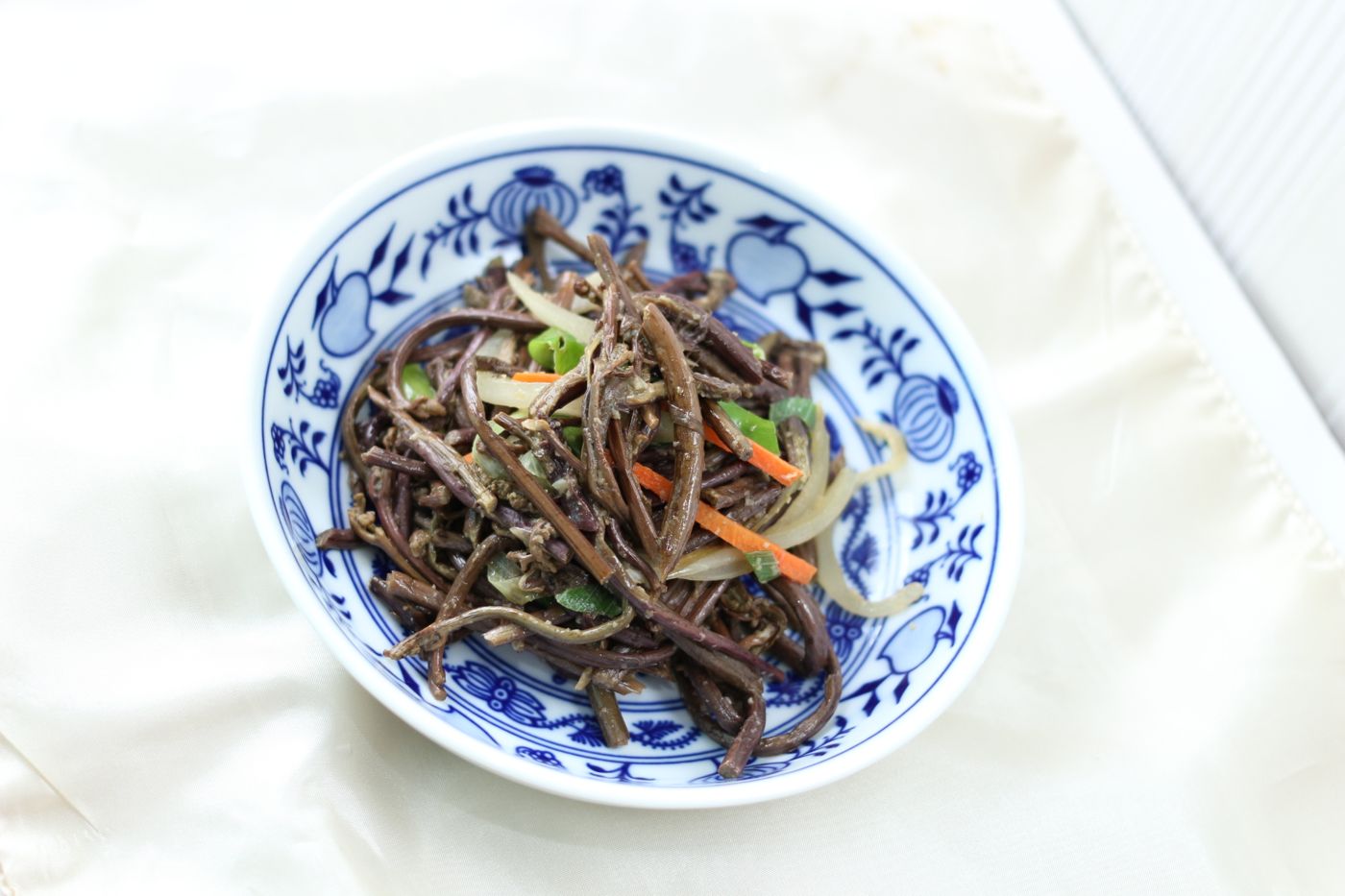 Gosari Namul고사리나물Dried bracken fern soaked, boiled and slowly stir-fried with soup soy sauce, garlic and perilla oil — chewy, earthy and central to holiday tables.
- Doraji Namul도라지나물Shredded bellflower root rubbed with salt to tame its bitterness, then gently stir-fried — the ivory-white member of the three-colored namul.
 Sigeumchi Namul시금치나물Spinach blanched for a few seconds, squeezed dry and dressed with garlic, soy sauce and sesame — one of the simplest and most familiar namul.
Sources
- 01무나물 (Mu-namul) — Encyclopedia of Korean Folk Culture (National Folk Museum of Korea)
- 02나물 (Namul) — Encyclopedia of Korean Culture
- 03Korean Food Composition Table: Radish (Mu), Korean radish, Root, Raw — National Institute of Agricultural Sciences
- 04Oil, sesame, salad or cooking (FDC 171016) — USDA FoodData Central
Last updated