Namul · Seasoned vegetables 나물
Doraji Namul
도라지나물
Romanization: doraji-namul
Shredded bellflower root rubbed with salt to tame its bitterness, then gently stir-fried — the ivory-white member of the three-colored namul.
- Serves
- 4
- Prep
- 25 min
- Cook
- 6 min
Recipe
Ingredients · Serves 4
- 200 gBellflower root (doraji)fresh, peeled and shredded; or 40 g dried, soaked overnight
- 1 tbspCoarse saltfor rubbing; rinsed off
- ⅓ tspSaltfor seasoning, plus more to taste
- 1 cloveGarlicminced
- 1 tbspPerilla oilor a neutral oil
- 2 tbspWater
- 1 tbspGreen onionwhite part, finely chopped
- 1 tspToasted sesame oil
- 1 tspToasted sesame seeds
Method
Technique: Blanching and Seasoning Namul, Bokkeum: Korean Stir-Frying
Step 1: If the shreds are thick, tear them lengthwise into thin strips about 5 cm long.
Step 2: Sprinkle with the coarse salt and rub and squeeze firmly with your hands for 2–3 minutes, until the root softens and releases a cloudy liquid. This draws out bitterness.
Step 3: Rinse well in several changes of cold water, then soak for 15–20 minutes. Taste a strand; if it is still very bitter, soak a little longer. Squeeze dry.
Step 4: For a softer texture, blanch for 30–60 seconds in boiling water, rinse and squeeze again (optional).
Step 5: Heat the perilla oil in a pan over medium heat. Add the doraji, garlic and ⅓ tsp salt and stir-fry for 2 minutes.
Step 6: Add the water, cover, and cook over low heat for 2–3 minutes, until tender but still slightly chewy.
Step 7: Stir in the green onion, sesame oil and sesame seeds. Taste, adjust the salt, and serve warm or at room temperature.
Origin & History
Doraji is the root of the balloon flower (Platycodon grandiflorum), a perennial that grows wild in sunny fields and hillsides across Korea and blooms with violet or white bell-shaped flowers in late summer. Its fibrous, faintly bitter root is prized for its chewy texture; roots from plants two or three years old are considered the most tender.
The root contains saponins — the same broad class of compounds found in ginseng — and it has a long place in traditional medicine. Joseon-era medical writing, including the Dongui bogam, describes it as a remedy for the throat and lungs. In the kitchen it is eaten as cooked namul, as a raw spicy salad (saengchae), skewered and grilled, and candied in honey as doraji-jeonggwa. The plant is familiar enough to have its own folk song, Doraji taryeong.
Seasoned bellflower root is the white dish in samsaek namul, the three-colored namul for ancestral rites and holidays, where it stands for the root — and, in one popular reading, the ancestors. Dried doraji is also among the stored greens eaten on Jeongwol Daeboreum.
Key Ingredients
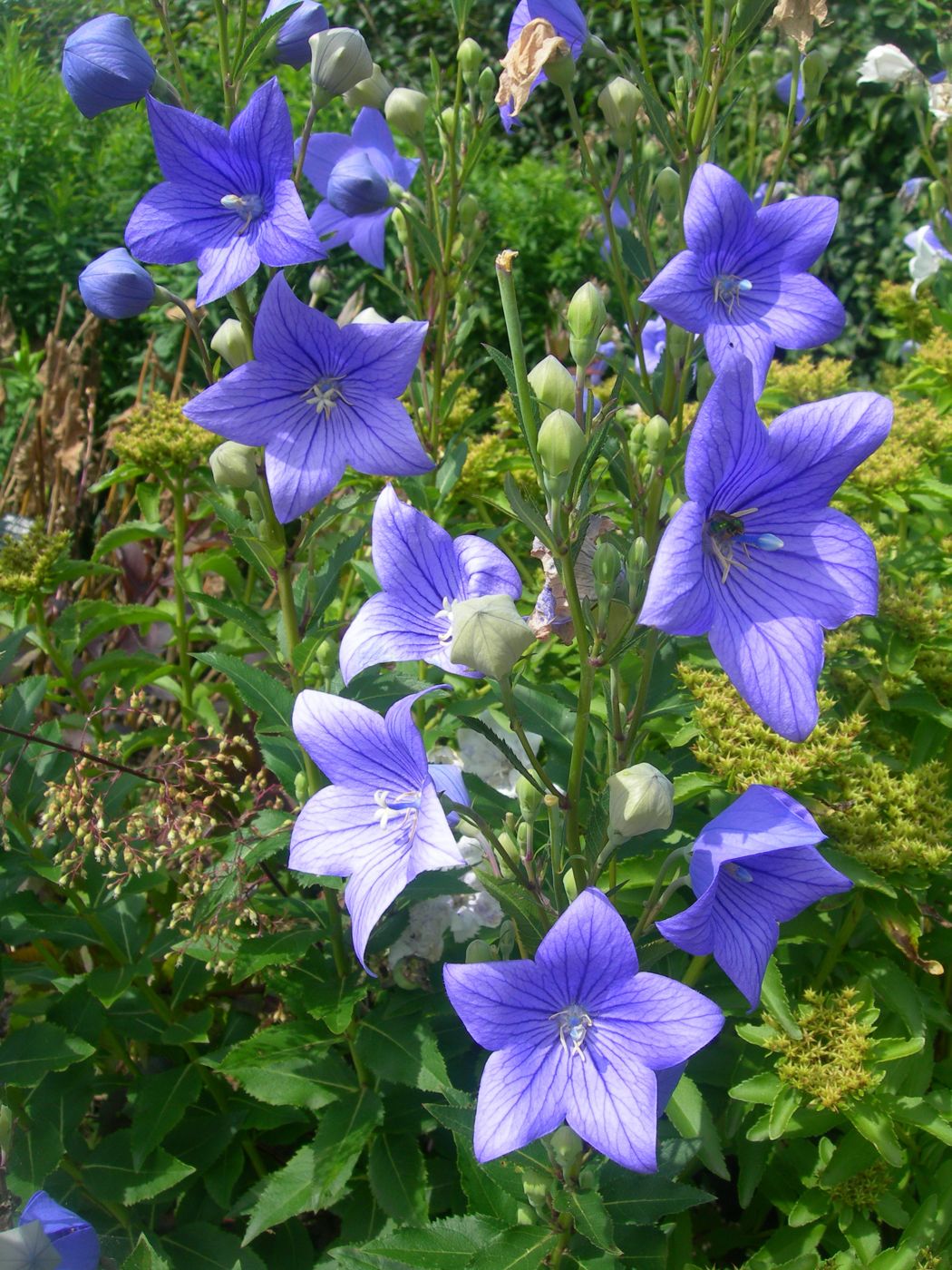 Balloon flower root도라지The pale, fibrous root of the balloon flower, prized for its crunch and gentle bitterness. It is tamed with salt and soaking, then served as a white namul, a tangy raw salad, or threaded onto skewers.
 Garlic마늘Used raw, minced, pickled and roasted, garlic is one of the essential aromatics of Korean food — in seasonings, marinades, kimchi and namul.
 Perilla깻잎Perilla leaves have a bold, minty-herbal scent. They are eaten fresh as a wrap, pickled in soy sauce, or layered with seasoning as kkaennip-jangajji.
 Green onion파Korean green onion (pa), from thick-stemmed daepa to slender scallions — chopped into nearly every seasoning sauce, soup and kimchi, and the star of pa-kimchi.
 Sesame참깨Toasted sesame seeds and sesame oil (chamgireum) finish countless Korean dishes, adding a nutty aroma and gloss.
Nutrition
| Calories | ~78 kcal |
|---|---|
| Protein | ~1.2 g |
| Fat | ~5 g |
| Carbohydrates | ~8.1 g |
| Fiber | ~2.3 g |
| Sodium | ~195 mg |
Notable forDietary fiber · Vitamin C
Estimated from the Korean Food Composition Table value for raw balloon-flower root, plus USDA FoodData Central values for garlic, green onion, oils, sesame seeds and the seasoning salt, divided by four. Rubbing salt is rinsed off and is not counted (some remains, so sodium may be a little higher). Doraji is valued more for texture than for vitamins; its vitamin C contribution is modest. Actual values vary with ingredients, portion size and preparation.
Health Benefits
- Fiber-rich root: bellflower root's chewy texture comes largely from its dietary fiber.
- Saponins: the root contains saponins, which are the subject of ongoing laboratory research.
- Traditional throat remedy: in Korean traditional medicine, doraji has long been taken for coughs and sore throats. These uses are traditional; they are not a substitute for medical care.
Regional Variations
- White stir-fried namul: the version for ancestral rites and holidays is seasoned with salt, garlic and oil only, so it stays pale.
- Spicy saengchae: for everyday meals, raw shredded doraji is often dressed with gochugaru, vinegar and sugar, making a bright, crunchy salad.
- Fresh or dried: fresh roots are peeled and shredded; dried shredded doraji must first be soaked for a day or more to soften and lose bitterness.
- Grilled or candied: beyond namul, the root is skewered and grilled with gochujang, or simmered in honey as doraji-jeonggwa.
Pairings
 Sigeumchi Namul시금치나물Spinach blanched for a few seconds, squeezed dry and dressed with garlic, soy sauce and sesame — one of the simplest and most familiar namul.
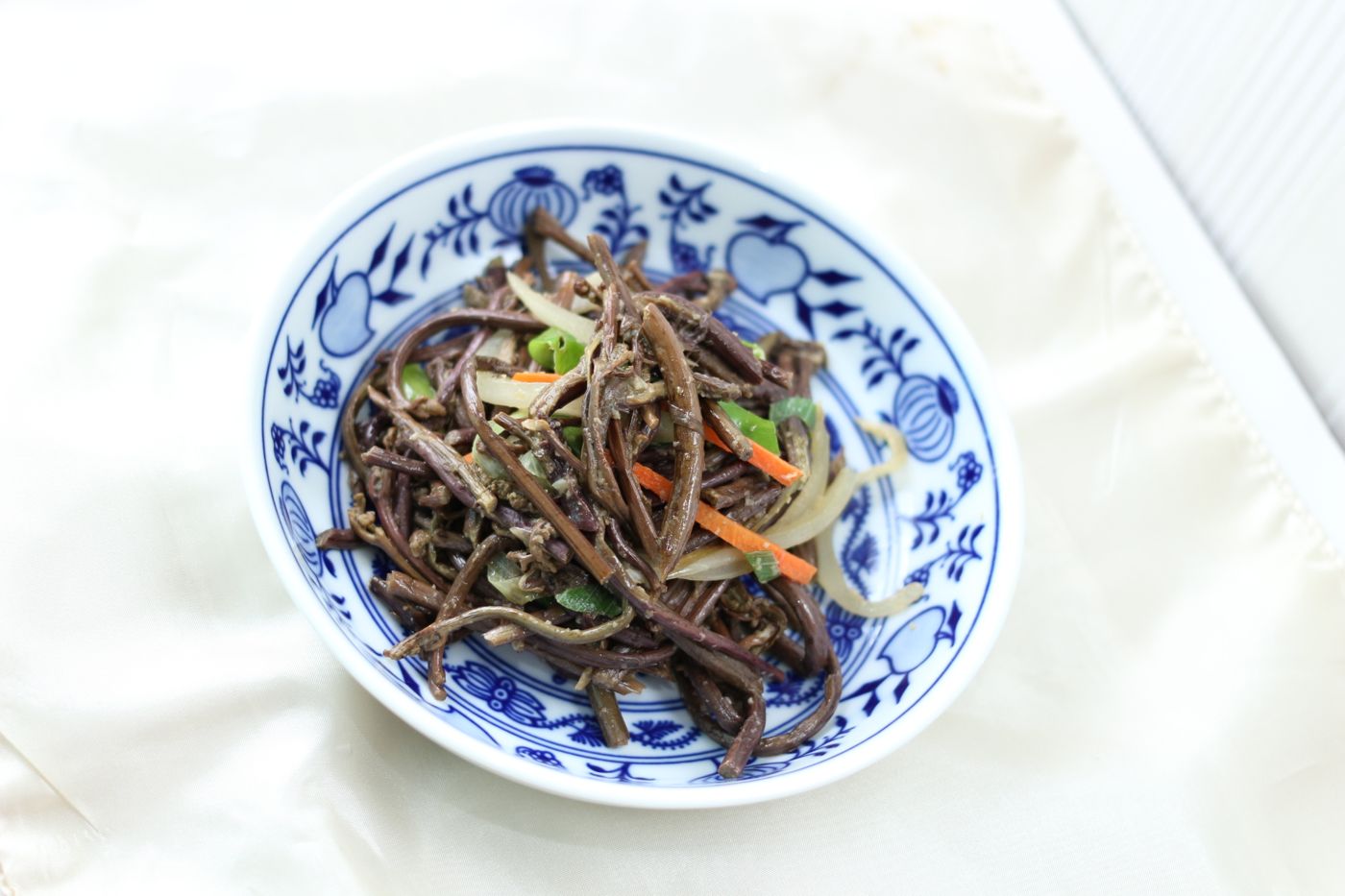 Gosari Namul고사리나물Dried bracken fern soaked, boiled and slowly stir-fried with soup soy sauce, garlic and perilla oil — chewy, earthy and central to holiday tables.
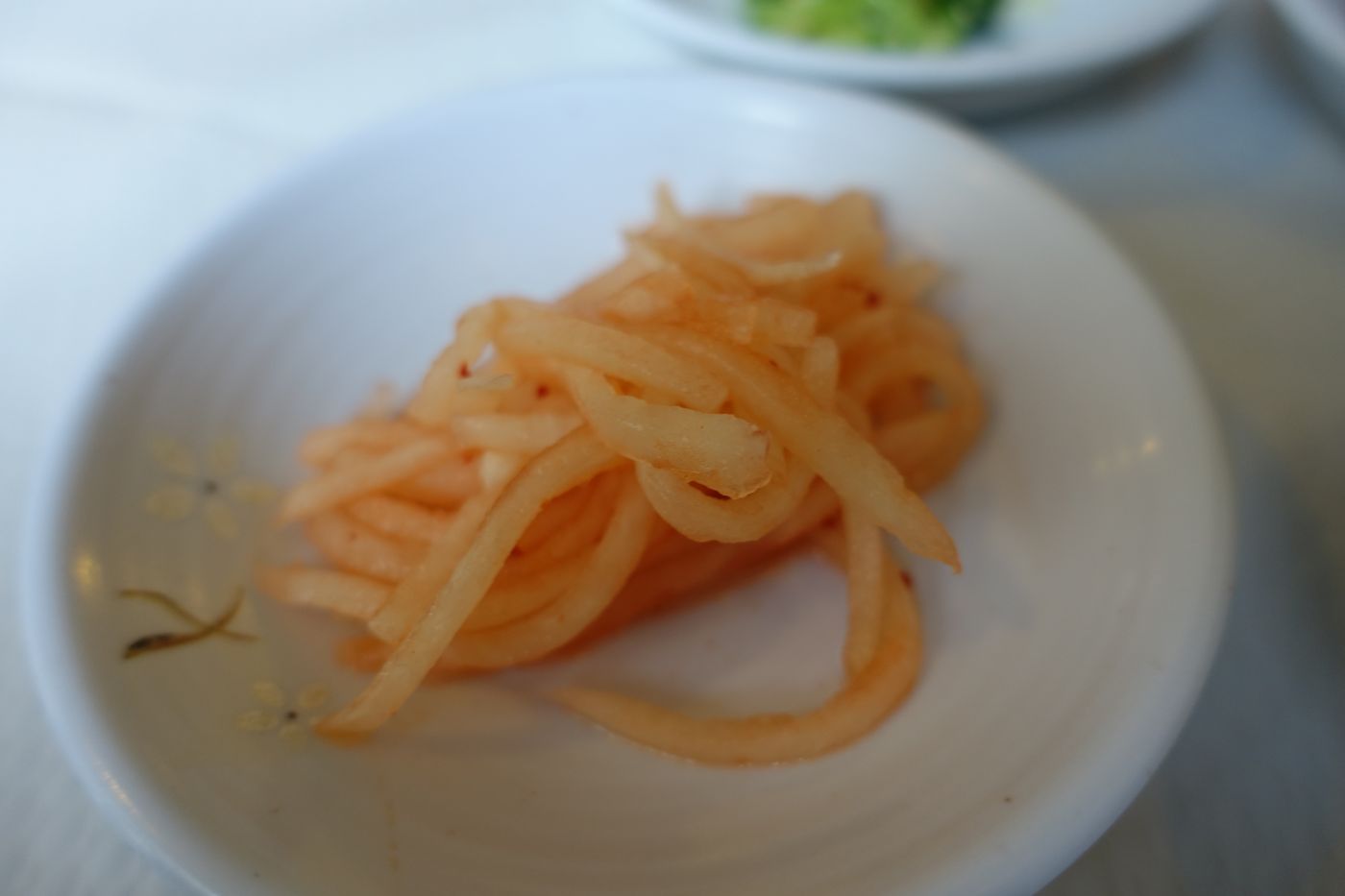 Musaengchae무생채Fine matchsticks of Korean radish dressed raw with chili flakes, a little vinegar and sugar — crisp, sweet-sharp and best made just before the meal.