Namul · Seasoned vegetables 나물
Kkaennip Namul (Seasoned Perilla Leaves)
깻잎나물
Romanization: kkaennip-namul
Young perilla leaves and tender tips, blanched and sautéed in perilla oil with garlic and soup soy sauce — a soft, deeply aromatic summer namul.
- Serves
- 4
- Prep
- 15 min
- Cook
- 10 min
Recipe
Ingredients · Serves 4
- 300 gYoung perilla leaves with tender stems (kkaennip-sun)
- 1 tbspPerilla oil
- 1 cloveGarlicminced
- 2 tspSoup soy sauce (guk-ganjang)
- 2 tbspWater
- 2 tbspPerilla seed powder (deulkkae-garu)optional
- 1 tbspGreen onionfinely chopped
- 1 tspToasted sesame seeds
Method
Technique: Blanching and Seasoning Namul, Bokkeum: Korean Stir-Frying
Step 1: Pick over the perilla, discarding tough stems and yellowed leaves. Wash in several changes of cold water.
Step 2: Bring a large pot of water to a boil with a pinch of salt. Blanch the leaves for about 1 minute, until wilted and the stems are tender.
Step 3: Drain, rinse in cold water and squeeze out the water firmly. Loosen the clump with your fingers and cut any long pieces in half.
Step 4: Toss the perilla with the soup soy sauce and garlic and leave for 5 minutes.
Step 5: Heat the perilla oil in a skillet over medium heat and sauté the leaves for 2 minutes. Add the water, cover and cook for 2 minutes more to soften.
Step 6: Uncover, sprinkle in the perilla seed powder if using, add the green onion and toss until the liquid is absorbed. Finish with sesame seeds and taste for salt.
Origin & History
Kkaennip are the leaves of perilla (deulkkae, Perilla frutescens), a plant grown mainly for its oil-rich seeds. The Encyclopedia of Korean Folk Culture observes that while perilla is cultivated in India, China and elsewhere in Asia, Korea is almost alone in eating the leaves as a vegetable; Japan's shiso is a related but differently scented plant. Perilla appears in the fifteenth-century Hyangyak jipseongbang under the name imja, and the folk-culture encyclopedia notes that its cultivation in the region is older than that of sesame.
The leaves owe their strong, minty-anise scent to aromatic compounds such as perillaldehyde and perilla ketone. That aroma is why they are used to wrap grilled meat and raw fish, pickled as kkaennip-jangajji, made into kkaennip-kimchi, and fried as bugak.
For namul, cooks use the small, soft leaves near the growing tips — with the tender stems attached — because they are less bitter than the large leaves sold for wrapping. The folk-culture encyclopedia describes these young leaves as blanched for namul and singles out their calcium content, recommending the dish for older people.
Key Ingredients
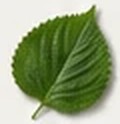 Perilla깻잎Perilla leaves have a bold, minty-herbal scent. They are eaten fresh as a wrap, pickled in soy sauce, or layered with seasoning as kkaennip-jangajji.
- Perilla Seed Powder들깨가루Roasted perilla seeds ground to a coarse, oily powder, sold whole or hulled. Stirred into soups and stews it makes them creamy and nutty; tossed with namul it adds body and fragrance.
 Garlic마늘Used raw, minced, pickled and roasted, garlic is one of the essential aromatics of Korean food — in seasonings, marinades, kimchi and namul.
 Soy sauce간장Korean soy sauce, in two main kitchen forms: pale, salty guk-ganjang (soup soy sauce) brewed the traditional way from meju, and darker, sweeter jin-ganjang for braises and marinades.
 Green onion파Korean green onion (pa), from thick-stemmed daepa to slender scallions — chopped into nearly every seasoning sauce, soup and kimchi, and the star of pa-kimchi.
 Sesame참깨Toasted sesame seeds and sesame oil (chamgireum) finish countless Korean dishes, adding a nutty aroma and gloss.
Nutrition
| Calories | ~81 kcal |
|---|---|
| Protein | ~4.2 g |
| Fat | ~5.5 g |
| Carbohydrates | ~5.6 g |
| Fiber | ~3.9 g |
| Sodium | ~241 mg |
Notable forVitamin K · Vitamin A (as beta-carotene) · Calcium · Manganese
Perilla uses the Korean Food Composition Table entry “Perilla leaf (Deulkkaennip), Blanched” (per 100 g: 32 kcal, 3.9 g fiber, 226 mg calcium, 587 µg RAE vitamin A, about 656 µg vitamin K) as a stand-in for leaves with tender stems, applied to the raw weight. Perilla oil, roasted perilla seed and soup soy sauce use Korean table values; garlic, green onion and sesame seeds use USDA FoodData Central. Totals divided by four. Leaving out the perilla seed powder saves about 19 kcal and 1.3 g fat per serving. Actual values vary with ingredients, portion size and preparation.
Health Benefits
- Vitamin K and vitamin A: perilla leaves are exceptionally rich in vitamin K and beta-carotene; one serving supplies several times a day's adequate intake of vitamin K.
- Calcium: the folk-culture encyclopedia highlights perilla leaf's calcium content (296 mg per 100 g raw in the Korean Food Composition Table), unusually high for a leafy vegetable.
- Plant compounds: the leaves contain rosmarinic acid, luteolin and other polyphenols that are being studied for antioxidant and anti-inflammatory activity, mostly in laboratory work.
- Fiber: a serving provides close to 4 g of fiber.
Regional Variations
- Sautéed in perilla oil: the usual version — blanched leaves sautéed briefly with garlic, soup soy sauce and perilla oil.
- With perilla seed powder: a spoonful or two of deulkkae-garu (ground perilla seed) stirred in at the end gives a creamy, nutty coating.
- Simply dressed: blanched leaves dressed with soy sauce, garlic and sesame oil without further cooking, like other spring namul.
Pairings
 Doenjang Jjigae (Soybean Paste Stew)된장찌개A thick, savory stew of fermented soybean paste with tofu, zucchini and whatever the season offers — the everyday pot at the center of the Korean table.
 Sigeumchi Namul시금치나물Spinach blanched for a few seconds, squeezed dry and dressed with garlic, soy sauce and sesame — one of the simplest and most familiar namul.
 Kongnamul Muchim콩나물무침Soybean sprouts cooked under a lid until just tender, then tossed with garlic, green onion and sesame oil — crisp, nutty and on tables across Korea.
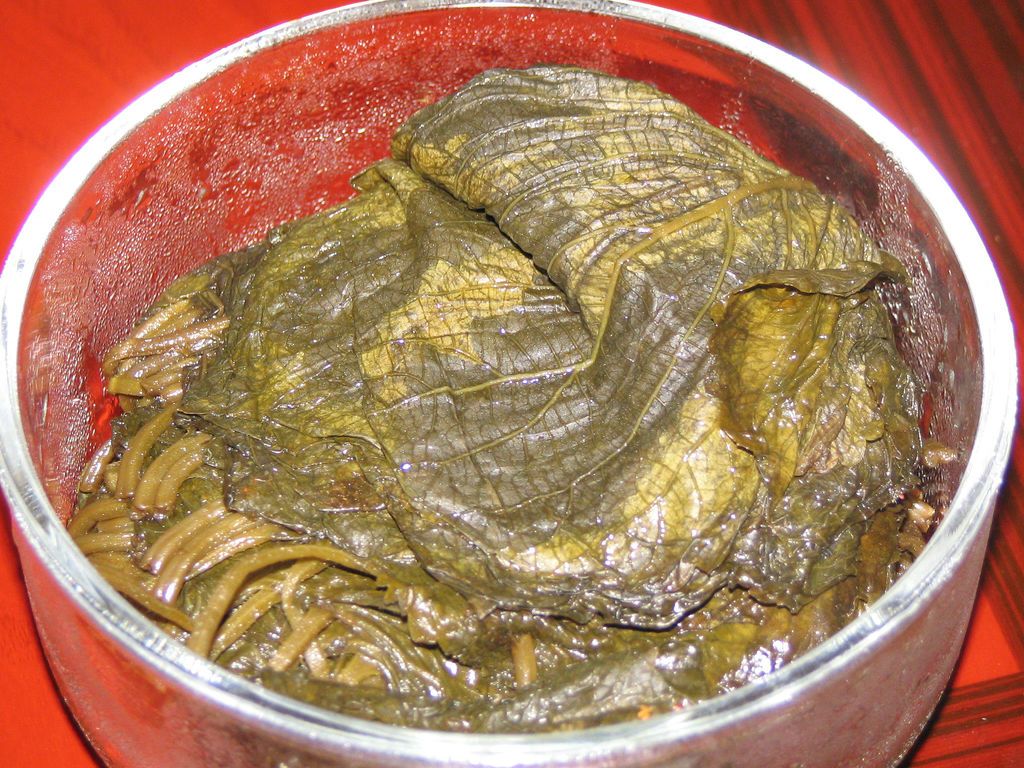 Soy-Pickled Perilla Leaves깻잎장아찌Fragrant perilla leaves steeped in a sweet-salty soy brine — peeled off one at a time and wrapped around a spoonful of rice.
Sources
- 01깻잎 (Perilla leaf) — Encyclopedia of Korean Folk Culture (National Folk Museum of Korea)
- 02들깨 (Perilla) — Encyclopedia of Korean Culture
- 03Korean Food Composition Table: Perilla leaf (Deulkkaennip), Blanched — National Institute of Agricultural Sciences
- 04Korean Food Composition Table: Perilla leaf (Deulkkaennip), Raw — National Institute of Agricultural Sciences
- 05Warfarin — MedlinePlus Drug Information (U.S. National Library of Medicine)
Last updated