Bokkeum · Stir-fried 볶음
Maneuljong Bokkeum
마늘종볶음
Romanization: maneuljong-bokkeum
Tender garlic scapes stir-fried in a light soy and syrup glaze until bright and just yielding — a spring banchan with a mild, sweet garlic flavor.
- Serves
- 4
- Prep
- 10 min
- Cook
- 6 min
Recipe
Ingredients · Serves 4
- 250 gGarlic scapes (maneuljong)tough ends trimmed, cut into 4–5 cm lengths
- 1 tbspNeutral cooking oil
- 1½ tbspSoy sauce
- 1 tspSugar
- 2 tbspWater
- 1 tbspMulyeot (rice or corn syrup)
- 1 tspToasted sesame oil
- 1 tspToasted sesame seeds
- 20 gSmall dried shrimp or anchoviesoptional; not included in the nutrition estimate
Method
Technique: Bokkeum: Korean Stir-Frying
Step 1: Rinse the scapes and trim off the woody bottoms and the thin flower buds. Cut into even lengths so they cook at the same rate.
Step 2: If the scapes are thick or you prefer them softer, blanch them in boiling salted water for 30–60 seconds, then drain well.
Step 3: Heat the oil in a wide pan over medium heat and stir-fry the scapes for 2–3 minutes, until bright green and slightly blistered. If using dried shrimp or anchovies, add them for the last minute.
Step 4: Add the soy sauce, sugar and water and toss for 1–2 minutes, until the liquid is nearly absorbed.
Step 5: Turn off the heat, add the syrup, sesame oil and sesame seeds and toss to coat. Serve warm or at room temperature.
Origin & History
Maneuljong (often spelled maneuljjong in speech) is the garlic scape, the firm flower stalk a garlic plant sends up in spring. Garlic growers pull the scapes as they appear because a stalk left to grow draws nutrients away from the bulb; the Chungcheongbuk-do Agricultural Research and Extension Services notes that late removal noticeably reduces bulb size.
The timing makes scapes a seasonal vegetable. According to the same extension guidance, they emerge from roughly late April to mid-May for the warm-region garlic grown in the south, and from late May into early June for cold-region garlic. For southern growers, scapes are a significant source of farm income in their own right, so farmers watch market prices when deciding how to handle them.
Stir-frying (bokkeum) the scapes briefly with soy sauce and syrup keeps their snap and tames their raw bite into a mellow, sweet garlic flavor. They are also pickled as maneuljong-jangajji and dressed with gochujang as a muchim, giving households several ways to use a short spring harvest.
Key Ingredients
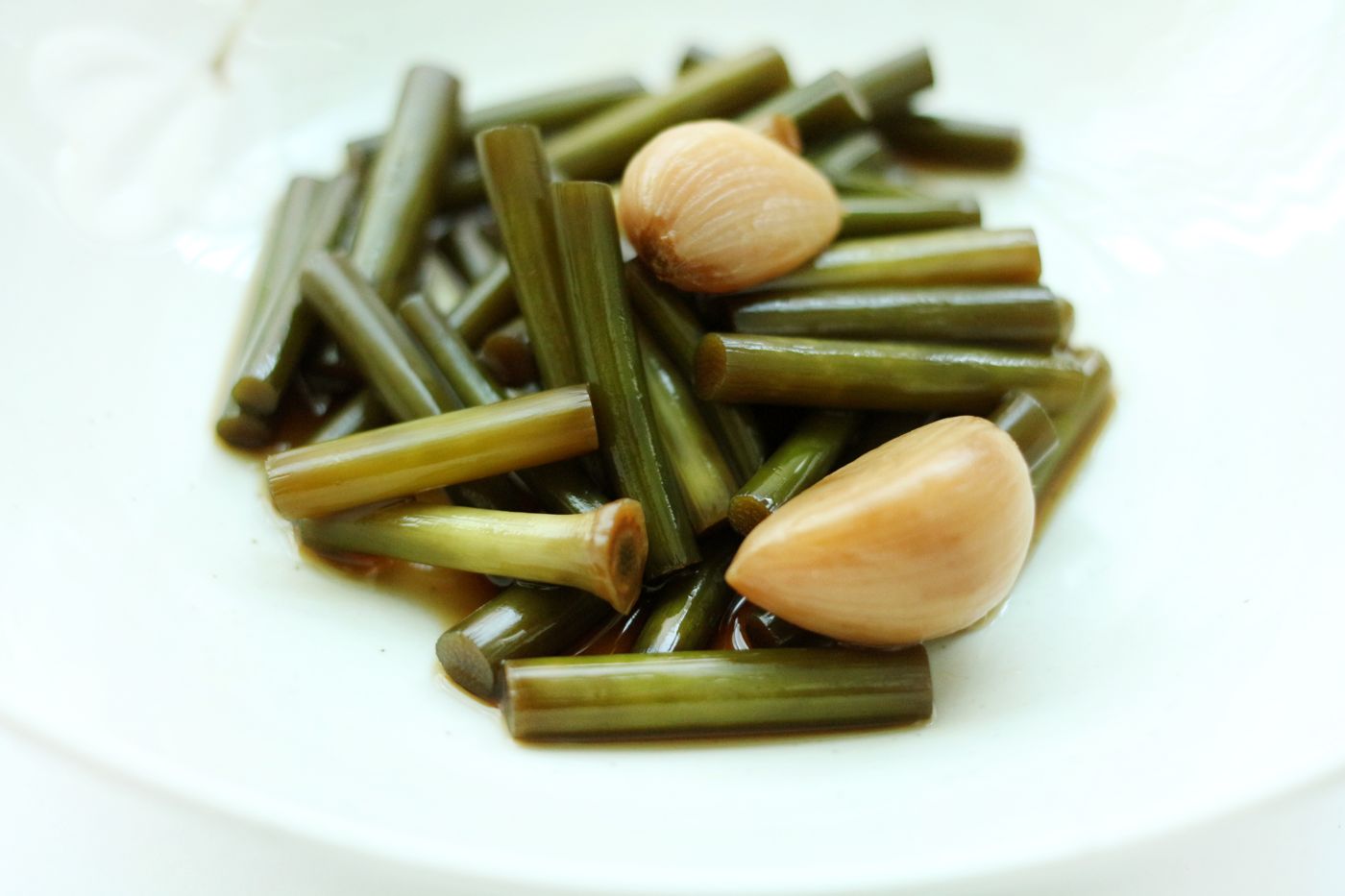 Garlic scapes마늘종The firm green flower stalks of the garlic plant, snapped off in spring. Stir-fried with dried shrimp as maneuljong-bokkeum, or pickled in soy sauce and vinegar.
 Soy sauce간장Korean soy sauce, in two main kitchen forms: pale, salty guk-ganjang (soup soy sauce) brewed the traditional way from meju, and darker, sweeter jin-ganjang for braises and marinades.
 Korean grain syrup물엿A clear, glossy syrup used to sweeten and glaze braised and stir-fried banchan. Its traditional relative, jocheong, is a darker malt syrup made by slowly boiling down saccharified rice.
 Sesame참깨Toasted sesame seeds and sesame oil (chamgireum) finish countless Korean dishes, adding a nutty aroma and gloss.
Nutrition
| Calories | ~99 kcal |
|---|---|
| Protein | ~1.8 g |
| Fat | ~5 g |
| Carbohydrates | ~13.7 g |
| Fiber | ~3 g |
| Sodium | ~335 mg |
Notable forVitamin C · Fiber · Vitamin K
Estimated by summing ingredient values and dividing by four servings, without the optional dried shrimp. Garlic scapes: Korean Food Composition Table entry 마늘종, 꽃줄기, 생것 (via the MFDS K-FIND database; about 44 mg vitamin C and 47 µg vitamin K per 100 g raw); soy sauce: USDA FDC 174277; corn syrup, light: FDC 168837; oil, sugar, sesame oil and sesame seeds from USDA. Cooking reduces vitamin C. The MFDS analysis of prepared garlic-scape stir-fry (89 kcal and 562 mg sodium per 100 g) is in a similar range. Actual values vary with ingredients, portion size and preparation.
Health Benefits
- Raw garlic scapes are a good source of vitamin C, some of which survives a quick stir-fry, and they also provide vitamin K.
- Scapes are high in dietary fiber for a green vegetable.
- A short cooking time and a small amount of oil keep the dish light.
Regional Variations
- With dried shrimp or anchovies: a popular version stir-fries the scapes with small dried shrimp or tiny dried anchovies for extra savor and calcium.
- Soy or spicy: the everyday glaze is soy sauce and syrup; a spicier version adds gochujang.
- Pickled and dressed: scapes are also preserved in soy sauce as jangajji, or blanched and dressed with gochujang and vinegar.
Pairings
 Myeolchi Bokkeum멸치볶음Small dried anchovies stir-fried until crisp, then glazed in a sweet soy and garlic syrup — a keeping banchan found in refrigerators across Korea.
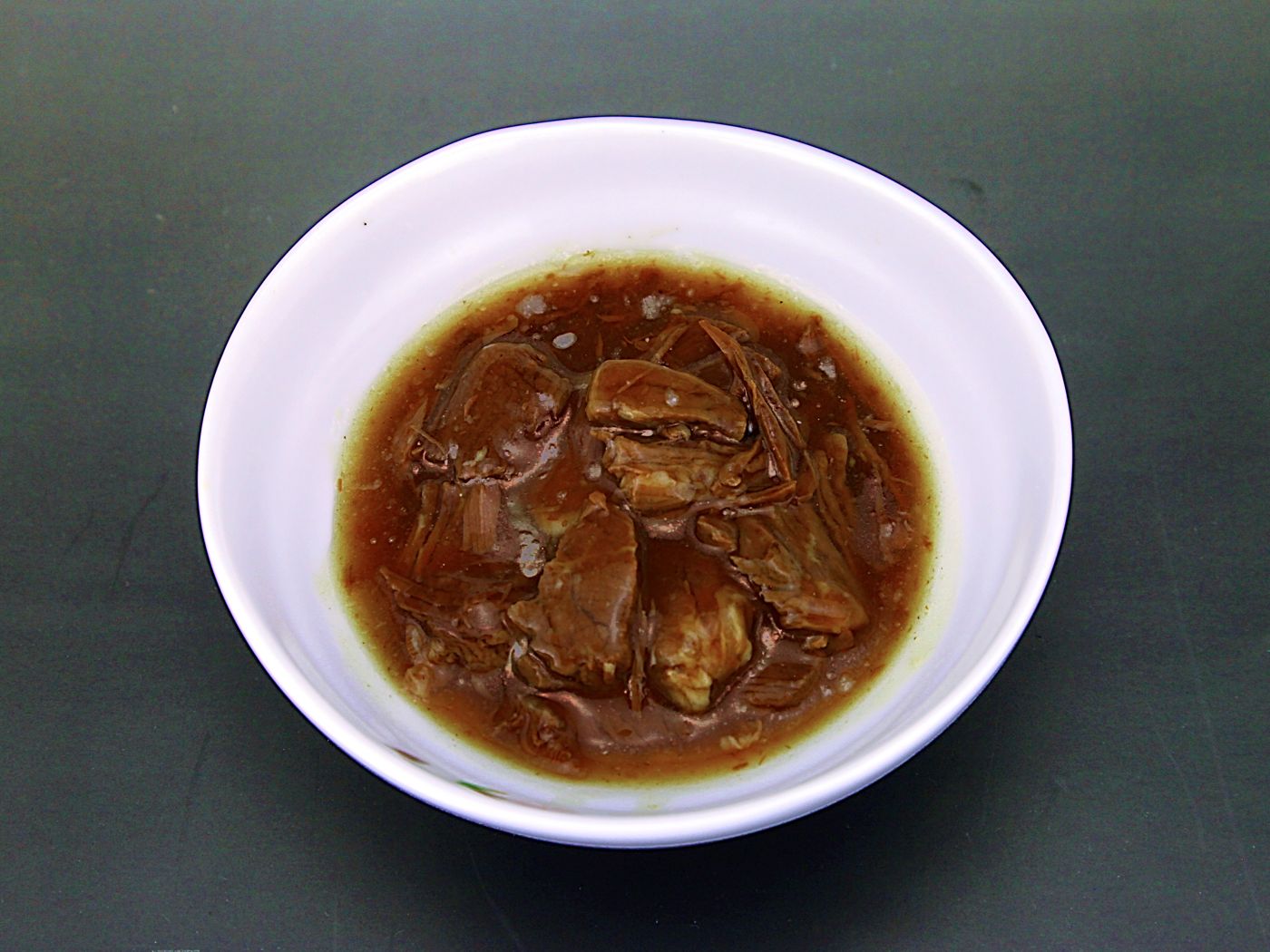 Jangjorim장조림Lean beef simmered in soy sauce until tender, then torn into strands and served in its savory broth, often with eggs, garlic and mild peppers.
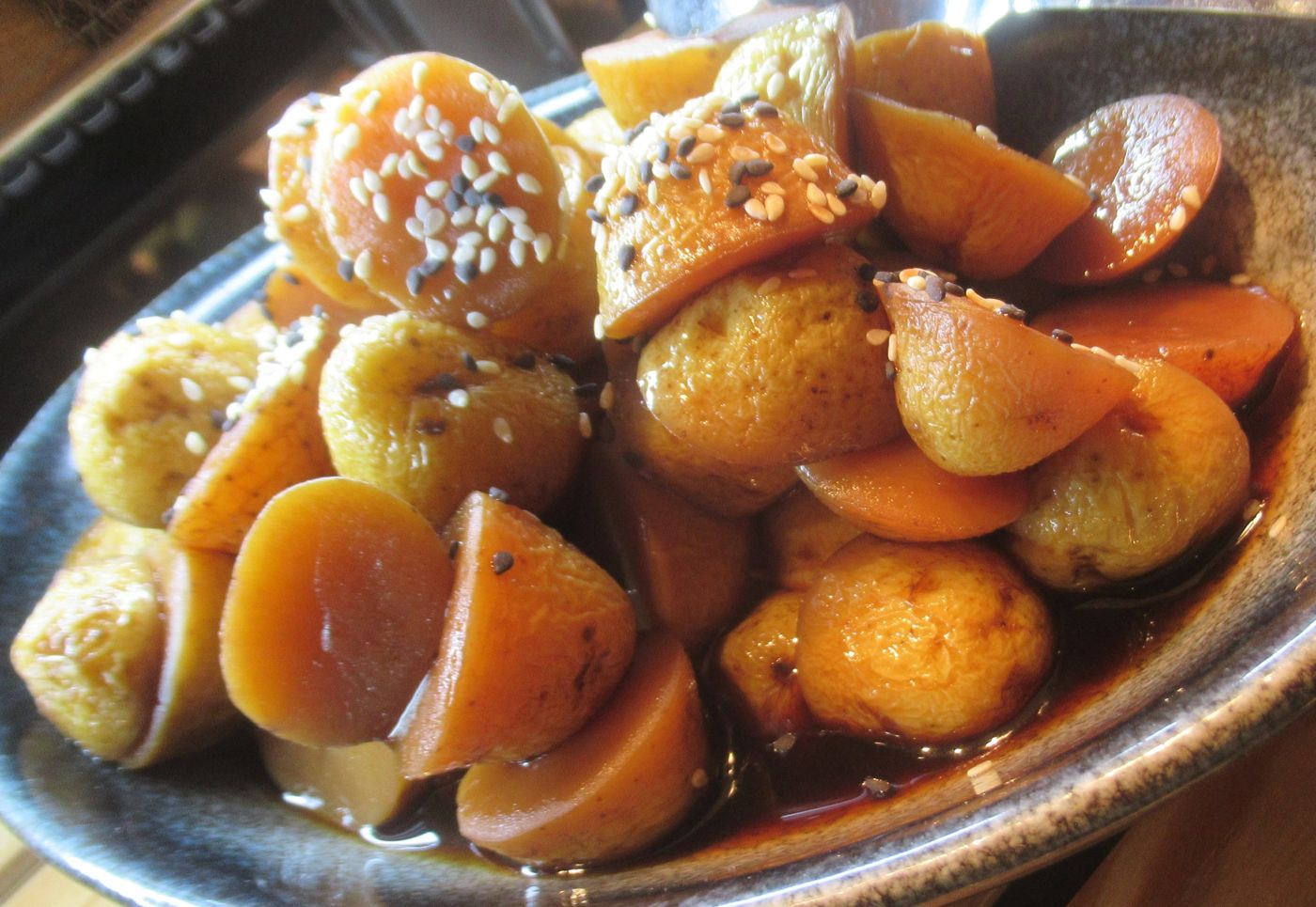 Gamja Jorim감자조림Cubed potatoes simmered in soy sauce, garlic and a touch of sweetness until tender and glossy — a comforting, child-friendly staple of the Korean home table.
Sources
- 01마늘 재배기술 (Garlic cultivation techniques) — Chungcheongbuk-do Agricultural Research and Extension Services
- 02마늘종, 꽃줄기, 생것 (Garlic scape, raw) — MFDS K-FIND / Korean Food Composition Table
- 03마늘쫑볶음 (Stir-fried garlic scapes, prepared dish) — MFDS K-FIND food composition database
- 04Sodium reduction — World Health Organization fact sheet
Last updated