Bokkeum · Stir-fried 볶음
Mareun Saeu Bokkeum (Stir-Fried Dried Shrimp)
마른새우볶음
Romanization: mareun-saeu-bokkeum
Small dried shrimp toasted in a dry pan, then glazed with soy sauce, rice syrup and garlic — a sweet-savory, crunchy banchan that keeps for days.
- Serves
- 6
- Prep
- 5 min
- Cook
- 10 min
Recipe
Ingredients · Serves 6
- 60 gSmall dried shrimp, shell-onabout 2 cups
- 1 tbspNeutral cooking oil
- 1 tbspSoy sauce
- 1½ tbspMulyeot (rice or corn syrup)
- 1 tspSugar
- 1 cloveGarlicminced
- 1 tspToasted sesame oil
- 1 tspToasted sesame seeds
Method
Technique: Bokkeum: Korean Stir-Frying
Step 1: Put the dried shrimp in a dry skillet over medium-low heat and toast for 2–3 minutes, shaking the pan, until fragrant and lightly crisp.
Step 2: Tip the shrimp into a fine sieve and shake to remove loose bits of shell and dust.
Step 3: Wipe the pan, add the oil and garlic and cook over low heat for 30 seconds without browning. Return the shrimp and stir-fry for 1 minute.
Step 4: Push the shrimp to one side, add the soy sauce and sugar to the empty part of the pan and let them bubble for a few seconds, then toss everything together.
Step 5: Turn off the heat, add the mulyeot and stir until every shrimp is glossy. Adding the syrup off the heat keeps the shrimp from turning hard.
Step 6: Stir in the sesame oil and sesame seeds, spread on a plate to cool, then store in an airtight container in the refrigerator for up to a week.
Origin & History
Korea's seas hold around ninety species of shrimp, and many of the smaller ones have long been salted into saeujeot or boiled and dried. The Encyclopedia of Korean Folk Culture describes the kkot-saeu (southern rough shrimp) of the west and south coasts — a shrimp of about 10 cm, larger than the tiny shrimp used for jeotgal — as something people boil and dry, and notes that dried shrimp are stir-fried to make banchan.
Stir-frying dried seafood with soy sauce and sweetener is a well-established family of banchan. The Encyclopedia of Korean Culture classes saeu-bokkeum with myeolchi-bokkeum and dried-squid stir-fries as "dry-heat" bokkeum, in contrast to moist stir-fries such as jeyuk-bokkeum or nakji-bokkeum. Its definition of bokkeum traces the cooking method through Joseon cookbooks, from quick, high-heat frying in an oiled lid to slow cooking of seasoned pastes.
Like anchovy bokkeum, dried shrimp bokkeum belongs to the group of mitbanchan — side dishes made in a batch and kept in the refrigerator, and it can be eaten cold straight from the container.
Key Ingredients
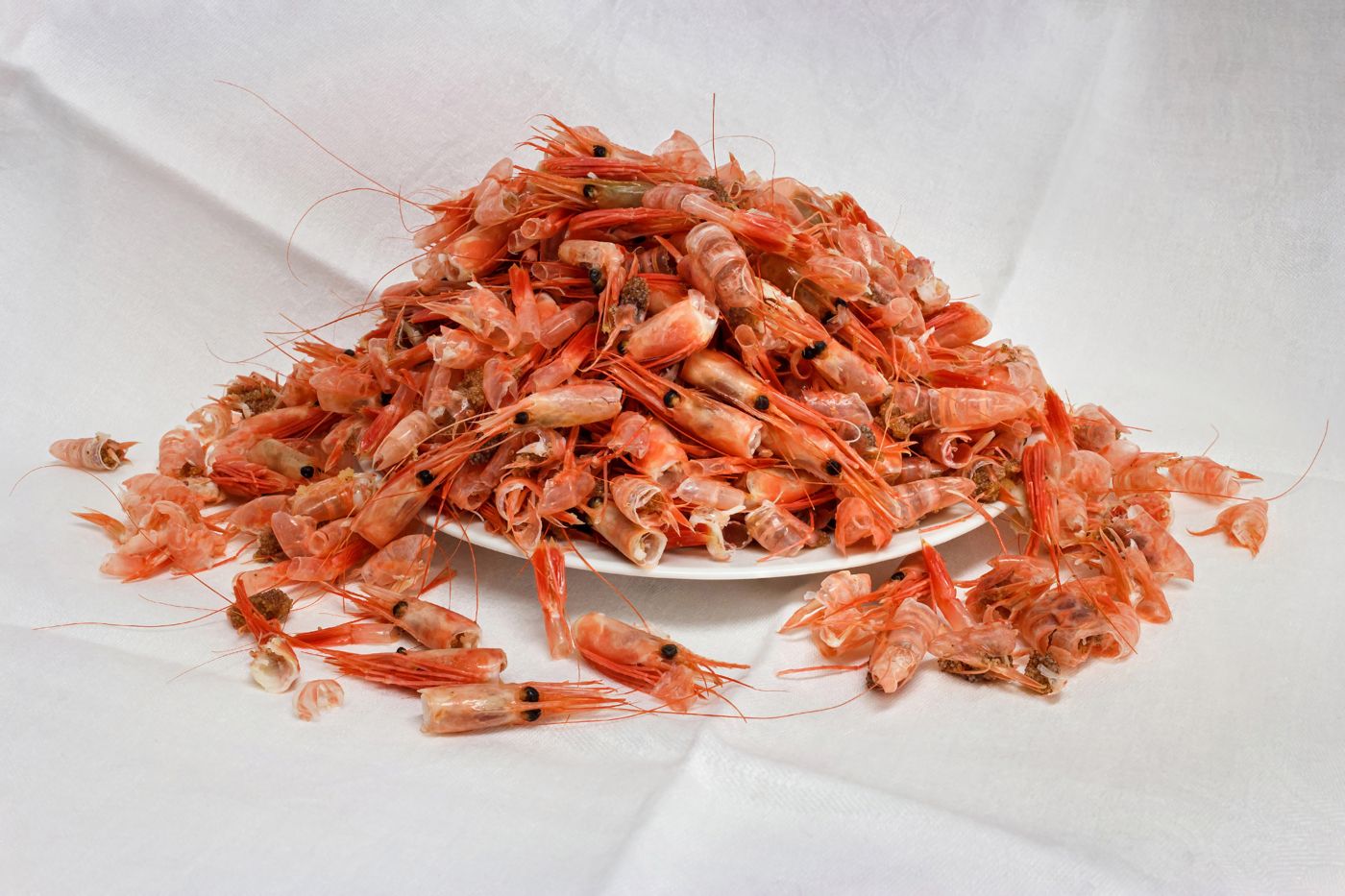 Shrimp (saeu)새우Shrimp in every size, from the tiny jeotsaeu salted to season kimchi to the large daeha. Mostly a West Sea catch, shrimp turn up across the Korean table, fresh, fried, braised and dried.
 Soy sauce간장Korean soy sauce, in two main kitchen forms: pale, salty guk-ganjang (soup soy sauce) brewed the traditional way from meju, and darker, sweeter jin-ganjang for braises and marinades.
 Korean grain syrup물엿A clear, glossy syrup used to sweeten and glaze braised and stir-fried banchan. Its traditional relative, jocheong, is a darker malt syrup made by slowly boiling down saccharified rice.
 Garlic마늘Used raw, minced, pickled and roasted, garlic is one of the essential aromatics of Korean food — in seasonings, marinades, kimchi and namul.
 Sesame참깨Toasted sesame seeds and sesame oil (chamgireum) finish countless Korean dishes, adding a nutty aroma and gloss.
Nutrition
| Calories | ~82 kcal |
|---|---|
| Protein | ~6 g |
| Fat | ~3.8 g |
| Carbohydrates | ~5.9 g |
| Fiber | ~0.1 g |
| Sodium | ~494 mg |
Notable forCalcium · Protein · Iron
Dried shrimp uses the Korean Food Composition Table entry “Southern rough shrimp, Boiled and dried” (per 100 g: 307 kcal, 55.5 g protein, 3,500 mg sodium, 4,068 mg calcium, 15.6 mg iron), standing in for whatever small dried shrimp is used; values for other species and brands will differ. Soy sauce and mulyeot use Korean table values; oil, sugar, garlic, sesame oil and sesame seeds use USDA FoodData Central. Totals divided by six. For comparison, the Korean table's prepared dish “Dried shrimp, Stir-fried” lists 342 kcal, 23.4 g protein and 981 mg sodium per 100 g. Actual values vary with ingredients, portion size and preparation.
Health Benefits
- Calcium from the shells: because the shrimp are eaten whole, shells and all, the Korean Food Composition Table shows dried shrimp as extremely high in calcium; how much of that calcium the body absorbs from shell is less certain.
- Compact protein: a small serving supplies about 6 g of protein.
- A keeping banchan: made once, it adds protein and savory flavor to several meals with no further cooking.
Regional Variations
- Soy and rice syrup: the standard glaze of soy sauce, mulyeot or jocheong, garlic and sesame, giving a shiny, sticky coating.
- Gochujang glaze: a spicier version with gochujang stirred into the syrup, similar to spicy anchovy bokkeum.
- With peppers: shishito or green chili peppers stir-fried in, as in kkwarigochu-myeolchi-bokkeum.
- With nuts: a handful of walnuts, almonds or peanuts added for extra crunch.
Pairings
 Myeolchi Bokkeum멸치볶음Small dried anchovies stir-fried until crisp, then glazed in a sweet soy and garlic syrup — a keeping banchan found in refrigerators across Korea.
 Gyeran Mari (Rolled Omelet)계란말이Beaten egg cooked in thin layers and rolled into a soft, striped log, then sliced — a gentle, everyday banchan and a lunchbox classic.
 Kongnamul Muchim콩나물무침Soybean sprouts cooked under a lid until just tender, then tossed with garlic, green onion and sesame oil — crisp, nutty and on tables across Korea.
Sources
- 01새우 (Shrimp) — Encyclopedia of Korean Folk Culture (National Folk Museum of Korea)
- 02볶음 (Bokkeum) — Encyclopedia of Korean Culture
- 03새우볶음 / 마른새우볶음 — Urimalsaem (National Institute of Korean Language)
- 04Korean Food Composition Table: Southern rough shrimp, Boiled and dried — National Institute of Agricultural Sciences
- 05Korean Food Composition Table: Dried shrimp, Stir-fried — National Institute of Agricultural Sciences
- 06Food Allergies — U.S. Food and Drug Administration
Last updated