Bokkeum · Stir-fried 볶음
Beoseot Bokkeum (Stir-Fried Mushrooms)
버섯볶음
Romanization: beoseot-bokkeum
Oyster mushrooms torn by hand and stir-fried with onion, garlic and a little soy sauce — a quick, savory, meaty-textured banchan.
- Serves
- 4
- Prep
- 10 min
- Cook
- 8 min
RegionJeolla
Jump to recipeRecipe
Ingredients · Serves 4
- 300 gOyster mushrooms (neutari-beoseot)or a mix with shiitake or king oyster
- ½ Onionabout 100 g, thinly sliced
- 1 tbspNeutral cooking oil
- 1 cloveGarlicminced
- 1 tbspSoy sauce
- 1 tbspGreen onionchopped
- 1 tspToasted sesame oil
- 1 tspToasted sesame seeds
- 1 pinchGround black pepper
Method
Technique: Bokkeum: Korean Stir-Frying
Step 1: Trim the tough base of the oyster mushroom clusters and tear the mushrooms by hand into strips about 1 cm wide. Wipe off any debris rather than soaking them, as they absorb water readily.
Step 2: Heat the oil in a wide pan over medium-high heat. Add the onion and garlic and stir-fry for 1 minute, until fragrant.
Step 3: Add the mushrooms in an even layer and let them sear for a minute before stirring. Cook for 3–4 minutes, until they wilt and the liquid they release has mostly evaporated.
Step 4: Drizzle the soy sauce around the edge of the pan so it sizzles, then toss everything together for another 30 seconds.
Step 5: Turn off the heat. Add the green onion, sesame oil, sesame seeds and black pepper, toss and serve warm or at room temperature.
Origin & History
Koreans have gathered and cooked mushrooms for a very long time; the National Folk Museum's encyclopedia notes references in the Samguk sagi, the twelfth-century Chinese envoy's account Goryeo dogyeong and the collected works of Yi Gyu-bo. The 1924 cookbook Joseon mussang sinsik yori jebeop ranked the best edible mushrooms in order: shiitake (pyogo), pine mushroom (songi), neungi, oyster mushroom (neutari) and wood ear (mogi). Joseon-era cookbooks describe mushroom soups that begin by frying the mushrooms in plenty of oil and seasoned soy sauce — the same first step as today's bokkeum.
The oyster mushroom is the most common choice for everyday beoseot-bokkeum. It grows wild on dead broadleaf trees such as oak, alder and willow, and in Korea it is now widely cultivated on logs or in bottles of sawdust. The Encyclopedia of Korean Culture notes that it turns pleasantly soft when cooked and is used in soups, as a blanched namul, in pan-fried and grilled dishes and in hot pots. The folk encyclopedia adds that its flavor reminds Westerners of oysters, hence its English name.
Mushroom side dishes are especially associated with forested inland regions. Stir-fried shiitake and oyster mushrooms are part of the mountain-vegetable bibimbap of Muju in North Jeolla, for example. At home, beoseot-bokkeum is a fast banchan: the mushrooms are torn along their natural lines, stir-fried over high heat and seasoned at the end.
Key Ingredients
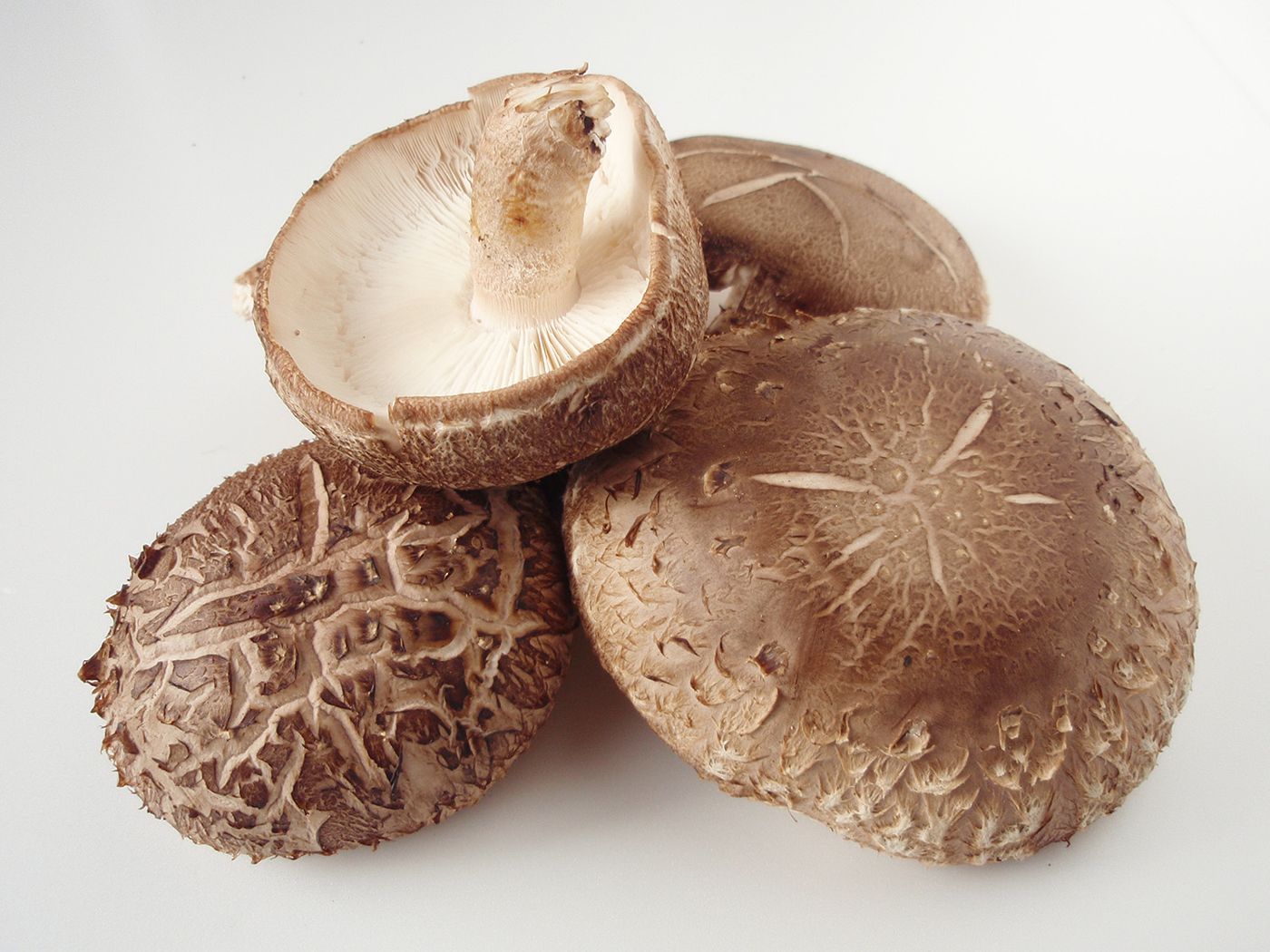 Shiitake mushroom표고Dark-capped, meaty mushrooms known in Korean as pyogo or pyogo-beoseot. Used fresh in stir-fries and pan-fried dishes, and dried for a deeply savory broth and an intensely aromatic bite.
 Garlic마늘Used raw, minced, pickled and roasted, garlic is one of the essential aromatics of Korean food — in seasonings, marinades, kimchi and namul.
 Soy sauce간장Korean soy sauce, in two main kitchen forms: pale, salty guk-ganjang (soup soy sauce) brewed the traditional way from meju, and darker, sweeter jin-ganjang for braises and marinades.
 Green onion파Korean green onion (pa), from thick-stemmed daepa to slender scallions — chopped into nearly every seasoning sauce, soup and kimchi, and the star of pa-kimchi.
 Sesame참깨Toasted sesame seeds and sesame oil (chamgireum) finish countless Korean dishes, adding a nutty aroma and gloss.
Nutrition
| Calories | ~71 kcal |
|---|---|
| Protein | ~2.9 g |
| Fat | ~4.9 g |
| Carbohydrates | ~7.3 g |
| Fiber | ~2.8 g |
| Sodium | ~218 mg |
Notable forNiacin · Folate · Dietary fiber
Oyster mushroom uses the Korean Food Composition Table entry “Oyster mushroom (Neutari-beouseot), Raw” (per 100 g: 15 kcal, 2.9 g fiber, 5.1 mg niacin, 68 µg folate). Soy sauce uses the Korean table's fermented soy sauce; onion, canola oil, garlic, green onion, sesame oil and sesame seeds use USDA FoodData Central. Totals divided by four; black pepper not counted. Actual values vary with ingredients, portion size and preparation.
Health Benefits
- B vitamins: oyster mushrooms are a source of niacin, folate and riboflavin; a serving supplies roughly a quarter of an adult's daily niacin.
- Fiber, few calories: mushrooms are high in water and fiber and low in fat, so the dish is filling for its calories; most of the fat comes from the cooking oil.
- Savory without much salt: mushrooms are naturally rich in savory compounds, so a small amount of soy sauce goes a long way.
- Ongoing research: the folk-culture encyclopedia notes that mushrooms are rich in ergosterol (a vitamin D precursor) and mentions laboratory work on anti-tumor activity; such findings do not establish health effects from eating the dish.
Regional Variations
- Oyster mushroom and vegetable: the common home version, with onion and sometimes bell pepper or carrot for color, seasoned with soy sauce or salt.
- With beef or pork: the dictionary definition of beoseot-bokkeum includes meat, and thin strips of seasoned beef are a classic addition.
- Pyogo-bokkeum: fresh or rehydrated shiitake, sliced and stir-fried with soy sauce and sesame oil — deeper and more savory.
- Mixed mushrooms: king oyster, enoki, beech and shiitake together, often finished with perilla seed powder or a pinch of black pepper.
Pairings
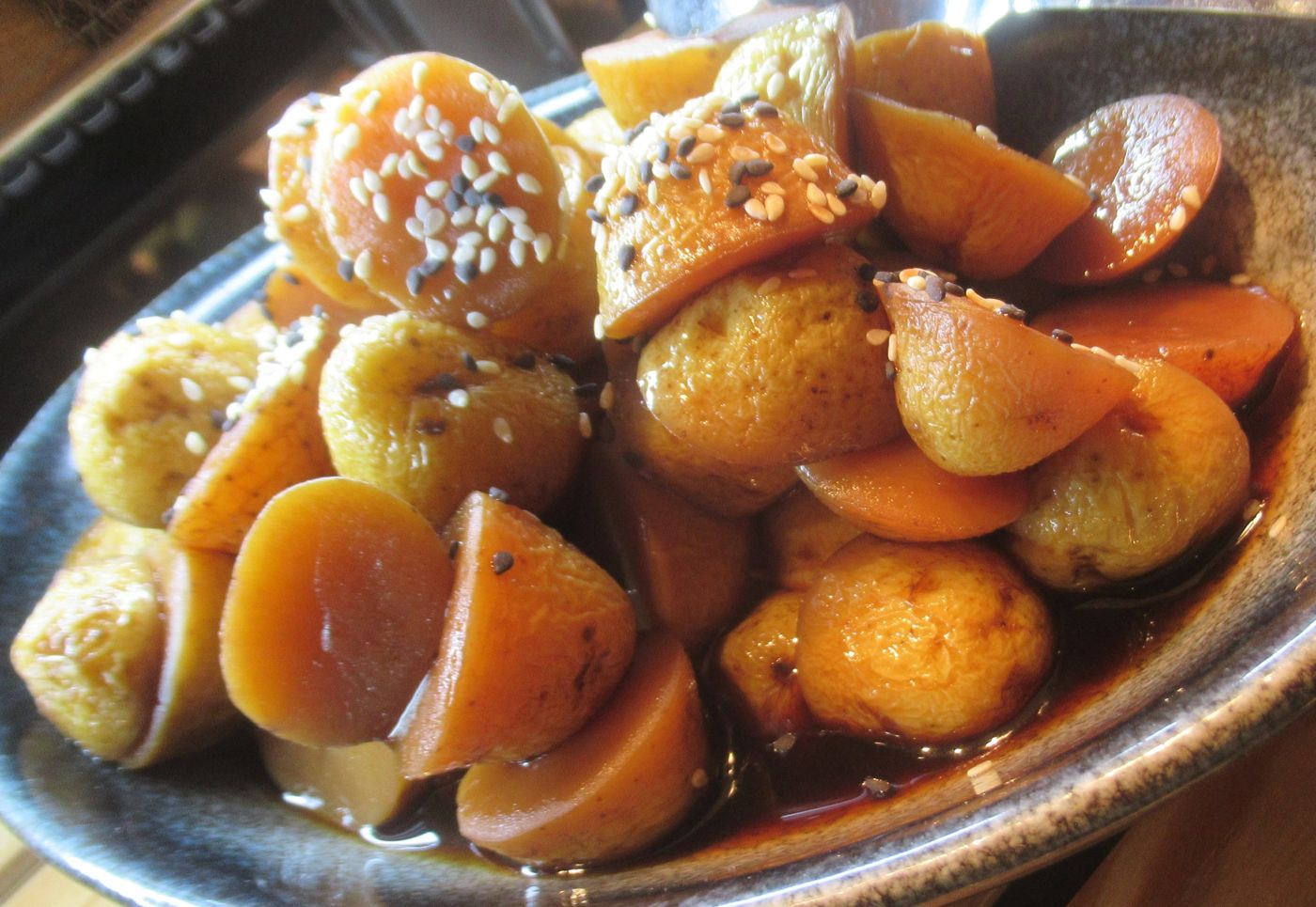 Gamja Jorim감자조림Cubed potatoes simmered in soy sauce, garlic and a touch of sweetness until tender and glossy — a comforting, child-friendly staple of the Korean home table.
 Sigeumchi Namul시금치나물Spinach blanched for a few seconds, squeezed dry and dressed with garlic, soy sauce and sesame — one of the simplest and most familiar namul.
 Doenjang Jjigae (Soybean Paste Stew)된장찌개A thick, savory stew of fermented soybean paste with tofu, zucchini and whatever the season offers — the everyday pot at the center of the Korean table.
Sources
- 01버섯 (Mushrooms) — Encyclopedia of Korean Folk Culture (National Folk Museum of Korea)
- 02느타리버섯 (Oyster mushroom) — Encyclopedia of Korean Culture
- 03버섯볶음 (Beoseot-bokkeum) — Urimalsaem (National Institute of Korean Language)
- 04나물 (Namul) — Encyclopedia of Korean Culture
- 05Korean Food Composition Table: Oyster mushroom (Neutari-beouseot), Raw — National Institute of Agricultural Sciences
Last updated