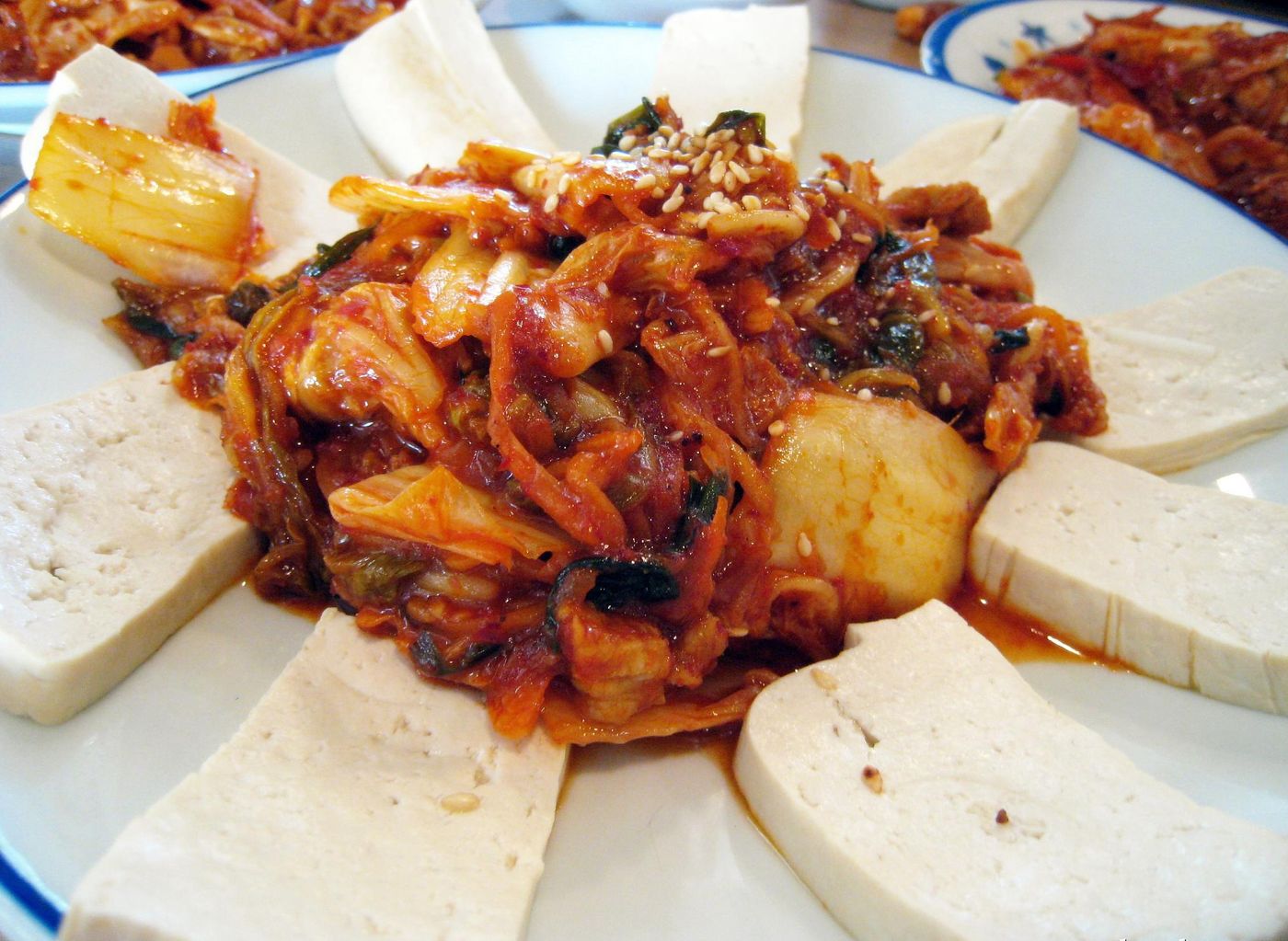
 Photo: benghan, CC BY-SA 2.0, via Wikimedia Commons
More dishes 기타
Dubu Kimchi (Tofu with Stir-Fried Kimchi)
두부김치
Romanization: dubu-kimchi
Warm slices of plain tofu arranged around kimchi stir-fried with pork — a mild-and-spicy pairing that is a favorite with soju and makgeolli.
- Serves
- 4
- Prep
- 10 min
- Cook
- 15 min
Recipe
Ingredients · Serves 4
- 450 gFirm tofu1 block
- 300 gWell-fermented napa cabbage kimchichopped, plus 2–3 tbsp brine
- 100 gPork belly or shoulderthinly sliced
- 100 gOnionabout ½ medium, sliced
- 2 stalksGreen onionscut into 3 cm lengths (about 30 g)
- 2 clovesGarlicminced
- 1 tspGochugaruoptional
- 1 tspSugarto balance very sour kimchi
- 1 tbspNeutral cooking oil
- 1 tbspToasted sesame oil
- 1 tspToasted sesame seedsgarnish
- ½ tspSaltfor the tofu cooking water
Method
Technique: Bokkeum: Korean Stir-Frying
Step 1: Heat the cooking oil in a skillet over medium-high heat and stir-fry the pork for 2–3 minutes, until it browns and renders some fat.
Step 2: Add the garlic and onion and stir-fry for 1 minute. Add the kimchi, gochugaru and sugar and stir-fry for 6–8 minutes, until the kimchi is soft and glossy; add the kimchi brine partway through if the pan looks dry.
Step 3: Meanwhile, bring a saucepan of water to a simmer with the salt. Slip in the whole block of tofu and simmer gently for 3–5 minutes, until heated through.
Step 4: Stir the green onions and sesame oil into the kimchi and take it off the heat.
Step 5: Lift out the tofu, drain briefly and cut into slices about 1 cm thick.
Step 6: Arrange the tofu slices around the edge of a platter, pile the kimchi in the center, sprinkle with sesame seeds and serve warm. Eat a piece of tofu topped with kimchi in each bite.
Origin & History
Dubu-kimchi puts two of the most familiar foods in Korea on one plate: plain tofu (dubu), warmed through, and well-fermented kimchi stir-fried with oil and usually pork. The Korean Food Promotion Institute describes it as a pairing of contrasts — the tofu's mildness and protein against the kimchi's heat and sourness, white slices ringed around a red center — and as one of the first dishes people reach for to eat with makgeolli or soju.
Tofu itself has a long history in Korea. The Encyclopedia of Korean Culture notes that the word first appears in Korean writing in a poem by the late-Goryeo scholar Yi Saek, suggesting tofu came from Yuan-dynasty China, and that the Annals of King Sejong record a Ming emperor praising Korean women sent to his court for their tofu-making. The encyclopedia also describes a rural custom of women sending fresh tofu to the men's quarters, where it became the excuse for a small gathering over drinks — a habit that foreshadows dubu-kimchi's role as a drinking snack.
No written record pins down when the dish itself took shape. The Korean Food Promotion Institute presents it as a cheap, filling standby of everyday pubs, made from two ingredients nearly every household has, and just as easy to put together at home in a few minutes.
Key Ingredients
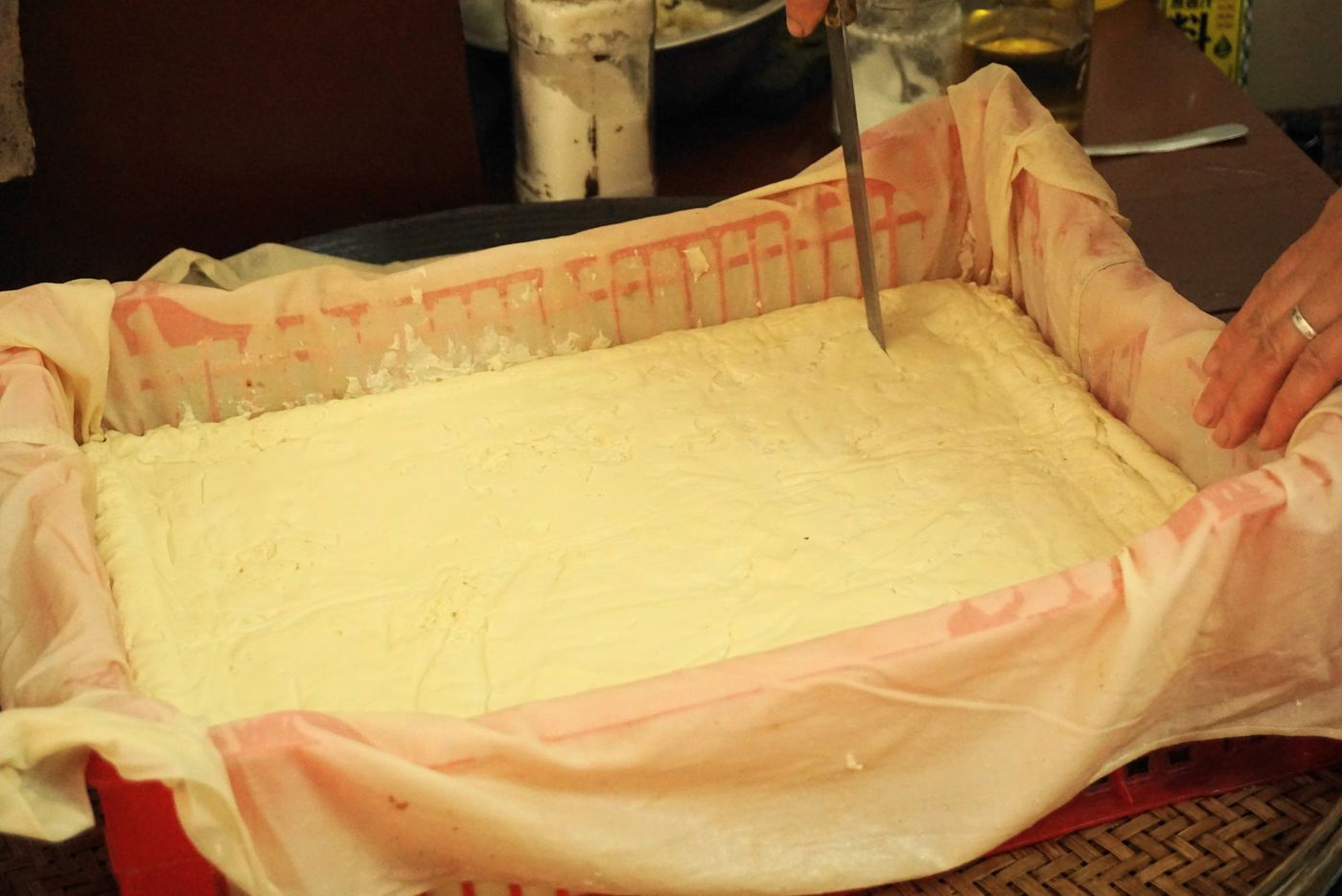 Tofu두부Fresh bean curd made by coagulating soy milk and pressing the curds. A quiet staple of Korean cooking since at least the late Goryeo period, it is pan-fried, braised in spicy soy glaze, or simmered in stews.
 Napa cabbage배추The tall, pale, tightly headed cabbage at the heart of Korea's best-known kimchi. Salted, layered with seasoning and left to ferment, it becomes baechu-kimchi; fresh, it goes into soups, wraps and quick salads.
 Green onion파Korean green onion (pa), from thick-stemmed daepa to slender scallions — chopped into nearly every seasoning sauce, soup and kimchi, and the star of pa-kimchi.
 Garlic마늘Used raw, minced, pickled and roasted, garlic is one of the essential aromatics of Korean food — in seasonings, marinades, kimchi and namul.
 Gochugaru고춧가루Korean red chili powder, made from dried red peppers ground coarse or fine. It gives kimchi, gochujang and countless banchan their color and warmth.
 Sesame참깨Toasted sesame seeds and sesame oil (chamgireum) finish countless Korean dishes, adding a nutty aroma and gloss.
Nutrition
| Calories | ~330 kcal |
|---|---|
| Protein | ~14.6 g |
| Fat | ~25.7 g |
| Carbohydrates | ~10.7 g |
| Fiber | ~5.3 g |
| Sodium | ~385 mg |
Notable forProtein · Calcium · Iron · Vitamin K
Estimated by summing Korean Food Composition Table values for firm tofu (D0150000009a) with USDA FoodData Central (SR Legacy) values for cabbage kimchi (FDC 170392), raw pork belly (FDC 167812), raw onion, raw scallions, raw garlic, red pepper, sugar, sesame oil and soybean oil, divided by 4. Excludes the tofu cooking water, sesame seeds and kimchi brine. The USDA kimchi entry lists 498 mg sodium per 100 g; Korean kimchi is often saltier, so actual sodium may be considerably higher. Using lean pork shoulder instead of belly lowers the fat noticeably. Actual values vary with ingredients, portion size and preparation.
Health Benefits
- Plant protein: tofu is a good source of protein and, depending on the coagulant, calcium and iron.
- Kimchi: cabbage kimchi adds fiber, vitamin K and folate. Stir-frying kills most of kimchi's live lactic acid bacteria, so the cooked kimchi should not be thought of as a probiotic food.
- Easy to lighten: less pork, more tofu and onion, and a lean cut make it a balanced, protein-rich dish.
Regional Variations
- With pork: pork belly or shoulder stir-fried with the kimchi is the most common pub style.
- Kimchi only: a vegetarian version stir-fries kimchi with onion and a little sugar and sesame oil; use a kimchi made without fish sauce or salted shrimp for a fully plant-based dish.
- How the tofu is warmed: simmered in salted water is classic; some cooks pan-fry the slices for a golden crust or steam them.
- Uncooked kimchi: some serve the tofu with plain sliced mature kimchi instead of stir-frying it.
Pairings
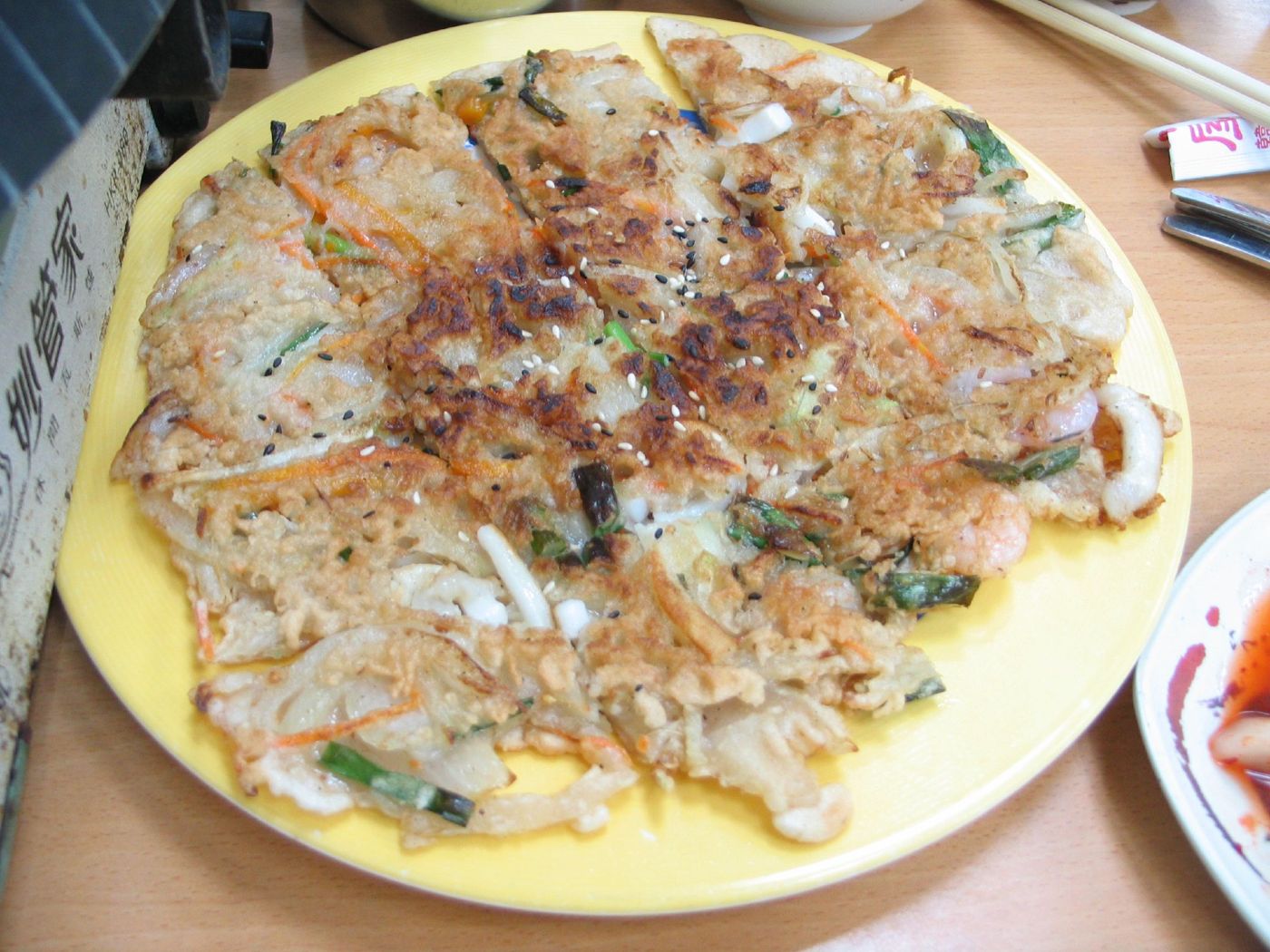 Haemul Pajeon (Seafood and Green Onion Pancake)해물파전Whole green onions bound in a light batter with squid, shrimp and clams, pan-fried until crisp — a generous jeon for sharing, closely tied to Busan's Dongnae.
- Dotori Muk Muchim도토리묵무침Slices of soft, faintly bitter acorn jelly tossed with crisp vegetables and a soy–chili–sesame dressing — a cool, light side dish and a favorite with drinks.
 Kongnamul Muchim콩나물무침Soybean sprouts cooked under a lid until just tender, then tossed with garlic, green onion and sesame oil — crisp, nutty and on tables across Korea.