Bokkeum · Stir-fried 볶음
Miyeok Julgi Bokkeum
미역줄기볶음
Romanization: miyeok-julgi-bokkeum
Salted sea mustard stems, soaked and stir-fried with garlic and sesame oil until tender-crunchy — a savory, ocean-fresh banchan with a satisfying snap.
- Serves
- 4
- Prep
- 40 min
- Cook
- 8 min
Recipe
Ingredients · Serves 4
- 300 gSalted sea mustard stems (miyeok julgi)salted weight
- ½ mediumOnionabout 100 g, thinly sliced
- 30 gCarrotcut into thin matchsticks
- 1 tbspNeutral cooking oil
- 2 clovesGarlicminced
- 1 tspSoy sauceoptional; taste first
- 1 tspToasted sesame oil
- 1 tspToasted sesame seeds
Method
Technique: Bokkeum: Korean Stir-Frying
Step 1: Shake off the loose salt and rinse the stems several times under running water. Soak them in plenty of cold water for 30–40 minutes, changing the water two or three times. Taste a piece: it should be only lightly salty.
Step 2: Blanch the stems in boiling water for about 30 seconds to remove any sea smell and soften them slightly, then rinse in cold water and squeeze dry.
Step 3: Cut the stems into 5–6 cm lengths, separating any thick pieces lengthwise.
Step 4: Heat the oil in a wide pan over medium heat and stir-fry the garlic for 30 seconds, until fragrant. Add the stems, onion and carrot and stir-fry for 4–5 minutes, until the onion softens and the stems turn a brighter green.
Step 5: Taste and add the soy sauce only if needed. Turn off the heat and toss with the sesame oil and sesame seeds. Serve at room temperature or chilled.
Origin & History
Miyeok (sea mustard, Undaria pinnatifida) is an annual seaweed with a branching holdfast, a flattened stem that continues as a midrib through the blade, and frilled spore-bearing leaves near the base. The Encyclopedia of Korean Culture notes that it grows wild along all of Korea's coasts, while farming is concentrated on the southern East Sea coast and on the south coast around Wando.
Traditionally, miyeok was spread in long sheets and sun-dried for storage. Today much of it is instead blanched briefly and rubbed with salt; the encyclopedia notes that salted seaweed keeps better than dried through the humid rainy season. The firm stems (julgi) are sold separately in this salted form, and they need a long soak before cooking.
Miyeok is woven into Korean life — most famously in miyeok-guk, the soup traditionally served to new mothers — and the encyclopedia lists many other preparations, from dressed miyeok-muchim to fried miyeok-jaban. Stir-frying the stems with garlic and oil is a modern home favorite: inexpensive, quick, and pleasantly crunchy.
Key Ingredients
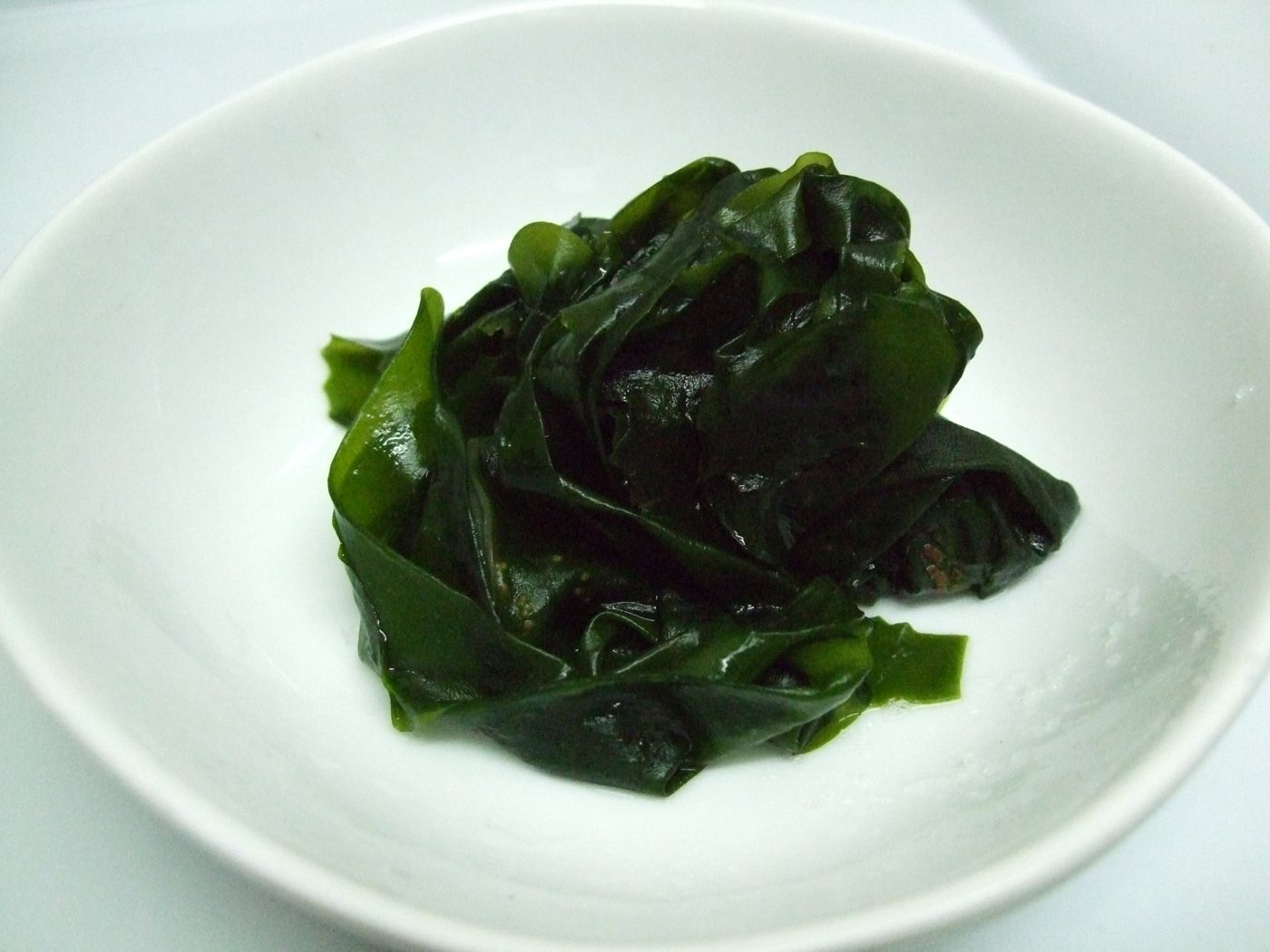 Sea mustard (miyeok, wakame)미역A tender brown seaweed sold dried in dark, crinkled strands that swell many times over in water. Simmered into miyeok-guk, it is the soup of birthdays and of a mother's first meals after giving birth.
 Garlic마늘Used raw, minced, pickled and roasted, garlic is one of the essential aromatics of Korean food — in seasonings, marinades, kimchi and namul.
 Soy sauce간장Korean soy sauce, in two main kitchen forms: pale, salty guk-ganjang (soup soy sauce) brewed the traditional way from meju, and darker, sweeter jin-ganjang for braises and marinades.
 Sesame참깨Toasted sesame seeds and sesame oil (chamgireum) finish countless Korean dishes, adding a nutty aroma and gloss.
Nutrition
| Calories | ~65 kcal |
|---|---|
| Protein | ~0.8 g |
| Fat | ~5.1 g |
| Carbohydrates | ~4.1 g |
| Fiber | ~3.7 g |
| Sodium | ~430 mg |
Notable forFiber · Iodine
Unlike the other estimates in this set, this one is scaled from the Korean MFDS food composition analysis of prepared miyeok-julgi-bokkeum (77 kcal, 5.95 g fat, 4.3 g fiber and 505 mg sodium per 100 g), because sodium in salted stems depends almost entirely on how thoroughly they are soaked. For comparison, the Korean Food Composition Table lists salted miyeok at about 13,000 mg sodium per 100 g and desalted, boiled stems at about 3,100 mg per 100 g, so under-soaked stems can be several times saltier than this estimate. The table entries used do not report iodine, which is listed as notable on the basis of seaweed's general iodine content. Actual values vary with ingredients, portion size and preparation.
Health Benefits
- Sea mustard stems are very low in calories and high in dietary fiber.
- Seaweeds supply iodine, a mineral the thyroid needs to make its hormones, and the Encyclopedia of Korean Culture notes miyeok is also valued as a source of calcium.
- The dish adds a sea vegetable to the table with only a little oil.
Regional Variations
- Seasoning: most cooks season with garlic, a little soy sauce or salt and sesame oil; some add a splash of fish sauce or perilla oil for depth.
- Add-ins: onion and carrot strips are common for sweetness and color; a spicy version adds gochugaru.
- Fresh stems: unsalted fresh stems are sometimes sold in season; they need only blanching rather than desalting.
Pairings
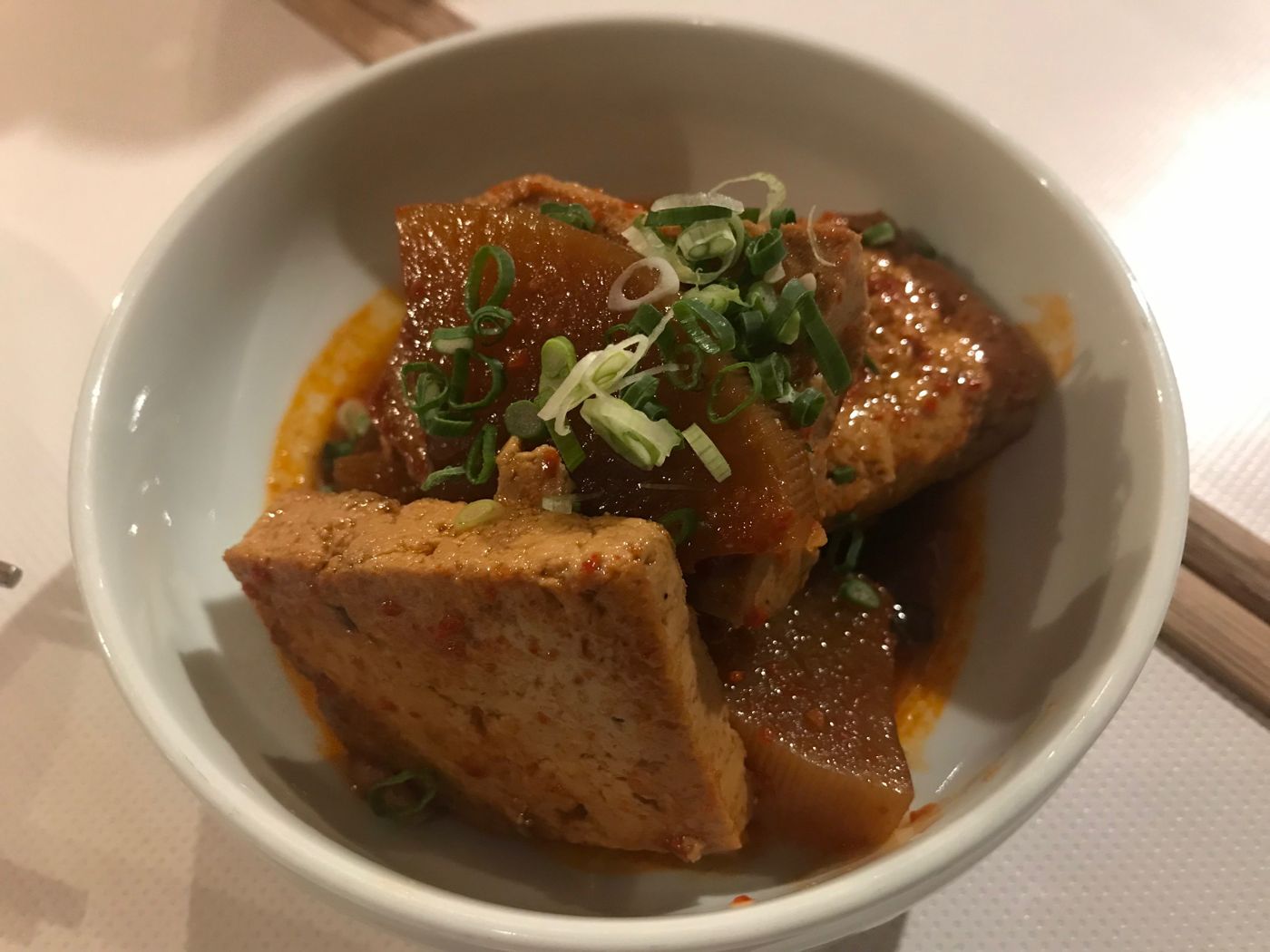 Dubu Jorim두부조림Slices of firm tofu pan-fried until golden, then simmered in a garlicky soy and chili sauce — an inexpensive, protein-rich staple of Korean home cooking.
 Myeolchi Bokkeum멸치볶음Small dried anchovies stir-fried until crisp, then glazed in a sweet soy and garlic syrup — a keeping banchan found in refrigerators across Korea.
 Sigeumchi Namul시금치나물Spinach blanched for a few seconds, squeezed dry and dressed with garlic, soy sauce and sesame — one of the simplest and most familiar namul.
Sources
- 01미역 (Sea mustard) — Encyclopedia of Korean Culture
- 02미역줄기볶음 (Stir-fried sea mustard stems, prepared dish) — MFDS K-FIND food composition database
- 03미역, 줄기, 염장 후 탈염, 삶은것 (Sea mustard stem, salted, desalted and boiled) — MFDS K-FIND / Korean Food Composition Table
- 04Iodine in diet — MedlinePlus Medical Encyclopedia
- 05Sodium reduction — World Health Organization fact sheet
Last updated