Regions
Chungcheong
충청
Korea's agricultural middle ground: gentle seasoning, skillfully cooked grains, aged pumpkin, and kimchi that leans on salted seafood more than chili.
Chungcheong sits between the capital region and the southern provinces, and its food is often described in the same in-between terms: neither as refined as Seoul's nor as intense as the south's, with an emphasis on honest, well-made everyday dishes.
Geography and climate
The region is really two landscapes. North Chungcheong is landlocked, while South Chungcheong faces the Yellow Sea. The Encyclopedia of Korean Culture describes farming as the main livelihood of both, singling out the fertile plains of South Chungcheong — the Yedang plain and the Baengma River basin — for their grain, and the Yellow Sea coast for its fishing grounds.
The same source links the area's rice culture to history: Chungcheong was the heartland of the ancient kingdom of Baekje, where rice is thought to have been the main grain at a time when other kingdoms relied more on barley or millet.
Character of the cuisine
Seasoning in the central region is usually described as moderate. The Korea Herald characterizes Chungcheong kimchi as mild, made with little chili powder, and the Encyclopedia of Korean Culture notes that Hwanghae cooks in the north were said to share Chungcheong's taste for food that is neither very salty nor bland.
Grains are treated with care. White rice was the most esteemed, but barley rice was eaten widely, and the encyclopedia remarks that well-prepared Chungcheong barley rice could be nearly as smooth as white rice. Aged pumpkin (neulgeun hobak) is another hallmark, cooked into porridges and thick sweet-savory mashes more often than in other provinces.
Broths followed the seasons: chicken or beef in summer, and seafood such as oysters in winter. The encyclopedia credits the region with practical dishes like rice-cake soup and wheat noodles flavored with seafood instead of meat.
Signature dishes and banchan
- Grain dishes: bean-sprout rice (kongnamul-bap), barley rice, mung bean porridge, pumpkin porridge and knife-cut noodles.
- Fermented soybean stews: cheonggukjang and dambukjang, two fermented soybean pastes, appear on the encyclopedia's list of Chungcheong specialties alongside soups of mallow, bean sprouts and dried radish greens.
- Vegetable side dishes: seasoned bean sprouts (kongnamul-muchim), young zucchini namul (see korean-zucchini), aged-pumpkin namul and chwinamul.
- Pickles: perilla leaf pickles (kkaennip-jangajji) and oiji, salt-brined cucumbers.
- Salted seafood: the encyclopedia's list includes eori-guljeot, a spicy salted oyster relish, and salted chili.
Kimchi styles
The Korea Herald describes Chungcheong kimchi as relying on salt and salted seafood — such as croaker and shrimp — rather than heavy chili, and names seokbakji (chunky mixed radish and cabbage kimchi) and hobakji, a pumpkin and cabbage kimchi that is often cooked into stew. The Encyclopedia of Korean Culture adds radish kimchi made with salted shrimp (saeujeot-kkakdugi; see kkakdugi and saeujeot), young-radish water kimchi, eggplant kimchi, gourd kimchi and spinach kimchi, as well as cold noodles served in nabak-kimchi broth.
Local specialties
- Cheongyang chili: the hot Cheongyang pepper, named for a county in South Chungcheong, is today one of Korea's most familiar chili varieties; the Korean Culture and Information Service dates its development to 1983.
- Mung bean jelly: cheongpo-muk appears both as a soup and a side dish.
- Rice cakes: the encyclopedia lists soemeori-tteok, kkot-sanbyeong and acorn and arrowroot rice cakes among the region's specialties.
Dishes from this region
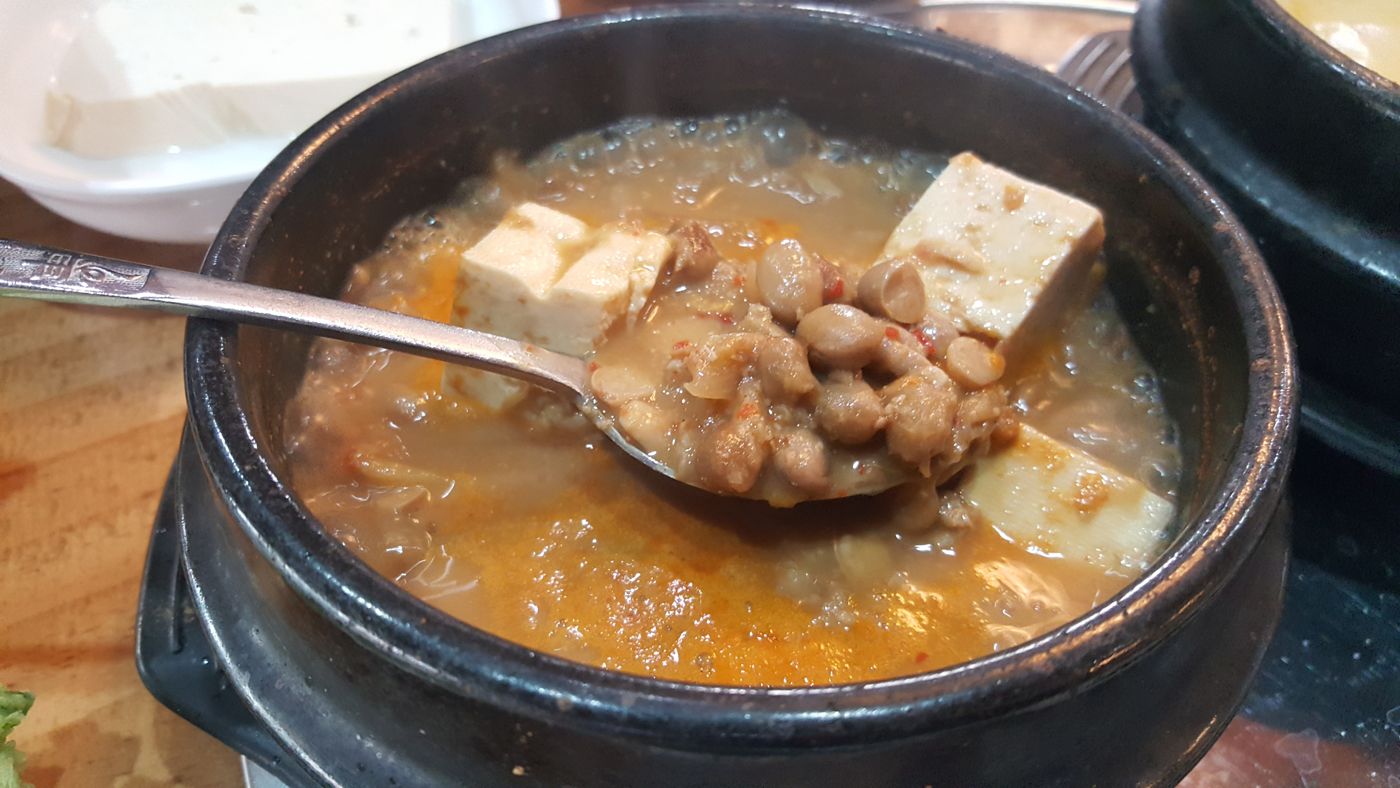 Cheonggukjang Jjigae (Quick-Fermented Soybean Stew)청국장찌개A thick, pungent winter stew of quick-fermented whole soybeans simmered with sour kimchi, tofu and a little pork or beef — loved for its earthy depth, notorious for its smell.
- Dallae Muchim (Seasoned Wild Chive)달래무침Raw wild chives, bulbs and all, tossed with soy sauce, chili flakes, a touch of vinegar and sesame — a sharp, garlicky spring muchim made in minutes.
- Dotori Muk Muchim도토리묵무침Slices of soft, faintly bitter acorn jelly tossed with crisp vegetables and a soy–chili–sesame dressing — a cool, light side dish and a favorite with drinks.
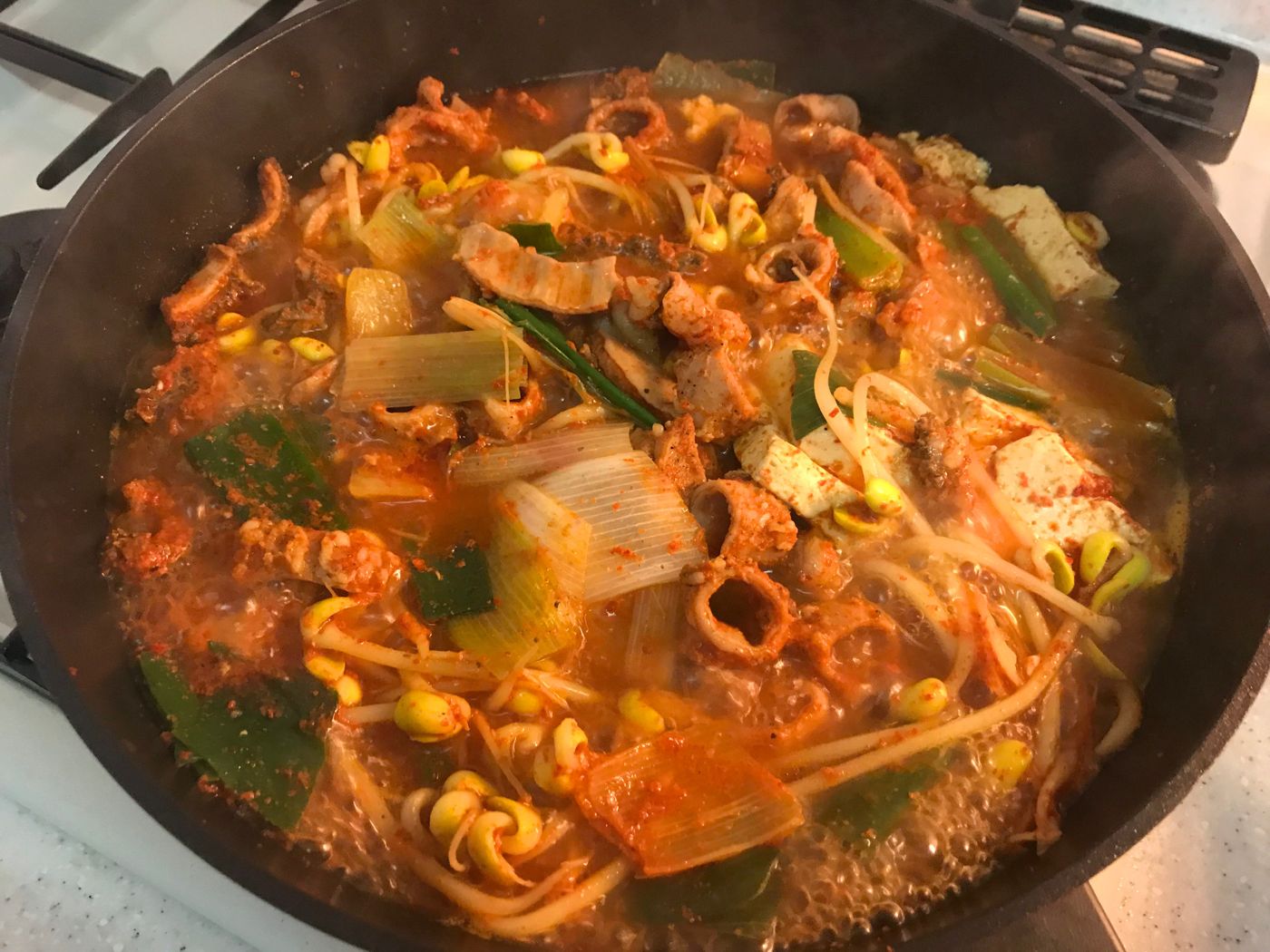 Gopchang Jeongol (Beef Intestine Hot Pot)곱창전골Cleaned beef small intestine and tripe simmered at the table with vegetables, mushrooms and glass noodles in a spicy broth — a rich, chewy hot pot for cold nights.
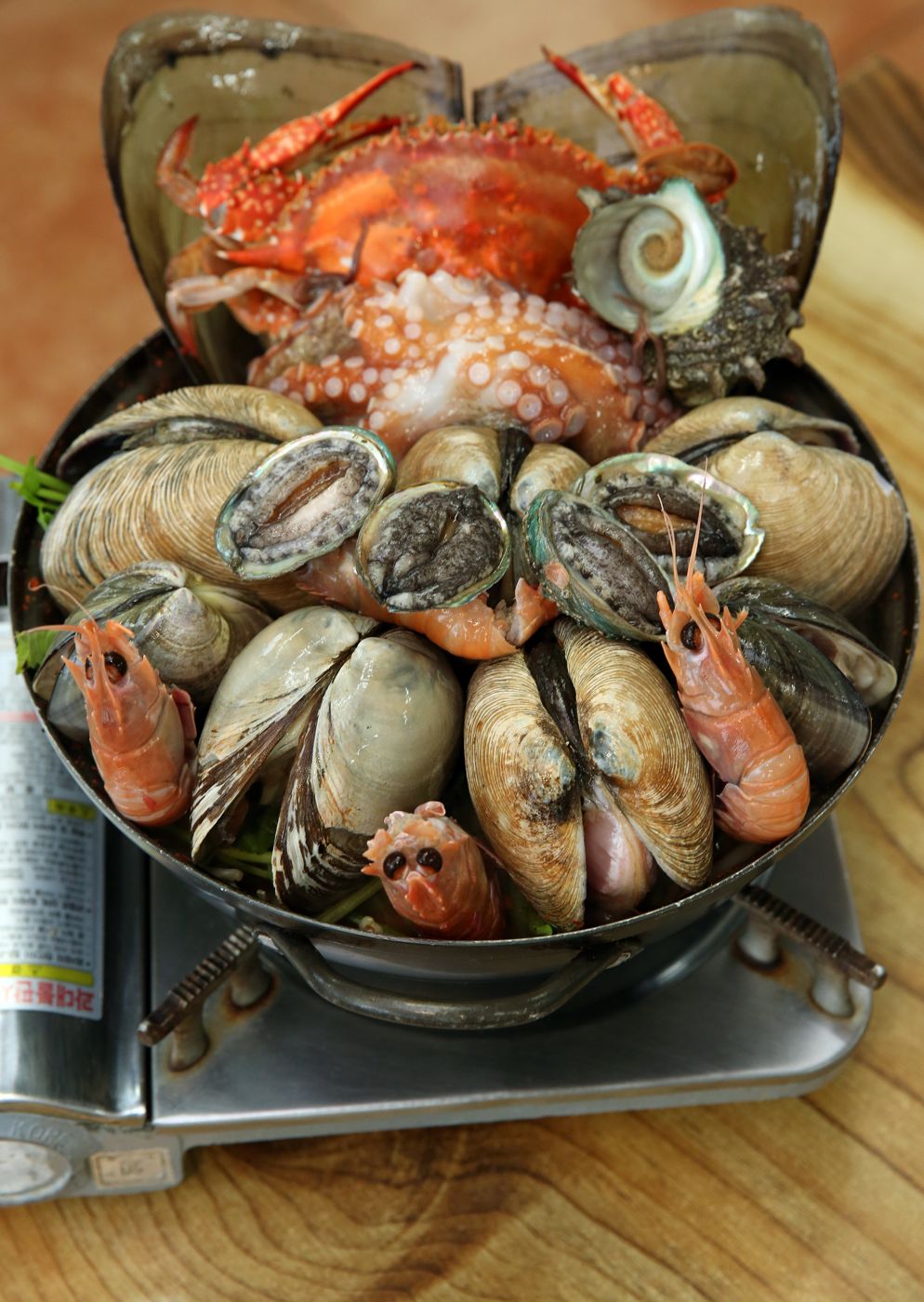 Haemul Tang (Spicy Seafood Hot Pot)해물탕Blue crab, octopus, shrimp, clams and sea squirt simmered with radish and water dropwort in a bright, spicy gochujang broth — a seafood feast in one pot.
- Kongnamul-bap (Soybean Sprout Rice)콩나물밥Rice steamed over a bed of soybean sprouts, often with a little beef, and eaten with a spoonful of soy-and-scallion sauce — a thrifty one-pot meal from Chungcheong.
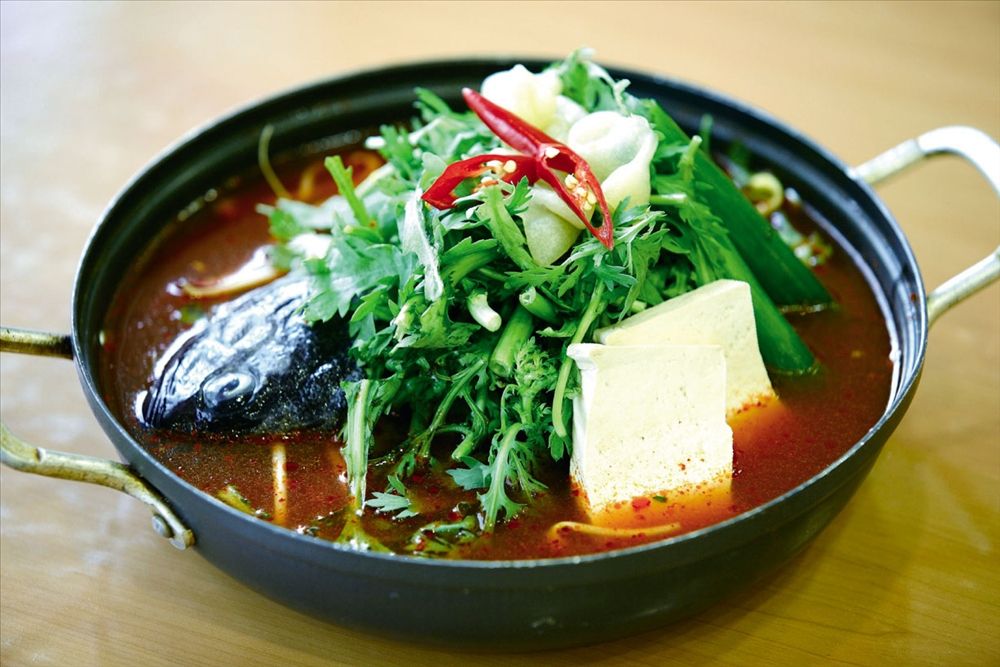 Maeuntang (Spicy Fish Stew)매운탕Fish — freshwater or sea — simmered with radish, tofu and fragrant greens in a fiery gochugaru and gochujang broth; the stew that follows sashimi and fills riverside restaurants.
 Napa Cabbage Kimchi배추김치Salted napa cabbage layered with a red paste of chili, garlic, ginger and fermented seafood, then left to ripen: the kimchi most people picture first.
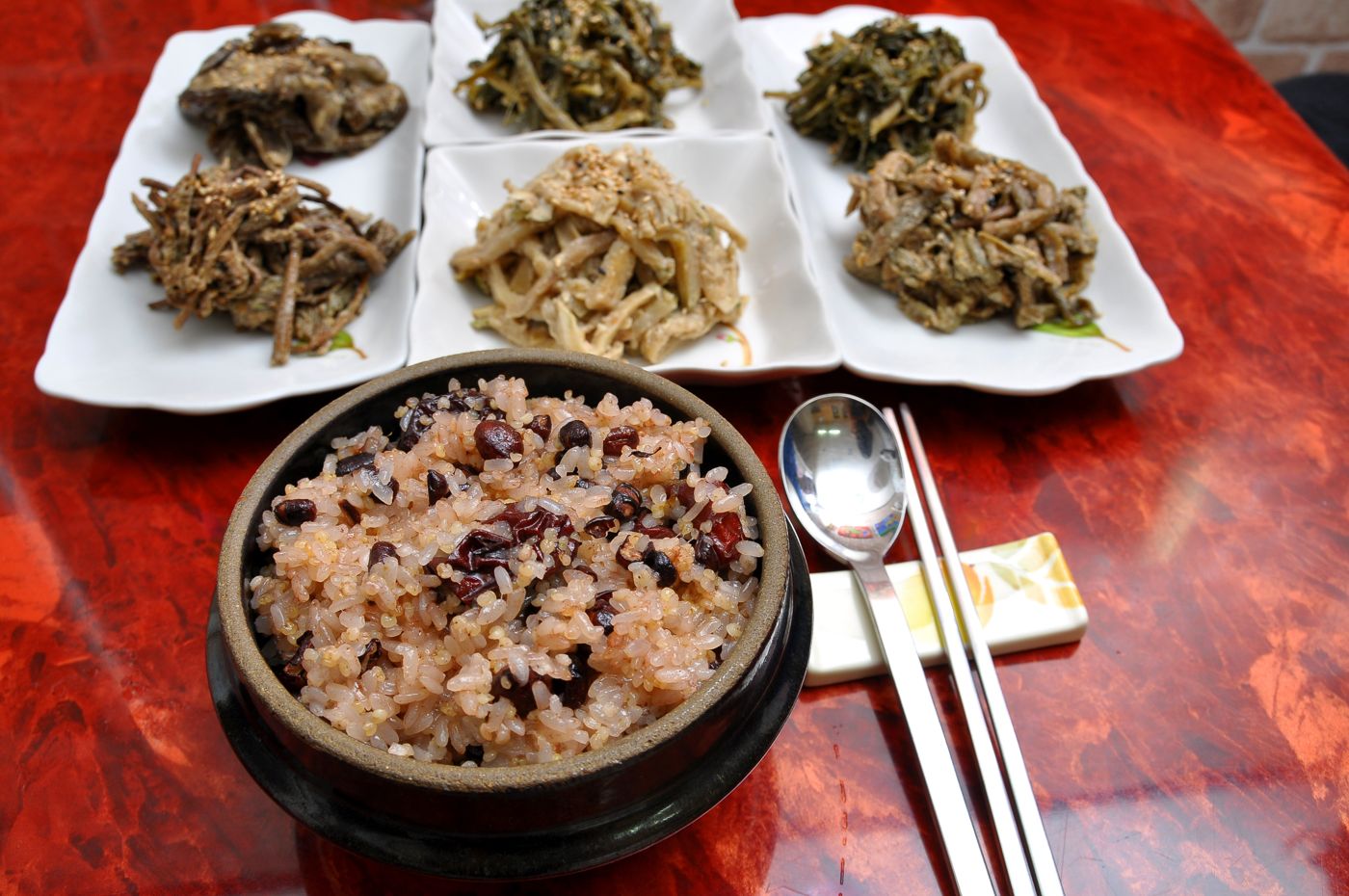 Ogokbap (Five-Grain Rice)오곡밥Glutinous rice cooked with sorghum, millet, red beans and black soybeans for Daeboreum, the first full moon of the lunar year, and shared among neighbors for a good harvest.
- Perilla Leaf Kimchi깻잎김치Stacks of perilla leaves layered with a soy, fish-sauce and chili seasoning — fragrant, slightly bitter summer kimchi peeled off one leaf at a time over rice.
- Pumpkin Kimchi for Stew호박김치Thick slices of pumpkin fermented with cabbage or young radish greens, then simmered into a mellow stew — a Hwanghae and Chungcheong cooking kimchi.
- Salted Clams조개젓Small shucked clams salted in their own boiled juices for a few weeks, then dressed with chili and green onion — an early-summer rice companion.
- Salted Radish Pickle짠지Whole radishes packed in heavy salt over winter and opened in spring — soaked, sliced thin and served in vinegared cold water or dressed with chili.
- Soy Sauce Water Kimchi장김치Cabbage and radish cured in soy sauce instead of salt, floated in a lightly sweet soy brine with pear, chestnut and pine nuts — a court and gentry kimchi.
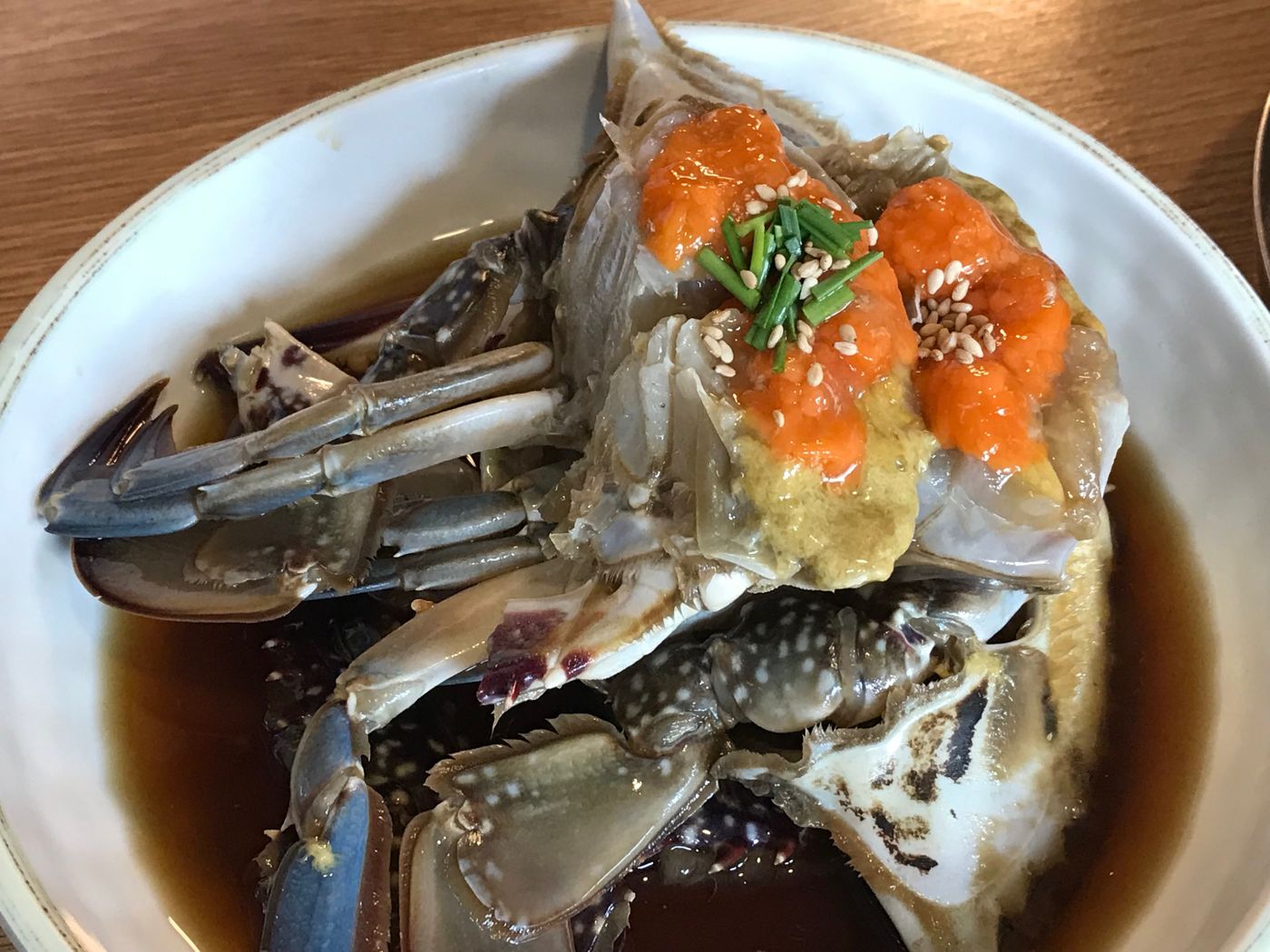 Soy-Marinated Raw Crab간장게장Raw crabs steeped in a boiled-and-cooled soy marinade until silky and savory — a centuries-old preserve, eaten by spooning rice into the shell.
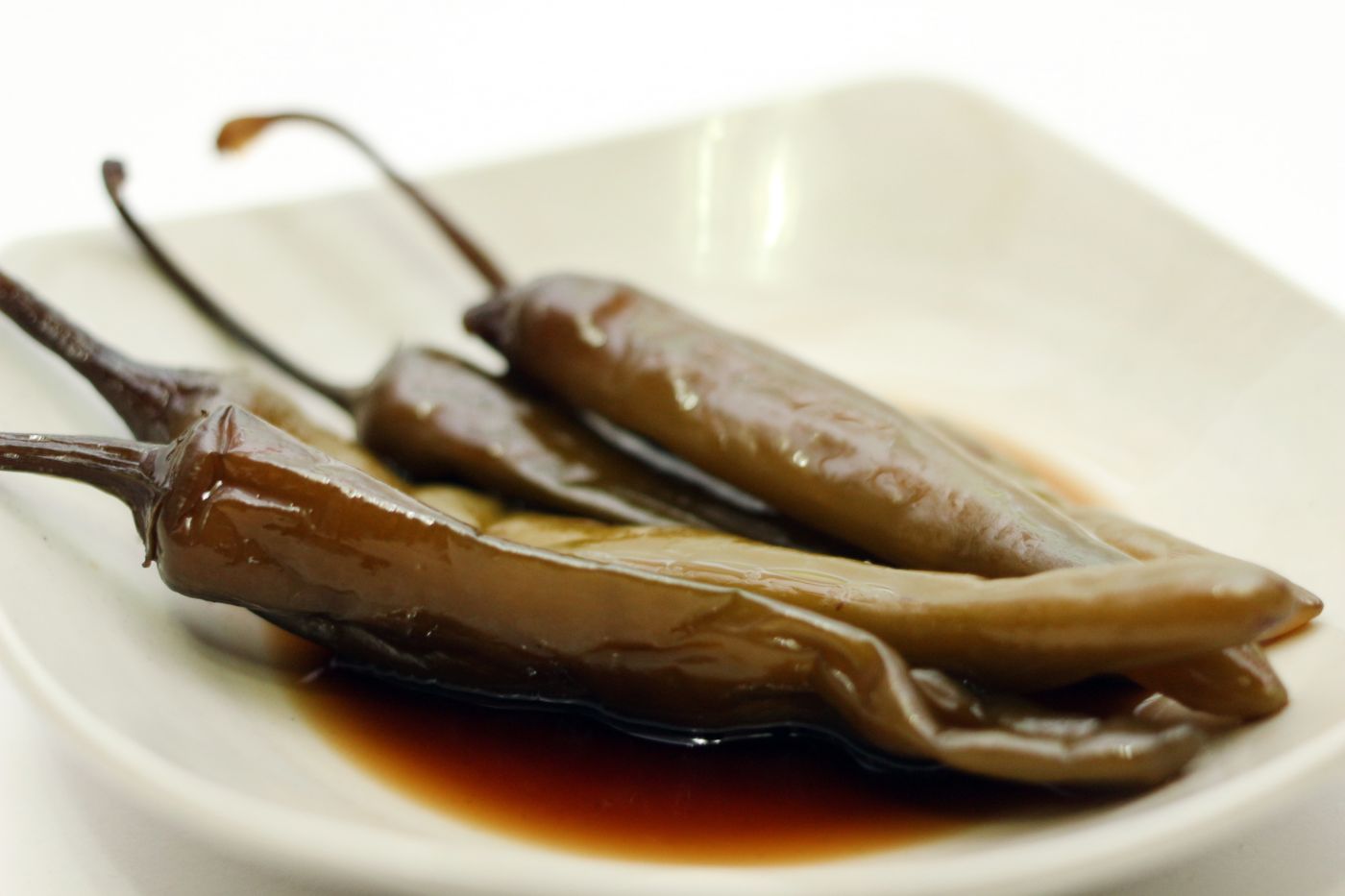 Soy-Pickled Green Chilies고추장아찌Whole green chilies cured in a sweet, tangy soy brine until olive-drab and tender-crisp — a keeping pickle that brings heat and salt to plain rice.
- Spicy Lightly Salted Oysters어리굴젓Fresh oysters lightly salted and ripened with chili — a short-keeping winter jeotgal famous in Seosan and Ganwoldo in South Chungcheong.
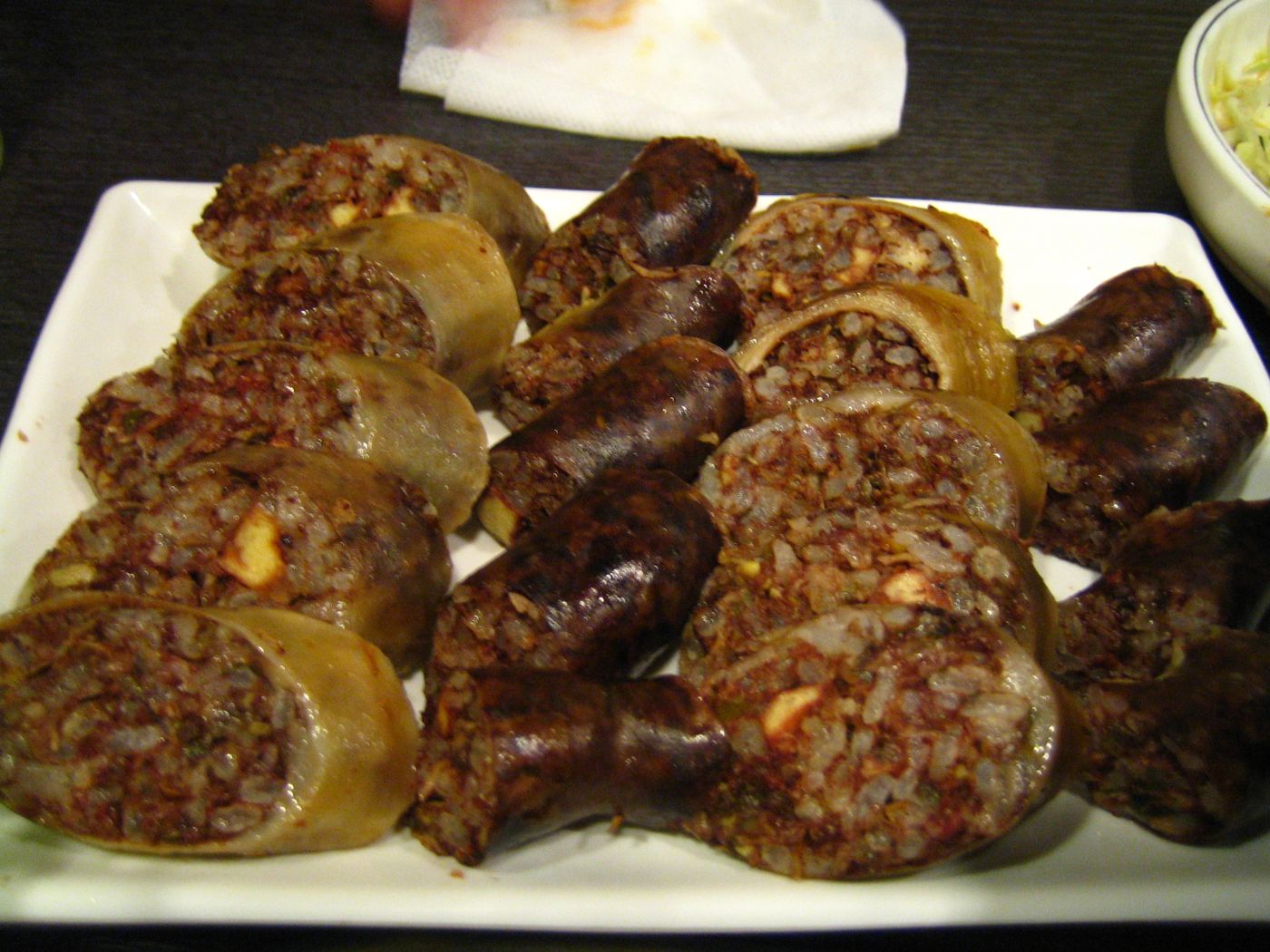 Sundae (Korean Blood Sausage)순대Pork intestine stuffed with pig's blood, glutinous rice, glass noodles and vegetables, then steamed — a northern farmhouse food that became a nationwide street snack.
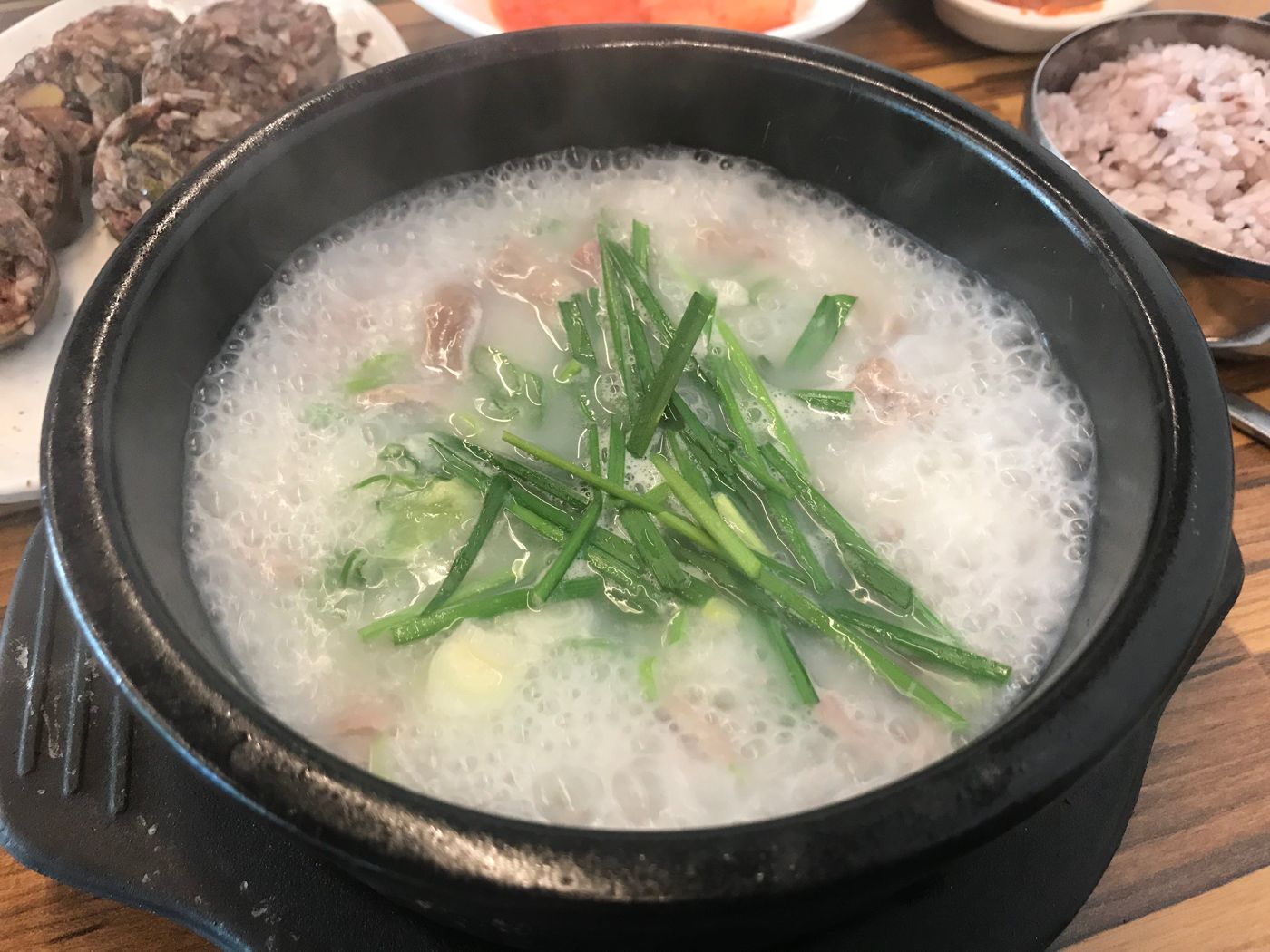 Sundaeguk (Blood Sausage Soup)순댓국Slices of Korean blood sausage and pork offal in a rich pork-bone broth, seasoned at the table with salted shrimp — a cheap, hearty market-day bowl served with rice.
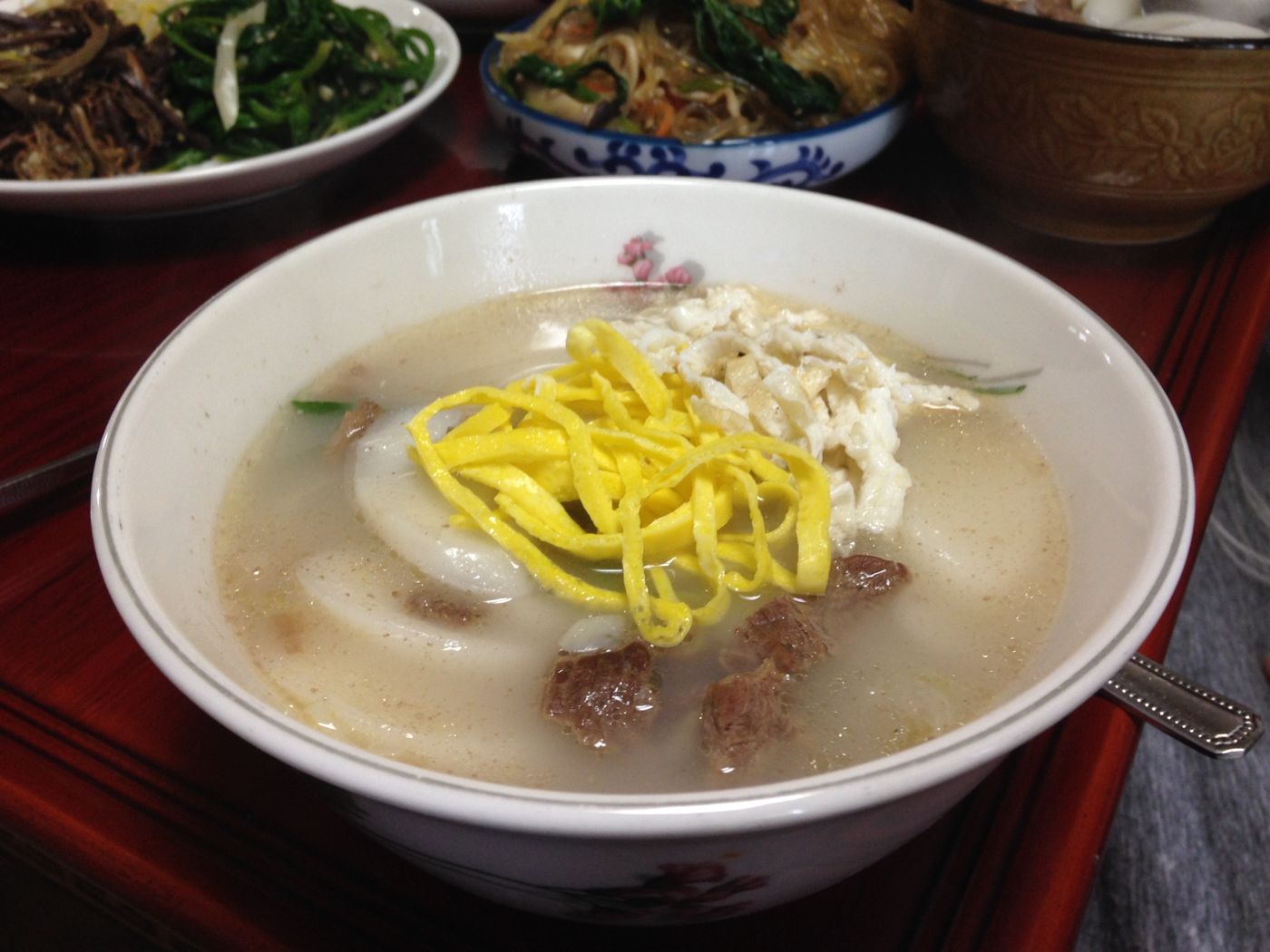 Tteokguk (Rice Cake Soup)떡국Thin ovals of white rice cake in clear beef broth, topped with egg ribbons and seaweed — the soup eaten on Seollal morning to greet the new year.
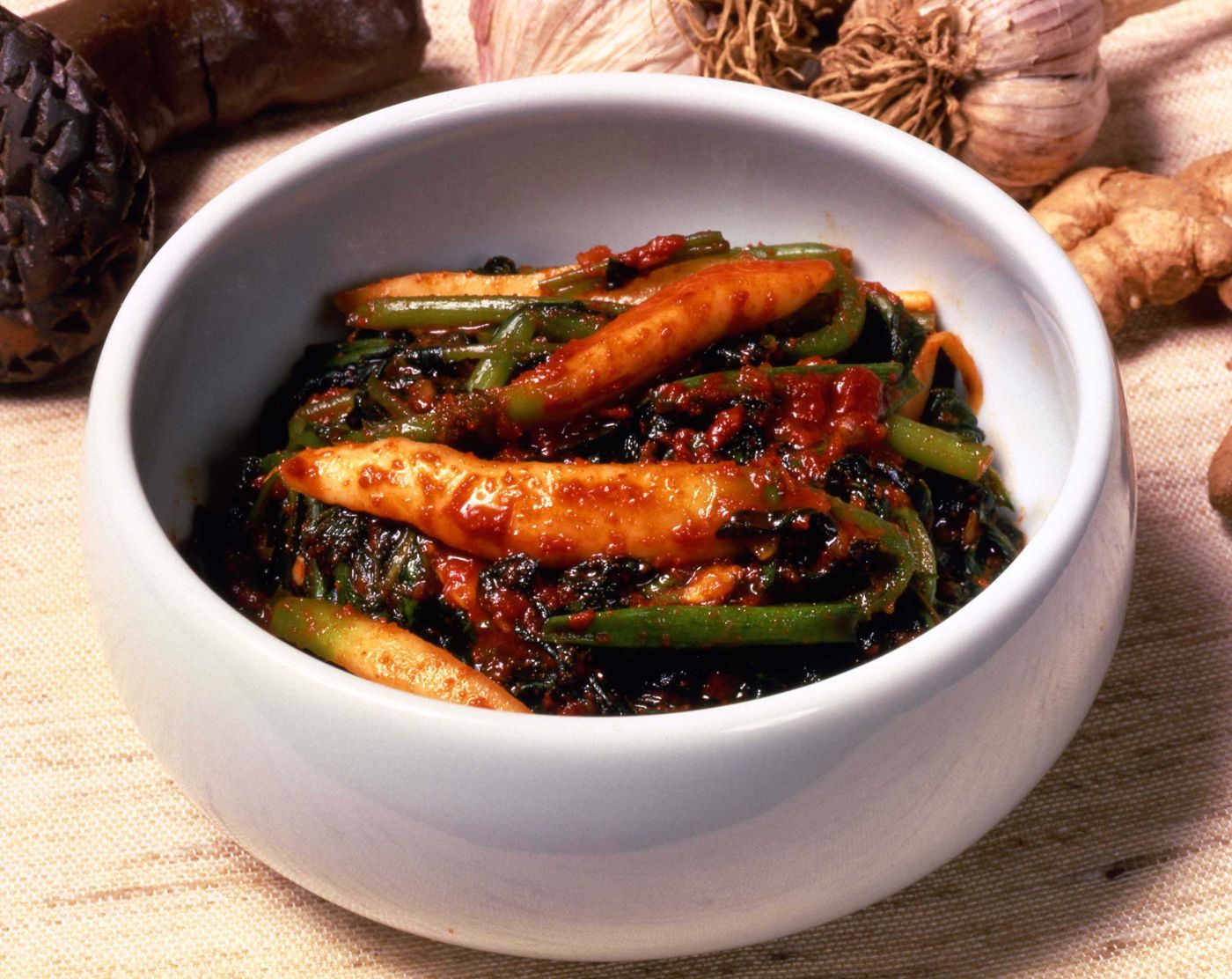 Young Summer Radish Kimchi열무김치Tender young radish greens in a loose, lightly spicy brine thickened with flour or rice paste — the classic summer kimchi, served over noodles and barley rice.