Muchim · Dressed side dish 무침
Dallae Muchim (Seasoned Wild Chive)
달래무침
Romanization: dallae-muchim
Raw wild chives, bulbs and all, tossed with soy sauce, chili flakes, a touch of vinegar and sesame — a sharp, garlicky spring muchim made in minutes.
- Serves
- 4
- Prep
- 15 min
- Cook
- 0 min
RegionChungcheong
Jump to recipeRecipe
Ingredients · Serves 4
- 150 gDallae (wild chives), with bulbs
- 1 tbspSoy sauce
- 1 tspGochugaru
- 1 tspRice or apple vinegar
- ½ tspSugar
- 1 tspToasted sesame oil
- 1 tspToasted sesame seeds
Method
Step 1: Peel away the papery outer skin from each bulb and pinch off the dark, hard root disc at the base; remove any yellowed leaves.
Step 2: Soak the dallae in cold water, then rinse under running water at least three times, rubbing the bulbs to loosen soil. Drain well and pat dry.
Step 3: If the bulbs are larger than a chickpea, lightly crush them with the flat of a knife. Cut the dallae into 4–5 cm lengths.
Step 4: In a bowl, stir together the soy sauce, gochugaru, vinegar, sugar and sesame oil until the sugar dissolves.
Step 5: Just before serving, add the dallae and toss lightly with your fingertips so the leaves do not bruise. Sprinkle with sesame seeds and serve immediately.
Origin & History
Dallae (Allium monanthum) is a small wild allium with thin, hollow leaves and a round white bulb, often called Korean wild chive or wild garlic in English. It grows on hillsides and field margins across the country, appears with naengi in the first weeks of spring, and dies back by summer. Older texts record it under Chinese names such as yasan and sosan ("little garlic"), names that were sometimes confused with other wild alliums. The National Folk Museum's encyclopedia notes that the word dallae is thought to describe the little bulbs dangling from the roots.
Dallae has long been part of the spring table. The farming song Nongga wollyeongga names "dallae kimchi" among the second-month foods that wake the appetite, and twentieth-century cookbooks such as Joseon yori jebeop and Joseon mussang sinsik yori jebeop describe a dallae soy sauce — the chives steeped in seasoned soy sauce — under the name dallae-jangajji. Because it is pungent, dallae was counted among the five pungent vegetables (osinchae) that Buddhist practice avoids, alongside green onion, garlic and chives.
Unlike most spring greens, dallae is usually eaten raw. Today it is grown under cover and sold year-round, but the wild plants of early spring are still prized for their stronger bite. The main growing areas include Seosan, Dangjin and Taean in South Chungcheong.
Key Ingredients
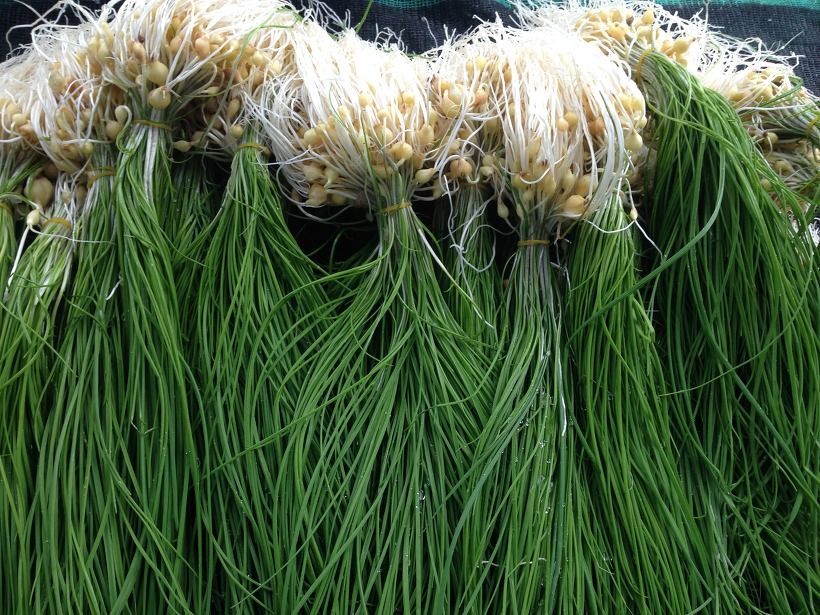 Dallae (Korean wild chive)달래Slender, grass-like leaves with a tiny white bulb at the base, tasting of garlic and green onion at once. Chopped raw into dallae-ganjang for dipping, dressed as dallae-muchim and floated in spring doenjang-guk.
 Soy sauce간장Korean soy sauce, in two main kitchen forms: pale, salty guk-ganjang (soup soy sauce) brewed the traditional way from meju, and darker, sweeter jin-ganjang for braises and marinades.
 Gochugaru고춧가루Korean red chili powder, made from dried red peppers ground coarse or fine. It gives kimchi, gochujang and countless banchan their color and warmth.
- Korean Vinegar식초Vinegar in the Korean kitchen, from naturally fermented grain and fruit vinegars, such as persimmon vinegar, to everyday brewed vinegar. It sharpens muchim, pickles and the dipping sauce chogochujang.
 Sesame참깨Toasted sesame seeds and sesame oil (chamgireum) finish countless Korean dishes, adding a nutty aroma and gloss.
Nutrition
| Calories | ~44 kcal |
|---|---|
| Protein | ~1.5 g |
| Fat | ~1.7 g |
| Carbohydrates | ~6.8 g |
| Fiber | ~1.4 g |
| Sodium | ~217 mg |
Notable forVitamin C · Vitamin K
Dallae uses the Korean Food Composition Table entry “Wild garlic (Dallae), Raw” (per 100 g: 56 kcal, 2.9 g fiber, 35 mg vitamin C, 54 µg vitamin K). Soy sauce uses the Korean table's fermented soy sauce; gochugaru uses the USDA red pepper (cayenne) entry as a stand-in; vinegar uses USDA cider vinegar; sugar, sesame oil and sesame seeds use USDA FoodData Central. Totals divided by four. Because the dish is eaten raw, little vitamin C is lost to cooking. Actual values vary with ingredients, portion size and preparation.
Health Benefits
- Vitamin C, eaten raw: dallae is relatively high in vitamin C for a green, and because this dish is not cooked, more of it reaches the plate than in blanched namul.
- Allium compounds: like garlic and green onion, dallae's sharpness comes from sulfur compounds formed when the plant is cut or crushed — the same family of compounds studied in other alliums. Research on their effects is ongoing.
- Small portion, big flavor: a modest amount seasons a whole meal, so the dish adds aroma and freshness for few calories.
Regional Variations
- Soy-and-vinegar dressing: the everyday version — raw dallae dressed with soy sauce, gochugaru, a little vinegar and sugar, and sesame. Many cooks leave out garlic and green onion so they do not mask dallae's own sharpness.
- Dallae-ganjang: chopped dallae stirred into soy sauce with sesame and chili, spooned over rice, tofu or jeon. Older cookbooks called a version of this dallae-jangajji.
- In soup and stew: a handful added at the last moment to doenjang-jjigae or doenjang-guk gives a fresh spring aroma.
- Eun-dallae: a cultivated type grown for an extra year, paler and more aromatic, sold as a premium product.
Pairings
- Naengi Muchim (Seasoned Shepherd's Purse)냉이무침Young shepherd's purse, roots and all, blanched for seconds and dressed with doenjang, garlic and sesame — the earthy, faintly bitter taste of early spring.
 Doenjang Jjigae (Soybean Paste Stew)된장찌개A thick, savory stew of fermented soybean paste with tofu, zucchini and whatever the season offers — the everyday pot at the center of the Korean table.
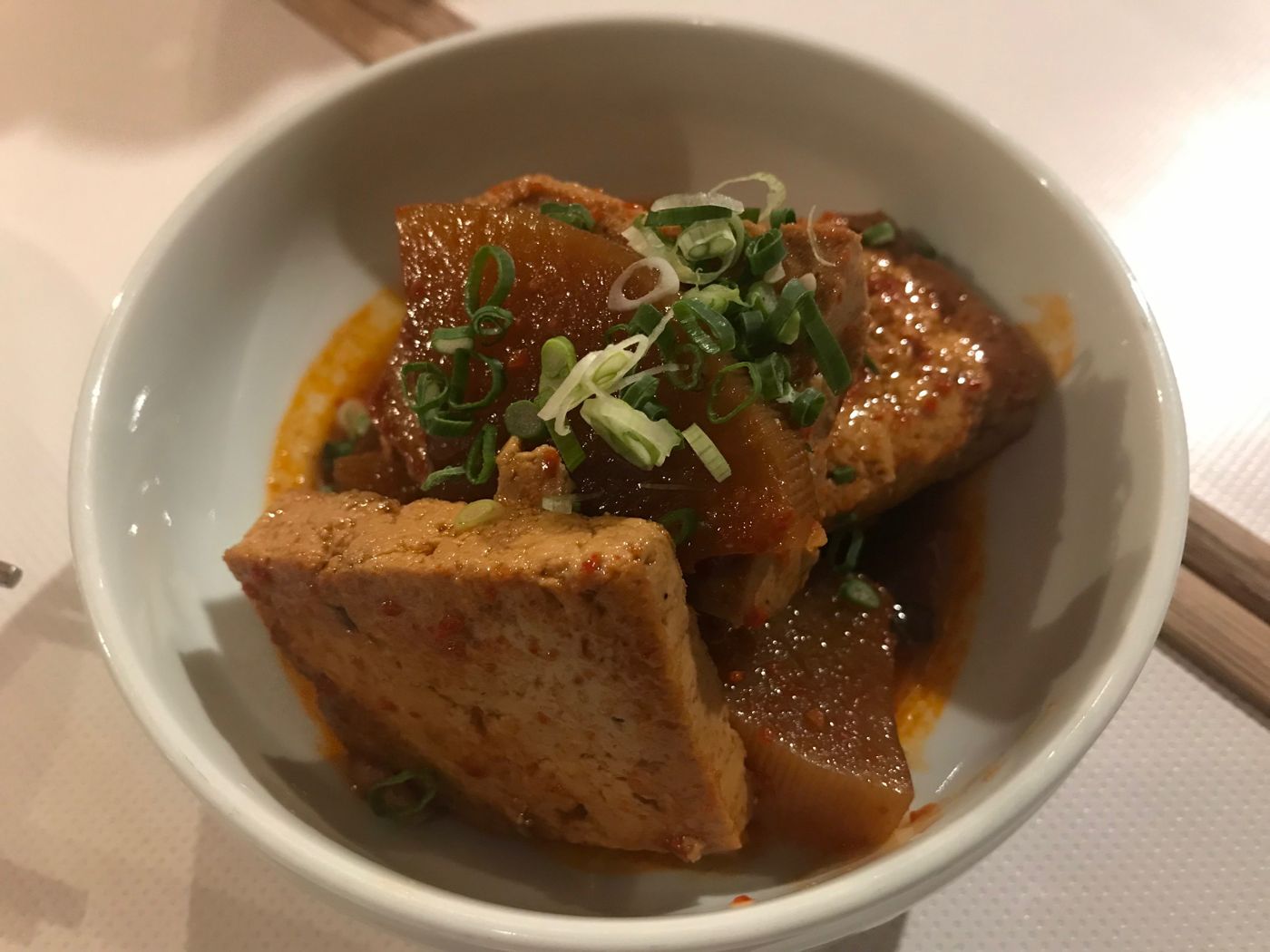 Dubu Jorim두부조림Slices of firm tofu pan-fried until golden, then simmered in a garlicky soy and chili sauce — an inexpensive, protein-rich staple of Korean home cooking.
Sources
- 01달래 (Dallae) — Encyclopedia of Korean Culture
- 02달래 (Dallae) — Encyclopedia of Korean Folk Culture (National Folk Museum of Korea)
- 03나물 (Namul) — Encyclopedia of Korean Culture
- 04향긋한 봄나물, 종류에 따른 안전한 조리법은? (Spring greens: safe preparation by type) — Korea Policy Briefing (korea.kr)
- 05Korean Food Composition Table: Wild garlic (Dallae), Raw — National Institute of Agricultural Sciences
- 06달래무침 — Urimalsaem (National Institute of Korean Language)
Last updated