Ingredient
Korean zucchini
애호박
Romanization: aehobak
A pale-green young squash with thin, smooth skin and tender flesh. Sliced into rounds for hobak-jeon, sautéed as namul and added to doenjang stews.
Flavor
Mild, sweet and nutty, with a soft, almost creamy texture when cooked. The thin skin needs no peeling.
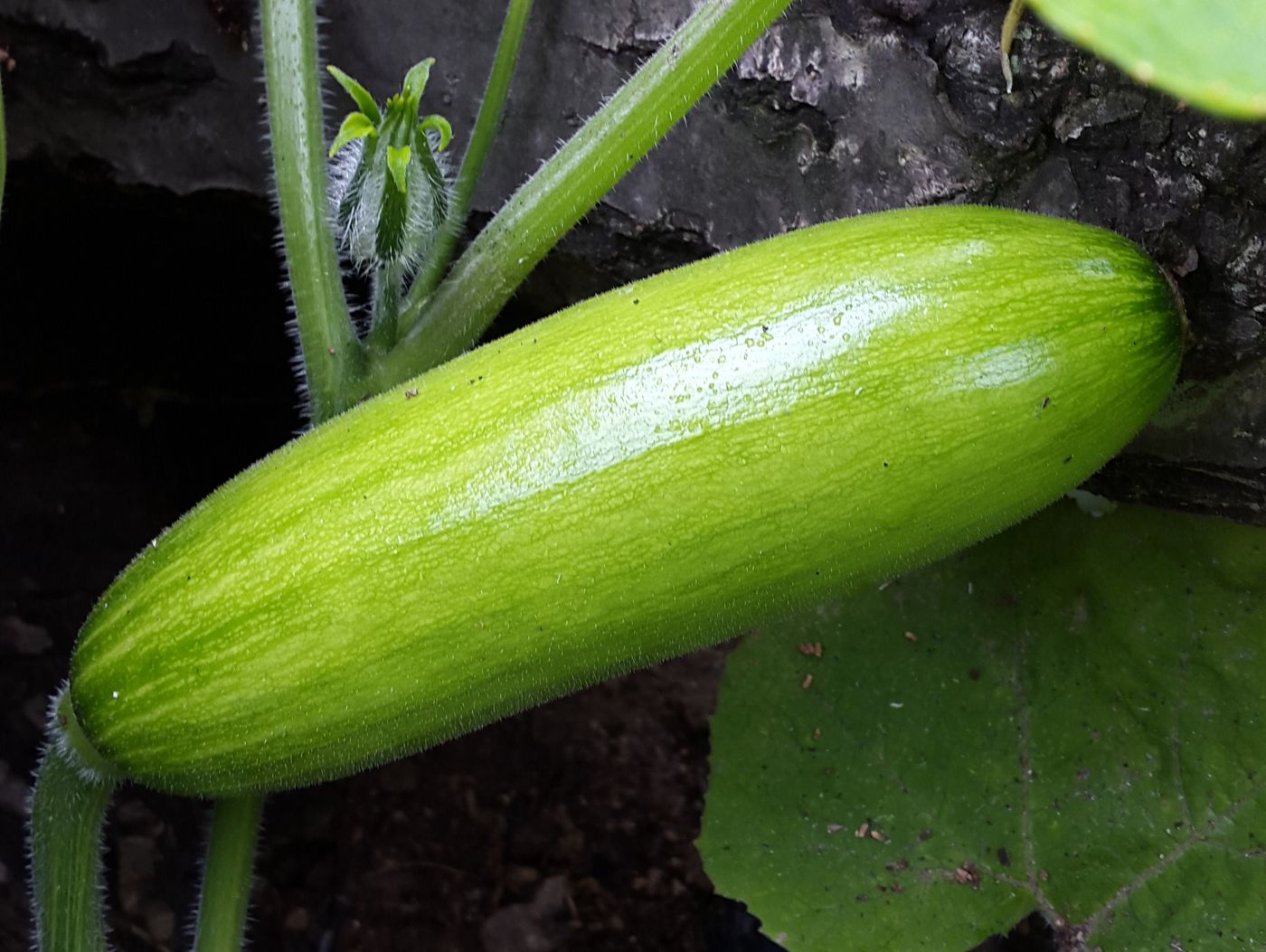 Photo: 산체, CC BY-SA 2.5, via Wikimedia Commons
Origin & History
Aehobak is the immature fruit of an East Asian summer squash. Although it looks like Western zucchini (Cucurbita pepo), it belongs to a different species, Cucurbita moschata, the group the Encyclopedia of Korean Culture calls the "Eastern" type of squash. Compared with zucchini, it has a thinner, smoother skin and more delicate flesh. Named cultivars include Seoul-madi, Bulam-sacheol and Miso.
Squashes originated in the Americas, and when exactly they reached Korea is unclear; they first appear in written records during the Joseon dynasty. The Korean word hobak covers the whole family, from these tender young fruits to the large, mature pumpkins used for porridge and rice cakes.
Young squash is a warm-season crop, harvested from late spring through autumn. In Korean markets aehobak is commonly sold wrapped in a snug plastic sleeve that it grows into on the vine, keeping each fruit uniform in shape.
In the kitchen it is sliced, coated in flour and egg, and pan-fried as hobak-jeon; sautéed as namul, often seasoned with salted shrimp; and simmered in stews such as doenjang-jjigae. Strips can also be sun-dried as hobak-goji and later rehydrated and stir-fried, a traditional way of keeping summer squash for winter.
Nutrition
| Calories | 22 kcal |
|---|---|
| Protein | 1.07 g |
| Fat | 0.09 g |
| Carbohydrates | 5.14 g |
| Fiber | 2.2 g |
| Sodium | 0 mg |
Notable forDietary fiber · Potassium
Korean Food Composition Table entry for aehobak (호박, 애호박, 생것 — “Pumpkin, Young, Raw” in the English edition): 93.1 g water, 224 mg potassium and 33 µg folate per 100 g. Actual values vary with ingredients, portion size and preparation.
Health Benefits
- Light vegetable: Raw aehobak is about 93% water, with roughly 22 kcal per 100 g (Korean Food Composition Table).
- Gentle on the menu: Its mild flavor and soft texture make it an easy vegetable to add to soups, stews and pancakes.
- Pan-fried form: Hobak-jeon is cooked in oil and coated in flour and egg, which adds fat and calories compared with steamed or sautéed squash.
Informational, not medical advice. Talk to a qualified professional about your own health and diet.
Dishes with Korean zucchini
- Aehobak Namul애호박나물Young Korean squash cut into half-moons and stir-fried with garlic and a little salted shrimp — sweet, tender and quick to make.
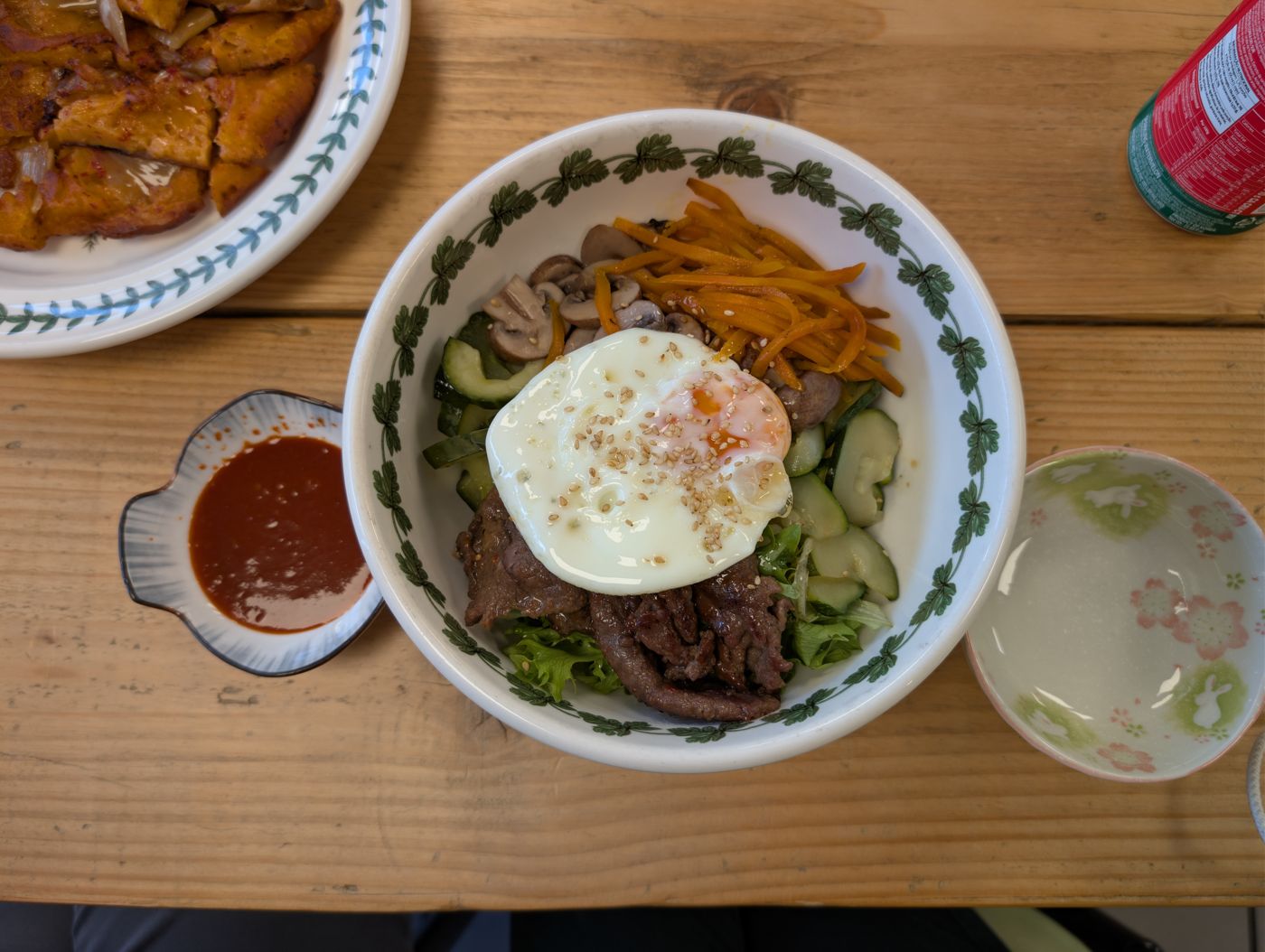 Bibimbap (Mixed Rice with Namul)비빔밥A bowl of rice topped with seasoned namul, beef and egg, mixed at the table with chili paste and sesame oil — banchan gathered into a single meal.
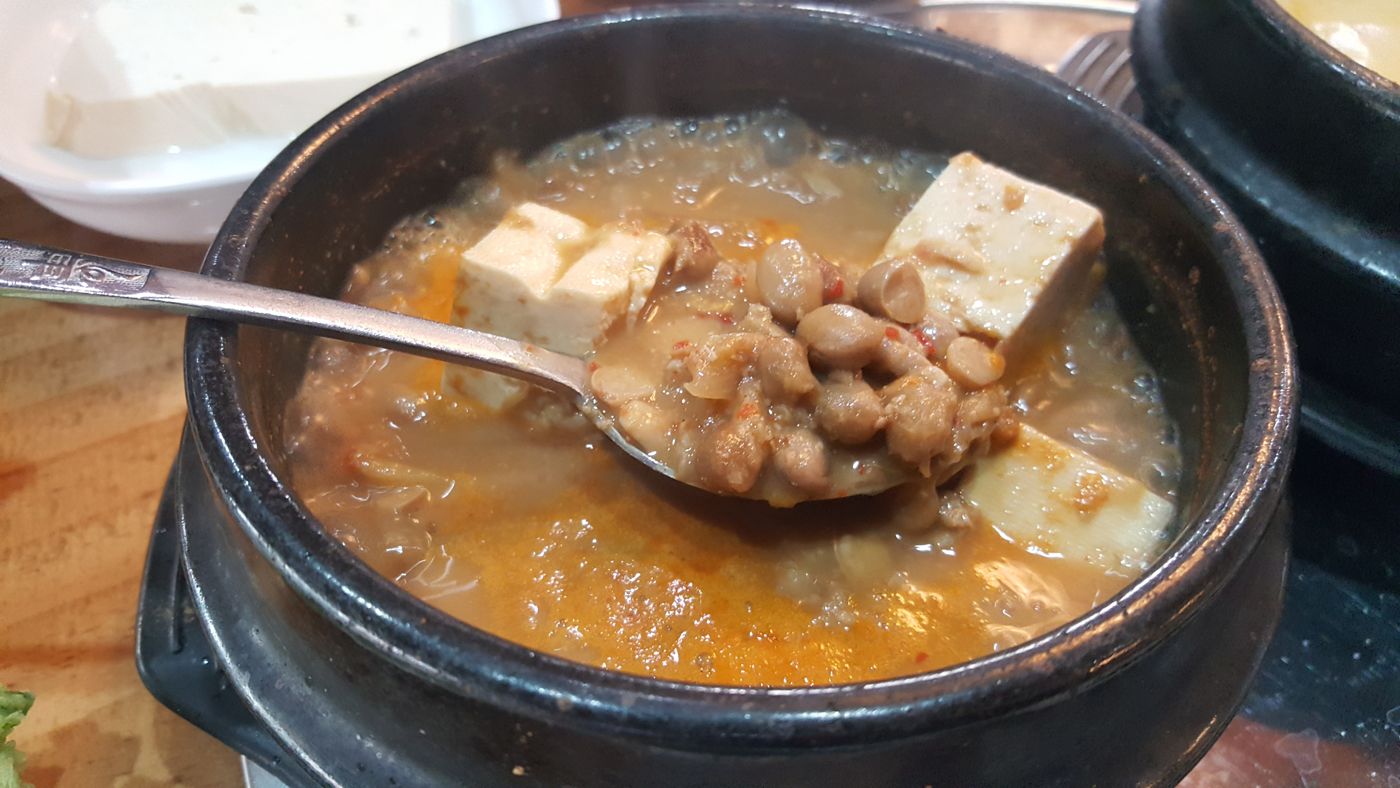 Cheonggukjang Jjigae (Quick-Fermented Soybean Stew)청국장찌개A thick, pungent winter stew of quick-fermented whole soybeans simmered with sour kimchi, tofu and a little pork or beef — loved for its earthy depth, notorious for its smell.
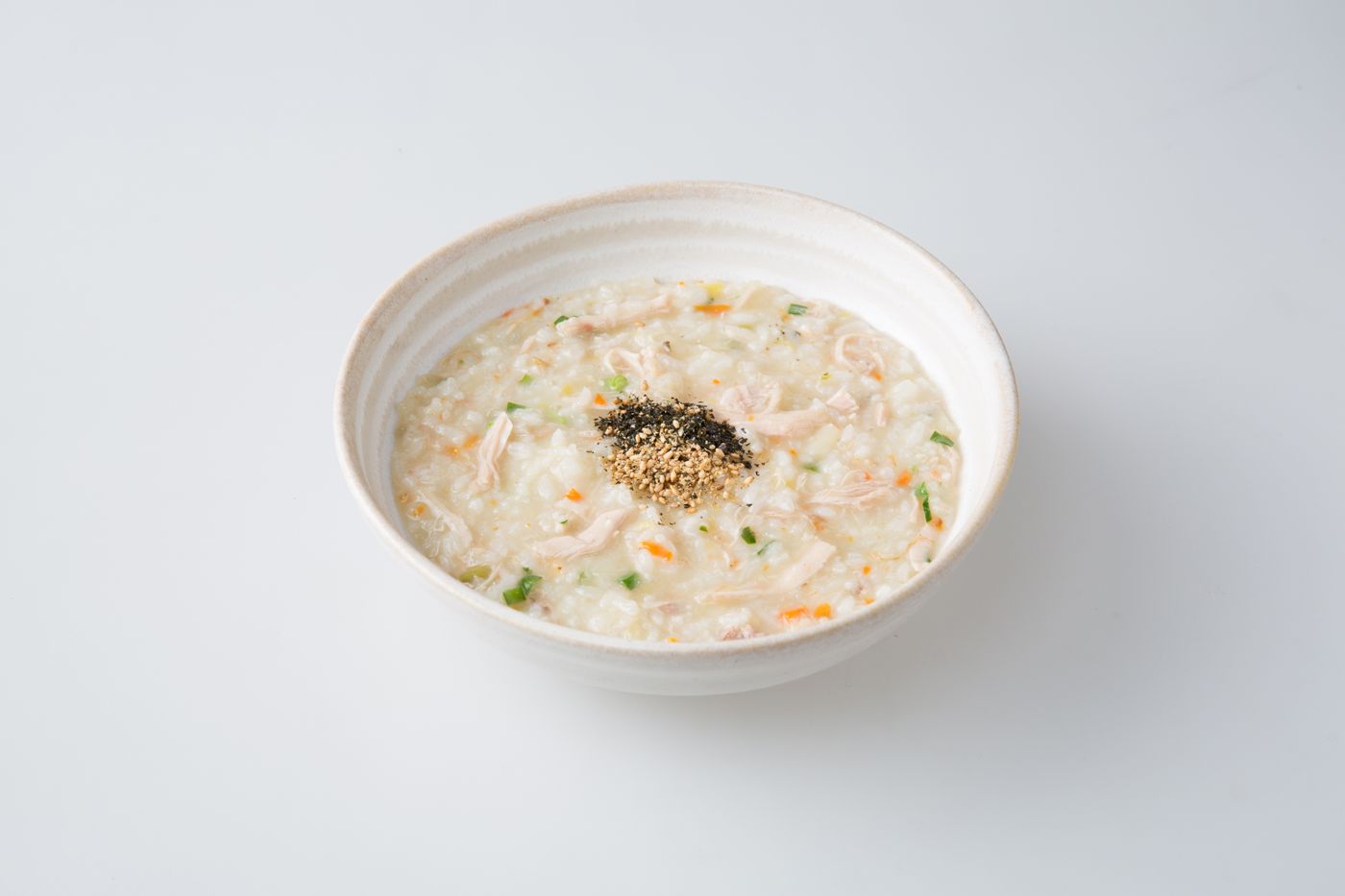 Dakjuk (Chicken Rice Porridge)닭죽Soft rice simmered in a clear chicken broth with shredded meat — a gentle, easy-to-digest porridge long served as summer restorative and sick-day food.
 Doenjang Jjigae (Soybean Paste Stew)된장찌개A thick, savory stew of fermented soybean paste with tofu, zucchini and whatever the season offers — the everyday pot at the center of the Korean table.
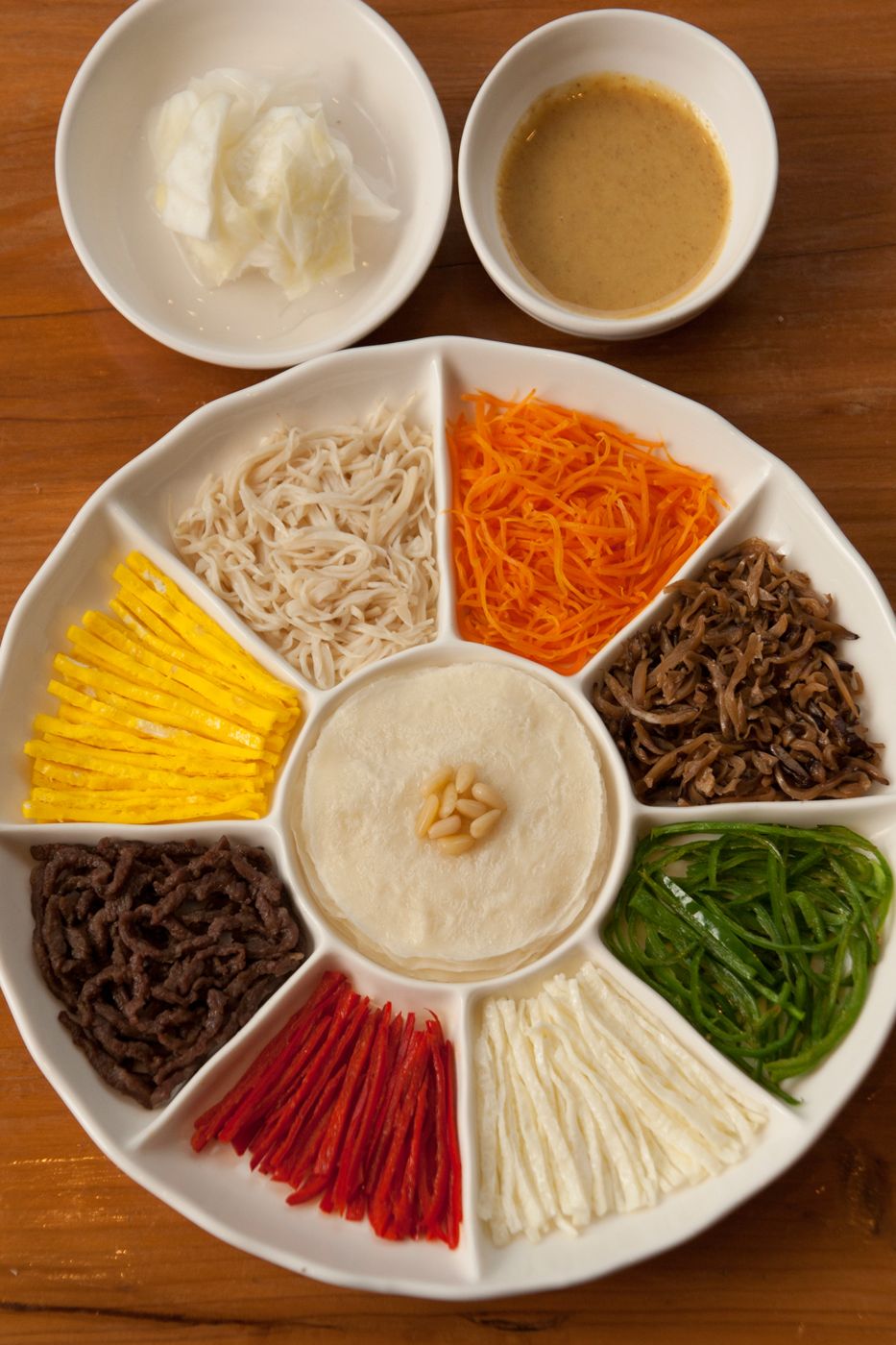 Gujeolpan (Platter of Nine Delicacies)구절판Eight finely cut fillings arranged by color around a stack of paper-thin crepes in a nine-compartment dish, wrapped at the table — an elegant banquet dish.
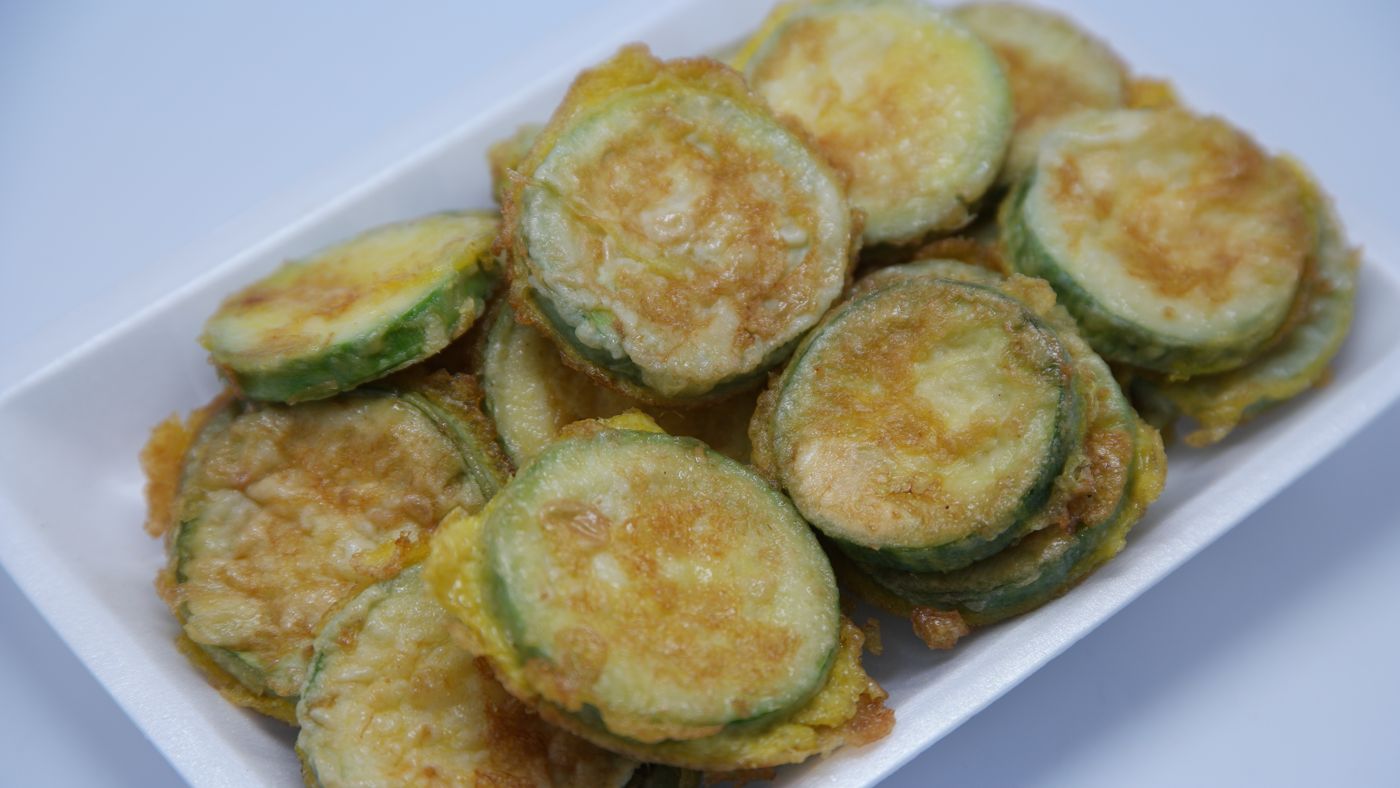 Hobak Jeon (Pan-Fried Zucchini)호박전Rounds of Korean zucchini dusted with flour, dipped in egg and pan-fried until golden — a soft, sweet jeon for holidays and everyday meals.
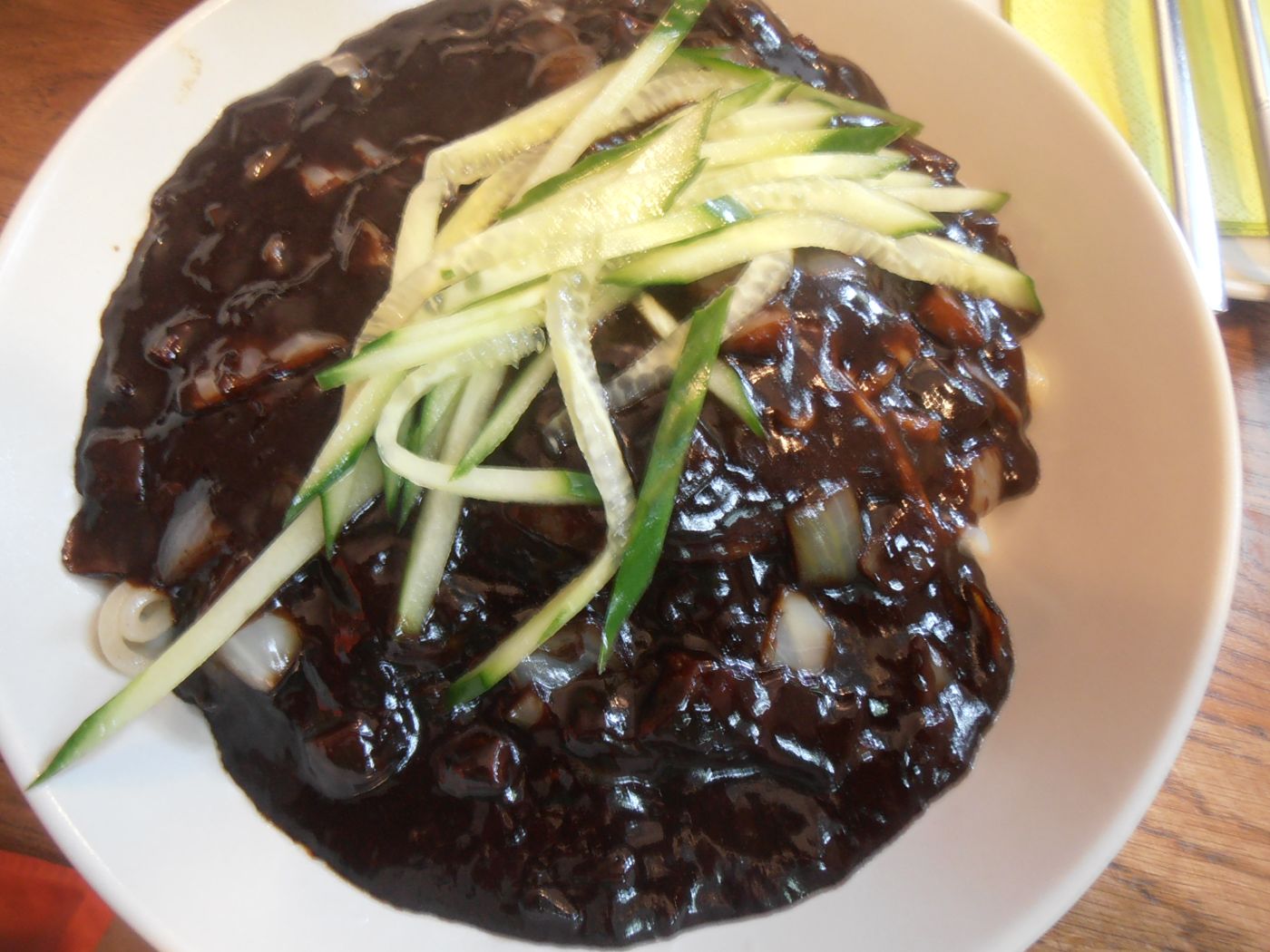 Jajangmyeon (Noodles in Black Bean Sauce)자장면Wheat noodles under a glossy sauce of chunjang fried with pork, onion and potato — the Korean-Chinese dish born among Shandong migrants in Incheon, contested origin claims and all.
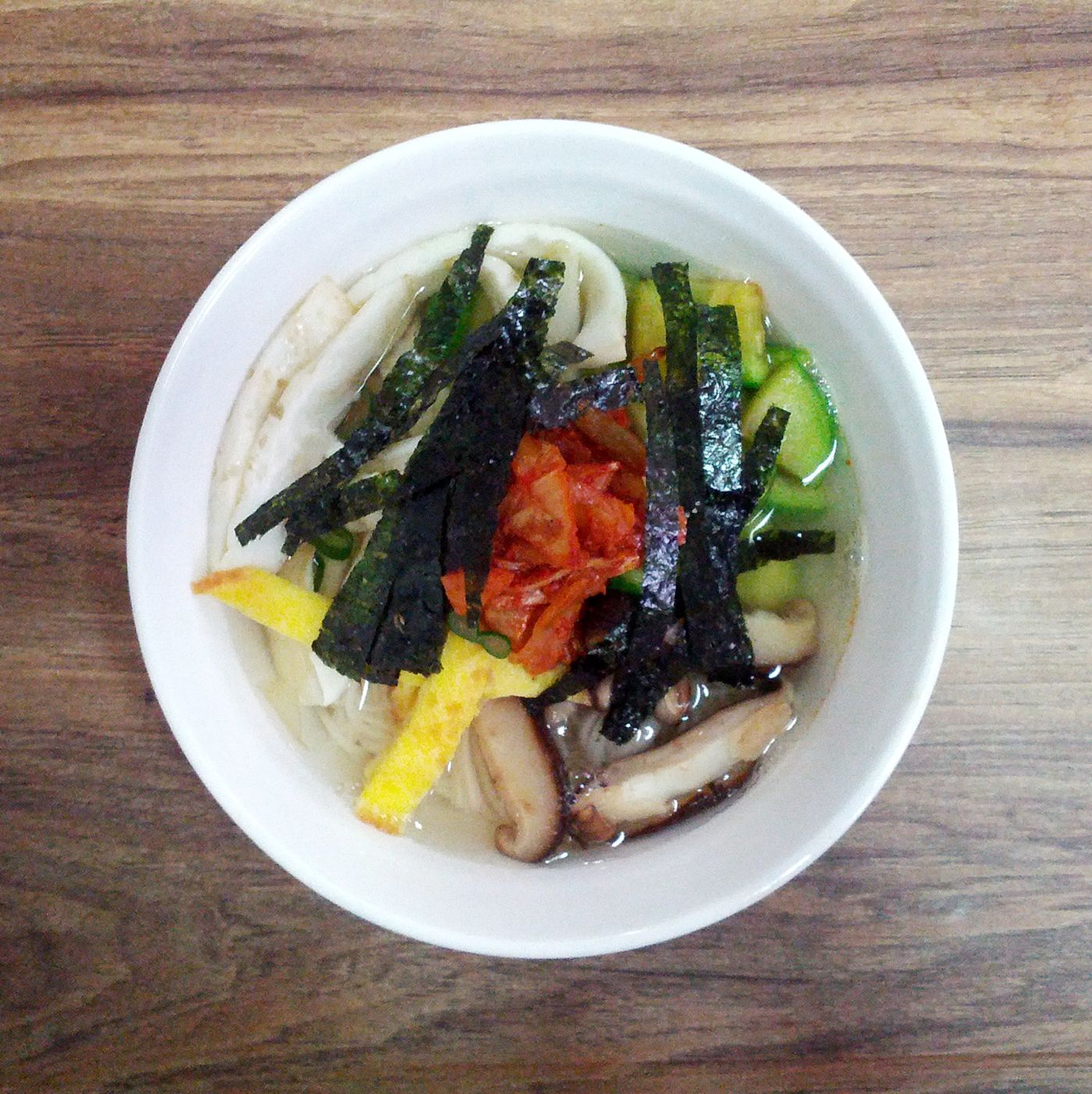 Janchi Guksu (Banquet Noodles)잔치국수Thin wheat noodles in a hot, clear anchovy or beef broth, topped with egg strips, zucchini and kimchi — the long-life noodles served at weddings and birthdays.
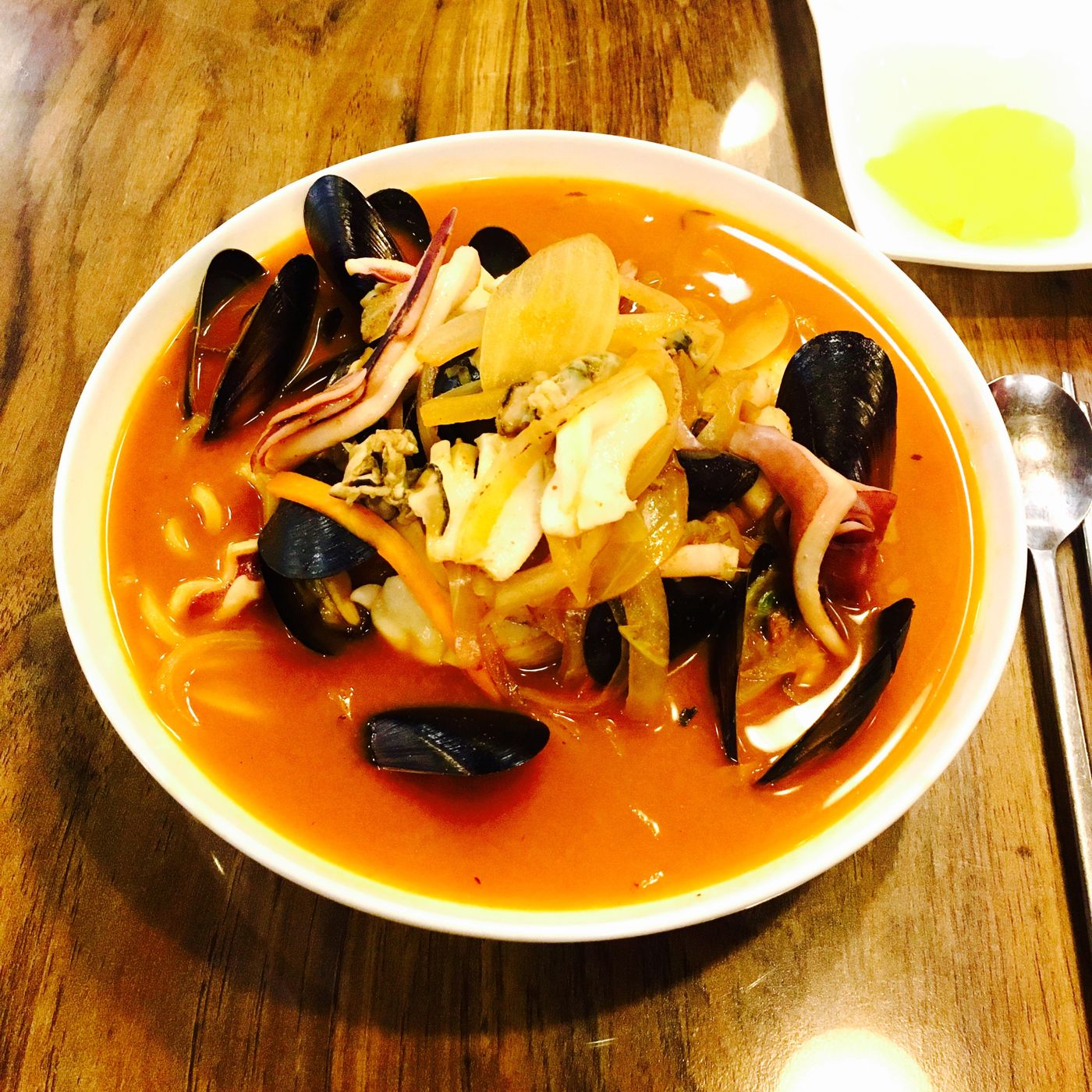 Jjamppong (Spicy Seafood Noodle Soup)짬뽕Thick wheat noodles in a fiery red broth of stir-fried pork, squid, shellfish and vegetables — the Korean-Chinese restaurant's spicy counterpart to jajangmyeon.
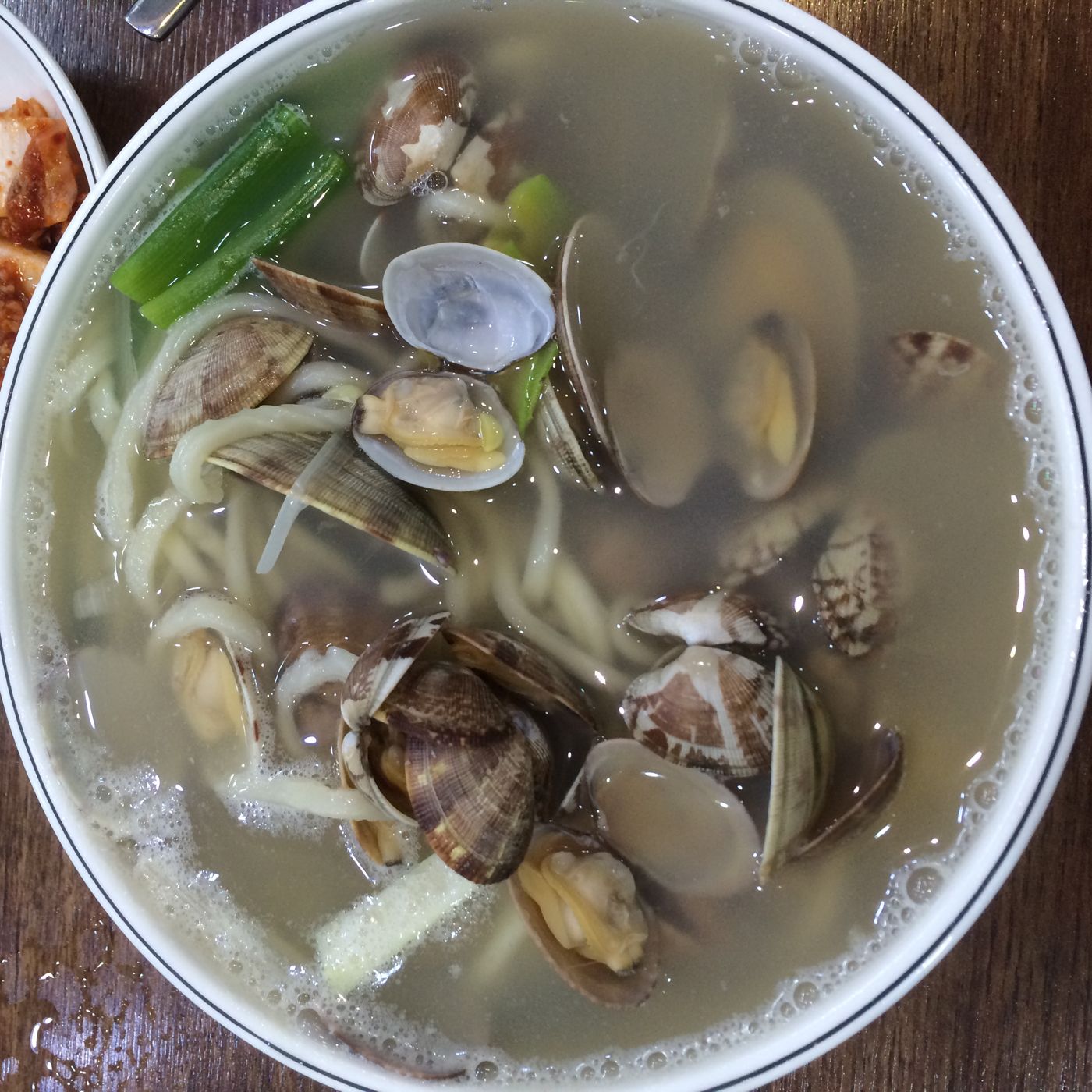 Kalguksu (Knife-Cut Noodle Soup)칼국수Hand-rolled wheat dough cut into ribbons with a knife and cooked right in anchovy, chicken or clam broth with potato and zucchini — Korea's homely noodle soup.
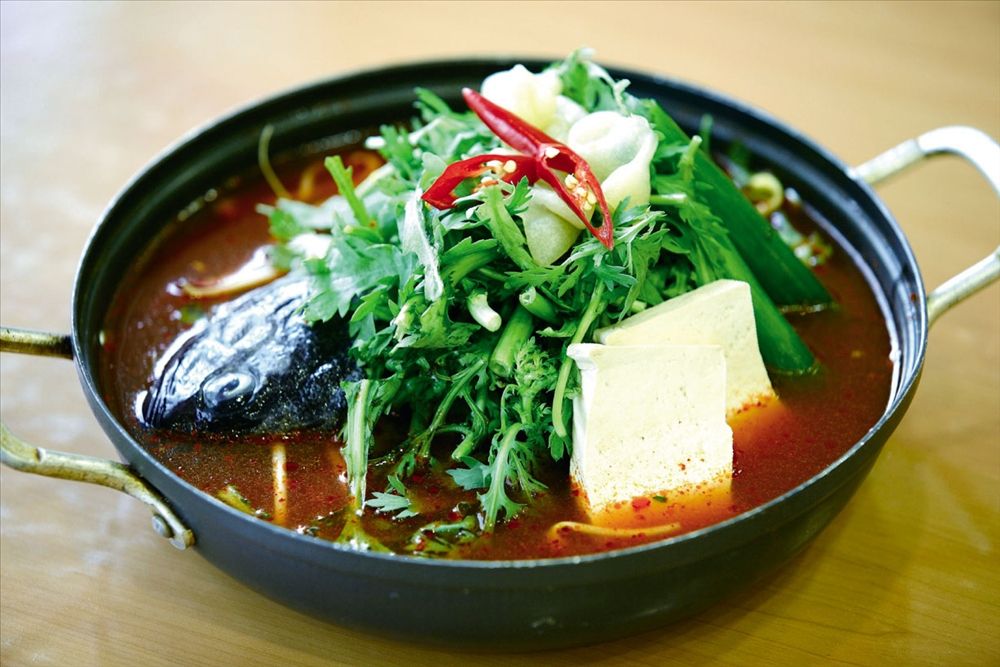 Maeuntang (Spicy Fish Stew)매운탕Fish — freshwater or sea — simmered with radish, tofu and fragrant greens in a fiery gochugaru and gochujang broth; the stew that follows sashimi and fills riverside restaurants.
- Mareun Hobak Namul (Dried Squash Namul)호박고지나물Sun-dried strips of young squash soaked and stir-fried with perilla oil and soy sauce — chewy and sweet, one of the stored "old greens" eaten on the first full moon.
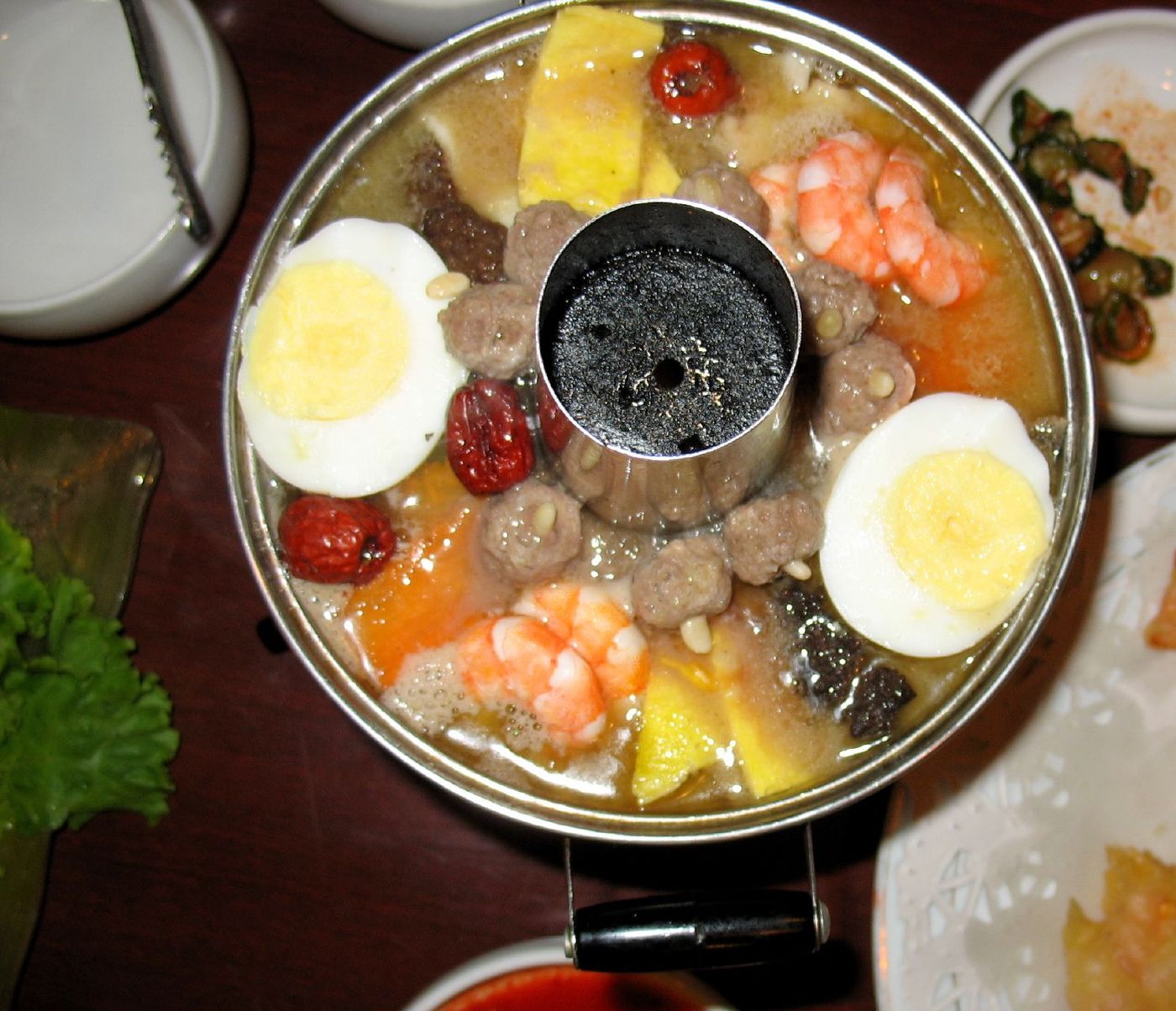 Sinseollo (Royal Hot Pot)신선로A court banquet dish of colorful beef, fish, egg, mushrooms and vegetables arranged in a chimney-centered brazier pot, with hot broth poured over and kept warm at the table.
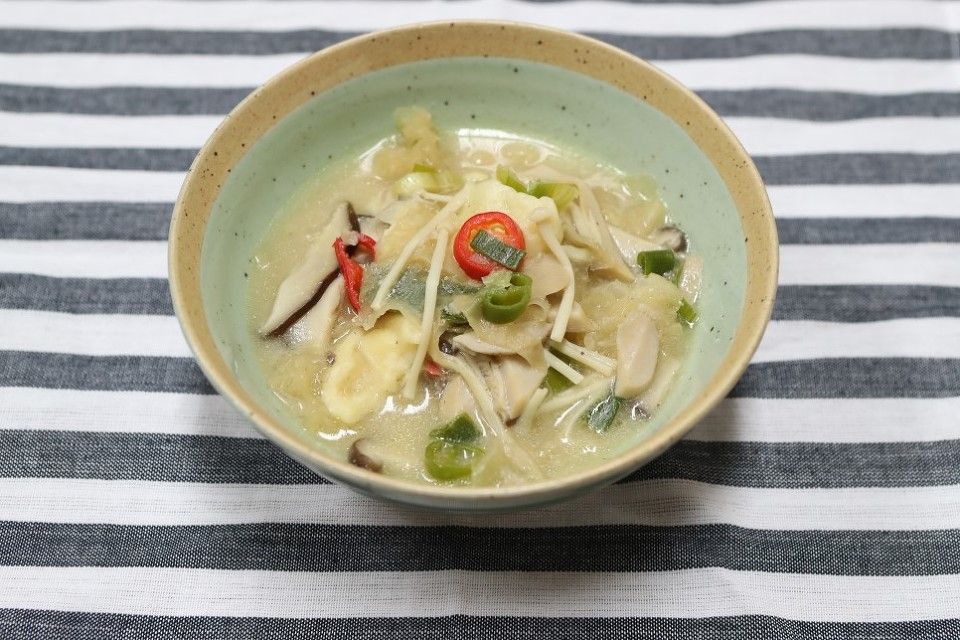 Sujebi (Hand-Torn Dough Soup)수제비Thin pieces of wheat dough pulled by hand into a simmering anchovy broth with zucchini and potato — a cozy, inexpensive one-pot meal, traditionally a summer staple.