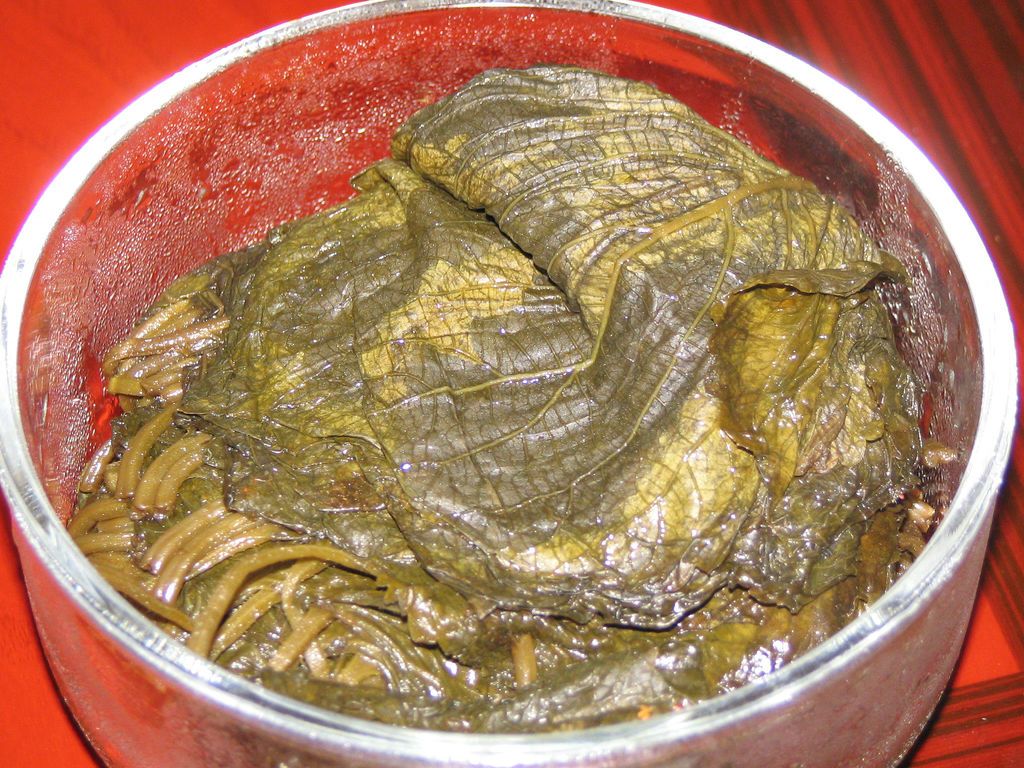
 Photo: Joseph Steinberg (Baltimoron in Korea) at Flickr, CC BY-SA 2.0, via Wikimedia Commons
Jangajji · Pickled 장아찌
Soy-Pickled Perilla Leaves
깻잎장아찌
Romanization: kkaennip-jangajji
Fragrant perilla leaves steeped in a sweet-salty soy brine — peeled off one at a time and wrapped around a spoonful of rice.
- Serves
- 15
- Prep
- 25 min
- Cook
- 10 min
Recipe
Ingredients · Serves 15
- 60 leavesPerilla leaves (kkaennip)about 100 g
- 150 mlSoy sauce (ganjang)
- 150 mlWater
- 3 tbspSugar
- 3 tbspRice vinegaroptional
- 3 clovesGarlicthinly sliced
- 1 Fresh red or green chilisliced, optional
Method
Technique: Jangajji: Pickling in Jang
Step 1: Rinse the perilla leaves one by one under running water, trim the stems short and pat or shake them as dry as possible.
Step 2: Stack the leaves in small bundles of 10 and lay them in a clean, heatproof glass container, tucking the garlic and chili between the layers.
Step 3: Bring the soy sauce, water and sugar to a boil, stirring to dissolve the sugar. Turn off the heat and stir in the vinegar, if using.
Step 4: Pour the hot brine over the leaves. Press them down with a small plate or weight so they stay submerged, and let cool.
Step 5: The next day, pour the brine into a pot, bring it back to a boil, let it cool completely and pour it back over the leaves. Repeat once more after 2–3 days for longer keeping.
Step 6: Refrigerate. The leaves are ready to eat in about 3 days and keep for several weeks chilled. Lift leaves out with clean chopsticks, and discard the batch if mold appears.
Origin & History
Jangajji is the Korean family of preserves in which vegetables are cured in salt, soy sauce, doenjang or gochujang and left to mature. The practice is old: Yi Gyu-bo's Goryeo-era verses already mention radish put down in jang to be eaten through the summer months, and farming calendars urged households to store vegetables while they were plentiful.
Perilla (deulkkae) has long been grown in Korea, where it is generally thought to have been cultivated since before the Unified Silla period, both for its seeds and its broad, aromatic leaves (kkaennip). The leaves are eaten fresh as a wrap, blanched as namul and, as here, pickled in soy sauce or soybean paste.
Soy-pickled perilla leaves are a staple mitbanchan — a keeping side dish made ahead and brought out at meal after meal.
Key Ingredients
 Perilla깻잎Perilla leaves have a bold, minty-herbal scent. They are eaten fresh as a wrap, pickled in soy sauce, or layered with seasoning as kkaennip-jangajji.
 Soy sauce간장Korean soy sauce, in two main kitchen forms: pale, salty guk-ganjang (soup soy sauce) brewed the traditional way from meju, and darker, sweeter jin-ganjang for braises and marinades.
 Garlic마늘Used raw, minced, pickled and roasted, garlic is one of the essential aromatics of Korean food — in seasonings, marinades, kimchi and namul.
Nutrition
| Calories | 19 kcal |
|---|---|
| Protein | 0.6 g |
| Fat | 0.1 g |
| Carbohydrates | 3.9 g |
| Fiber | 0.7 g |
| Sodium | 271 mg |
Notable forVitamin K
From the Korean Food Composition Table entry “Perilla leaf, Pickled, Deulkkaennip-Jangajji” (per 100 g: 124 kcal, 1809 mg sodium), scaled to the serving size. Homemade batches vary with salting and seasoning. Actual values vary with ingredients, portion size and preparation.
Health Benefits
- Leafy herb: perilla leaves are low in calories and contain beta-carotene and the plant compound rosmarinic acid.
- A little goes far: the strong flavor means a single leaf can season a whole spoonful of rice.
Regional Variations
- Soy-sauce style: the version here, cured in a boiled soy-sugar brine, often sharpened with a little vinegar.
- Doenjang style: leaves layered in soybean paste for a deeper, earthier pickle; vegetables destined for paste are usually dried a little first so they do not water it down.
- Seasoned leaves: a quicker relative brushes each leaf with soy sauce, chili flakes and garlic and is eaten within days rather than cured.
Pairings
 Gyeran Mari (Rolled Omelet)계란말이Beaten egg cooked in thin layers and rolled into a soft, striped log, then sliced — a gentle, everyday banchan and a lunchbox classic.
 Myeolchi Bokkeum멸치볶음Small dried anchovies stir-fried until crisp, then glazed in a sweet soy and garlic syrup — a keeping banchan found in refrigerators across Korea.
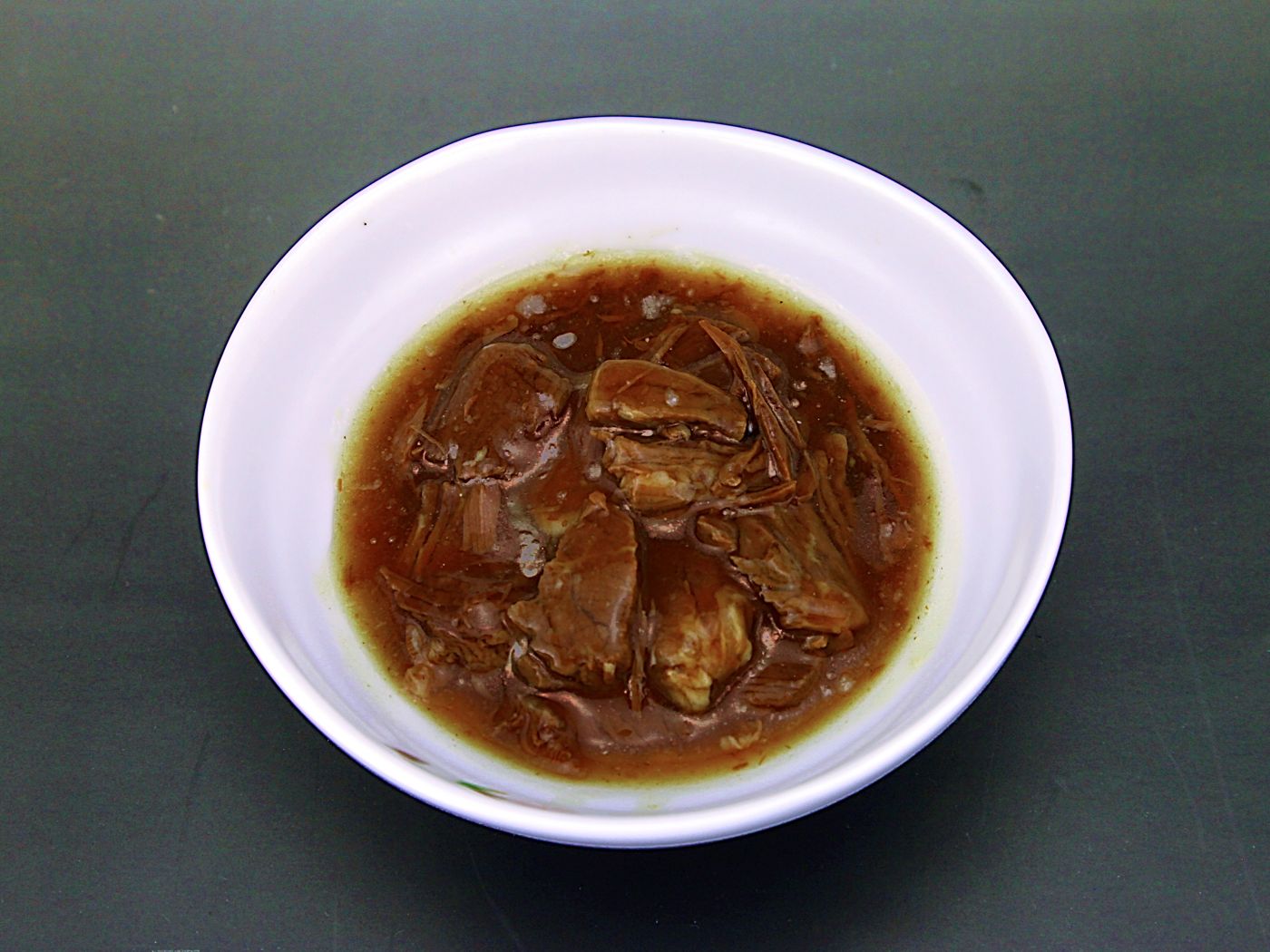 Jangjorim장조림Lean beef simmered in soy sauce until tender, then torn into strands and served in its savory broth, often with eggs, garlic and mild peppers.