 Photo: Charles Haynes, CC BY-SA 2.0, via Wikimedia Commons
Namul · Seasoned vegetables 나물
Kongnamul Muchim
콩나물무침
Romanization: kongnamul-muchim
Soybean sprouts cooked under a lid until just tender, then tossed with garlic, green onion and sesame oil — crisp, nutty and on tables across Korea.
- Serves
- 4
- Prep
- 5 min
- Cook
- 7 min
RegionJeolla
Jump to recipeRecipe
Ingredients · Serves 4
- 300 gSoybean sproutsrinsed; pick off any loose hulls and discolored roots
- 120 mlWater
- ½ tspSaltplus more to taste
- 1 cloveGarlicfinely minced
- 1 tbspGreen onionfinely chopped
- 1 tbspToasted sesame oil
- 1 tspToasted sesame seeds
- 1 tspGochugaruoptional, for the spicy version; not included in the nutrition estimate
Method
Technique: Blanching and Seasoning Namul
Step 1: Put the sprouts and water in a pot, cover with a tight lid and bring to a boil over medium-high heat.
Step 2: Lower the heat to medium and cook, still covered, for about 5–6 minutes, until the stems are tender but still crunchy. Keep the lid on the whole time to avoid a raw, beany smell.
Step 3: Drain the sprouts and spread them out on a tray or in a wide bowl so they stop cooking and cool slightly.
Step 4: Add the salt, garlic, green onion, sesame oil and sesame seeds (and gochugaru, if using). Toss gently with your fingertips so the stems don't break.
Step 5: Taste and add a pinch more salt if needed. Serve warm, at room temperature or chilled; it keeps for 2–3 days in the refrigerator.
Origin & History
Soybean sprouts (kongnamul) are soybeans set in a vessel with drainage holes, kept out of the light and watered until long pale stems grow. Nobody knows exactly when Koreans began eating them, but the Encyclopedia of Korean Culture points out that the soybean itself is thought to have originated in Manchuria, once Goguryeo territory, which hints at a long history. The sprouts appear in writing in the Goryeo-period medical text Hyangyak gugeupbang under the name daeduhwang, and the Joseon household manual Sallim gyeongje records them as duachae along with a method for cooking them.
For generations the sprouts were grown at home. A cracked earthenware jar or a steamer pot (siru) set over a basin, draped with a dark cloth and tucked into the corner of a room, would be watered by ladle several times a day; in five or six days the sprouts were ready. When ancestral rites approached, a sprouting jar was a fixture in the corner of the room. Because the sprouts grow through the winter, they were long valued as a fresh vegetable in the coldest months.
Kongnamul goes into soups, rice, stir-fries and kimchi, but this simple dressed version is one of the most common banchan of all. Cooks have traditionally steamed or boiled the sprouts with care to avoid a raw, beany smell — hence the widespread habit of keeping the lid closed while they cook.
Key Ingredients
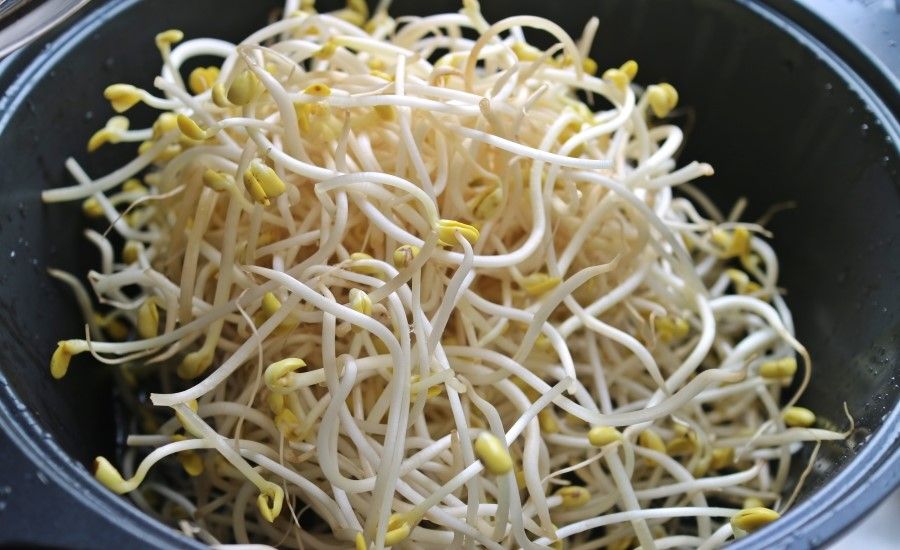 Soybean sprouts콩나물Soybeans sprouted in the dark until they grow long, pale stems topped with a yellow bean. A staple of everyday Korean cooking in kongnamul-muchim, clear sprout soup and sprout rice.
 Garlic마늘Used raw, minced, pickled and roasted, garlic is one of the essential aromatics of Korean food — in seasonings, marinades, kimchi and namul.
 Green onion파Korean green onion (pa), from thick-stemmed daepa to slender scallions — chopped into nearly every seasoning sauce, soup and kimchi, and the star of pa-kimchi.
 Sesame참깨Toasted sesame seeds and sesame oil (chamgireum) finish countless Korean dishes, adding a nutty aroma and gloss.
 Gochugaru고춧가루Korean red chili powder, made from dried red peppers ground coarse or fine. It gives kimchi, gochujang and countless banchan their color and warmth.
Nutrition
| Calories | ~68 kcal |
|---|---|
| Protein | ~3.7 g |
| Fat | ~4.7 g |
| Carbohydrates | ~3.1 g |
| Fiber | ~1.8 g |
| Sodium | ~295 mg |
Notable forVitamin K · Folate · Plant protein
Estimated from the Korean Food Composition Table value for raw kongnamul (USDA's entry for sprouted soybeans describes a much shorter sprout with several times the calories, so it was not used), plus USDA FoodData Central values for salt, garlic, green onion, sesame oil and sesame seeds, divided by four. Vitamin C figures for soybean sprouts vary widely between sources and fall during cooking, so it is not listed as a notable nutrient. Actual values vary with ingredients, portion size and preparation.
Health Benefits
- Plant protein and fiber: soybean sprouts add some plant protein and fiber to a meal for very few calories.
- A winter vegetable: Korean sources note that sprouting gives soybeans vitamin C that the dry beans lack, which made the sprouts a valued fresh vegetable in winter. Measured amounts vary considerably and much is lost with longer cooking, so short cooking times are best.
- A traditional comfort food: the related sprout soup, kongnamul-guk, has long been eaten the morning after drinking for its mild, clear broth; Jeonju's kongnamul-gukbap is a well-known hangover dish. This is a cultural tradition rather than a proven remedy.
Regional Variations
- Plain or spicy: the plain version is seasoned with salt or soy sauce, garlic and sesame oil; a spicy version adds gochugaru.
- Jeonju: the city of Jeonju in North Jeolla is famous for its soybean sprouts, credited locally to good water and to sprouts grown from small black seomoktae beans. It is known for kongnamul-gukbap (sprout and rice soup) and for sprout rice and bibimbap.
- Southern specialties: soybean sprouts are an essential ingredient in regional dishes such as Masan's spicy braised sea squirt (mideodeok-jjim) and Jinju-style bibimbap.
- Steamed, not boiled: older home cooks often steamed the sprouts over rice or water rather than boiling them, then dressed them with seasoned soy sauce.
Pairings
 Sigeumchi Namul시금치나물Spinach blanched for a few seconds, squeezed dry and dressed with garlic, soy sauce and sesame — one of the simplest and most familiar namul.
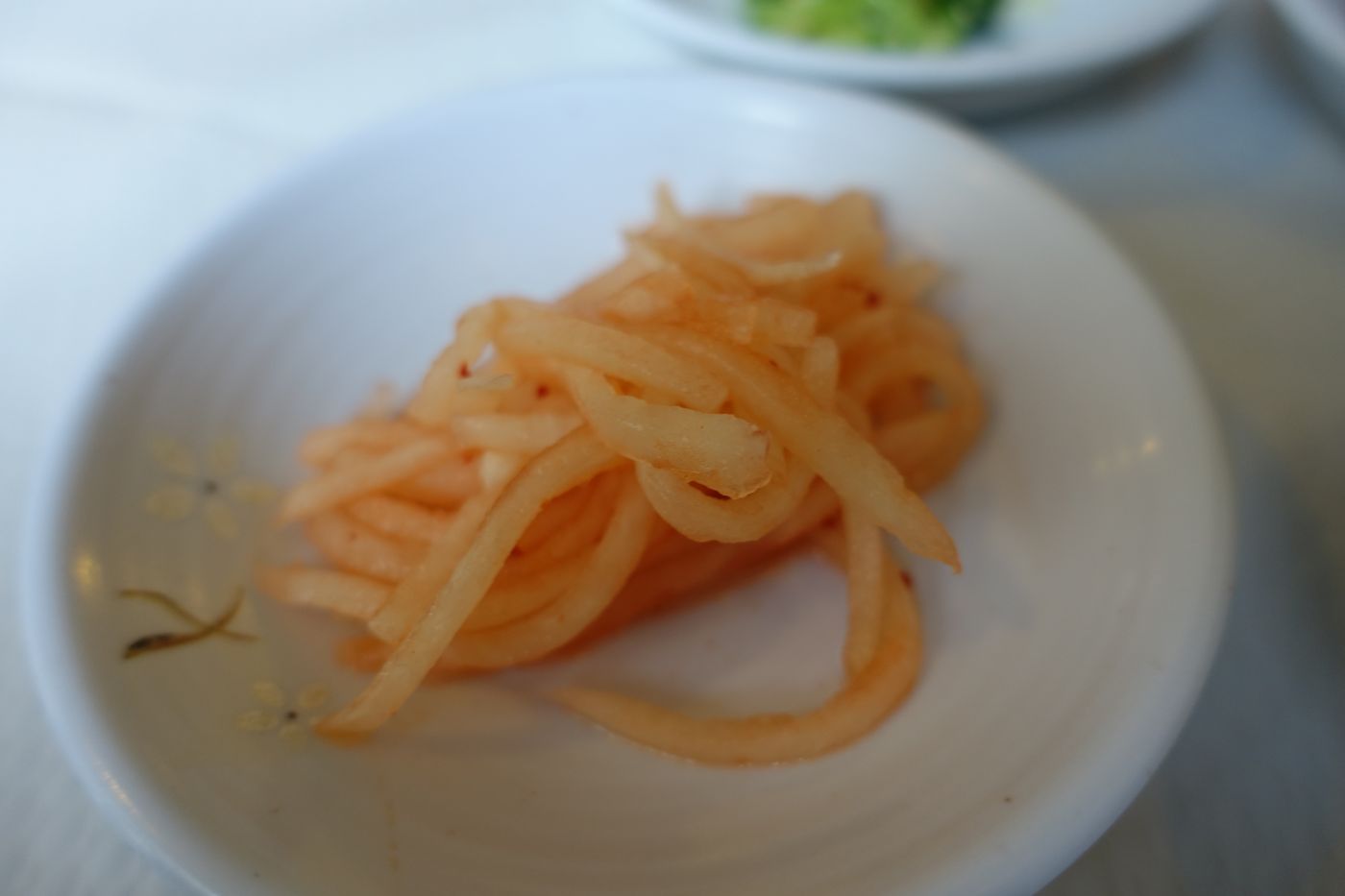 Musaengchae무생채Fine matchsticks of Korean radish dressed raw with chili flakes, a little vinegar and sugar — crisp, sweet-sharp and best made just before the meal.
 Napa Cabbage Kimchi배추김치Salted napa cabbage layered with a red paste of chili, garlic, ginger and fermented seafood, then left to ripen: the kimchi most people picture first.
Sources
- 01콩나물 (Kongnamul) — Encyclopedia of Korean Culture
- 02콩나물국 (Kongnamul-guk) — Encyclopedia of Korean Culture
- 03전주콩나물국밥 (Jeonju kongnamul-gukbap) — Encyclopedia of Korean Culture
- 04Korean Food Composition Database — National Institute of Agricultural Sciences, RDA
- 05Seed and Bean Sprouts — UConn Food Safety (University of Connecticut)
Last updated