Ingredient
Yangpa (onion)
양파
Romanization: yangpa
The bulb onion, literally the "Western scallion." A latecomer to Korea, it is now everywhere: sweetening stir-fries and braises, pickled in soy sauce as yangpa-jangajji, and served raw beside grilled meat.
Flavor
Raw, crisp and pungent with a sharp, sulfurous bite; cooked, it turns soft, sweet and mellow, caramelizing to deep savoriness. Korean onions are often juicy and relatively sweet.
 Photo: Colin, CC BY-SA 3.0, via Wikimedia Commons
Origin & History
The onion (Allium cepa) is thought to have originated in western Asia, spreading through the Middle East to Egypt and the Mediterranean, then across Europe. Its Korean name, yangpa, simply means "Western pa" (scallion), and it reached Korea only at the end of the Joseon period. The Encyclopedia of Korean Culture suggests it came from the United States or Japan.
Changnyeong in Gyeongsangnam-do calls itself the birthplace of Korean onion growing. According to local history, onions arriving from Japan were trial-planted at a horticultural station at Ttukseom in Seoul in 1908, and the following year Seong Chan-yeong of Seok-ri, Daeji-myeon, began the first farm cultivation in Changnyeong. Seed long had to be imported at great cost until a local horticulture teacher produced domestic seed in 1946. In the 1950s Seong's grandson, Seong Jae-gyeong, promoted the crop to neighbors as a far more lucrative winter crop than barley, planted in rice paddies after the harvest. By 1970 Changnyeong produced over a third of the nation's onions.
Today the largest growing area is the southwest. In Muan County, South Jeolla, onions grown in red clay soils near the coast are a signature product; in 2022 the county farmed about 2,000 hectares of onions, close to two-fifths of the province's onion fields. The Encyclopedia of Korean Culture notes the regional pattern: Jeolla onions are mostly grown in dry fields, while in the Gyeongsang provinces they are often a second crop in rice paddies. Onions are sown in late summer, transplanted in autumn and harvested in early summer once the tops fall over.
In Korean cooking, onion is the quiet sweetener in bulgogi, jeyuk-bokkeum, japchae and countless braises and soups, and it is fried with chunjang in jajangmyeon. Raw slices with ssamjang accompany grilled meat, and soy-pickled yangpa-jangajji is a staple banchan.
Nutrition
| Calories | 29 kcal |
|---|---|
| Protein | 0.96 g |
| Fat | 0.17 g |
| Carbohydrates | 6.52 g |
| Fiber | 1.6 g |
| Sodium | 2 mg |
Notable forVitamin C · Potassium · Vitamin B6
Korean Food Composition Table entry "Onion (Yangpa), Raw" (양파, 생것): also 4.93 mg vitamin C, 148 mg potassium, 0.113 mg vitamin B6, 11 µg folate and 4.71 g total sugars per 100 g. Actual values vary with ingredients, portion size and preparation.
Health Benefits
- Low-calorie flavor base: Per the Korean Food Composition Table, onion is low in calories and fat and provides some vitamin C, potassium and vitamin B6, plus fiber.
- Traditional beliefs: Korean references repeat long-held claims that onion helps prevent hardening of the arteries and high blood pressure and eases fatigue. These are traditional and preliminary ideas, not established effects of eating onion.
- Pickles add salt and sugar: Yangpa-jangajji and other onion pickles are brined in soy sauce, vinegar and sugar, so they contribute sodium and sugar even though the onion itself has almost none.
- Digestive comfort: Some people find raw onion hard to digest or a trigger for heartburn; cooking it often makes it gentler.
Informational, not medical advice. Talk to a qualified professional about your own health and diet.
Dishes with Yangpa (onion)
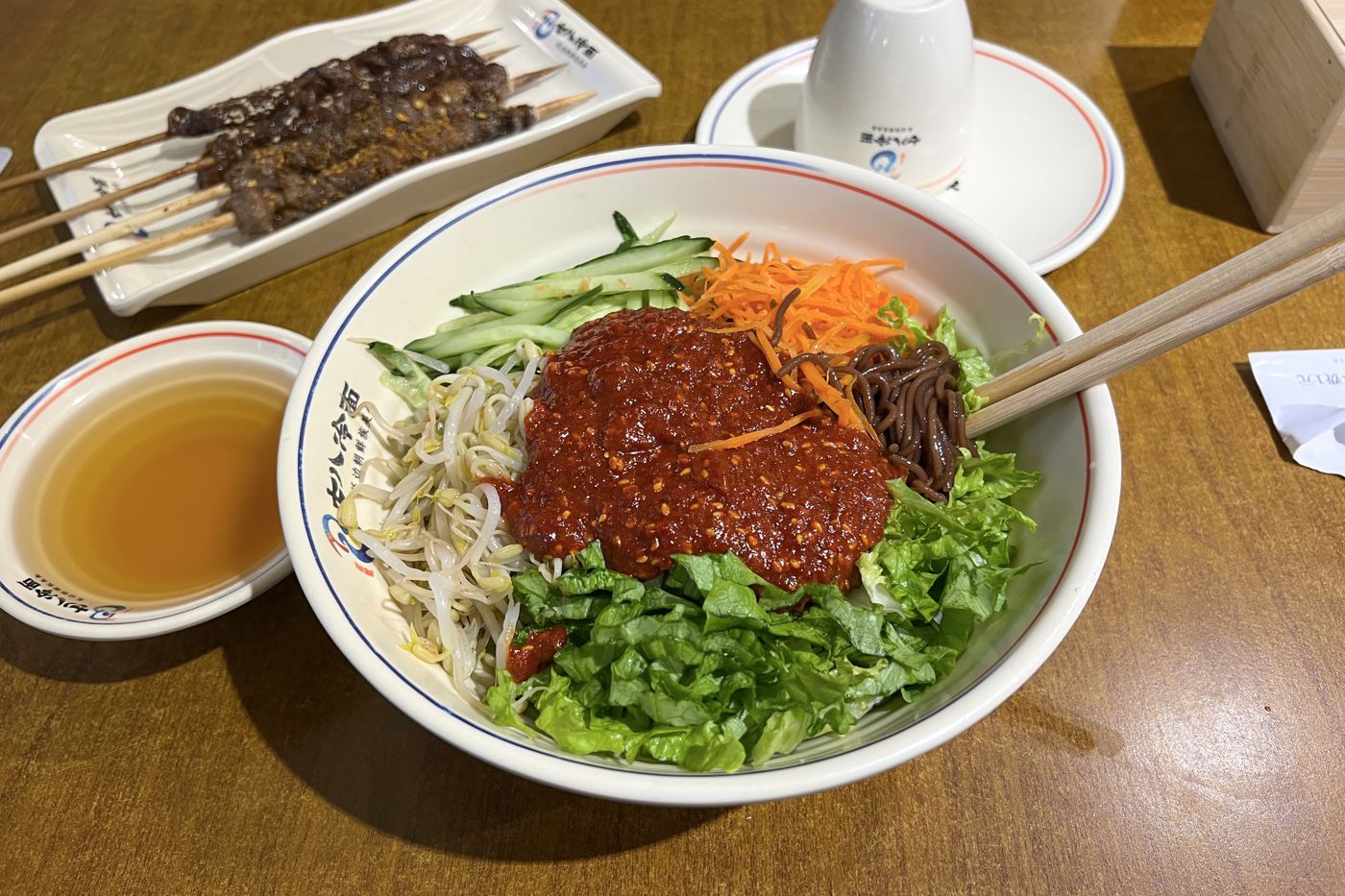 Bibim-naengmyeon (Spicy Mixed Cold Noodles)비빔냉면Chewy starch noodles tossed in a sweet, vinegary chili sauce, topped with cucumber, pear and egg — the Hamheung tradition of hoe-naengmyeon, carried south by refugees.
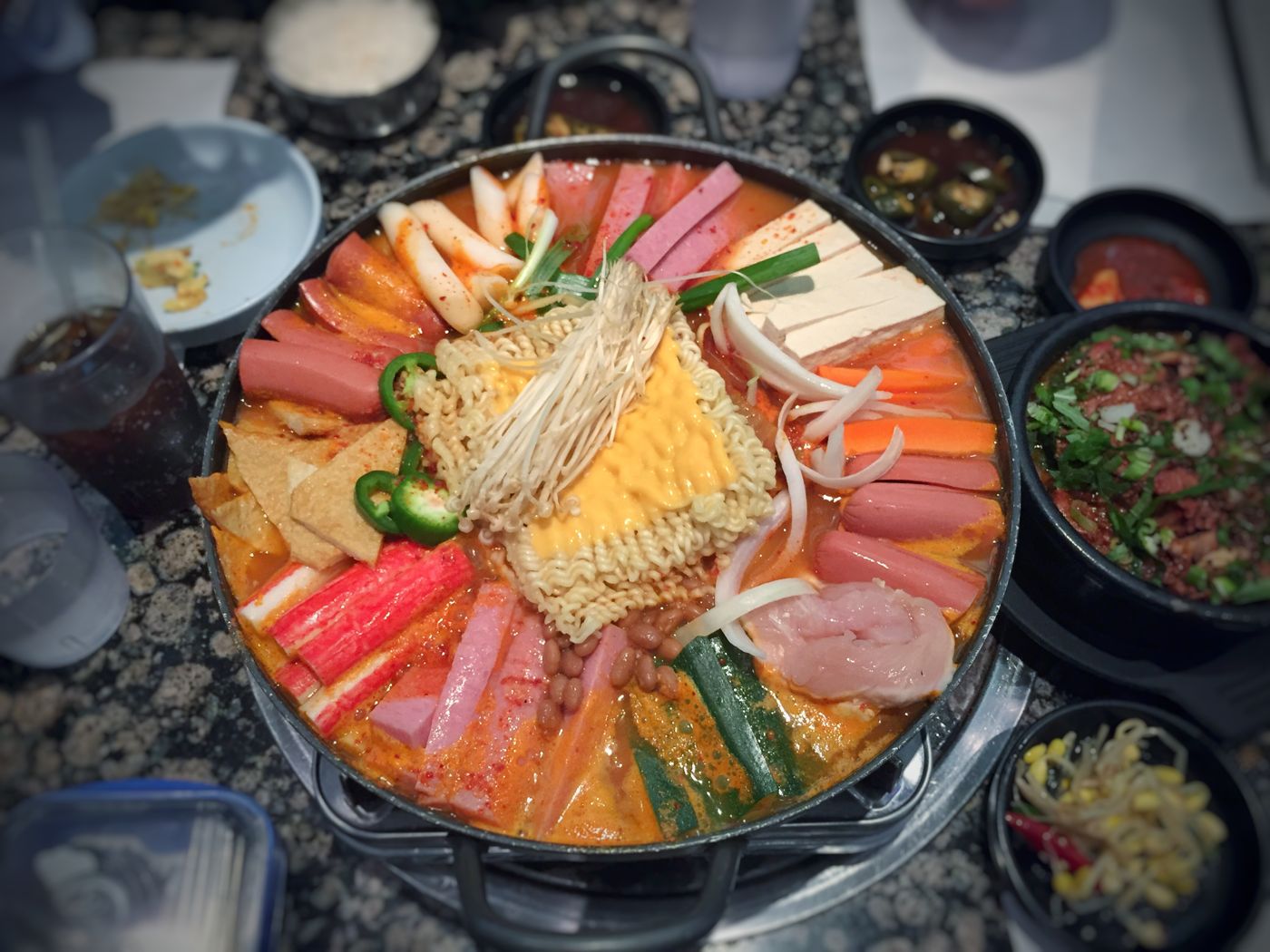 Budae Jjigae (Army Base Stew)부대찌개Ham, sausages and canned beans simmered with kimchi, tofu and a gochujang-chili broth, usually finished with instant noodles — a postwar stew born around US Army bases.
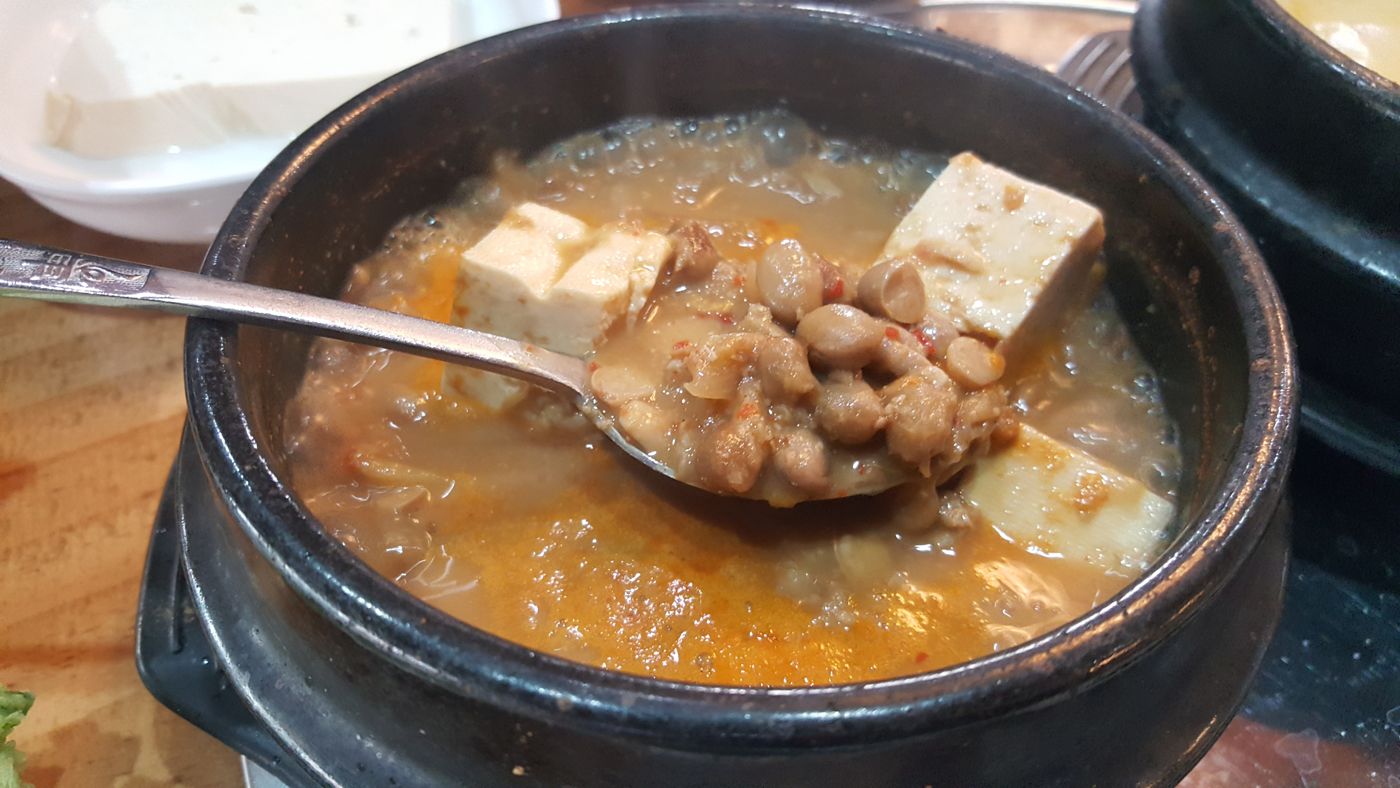 Cheonggukjang Jjigae (Quick-Fermented Soybean Stew)청국장찌개A thick, pungent winter stew of quick-fermented whole soybeans simmered with sour kimchi, tofu and a little pork or beef — loved for its earthy depth, notorious for its smell.
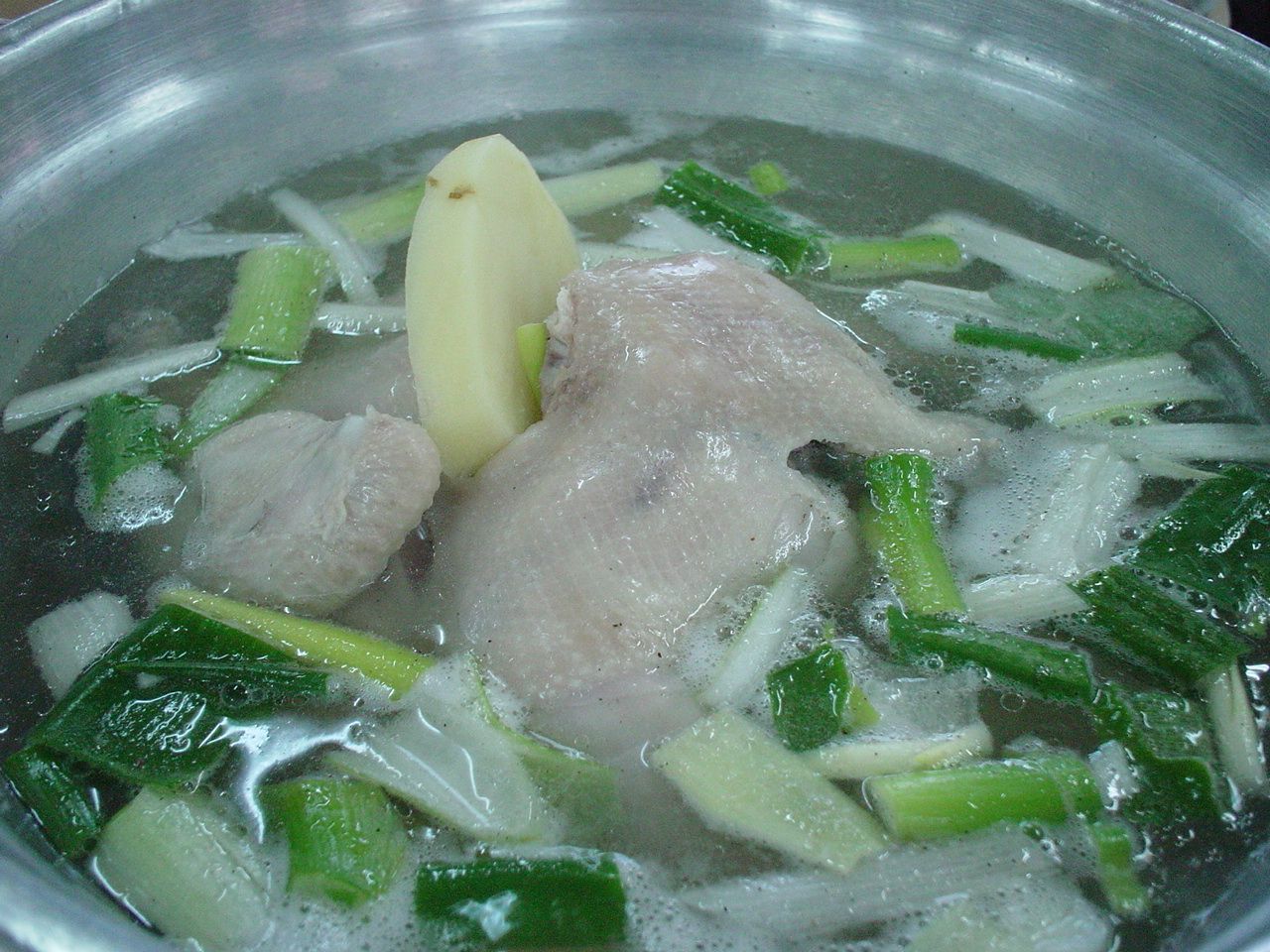 Dak Hanmari ("One Whole Chicken" Hot Pot)닭한마리A whole chicken simmered at the table with potatoes, rice cakes and green onion, dipped in a vinegar-mustard sauce, then finished with noodles in the broth — a Dongdaemun original.
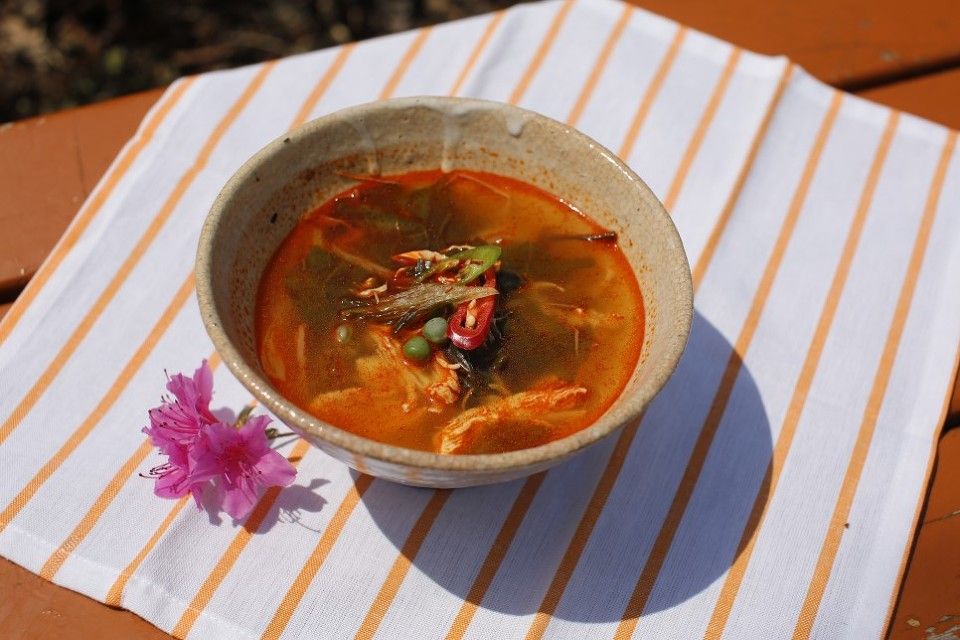 Dakgaejang (Spicy Chicken Soup)닭개장Shredded chicken simmered with bracken, taro stems and plenty of green onion in a fiery chili-oil broth — the chicken cousin of yukgaejang.
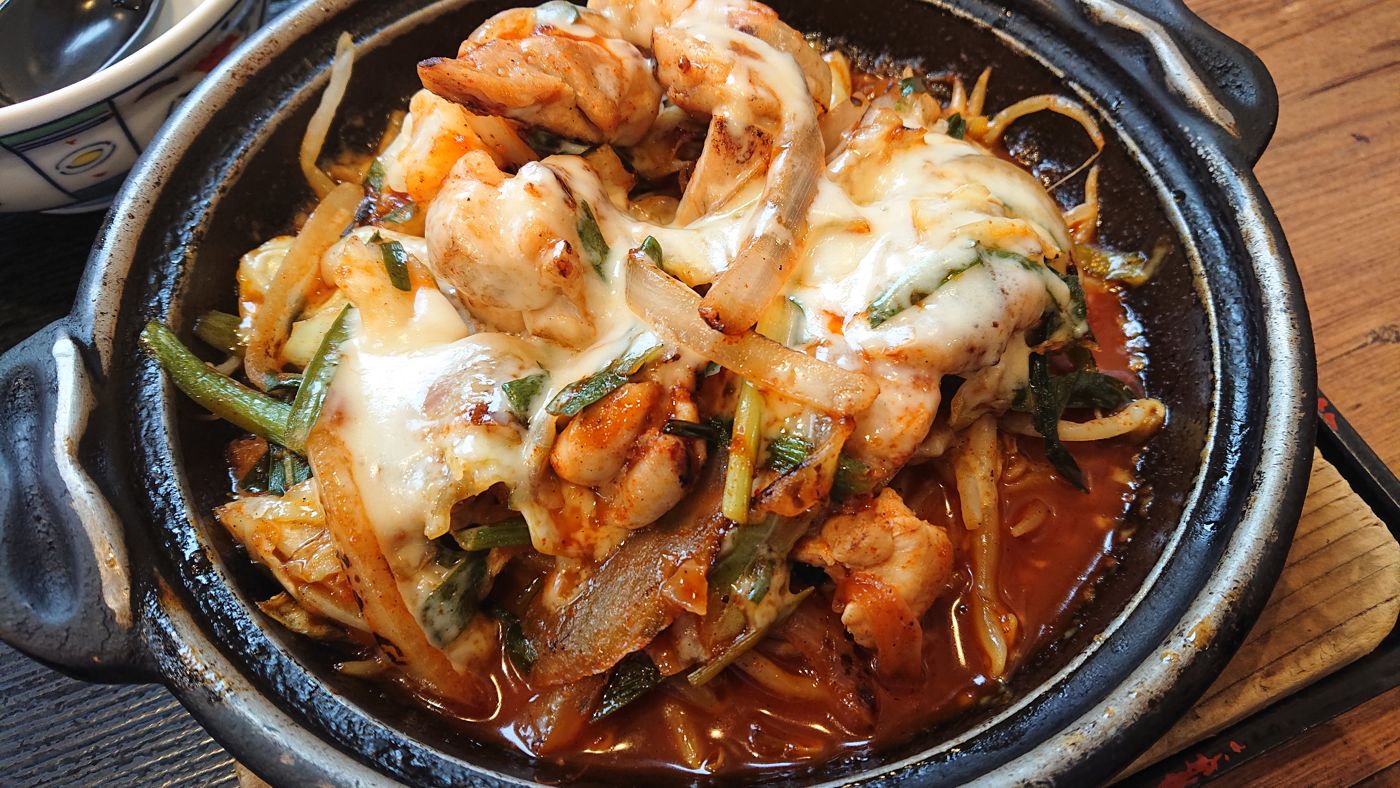 Dakgalbi (Spicy Stir-Fried Chicken)닭갈비Chicken marinated in a fiery gochujang sauce and cooked on a big iron pan with cabbage, sweet potato and rice cakes — Chuncheon's signature dish, finished with fried rice.
- Gamja Salad (Korean Potato Salad)감자샐러드Mashed boiled potato folded with egg, cucumber, carrot and mayonnaise — a soft, mildly sweet modern banchan served alongside rice, kimchi and namul.
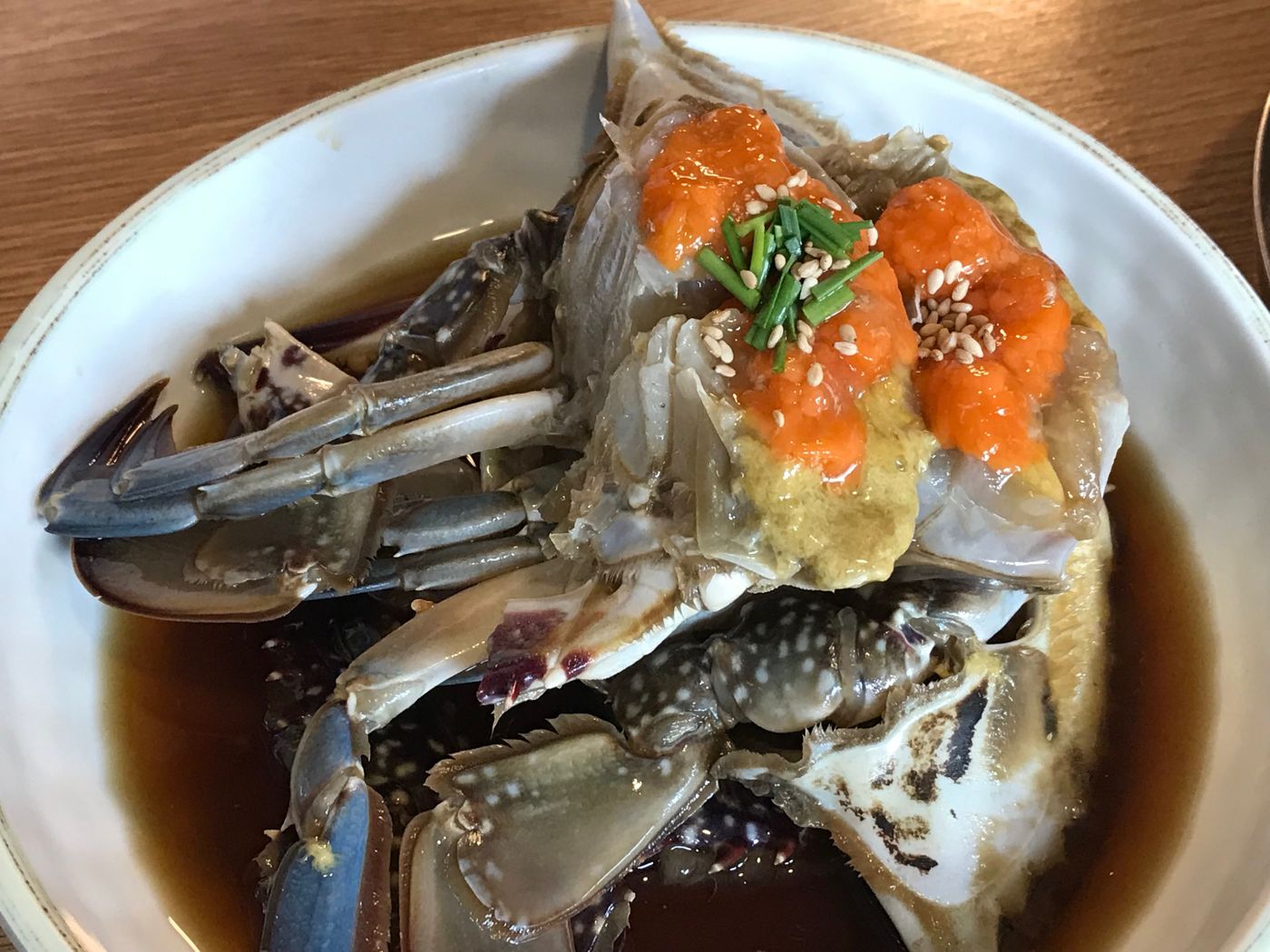 Soy-Marinated Raw Crab간장게장Raw crabs steeped in a boiled-and-cooled soy marinade until silky and savory — a centuries-old preserve, eaten by spooning rice into the shell.
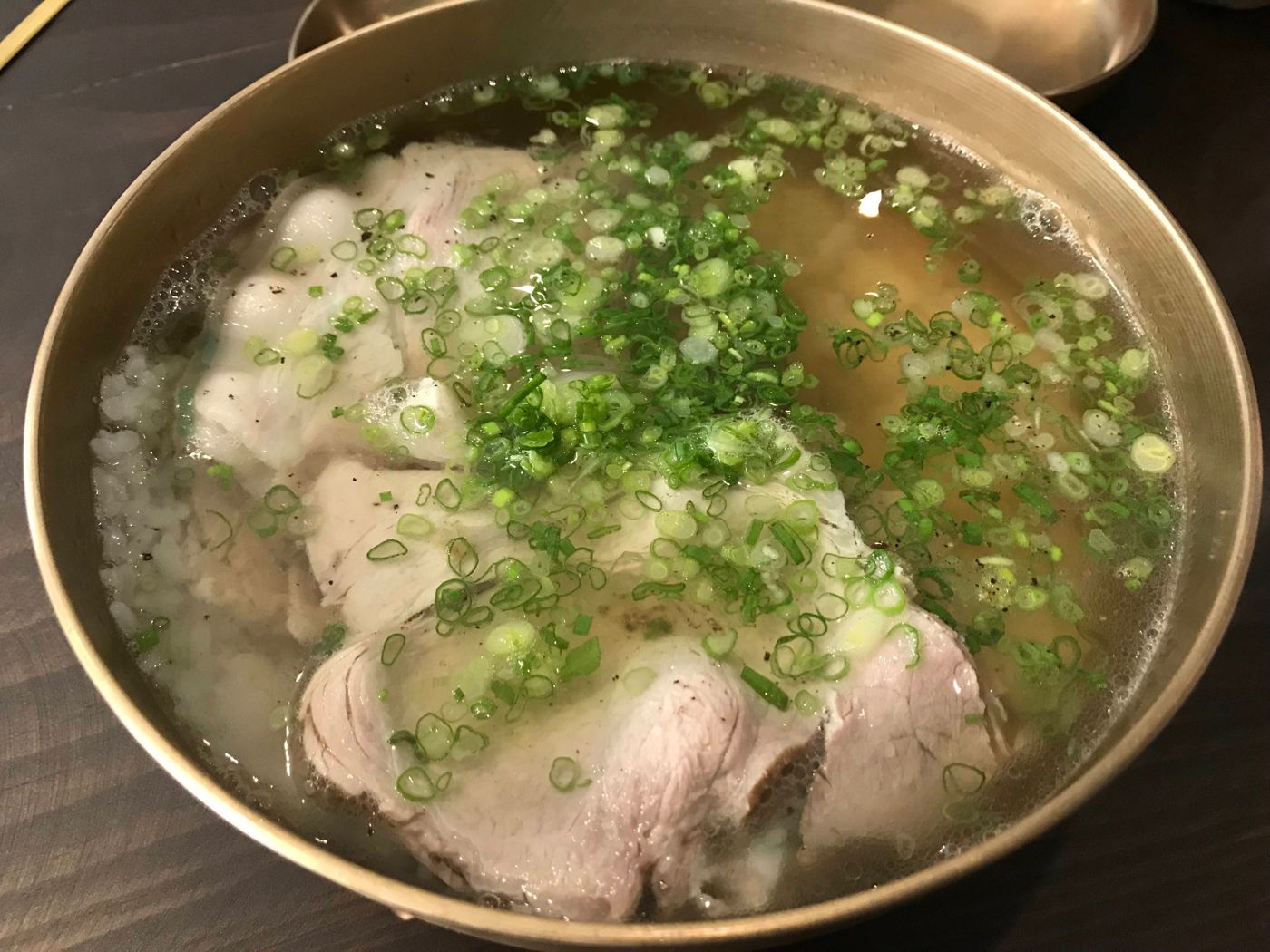 Gomtang (Beef Bone and Brisket Soup)곰탕A long-simmered beef soup, usually built on brisket, shank and offal and served over rice, with a broth that is lightly salted at the table. A pillar of the Korean gukbap tradition.
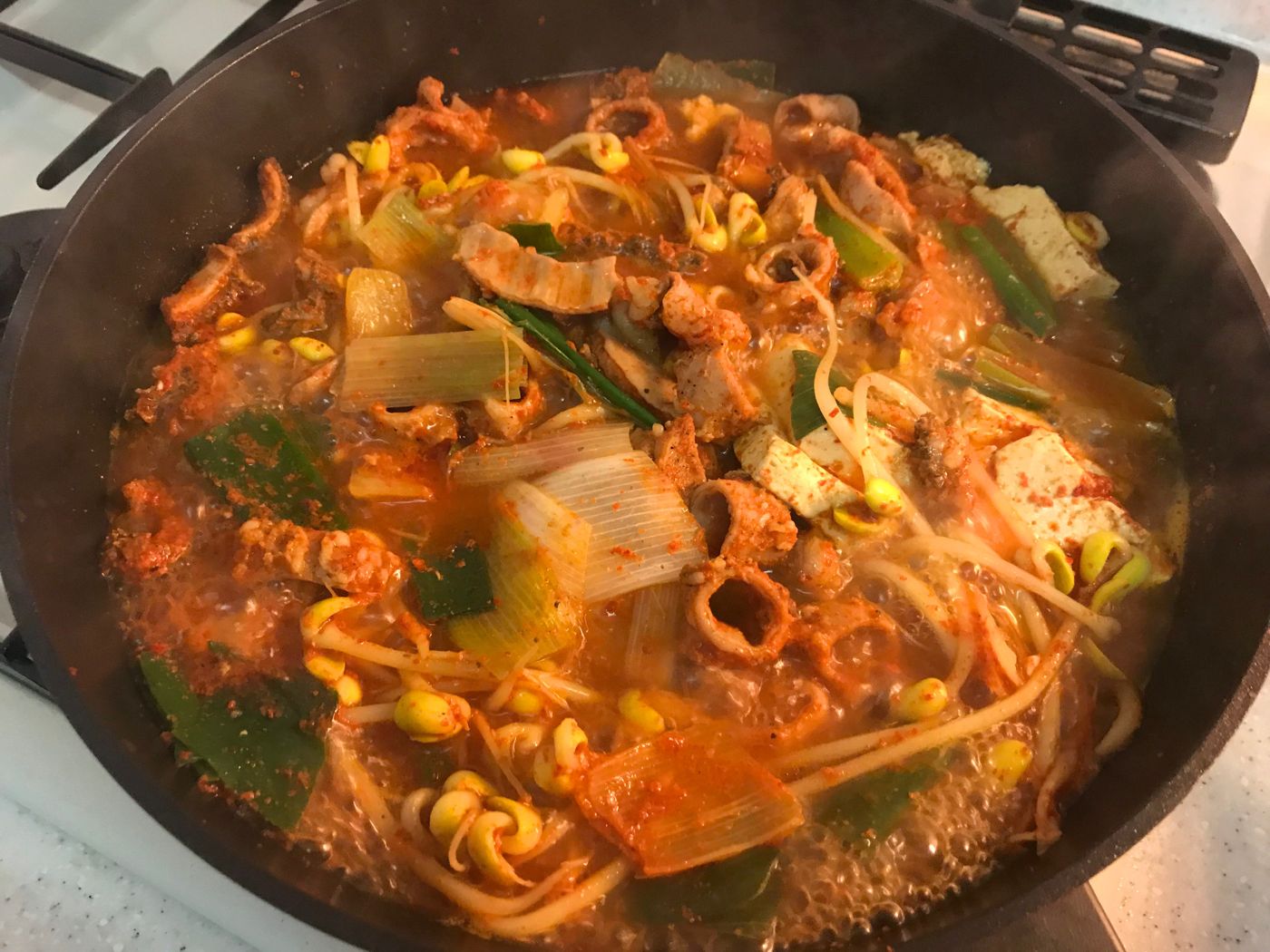 Gopchang Jeongol (Beef Intestine Hot Pot)곱창전골Cleaned beef small intestine and tripe simmered at the table with vegetables, mushrooms and glass noodles in a spicy broth — a rich, chewy hot pot for cold nights.
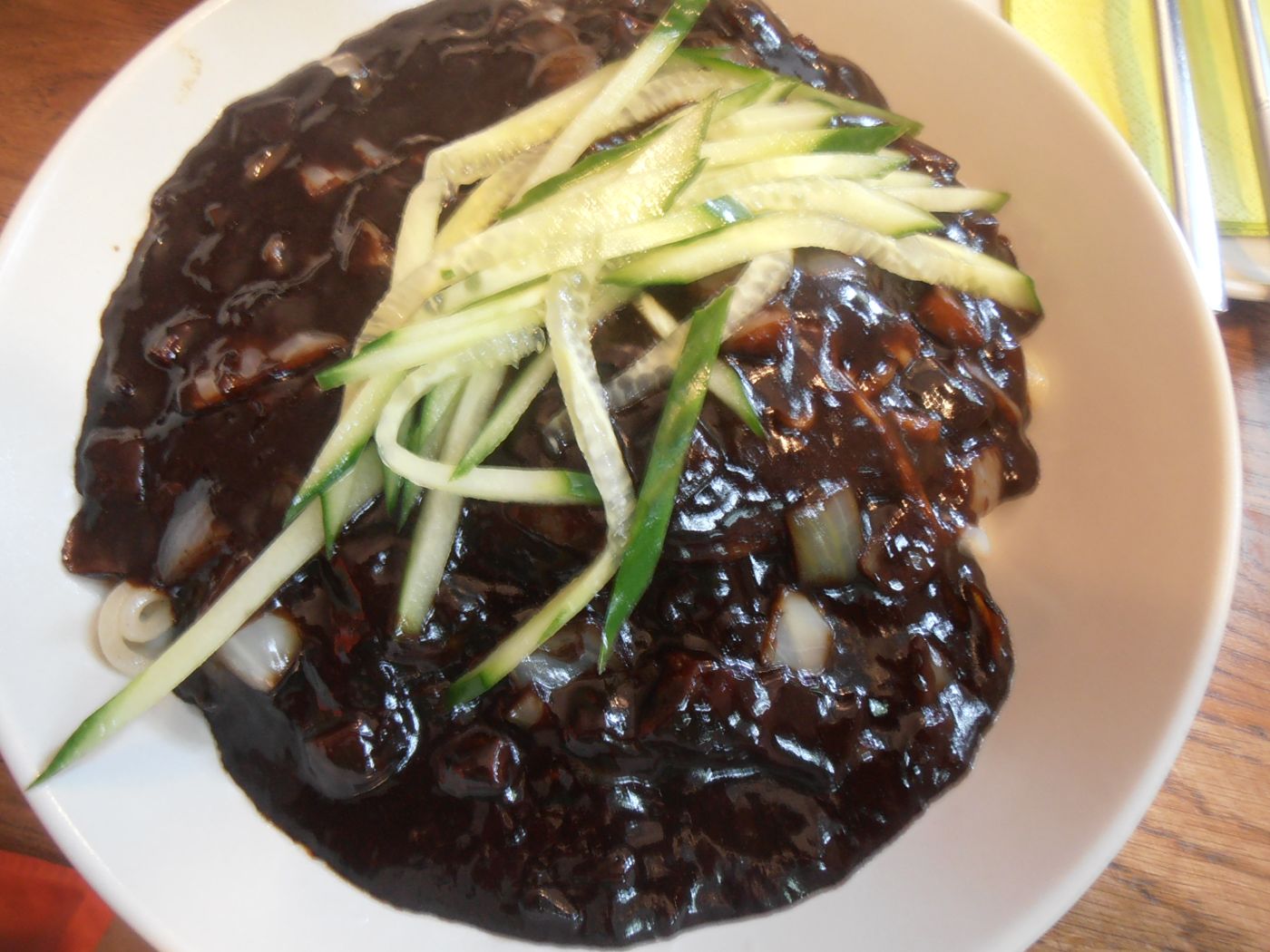 Jajangmyeon (Noodles in Black Bean Sauce)자장면Wheat noodles under a glossy sauce of chunjang fried with pork, onion and potato — the Korean-Chinese dish born among Shandong migrants in Incheon, contested origin claims and all.
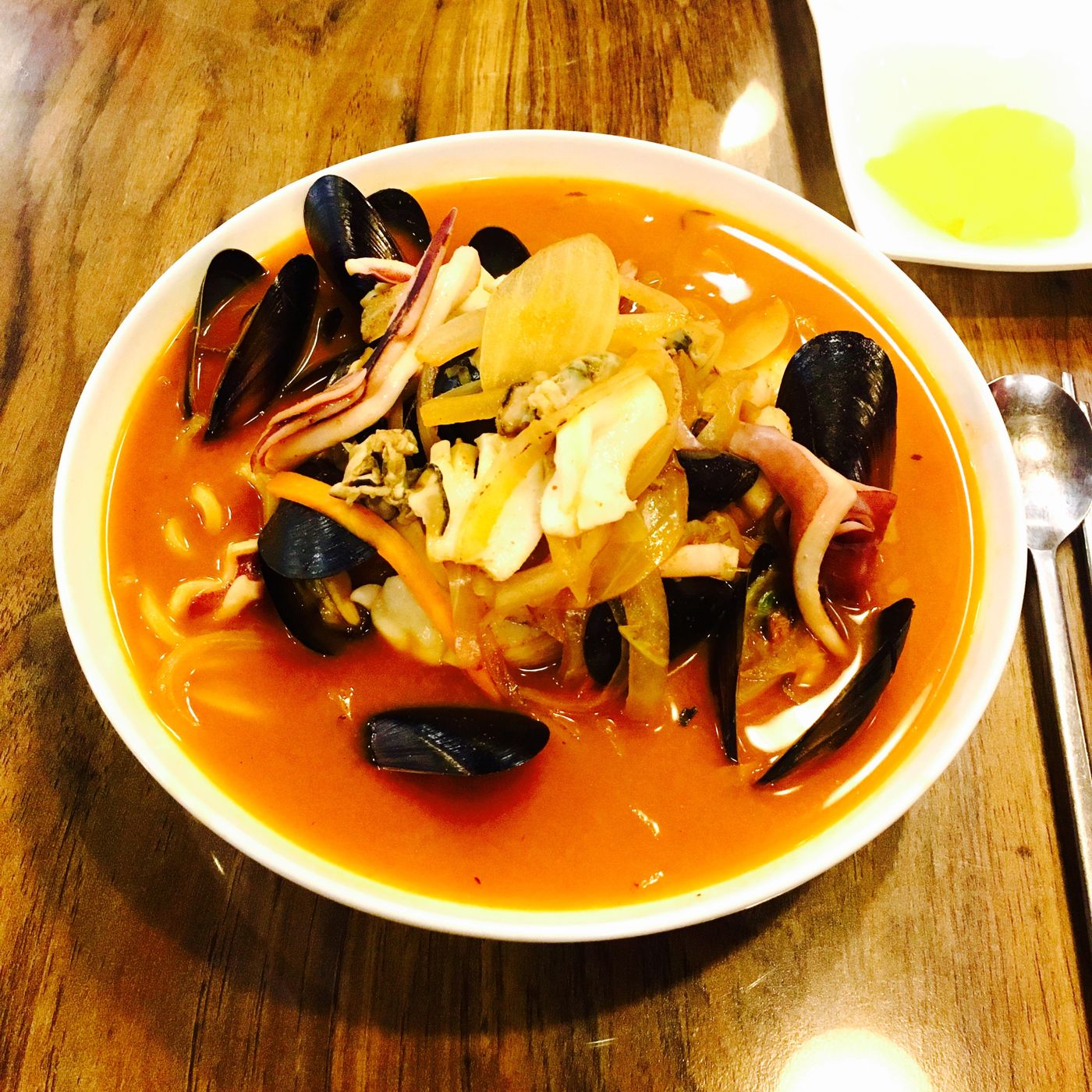 Jjamppong (Spicy Seafood Noodle Soup)짬뽕Thick wheat noodles in a fiery red broth of stir-fried pork, squid, shellfish and vegetables — the Korean-Chinese restaurant's spicy counterpart to jajangmyeon.
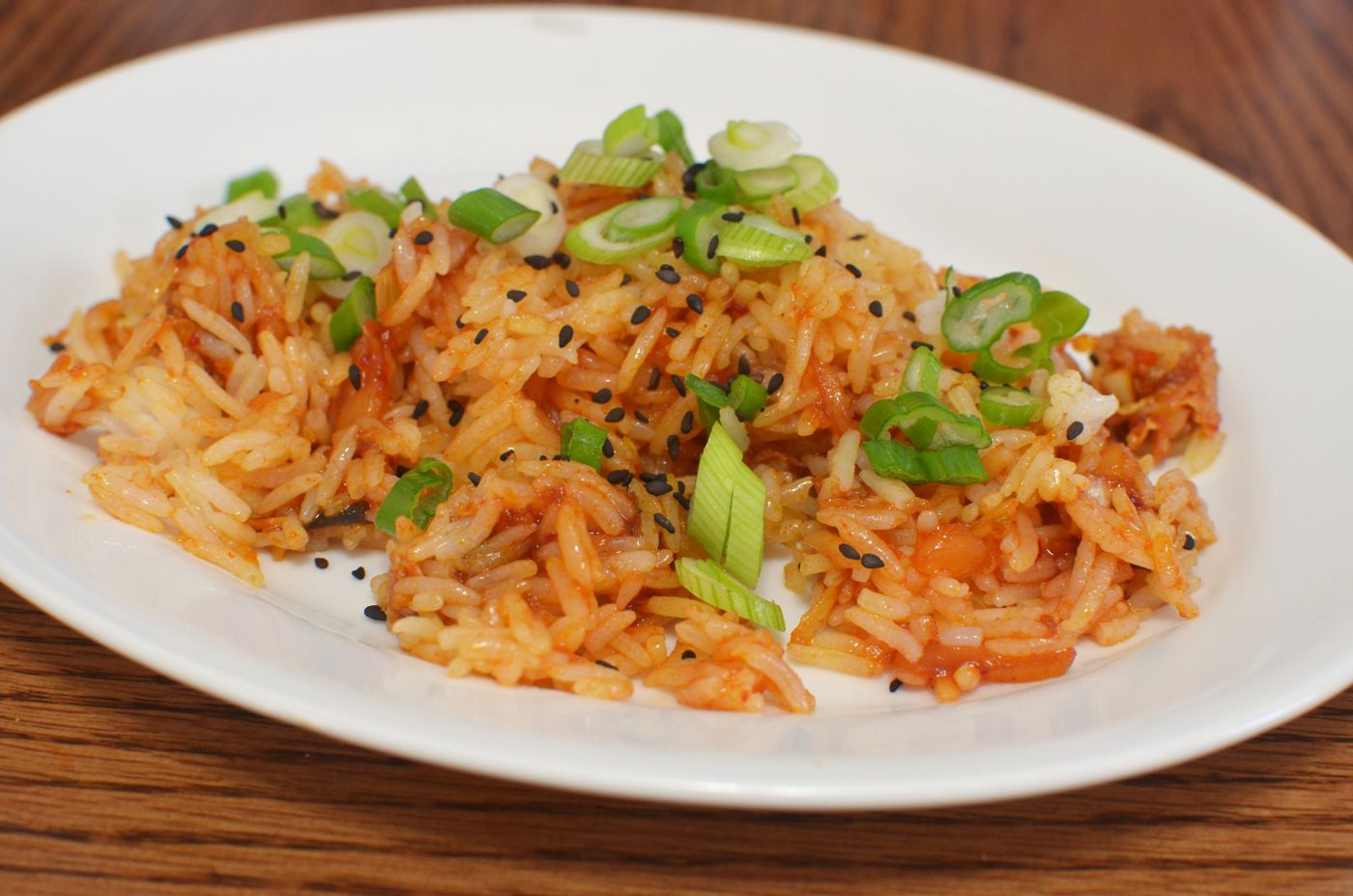 Kimchi-bokkeumbap (Kimchi Fried Rice)김치볶음밥Leftover rice stir-fried with sour, well-fermented kimchi and a little pork, usually topped with a fried egg — a home staple that spread with frying pans and cooking oil.
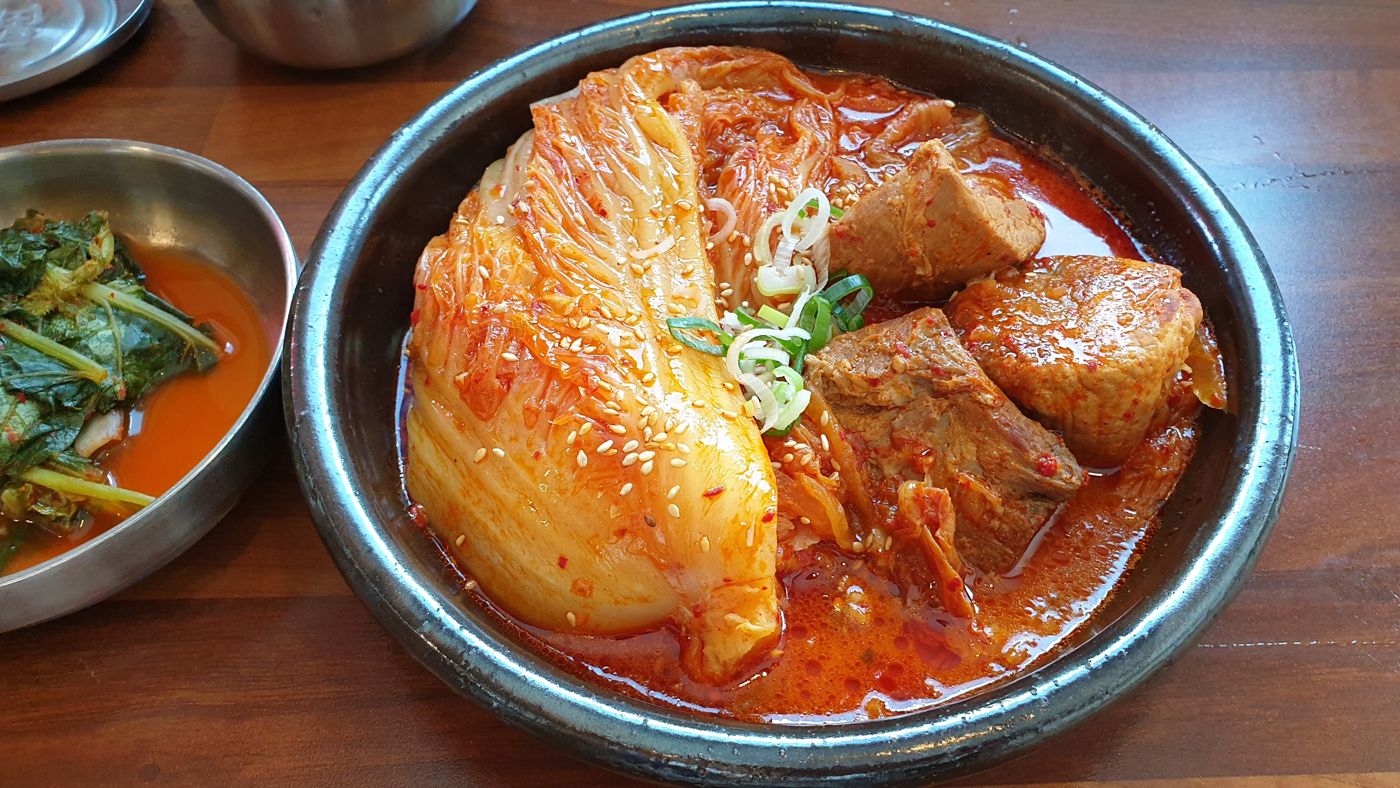 Kimchi-jjim (Braised Aged Kimchi with Pork)김치찜Well-fermented kimchi braised slowly with pork until the sourness mellows and the meat turns tender, with only a little liquid left in the pot. A hearty dish for a bowl of rice.
- Kkaennip Jjim (Steamed Seasoned Perilla Leaves)깻잎찜Perilla leaves layered with a garlicky soy-chili sauce and steamed until soft — a fragrant banchan for wrapping around spoonfuls of rice.
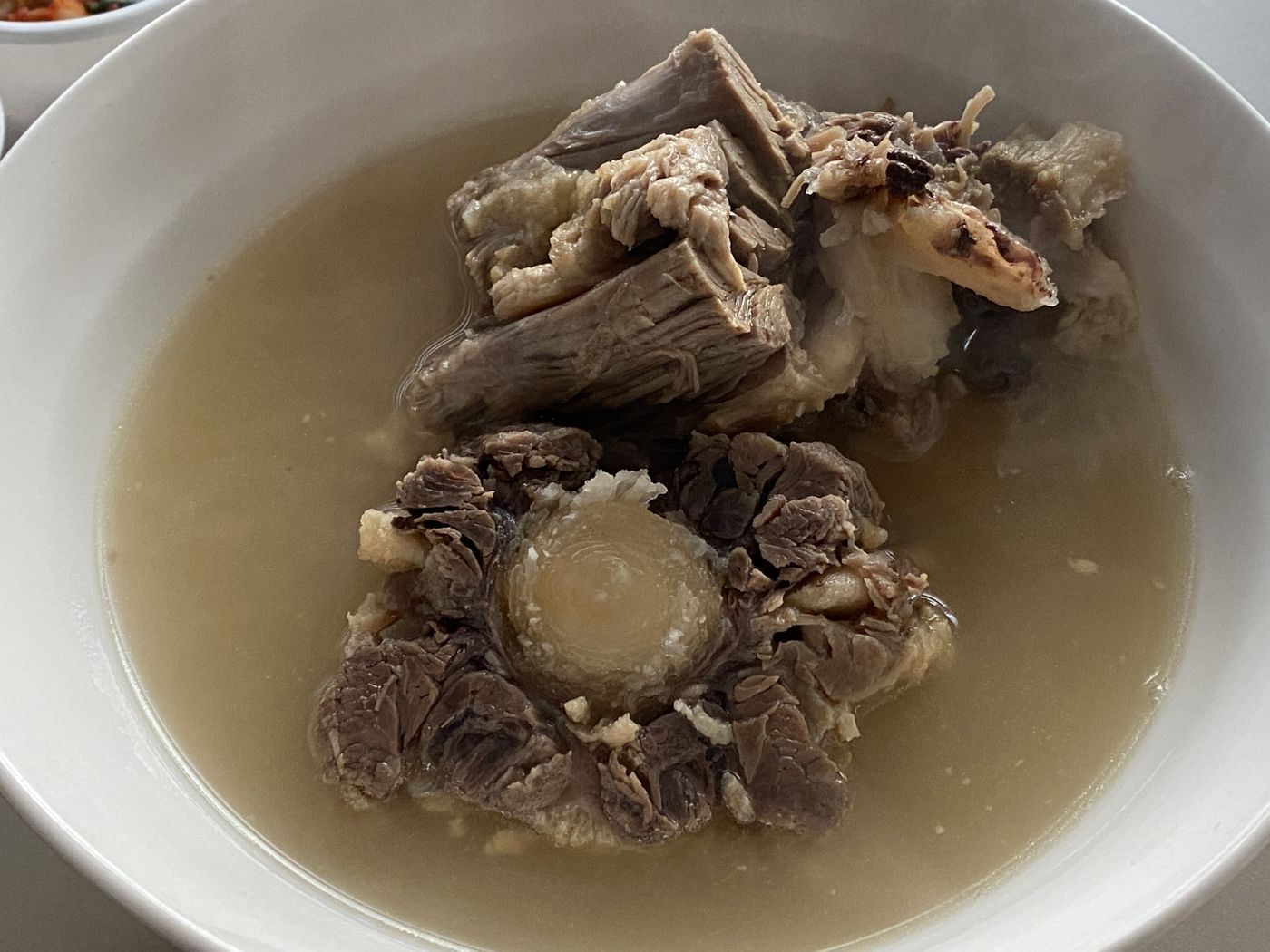 Kkori-gomtang (Oxtail Soup)꼬리곰탕Oxtail simmered for hours until the meat slips from the bone, in a rich, savory broth ladled over rice. A gomtang built on a single cut.
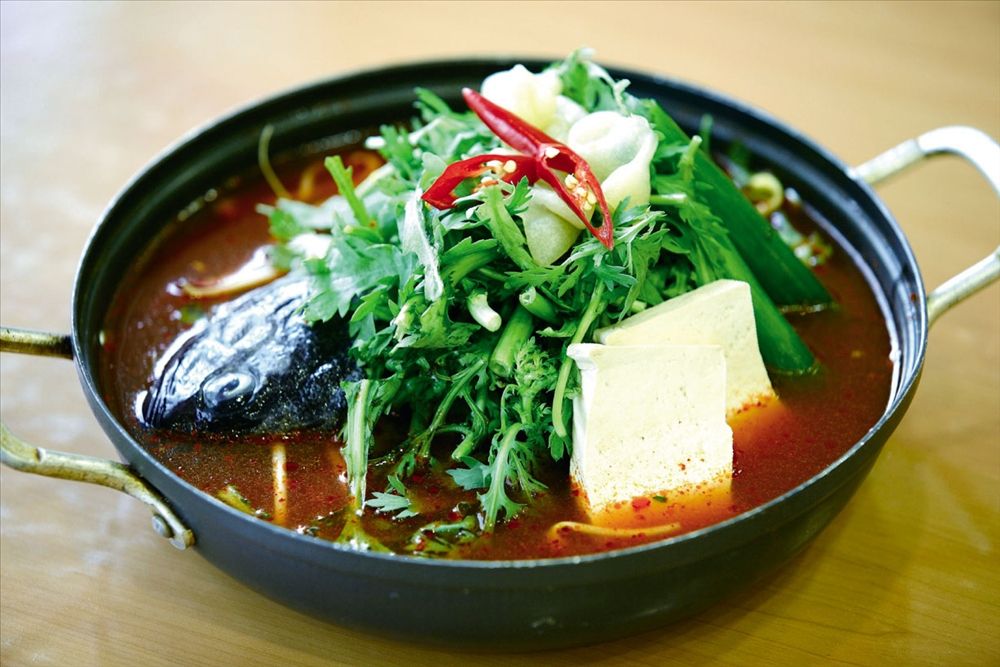 Maeuntang (Spicy Fish Stew)매운탕Fish — freshwater or sea — simmered with radish, tofu and fragrant greens in a fiery gochugaru and gochujang broth; the stew that follows sashimi and fills riverside restaurants.
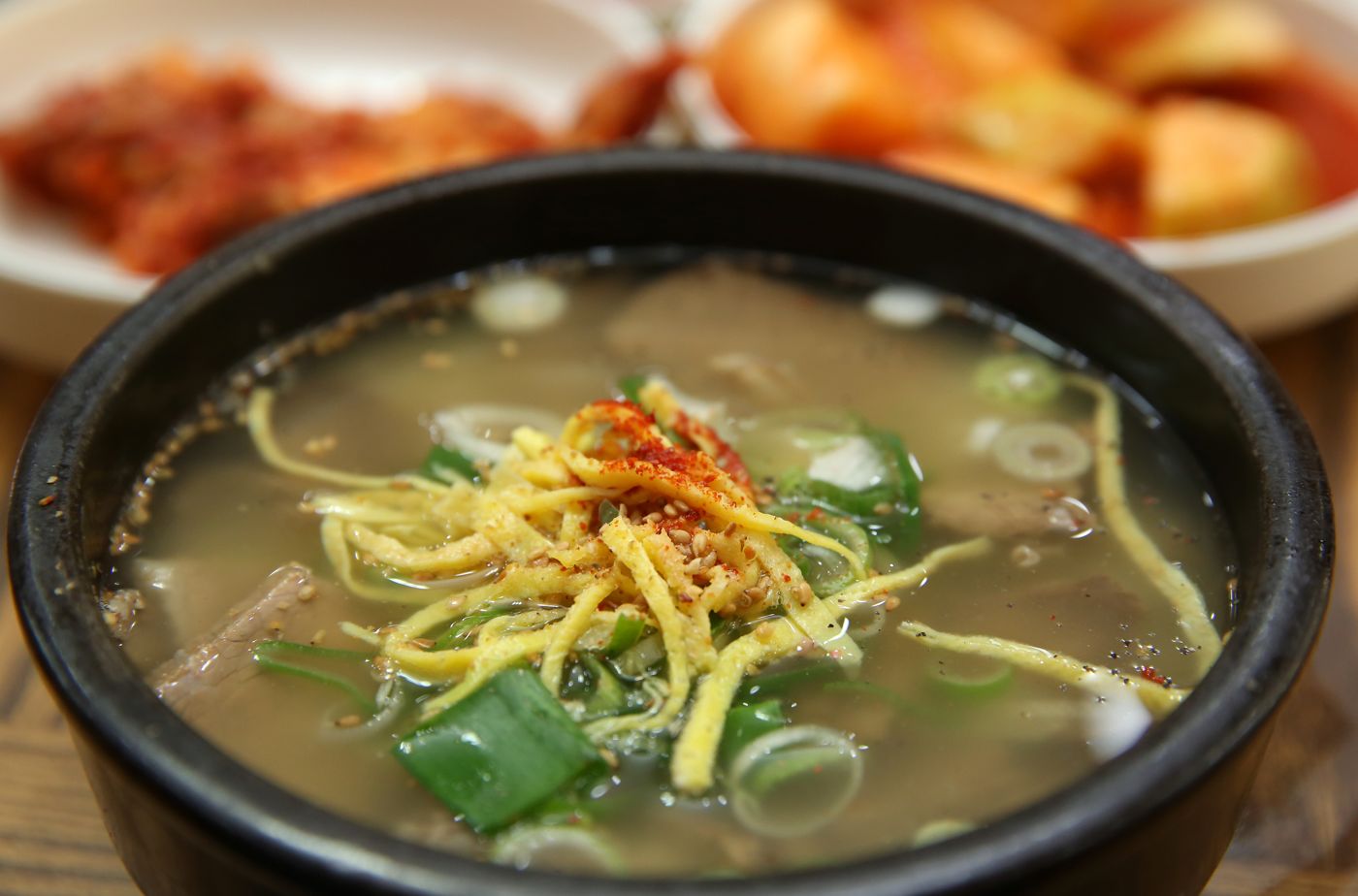 Naju Gomtang (Naju Clear Beef Soup)나주곰탕Brisket, shank and other beef cuts simmered into a clear, gently rich broth, poured over rice and topped with green onion — the market-day soup of Naju in South Jeolla.
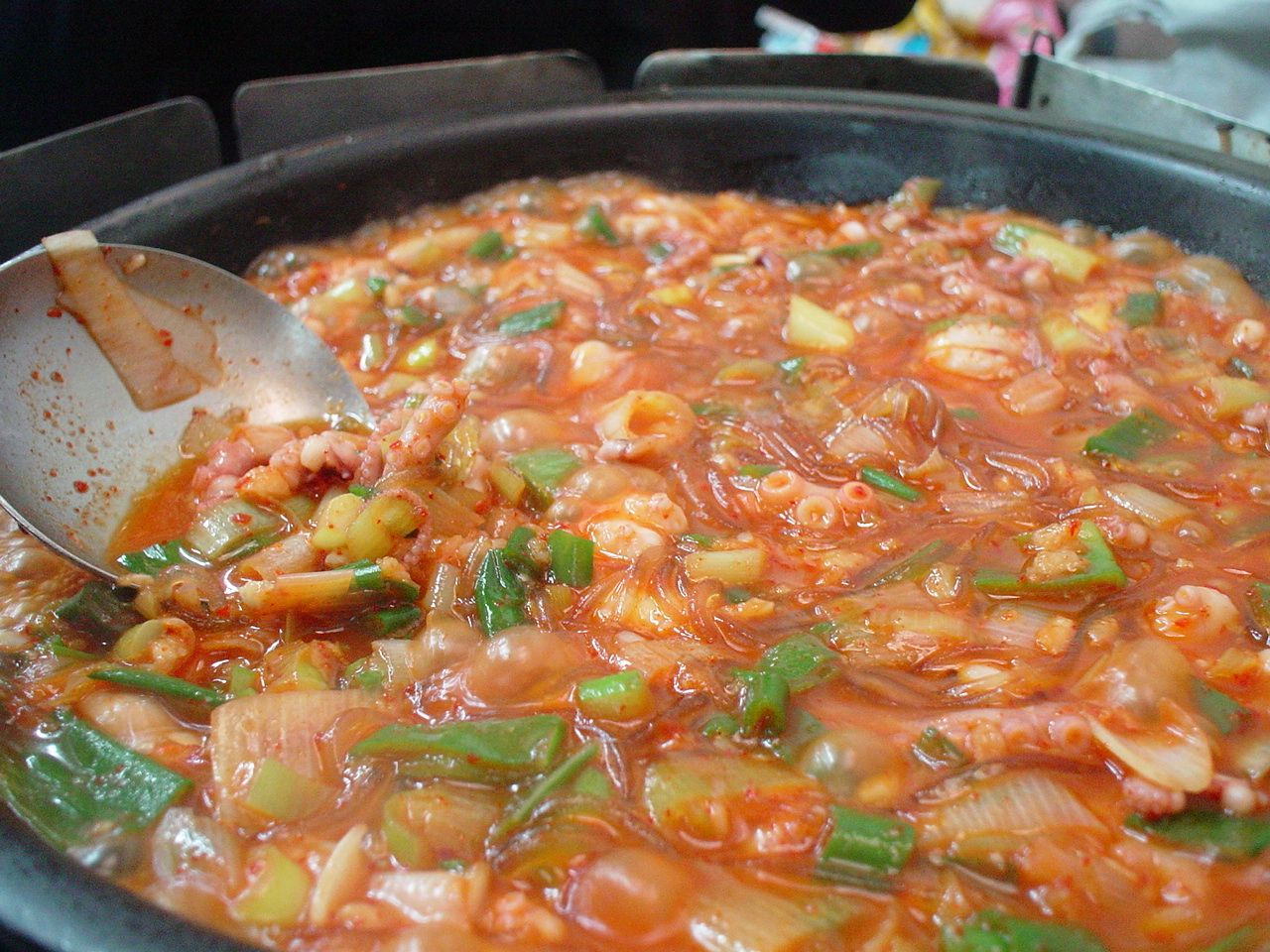 Nakji Bokkeum (Spicy Stir-Fried Octopus)낙지볶음Long-arm octopus stir-fried fast over high heat with onion and a fiery gochugaru sauce, usually served with rice and a mild soup to calm the heat.
- Saengtae Jjigae (Fresh Pollock Stew)생태찌개Chunks of fresh, never-frozen pollock simmered with radish, tofu and a red chili broth, finished with water dropwort and crown daisy — a winter stew prized for its clean, bracing taste.
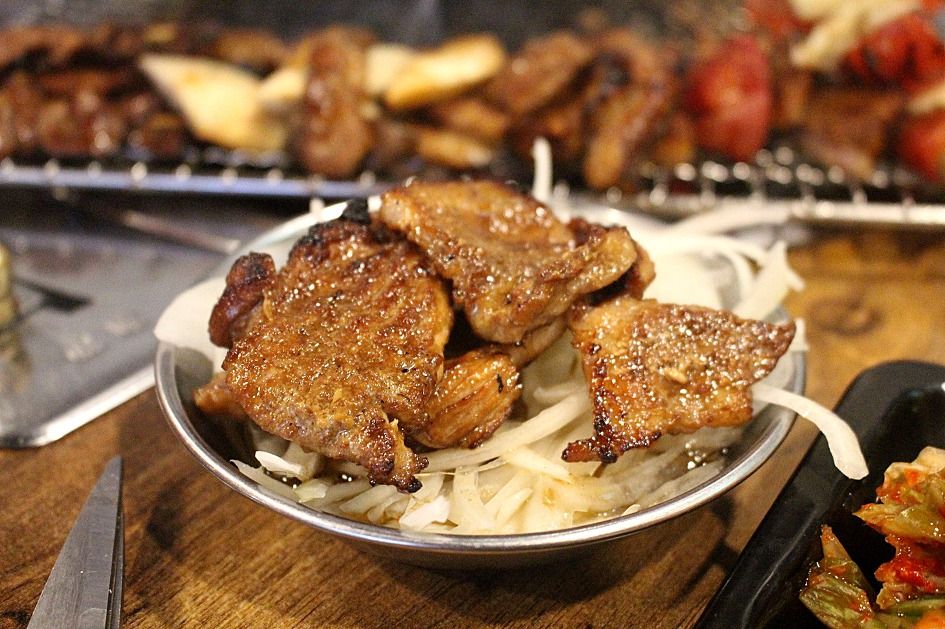 So-galbi-gui (Grilled Beef Short Ribs)소갈비구이Beef short ribs scored to the bone, marinated with soy, pear, garlic and sesame and grilled over charcoal — Korea's celebration barbecue, best known in Suwon's salt-seasoned style.
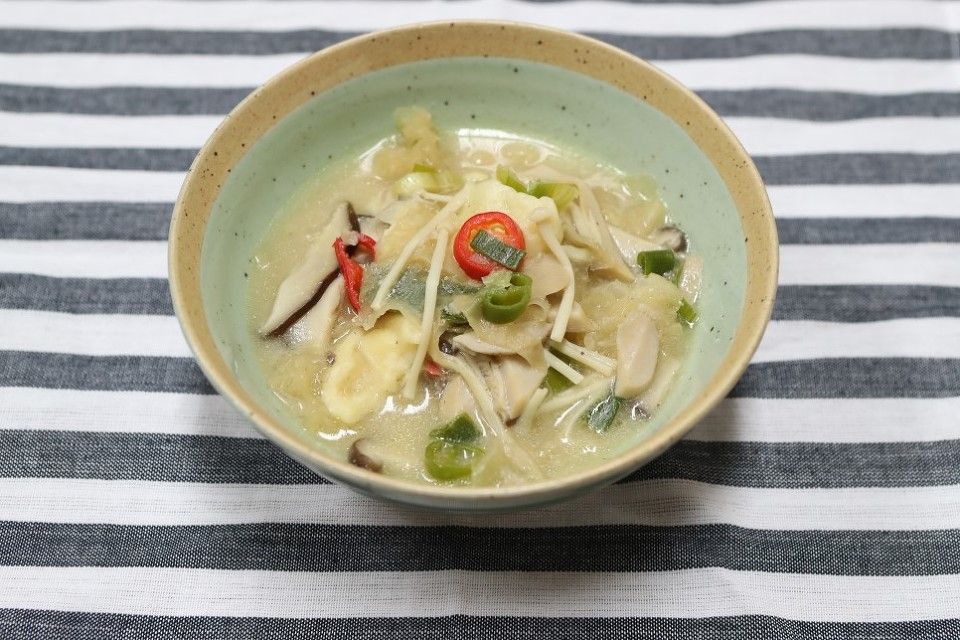 Sujebi (Hand-Torn Dough Soup)수제비Thin pieces of wheat dough pulled by hand into a simmering anchovy broth with zucchini and potato — a cozy, inexpensive one-pot meal, traditionally a summer staple.
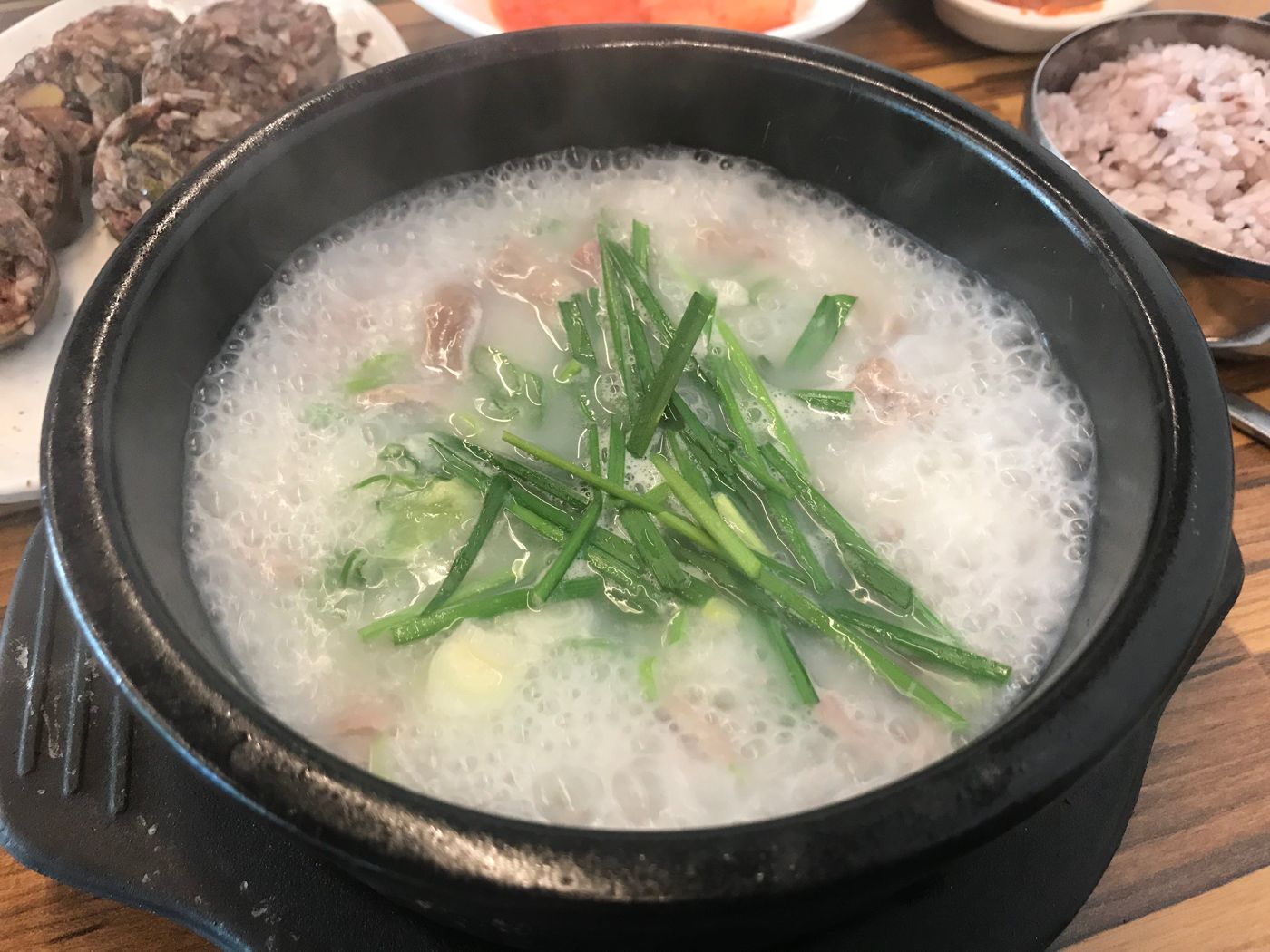 Sundaeguk (Blood Sausage Soup)순댓국Slices of Korean blood sausage and pork offal in a rich pork-bone broth, seasoned at the table with salted shrimp — a cheap, hearty market-day bowl served with rice.
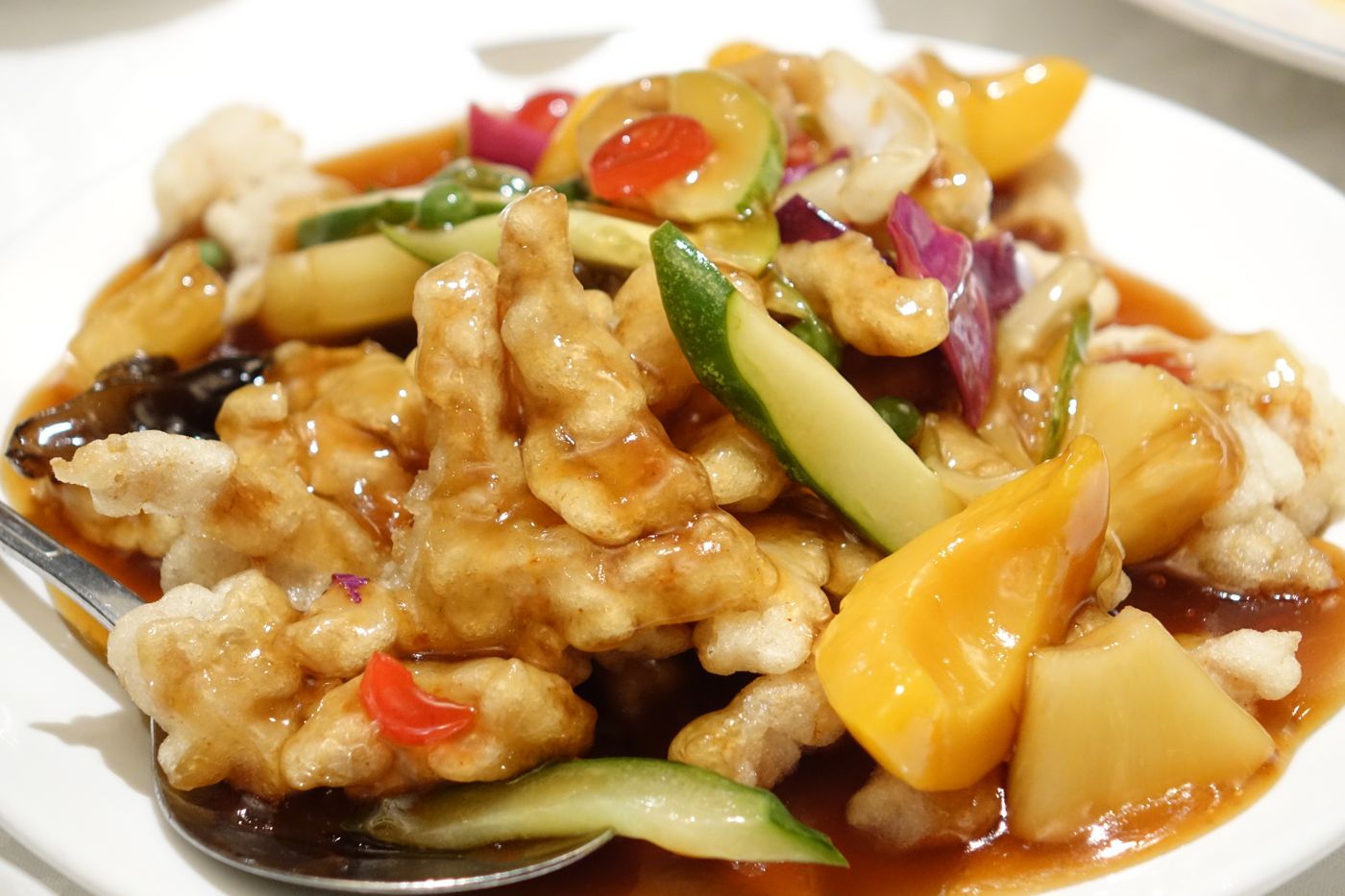 Tangsuyuk (Sweet and Sour Pork)탕수육Strips of pork in a crisp starch batter, fried twice and dressed with a glossy sweet-and-sour vegetable sauce — the shared platter of the Korean-Chinese restaurant.
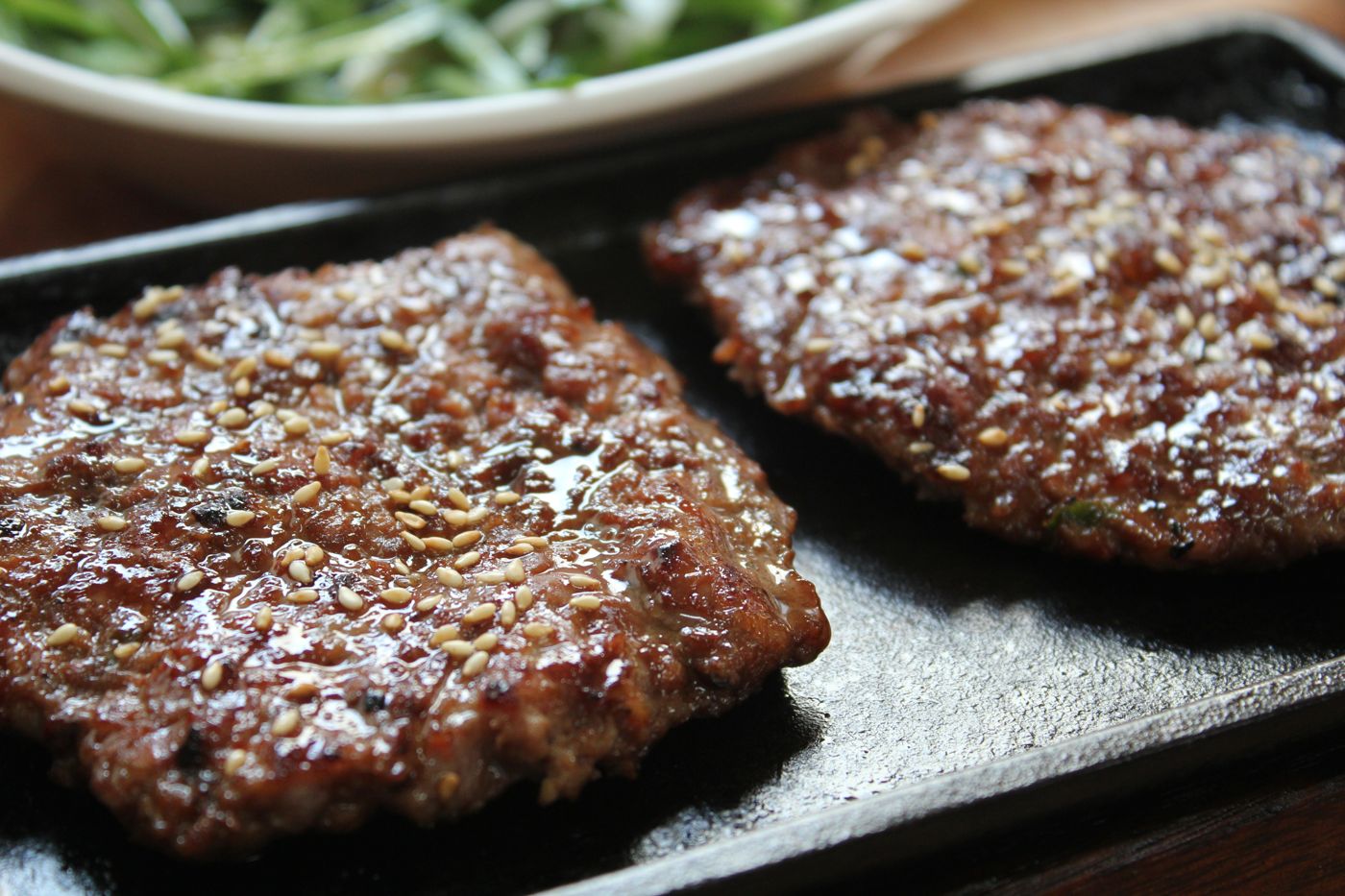 Tteokgalbi (Minced Short-Rib Patties)떡갈비Short-rib meat minced, seasoned sweet-savory and shaped into a patty, then grilled. Damyang presses it back onto the bone; Gwangju's Songjeong style is a flat boneless square.
- Green Cabbage Kimchi양배추김치Crisp, quick kimchi of round green cabbage — once South Korea's stand-in when napa ran short, and still an everyday summer kimchi in North Korea.
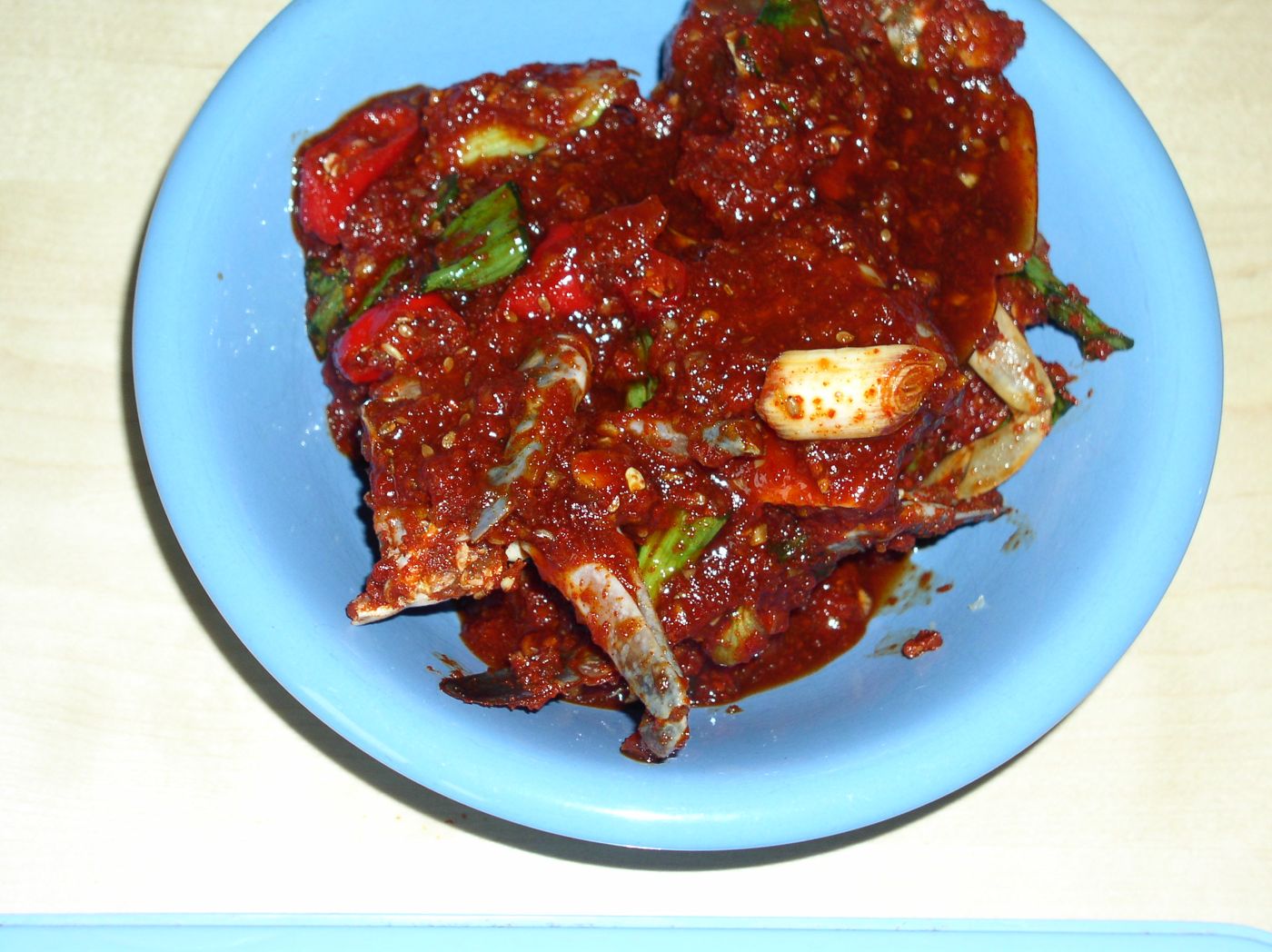 Spicy Marinated Raw Crab양념게장Raw crab pieces tossed in a glossy chili, garlic and soy dressing and eaten within days — sweet, fiery and a specialty of Yeosu's gejang restaurants.