 Photo: I. H Cho, CC0, via Wikimedia Commons
Jjim · Steamed 찜
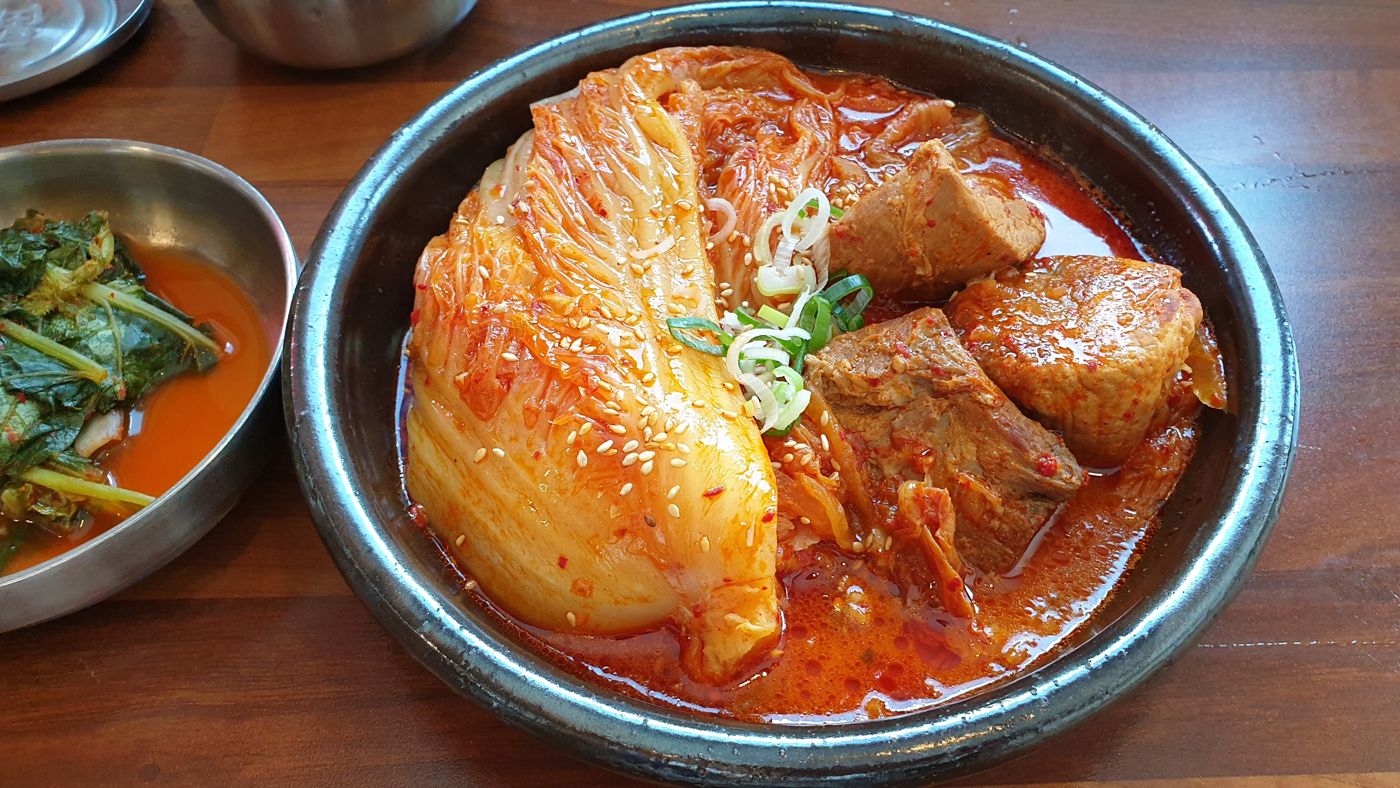
Kimchi-jjim (Braised Aged Kimchi with Pork)
김치찜
Romanization: kimchi-jjim
Well-fermented kimchi braised slowly with pork until the sourness mellows and the meat turns tender, with only a little liquid left in the pot. A hearty dish for a bowl of rice.
- Serves
- 4
- Prep
- 15 min
- Cook
- 50 min
Recipe
Ingredients · Serves 4
- 600 gWell-fermented napa cabbage kimchithe more sour, the better; plus ¼ cup of its brine
- 300 gPork belly or pork neckcut into thick slices
- 150 gOnionsliced thickly
- 30 gGreen onioncut into 5 cm lengths
- 15 gGarlicabout 4 cloves, minced
- 1 tspGochugaru (chili flakes)optional
- 1 tspSugarto round off the sourness; adjust
- 1 tbspSoy sauce
- 1 tspToasted sesame oil
- 300 mlWater or anchovy broth
Method
Technique: Steaming and Jjim, Making Kimchi
Step 1: If the kimchi is very salty, shake off the seasoning paste and rinse it lightly; leave the cabbage in large pieces, and keep the brine.
Step 2: Spread the onion over the bottom of a heavy pot or shallow ttukbaegi. Lay the pork on top and sprinkle with the garlic, sugar and soy sauce.
Step 3: Pile the kimchi over the pork. Add the water or broth and the brine, drizzle the sesame oil over the top, and add the gochugaru if using.
Step 4: Bring to a boil over medium-high heat, then cover tightly, turn to low and braise for 40–45 minutes, until the pork is fork-tender and the kimchi has turned soft and translucent. Check once or twice and add a splash of water if the pot looks dry.
Step 5: Scatter the green onion over the top, cover and cook 3 minutes more. Cut the kimchi with scissors, nestle the pork alongside, and serve with plenty of hot rice.
Origin & History
Kimchi-jjim has no documented birth date. The standard reference works cover its two parent dishes rather than this one, so the story is best told through them. The Encyclopedia of Korean Culture explains that jjim originally meant food cooked in a rice steamer (siru). As kitchens changed, the name stayed while the method shifted to simmering or boiling down to a dish with little or no broth. The entry treats jjim less as a technique than as a finished state: a pot closed tightly enough that the food cooks in its own steam and juices.
Its other parent is kimchi-jjigae. The same encyclopedia suggests that kimchi stew grew out of ways to use kimchi that had turned sour or that people did not want to eat raw, and it adds that kimchi in its modern chili-red form became common only after chili peppers arrived in the mid-Joseon period. Its preparation is a clue to kimchi-jjim as well: winter whole-cabbage kimchi is squeezed or rinsed to take off its stale sourness, cut roughly, and cooked until very soft with seasoned meat, with pork or pork ribs among the options.
The Korea Tourism Organization's English-language food pages describe kimchi-jjim as tangy kimchi simmered a long time with moderately fatty pork, usually belly or neck, until the meat is tender and the kimchi's sharpness softens into savory depth. It is served hot with freshly steamed rice. The same site defines mugeunji as kimchi aged for more than six months at low temperature, and says that aged kimchi suits stews and braises, whereas merely sour kimchi is typically used in stir-fries and soups.
Key Ingredients
 Pork (dwaeji-gogi)돼지고기Korea's most widely eaten meat, prized cut by cut: fatty belly for samgyeopsal, neck for the grill, lean legs for boiled suyuk and stir-fried jeyuk. Pork also anchors Jeju Island's feast cooking.
 Yangpa (onion)양파The bulb onion, literally the "Western scallion." A latecomer to Korea, it is now everywhere: sweetening stir-fries and braises, pickled in soy sauce as yangpa-jangajji, and served raw beside grilled meat.
 Green onion파Korean green onion (pa), from thick-stemmed daepa to slender scallions — chopped into nearly every seasoning sauce, soup and kimchi, and the star of pa-kimchi.
 Garlic마늘Used raw, minced, pickled and roasted, garlic is one of the essential aromatics of Korean food — in seasonings, marinades, kimchi and namul.
 Gochugaru고춧가루Korean red chili powder, made from dried red peppers ground coarse or fine. It gives kimchi, gochujang and countless banchan their color and warmth.
 Soy sauce간장Korean soy sauce, in two main kitchen forms: pale, salty guk-ganjang (soup soy sauce) brewed the traditional way from meju, and darker, sweeter jin-ganjang for braises and marinades.
 Sesame참깨Toasted sesame seeds and sesame oil (chamgireum) finish countless Korean dishes, adding a nutty aroma and gloss.
Nutrition
| Calories | ~454 kcal |
|---|---|
| Protein | ~9.9 g |
| Fat | ~41.9 g |
| Carbohydrates | ~10.8 g |
| Fiber | ~3.7 g |
| Sodium | ~994 mg |
Notable forFiber · Protein
Estimated by summing USDA FoodData Central (SR Legacy) values for kimchi (FDC 170392), raw pork belly (FDC 167812), onion, scallions, garlic, red cayenne pepper as a stand-in for gochugaru (FDC 170932), sugar, soy sauce (FDC 174277) and sesame oil, divided by four. Because pork belly is counted entirely as eaten, the fat and calorie figures are an upper bound: some fat stays in the pot if you skim it. The kimchi brine is not counted. Actual values vary with ingredients, portion size and preparation.
Health Benefits
- Fiber from kimchi: USDA lists about 1.6 g of fiber per 100 g of kimchi, so a generous helping adds a few grams of fiber to the meal.
- Fermented food: kimchi is a fermented food; see fermented foods for what is and is not established. Long cooking would be expected to reduce live cultures, so this dish is better thought of as a source of flavor and fiber than of probiotics.
- Protein: the pork contributes protein, about 10 g per serving in the estimate.
Regional Variations
- Wrapped pork belly: one Korea Tourism Organization recipe lays thick onion slices in the pan, wraps pieces of pork belly in leaves of aged kimchi, stands them upright, and braises them in kimchi liquid and anchovy broth with the lid on.
- Loose, layered style: cooks who skip the wrapping simply layer kimchi and sliced pork in the pot, which is the version in the recipe below.
- Jjim versus jjigae: kimchi-jjim is cooked with far less liquid than kimchi-jjigae, so the result is thicker and closer to a braise than a stew.
Pairings
 Napa Cabbage Kimchi배추김치Salted napa cabbage layered with a red paste of chili, garlic, ginger and fermented seafood, then left to ripen: the kimchi most people picture first.
 Gyeran Jjim (Steamed Egg)계란찜Eggs whisked with water or broth and gently steamed into a silky, savory custard, often seasoned with salted shrimp and served bubbling hot.
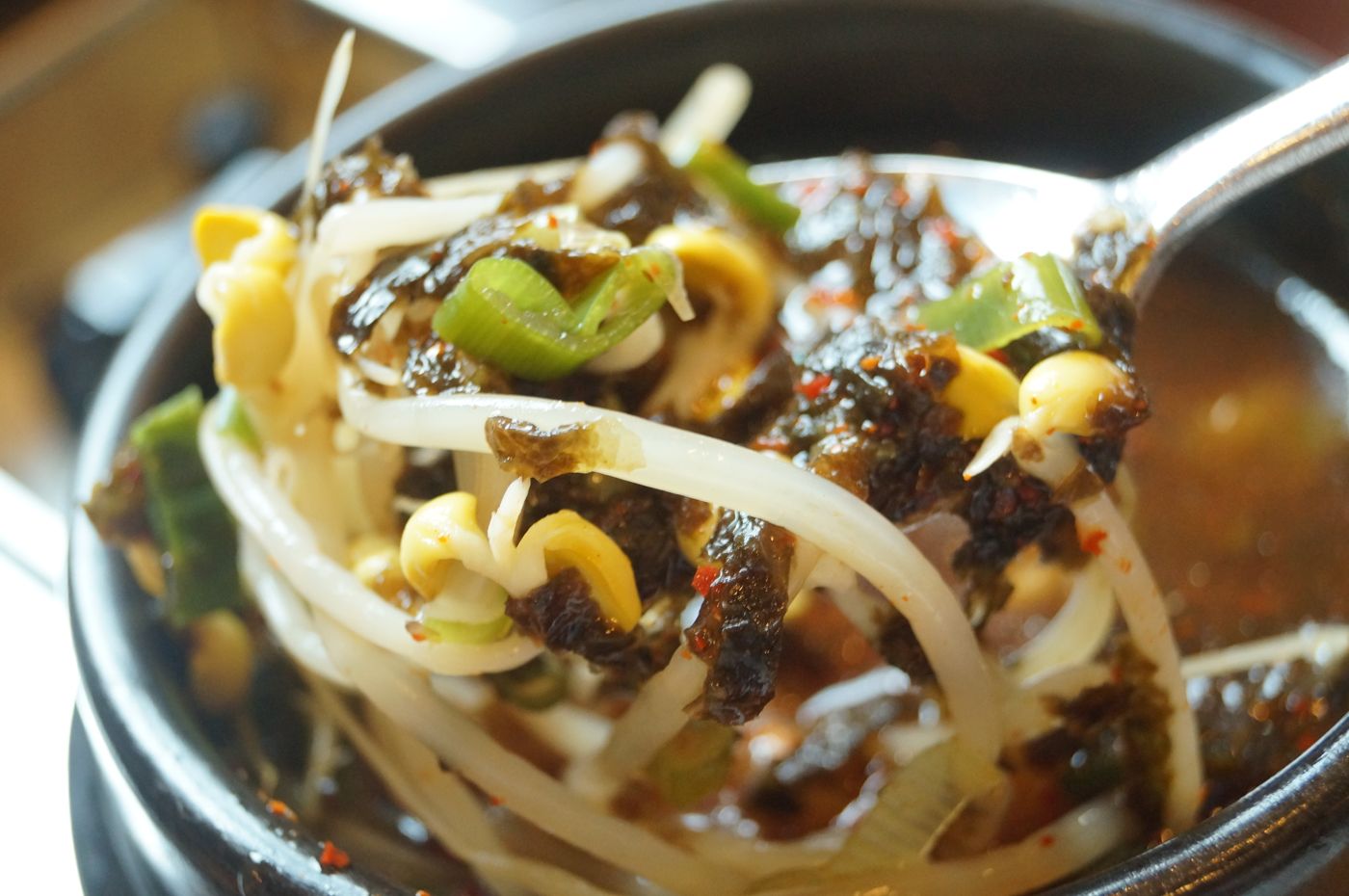 Kongnamul Guk (Soybean Sprout Soup)콩나물국A clear, light soup of soybean sprouts in anchovy-kelp stock, seasoned with salt or soup soy sauce — an everyday guk and a favorite morning-after cure.
 Sigeumchi Namul시금치나물Spinach blanched for a few seconds, squeezed dry and dressed with garlic, soy sauce and sesame — one of the simplest and most familiar namul.
Sources
- 01Braised Pork with Kimchi (김치찜 / Kimchijjim) — Korea Tourism Organization (VisitKorea)
- 02Braised Pork Belly Wrapped in Aged Kimchi (묵은지 삼겹살말이) — Korea Tourism Organization (VisitKorea)
- 03김치찌개 (Kimchi-jjigae) — Encyclopedia of Korean Culture (한국민족문화대백과사전)
- 04찜 (Jjim) — Encyclopedia of Korean Culture (한국민족문화대백과사전)
- 05Cabbage, kimchi — USDA FoodData Central
Last updated