More dishes 기타
Gamja Salad (Korean Potato Salad)
감자샐러드
Romanization: gamja-saelleodeu
Mashed boiled potato folded with egg, cucumber, carrot and mayonnaise — a soft, mildly sweet modern banchan served alongside rice, kimchi and namul.
- Serves
- 6
- Prep
- 20 min
- Cook
- 25 min
Recipe
Ingredients · Serves 6
- 600 gStarchy potatoesabout 3 medium, peeled and cut into chunks
- 2 Eggshard-boiled
- ½ Cucumberabout 100 g, thinly sliced
- ½ tspSaltfor salting the cucumber
- 50 gCarrotfinely diced
- 40 gOnionfinely diced
- 100 gMayonnaiseabout 7 tbsp
- 2 tspSugar
- 2 tspVinegar
- ⅓ tspSaltto taste
- 1 pinchGround black pepper
Method
Step 1: Put the potatoes in a pot of cold salted water, bring to a boil and cook for 15–20 minutes, until a chopstick slides through easily. Meanwhile, boil the eggs for 10–12 minutes, cool them in cold water and peel.
Step 2: Toss the cucumber slices with ½ tsp salt and leave for 10 minutes; squeeze firmly in a cloth to remove the liquid. Soak the diced onion in cold water for 5 minutes to soften its bite, then drain well.
Step 3: Blanch the diced carrot for 1 minute so it is tender-crisp, and drain.
Step 4: Drain the potatoes, return them to the hot pot for a minute to steam off excess moisture, and mash while warm, leaving some small lumps if you like texture.
Step 5: Let the potatoes cool until just warm. Chop the eggs and add them with the cucumber, carrot and onion.
Step 6: Fold in the mayonnaise, sugar, vinegar, salt and pepper. Taste and adjust, then chill for 30 minutes before serving.
Step 7: Keep refrigerated and eat within 2–3 days.
Origin & History
Gamja-saelleodeu is a newcomer to the Korean table. The potato itself arrived late: the Encyclopedia of Korean Folk Culture notes that Yi Gyu-gyeong's nineteenth-century Oju yeonmun jangjeon sango records it being brought into Hamgyeong Province in 1824 by Qing-dynasty ginseng diggers, and an 1832 text describes it coming in from the north. It was long valued as a famine crop, and Gangwon Province — still the country's largest potato-growing region — kept many potato dishes as everyday food.
Salad, by contrast, entered Korean as a Western dish. The National Institute of Korean Language's dictionary still records the older loanword sarada — a Western dish of raw vegetables or fruit dressed with mayonnaise or French dressing — alongside the modern saelleodeu. Its entry for gamja-saelleodeu describes the Korean version precisely: boiled potato mashed and mixed with mayonnaise and salt, with carrot, cucumber, imitation crab or macaroni stirred in.
However it arrived, potato salad is now firmly part of the banchan repertoire. It is common enough to have its own entry in the Korean Food Composition Table, and its soft, cool sweetness offsets spicy and salty plates.
Key Ingredients
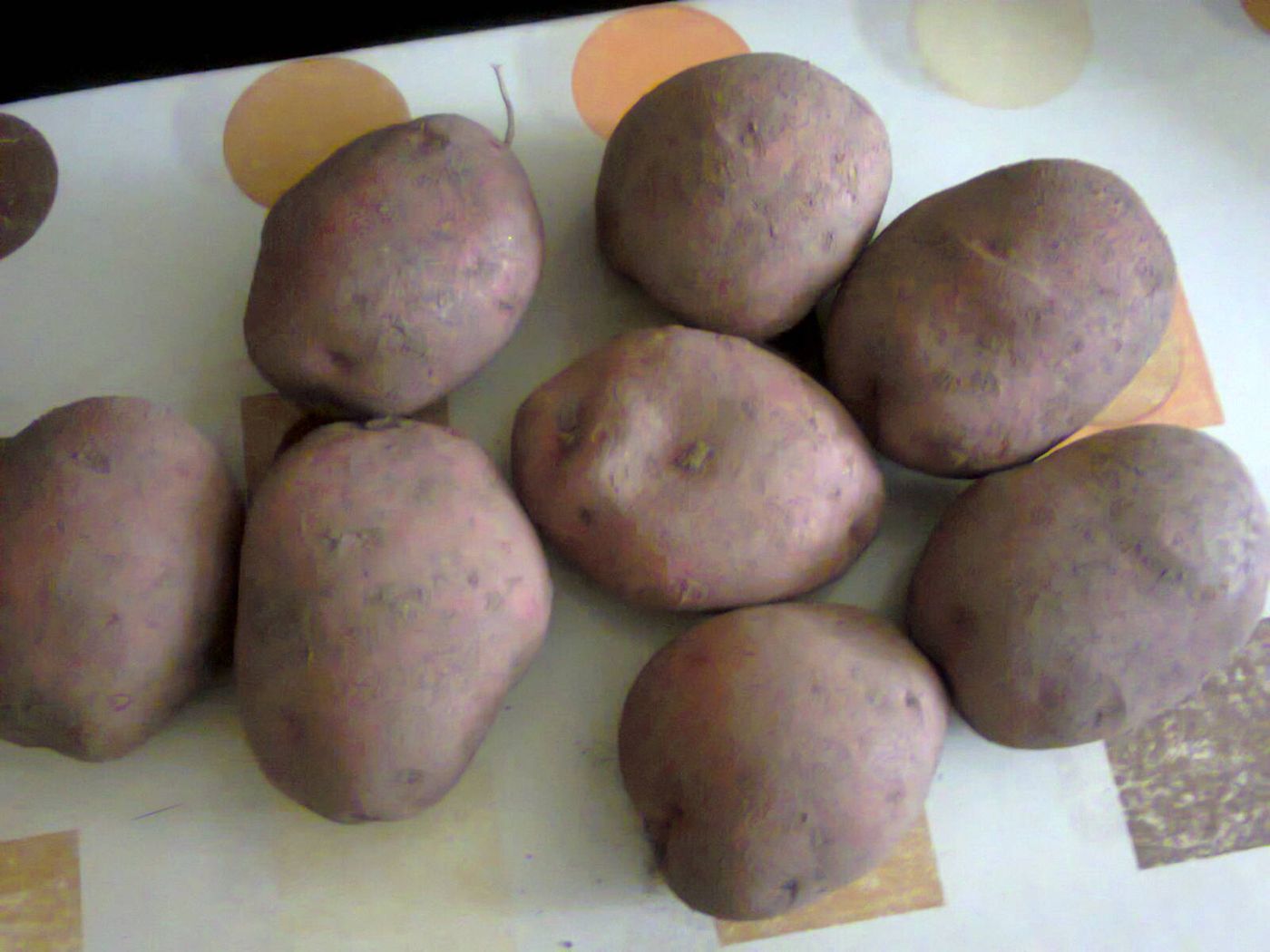 Potato감자A relatively recent arrival that became a mainstay of the mountain provinces. Braised in soy sauce as gamja-jorim, stir-fried in fine matchsticks, grated into crisp gamja-jeon and simmered in countless soups.
- Egg (gyeran)계란The everyday protein of the Korean table: rolled into gyeran-mari, steamed into puffy gyeran-jjim, simmered in soy for gyeran-jangjorim, and cut into thin yellow and white ribbons of jidan to garnish soups and noodles.
- Cucumber오이Slender, thin-skinned Korean cucumbers, prized for their crunch. Stuffed and fermented as oi-sobagi, dressed quickly as oi-muchim, salted into oiji or floated in chilled summer soup.
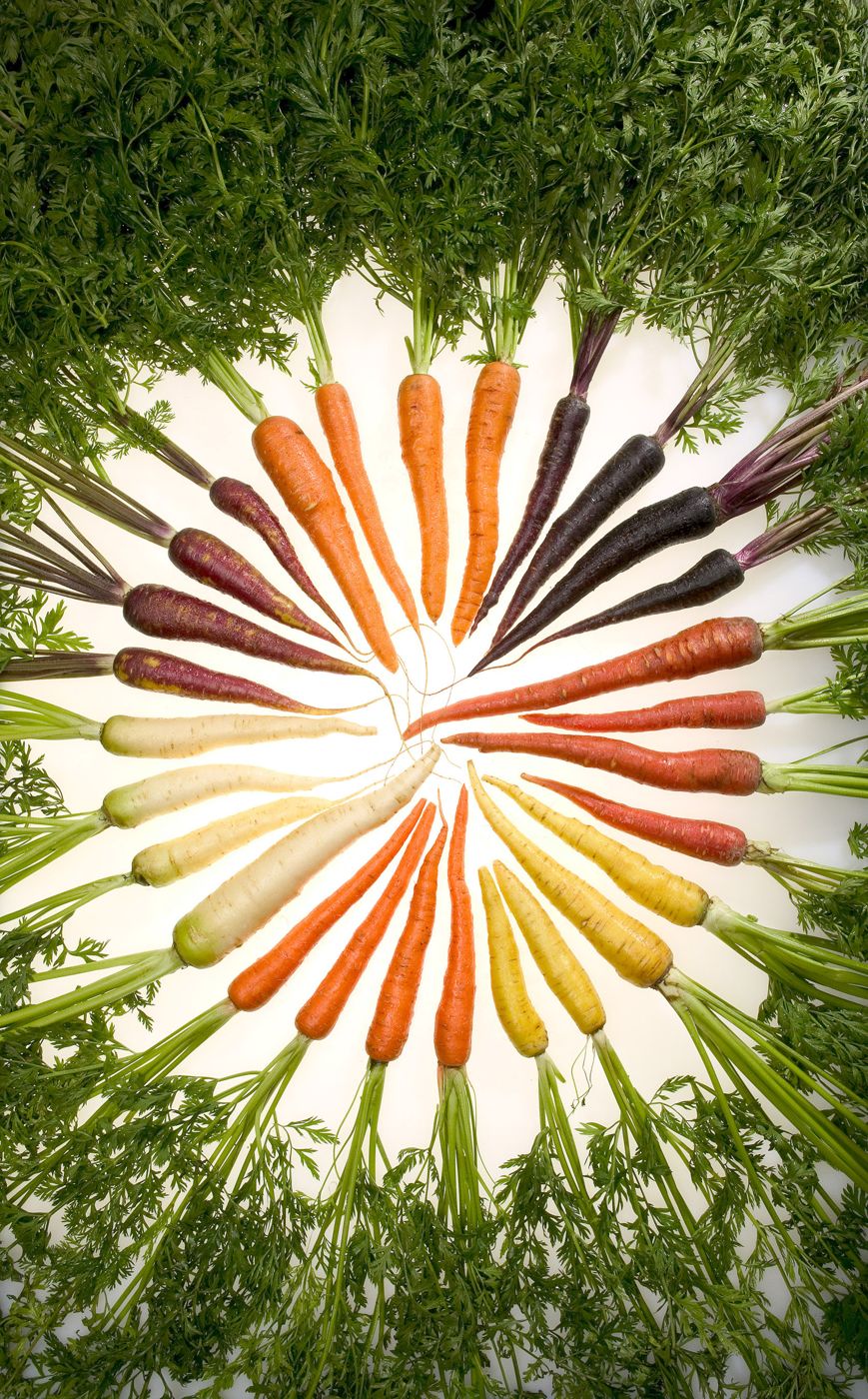 Danggeun (carrot)당근The orange root that brings color to the Korean table: julienned into japchae and gimbap, shredded into jeon batters, stir-fried with dakgalbi. Korea's sweetest winter carrots come from the volcanic fields of eastern Jeju.
 Yangpa (onion)양파The bulb onion, literally the "Western scallion." A latecomer to Korea, it is now everywhere: sweetening stir-fries and braises, pickled in soy sauce as yangpa-jangajji, and served raw beside grilled meat.
Nutrition
| Calories | ~223 kcal |
|---|---|
| Protein | ~4.5 g |
| Fat | ~13.9 g |
| Carbohydrates | ~20.4 g |
| Fiber | ~2.3 g |
| Sodium | ~331 mg |
Notable forPotassium · Vitamin K
Potato uses the Korean Food Composition Table entry “Potato, Sumi, Raw” (70 kcal, 335 mg potassium per 100 g); mayonnaise, cucumber and carrot also use Korean table values (mayonnaise supplies most of the vitamin K). Hard-boiled egg, onion and other seasonings use USDA FoodData Central. Only part of the cucumber-salting salt is counted, since most is squeezed out. Totals divided by six. For comparison, the Korean table's own composite entry for potato salad lists 143 kcal and 529 mg sodium per 100 g, so store-bought versions can be considerably saltier. Actual values vary with ingredients, portion size and preparation.
Health Benefits
- Potassium: potatoes are a good source of potassium; the Korean Food Composition Table lists 335 mg per 100 g of raw potato.
- Energy and comfort: a soft, mild dish that children and older adults usually find easy to eat, and that balances spicier banchan on the table.
- Lighter versions: using less mayonnaise, more cucumber and carrot, or part yogurt reduces fat and calories considerably.
Regional Variations
- Classic mashed style: potatoes mashed fairly smooth with diced cucumber, carrot, onion and chopped egg, bound with mayonnaise and seasoned with a little sugar and vinegar.
- With imitation crab or macaroni: both additions are named in the National Institute of Korean Language's definition of the dish.
- Fruit and corn: diced apple, sweet corn or raisins are popular additions that push the salad sweeter.
- Chunky style: potatoes cut into cubes and only lightly crushed, closer to Western potato salads.
Pairings
 Gyeran Mari (Rolled Omelet)계란말이Beaten egg cooked in thin layers and rolled into a soft, striped log, then sliced — a gentle, everyday banchan and a lunchbox classic.
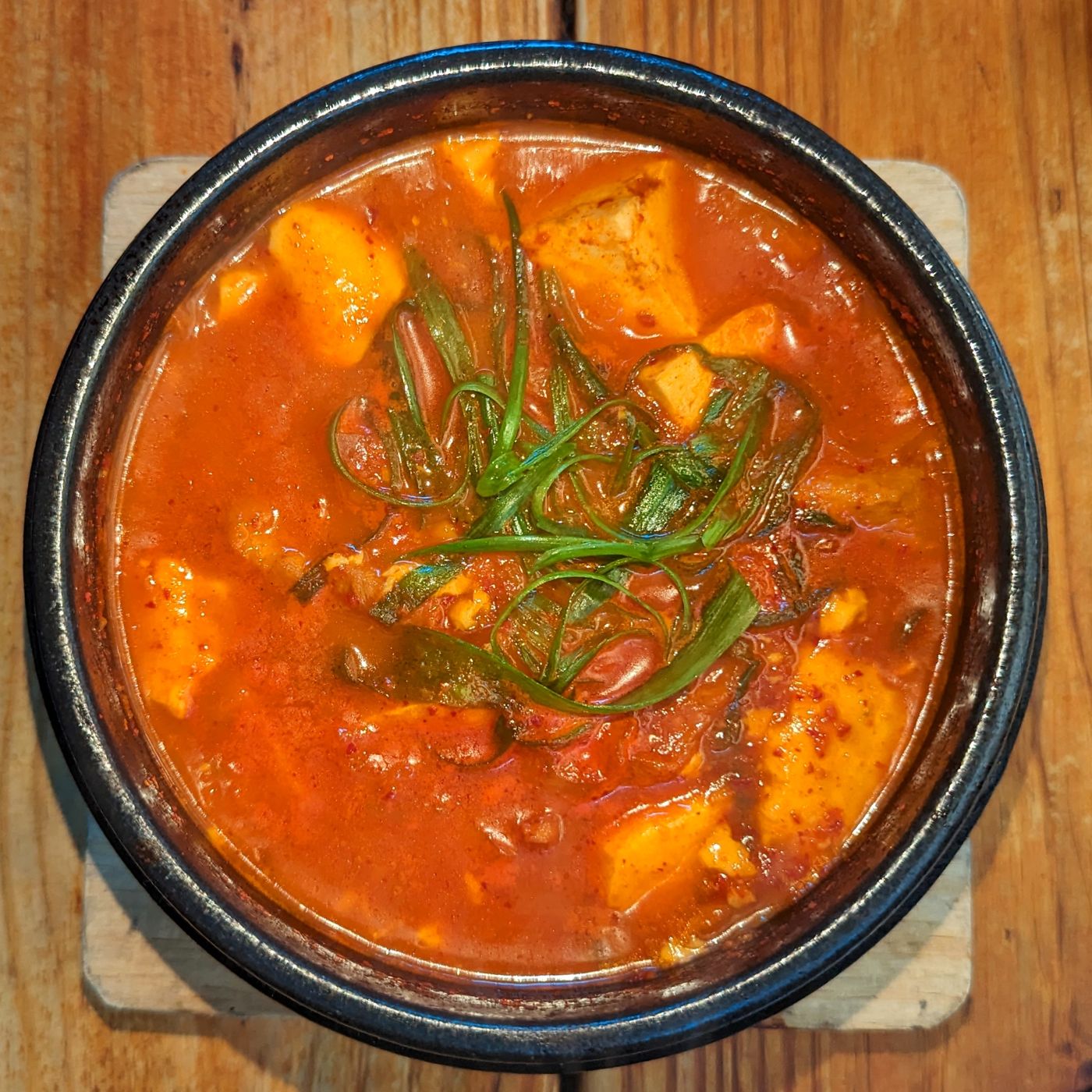 Kimchi Jjigae (Kimchi Stew)김치찌개Sour, well-aged napa cabbage kimchi simmered with pork and tofu into a tangy, spicy stew — the classic way to use up kimchi that has gone past its prime.
 Sigeumchi Namul시금치나물Spinach blanched for a few seconds, squeezed dry and dressed with garlic, soy sauce and sesame — one of the simplest and most familiar namul.
Sources
- 01감자샐러드 (Gamja-saelleodeu) — Urimalsaem (National Institute of Korean Language)
- 02사라다 (Sarada) — Urimalsaem (National Institute of Korean Language)
- 03감자 (Gamja, potato) — Encyclopedia of Korean Folk Culture (National Folk Museum of Korea)
- 04Korean Food Composition Table: Potato salad — National Institute of Agricultural Sciences
- 05Safe Food Handling — U.S. Food and Drug Administration
Last updated