Techniques
Making Kimchi
김치 담그기
Salt, season, ferment: how vegetables become kimchi, why salt and cool temperatures matter, and how to store it safely.
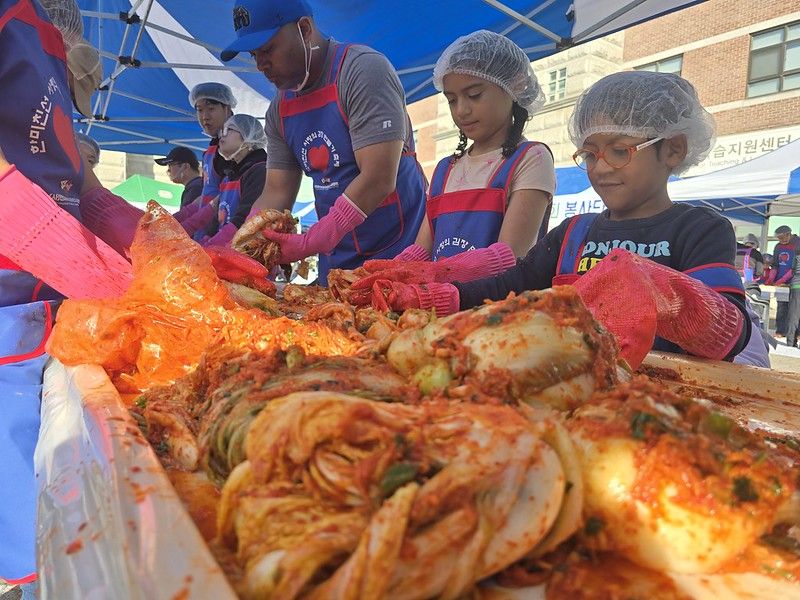 Photo: U.S. Army USAG-H by Jeremy Buddemeier, Public domain, via Wikimedia Commons
The Encyclopedia of Korean Culture defines kimchi as vegetables such as napa cabbage, radish and cucumber that are salted, mixed with seasonings and left to ferment. Hundreds of variations exist, but nearly all follow the same three stages: salting, seasoning and fermentation. Late-autumn kimjang, when households make winter kimchi together, was inscribed on UNESCO's Representative List of the Intangible Cultural Heritage of Humanity in 2013.
Step 1: Salting
Salting is the step that makes kimchi possible. Salt draws water out of the vegetable so it softens and becomes pliable, seasons it throughout, and creates conditions that favor salt-tolerant lactic acid bacteria over many spoilage organisms.
- Napa cabbage is usually halved or quartered lengthwise, dipped in brine, and then sprinkled with coarse salt between the leaves, concentrating on the thick white ribs. A food-safety guideline from the BC Centre for Disease Control describes a brine of roughly 10–12% salt and a salting time of about 2 to 10 hours; a Colorado State University Extension recipe calls for 3 to 6 hours at room temperature.
- Rinse and drain. After salting, the cabbage is rinsed several times in cold water and drained well, often for 30 minutes or more. Rinsing removes surface salt and grit; draining keeps the finished kimchi from turning watery.
- Target saltiness. Colorado State notes that finished kimchi typically lands at about 2–5% salt. Too little salt risks soft, off-tasting kimchi; too much slows fermentation and makes it harsh.
Step 2: The seasoning paste
The classic paste for baechu-kimchi combines gochugaru, garlic, ginger, julienned Korean radish and green onion, usually bound with a thin porridge of glutinous rice flour that helps the seasoning cling. Fermented seafood such as saeujeot (salted shrimp) or myeolchi-aekjeot (anchovy sauce) adds depth; some cooks add grated Asian pear or a little sugar. The paste is spread between every leaf, and the cabbage is folded and packed tightly into a container with as little trapped air as possible.
Chili was a later addition. The encyclopedia explains that chili peppers reached Korea around the mid-Joseon period and that, by the 1760s, recipes describe chili powder mixed with vegetables and salted seafood; tightly headed napa cabbage of the modern kind became common only in about the last century.
Step 3: Fermentation
Kimchi ferments spontaneously, driven by lactic acid bacteria already present on the vegetables and seasonings. Research on napa cabbage kimchi describes a typical succession: Leuconostoc species dominate early, producing a fresh, lightly fizzy sourness, while Lactobacillus populations grow as the kimchi becomes more acidic. A 2025 study in Foods treated a pH between about 4.0 and 4.5 as optimally ripe and considered kimchi below pH 4.0 over-ripe.
Temperature controls the pace. The BC Centre for Disease Control summarizes modeling showing kimchi reaching pH 4.6 or lower in about 2 days at 20°C, 6 days at 10°C, 15 days at 5°C and 35 days at 0°C. Traditionally, kimjang kimchi was packed into earthenware jars and buried in the ground over winter, where steady near-freezing temperatures slowed fermentation for months. Since the 2000s, many Korean homes use dedicated kimchi refrigerators that can ferment at a set temperature and then hold the kimchi cold.
A common home approach is to leave freshly made kimchi at cool room temperature for a day or two, then refrigerate it. Colorado State suggests about 1 to 2 days at around 20°C (68°F).
Food safety
Kimchi is eaten raw, so the acid produced during fermentation is its main safeguard. Extension and public-health guidance agrees on a few points:
- Reach pH 4.6 or below. Colorado State advises that kimchi reach pH 4.6 or lower before eating and suggests inexpensive pH strips for home cooks. The BC guideline, written for food businesses, recommends discarding a batch that does not reach that level within about 3 days at room temperature or 7 days under refrigeration.
- Start clean. Wash produce thoroughly and use clean hands, tools and water. Outbreaks of pathogenic E. coli and norovirus linked to kimchi have been traced to contaminated raw ingredients or water and to insufficient fermentation.
- Treat fresh kimchi like salad. Unfermented geotjeori, eaten the day it is made, has not yet developed protective acidity. Keep it refrigerated and eat it within about three days.
- Choose the right container. Colorado State advises against metal containers and cracked or chipped earthenware; glass, food-grade plastic or sound glazed crocks work well.
- Know when to discard. Discard kimchi with surface mold. Oregon State University Extension adds that a soft, slimy texture signals spoilage, while a strongly sour taste on its own simply means over-fermentation.
Storage
Refrigerated kimchi keeps fermenting slowly and grows more sour over time. Colorado State suggests eating home kimchi within about two weeks for best quality, while Oregon State notes it can keep for months in the refrigerator. Well-aged, sour kimchi is prized for cooking, for example in kimchi-jeon.
Beyond napa cabbage
The same principles apply to cubed radish kkakdugi, stuffed cucumber oi-sobagi and green onion pa-kimchi. Water kimchi such as dongchimi and nabak-kimchi ferments in a mild brine and is usually made without heavy chili.
Dishes using this technique
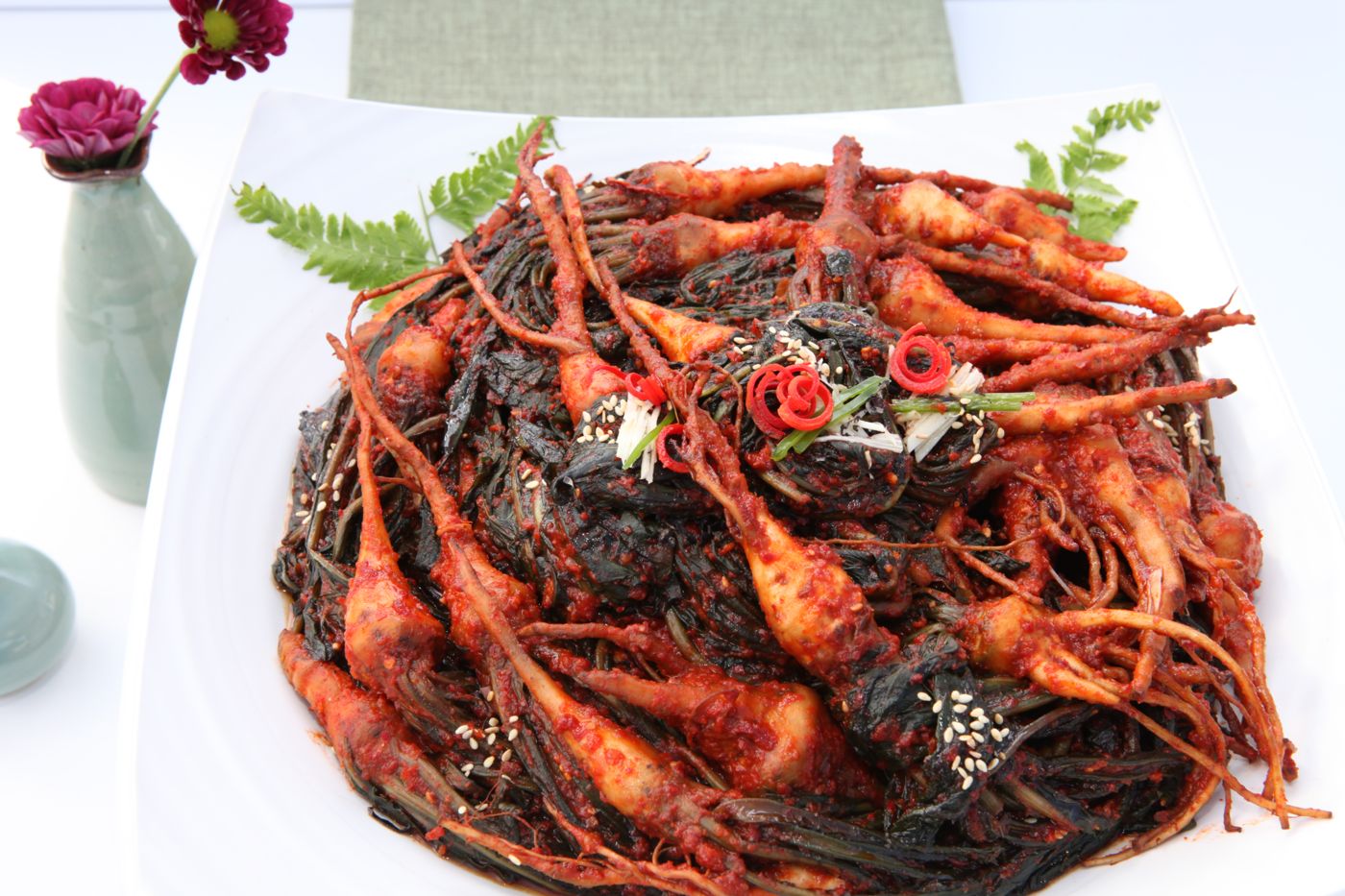 Bitter Godeulppaegi Kimchi고들빼기김치A bittersweet Jeolla kimchi of whole godeulppaegi greens and roots, soaked for days to tame the bitterness and dressed with anchovy jeotgal and chili.
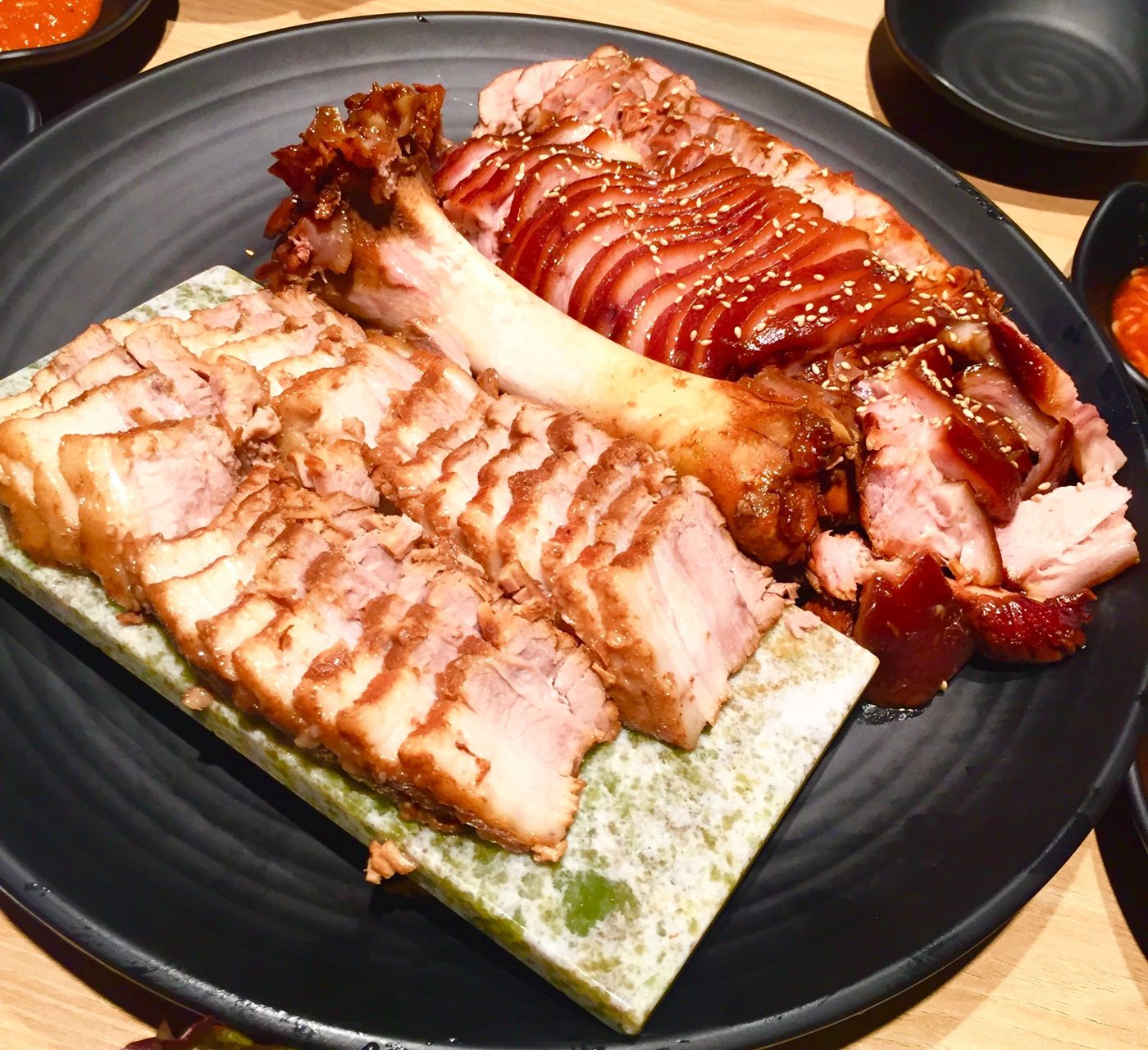 Bossam (Boiled Pork Wraps)보쌈Pork belly simmered with doenjang and aromatics, pressed and sliced, then wrapped in salted cabbage with spicy radish and salted shrimp — a feast dish built for sharing.
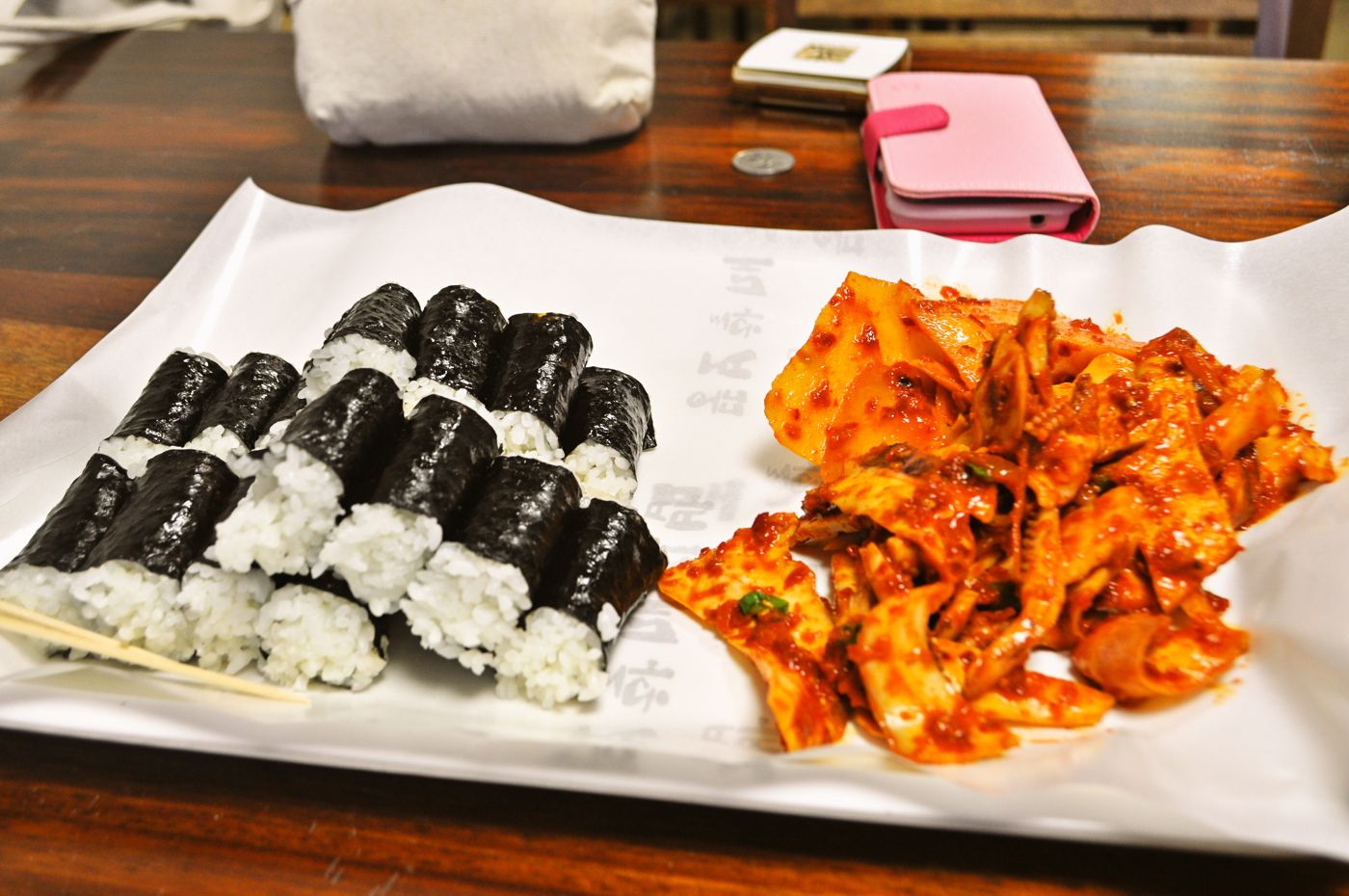 Chungmu Gimbap (Tongyeong Rice Rolls)충무김밥Finger-sized rolls of plain rice in laver, eaten with spicy squid and chunky radish kimchi on the side — Tongyeong's harbor food, built to survive summer heat.
- Chunky Radish and Cabbage Kimchi섞박지Big, flat-cut pieces of radish and cabbage mixed in one chili and jeotgal seasoning — a late-autumn “mixed” kimchi, and the name for big radish kimchi today.
 Cubed Radish Kimchi깍두기Korean radish cut into neat cubes and tossed with chili, garlic and salted shrimp — crunchy, juicy and a classic partner to rich soups.
- Cut Cabbage Kimchi막김치Napa cabbage cut into bite-size pieces before salting and tossed with the seasoning all at once — the quick, everyday way to make cabbage kimchi.
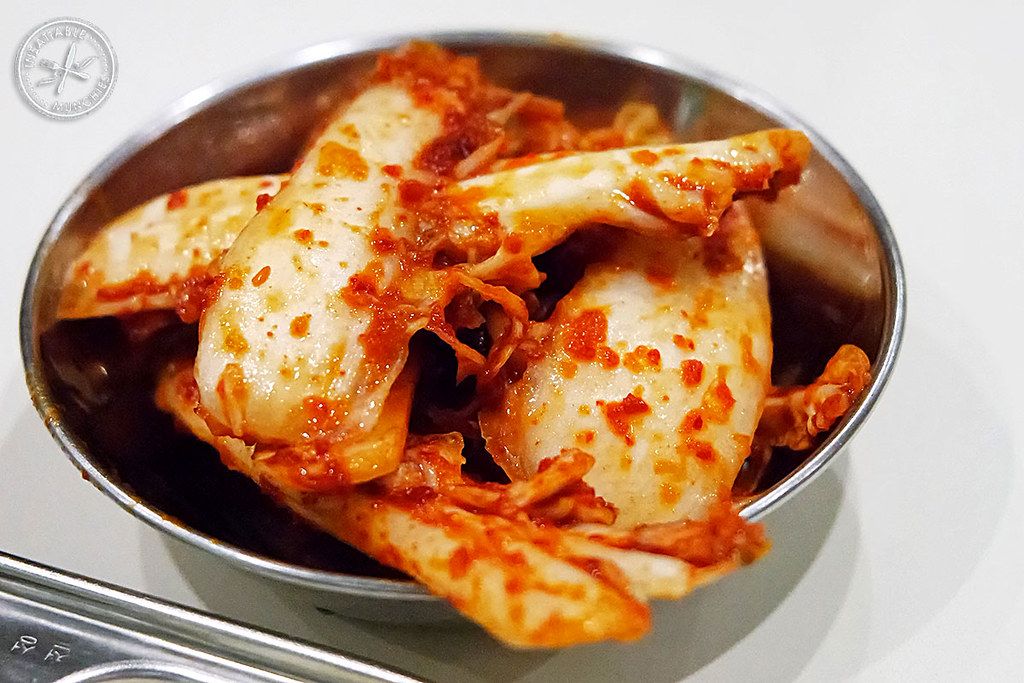 Fresh Cabbage Kimchi겉절이Napa cabbage salted only briefly, then tossed with chili, garlic and fish sauce and eaten the same day — kimchi at its freshest, crisp and bright.
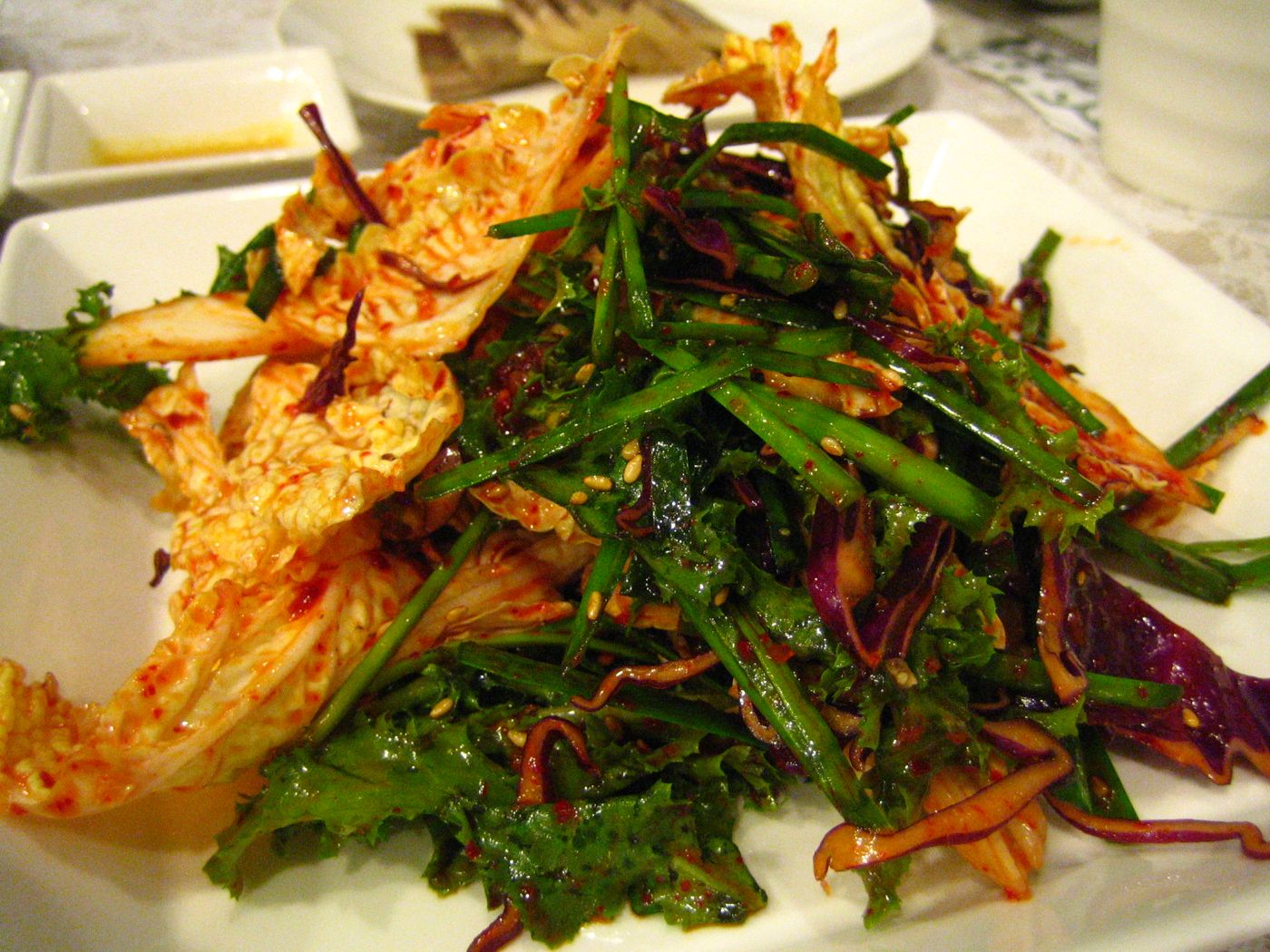 Garlic Chive Kimchi부추김치Whole garlic chives tossed with anchovy fish sauce and plenty of chili — a quick kimchi eaten fresh or ripe, known by a different name in nearly every province.
- Green Cabbage Kimchi양배추김치Crisp, quick kimchi of round green cabbage — once South Korea's stand-in when napa ran short, and still an everyday summer kimchi in North Korea.
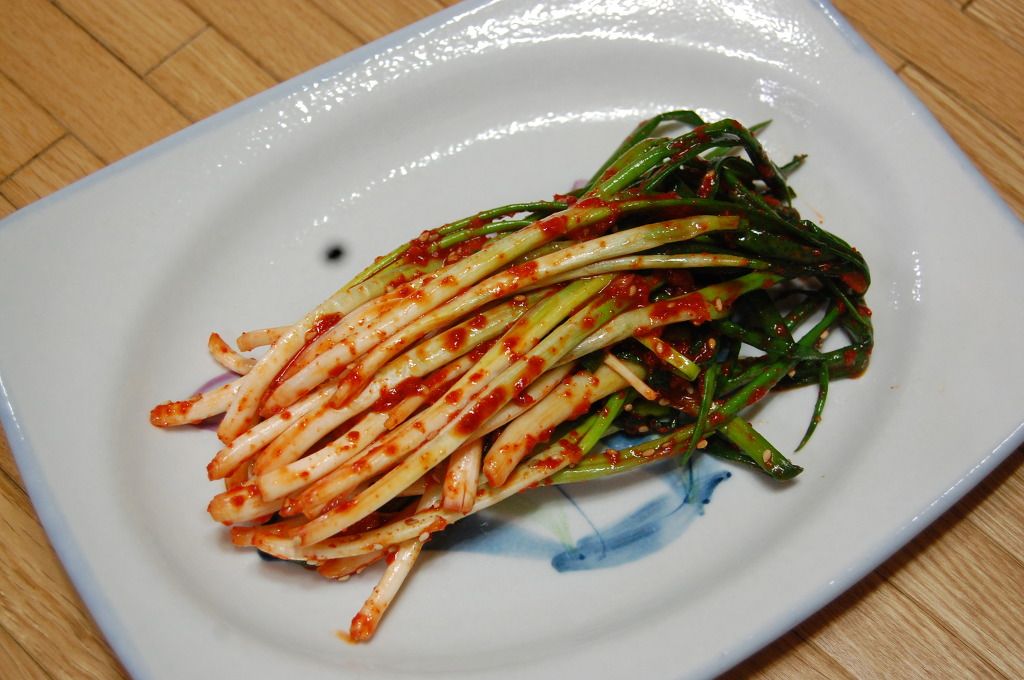 Green Onion Kimchi파김치Slender Korean green onions coated in a thick chili and anchovy-sauce paste — pungent when fresh, mellow and savory once ripe.
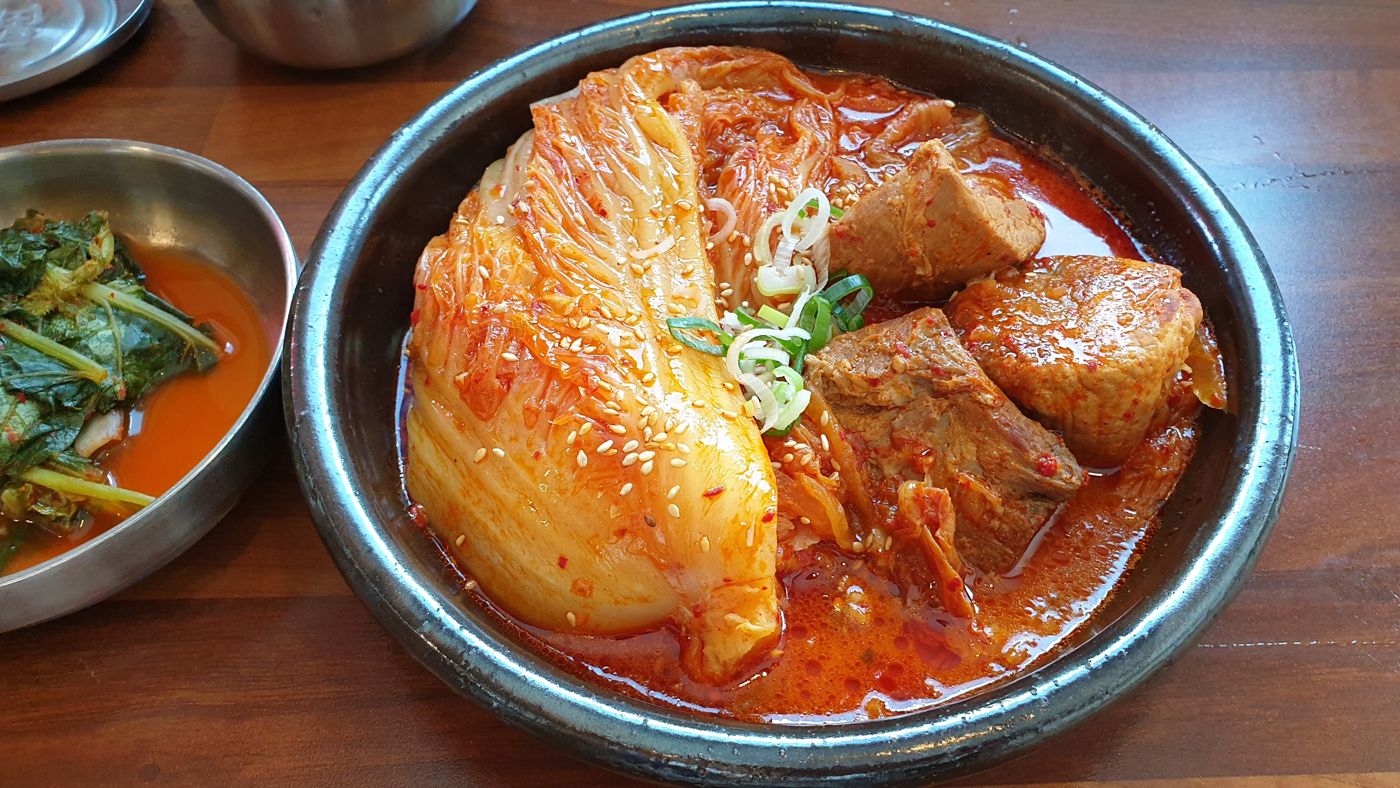 Kimchi-jjim (Braised Aged Kimchi with Pork)김치찜Well-fermented kimchi braised slowly with pork until the sourness mellows and the meat turns tender, with only a little liquid left in the pot. A hearty dish for a bowl of rice.
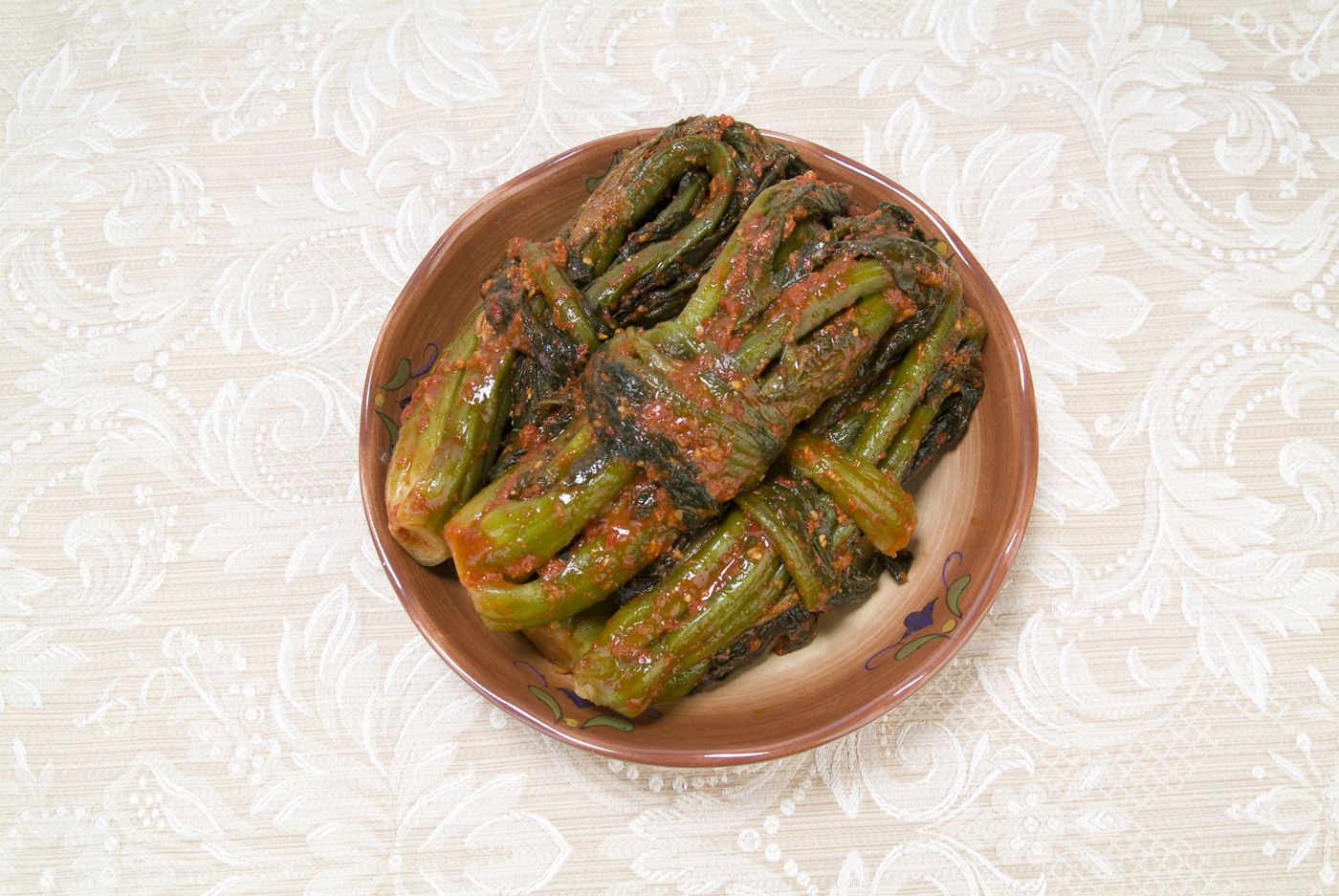 Mustard Leaf Kimchi갓김치Leaf mustard rolled in a chili and anchovy paste and fermented until its nose-tingling bite mellows — a Jeolla specialty, famously from Dolsan in Yeosu.
 Napa Cabbage Kimchi배추김치Salted napa cabbage layered with a red paste of chili, garlic, ginger and fermented seafood, then left to ripen: the kimchi most people picture first.
- Oyster Radish Kimchi굴깍두기Cubed radish kimchi folded through with fresh raw oysters — a short-lived winter kimchi, eaten within days while the oysters are still sweet.
- Perilla Leaf Kimchi깻잎김치Stacks of perilla leaves layered with a soy, fish-sauce and chili seasoning — fragrant, slightly bitter summer kimchi peeled off one leaf at a time over rice.
- Ponytail Radish Kimchi총각김치Small, firm radishes kimchi'd whole with their green tops in a chili and salted-shrimp paste — crunchy, juicy and a fixture of the winter kimjang.
- Pumpkin Kimchi for Stew호박김치Thick slices of pumpkin fermented with cabbage or young radish greens, then simmered into a mellow stew — a Hwanghae and Chungcheong cooking kimchi.
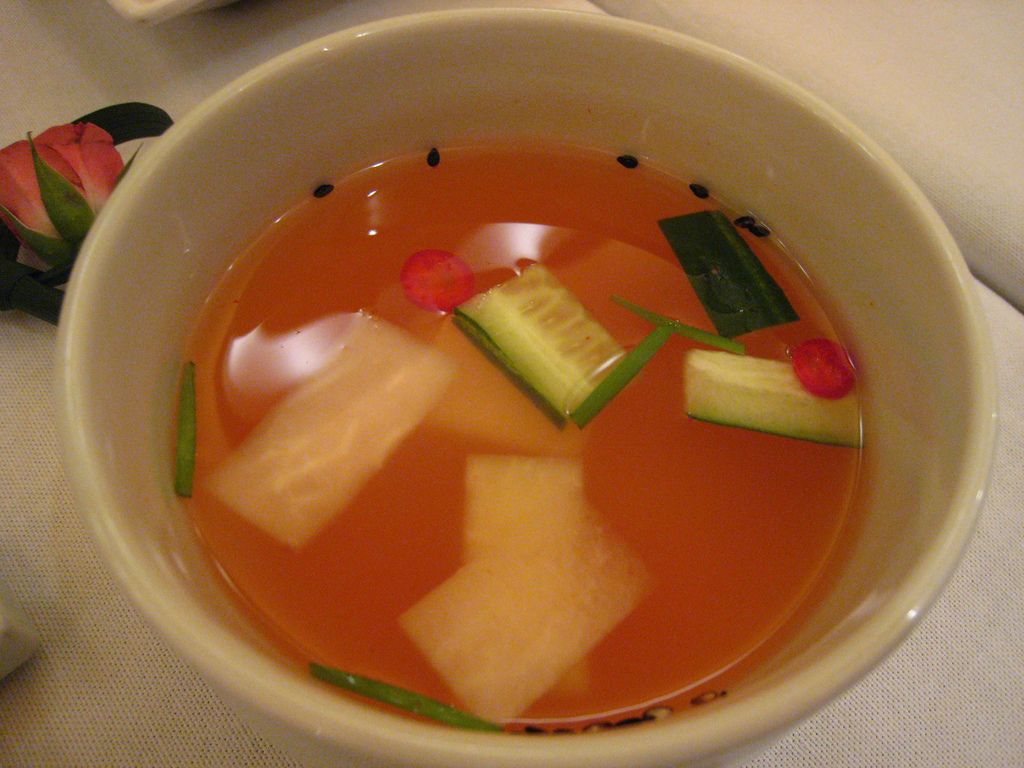 Radish and Cabbage Water Kimchi나박김치Thin squares of radish and napa cabbage in a lightly salted, pink-tinted broth — a mild, refreshing water kimchi eaten by the spoonful.
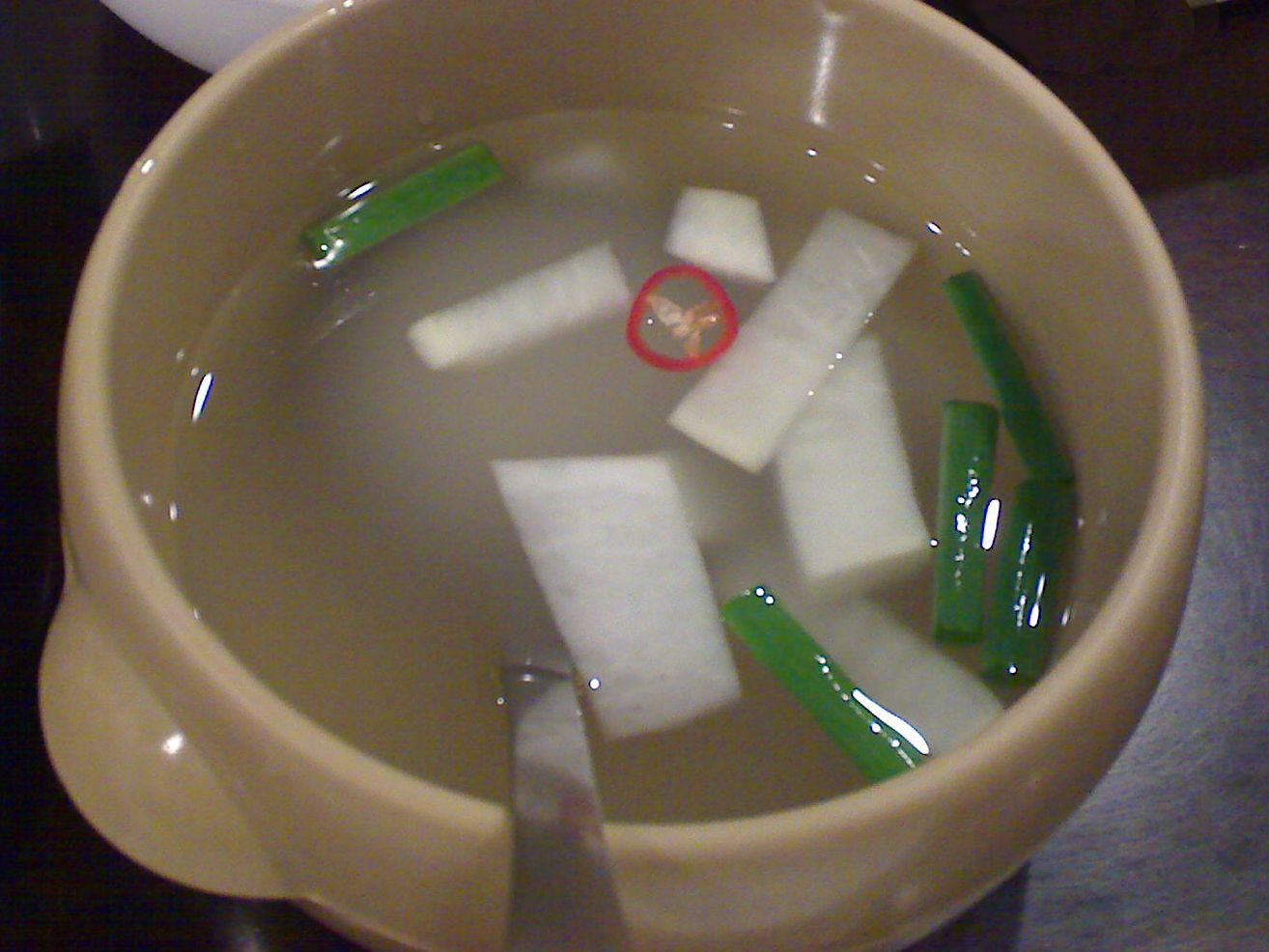 Radish Water Kimchi동치미Whole radishes steeped in a clear salt brine with pear, ginger and green chili — a winter water kimchi whose tangy broth is prized on its own.
- Soy Sauce Water Kimchi장김치Cabbage and radish cured in soy sauce instead of salt, floated in a lightly sweet soy brine with pear, chestnut and pine nuts — a court and gentry kimchi.
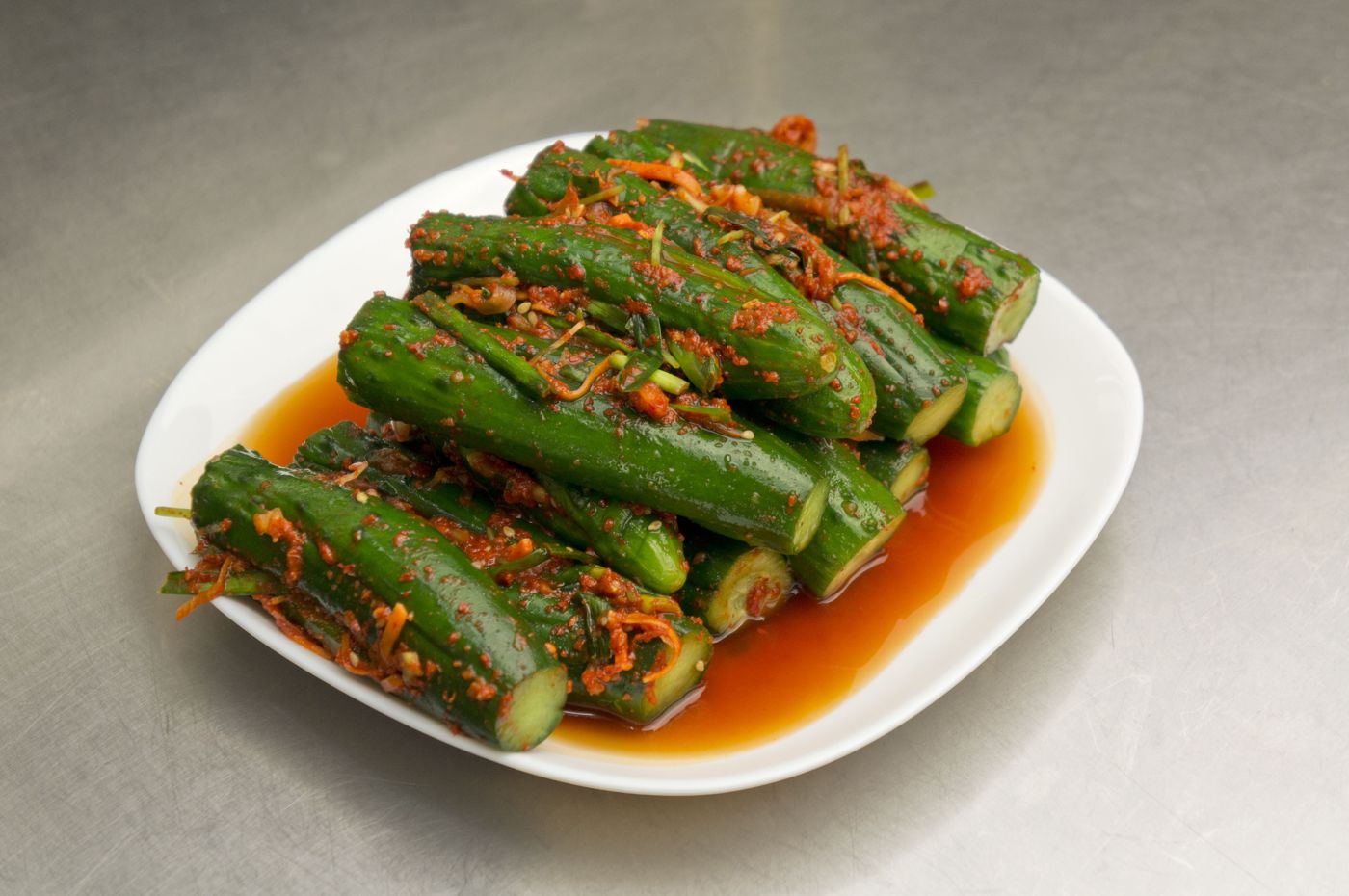 Stuffed Cucumber Kimchi오이소박이Cucumbers slit and stuffed with garlic chives, chili and garlic — a crisp, refreshing summer kimchi meant to be eaten young.
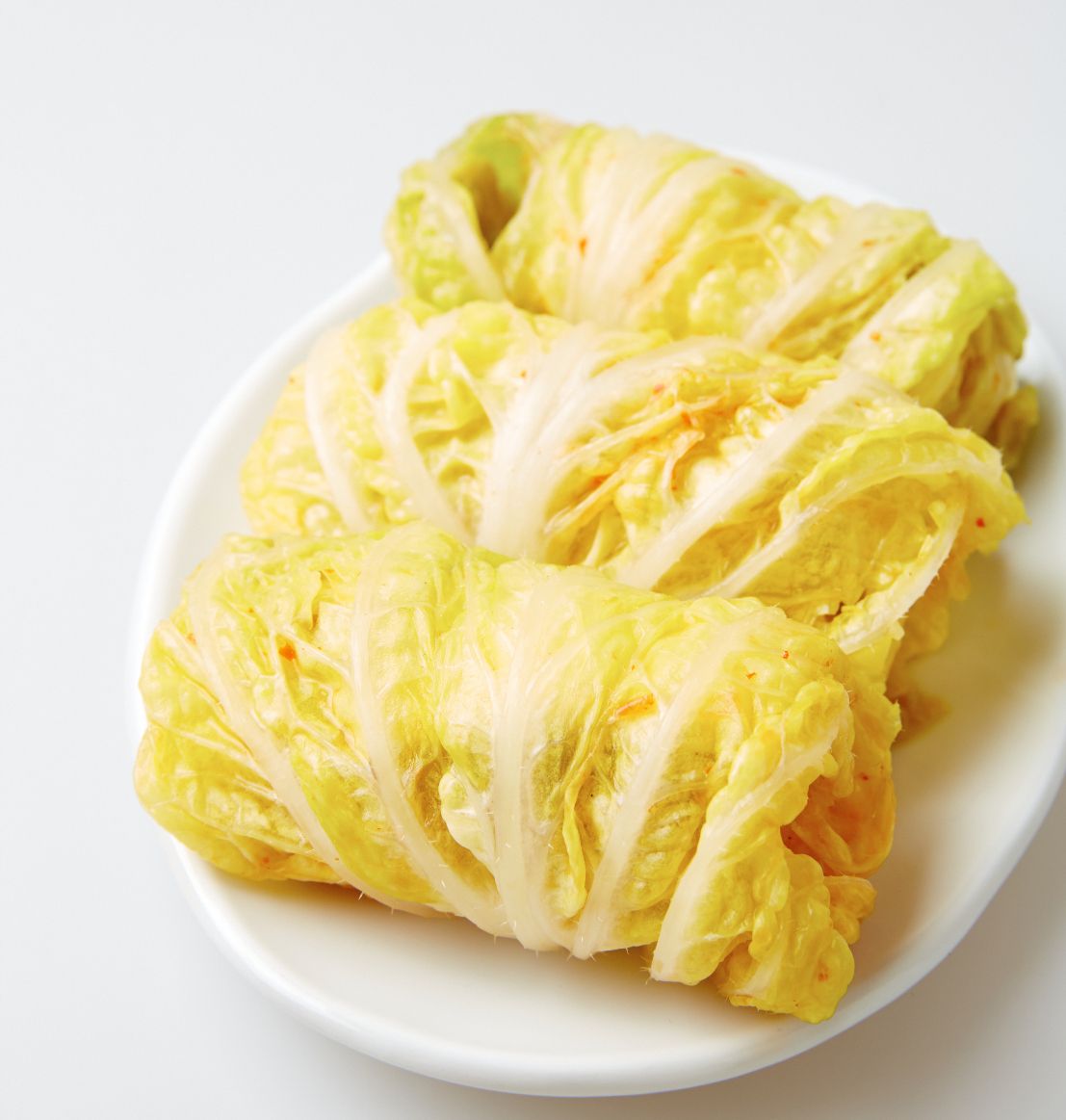 White Kimchi백김치Napa cabbage stuffed with radish, pear, chestnut and jujube and ripened in a clear, cool brine — kimchi with no chili flakes, mild and refreshing.
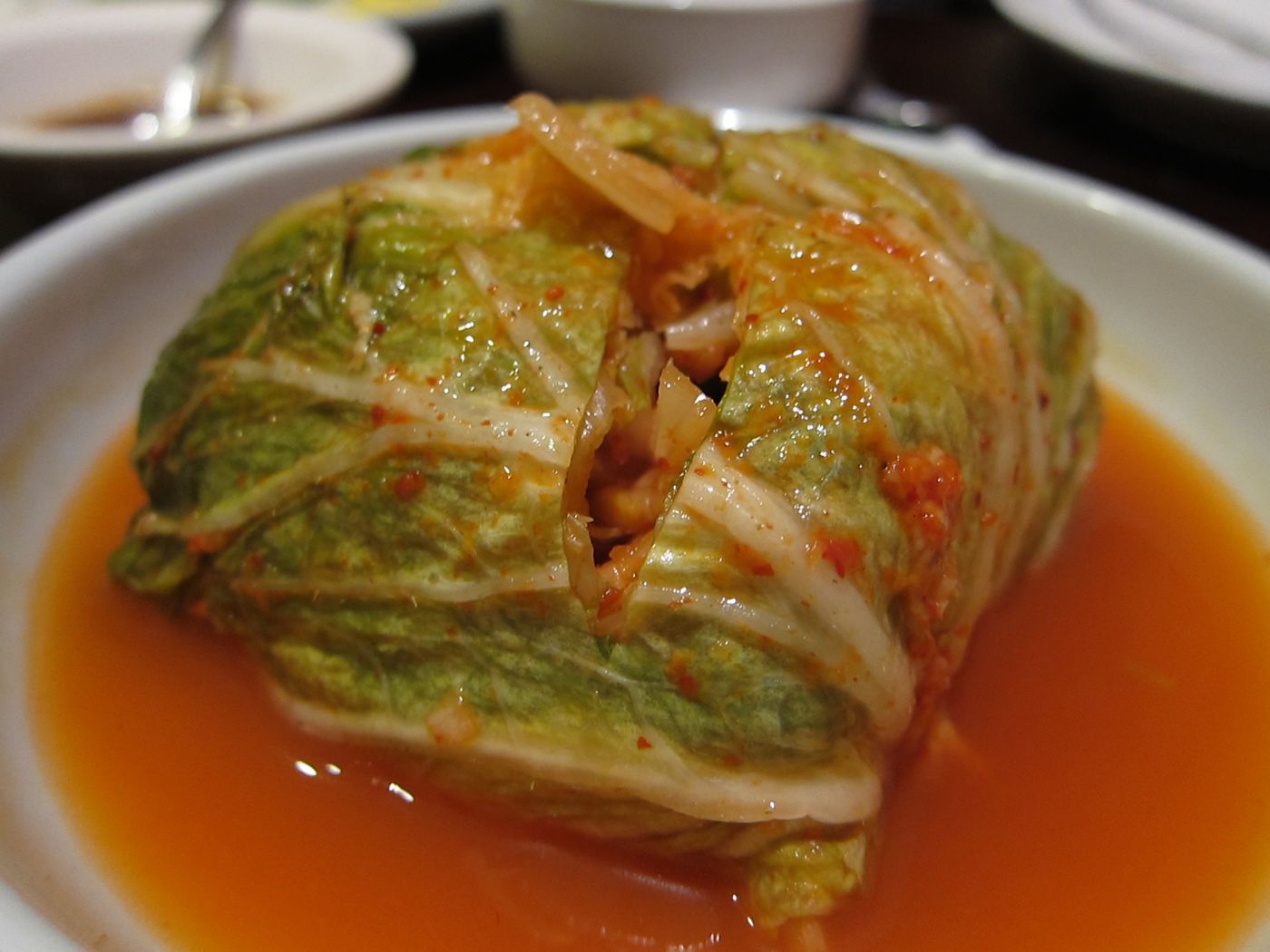 Wrapped Kimchi보쌈김치Cabbage, radish, fruit, nuts and seafood bundled inside whole cabbage leaves — the lavish wrapped kimchi of Gaeseong, made for honored guests.
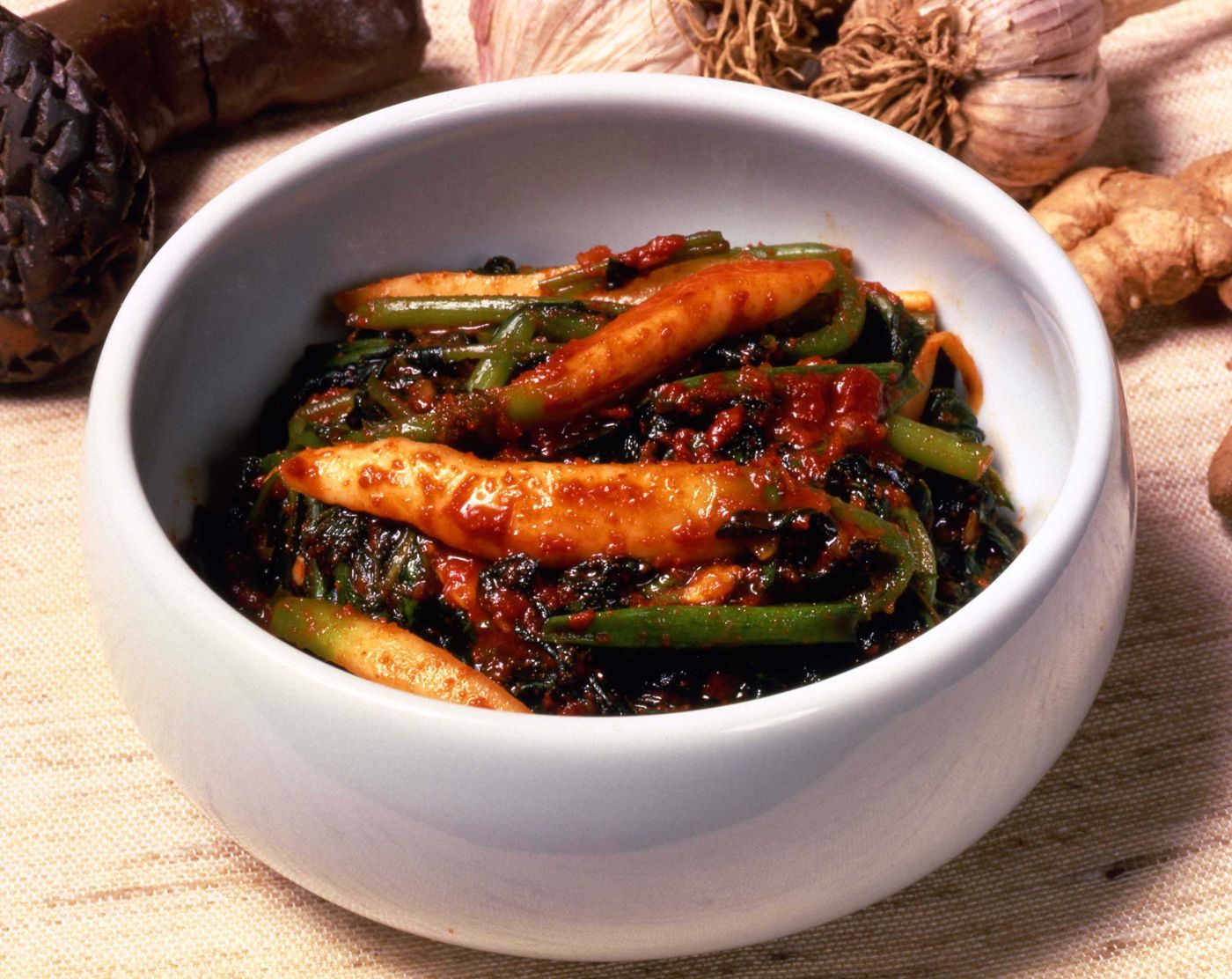 Young Summer Radish Kimchi열무김치Tender young radish greens in a loose, lightly spicy brine thickened with flour or rice paste — the classic summer kimchi, served over noodles and barley rice.
Sources
- 01김치 (Kimchi) — Encyclopedia of Korean Culture
- 02Understanding and Making Kimchi — Colorado State University Extension
- 03Safety of Fermented Foods, Section 3.3: Kimchi — BC Centre for Disease Control
- 04Is my kimchi safe to eat? — Oregon State University Extension
- 05Effect of Fermentation Conditions on Functional Quality of Napa Cabbage Kimchi (Foods, 2025) — PMC
- 06Kimjang, making and sharing kimchi in the Republic of Korea — UNESCO