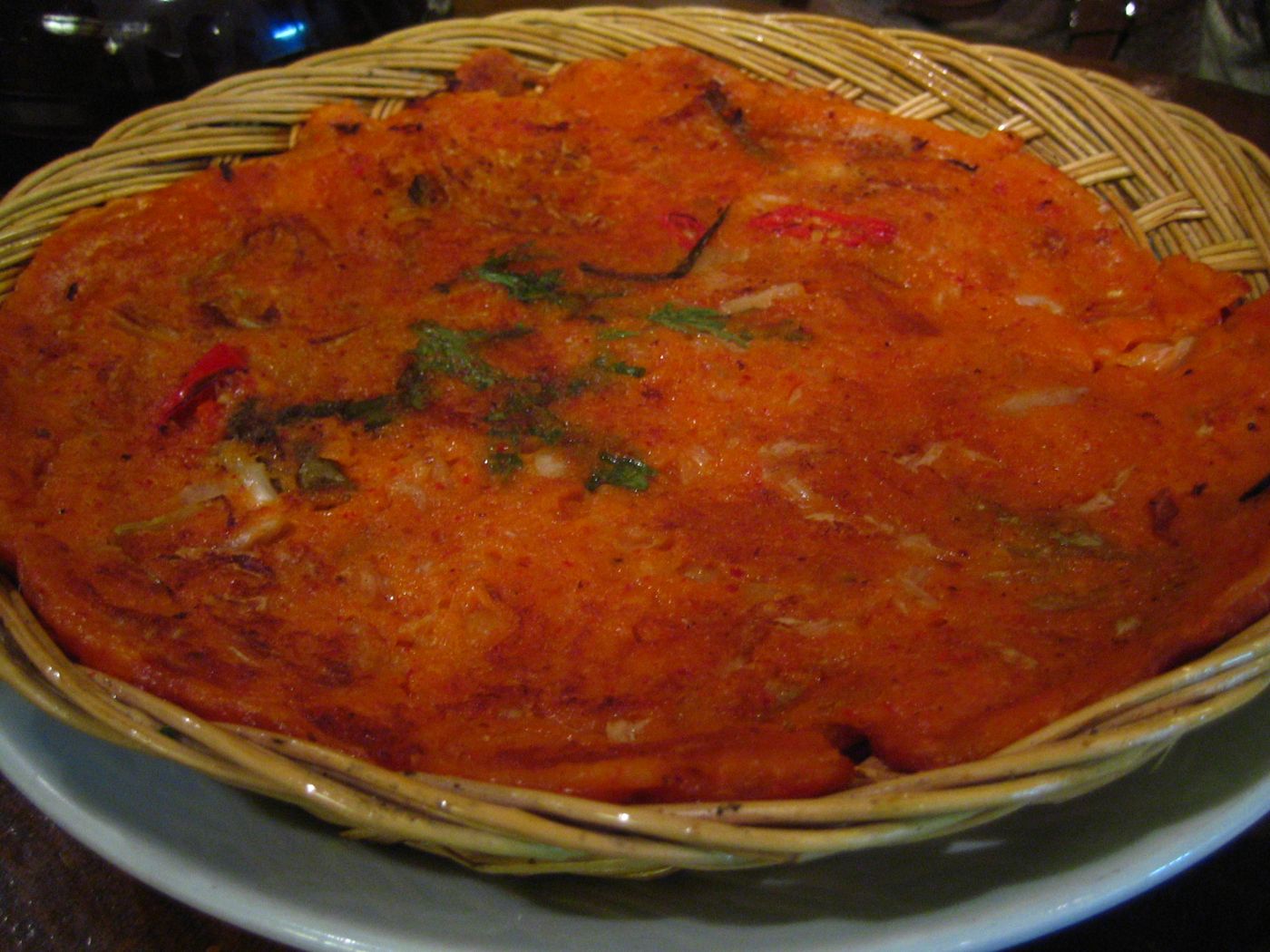
 Photo: ayustety (a flickr user), CC BY-SA 2.0, via Wikimedia Commons
Jeon · Pan-fried 전
Kimchi Jeon (Kimchi Pancake)
김치전
Romanization: kimchi-jeon
Chopped, well-fermented kimchi folded into a thin flour batter and pan-fried until crisp at the edges — tangy, savory and quick to make.
- Serves
- 4
- Prep
- 10 min
- Cook
- 15 min
Recipe
Ingredients · Serves 4
- 200 gWell-fermented napa cabbage kimchiabout 1 packed cup, chopped
- 3 tbspKimchi brinefrom the kimchi jar
- 120 gAll-purpose flourabout 1 cup
- 160 mlCold wateradd a little more if the batter is very thick
- ¼ mediumOnionthinly sliced (about 50 g)
- 2 stalksGreen onionscut into 3 cm lengths (about 30 g)
- 1 tspGochugaruoptional
- 1 tspSugaroptional, to soften very sour kimchi
- 3 tbspNeutral cooking oilfor frying
Method
Technique: Jeon: Pan-Frying in Flour and Egg
Step 1: Squeeze the kimchi lightly over a bowl to collect its juices, then chop it into bite-size pieces.
Step 2: In a mixing bowl, whisk the flour with the cold water and kimchi brine until smooth. Add the kimchi, onion, green onion and gochugaru and sugar if using, and stir until evenly coated. The batter should be loose enough to spread thinly.
Step 3: Heat half the oil in a large skillet over medium-high heat. Pour in half the batter and spread it into an even pancake about 5 mm thick.
Step 4: Cook for 3–4 minutes, until the underside is golden and crisp and the edges begin to brown. Flip, press down gently with the spatula, and cook for another 2–3 minutes. Drizzle a little extra oil around the edges if the pan looks dry.
Step 5: Slide onto a cutting board and repeat with the remaining oil and batter.
Step 6: Cut into wedges or squares and serve hot, plain or with a little vinegar-soy dipping sauce.
Origin & History
Kimchi-jeon, also called kimchi-buchimgae, belongs to the batter-style branch of the jeon family. Classic jeon are sliced ingredients coated in flour and egg; the Encyclopedia of Korean Culture notes that pancakes made by mixing ingredients into a batter and frying them flat — such as mung-bean bindaetteok — are called jijimgae or buchimgae.
The dish is a practical answer to a familiar kitchen question: what to do with cabbage kimchi that has fermented past its crisp, fresh stage. Sour, well-ripened kimchi (sin-kimchi or mugeunji) loses its appeal as a side dish but gives a pancake deep flavor, and its brine seasons the batter.
Kimchi-jeon is made at home as a snack, a banchan or something to share with drinks, and it is closely associated with rainy days, when many Koreans crave jeon with makgeolli — convenience-store chains have reported makgeolli sales rising on rainy days.
Key Ingredients
 Napa cabbage배추The tall, pale, tightly headed cabbage at the heart of Korea's best-known kimchi. Salted, layered with seasoning and left to ferment, it becomes baechu-kimchi; fresh, it goes into soups, wraps and quick salads.
 Gochugaru고춧가루Korean red chili powder, made from dried red peppers ground coarse or fine. It gives kimchi, gochujang and countless banchan their color and warmth.
 Green onion파Korean green onion (pa), from thick-stemmed daepa to slender scallions — chopped into nearly every seasoning sauce, soup and kimchi, and the star of pa-kimchi.
Nutrition
| Calories | ~220 kcal |
|---|---|
| Protein | ~4.1 g |
| Fat | ~10.6 g |
| Carbohydrates | ~27 g |
| Fiber | ~2.2 g |
| Sodium | ~310 mg |
Notable forVitamin K · Folate · Iron
Estimated by summing USDA FoodData Central (SR Legacy) values for cabbage kimchi (FDC 170392, also used for the brine), enriched all-purpose flour (FDC 168894), raw onion, raw scallions, sugar and soybean-based cooking oil, divided by 4. Assumes all the oil is absorbed. The USDA kimchi entry lists 498 mg sodium per 100 g; homemade and Korean commercial kimchi is often saltier, so actual sodium may be noticeably higher. Folate and iron come largely from enriched flour; much of the vitamin K comes from the green onion and soybean oil. Actual values vary with ingredients, portion size and preparation.
Health Benefits
- Kimchi in the batter: cabbage kimchi contributes vitamin K, folate and fiber. Cooking kills most of the live lactic acid bacteria found in raw kimchi, so the pancake should not be thought of as a probiotic food.
- Using what you have: the dish is a traditional way to use up over-ripe kimchi, reducing food waste.
- Adjustable richness: less oil in a good nonstick pan, more vegetables and a little added seafood can make it a lighter, more balanced dish.
Regional Variations
- With pork or seafood: thin slices of pork belly, squid or small shrimp are common additions that make the pancake heartier.
- Thin and crisp or thick and soft: some cooks keep the batter thin and fry in more oil for lacy, crunchy edges; others add egg for a softer, thicker pancake.
- Batter blends: many households use a commercial buchim-garu (seasoned pancake mix) or add a little rice flour or potato starch for crispness.
- Spice level: extra gochugaru or a spoonful of gochujang in the batter deepens the color and heat.
Pairings
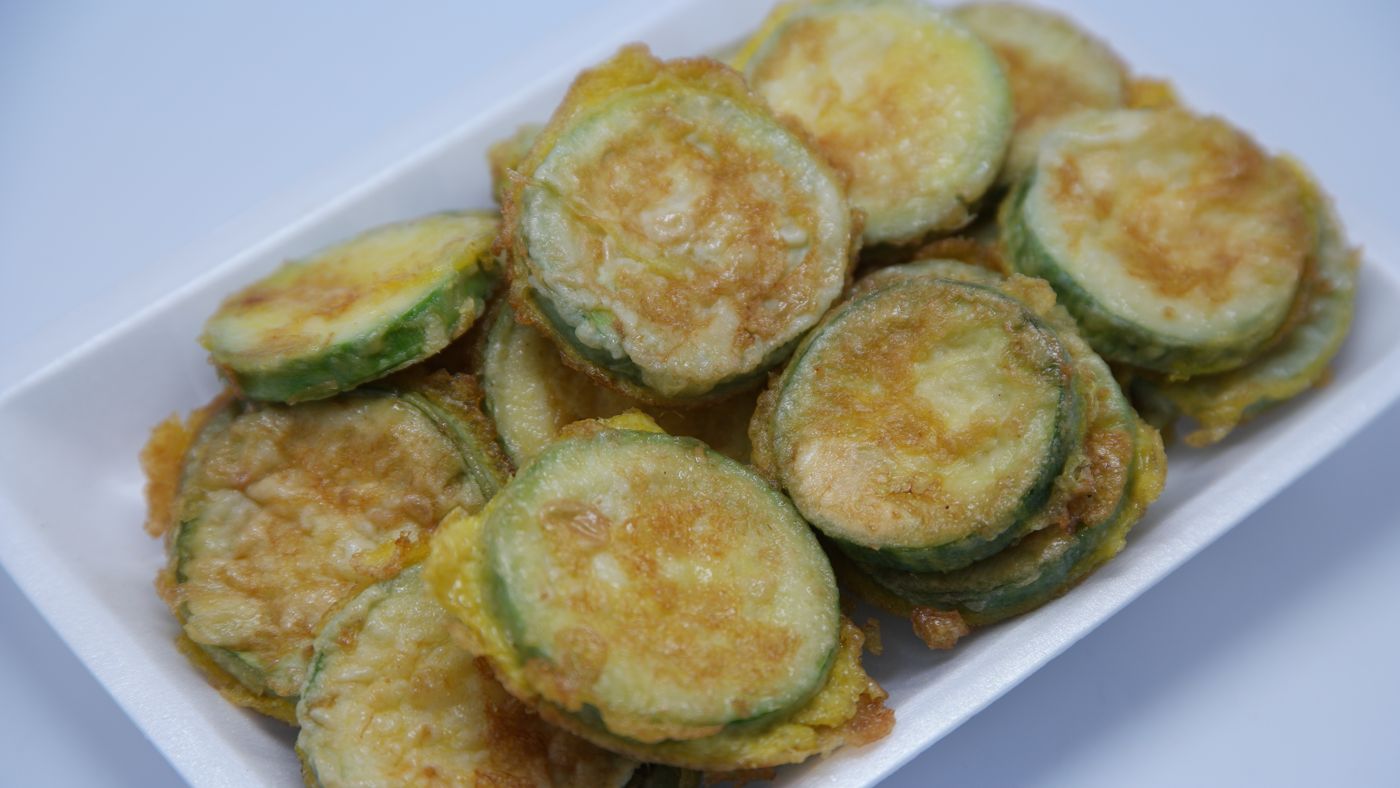 Hobak Jeon (Pan-Fried Zucchini)호박전Rounds of Korean zucchini dusted with flour, dipped in egg and pan-fried until golden — a soft, sweet jeon for holidays and everyday meals.
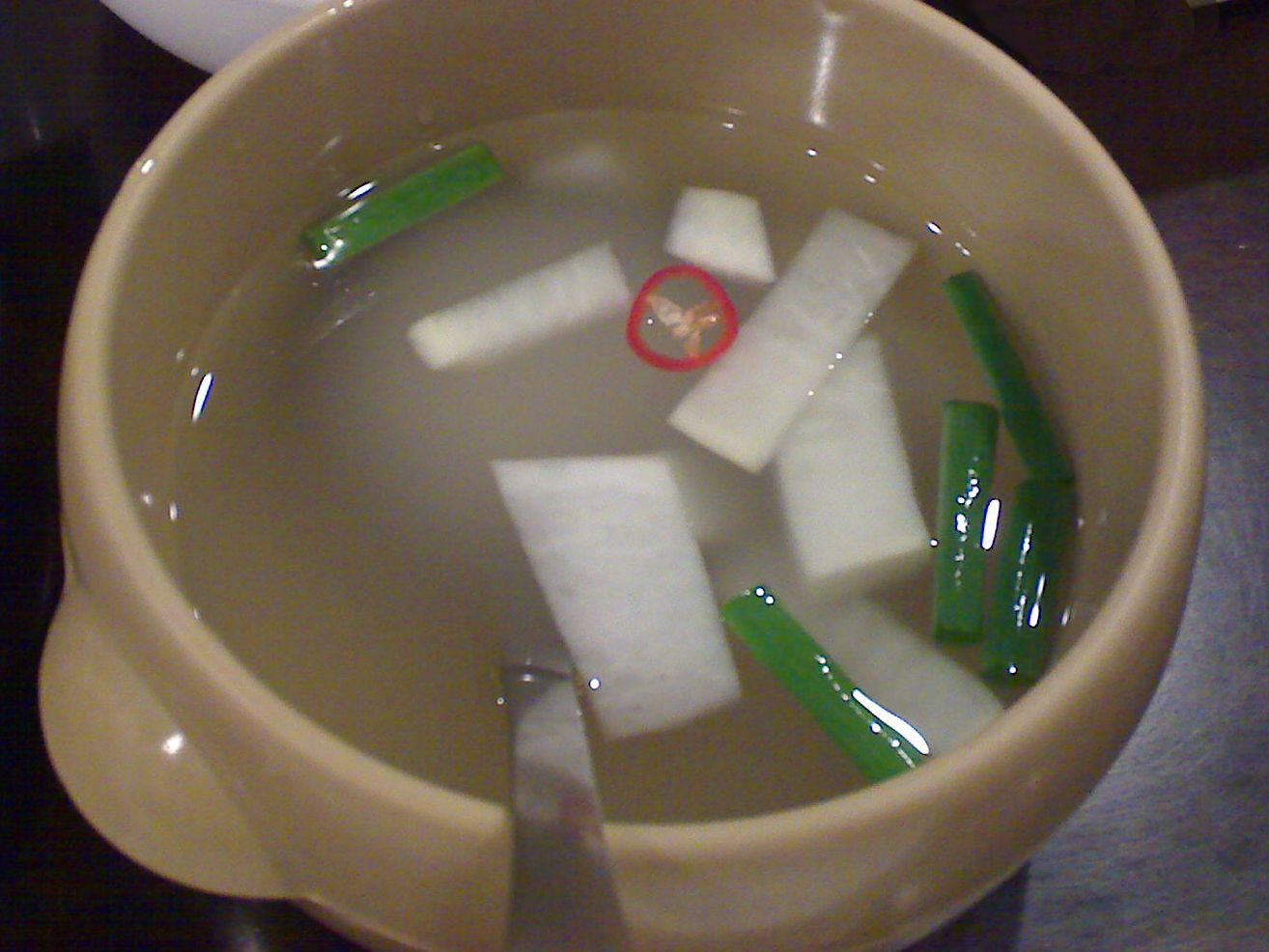 Radish Water Kimchi동치미Whole radishes steeped in a clear salt brine with pear, ginger and green chili — a winter water kimchi whose tangy broth is prized on its own.
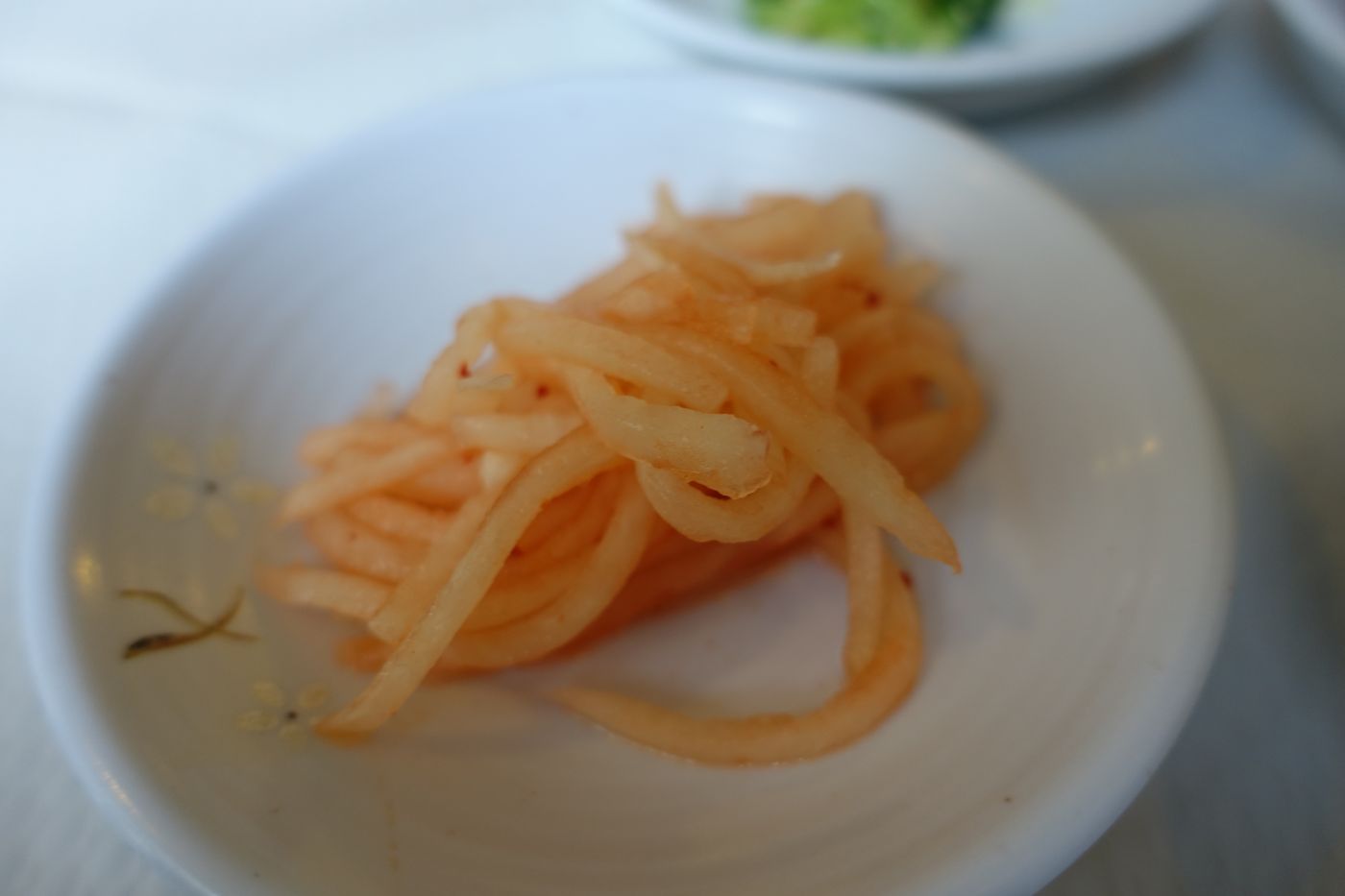 Musaengchae무생채Fine matchsticks of Korean radish dressed raw with chili flakes, a little vinegar and sugar — crisp, sweet-sharp and best made just before the meal.
Sources
- 01[맛있는TMI] 비 오면 막걸리 생각나는 이유…판매량 30% 증가 — Edaily (2020)
- 02전 (Jeon) — Encyclopedia of Korean Culture
- 03한식과 술의 조화, 풍류를 즐기다 (Vol. 44: Jeon) — Hansik magazine, Korean Food Promotion Institute
- 04Cabbage, kimchi (FDC 170392) — USDA FoodData Central
- 05Wheat flour, white, all-purpose, enriched, bleached (FDC 168894) — USDA FoodData Central
Last updated