Namul · Seasoned vegetables 나물
Naengi Muchim (Seasoned Shepherd's Purse)
냉이무침
Romanization: naengi-muchim
Young shepherd's purse, roots and all, blanched for seconds and dressed with doenjang, garlic and sesame — the earthy, faintly bitter taste of early spring.
- Serves
- 4
- Prep
- 20 min
- Cook
- 5 min
Recipe
Ingredients · Serves 4
- 300 gShepherd's purse (naengi), with rootsyoung plants, before flowering
- 1 tbspDoenjang
- 1 tspSoup soy sauce (guk-ganjang)
- 1 cloveGarlicfinely minced
- 1 tbspGreen onionfinely chopped
- 1 tbspToasted sesame oil
- 1 tspToasted sesame seedslightly crushed
Method
Technique: Blanching and Seasoning Namul
Step 1: Pick over the shepherd's purse, pulling off yellowed outer leaves. Scrape the roots with a paring knife to remove fine hairs and soil, but leave them attached.
Step 2: Soak in a large bowl of cold water, swish, then lift the plants out so grit stays behind. Repeat three or four times, until no soil settles at the bottom.
Step 3: Bring a large pot of water to a boil with a pinch of salt. Add the naengi and blanch for 10–15 seconds, just until the leaves turn bright green.
Step 4: Drain and plunge into cold water, then rinse once more. Squeeze gently but firmly to remove excess water and cut any long plants into 5–6 cm lengths.
Step 5: In a bowl, mix the doenjang, soup soy sauce and garlic. Add the naengi and work the seasoning in with your fingertips, loosening the clumps.
Step 6: Add the green onion, sesame oil and sesame seeds, toss again and taste. Serve the same day, at room temperature.
Origin & History
Shepherd's purse (Capsella bursa-pastoris) grows wild in fields, along paths and at the edges of farmland all over Korea, and it is one of the very first greens to appear when the ground thaws — the National Folk Museum's food encyclopedia calls it a herald of spring. It goes by many local names, from nasaengi and nasangu to nasi, and in older texts is written with the Chinese character je (薺).
People have eaten it for a very long time. The Encyclopedia of Korean Culture points to the Chinese Book of Songs, which compares something sweet to shepherd's purse, as evidence of its ancient use, and to Korean texts such as the eighteenth-century Jeungbo sallim gyeongje, which describes the plant as warming and recommends it as a porridge. In Korea its best-known form is naengi-guk, a doenjang soup listed in the second-month verses of the nineteenth-century farming song Nongga wollyeongga; the same song pairs "dallae kimchi and naengi soup" as foods that revive a jaded appetite. Households also dug the roots in winter and kept them in storage pits for soup.
As a banchan, it is usually eaten cooked rather than raw. The roots are scrubbed rather than trimmed, because their sweet, nutty flavor is the point, and the plant is blanched for only a few seconds before being dressed. Depending on the region, the dish may be called naengi-namul, naengi-muchim or nansi-muchim.
Key Ingredients
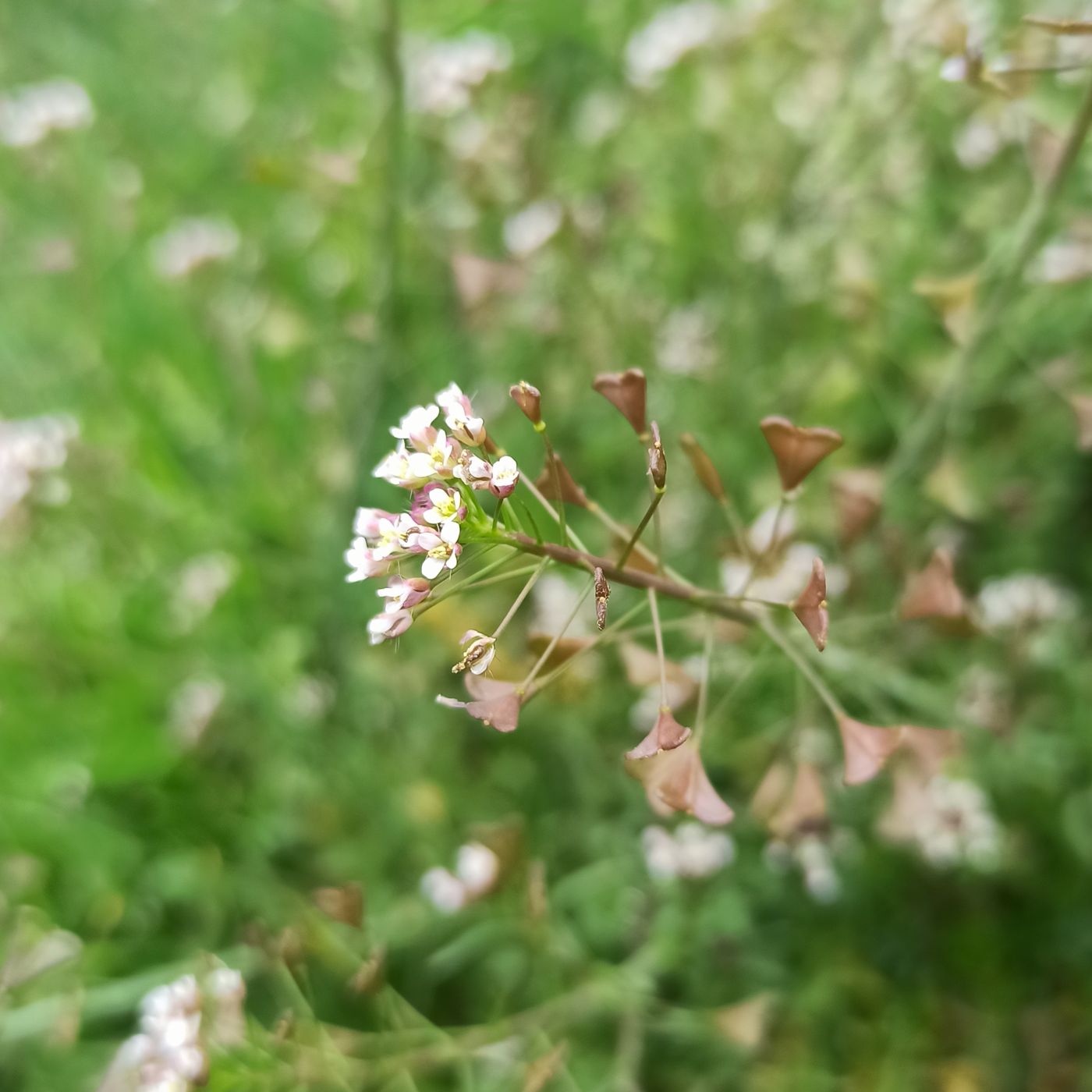 Naengi (shepherd's purse)냉이A low, ground-hugging wild green dug up root and all in late winter and early spring. Its nutty, earthy perfume defines naengi-muchim and naengi doenjang-guk, the first taste of spring on many Korean tables.
 Doenjang된장Fermented soybean paste — the savory foundation of doenjang-jjigae, many soups and dressings for namul. It is one of Korea's core jang, or fermented sauces.
 Soy sauce간장Korean soy sauce, in two main kitchen forms: pale, salty guk-ganjang (soup soy sauce) brewed the traditional way from meju, and darker, sweeter jin-ganjang for braises and marinades.
 Garlic마늘Used raw, minced, pickled and roasted, garlic is one of the essential aromatics of Korean food — in seasonings, marinades, kimchi and namul.
 Green onion파Korean green onion (pa), from thick-stemmed daepa to slender scallions — chopped into nearly every seasoning sauce, soup and kimchi, and the star of pa-kimchi.
 Sesame참깨Toasted sesame seeds and sesame oil (chamgireum) finish countless Korean dishes, adding a nutty aroma and gloss.
Nutrition
| Calories | ~73 kcal |
|---|---|
| Protein | ~4 g |
| Fat | ~4.4 g |
| Carbohydrates | ~6.5 g |
| Fiber | ~3.8 g |
| Sodium | ~342 mg |
Notable forVitamin K · Calcium · Iron · Folate
Shepherd's purse uses the Korean Food Composition Table entry “Shepherd's purse (Naeng-i), Blanched” (per 100 g: 40 kcal, 4.5 g fiber, 207 mg calcium, 7.0 mg iron, 99 µg folate, about 224 µg vitamin K), applied to the raw weight on the assumption that a 15-second blanch changes the weight little. Doenjang and soup soy sauce use Korean Food Composition Table values for traditional products; garlic, green onion, sesame oil and sesame seeds use USDA FoodData Central. Totals divided by four. Actual values vary with ingredients, portion size and preparation.
Health Benefits
- Unusually nutrient-dense for a green: the Korean Food Composition Table lists raw shepherd's purse at about 3.8 g protein, 322 mg calcium and 9.5 mg iron per 100 g, along with beta-carotene and folate — high figures for a leafy vegetable. The iron is the plant (non-heme) form, which the body absorbs less readily than iron from meat.
- Vitamin K: a serving supplies more than a day's adequate intake of vitamin K.
- Fiber: the roots and leaves together give a serving close to 4 g of fiber.
- Traditional and early research: Korean herbal texts regarded naengi as warming and good for the organs, and the National Folk Museum's encyclopedia mentions Korea Food Research Institute work in rodents on fatty liver. These are traditional beliefs and early laboratory findings, not established effects in people.
Regional Variations
- Doenjang-dressed: the most familiar version, with doenjang, soy sauce, garlic, green onion, sesame salt and sesame oil — the fermented soybean paste suits naengi's earthy roots.
- Stir-fried: instead of simply being tossed with its seasoning, the blanched naengi can be stir-fried briefly with its seasoning — the folk-culture encyclopedia describes the namul as either dressed or stir-fried.
- Flower stalks: once the plant bolts and its leaves toughen, cooks cut just the flower stalks and dress them the same way.
- Soups and stews: beyond namul, naengi is most often eaten in doenjang soup or stew, with clams or a dusting of soybean flour, and it also goes into porridge, rice, jeon and even kimchi.
Pairings
- Dallae Muchim (Seasoned Wild Chive)달래무침Raw wild chives, bulbs and all, tossed with soy sauce, chili flakes, a touch of vinegar and sesame — a sharp, garlicky spring muchim made in minutes.
 Doenjang Jjigae (Soybean Paste Stew)된장찌개A thick, savory stew of fermented soybean paste with tofu, zucchini and whatever the season offers — the everyday pot at the center of the Korean table.
 Kongnamul Muchim콩나물무침Soybean sprouts cooked under a lid until just tender, then tossed with garlic, green onion and sesame oil — crisp, nutty and on tables across Korea.
Sources
- 01냉이 (Shepherd's purse) — Encyclopedia of Korean Culture
- 02냉이나물 (Naengi-namul) — Encyclopedia of Korean Folk Culture (National Folk Museum of Korea)
- 03향긋한 봄나물, 종류에 따른 안전한 조리법은? (Spring greens: safe preparation by type) — Korea Policy Briefing (korea.kr)
- 04Korean Food Composition Table: Shepherd's purse (Naeng-i), Blanched — National Institute of Agricultural Sciences
- 05Warfarin — MedlinePlus Drug Information (U.S. National Library of Medicine)
Last updated