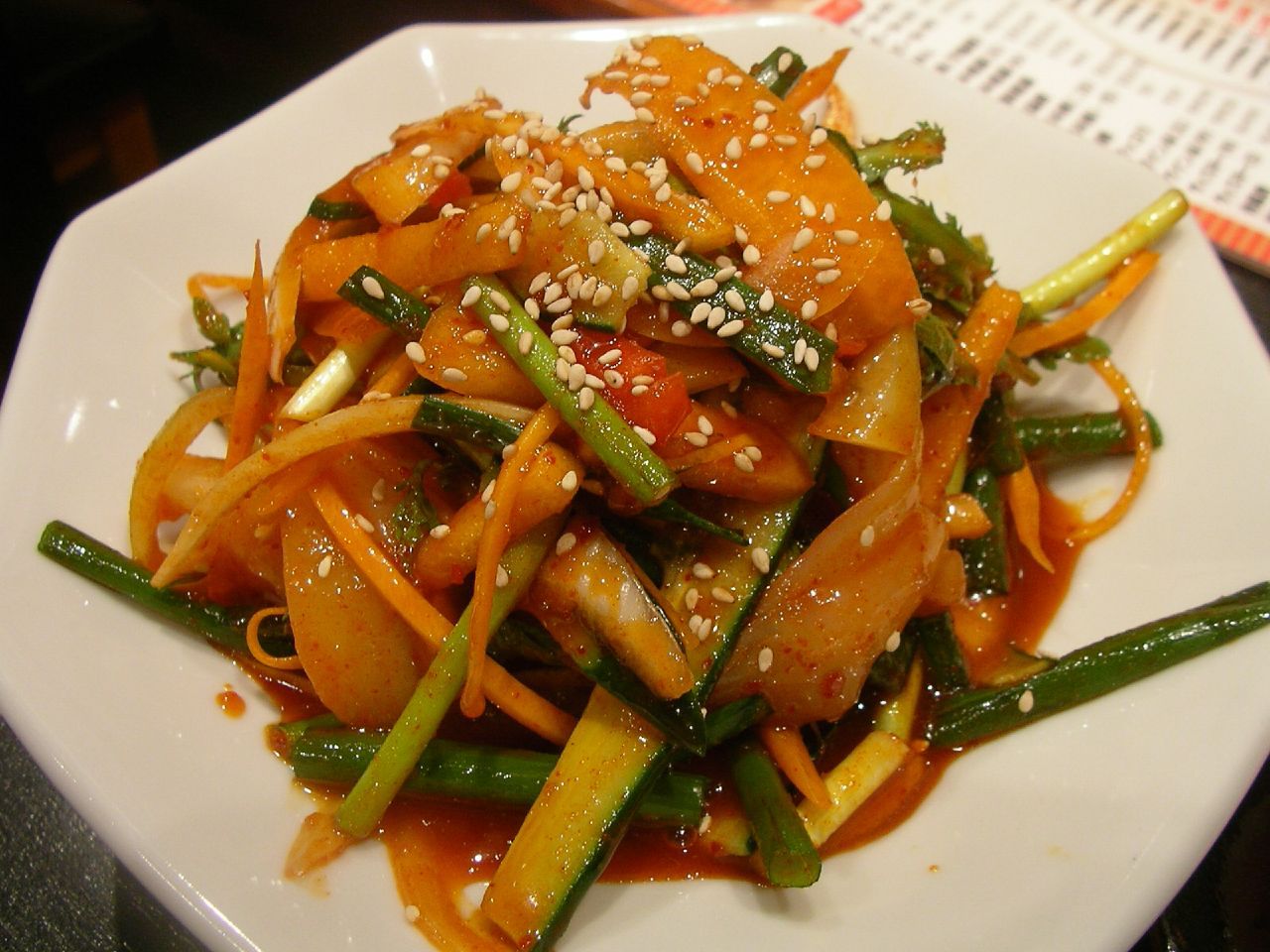
 Photo: jetalone (flickr), CC BY 2.0, via Wikimedia Commons
Muchim · Dressed side dish 무침
Oi Muchim
오이무침
Romanization: oi-muchim
Thin-sliced cucumber, briefly salted and tossed with chili flakes, vinegar and garlic — a cool, crunchy quick salad made in minutes, especially in summer.
- Serves
- 4
- Prep
- 20 min
- Cook
- 0 min
Recipe
Ingredients · Serves 4
- 400 gKorean or Persian cucumbersabout 2 medium Korean cucumbers
- ½ tspSaltfor salting
- 2 tspGochugaru
- 1 tspSugar
- 1 tbspRice or apple vinegar
- 1 cloveGarlicminced
- 1 tbspGreen onionchopped
- 1 tspToasted sesame oil
- 1 tspToasted sesame seeds
Method
Step 1: Rub the cucumber skins with a little salt under running water to clean them, then trim the ends.
Step 2: Slice the cucumbers into thin rounds or half-moons, about 3 mm thick.
Step 3: Toss with the ½ tsp salt and let stand for 10–15 minutes, until the slices soften slightly and release water.
Step 4: Pour off the liquid and gently squeeze the slices to remove excess water (don't rinse).
Step 5: Add the gochugaru, sugar, vinegar, garlic and green onion and toss with your fingertips.
Step 6: Finish with the sesame oil and sesame seeds, taste, and serve cold. Eat within a day for the best crunch.
Origin & History
Cucumber (oi) is native to northern India and is thought to have reached Korea roughly 1,500 years ago. It became one of the staple vegetables of the Korean garden, and Korean growers developed their own types for open fields and greenhouses, such as the long, heat-tolerant cucumbers of Samcheok.
Korean cooks use cucumber in many ways: salt-cured as oiji, stuffed with chives and chili as oi-sobagi, floated in the chilled summer soup oi-naengguk, and dressed raw. The Encyclopedia of Korean Culture lists cucumber with radish and bellflower root as one of the principal vegetables for saengchae, the family of raw seasoned dishes, and notes that Korean chives are often mixed with cucumber for extra fragrance.
Oi-muchim is the quickest of these preparations: cucumbers are sliced, salted just long enough to draw out some water and keep them crunchy, then dressed. It is especially popular in summer, the height of cucumber season, when a cool, sharp side dish is most welcome.
Key Ingredients
- Cucumber오이Slender, thin-skinned Korean cucumbers, prized for their crunch. Stuffed and fermented as oi-sobagi, dressed quickly as oi-muchim, salted into oiji or floated in chilled summer soup.
 Gochugaru고춧가루Korean red chili powder, made from dried red peppers ground coarse or fine. It gives kimchi, gochujang and countless banchan their color and warmth.
 Garlic마늘Used raw, minced, pickled and roasted, garlic is one of the essential aromatics of Korean food — in seasonings, marinades, kimchi and namul.
 Green onion파Korean green onion (pa), from thick-stemmed daepa to slender scallions — chopped into nearly every seasoning sauce, soup and kimchi, and the star of pa-kimchi.
 Sesame참깨Toasted sesame seeds and sesame oil (chamgireum) finish countless Korean dishes, adding a nutty aroma and gloss.
Nutrition
| Calories | ~37 kcal |
|---|---|
| Protein | ~1.4 g |
| Fat | ~1.6 g |
| Carbohydrates | ~5 g |
| Fiber | ~1.1 g |
| Sodium | ~295 mg |
Notable forVitamin K · Vitamin C
Estimated from the Korean Food Composition Table values for raw Korean cucumber (dadagi type) and red pepper powder, plus USDA FoodData Central values for salt, sugar, vinegar, garlic, green onion, sesame oil and sesame seeds, divided by four. All the salting salt is counted; because some drains away with the liquid, actual sodium is likely lower. Actual values vary with ingredients, portion size and preparation.
Health Benefits
- Hydrating and light: cucumber is about 95% water, so this is one of the lightest banchan on the table.
- Vitamins: cucumber, eaten with its skin, contributes vitamin K and some vitamin C.
- Refreshing contrast: its cool, acidic crunch balances rich, grilled or braised dishes.
Regional Variations
- Spicy sweet-sour: the most common version uses gochugaru, vinegar and a little sugar.
- With chives or onion: sliced onion or Korean chives (buchu) are often added for aroma and bite.
- Non-spicy: a mild version dresses salted cucumber with sesame oil, garlic and salt only.
- Pressed cucumber: some cooks squeeze the salted slices hard for an extra-crunchy, almost pickled texture.
Pairings
- Buchu Muchim부추무침Raw Korean chives tossed with soy sauce, chili flakes, vinegar and sesame — a pungent, garlicky salad that cuts through grilled meat and rich soups.
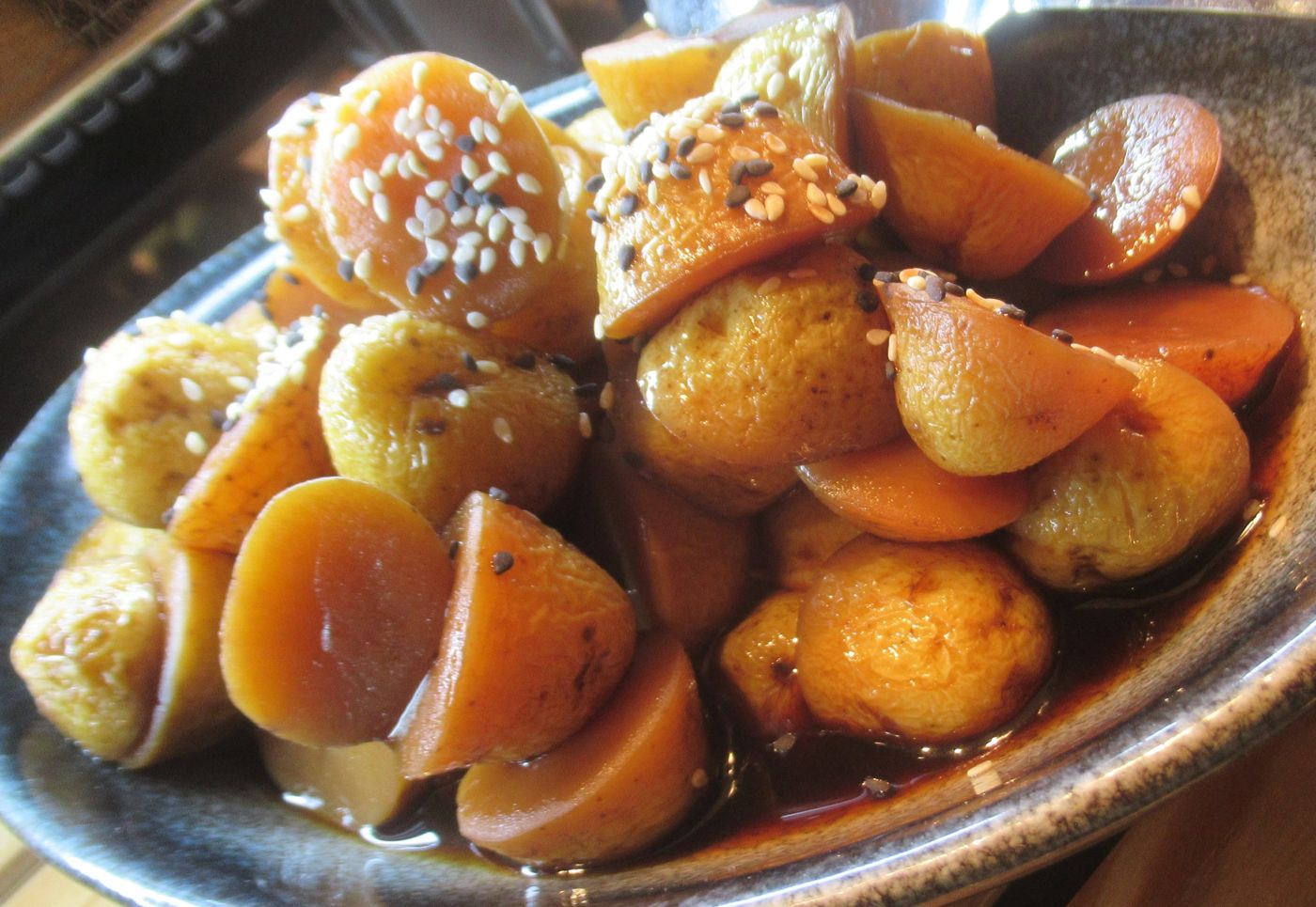 Gamja Jorim감자조림Cubed potatoes simmered in soy sauce, garlic and a touch of sweetness until tender and glossy — a comforting, child-friendly staple of the Korean home table.
 Gyeran Jjim (Steamed Egg)계란찜Eggs whisked with water or broth and gently steamed into a silky, savory custard, often seasoned with salted shrimp and served bubbling hot.