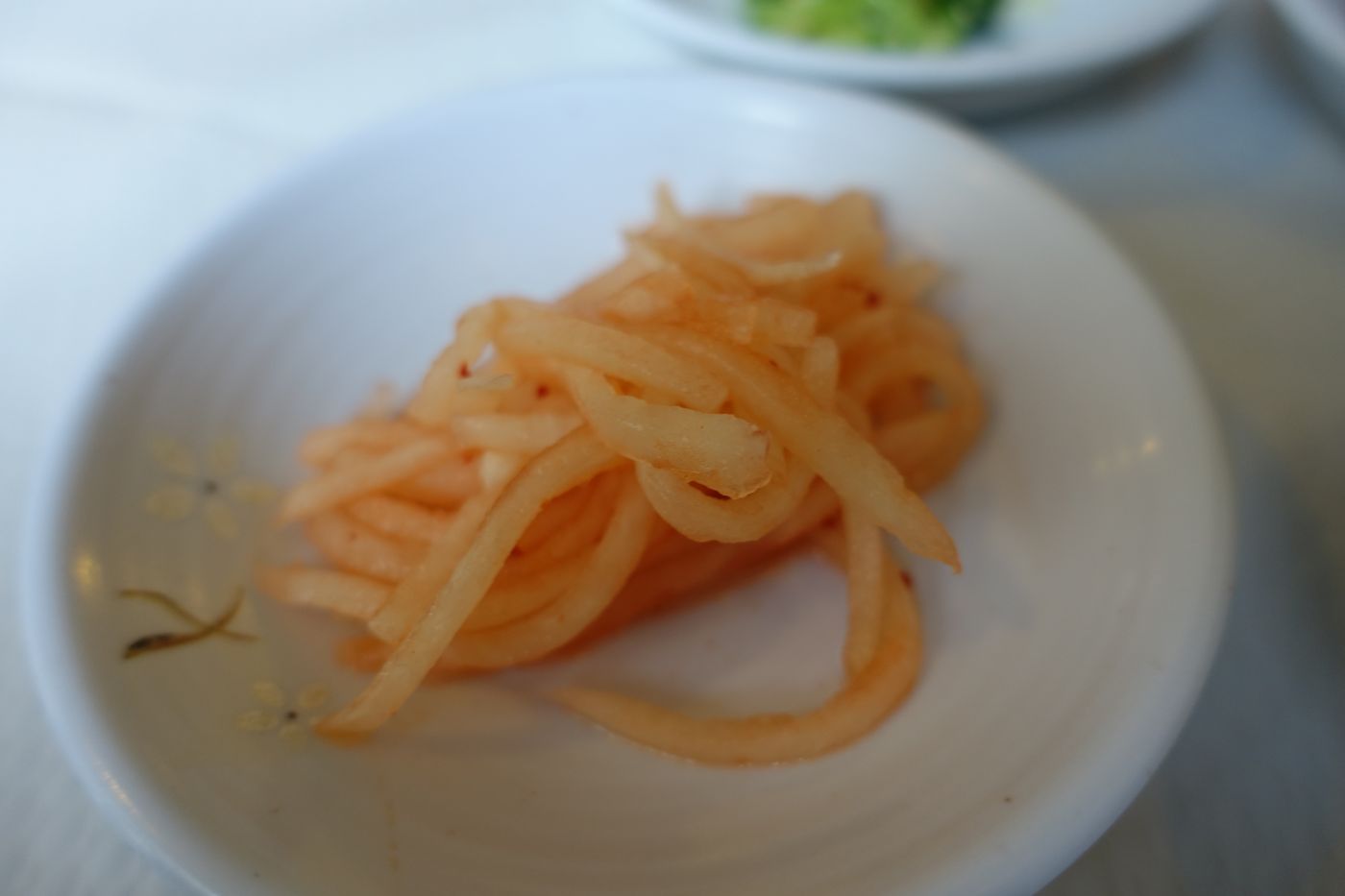
 Photo: Guilhem Vellut from Paris, France, CC BY 2.0, via Wikimedia Commons
Muchim · Dressed side dish 무침
Musaengchae
무생채
Romanization: musaengchae
Fine matchsticks of Korean radish dressed raw with chili flakes, a little vinegar and sugar — crisp, sweet-sharp and best made just before the meal.
- Serves
- 4
- Prep
- 15 min
- Cook
- 0 min
Recipe
Ingredients · Serves 4
- 300 gKorean radish (mu)about ⅓ of a medium radish, peeled
- 2 tspGochugarufine or coarse
- ½ tspSaltplus more to taste
- 2 tspSugar
- 1 tbspRice or apple vinegar
- 1 cloveGarlicminced
- 1 tbspGreen onionfinely chopped
- 1 tspAnchovy fish sauceoptional; not included in the nutrition estimate
- 1 tspToasted sesame seeds
Method
Step 1: Cut the radish into thin slices about 5 cm long, then into fine matchsticks about 2–3 mm thick. Cutting along the grain keeps them crisp.
Step 2: Put the radish in a bowl and toss with the gochugaru first, rubbing gently so the strands take on an even red color.
Step 3: Add the salt, sugar, vinegar, garlic and green onion (and fish sauce, if using). Toss lightly with your fingertips — don't squeeze, or the radish will turn watery.
Step 4: Taste and adjust the salt, sugar and vinegar. Sprinkle with sesame seeds.
Step 5: Serve right away. If you make it ahead, keep it chilled and drain off any liquid before serving; it is best within a day or two.
Origin & History
Saengchae means a raw vegetable dish: vegetables that are dressed without cooking, in contrast to cooked namul. The Encyclopedia of Korean Culture describes saengchae as lightly oiled and seasoned with vinegar-based dressings, vinegar and chili, or mustard, and names radish, cucumber and bellflower root among the vegetables most often used. Musaengchae — raw radish saengchae — is the most common of them all.
Radish (mu) has a long history in Korea. It is thought to have arrived from China around the Three Kingdoms period, and by the Goryeo dynasty it was clearly an important vegetable: the poet Yi Gyu-bo (1168–1241) wrote about it among the vegetables of his kitchen garden. Over the centuries, Korean radishes developed into local types suited to the peninsula's climate, and the radish became a cornerstone of Korean cooking.
Radishes are at their sweetest and firmest in autumn, the same season they are gathered for kimjang, and musaengchae made from autumn radish is especially good. Because salted raw vegetables release water and lose their crispness as they sit, traditional advice is to dress saengchae just before serving.
Key Ingredients
 Korean radish무A stout, heavy white radish, often tinged pale green near the top. It is cubed for kkakdugi, left whole in the clear brine of dongchimi, shredded into salads and simmered into broths.
 Gochugaru고춧가루Korean red chili powder, made from dried red peppers ground coarse or fine. It gives kimchi, gochujang and countless banchan their color and warmth.
 Garlic마늘Used raw, minced, pickled and roasted, garlic is one of the essential aromatics of Korean food — in seasonings, marinades, kimchi and namul.
 Green onion파Korean green onion (pa), from thick-stemmed daepa to slender scallions — chopped into nearly every seasoning sauce, soup and kimchi, and the star of pa-kimchi.
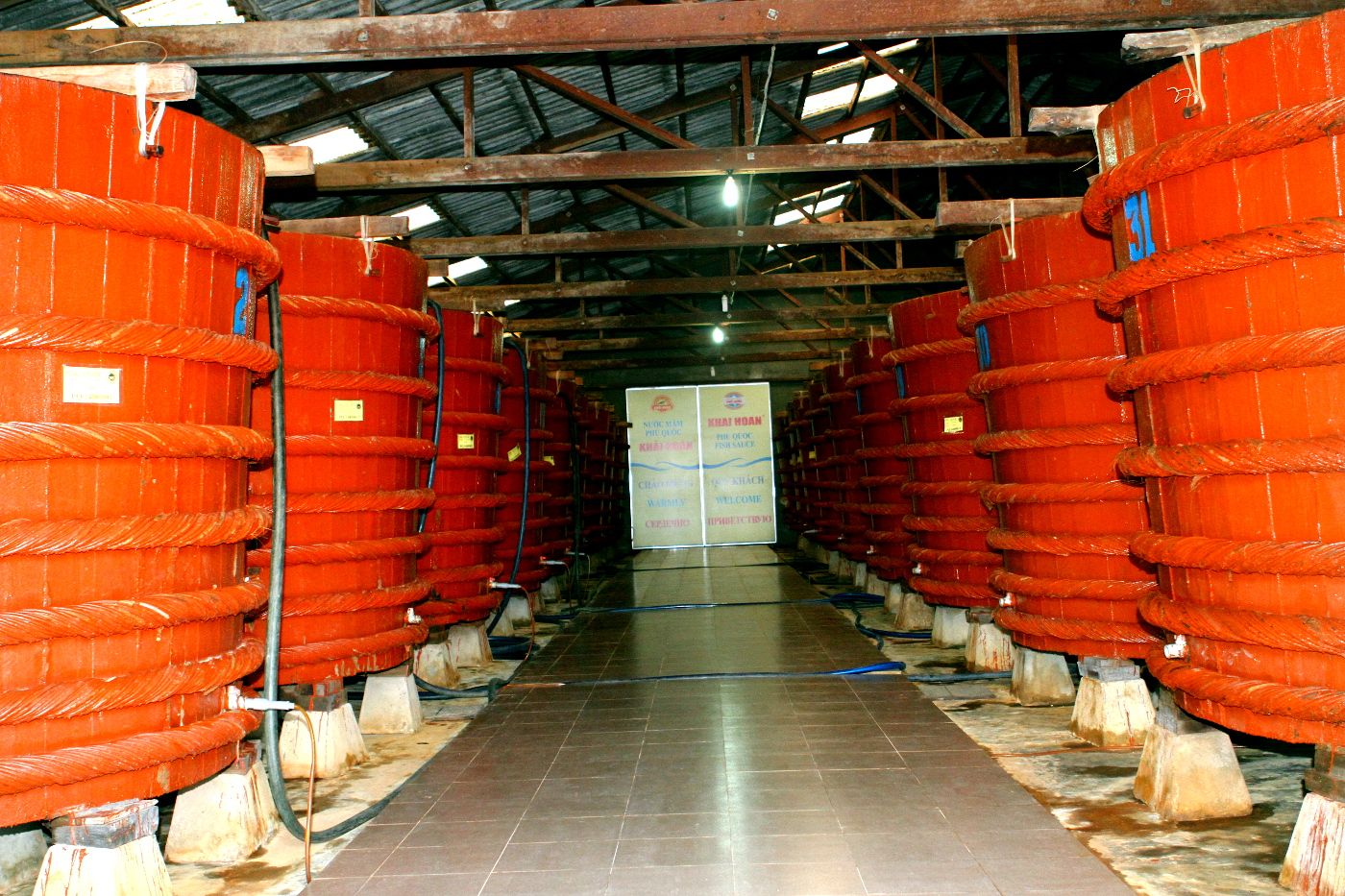 Anchovy fish sauce멸치액젓The clear amber liquid drawn from salted, fermented anchovies. A jeotgal in liquid form, it is the savory backbone of much southern-style kimchi and a quick seasoning for soups and namul.
 Sesame참깨Toasted sesame seeds and sesame oil (chamgireum) finish countless Korean dishes, adding a nutty aroma and gloss.
Nutrition
| Calories | ~34 kcal |
|---|---|
| Protein | ~0.9 g |
| Fat | ~0.6 g |
| Carbohydrates | ~6.8 g |
| Fiber | ~1.4 g |
| Sodium | ~300 mg |
Notable forVitamin C · Dietary fiber
Estimated from the Korean Food Composition Table values for raw Korean radish and red pepper powder, plus USDA FoodData Central values for salt, sugar, vinegar, garlic, green onion and sesame seeds, divided by four. Some salt is left behind in the liquid the radish releases, so actual sodium may be slightly lower; optional fish sauce would add roughly 120 mg sodium per serving. Actual values vary with ingredients, portion size and preparation.
Health Benefits
- Raw crunch, few calories: radish is mostly water and very low in calories, so musaengchae adds bulk and texture to a meal lightly.
- Vitamin C: because it is eaten raw, the radish keeps its vitamin C, which cooking would partly destroy.
- Traditional associations: radish has long been used in Korean folk remedies for coughs and colds — a cultural tradition rather than a proven treatment.
Regional Variations
- Red or white: the familiar red version is tinted with gochugaru; a white version uses only salt, vinegar and sugar for a milder, clean taste.
- With fish sauce: some cooks add a little anchovy or shrimp sauce for depth, which brings it closer to a quick fresh kimchi.
- Sweet-sour or savory: the balance of vinegar and sugar varies widely between households; some leave out vinegar altogether.
Pairings
 Kongnamul Muchim콩나물무침Soybean sprouts cooked under a lid until just tender, then tossed with garlic, green onion and sesame oil — crisp, nutty and on tables across Korea.
- Doraji Namul도라지나물Shredded bellflower root rubbed with salt to tame its bitterness, then gently stir-fried — the ivory-white member of the three-colored namul.
 Gyeran Mari (Rolled Omelet)계란말이Beaten egg cooked in thin layers and rolled into a soft, striped log, then sliced — a gentle, everyday banchan and a lunchbox classic.