Namul · Seasoned vegetables 나물
Ssukgat Muchim (Seasoned Crown Daisy)
쑥갓무침
Romanization: ssukgat-muchim
Crown daisy greens blanched for a few seconds and dressed with soy sauce, a touch of vinegar, garlic and sesame — a soft namul with a distinctive herbal fragrance.
- Serves
- 4
- Prep
- 10 min
- Cook
- 5 min
Recipe
Ingredients · Serves 4
- 300 gSsukgat (crown daisy)thick lower stems trimmed
- 1 tbspSaltfor the blanching water
- 1 tbspSoy sauce
- 1 tspVinegaroptional
- 1 tspGarlicminced
- 1 tbspGreen onionfinely chopped
- 1 tbspToasted sesame oil
- 1 tspToasted sesame seedslightly crushed
Method
Technique: Blanching and Seasoning Namul
Step 1: Wash the ssukgat well and trim any thick, woody stems.
Step 2: Bring a large pot of water to a rolling boil with the salt. Add the ssukgat and blanch for 15–20 seconds, just until wilted and bright green; it softens very quickly.
Step 3: Drain and rinse in cold water at once, then squeeze out the water gently.
Step 4: Cut into 4–5 cm lengths and loosen with your fingers.
Step 5: Toss with the soy sauce, vinegar, garlic and green onion, then add the sesame oil and sesame seeds and toss again.
Step 6: Serve within a few hours; the leaves darken and the aroma fades as it sits.
Origin & History
Ssukgat, crown daisy or garland chrysanthemum, is an annual of the daisy family with deeply cut, feathery leaves and a strong, resinous aroma. Older references, including the Encyclopedia of Korean Culture, list it as Chrysanthemum coronarium; botanists now generally place it in the genus Glebionis. It is native to the Mediterranean, and the encyclopedia suggests it reached Korea during the Goryeo period. In Korea it is grown as a vegetable — mostly medium-leaved varieties, cut when young — rather than for its yellow-and-white flowers.
The Encyclopedia of Korean Culture calls ssukgat a traditional vegetable of real food value that is grown in relatively small amounts, valued chiefly as a leaf to tuck into lettuce wraps and as a namul green. Its scent also makes it a favorite finishing herb for spicy fish stews such as maeuntang, where it is added at the last moment.
The National Institute of Korean Language's dictionary records several ways of eating it: ssukgat-namul, blanched briefly and dressed with vinegar, oil, soy sauce and sesame salt or with stir-fried meat; ssukgat-saengchae, raw and lightly salted; ssukgat-ssam, raw leaves wrapped around rice; and ssukgat-ganghoe, blanched stems rolled into bundles and dipped in vinegared gochujang. Ssukgat-muchim in everyday use usually means the blanched namul.
Key Ingredients
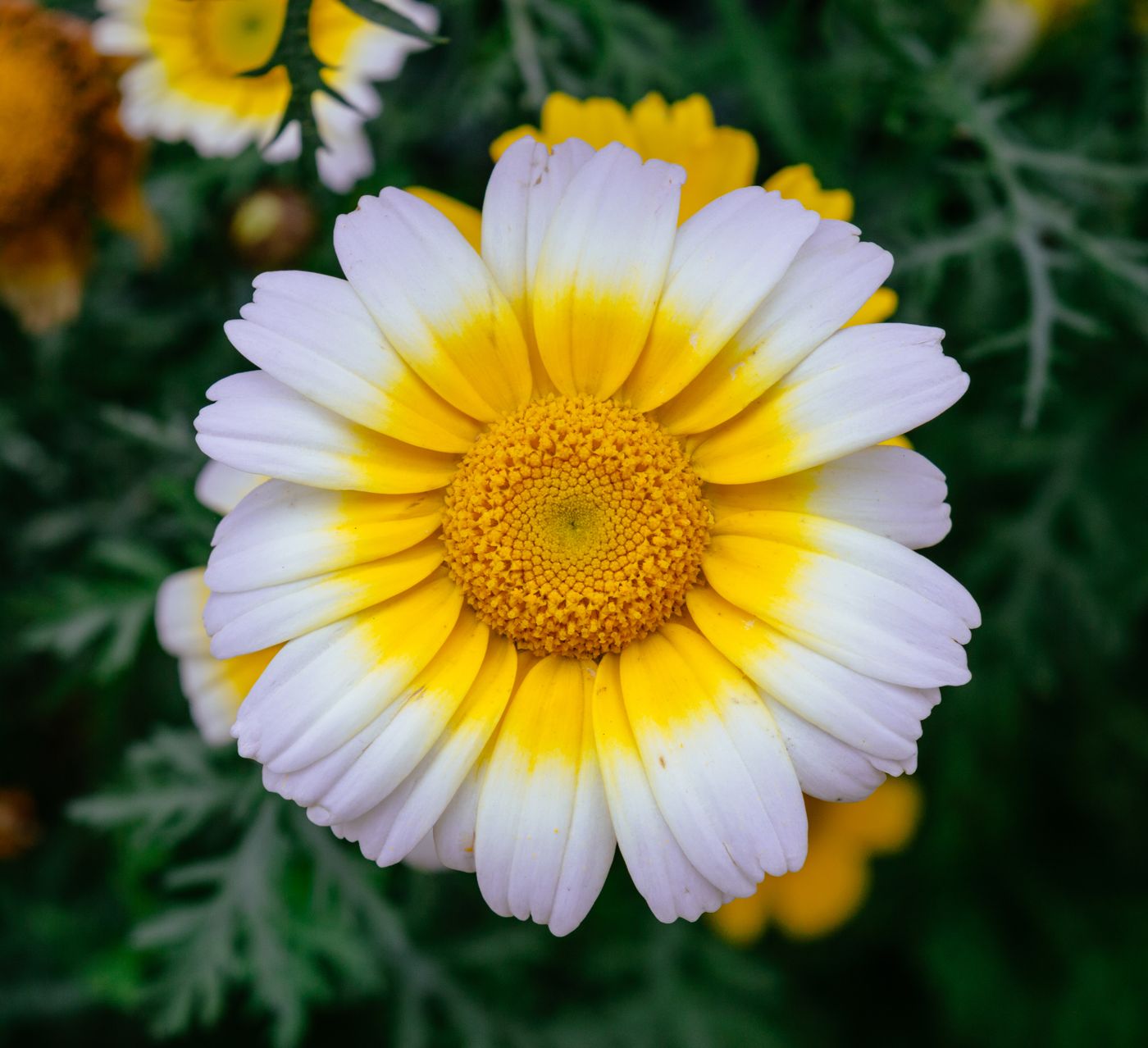 Ssukgat (crown daisy)쑥갓An edible chrysanthemum grown for its feathery, deeply lobed leaves and tender stems. Its bold, resinous perfume finishes spicy fish stews and hot pots, and it is a classic leaf for the ssam basket and quick namul.
 Soy sauce간장Korean soy sauce, in two main kitchen forms: pale, salty guk-ganjang (soup soy sauce) brewed the traditional way from meju, and darker, sweeter jin-ganjang for braises and marinades.
- Korean Vinegar식초Vinegar in the Korean kitchen, from naturally fermented grain and fruit vinegars, such as persimmon vinegar, to everyday brewed vinegar. It sharpens muchim, pickles and the dipping sauce chogochujang.
 Garlic마늘Used raw, minced, pickled and roasted, garlic is one of the essential aromatics of Korean food — in seasonings, marinades, kimchi and namul.
 Green onion파Korean green onion (pa), from thick-stemmed daepa to slender scallions — chopped into nearly every seasoning sauce, soup and kimchi, and the star of pa-kimchi.
 Sesame참깨Toasted sesame seeds and sesame oil (chamgireum) finish countless Korean dishes, adding a nutty aroma and gloss.
Nutrition
| Calories | ~53 kcal |
|---|---|
| Protein | ~2.1 g |
| Fat | ~3.9 g |
| Carbohydrates | ~3.2 g |
| Fiber | ~2 g |
| Sodium | ~325 mg |
Notable forVitamin K · Vitamin A (as beta-carotene) · Folate · Calcium
Ssukgat uses the Korean Food Composition Table entry “Crown daisy (Ssukgat), Raw” (per 100 g: 15 kcal, 2.4 g fiber, 191 µg vitamin K, 206 µg RAE vitamin A, 115 µg folate, 91 mg calcium, 145 mg sodium), applied to the raw weight; blanching losses are not accounted for. Soy sauce uses the Korean table; vinegar, garlic, green onion, sesame oil and sesame seeds use USDA FoodData Central. Salt in the blanching water is not counted. Totals divided by four. Actual values vary with ingredients, portion size and preparation.
Health Benefits
- Vitamin K and beta-carotene: the Korean Food Composition Table shows crown daisy as rich in both; a serving supplies more than a day's adequate intake of vitamin K.
- Folate and calcium: the greens also contribute folate and some calcium.
- Light and aromatic: a generous serving is around 50 kcal, most of it from sesame oil, which also helps the body absorb the fat-soluble vitamins.
Regional Variations
- Blanched namul: the version here, dressed with soy sauce, a little vinegar, garlic and sesame.
- With stir-fried beef: the dictionary notes a richer version tossed with seasoned, stir-fried meat.
- Raw saengchae: leaves lightly salted, squeezed and dressed, or tossed in a soy-gochugaru-vinegar dressing as a quick salad.
- Ssukgat-ganghoe: blanched stems wound into small bundles and served with chogochujang.
- With tofu: some cooks mash in crumbled, squeezed tofu for a creamier namul.
Pairings
 Doenjang Jjigae (Soybean Paste Stew)된장찌개A thick, savory stew of fermented soybean paste with tofu, zucchini and whatever the season offers — the everyday pot at the center of the Korean table.
 Kongnamul Muchim콩나물무침Soybean sprouts cooked under a lid until just tender, then tossed with garlic, green onion and sesame oil — crisp, nutty and on tables across Korea.
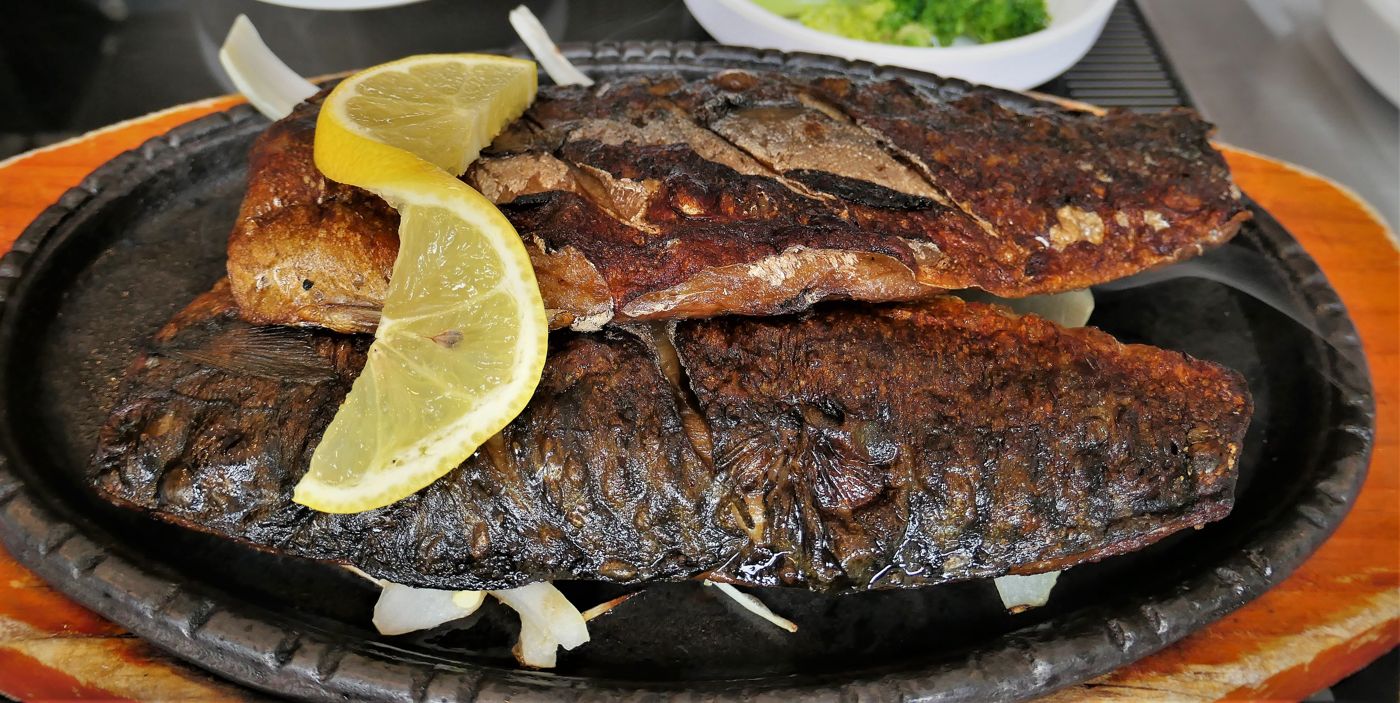 Godeungeo-gui (Grilled Mackerel)고등어구이Salted mackerel grilled or pan-fried until the skin crackles and the rich flesh flakes — one of the most common fish dishes on the Korean home table.
Sources
- 01쑥갓 (Crown daisy) — Encyclopedia of Korean Culture
- 02쑥갓나물 / 쑥갓생채 / 쑥갓강회 — Urimalsaem (National Institute of Korean Language)
- 03Korean Food Composition Table: Crown daisy (Ssukgat), Raw — National Institute of Agricultural Sciences
- 04Warfarin — MedlinePlus Drug Information (U.S. National Library of Medicine)
Last updated