Namul · Seasoned vegetables 나물
Gaji Namul
가지나물
Romanization: gaji-namul
Eggplant steamed until silky, torn into strips and dressed with soy sauce, garlic and sesame — a soft, savory summer namul.
- Serves
- 4
- Prep
- 10 min
- Cook
- 10 min
Recipe
Ingredients · Serves 4
- 400 gAsian eggplantsabout 3 slender Korean or Japanese eggplants
- 1½ tbspSoy sauce
- 1 cloveGarlicfinely minced
- 1 tbspGreen onionfinely chopped
- 1 tspGochugaruoptional
- 1 tbspToasted sesame oil
- 1 tspToasted sesame seeds
Method
Technique: Steaming and Jjim, Blanching and Seasoning Namul
Step 1: Trim the stems and cut the eggplants in half crosswise, then in half lengthwise so they fit in your steamer.
Step 2: Steam over boiling water, skin side up, for 6–8 minutes, until a chopstick slides through easily but the pieces still hold their shape. Overcooking makes them mushy.
Step 3: Spread the eggplant on a plate or rack to cool until you can handle it. Gently press out excess moisture.
Step 4: Tear each piece lengthwise by hand into finger-width strips.
Step 5: In a bowl, mix the soy sauce, garlic, green onion, gochugaru (if using), sesame oil and sesame seeds.
Step 6: Add the eggplant and toss gently with your fingertips. Taste, adjust with a pinch of salt if needed, and serve at room temperature or lightly chilled. Best eaten within 2 days.
Origin & History
Eggplant is thought to have originated in India and reached Korea by way of China, and it has a long history on the peninsula. The Encyclopedia of Korean Culture notes that the late-Joseon compilation Haedong yeoksa quotes Tang- and Song-dynasty Chinese texts describing a long-stemmed, egg-shaped, sweet eggplant grown in Silla — good enough that the Chinese planted it themselves. A Goryeo-period poem in Yi Gyu-bo's collected works describes growing eggplant at home and eating it raw or boiled.
Seasoned eggplant appears again and again in later cookbooks. The National Folk Museum's food encyclopedia lists a garlic-eggplant preparation in the eighteenth-century Jeungbo sallim gyeongje, gaji-namul by name in the nineteenth-century Siuijeonseo and in Joseon yori jebeop, and the names gajachae and jagwachae in the 1924 Joseon mussang sinsik yori jebeop. The classic method is to steam whole eggplants, split them lengthwise into strips and dress them with a soy-based seasoning.
Eggplant was also preserved for the cold months. The seventeenth-century Eumsik dimibang describes sealing cut ends with beeswax and layering the fruit in wood ash so it would keep into winter, and sliced, sun-dried eggplant was one of the dried vegetables cooked as mugeun-namul for the first full moon of the lunar year (Jeongwol Daeboreum).
Key Ingredients
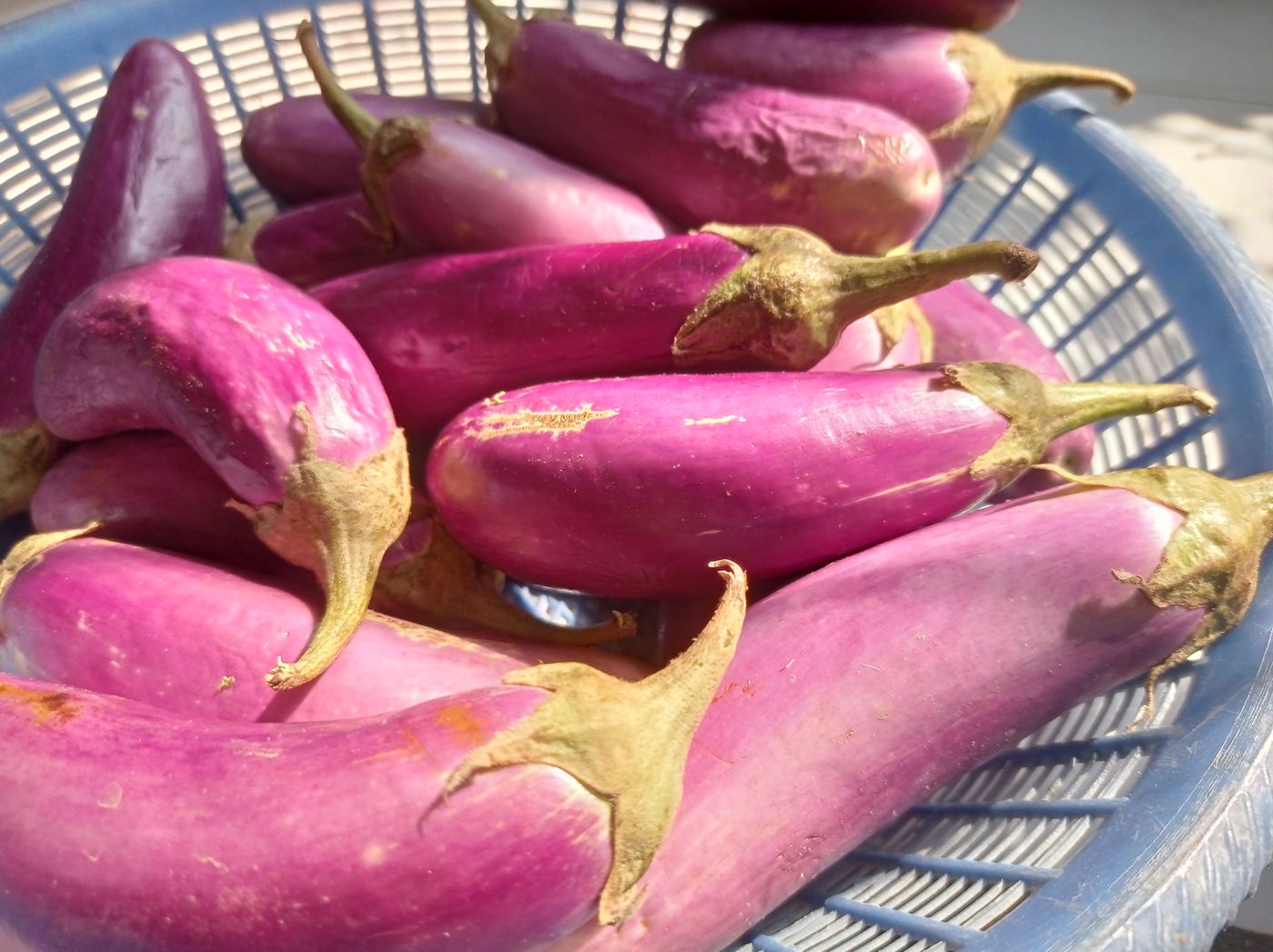 Eggplant가지Slender, glossy purple eggplant, steamed until silky and torn into strips for gaji-namul, one of the gentlest summer banchan. It is also pan-fried, braised, stir-fried and, in the past, sun-dried for winter.
 Soy sauce간장Korean soy sauce, in two main kitchen forms: pale, salty guk-ganjang (soup soy sauce) brewed the traditional way from meju, and darker, sweeter jin-ganjang for braises and marinades.
 Garlic마늘Used raw, minced, pickled and roasted, garlic is one of the essential aromatics of Korean food — in seasonings, marinades, kimchi and namul.
 Green onion파Korean green onion (pa), from thick-stemmed daepa to slender scallions — chopped into nearly every seasoning sauce, soup and kimchi, and the star of pa-kimchi.
 Gochugaru고춧가루Korean red chili powder, made from dried red peppers ground coarse or fine. It gives kimchi, gochujang and countless banchan their color and warmth.
 Sesame참깨Toasted sesame seeds and sesame oil (chamgireum) finish countless Korean dishes, adding a nutty aroma and gloss.
Nutrition
| Calories | ~66 kcal |
|---|---|
| Protein | ~1.8 g |
| Fat | ~4 g |
| Carbohydrates | ~7.2 g |
| Fiber | ~3.4 g |
| Sodium | ~330 mg |
Notable forDietary fiber · Manganese
Estimated by summing USDA FoodData Central values for raw eggplant, soy sauce (shoyu), garlic, green onion, gochugaru (as red pepper), sesame oil and sesame seeds, then dividing by four. Steaming causes little nutrient loss, but values are approximate. Actual values vary with ingredients, portion size and preparation.
Health Benefits
- Fiber for few calories: eggplant is mostly water and fiber, so a generous serving adds bulk and fiber to a meal for relatively few calories.
- Gentle cooking: steaming uses no oil in the cooking itself; the sesame oil comes only from the dressing, which keeps this lighter than fried or stir-fried eggplant dishes, which soak up oil readily.
- Traditional uses: the Encyclopedia of Korean Culture notes eggplant's place in traditional medicine for heat and inflammation; these are folk uses rather than established effects.
Regional Variations
- Steamed and dressed: the most common home version — eggplant steamed in a steamer or over rice, torn by hand and tossed with soy sauce, garlic, green onion and sesame.
- Stir-fried: eggplant cut into pieces and stir-fried with onion, garlic and green onion, then finished with salt, sesame and sesame oil. Stir-frying is also how dried eggplant is usually cooked as a namul.
- With vinegar or chili: some cooks add a little vinegar or gochugaru to the dressing; because vinegar can dull the color, dressings with vinegar are mixed just before serving.
- Dried eggplant for Daeboreum: sun-dried eggplant slices, soaked and stir-fried, are one of the stored namul eaten on the first full moon.
Pairings
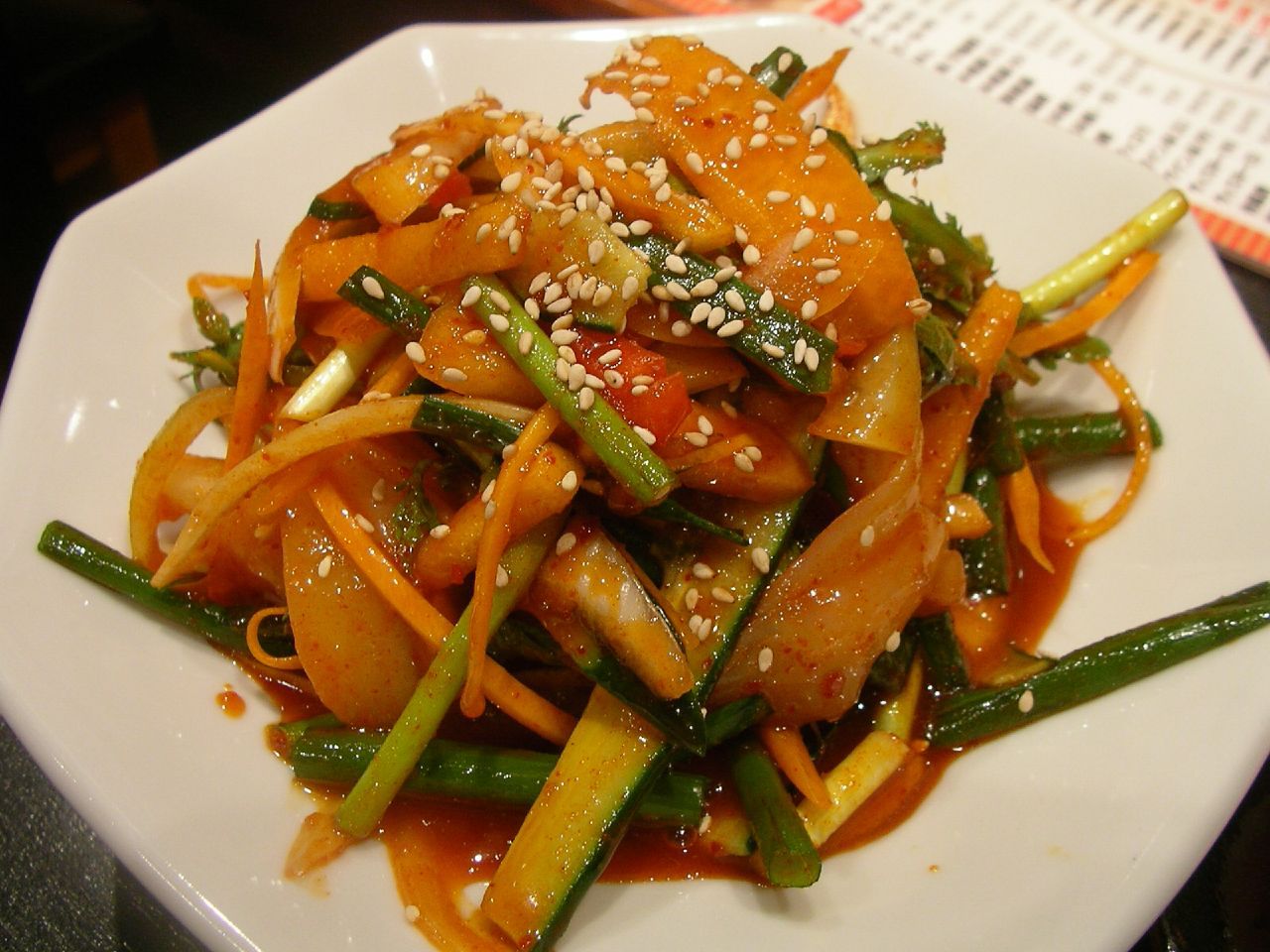 Oi Muchim오이무침Thin-sliced cucumber, briefly salted and tossed with chili flakes, vinegar and garlic — a cool, crunchy quick salad made in minutes, especially in summer.
 Sigeumchi Namul시금치나물Spinach blanched for a few seconds, squeezed dry and dressed with garlic, soy sauce and sesame — one of the simplest and most familiar namul.
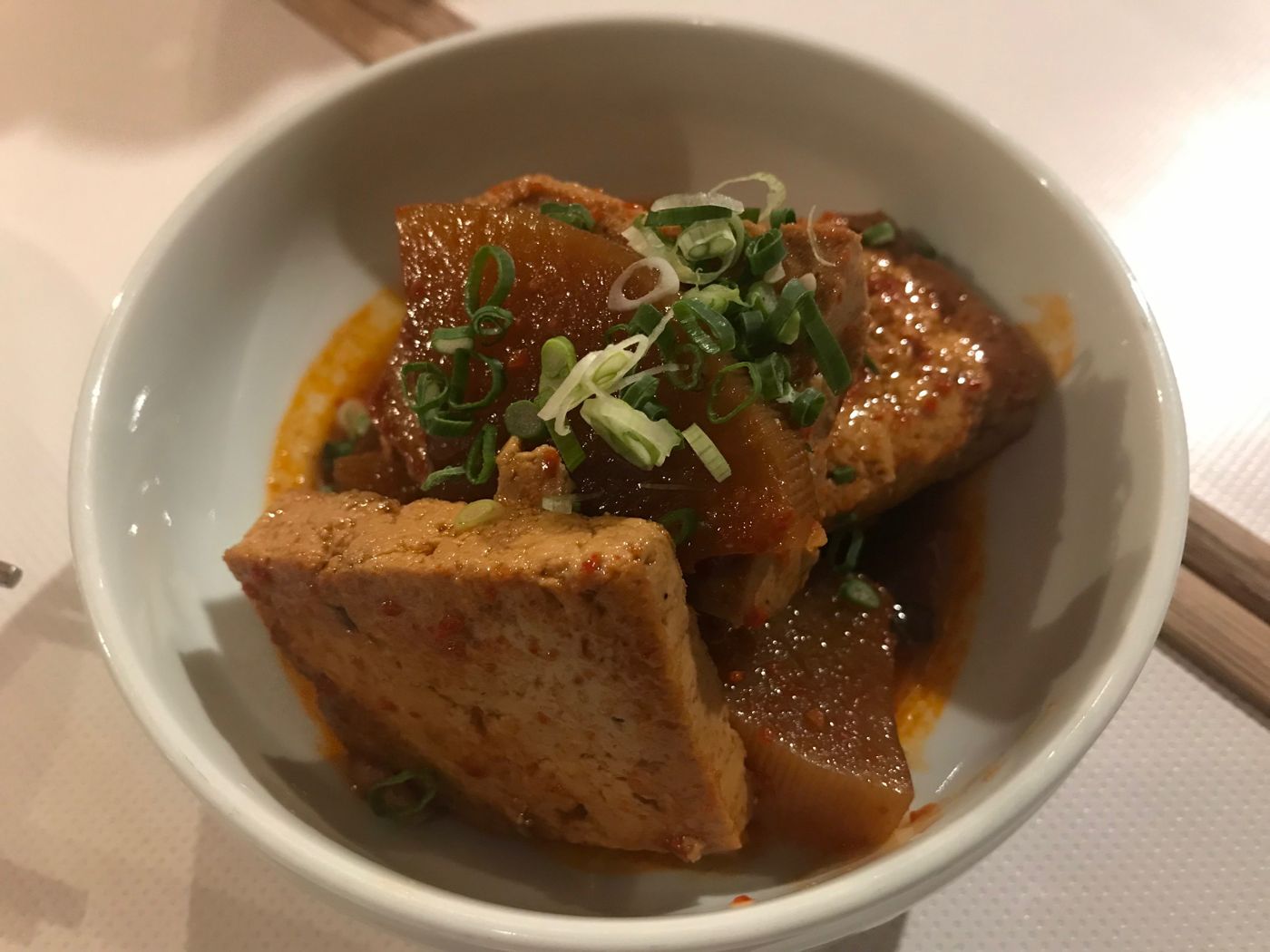 Dubu Jorim두부조림Slices of firm tofu pan-fried until golden, then simmered in a garlicky soy and chili sauce — an inexpensive, protein-rich staple of Korean home cooking.
Sources
- 01가지나물 (Gaji-namul) — Encyclopedia of Korean Folk Culture (National Folk Museum of Korea)
- 02가지 (Eggplant) — Encyclopedia of Korean Culture
- 03나물 (Namul) — Encyclopedia of Korean Culture
- 04묵은나물 (Mugeun-namul) — Encyclopedia of Korean Culture
- 05Eggplant, raw (FDC 169228) — USDA FoodData Central
Last updated