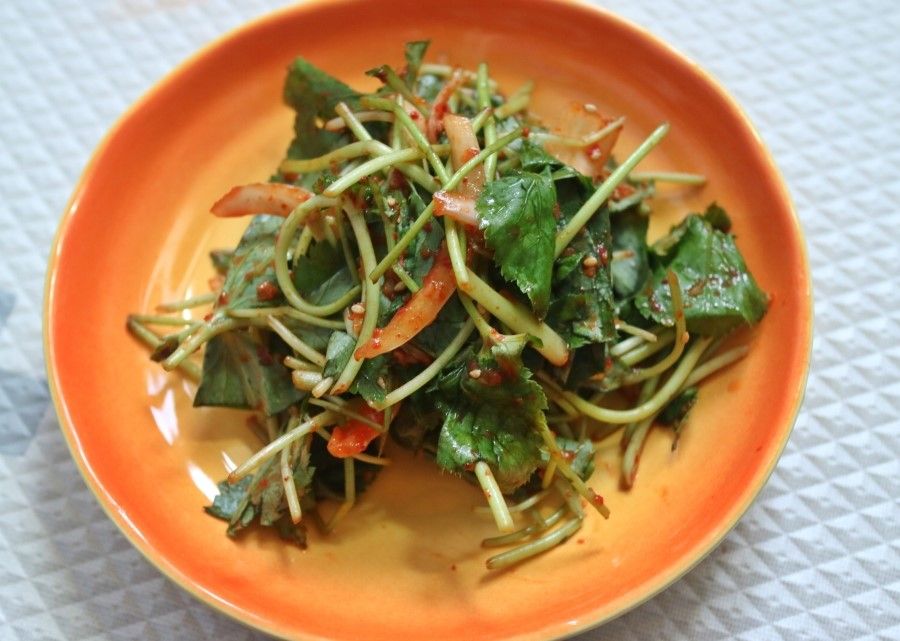
 Photo: parkyang1021, CC BY 2.5, via Wikimedia Commons
Namul · Seasoned vegetables 나물
Chamnamul Muchim (Seasoned Chamnamul)
참나물무침
Romanization: chamnamul-muchim
Tender chamnamul blanched for seconds and dressed with soy sauce, garlic and sesame oil — a fresh, celery-scented spring namul.
- Serves
- 4
- Prep
- 10 min
- Cook
- 5 min
Recipe
Ingredients · Serves 4
- 300 gChamnamultough lower stems trimmed
- 1 tbspSaltfor the blanching water
- 1 tbspSoy sauce
- ¼ tspFine saltto taste
- ½ tspSugar
- 1 tspGarlicminced
- 1 tbspGreen onionfinely chopped
- 1 tbspToasted sesame oil
- 1 tspToasted sesame seedslightly crushed
Method
Technique: Blanching and Seasoning Namul
Step 1: Pick over the chamnamul, discarding yellowed leaves and trimming the toughest stem ends. Wash well.
Step 2: Bring a large pot of water to a rolling boil with the salt. Add the chamnamul stems first and, after about 10 seconds, push the leaves under; cook 20–30 seconds in all, just until bright green and wilted.
Step 3: Drain and plunge into ice-cold water to stop the cooking, then squeeze out the water firmly but not so hard that the leaves turn mushy.
Step 4: Cut into 4–5 cm lengths and loosen the clumps with your fingers.
Step 5: Add the soy sauce, salt, sugar, garlic and green onion and toss lightly with your fingertips. Add the sesame oil and sesame seeds and toss again.
Step 6: Serve the same day; chamnamul loses its fragrance and color quickly.
Origin & History
Chamnamul (Pimpinella brachycarpa) is a perennial of the carrot and celery family that grows in the shade of mountain forests in Korea, Japan and China. The National Institute of Korean Language's dictionary describes it as standing 50–80 cm tall, with toothed, egg-shaped leaflets and clusters of small white flowers in summer; its young leaves and stems are the part eaten. The prefix cham- means "true" or "genuine," and chamnamul is prized for its clean, parsley-like fragrance.
Like many wild greens, chamnamul belongs to the long Korean tradition of sannamul — mountain and field greens gathered in spring, blanched quickly in salted water, squeezed and dressed with garlic, green onion and sesame or perilla oil. The Encyclopedia of Korean Folk Culture traces this practice back to prehistoric gathering and notes that greens with a distinctive aroma are best eaten right when the new shoots appear. Today most chamnamul in markets is cultivated, and the Korean Food Composition Table lists wild and cultivated forms separately.
The dictionary defines chamnamul-muchim as chamnamul blanched briefly in boiling salted water, squeezed, cut and dressed with soy sauce, sesame salt, sugar, sesame oil, green onion and garlic — exactly the home recipe still made today.
Key Ingredients
- Chamnamul (Korean wild parsley)참나물A cool-loving mountain herb of the carrot family, sold in fragrant bunches of three-part leaves on slender stems. Its celery-and-parsley perfume shines in quick raw chamnamul-muchim and lightly blanched namul.
 Soy sauce간장Korean soy sauce, in two main kitchen forms: pale, salty guk-ganjang (soup soy sauce) brewed the traditional way from meju, and darker, sweeter jin-ganjang for braises and marinades.
 Garlic마늘Used raw, minced, pickled and roasted, garlic is one of the essential aromatics of Korean food — in seasonings, marinades, kimchi and namul.
 Green onion파Korean green onion (pa), from thick-stemmed daepa to slender scallions — chopped into nearly every seasoning sauce, soup and kimchi, and the star of pa-kimchi.
 Sesame참깨Toasted sesame seeds and sesame oil (chamgireum) finish countless Korean dishes, adding a nutty aroma and gloss.
Nutrition
| Calories | ~58 kcal |
|---|---|
| Protein | ~1.8 g |
| Fat | ~3.9 g |
| Carbohydrates | ~5 g |
| Fiber | ~2.2 g |
| Sodium | ~375 mg |
Notable forVitamin K · Vitamin A (as beta-carotene) · Potassium
Chamnamul uses the Korean Food Composition Table entry “Chamnamul, Cultivated, Raw” (per 100 g: 20 kcal, 2.6 g fiber, 315 µg vitamin K, 136 µg RAE vitamin A, 582 mg potassium), applied to the raw weight; blanching losses are not accounted for (the table's blanched entry shows similar vitamin K and somewhat less potassium). Soy sauce uses the Korean table; salt, sugar, garlic, green onion, sesame oil and sesame seeds use USDA FoodData Central. Salt in the blanching water is not counted. Totals divided by four. Actual values vary with ingredients, portion size and preparation.
Health Benefits
- Vitamin K: a serving provides well over a day's adequate intake of vitamin K, which the body uses for blood clotting and bone health.
- Carotenoids: in a 2023 study of 18 traditional Korean leafy greens, chamnamul had the highest measured levels of lutein, beta-carotene and total carotenoids.
- Potassium and fiber: the greens contribute potassium and fiber for few calories; the sesame oil helps the body absorb fat-soluble carotenoids and vitamin K.
Regional Variations
- Soy-dressed: the standard version described in the dictionary, with soy sauce, garlic, sesame oil and sesame.
- Salt-dressed: salt or soup soy sauce instead of regular soy keeps the color bright green.
- Doenjang or gochujang: some cooks dress chamnamul with a little doenjang, or gochujang and vinegar, as with other spring greens.
- Raw: very young chamnamul is also eaten raw as a salad or geotjeori-style quick kimchi.
Pairings
 Doenjang Jjigae (Soybean Paste Stew)된장찌개A thick, savory stew of fermented soybean paste with tofu, zucchini and whatever the season offers — the everyday pot at the center of the Korean table.
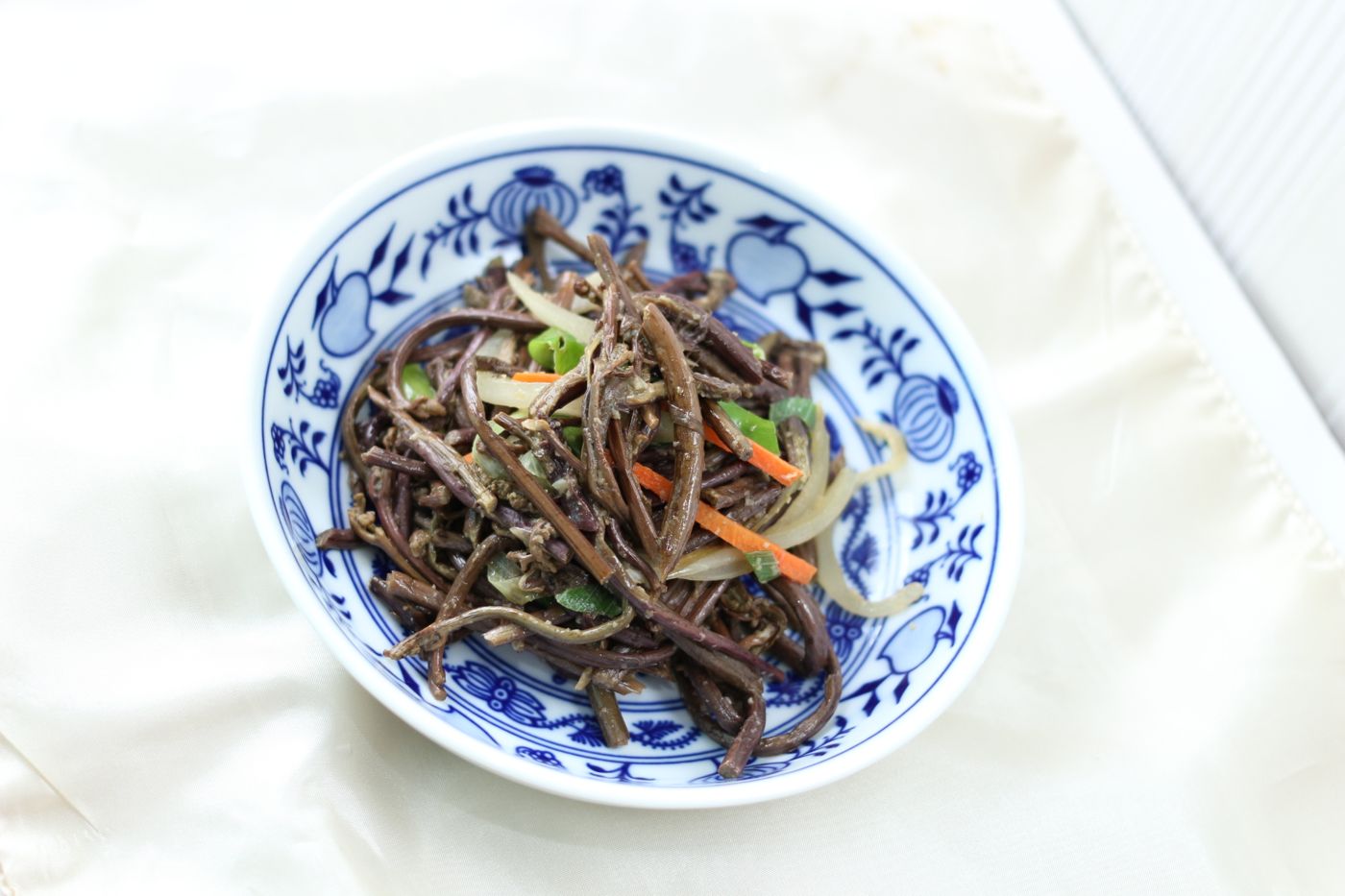 Gosari Namul고사리나물Dried bracken fern soaked, boiled and slowly stir-fried with soup soy sauce, garlic and perilla oil — chewy, earthy and central to holiday tables.
- Doraji Namul도라지나물Shredded bellflower root rubbed with salt to tame its bitterness, then gently stir-fried — the ivory-white member of the three-colored namul.
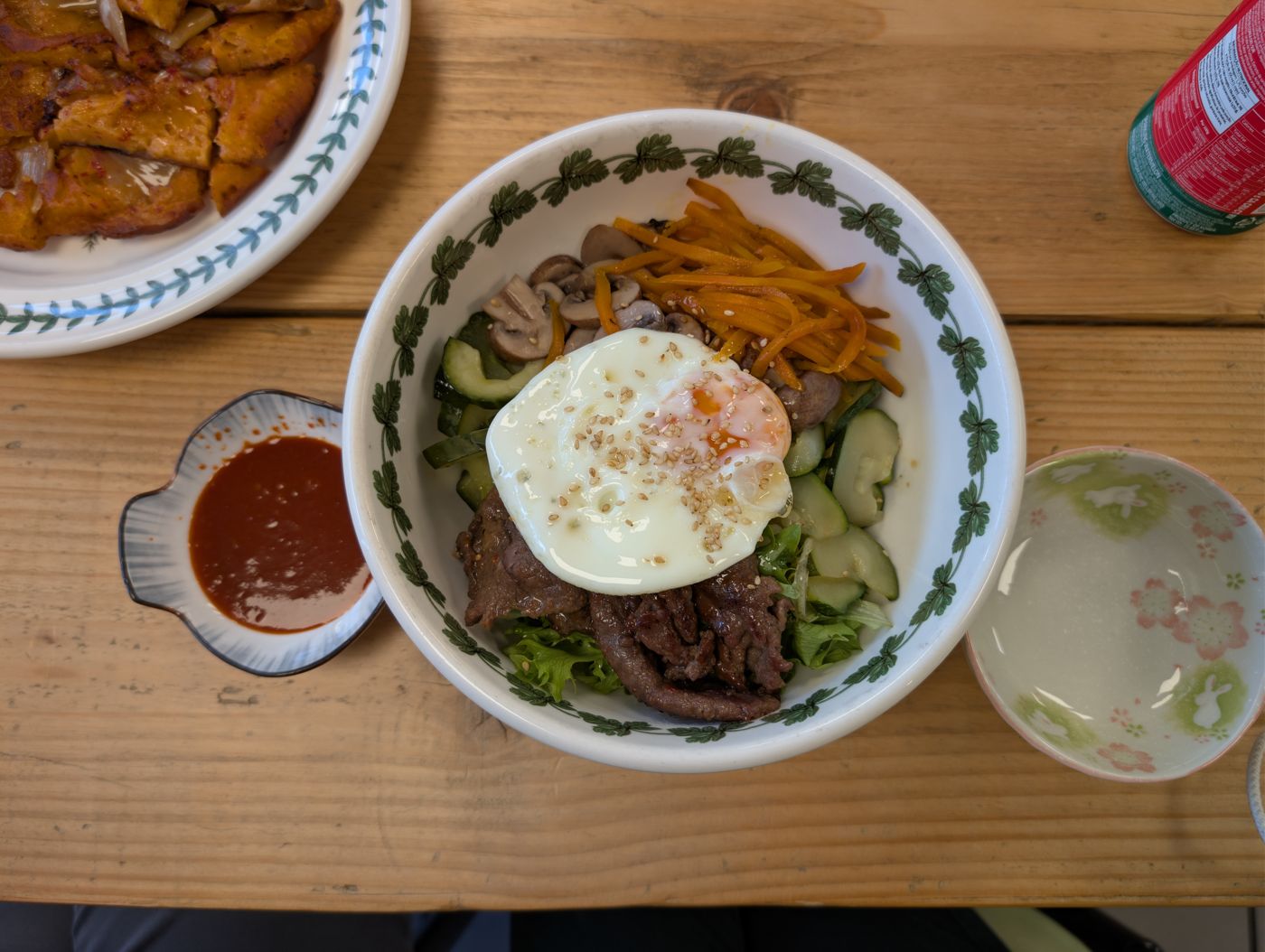 Bibimbap (Mixed Rice with Namul)비빔밥A bowl of rice topped with seasoned namul, beef and egg, mixed at the table with chili paste and sesame oil — banchan gathered into a single meal.
Sources
- 01참나물 / 참나물무침 — Urimalsaem (National Institute of Korean Language)
- 02산나물 (Sannamul, mountain greens) — Encyclopedia of Korean Folk Culture (National Folk Museum of Korea)
- 03Korean Food Composition Table: Chamnamul, Cultivated, Raw — National Institute of Agricultural Sciences
- 04Ko EY et al. Carotenoid and Tocopherol Profiling in 18 Korean Traditional Green Leafy Vegetables by LC-SIM-MS. Foods, 2023
- 05Warfarin — MedlinePlus Drug Information (U.S. National Library of Medicine)
Last updated