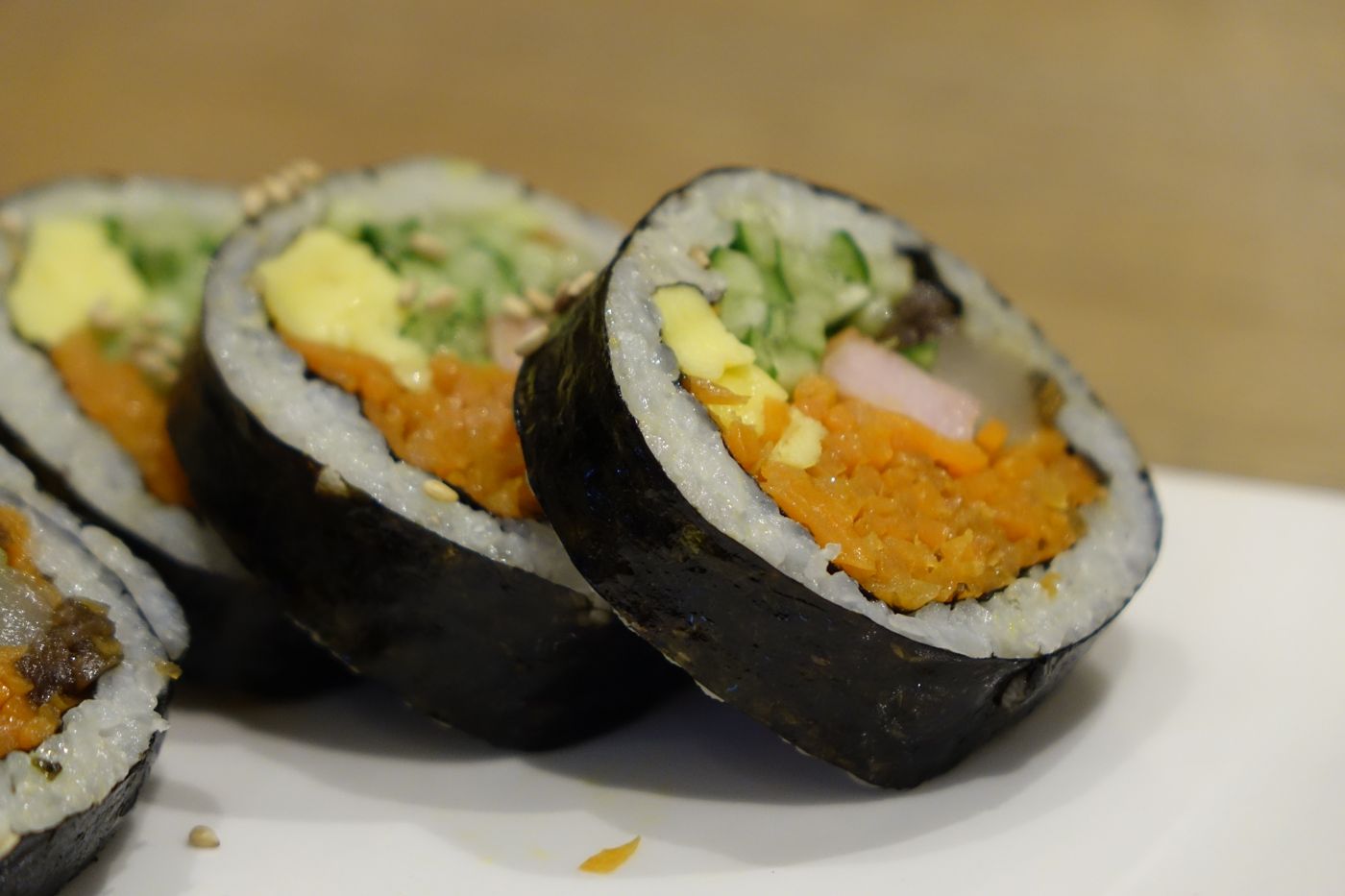
 Photo: 최광모, CC BY-SA 4.0, via Wikimedia Commons
Bap · Rice dishes 밥
Gimbap (Seaweed Rice Rolls)
김밥
Romanization: gimbap
Rice seasoned with sesame oil and salt, rolled in laver around strips of spinach, egg, carrot and pickled radish, then sliced — Korea's classic picnic and lunchbox food.
- Serves
- 4
- Prep
- 40 min
- Cook
- 30 min
RegionTongyeong
Jump to recipeRecipe
Ingredients · Serves 4
- 360 gShort-grain white rice2 cups, cooked slightly firm (about 1 kg cooked)
- 4 sheetsGimbap laver sheetsfull-size, lightly toasted
- 150 gSpinach
- 100 gCarrotjulienned
- 3 largeEggs
- 4 long stripsYellow pickled radish (danmuji)about 80 g, patted dry
- 100 gFish cake sheets (eomuk)cut into long strips
- 1 tbspSoy saucefor the fish cake
- 1 tspSugarfor the fish cake
- 1 cloveGarlicminced, for the spinach
- ¾ tspSaltdivided: rice, spinach, eggs, carrot
- 2 tbspToasted sesame oildivided; plus a little for brushing
- 1 tbspToasted sesame seeds
- 1½ tbspNeutral cooking oil
Method
Technique: Cooking Bap, Blanching and Seasoning Namul
Step 1: While the rice is still hot, fold in ½ tsp salt and 1 tbsp sesame oil with a paddle, then spread it out to cool to just warm.
Step 2: Blanch the spinach for 30 seconds, rinse in cold water, squeeze firmly and season with a pinch of salt, the garlic, 1 tsp sesame oil and the sesame seeds.
Step 3: Beat the eggs with a pinch of salt and cook in a lightly oiled rectangular or round pan as a thick, flat omelet over low heat; cool and cut into long strips about 1 cm thick.
Step 4: Stir-fry the carrot in a little oil with a pinch of salt until just softened. In the same pan, cook the fish cake strips with the soy sauce, sugar and 2 tbsp water until the liquid is absorbed.
Step 5: Place a laver sheet shiny side down on a bamboo mat. Spread a quarter of the rice thinly and evenly over it with damp fingers, leaving a 3 cm strip bare at the far edge.
Step 6: Lay a quarter of each filling in neat rows across the rice about a third of the way up. Lift the near edge of the mat and roll firmly over the fillings, tucking as you go, then continue rolling to seal against the bare edge.
Step 7: Brush the roll lightly with sesame oil. Repeat with the remaining sheets.
Step 8: Slice each roll into 1.5 cm rounds with a sharp knife wiped with a damp cloth between cuts. Serve the same day.
Origin & History
Laver (gim) has a long history in Korea. The Encyclopedia of Korean Culture notes that Joseon geographies list it as a product of the southern and eastern coasts, that it was good enough to be traded abroad, and that on the first full moon of the lunar year people wrapped rice in laver or leaves as boksam, "wrapping good fortune." A 1936 cookbook describes gimssam: laver brushed with oil, salted and toasted, then used to wrap rice.
Gimbap in today's sense — rice spread on a sheet of laver, filled and rolled — is, in the encyclopedia's account, a localized form of Japanese norimaki introduced during the colonial period. A 1925 newspaper item already mentions "Japanese gimbap," and a 1930 recipe insisted on thick Japanese laver because Korean sheets were too thin to roll. By 1939, however, a newspaper column by the cookbook author Hong Seon-pyo recommended rolls of Korean laver filled with rice, soy-braised beef and kimchi for lunchboxes, and a 1946 home-cooking text dropped the sweetened vinegar of sushi rice altogether. Rice seasoned with sesame oil and salt rather than vinegar remains the clearest difference from Japanese rolls.
The fillings changed with the times. The encyclopedia dates the first gimbap with yellow pickled radish (danmuji) to a 1958 newspaper article and the first with ham to the same year; in later decades processed ham made for gimbap and soy-braised burdock replaced older fillings such as dyed fish floss and braised gourd strips. The Korean Food Promotion Institute places the rise of the long rolled form in the 1960s and 1970s, when it became the indispensable food for school excursions, and gimbap specialty shops and franchises spread in the 1990s.
Gimbap is a portable assembly of familiar side dishes: spinach dressed like sigeumchi-namul, a thin rolled omelet in the manner of gyeran-mari, braised fish cake like eomuk-bokkeum and sometimes ueong-jorim. See also dosirak.
Key Ingredients
 Rice쌀Short, round grains of japonica rice that cook up glossy, soft and gently clinging. Steamed white rice, bap, is the center of the Korean table: every banchan, soup and stew is planned to be eaten with it.
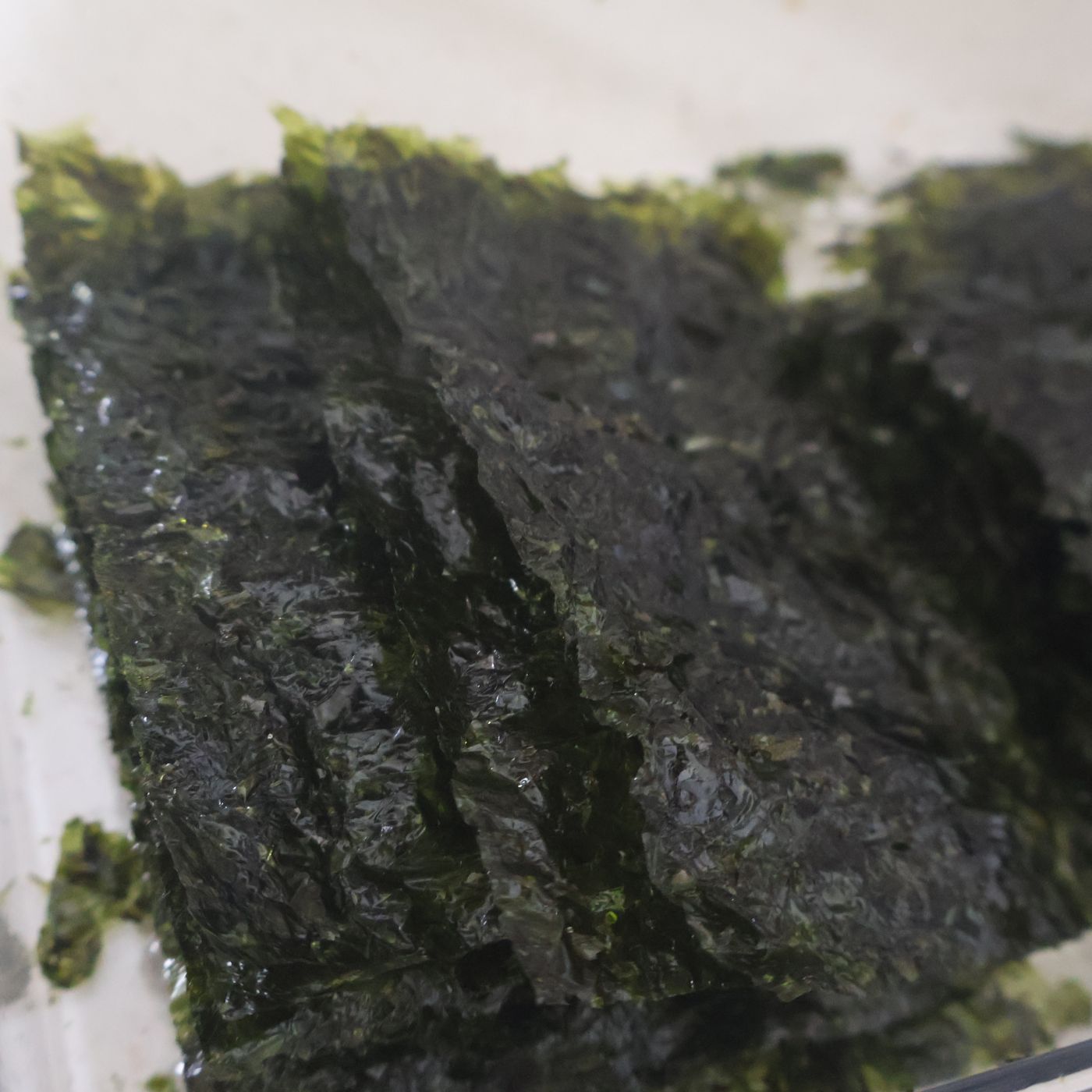 Laver (gim)김Paper-thin sheets of dried red seaweed, toasted until crisp and fragrant. Gim wraps gimbap and rice, crumbles over noodles and soups, and — brushed with oil and salt — becomes the everyday side dish gim-gui.
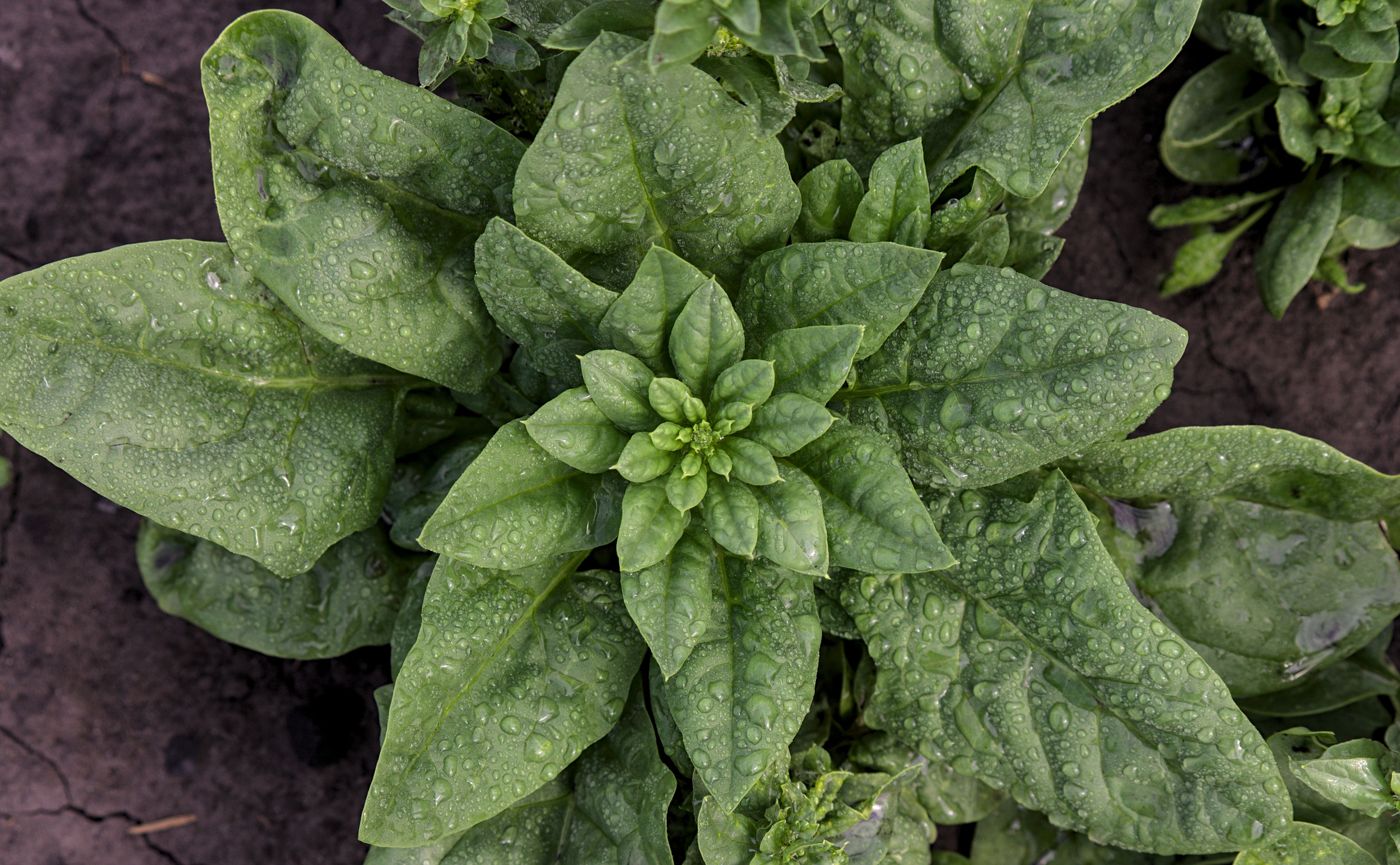 Spinach시금치Tender, deep-green spinach, most often blanched, squeezed and dressed with sesame oil as sigeumchi-namul, one of the most familiar banchan on the Korean table.
- Fish cake어묵A processed food of ground white fish, salt and starch, shaped into sheets, tubes or balls and then fried, steamed or grilled. Busan made it famous, and stir-fried eomuk is a common banchan.
 Soy sauce간장Korean soy sauce, in two main kitchen forms: pale, salty guk-ganjang (soup soy sauce) brewed the traditional way from meju, and darker, sweeter jin-ganjang for braises and marinades.
 Garlic마늘Used raw, minced, pickled and roasted, garlic is one of the essential aromatics of Korean food — in seasonings, marinades, kimchi and namul.
 Sesame참깨Toasted sesame seeds and sesame oil (chamgireum) finish countless Korean dishes, adding a nutty aroma and gloss.
Nutrition
| Calories | ~570 kcal |
|---|---|
| Protein | ~17 g |
| Fat | ~18 g |
| Carbohydrates | ~84 g |
| Fiber | ~4.7 g |
| Sodium | ~1130 mg |
Notable forVitamin A · Vitamin K · Selenium
Estimated by summing USDA FoodData Central (SR Legacy) values for raw medium-grain white rice (FDC 168879), spinach (FDC 168462), carrot (FDC 170393), whole egg (FDC 171287), soy sauce (FDC 174277), sesame oil, sesame seeds, sugar, garlic, soybean oil and table salt, with dried gimbap laver (L0030010001a), yellow pickled radish (F060000B09Ia) and fried fish paste (K8000000009j) from the Korean Food Composition Table, divided by 4. Assumes 2.5 g per laver sheet. Danmuji brands vary widely in salt; the database value may be lower than many commercial products. Actual values vary with ingredients, portion size and preparation.
Health Benefits
- A portable mixed meal: one roll combines grain, egg, fish cake and vegetables, which the Encyclopedia of Korean Culture describes as a fast food with a fairly even spread of nutrients.
- Laver and greens: spinach and laver contribute vitamin A (as beta-carotene) and vitamin K; seaweeds such as laver also contain iodine. See seaweed and iodine.
- Easy to adjust: more vegetables (cucumber, perilla leaves, burdock) and less processed meat or fish cake makes a lighter roll.
Regional Variations
- Chungmu gimbap (Tongyeong): small fingers of plain rice in laver with no filling, served with spicy squid and radish kimchi on the side. The Korean Food Promotion Institute relates that the fillings were kept separate because rolled gimbap spoiled quickly in the heat of the port town, and that the dish became nationally famous after a vendor sold it at the 1981 Gukpung festival in Seoul.
- Classic or vegetable gimbap: spinach, carrot, egg, pickled radish, fish cake or ham and burdock — the standard home and snack-shop roll.
- Kkoma (mini) gimbap: rolled on a half or quarter sheet of laver with just a few fillings.
- Specialty rolls: shops sell kimchi, beef, tuna, cheese and pork-cutlet gimbap, and "nude" gimbap with the rice on the outside; convenience stores sell triangle gimbap.
Pairings
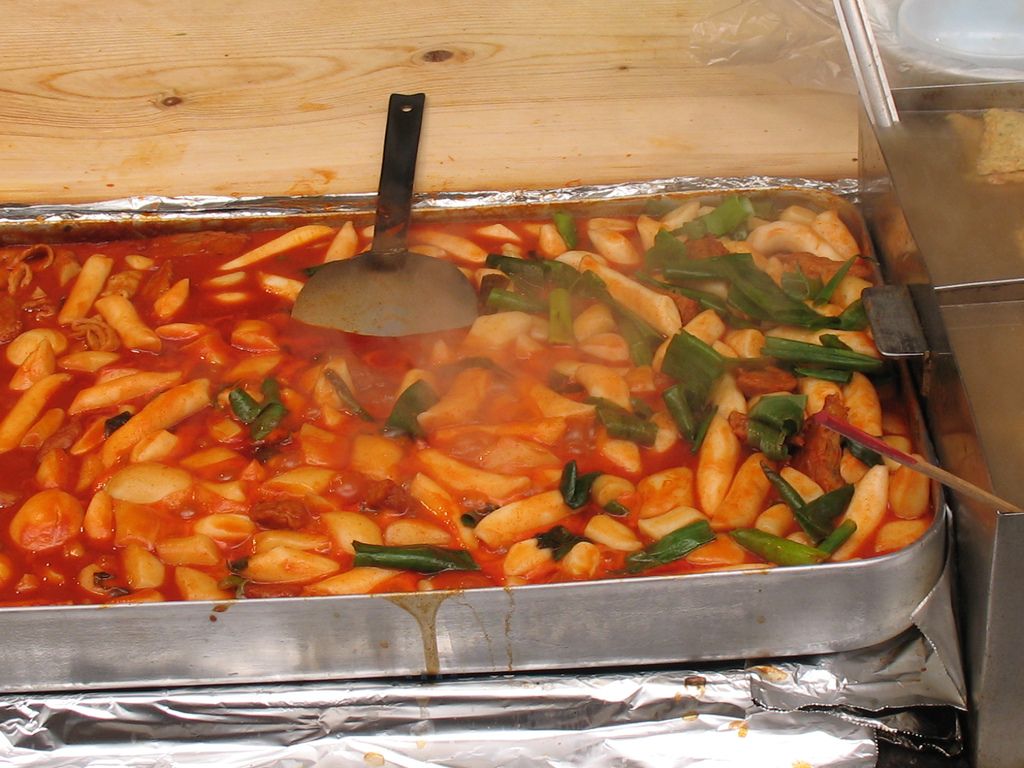 Tteokbokki (Spicy Stir-fried Rice Cakes)떡볶이Chewy rice cakes simmered in a sweet, fiery gochujang sauce with fish cake and green onion — a postwar street snack with roots in a refined soy-sauce court dish.
 Cubed Radish Kimchi깍두기Korean radish cut into neat cubes and tossed with chili, garlic and salted shrimp — crunchy, juicy and a classic partner to rich soups.
 Napa Cabbage Kimchi배추김치Salted napa cabbage layered with a red paste of chili, garlic, ginger and fermented seafood, then left to ripen: the kimchi most people picture first.