Regions
Jeonju
전주
A UNESCO Creative City of Gastronomy since 2012, Jeonju is known for bibimbap, bean-sprout soup with rice, yellow mung bean jelly and lavish hanjeongsik tables.
Jeonju, the capital of North Jeolla (since 2024 officially Jeonbuk State), has a reputation inside Korea that few cities can match: the Korea Tourism Organization calls it the "hometown of food," and in 2012 UNESCO named Jeonju a Creative City of Gastronomy.
Why Jeonju eats well
Jeonju sits at the edge of the Honam plain, Korea's great rice-growing region, within reach of the West Sea coast and the mountains to the east. UNESCO's description of the city highlights exactly that combination: plains rice, Yellow Sea seafood and mountain vegetables. The Encyclopedia of Korean Culture adds a cultural layer, describing Jeolla cooking as nearly as extravagant as Gaeseong's and noting that the province absorbed the refined style of Joseon's yangban gentry. For the wider province, see Jeolla.
Jeonju bibimbap
Jeonju bibimbap is the city's most famous dish, and locals sometimes call it bean sprout bibimbap. The Encyclopedia of Korean Culture lists some thirty possible ingredients and singles out the ones that define its character: soybean sprouts, yellow mung bean jelly (hwangpo-muk), gochujang, raw seasoned beef (or stir-fried beef), soy sauce, sesame oil and egg. The rest change with the season and can include spinach, bracken, mung bean sprouts, radish salad, zucchini, mushrooms, pine nuts and laver.
Two details are distinctive. The rice is cooked in broth made from beef brisket rather than plain water, and seasoned with sesame oil while still hot. And, according to the encyclopedia, the dish was originally mixed in the kitchen and topped with jelly before serving; today the toppings are arranged over the rice so each diner mixes their own. A bowl of bean-sprout soup always comes alongside. The encyclopedia regards a court-to-commoner origin as the most plausible of several theories but notes that the dish's history is uncertain.
Hwangpo-muk
Hwangpo-muk is mung bean jelly dyed yellow with gardenia. It is one of the "eight flavors of Wansan," an old name for Jeonju. The Encyclopedia of Korean Culture credits the spring water around Omokdae, in the old neighborhood once called Mukssaemgol ("jelly-spring village"), with making particularly good jelly, since mung bean starch is said to settle best in water low in iron and salt. In 2020 the city designated a family that has made the jelly for three generations as a recognized Jeonju food house. In Jeonju it is usually cut into thin strips and eaten with raw beef. See making muk.
Kongnamul-gukbap
Jeonju's bean-sprout soup with rice was already famous in 1929, when the magazine Byeolgeongon praised the city's takbaegi-guk in a survey of regional specialties as a rival to Pyongyang's and Seoul's beef soups, though made from nothing but sprouts, and credited the local water for the difference. Jeonju sprouts are grown from small black "rat-eye" soybeans and are considered best at about 5 to 6 centimeters. Today the sprouts are parboiled and seasoned, then simmered in an earthenware bowl with rice, anchovy-and-kelp broth and saeujeot, finished with green onion, sour kimchi and chili, sometimes with an egg. It is eaten as a hangover soup, traditionally with a cup of moju, makgeolli simmered with ginger, jujube, licorice root and cinnamon. Try it alongside a plate of kongnamul-muchim.
Hanjeongsik
Hanjeongsik, the full Korean table set all at once, is where Jeonju's abundance is most visible. The Korea Tourism Organization notes that Jeonju versions draw on local specialties such as bean sprouts, mung bean jelly, minari and zucchini. The city's own tourism office describes dozens of side dishes made from seasonal local ingredients, and presents the meal as heir to both royal court cooking and the dining of noble households, Jeonju being the ancestral seat of the Joseon royal family. Expect jeotgal, jangajji, jeon and several kimchi among the banchan, though the exact lineup and count vary from restaurant to restaurant. For the logic behind such a table, see Korean table settings.
Festivals and today
UNESCO points to the Jeonju Bibimbap Festival and an international fermented-food expo as major showcases, along with culinary education programs in the city and a foundation dedicated to promoting bibimbap abroad.
Dishes from this region
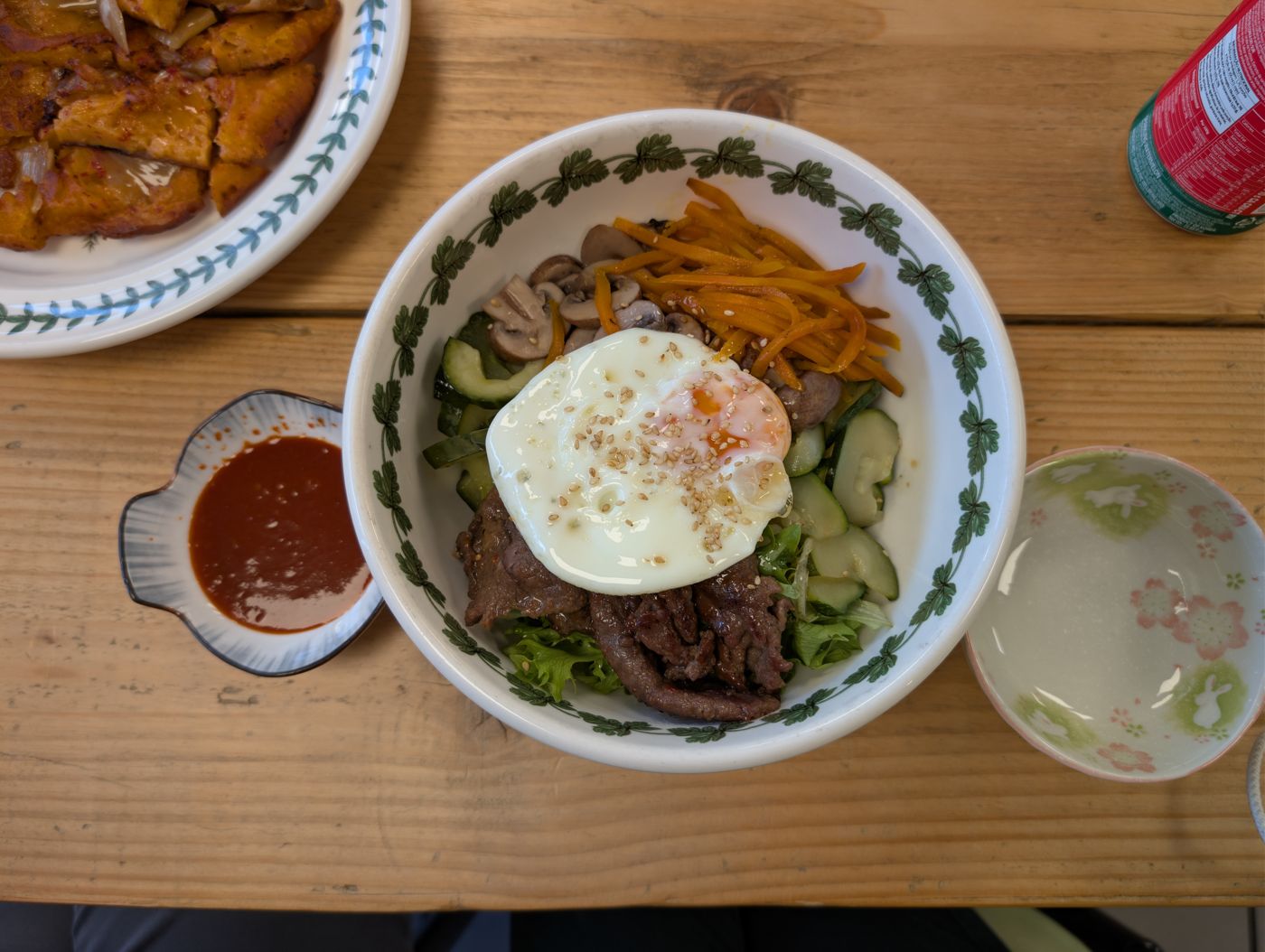 Bibimbap (Mixed Rice with Namul)비빔밥A bowl of rice topped with seasoned namul, beef and egg, mixed at the table with chili paste and sesame oil — banchan gathered into a single meal.
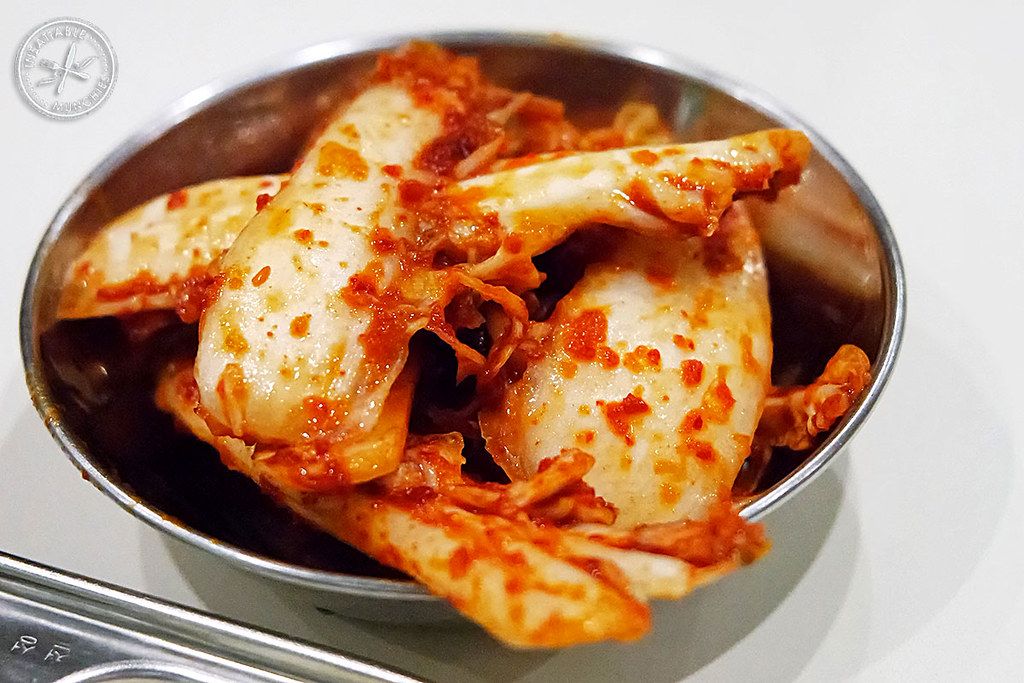 Fresh Cabbage Kimchi겉절이Napa cabbage salted only briefly, then tossed with chili, garlic and fish sauce and eaten the same day — kimchi at its freshest, crisp and bright.
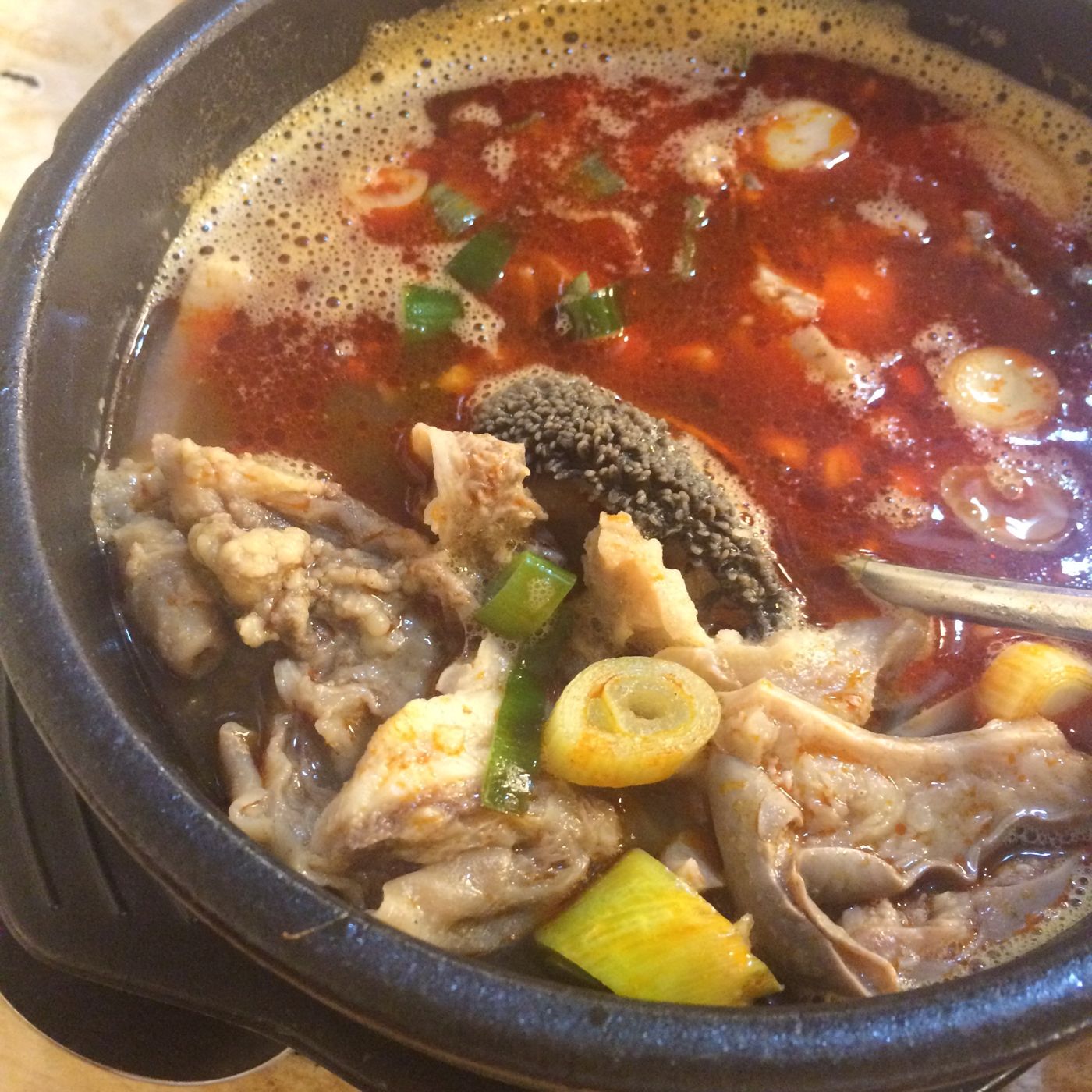 Haejangguk (Hangover Soup)해장국A hot, hearty morning soup — classically beef-bone broth with cabbage greens, bean sprouts and seonji (beef blood curd) — eaten over rice after a night of drinking.
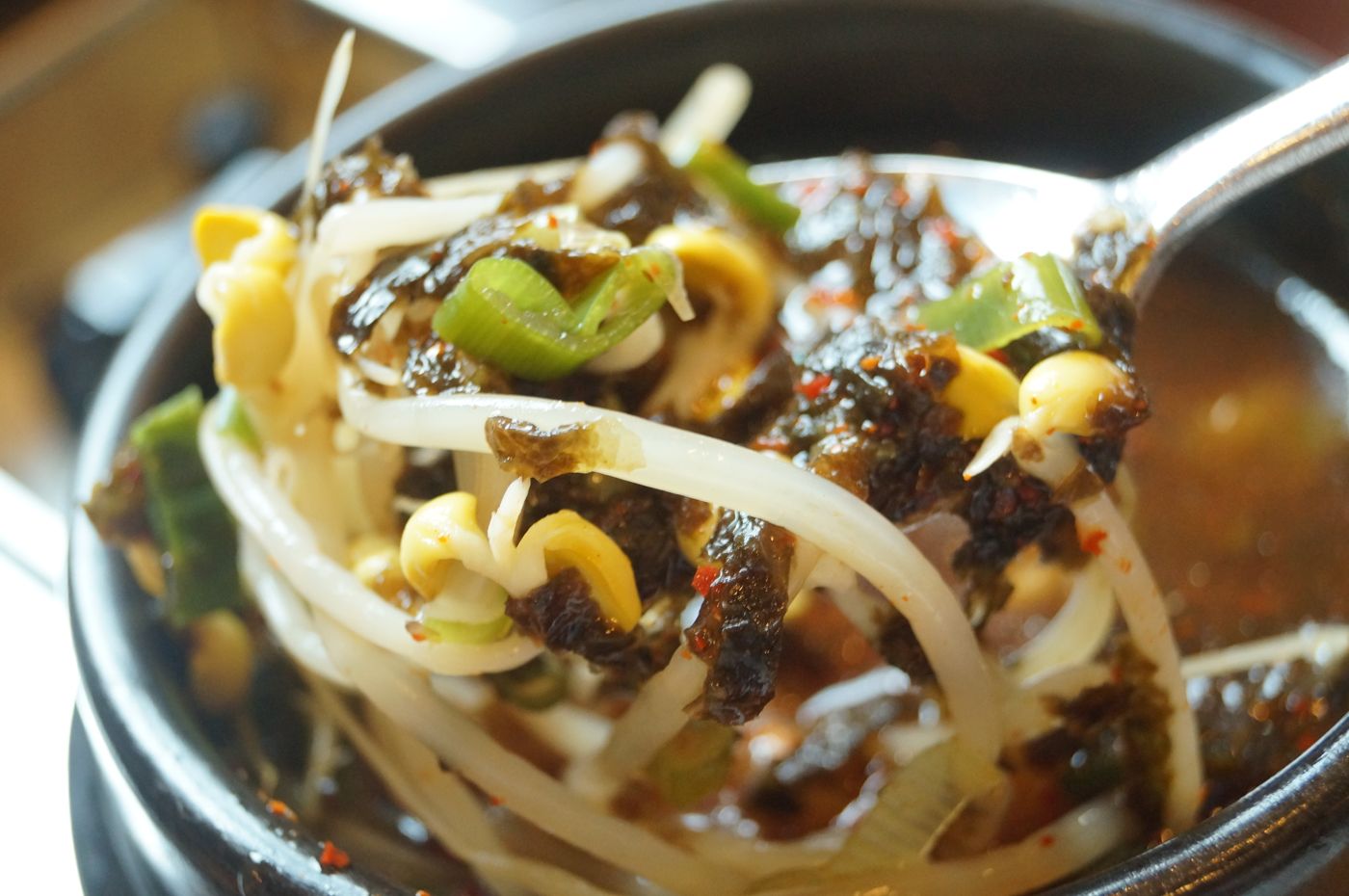 Kongnamul Guk (Soybean Sprout Soup)콩나물국A clear, light soup of soybean sprouts in anchovy-kelp stock, seasoned with salt or soup soy sauce — an everyday guk and a favorite morning-after cure.
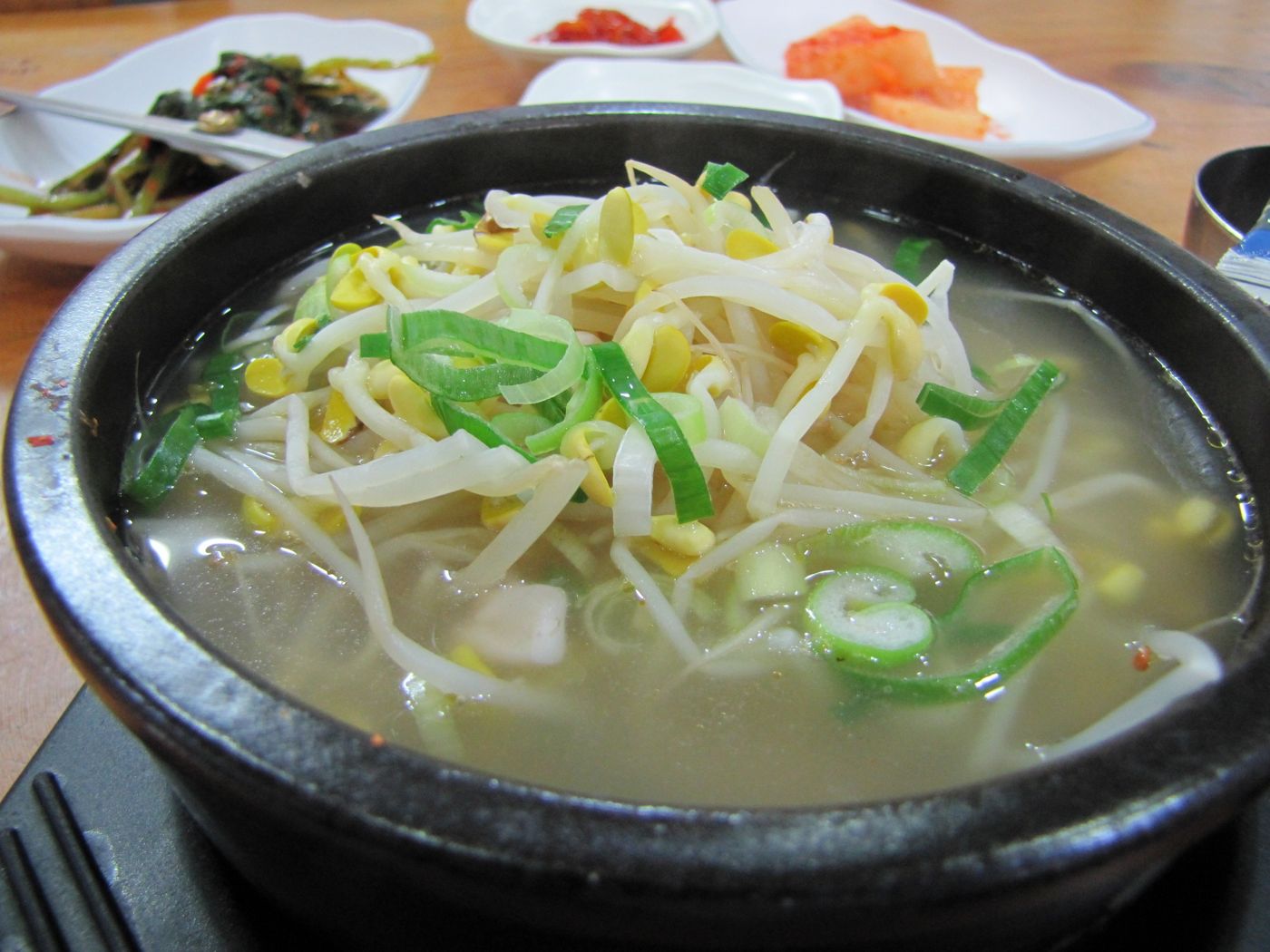 Kongnamul Gukbap (Jeonju Soybean-Sprout Rice Soup)콩나물국밥Rice and crisp soybean sprouts in a clear, savory broth, finished with egg, salted shrimp and kimchi. Jeonju's market breakfast and morning-after bowl.
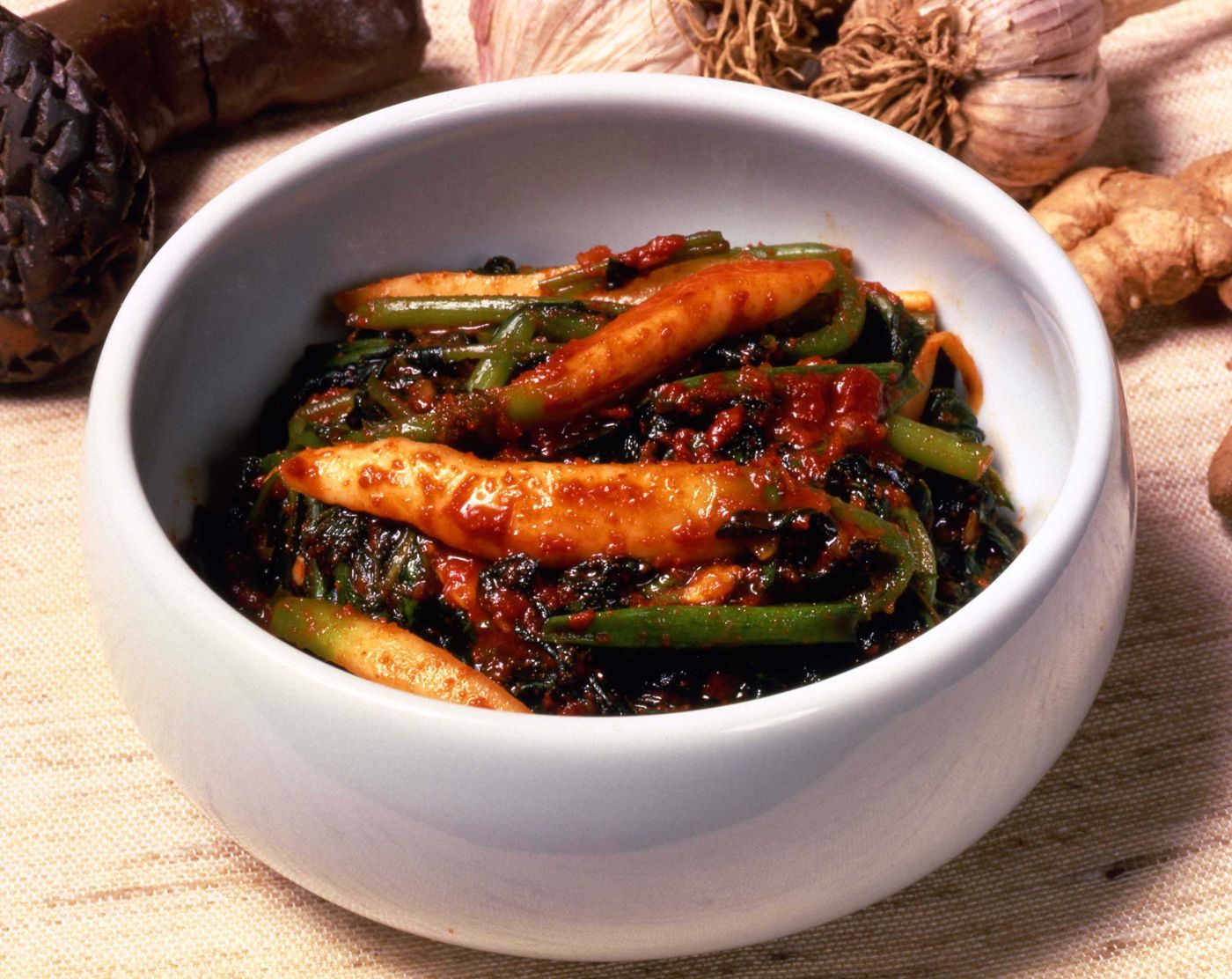 Young Summer Radish Kimchi열무김치Tender young radish greens in a loose, lightly spicy brine thickened with flour or rice paste — the classic summer kimchi, served over noodles and barley rice.
Sources
- 01Jeonju — UNESCO Creative Cities Network
- 02전주비빔밥 (Jeonju Bibimbap) — Encyclopedia of Korean Culture
- 03전주콩나물국밥 (Jeonju Kongnamul-gukbap) — Encyclopedia of Korean Culture
- 04오목대황포묵 (Omokdae Hwangpo-muk) — Encyclopedia of Korean Culture
- 05Jeonju Korean Table D'Hote (Jeonju Hanjeongsik) — VISITKOREA
- 06A Table Full of Flavor: Jeonju Food Road — Jeonju City Tourism