Ingredient
Rice
쌀
Romanization: ssal
Short, round grains of japonica rice that cook up glossy, soft and gently clinging. Steamed white rice, bap, is the center of the Korean table: every banchan, soup and stew is planned to be eaten with it.
Flavor
Mild, faintly sweet and clean-tasting; freshly cooked short-grain rice is moist, glossy and slightly sticky, a neutral backdrop that softens salty and spicy banchan.
 Photo: ROCKY, CC BY-SA 4.0, via Wikimedia Commons
Origin & History
Ssal is the hulled grain of the rice plant, Oryza sativa. Botanists divide cultivated rice into japonica, javanica and indica types, and Korea grows almost entirely the japonica kind — a short, cold-tolerant plant with short, rounded grains that is also typical of Japan and northeastern China. Within japonica there are two kinds of starch behavior: ordinary non-glutinous rice (maepssal), whose starch is roughly one-fifth amylose, and glutinous rice (chapssal), which has almost none and turns sticky when cooked.
Rice reached the peninsula from the Chinese mainland, and carbonized grains about 3,000 years old from Heunam-ri in Yeoju and from the Pyongyang area show it was being grown in the Bronze Age, alongside millet, sorghum and barley. Paddy farming flourished in the warm, well-watered southern regions of Yeongnam and Honam; the Three Kingdoms of Baekje and Silla promoted it, and by Unified Silla rice had become the leading grain — so central to taxation that a native character for a paddy field, dap (畓), was coined. Even so, white rice long remained a food of the well-off. Through the Joseon period most farming families ate it only on holidays and ancestral rites, filling everyday bowls with barley and other grains.
The modern story is one of scarcity turning into surplus. Under Japanese colonial rule large quantities of Korean rice were shipped to Japan while per-capita consumption at home fell sharply. In the 1970s the high-yielding Tongil varieties lifted harvests enough for the country to become self-sufficient in rice for the first time, and the government, which had campaigned for mixing barley into rice, lifted its restrictions. As incomes rose, households returned to better-tasting ordinary japonica varieties, and per-capita rice consumption has declined steadily since around 1980.
Rice is graded by milling — from brown rice (hyeonmi) through partly milled grades to white rice — and sold by variety and region, with names such as Gyeonggi rice and Honam rice familiar to shoppers. Beyond bap, it is ground for rice cakes (tteok), brewed into makgeolli and other sul, simmered into juk, and the browned crust left in the pot becomes nurungji and the toasty drink sungnyung.
Nutrition
| Calories | 366 kcal |
|---|---|
| Protein | 6.81 g |
| Fat | 1.05 g |
| Carbohydrates | 78.74 g |
| Fiber | 1.9 g |
| Sodium | 2 mg |
Notable forManganese (0.88 mg) · Niacin (1.06 mg)
Values copied from the Korean Food Composition Table (Rural Development Administration / National Institute of Crop Science) for this exact food, per 100 g edible portion. These are values for dry, uncooked grain; cooking roughly doubles to triples the weight with water, so a bowl of cooked rice has far less energy per 100 g. Actual values vary with ingredients, portion size and preparation.
Health Benefits
- An energy staple: White rice is mostly starch, providing the bulk of the energy in a traditional Korean meal, with modest protein and very little fat or sodium.
- Brown and mixed-grain rice keep more of the grain: The bran and germ removed in milling carry most of the B vitamins and fiber; brown rice and mixed-grain japgokbap retain more of them than polished white rice.
- Naturally gluten-free: The U.S. National Institute of Diabetes and Digestive and Kidney Diseases lists rice among the grains that are safe for people with celiac disease (watch for wheat in sauces and seasonings served with it).
- Arsenic and variety: Rice can take up arsenic from soil and water. The U.S. FDA advises eating a varied diet across grains rather than relying on rice alone, and notes that cooking rice in excess water and draining it lowers arsenic — along with some of its nutrients.
Informational, not medical advice. Talk to a qualified professional about your own health and diet.
Dishes with Rice
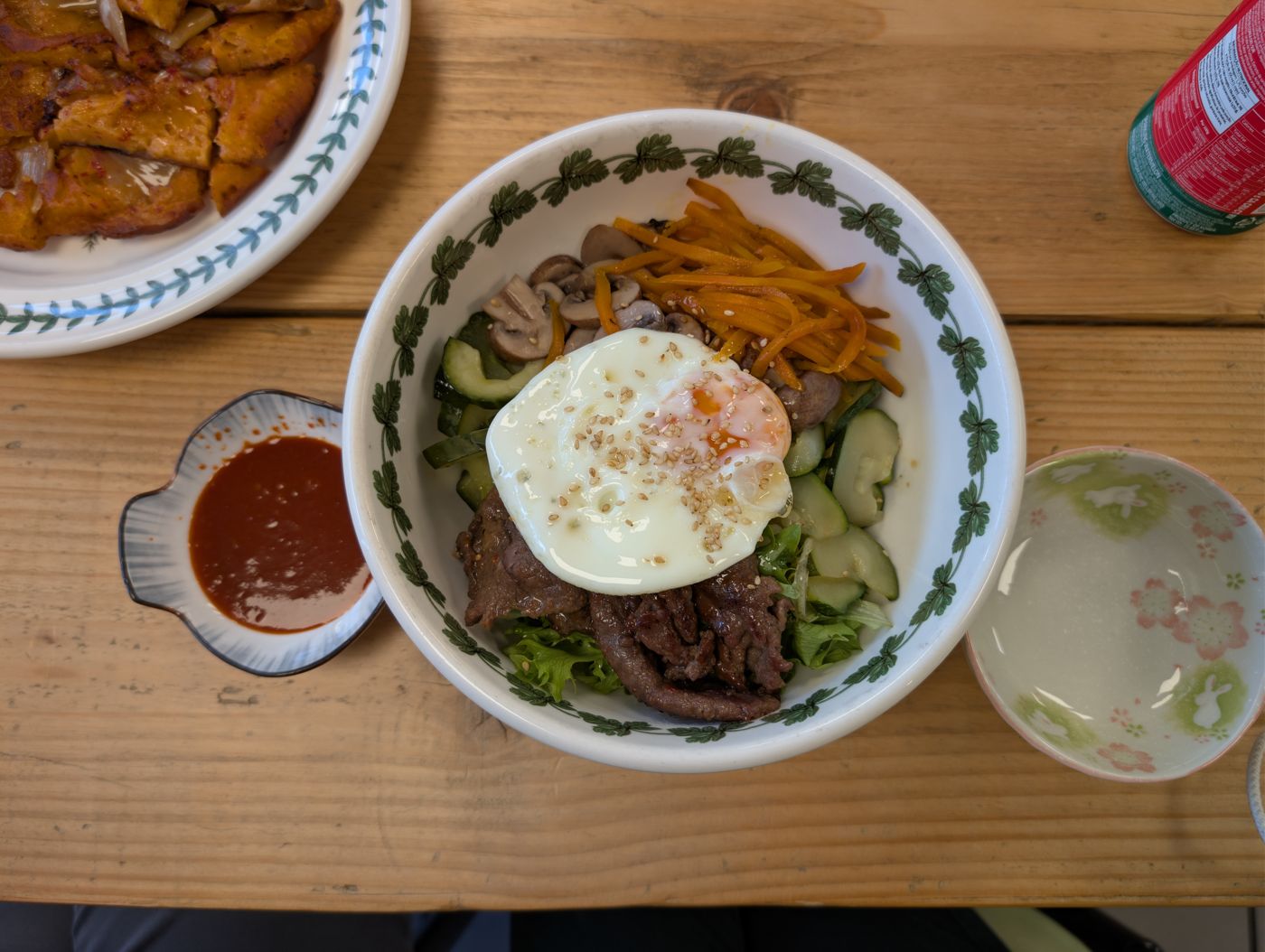 Bibimbap (Mixed Rice with Namul)비빔밥A bowl of rice topped with seasoned namul, beef and egg, mixed at the table with chili paste and sesame oil — banchan gathered into a single meal.
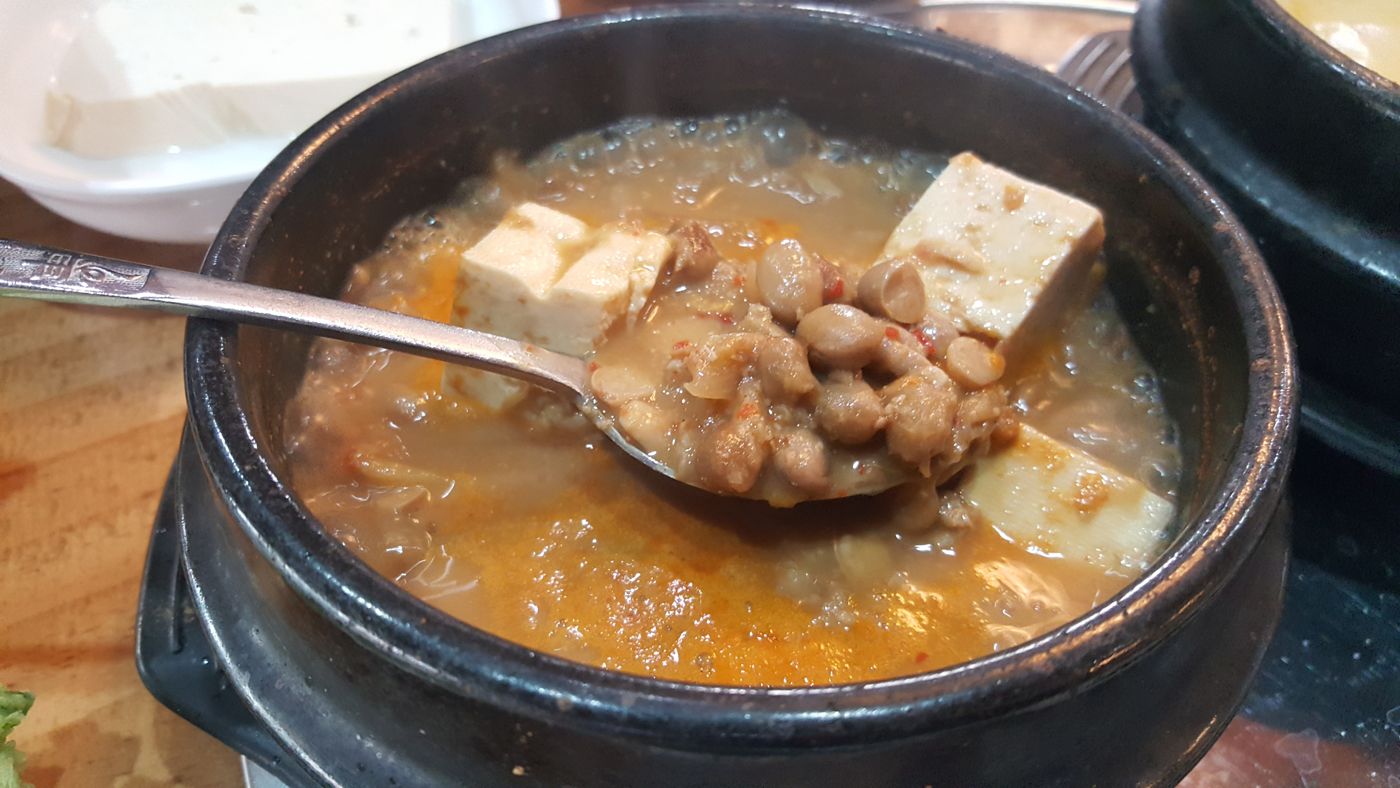 Cheonggukjang Jjigae (Quick-Fermented Soybean Stew)청국장찌개A thick, pungent winter stew of quick-fermented whole soybeans simmered with sour kimchi, tofu and a little pork or beef — loved for its earthy depth, notorious for its smell.
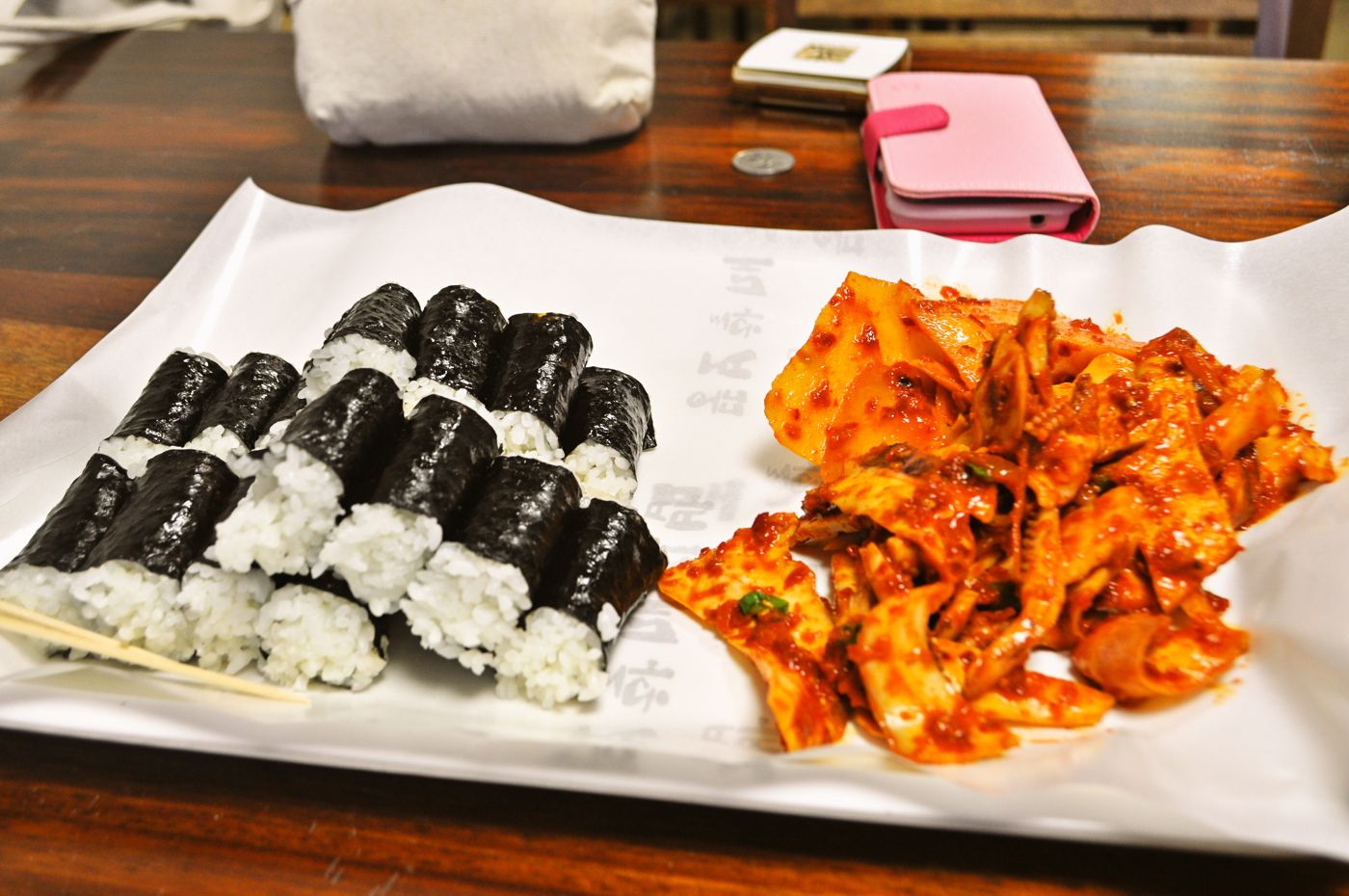 Chungmu Gimbap (Tongyeong Rice Rolls)충무김밥Finger-sized rolls of plain rice in laver, eaten with spicy squid and chunky radish kimchi on the side — Tongyeong's harbor food, built to survive summer heat.
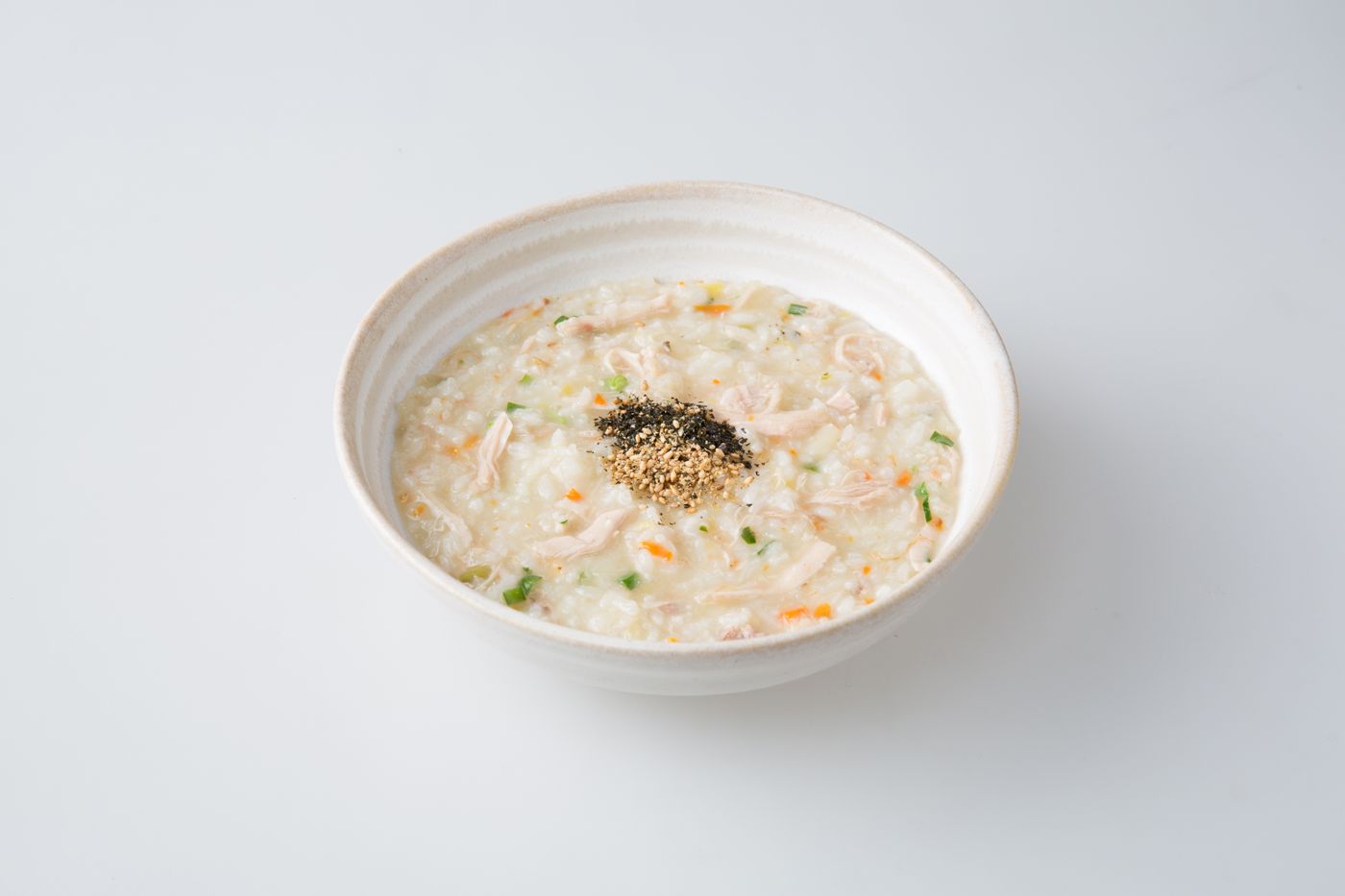 Dakjuk (Chicken Rice Porridge)닭죽Soft rice simmered in a clear chicken broth with shredded meat — a gentle, easy-to-digest porridge long served as summer restorative and sick-day food.
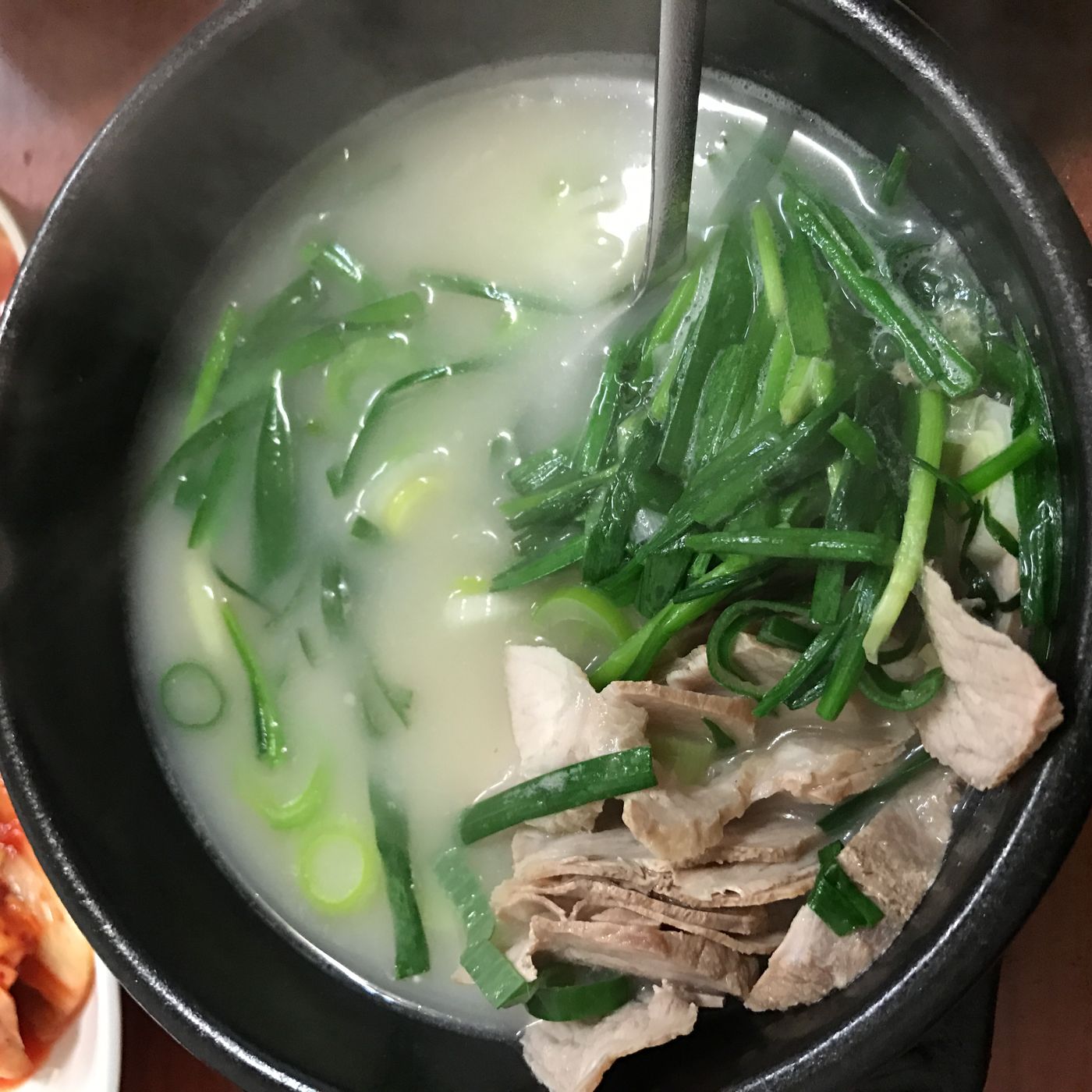 Dwaeji Gukbap (Busan Pork and Rice Soup)돼지국밥Slices of boiled pork in a milky pork-bone broth over rice, seasoned at the table with salted shrimp and garlic chives — Busan's signature everyday bowl.
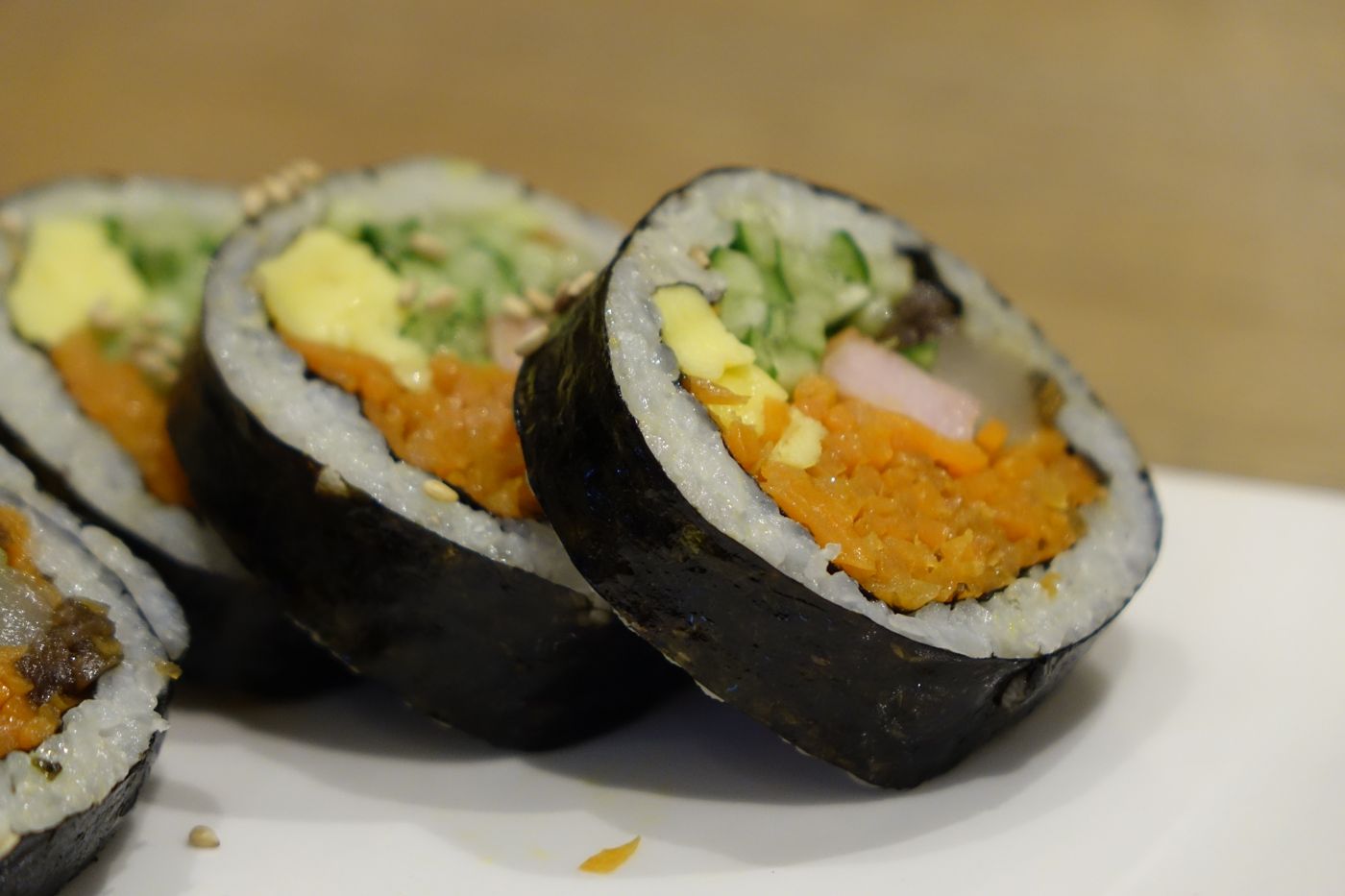 Gimbap (Seaweed Rice Rolls)김밥Rice seasoned with sesame oil and salt, rolled in laver around strips of spinach, egg, carrot and pickled radish, then sliced — Korea's classic picnic and lunchbox food.
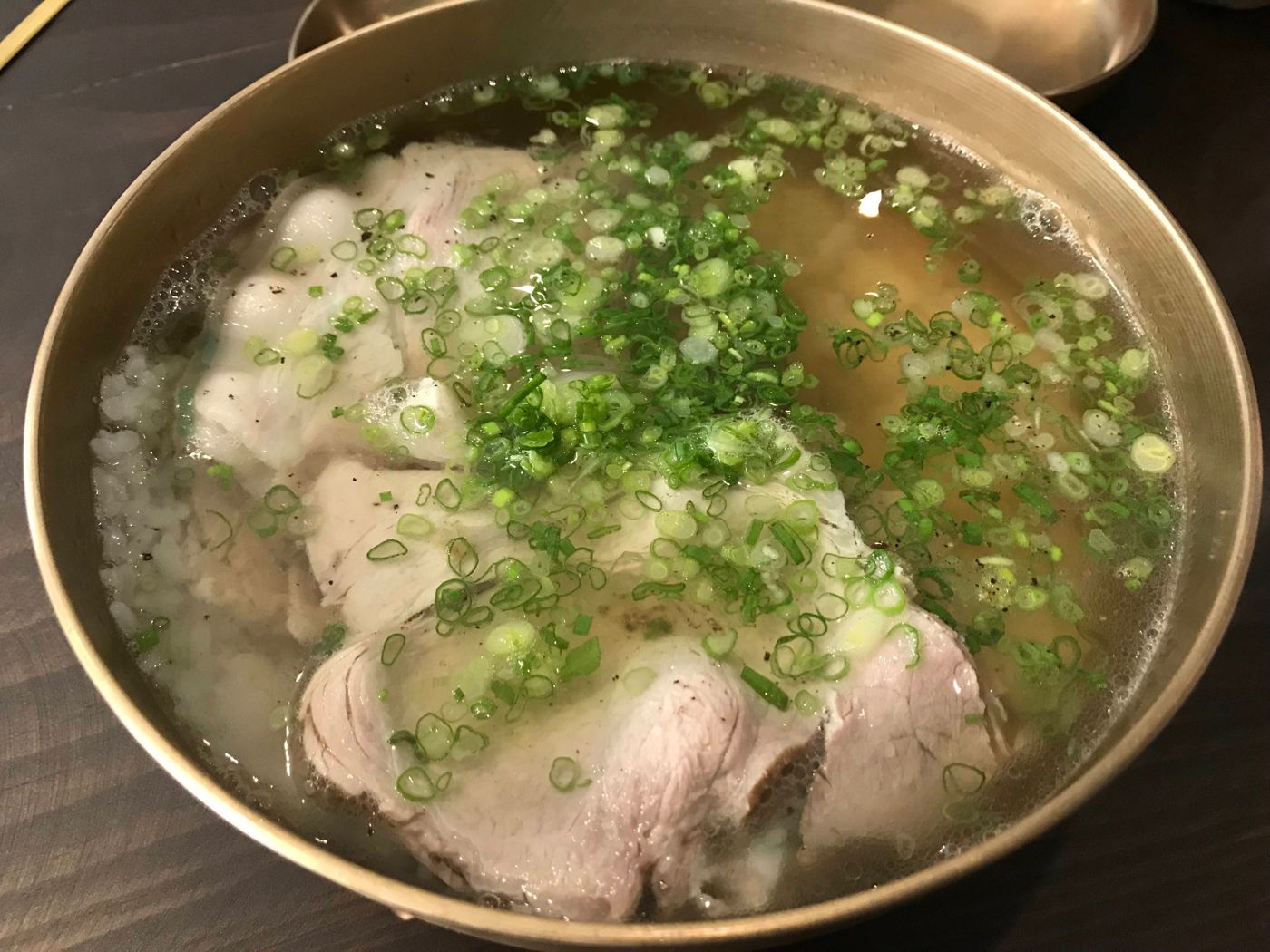 Gomtang (Beef Bone and Brisket Soup)곰탕A long-simmered beef soup, usually built on brisket, shank and offal and served over rice, with a broth that is lightly salted at the table. A pillar of the Korean gukbap tradition.
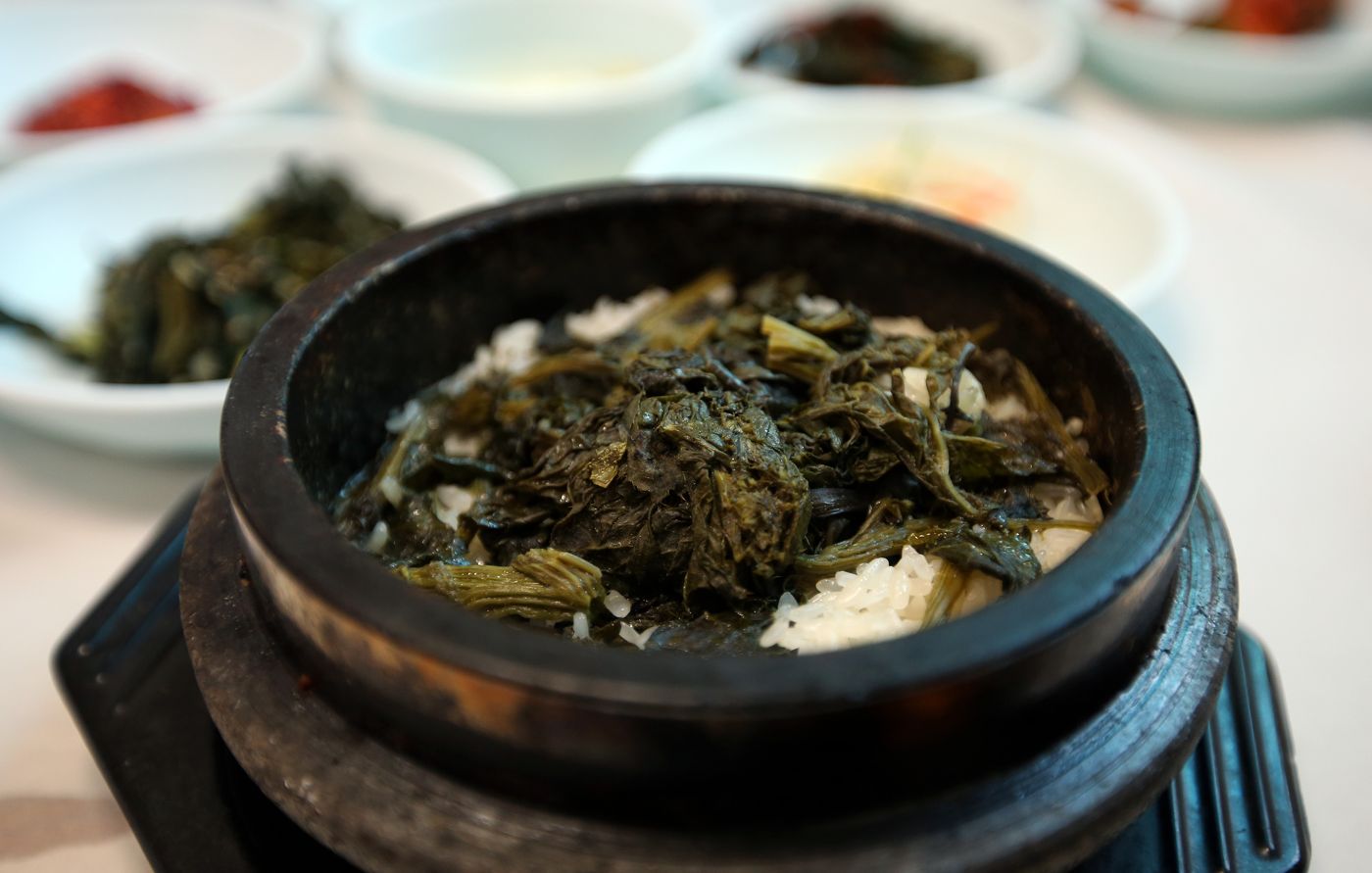 Gondeure-bap (Thistle Rice)곤드레밥Rice steamed with dried-and-rehydrated gondeure, a soft mountain thistle, then stirred with a soy-sauce dressing — the signature dish of Gangwon's highlands, especially Jeongseon.
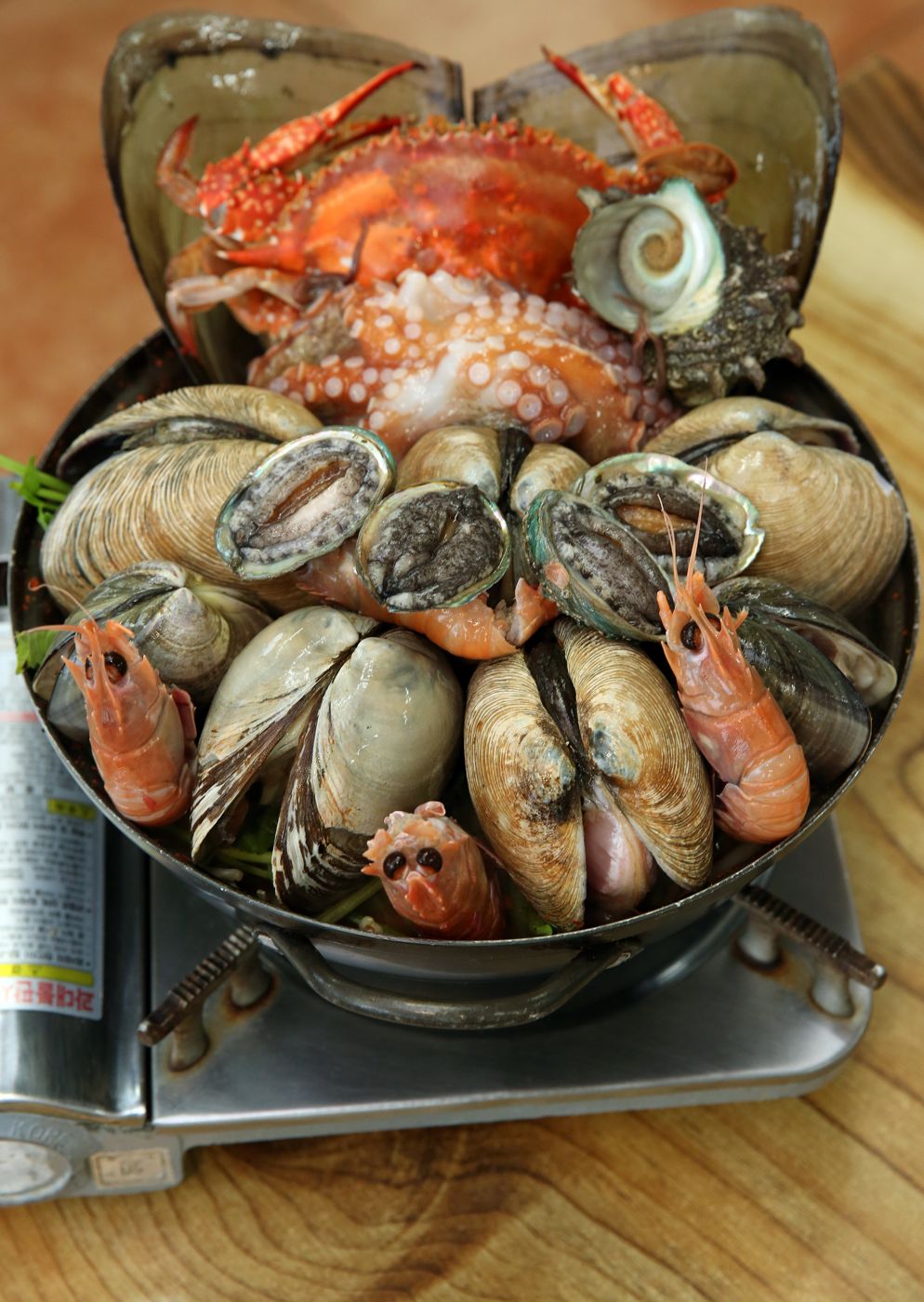 Haemul Tang (Spicy Seafood Hot Pot)해물탕Blue crab, octopus, shrimp, clams and sea squirt simmered with radish and water dropwort in a bright, spicy gochujang broth — a seafood feast in one pot.
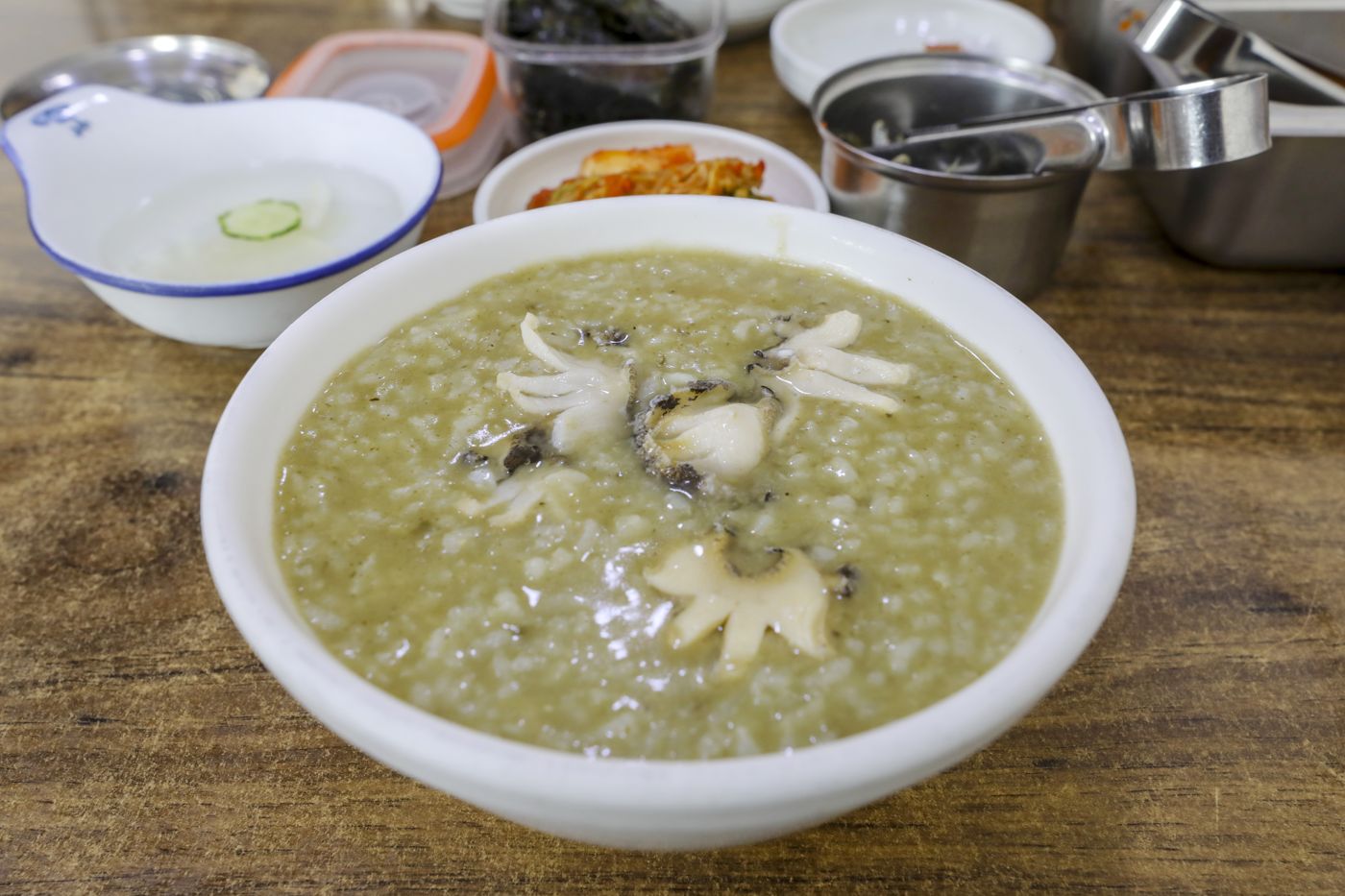 Jeonbok-juk (Abalone Rice Porridge)전복죽Rice simmered with sliced abalone and its green viscera in sesame oil until silky — Jeju's restorative porridge for convalescents, new mothers and anyone in need of comfort.
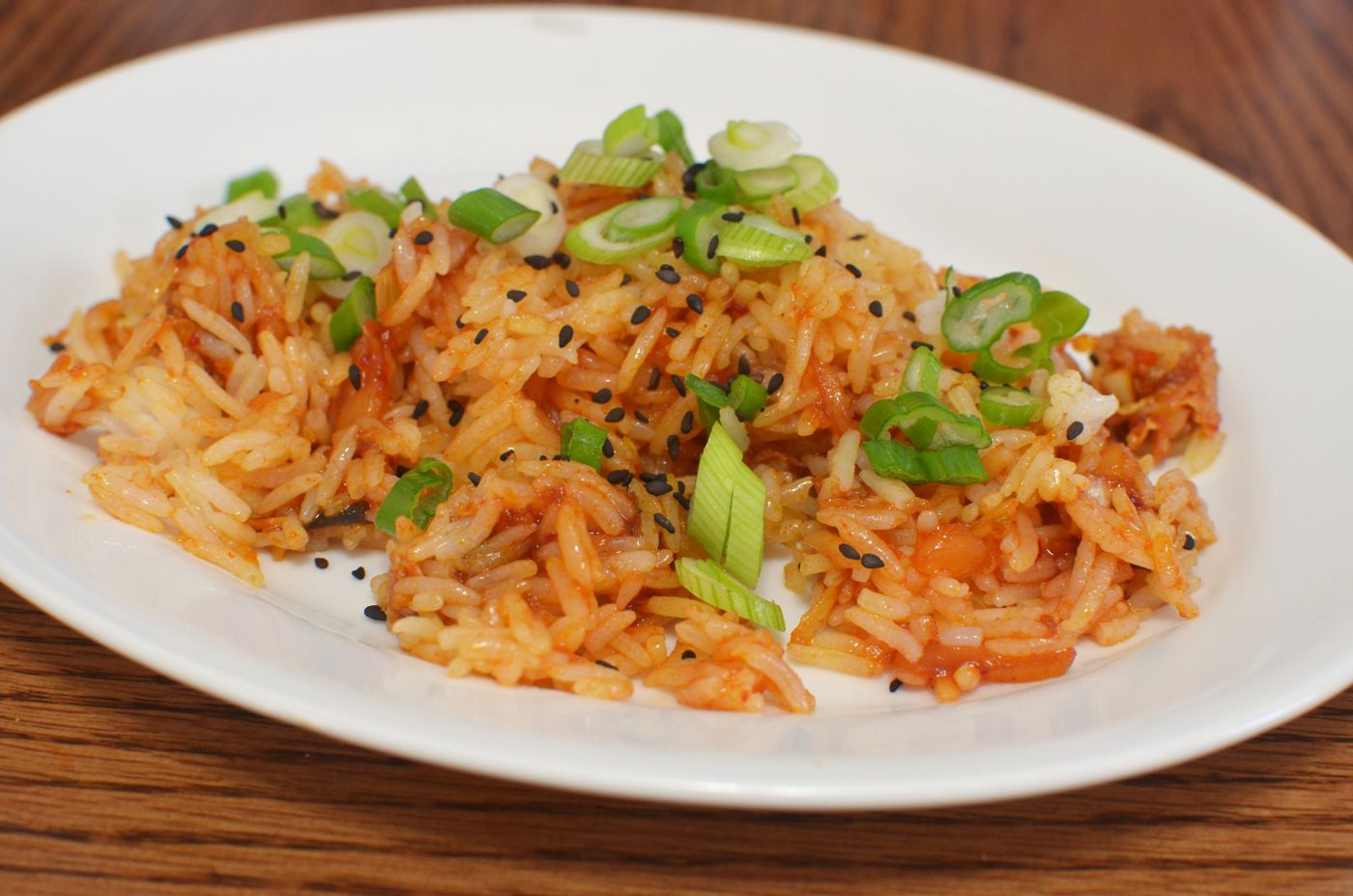 Kimchi-bokkeumbap (Kimchi Fried Rice)김치볶음밥Leftover rice stir-fried with sour, well-fermented kimchi and a little pork, usually topped with a fried egg — a home staple that spread with frying pans and cooking oil.
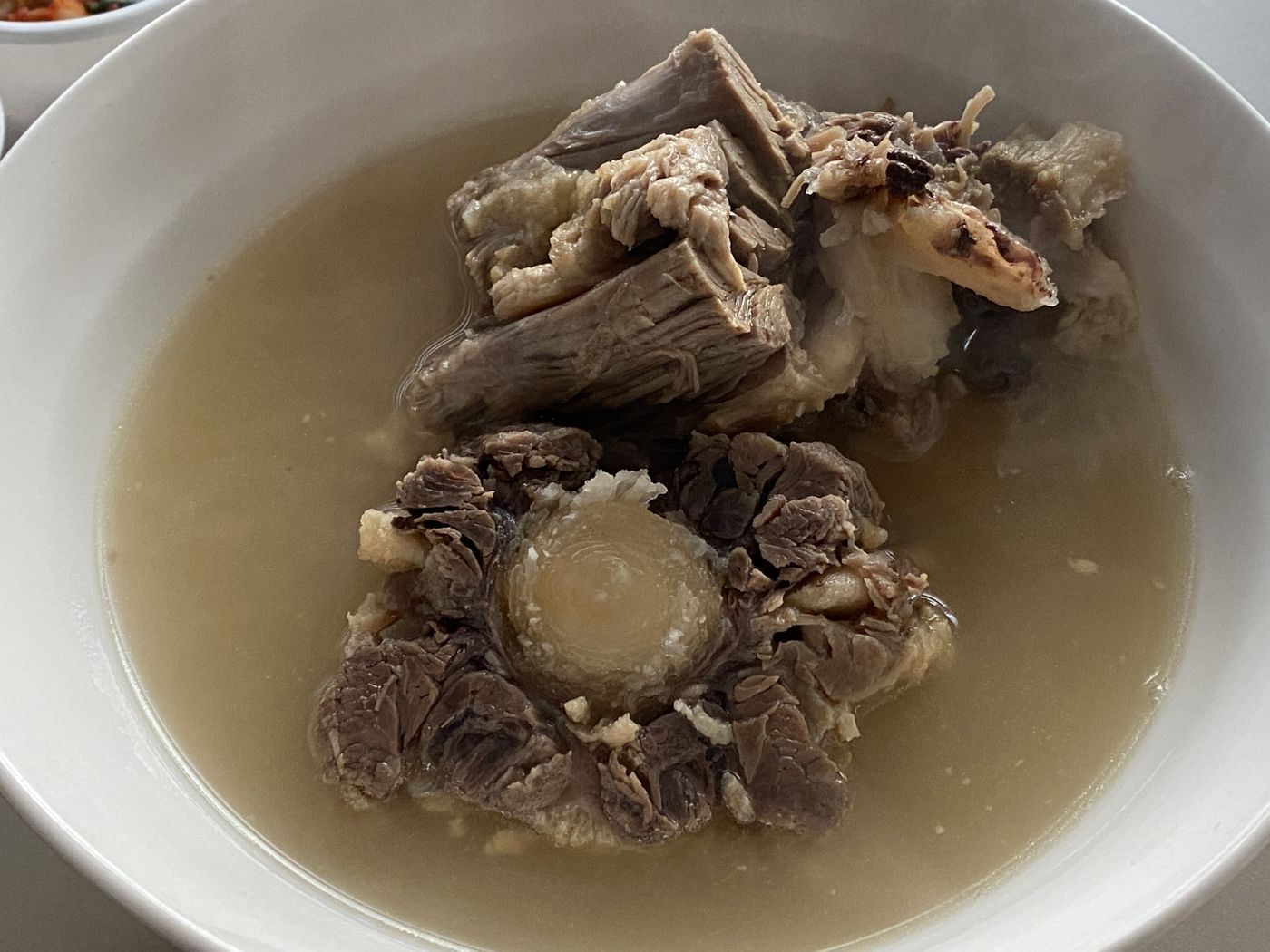 Kkori-gomtang (Oxtail Soup)꼬리곰탕Oxtail simmered for hours until the meat slips from the bone, in a rich, savory broth ladled over rice. A gomtang built on a single cut.
- Kongnamul-bap (Soybean Sprout Rice)콩나물밥Rice steamed over a bed of soybean sprouts, often with a little beef, and eaten with a spoonful of soy-and-scallion sauce — a thrifty one-pot meal from Chungcheong.
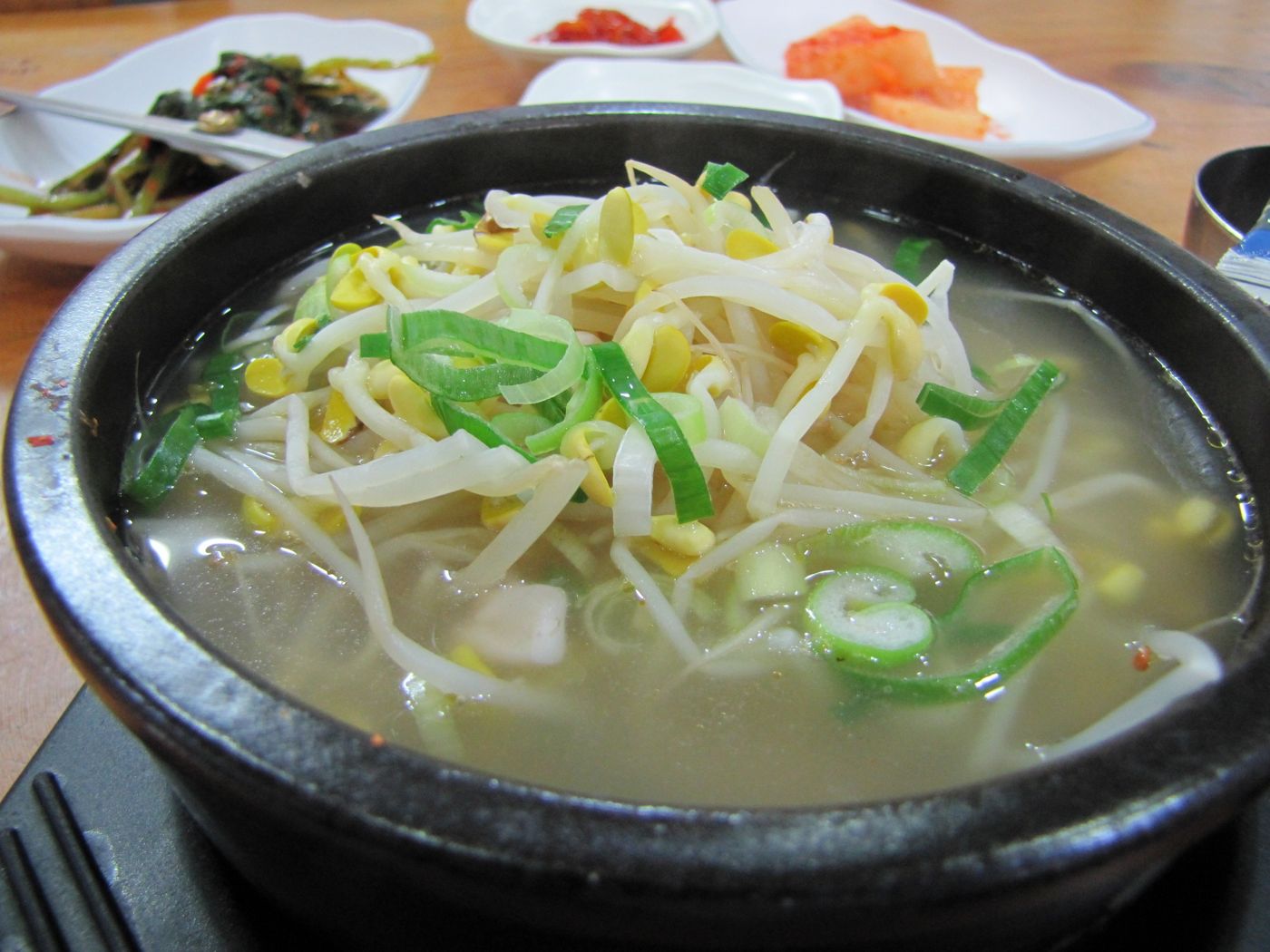 Kongnamul Gukbap (Jeonju Soybean-Sprout Rice Soup)콩나물국밥Rice and crisp soybean sprouts in a clear, savory broth, finished with egg, salted shrimp and kimchi. Jeonju's market breakfast and morning-after bowl.
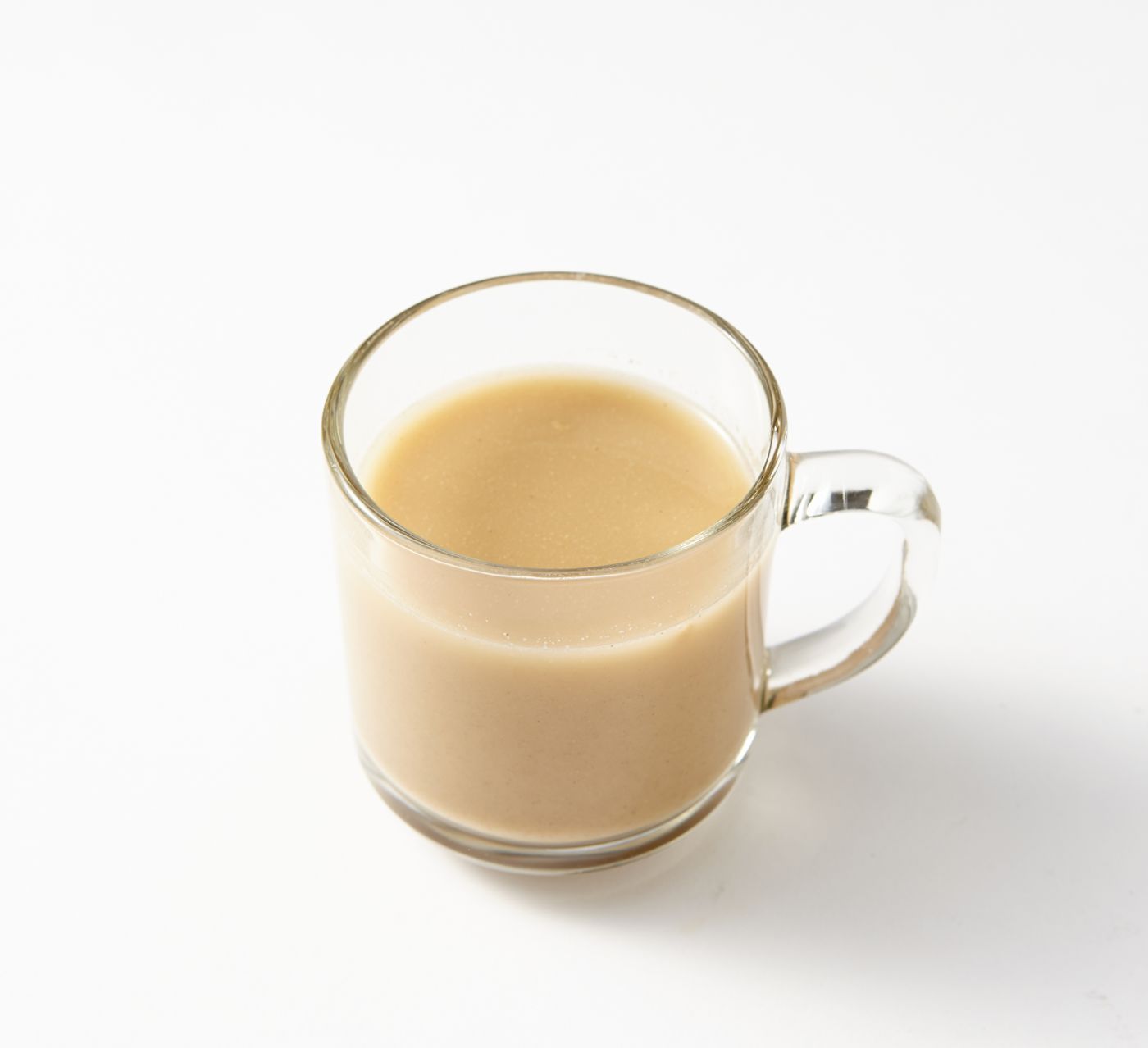 Misutgaru (Roasted Grain Drink)미숫가루A fine powder of steamed, dried and roasted grains stirred into cold water with honey — a nutty summer drink that doubled for centuries as travel food and famine ration.
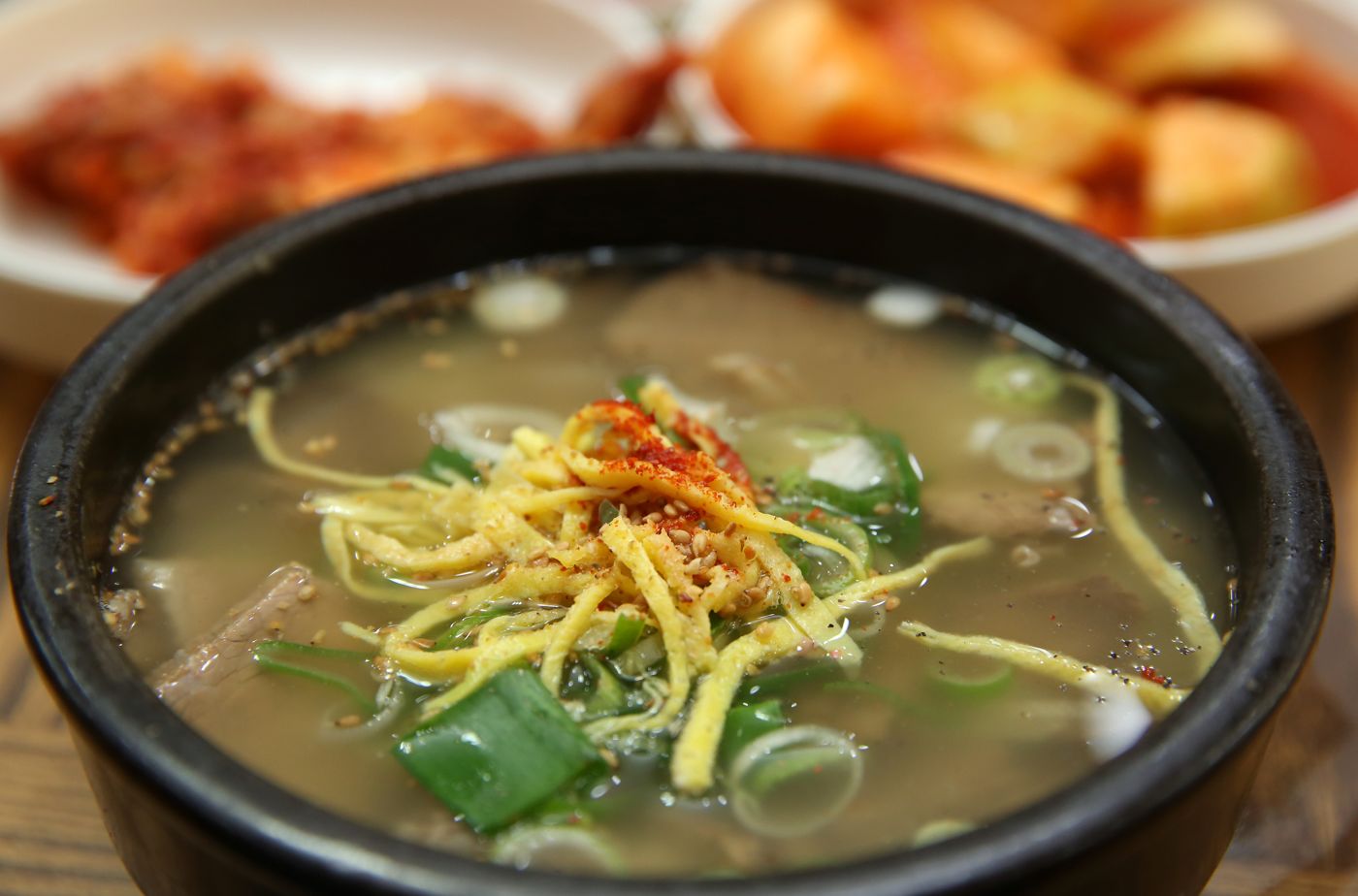 Naju Gomtang (Naju Clear Beef Soup)나주곰탕Brisket, shank and other beef cuts simmered into a clear, gently rich broth, poured over rice and topped with green onion — the market-day soup of Naju in South Jeolla.
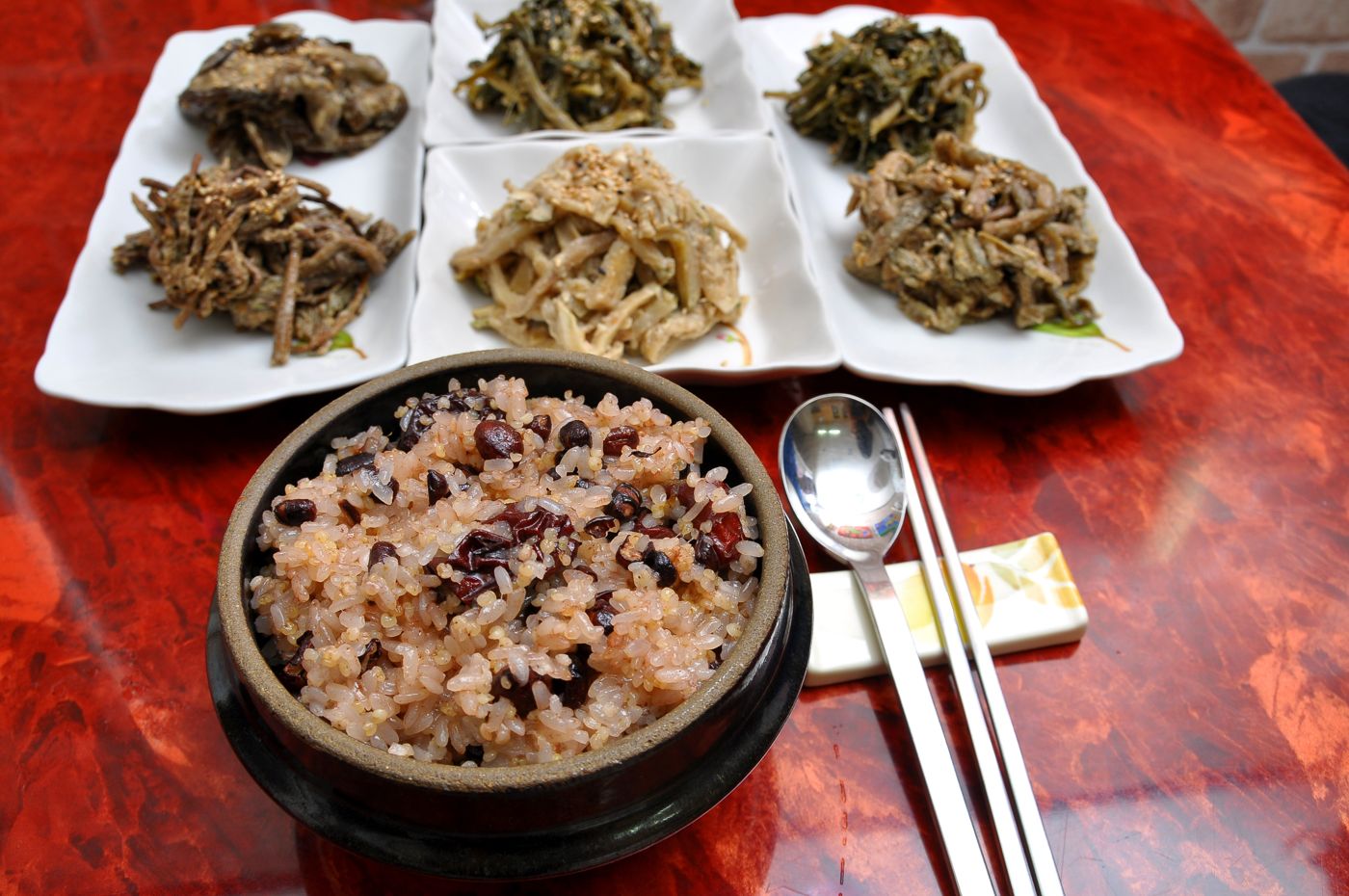 Ogokbap (Five-Grain Rice)오곡밥Glutinous rice cooked with sorghum, millet, red beans and black soybeans for Daeboreum, the first full moon of the lunar year, and shared among neighbors for a good harvest.
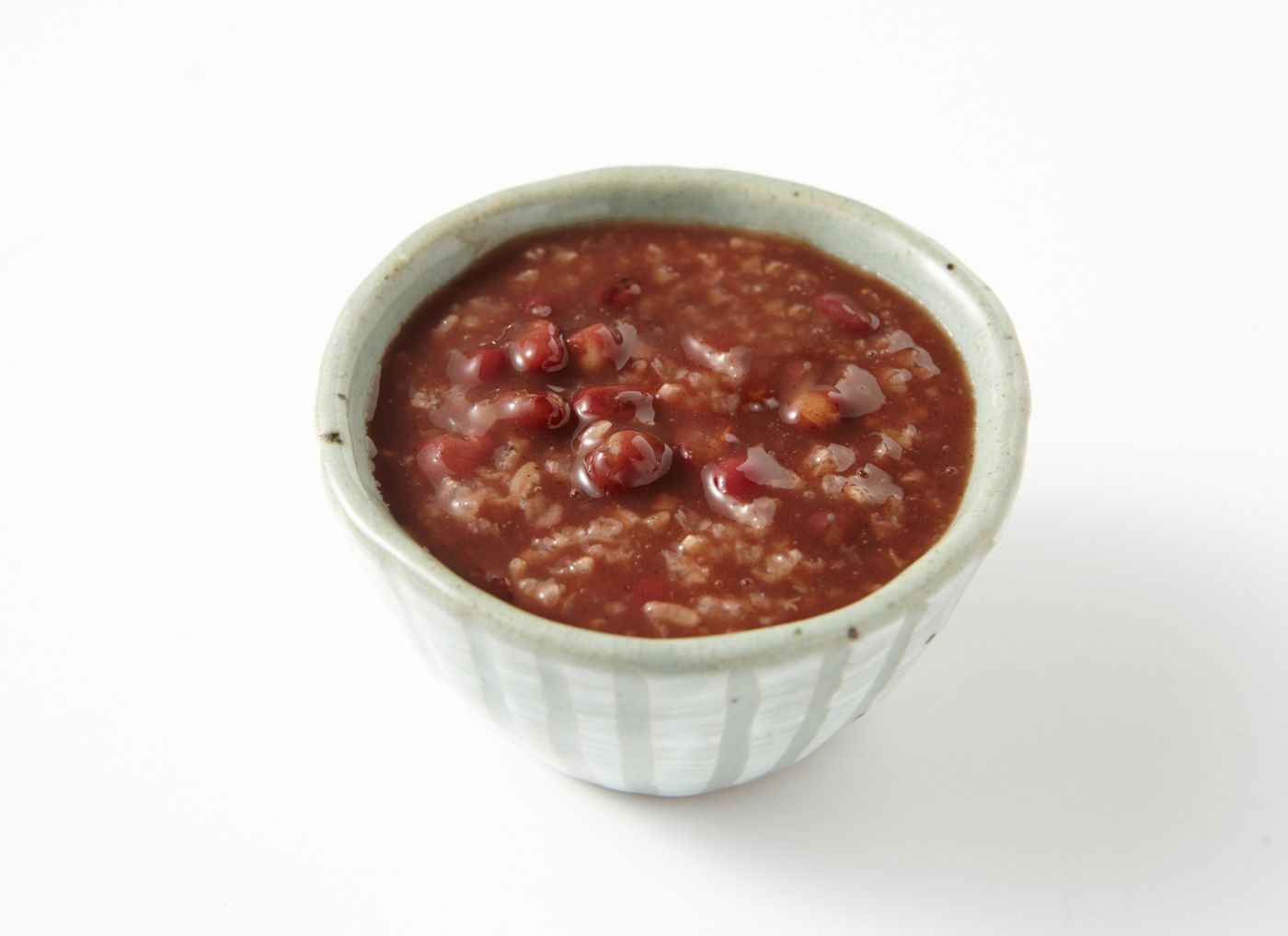 Patjuk (Red Bean Porridge)팥죽Porridge of puréed red adzuki beans and rice with chewy glutinous rice balls, eaten at the winter solstice to ward off misfortune and shared with neighbors.
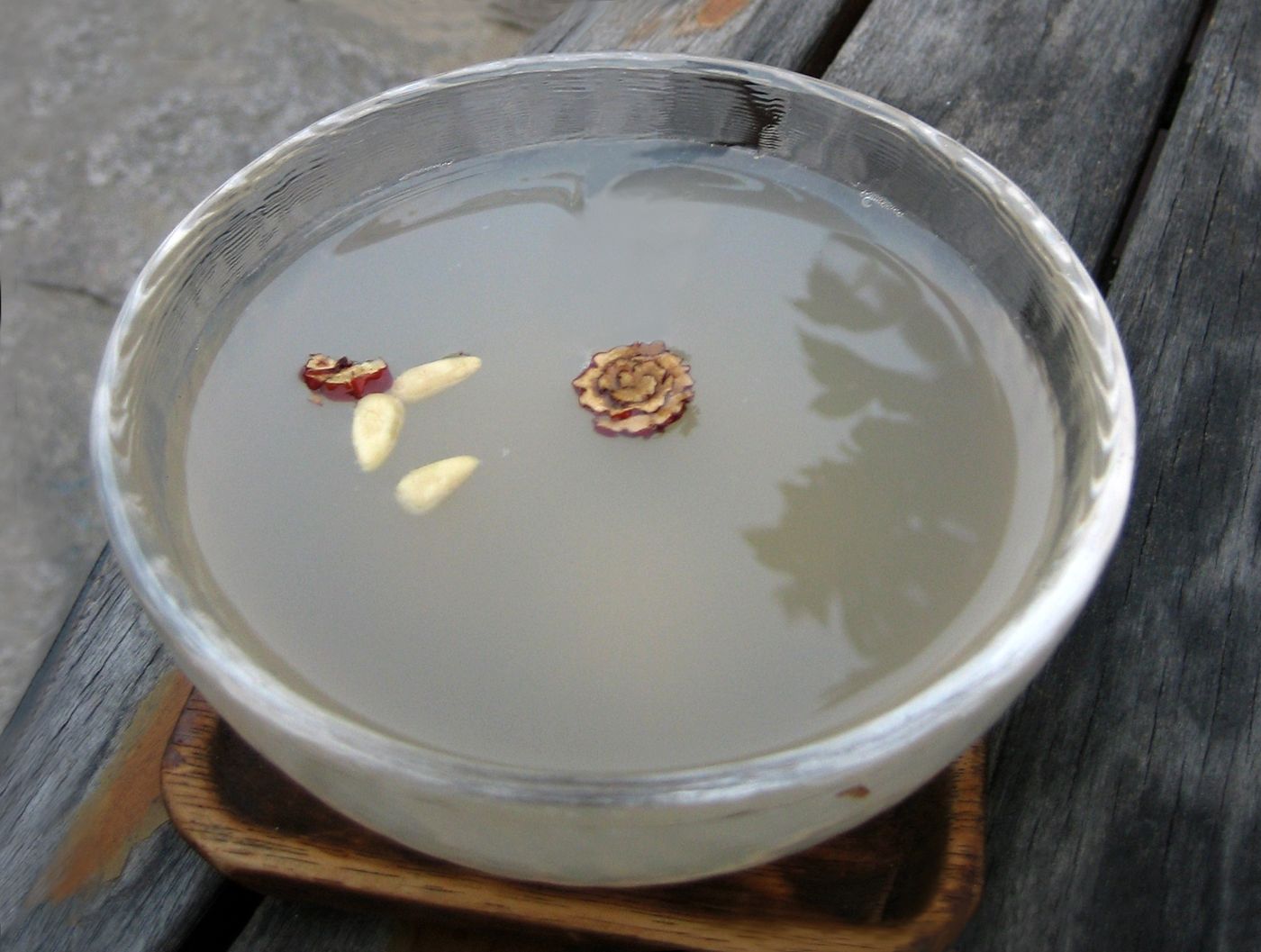 Sikhye (Sweet Malted Rice Drink)식혜Cooked rice steeped in barley-malt water until it sweetens and the grains float, then chilled — the traditional after-feast drink of Korean holidays.
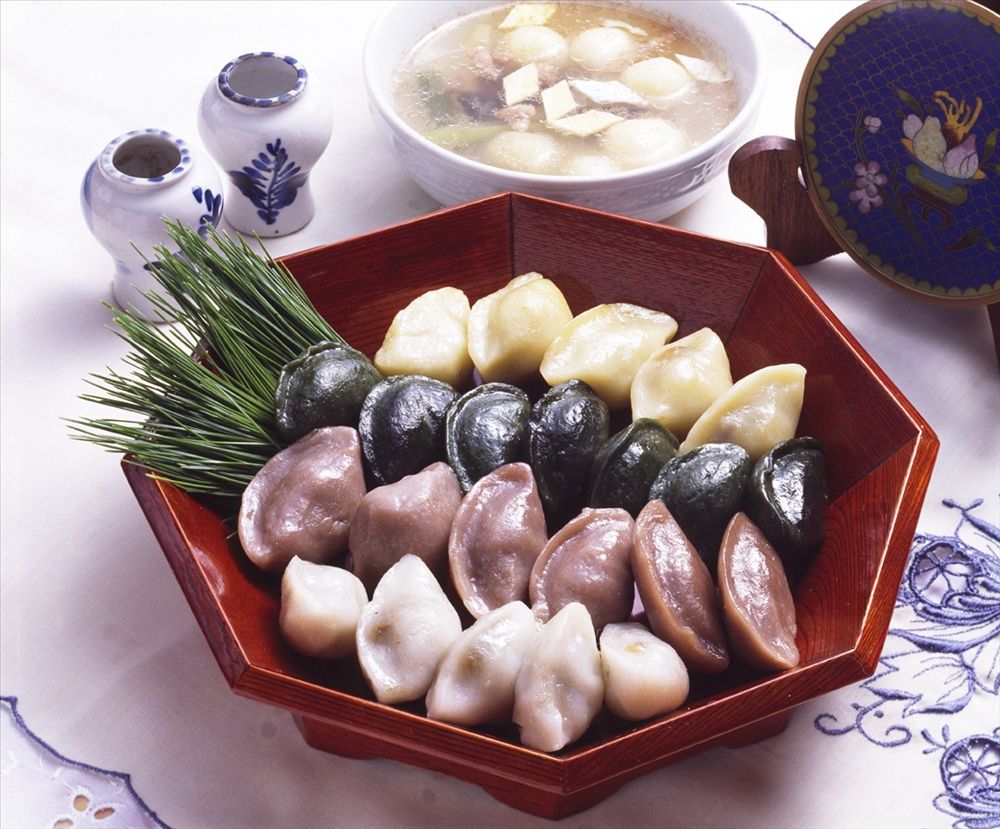 Songpyeon (Half-Moon Rice Cakes)송편Small half-moon cakes of rice dough filled with sweet sesame, beans or chestnut and steamed on a bed of pine needles — the rice cake of Chuseok, made with the new harvest.
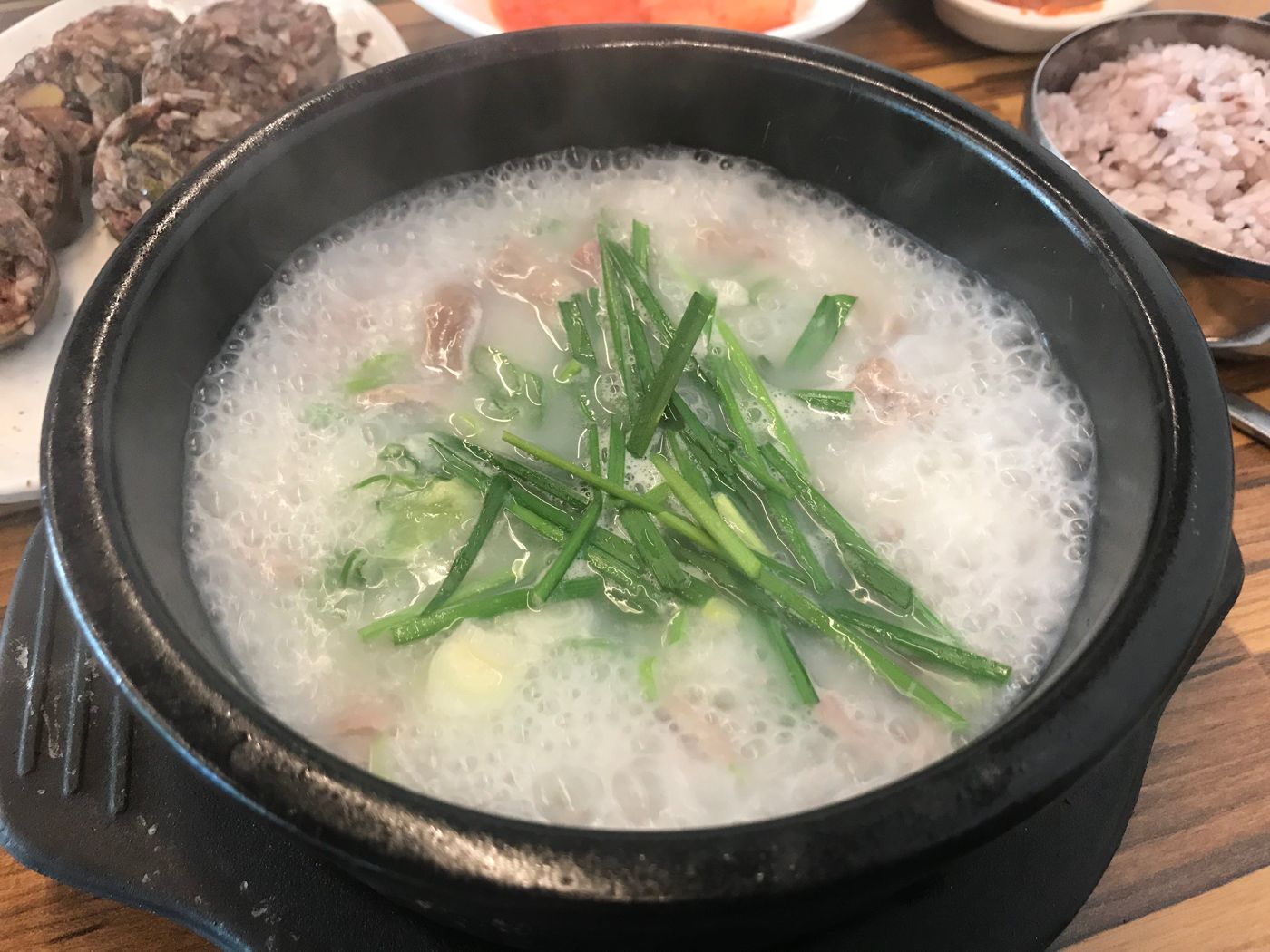 Sundaeguk (Blood Sausage Soup)순댓국Slices of Korean blood sausage and pork offal in a rich pork-bone broth, seasoned at the table with salted shrimp — a cheap, hearty market-day bowl served with rice.
- Toran Guk (Taro Soup)토란국Parboiled taro simmered in a clear beef-and-kelp broth seasoned with soup soy sauce — a soft, gently slippery soup made for the Chuseok harvest table.