Ingredient
Bracken fern shoots
고사리
Romanization: gosari
The young, tightly curled shoots of bracken fern, picked in spring and almost always sold blanched and dried. Once soaked and thoroughly cooked, gosari turns tender and earthy, and it is a fixture of ancestral-rite tables, bibimbap and yukgaejang.
Flavor
Earthy and faintly smoky, with a meaty chew once rehydrated and cooked; it readily takes on soy sauce, garlic and toasted oils.
Origin & History
Gosari is the edible spring shoot of bracken (Pteridium aquilinum var. latiusculum), a hardy perennial fern that spreads in large colonies and can grow to about a meter tall. It is gathered while the fronds are still coiled into small, fuzzy fists, before they unfurl into a feathery leaf.
Bracken has been eaten across East Asia since antiquity, and in Korea it became so customary that it is considered indispensable on the jesa (ancestral rite) table. Dried gosari is also one of the stored greens (mugeun-namul) traditionally cooked for the first full moon of the lunar year, Jeongwol Daeboreum, and gathering bracken is the subject of folk songs from many regions.
Harvest runs through spring — the Encyclopedia of Korean Culture gives late April to early May for the mainland, while on Jeju foragers head to the fields from March to May. The traditional preparation steeped the shoots with wood ash and hot water (today salt and baking soda are more common) to remove bitterness and break down an enzyme that destroys vitamin B1. The shoots are then boiled and sun-dried so they keep year-round.
In the kitchen, dried gosari is soaked, simmered again until soft, and then seasoned and stir-fried as gosari-namul. It is one of the classic toppings for bibimbap and gives body to yukgaejang, the spicy beef soup.
Nutrition
| Calories | 21 kcal |
|---|---|
| Protein | 2.74 g |
| Fat | 0.24 g |
| Carbohydrates | 3.55 g |
| Fiber | 2.7 g |
| Sodium | 2 mg |
Notable forFolate (137 µg) · Dietary fiber (2.7 g) · Vitamin K (28 µg)
Values copied from the Korean Food Composition Table (Rural Development Administration / National Institute of Crop Science) for this exact food, per 100 g edible portion. Actual values vary with ingredients, portion size and preparation.
Health Benefits
- Fiber and folate: Cooked gosari is low in calories and, per the Korean Food Composition Table, supplies dietary fiber and a meaningful amount of folate.
- Always cook it thoroughly: Raw bracken contains an enzyme that breaks down vitamin B1, which traditional ash-and-hot-water processing was designed to destroy. Never eat it raw.
- The ptaquiloside question: Bracken contains ptaquiloside, a compound that damages DNA in laboratory and animal studies; the International Agency for Research on Cancer lists bracken fern as possibly carcinogenic to humans (Group 2B), with human evidence limited.
- Boiling makes a large difference: A 2023 risk-assessment study found that soaking alone for four hours did not measurably lower ptaquiloside, while boiling for 10 minutes cut it by roughly 70–88% and boiling for 20 minutes by about 94–99%. The authors recommend boiling bracken for at least 20 minutes before eating — so even pre-dried gosari is best soaked and then simmered well.
- Enjoy in moderation: As a traditional side dish eaten in small portions as part of a varied diet, properly prepared gosari is a long-standing part of Korean food culture.
Informational, not medical advice. Talk to a qualified professional about your own health and diet.
Dishes with Bracken fern shoots
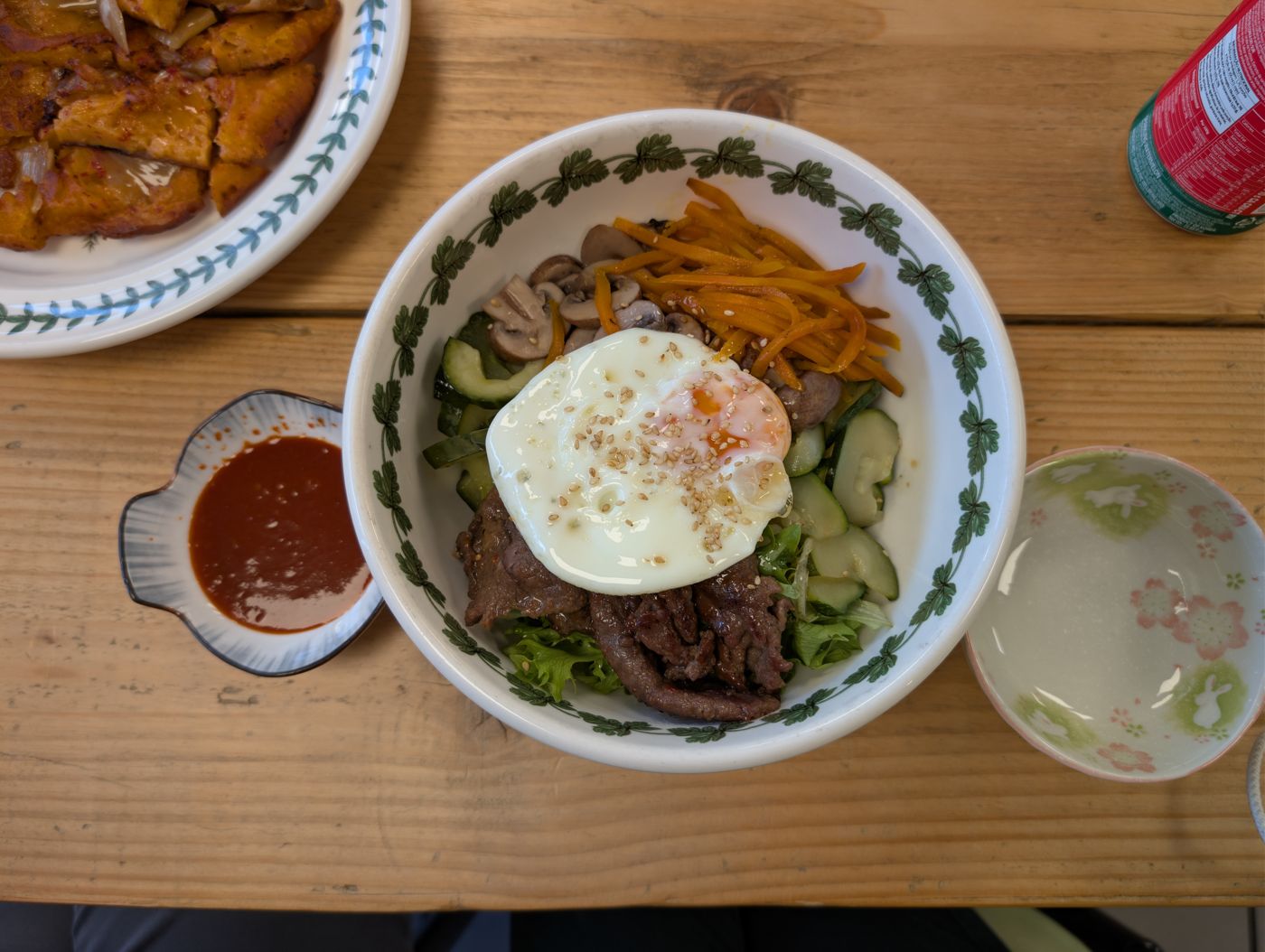 Bibimbap (Mixed Rice with Namul)비빔밥A bowl of rice topped with seasoned namul, beef and egg, mixed at the table with chili paste and sesame oil — banchan gathered into a single meal.
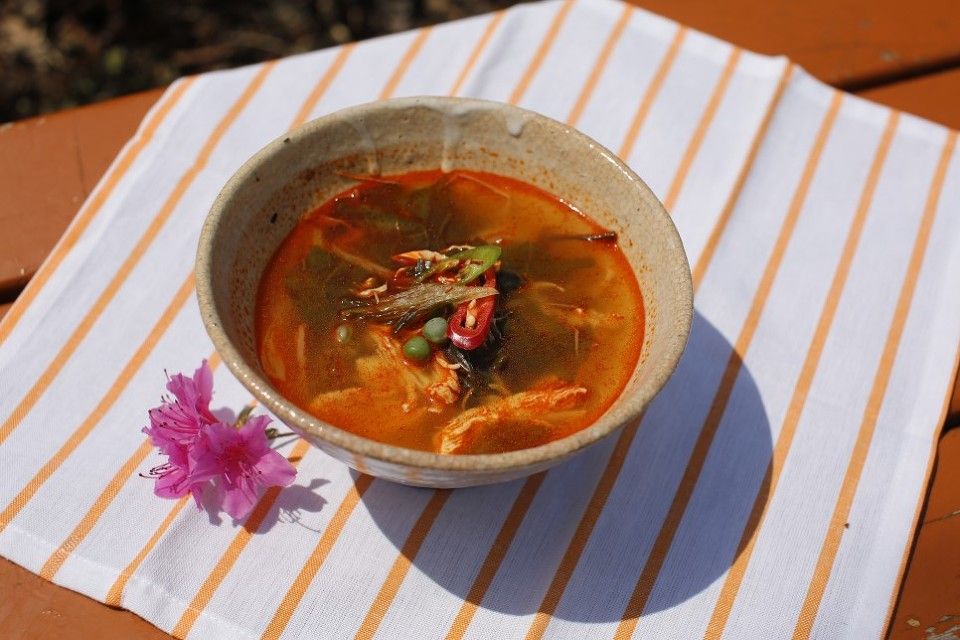 Dakgaejang (Spicy Chicken Soup)닭개장Shredded chicken simmered with bracken, taro stems and plenty of green onion in a fiery chili-oil broth — the chicken cousin of yukgaejang.
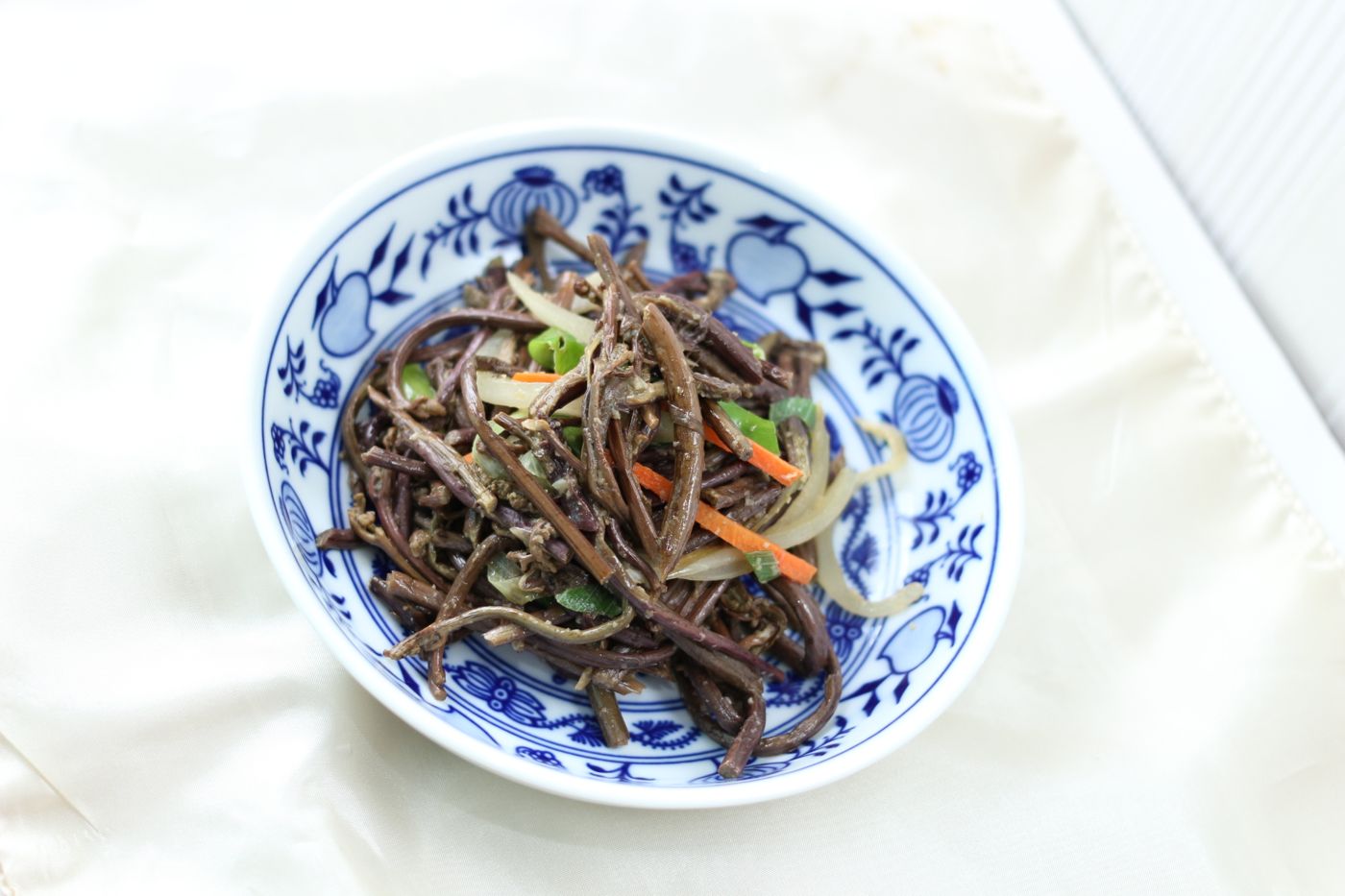 Gosari Namul고사리나물Dried bracken fern soaked, boiled and slowly stir-fried with soup soy sauce, garlic and perilla oil — chewy, earthy and central to holiday tables.
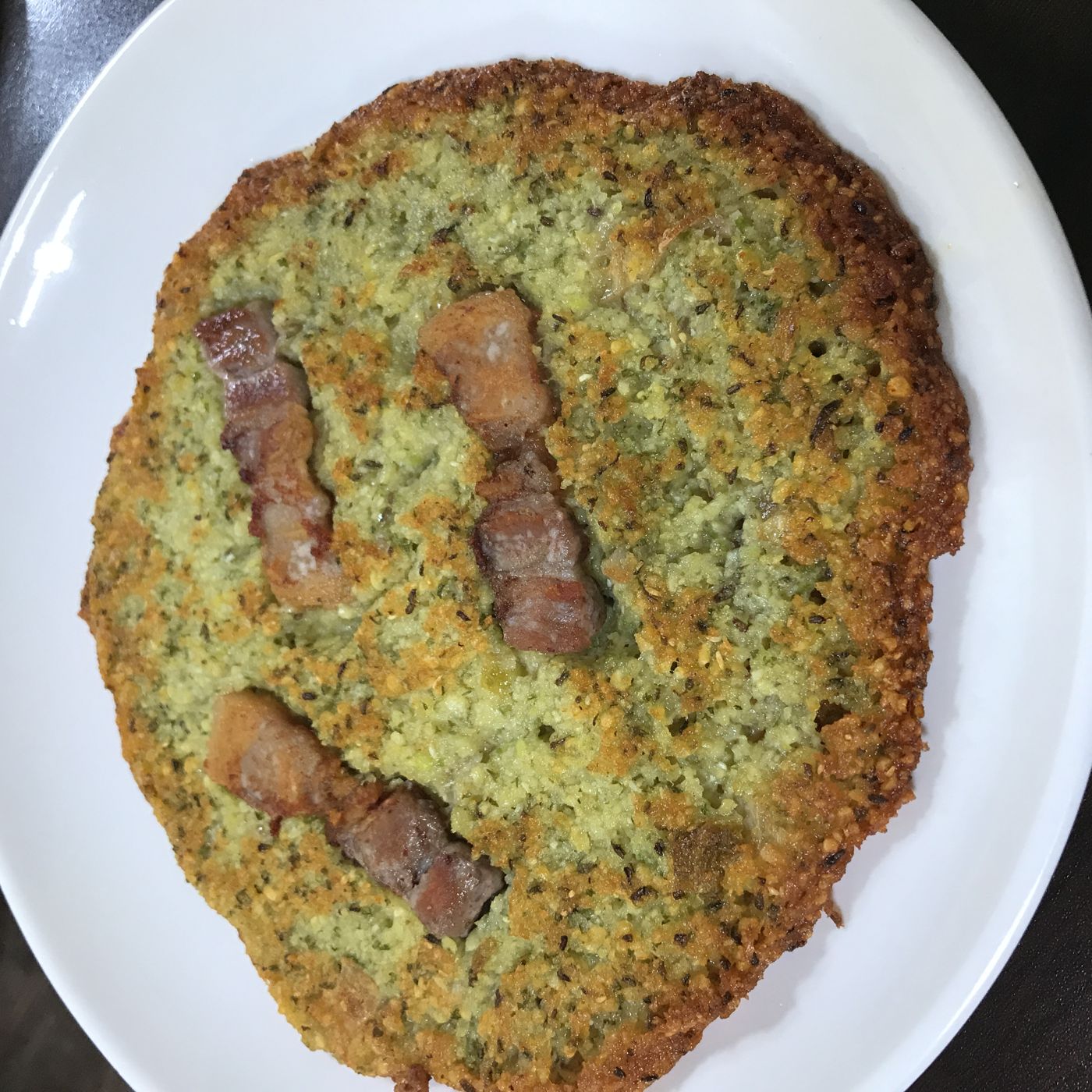 Nokdu Bindaetteok (Mung Bean Pancake)녹두빈대떡Soaked mung beans ground into a thick batter with kimchi, sprouts and pork, then fried crisp in generous oil — a northern specialty and a Seoul market favorite.
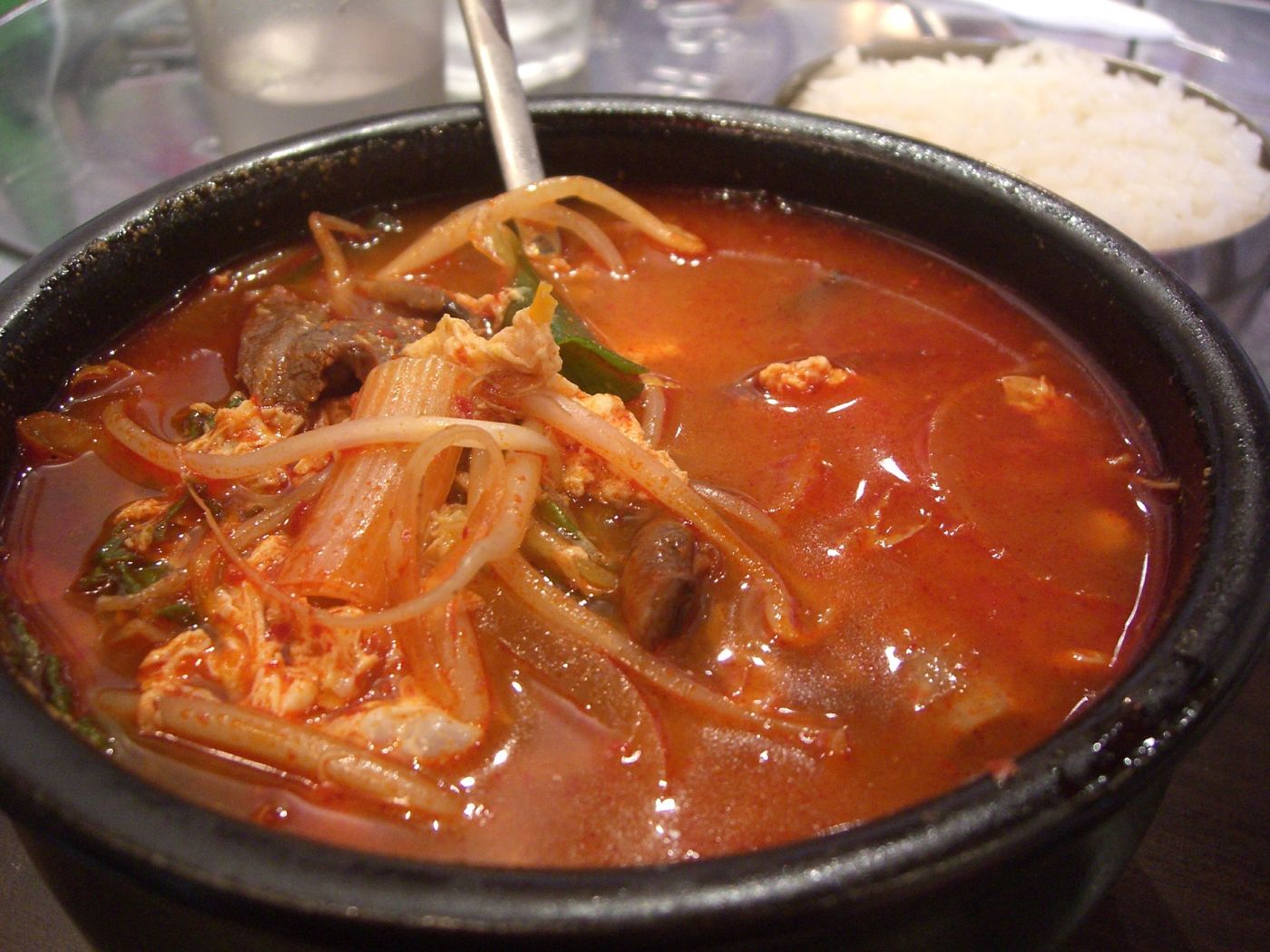 Yukgaejang (Spicy Beef Soup)육개장Shredded beef simmered with bracken, bean sprouts and plenty of green onion in a red, chili-spiked broth — a fiery summer restorative and a gathering-day soup.
Sources
- 01고사리 (Bracken) — Encyclopedia of Korean Culture
- 02묵은나물 (Mugeun-namul) — Encyclopedia of Korean Culture
- 03Risk Assessment and Risk Reduction of Ptaquiloside in Bracken Fern (Toxics, 2023)
- 04Jeju's gosari season in full swing, but risks grow — The Korea Herald
- 05Korean Food Composition Table — Bracken (Gosari), Blanched